
Wedding Guest Dress Fabrics: How to Compare Feel, Drape and Formality
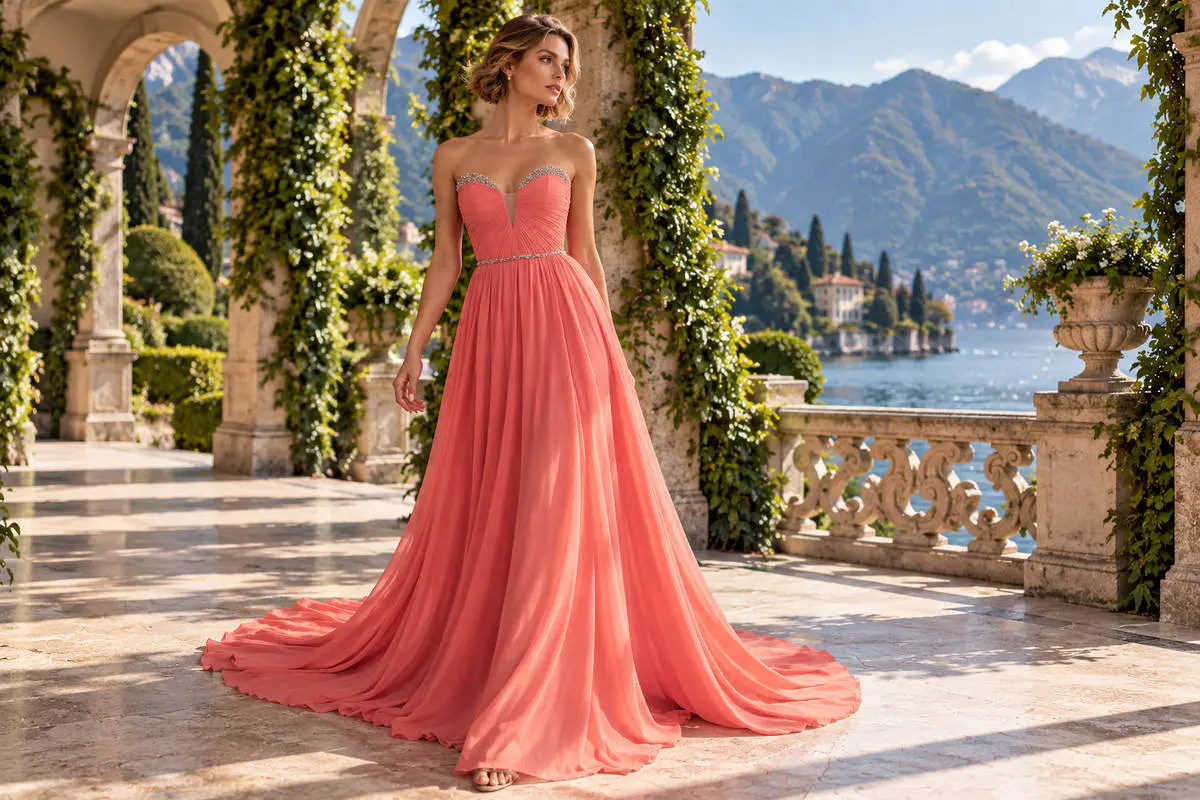
Choosing wedding guest dress fabrics means looking beyond the fabric name. Chiffon offers floating movement, crepe creates a cleaner line, and satin reflects more light. The best choice also depends on the lining, dress code, venue, and how comfortably the finished dress moves. Use these checks before deciding.
Which Wedding Guest Dress Fabrics Work Best?
Chiffon and lightweight crepe are useful starting points for outdoor ceremonies. Satin, textured jacquard, and embellished materials can suit dressier evening celebrations. No single fabric guarantees comfort because fiber content, garment weight, lining, and cut change the result. Compare dresses within the same setting rather than assuming one material wins everywhere.
Start with the invitation and browse Wedding Guest Dresses to see how different materials change the shape of comparable gowns. Then judge each dress on its own construction rather than the fabric label alone.
Chiffon, Crepe and Satin: Three Different Behaviors
These three materials cover very different looks. A fitting-room comparison makes their strengths and trade-offs easier to see.

Chiffon: Airy Layers and Fluid Movement
Chiffon is a lightweight, sheer fabric often used over an opaque lining. Layered skirts can float while walking without adding the rigid shape of a heavier textile. Check that the lining provides coverage in daylight and does not cling or twist underneath.
Chiffon dresses for wedding guests can feel particularly appropriate at garden or destination celebrations. However, the completed garment may still feel warm when the lining is dense or several layers are used.
Crepe: A Matte Finish and Controlled Drape
Crepe describes a textured surface rather than one fiber or thickness. Some versions fall softly, while substantial stretch crepe supports closer silhouettes. Try sitting and standing to see whether the dress pulls across your hips or returns comfortably to shape.
Jovani offers Crepe Wedding Guest Dresses in fitted, A-line, and draped designs. The collection includes stretch crepe options, making it useful for comparing fabric behavior across different silhouettes.
Satin: Light Reflection and Visible Fit
Satin is a weave, not a promise of silk content or a particular weight. Fluid satin can follow the body closely, while structured versions hold pleats and sculpted shapes. Look for tension marks, visible seams, and wrinkles after sitting.
Within Jovani’s Satin Wedding Guest Dresses, product descriptions distinguish stretch satin, structured satin, and other constructions. Compare the lining and bodice support before deciding which sheen and shape work for your event.
How Do Lace, Organza and Embellishments Compare?
Lace adds patterned texture, organza creates crisp volume, and beadwork brings light-catching detail. Each material asks different questions about comfort, opacity, and care. The useful comparison is how the finished garment behaves rather than how ornate the surface appears.
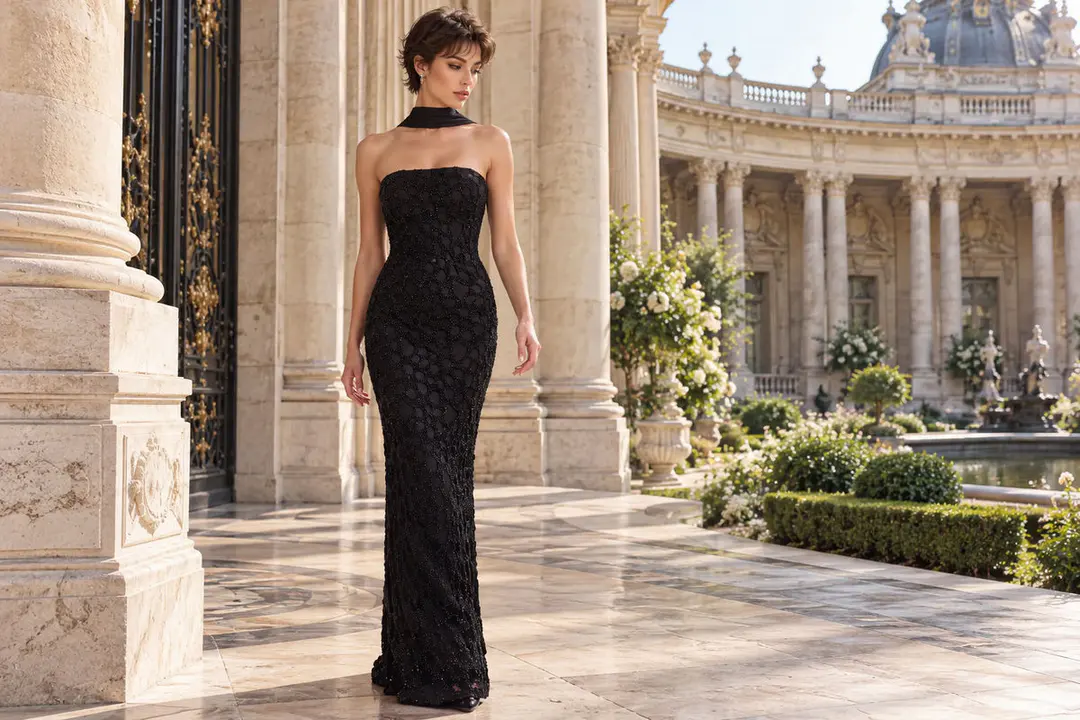
Lace and Organza Need a Lining Check
A colored lace overlay may look soft or sharply defined depending on its pattern and backing. Look for itchy edges, exposed mesh, and lining that changes the visible color. For etiquette and styling specific to lace, see Jovani’s guide to lace wedding guest dresses.
Organza is generally more structured than chiffon, so it can hold sleeves or skirt volume. Check whether stiff edges catch against skin or neighboring layers as you move.
Beading, Sequins and Textured Weaves Add Weight
Beads and sequins add surface detail but can also increase weight and snag on bags or jewelry. Run a hand gently along seam edges and inspect where embellishments meet the arm. The Beaded Wedding Guest Dresses collection shows Jovani styles using beadwork, sequin mesh, and beaded tulle.
Jacquard and brocade rely on woven patterns rather than loose decoration. Their structure may feel more substantial, which can be useful for a cooler indoor venue but less appealing outdoors in heat.
Match Fabric to the Wedding Setting
A suitable material should work with the invitation and the actual conditions. Separate the ceremony from the reception if one is outdoors and the other is climate-controlled.

Outdoor Heat, Breeze and Uneven Ground
For a warm garden or beach event, prioritize airflow through the complete dress and freedom around the legs. Chiffon or lighter crepe can suit the setting, but heavy linings may cancel their advantage. Check whether a long skirt drags or lifts in the wind.
Indoor Evening Receptions and Formal Dress Codes
Satin, dense crepe, jacquard, or selective embellishment may look appropriate for evening receptions. A cocktail invitation may also allow a shorter dress if the design and venue support it. Jovani’s Short Wedding Guest Dresses include crepe, jacquard, and satin examples for comparing finished looks.
Fabric choice does not replace etiquette. The invitation remains the best starting point, with wedding guest dress etiquette helping determine what degree of formality the occasion expects.
Try These Five Fabric Checks Before You Buy
A few realistic movements reveal more than a fabric swatch or product photograph. Perform the tests wearing the undergarments you plan to use.
- Sit for a full minute and check creasing, pulling, and lining movement.
- Walk and turn to see how the skirt falls around your legs.
- Raise both arms to test sleeve edges, beadwork, and bodice security.
- Look at the color in daylight and under warmer indoor lighting.
- Read the fiber and care labels, then ask about alterations and cleaning.
Jovani’s wedding guest collection identifies fabrics including crepe, satin, jacquard, chiffon, and sequin mesh. These category filters are useful for narrowing options, but the fitting-room tests determine whether a particular dress feels right.
Consider Color, Shine and Care Together
Highly reflective material can appear brighter in flash photography than it does indoors. Test a pale satin or metallic finish before wearing it to a wedding, especially if the shade could appear bridal. For the color-specific decision, read wearing metallic to a wedding as a guest.
Check the care label before purchase. Delicate chiffon, lace, and embellished garments may require specialized cleaning or careful storage. A dress you can wear comfortably and maintain properly is often the better choice than an impractical surface finish.
For a closer look at fabric, lining, and fit in person, find an authorized Jovani retailer and ask to compare several constructions under the same lighting.
Frequently Asked Questions
What fabric is best for a summer wedding guest dress?
Choose a lightweight chiffon or breathable crepe dress with an appropriate lining. Check the whole garment in warm conditions because extra layers can retain heat.
Is satin too formal for a wedding guest?
No. Satin can work for cocktail or formal weddings when the length, silhouette, and sheen suit the invitation. A structured gown reads differently from a soft midi.
Do chiffon wedding guest dresses need lining?
Usually, a sheer chiffon dress needs an opaque layer or another form of appropriate coverage. Check it in daylight and while walking.
How can I tell whether beaded fabric will be comfortable?
Try the dress seated and standing, then inspect the underarm seams and lining. Heavy embellishment or exposed edges may rub during a long reception.