
Bridal Vocabulary: 75 Wedding Dress Terms Brides See in Appointments and Product Pages
Wedding dress terms can make a bridal appointment feel more complicated than it needs to be. Consultants and product pages use words such as A-line, bateau, Mikado, chapel train, Basque waist, horsehair braid, and illusion mesh because each describes a specific part of the gown.
You do not need to memorize every bridal term before shopping. Knowing the basic vocabulary simply makes it easier to understand what you are trying on, compare one gown with another, and explain which details you want to see again.
What wedding dress terms should you know before a bridal appointment?
Learn the terms that describe silhouette, neckline, sleeves, bodice construction, waist placement, skirt and train, fabric, surface detail, and ordering. Those categories cover most of the vocabulary you will see during appointments and on wedding dress product pages.
The definitions below are intentionally practical. They explain what a term means when you encounter it while shopping rather than turning each one into a separate style rule.
For a broader introduction to bridal shopping and gown categories, start with Jovani's Wedding Dresses 101.
Wedding dress silhouette terms
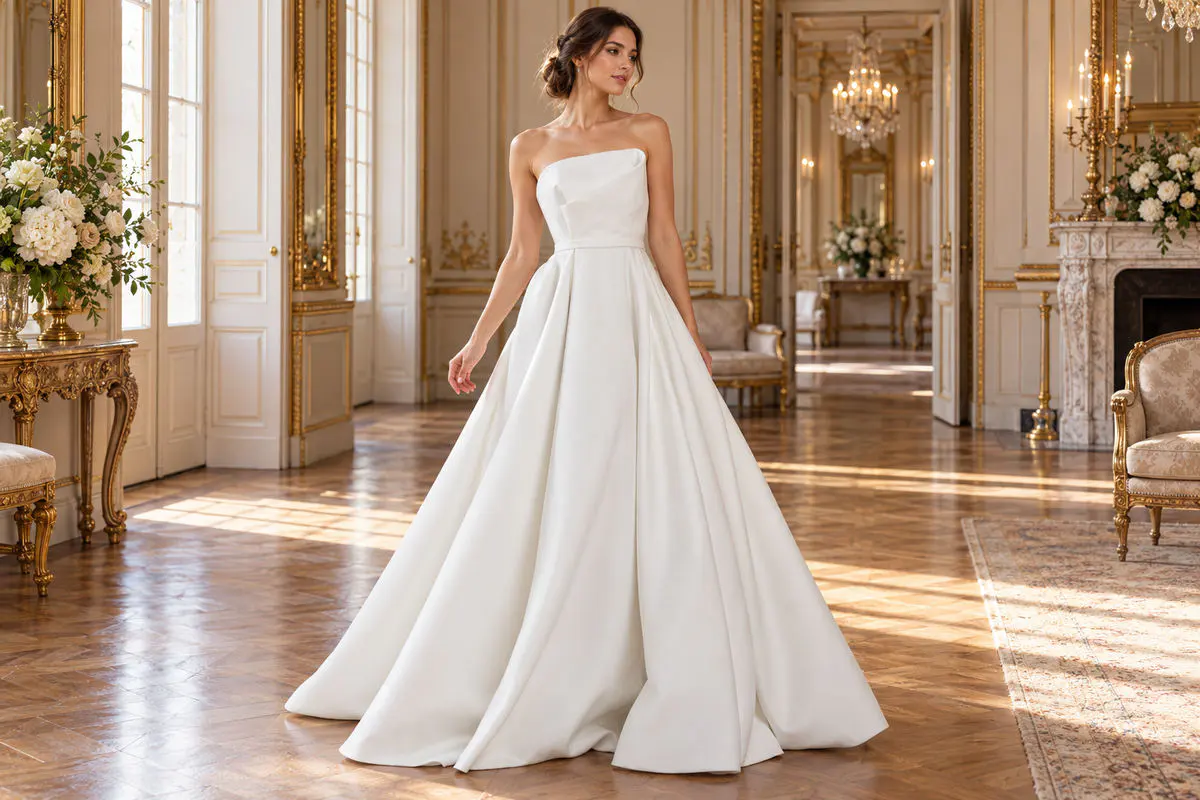
Silhouette describes the overall outline of the gown. It is different from neckline, sleeve style, and fabric, so two dresses can share the same silhouette while looking very different above the waist.
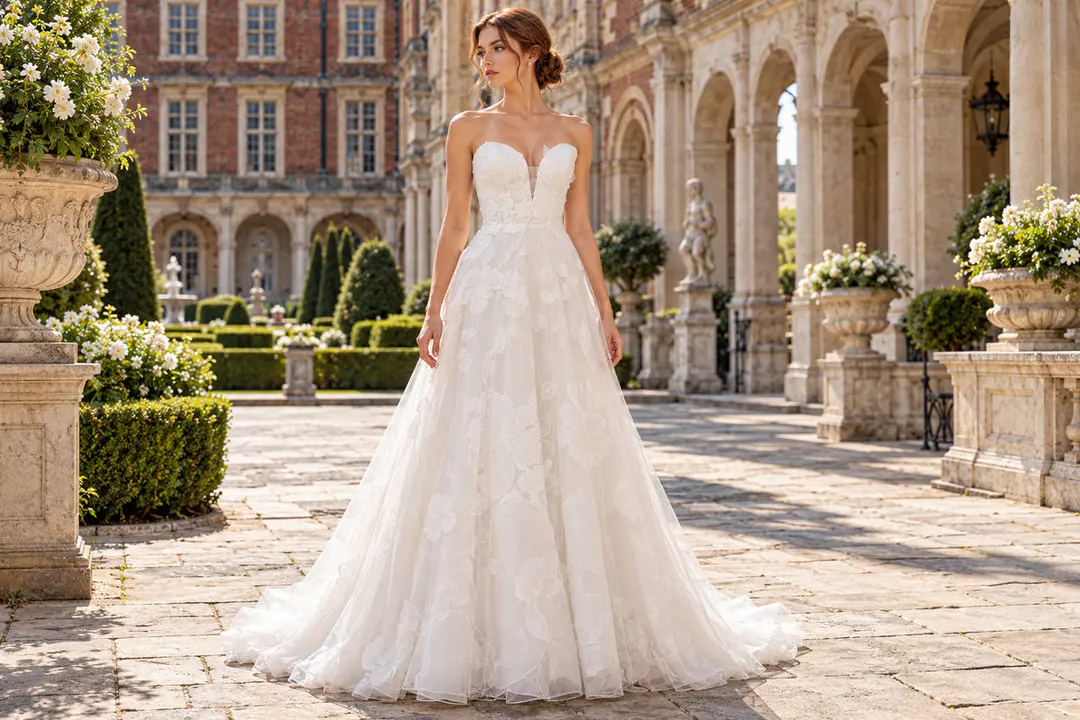
- A-line. An A-line dress is narrower through the upper gown and gradually becomes wider toward the hem, creating an outline similar to a capital A.
- Ball gown. A ball gown combines a defined bodice with a substantially fuller skirt. The amount of volume varies by design, but the skirt is clearly wider than a standard A-line.
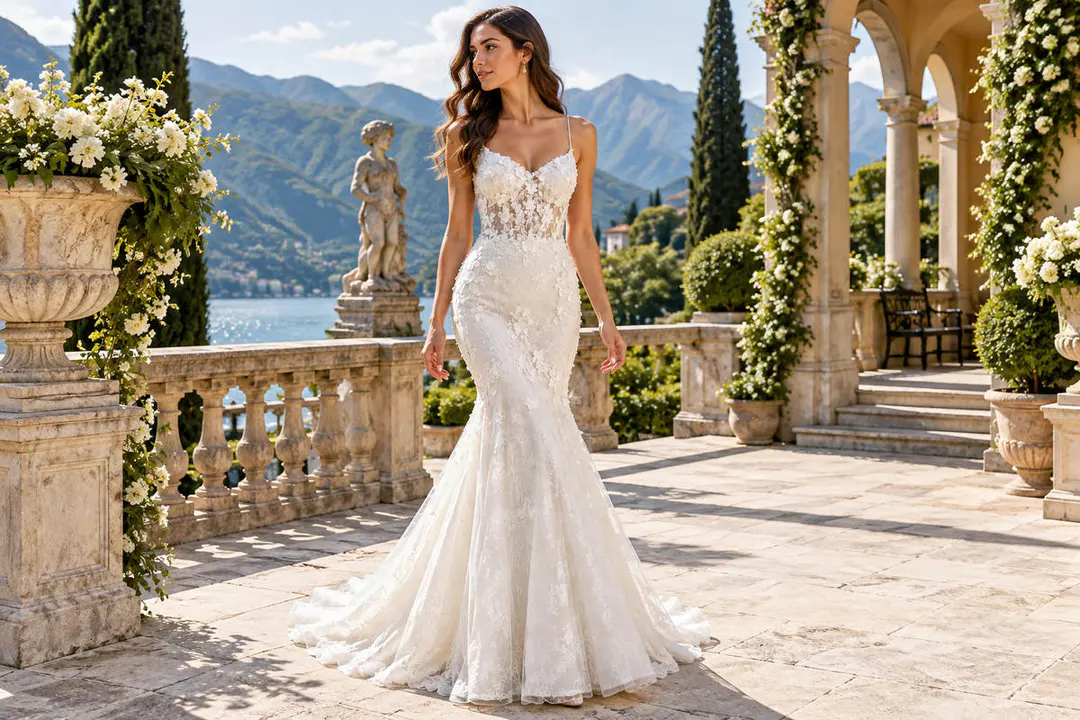
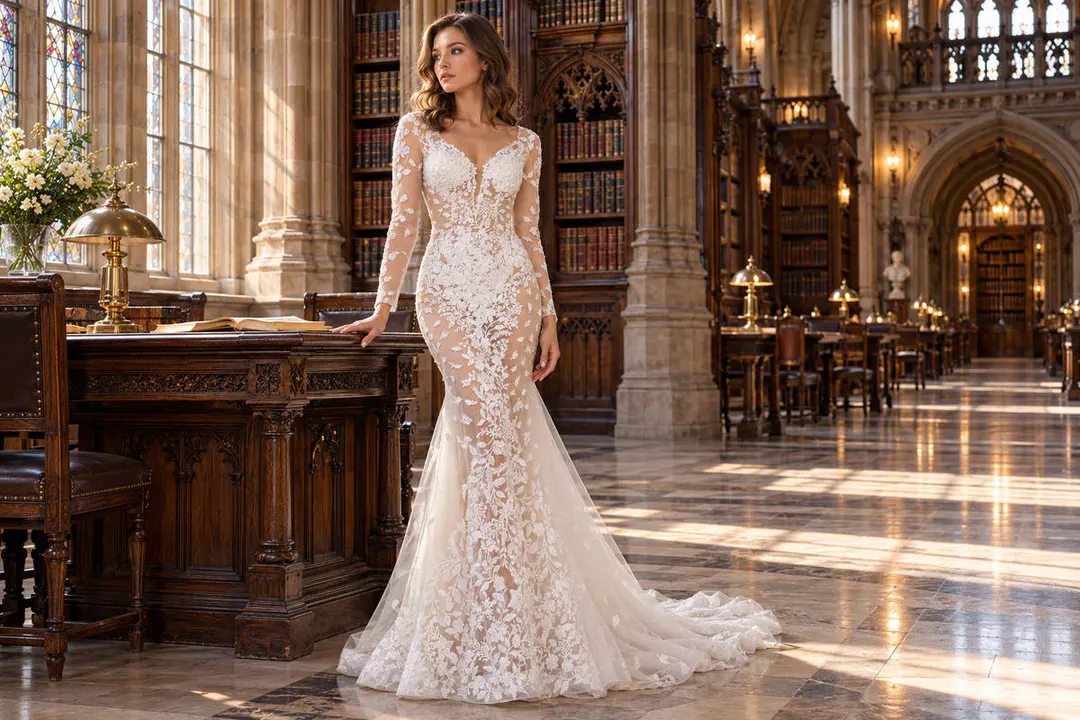
- Mermaid. A mermaid gown stays fitted through much of the torso and hips before releasing into a wider skirt lower on the body.
- Trumpet. A trumpet silhouette is also fitted through the upper skirt but begins to flare earlier and more gradually than many mermaid designs.
- Sheath. A sheath follows a relatively narrow line from the upper gown toward the hem instead of opening into a full skirt.
- Column. A column gown has a straight, elongated outline with limited skirt flare. The term is often used for dresses that fall in a clean vertical line.
- Fit-and-flare. Fit-and-flare is a broader term for a gown that stays closer through the upper portion before widening below. Mermaid and trumpet shapes fall within this general idea, although retailers may use the labels differently.
- Empire waist silhouette. An empire gown begins its skirt high on the torso, usually beneath the bust, instead of at the natural waist.
- Tea-length. A tea-length wedding dress ends between the knee and ankle rather than reaching the floor. The exact point varies by design.
- Mini wedding dress. A mini wedding dress has a hem above the knee and is often used for civil ceremonies, reception looks, or brides who prefer a shorter gown.
For a deeper comparison of shape and skirt structure, Jovani's wedding dress silhouette guide explains the major bridal silhouettes in more detail.
Wedding dress neckline terms
The neckline describes the upper edge of the bodice around the chest, shoulders, and neck. It should be evaluated with the straps, sleeves, and back because those elements work together.
- Sweetheart neckline. A sweetheart neckline curves down at the center front and rises on either side, creating a shape similar to the top of a heart.
- Straight neckline. A straight neckline creates a more horizontal upper edge across the bodice. It is commonly seen on strapless gowns but can appear with straps too.
- V-neck. A V-neck forms a V-shaped opening at the front. The depth can range from relatively shallow to much lower.
- Plunging neckline. A plunging neckline extends lower than a standard V-neck or scoop and may include mesh or another insert depending on the gown.
- Square neckline. A square neckline uses straighter horizontal and vertical lines around the upper bodice rather than a curved opening.
- Bateau neckline. Also called a boat neck, a bateau runs high across the front and extends broadly toward the shoulders.
- Scoop neckline. A scoop neckline uses a rounded U-shaped curve across the front of the bodice.
- Halter neckline. A halter design directs straps or fabric upward around the neck while leaving more of the shoulder area exposed.
- High neckline. A high neckline provides more coverage toward the base of the neck and may be opaque, sheer, lace-covered, or embellished.
- Off-the-shoulder neckline. An off-the-shoulder neckline sits below the top of the shoulders and may connect to fitted, draped, short, or long sleeves.
Wedding dress sleeve and strap terms
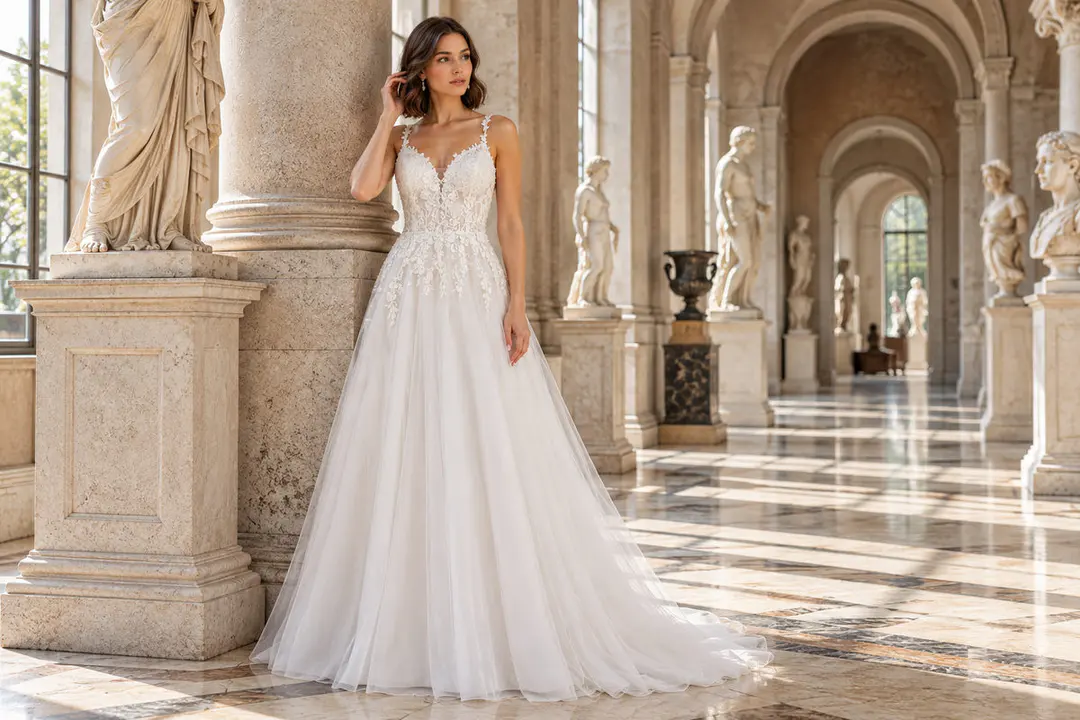
Sleeves and straps affect both appearance and movement. Their names describe the general construction, but the exact width, transparency, and fabric vary by gown.
- Cap sleeve. A cap sleeve covers the top of the shoulder with only a short extension over the upper arm.
- Short sleeve. A short sleeve extends farther down the arm than a cap sleeve but ends well above the elbow.
- Long sleeve. A long sleeve generally extends toward the wrist. It may be opaque, sheer, lace-covered, fitted, or fuller in shape.
- Bishop sleeve. A bishop sleeve has more volume through the arm and narrows or gathers near the wrist.
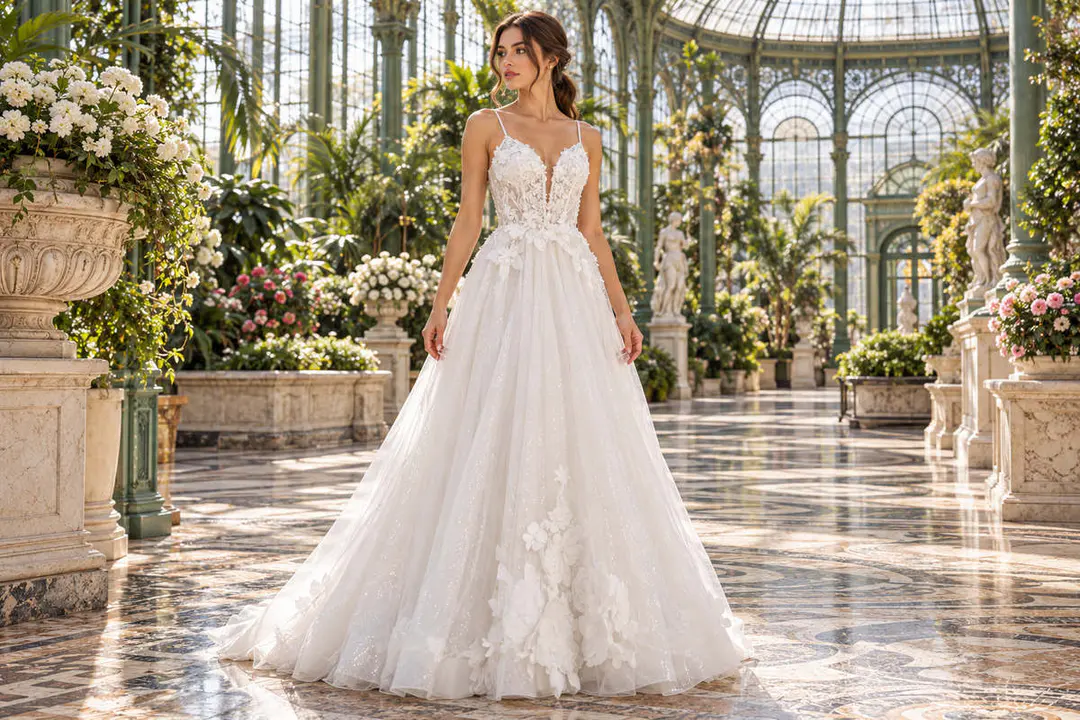
- Illusion sleeve. An illusion sleeve uses sheer mesh or tulle so lace, embroidery, or embellishment can appear to rest directly on the skin.
- Detachable sleeves. Detachable sleeves are designed to be added to or removed from the gown, allowing the upper look to change between parts of the wedding.
- Spaghetti straps. Spaghetti straps are very narrow shoulder straps.
- Tank straps. Tank straps are wider shoulder straps that create more visible structure than spaghetti straps.
Bodice and internal construction terms
The bodice is the upper portion of the gown. Many terms in bridal appointments describe the parts you can see as well as structural elements hidden inside the dress.
- Bodice. The bodice is the upper section of the gown above the skirt. It includes the neckline and may include straps, sleeves, seams, lining, or internal structure.
- Corset bodice. A corset bodice uses corset-inspired shaping or construction. The term does not guarantee one specific internal system, so check the actual gown.
- Boning. Boning refers to narrow structural pieces that may be placed inside bodice seams or channels to help the garment hold its shape.
- Cups. Cups are shaped sections inside some bodices. Their presence does not automatically tell you how much support the gown provides.
- Lining. Lining is an inner fabric layer that may add coverage, opacity, comfort, or a smoother interior surface.
- Underlining. Underlining is an additional layer attached to the main fabric to change its body, opacity, or stability before the garment is assembled.
- Interfacing. Interfacing is a structural material used inside selected areas of a garment to reinforce them or help them keep their shape.
- Princess seams. Princess seams are long shaped seams that run vertically through the bodice and sometimes continue into the skirt.
- Darts. Darts are stitched folds used to shape flat fabric around three-dimensional areas of the garment.
Understanding these parts is useful because two gowns that look similar from the outside can feel and behave differently once you try them on.
Wedding dress waistline terms
Waistline terminology tells you where the visual or structural transition between bodice and skirt occurs.
- Basque waist. A Basque waist extends lower at the center front, often creating a V-shaped or curved point where the bodice meets the skirt.
- Natural waist. A natural waistline places the main bodice-to-skirt transition close to the body's natural waist.
- Dropped waist. A dropped waist moves that transition lower on the torso before the skirt begins to widen.
These terms describe garment placement, not rules about which body should wear which waistline.
Wedding dress train and skirt-structure terms
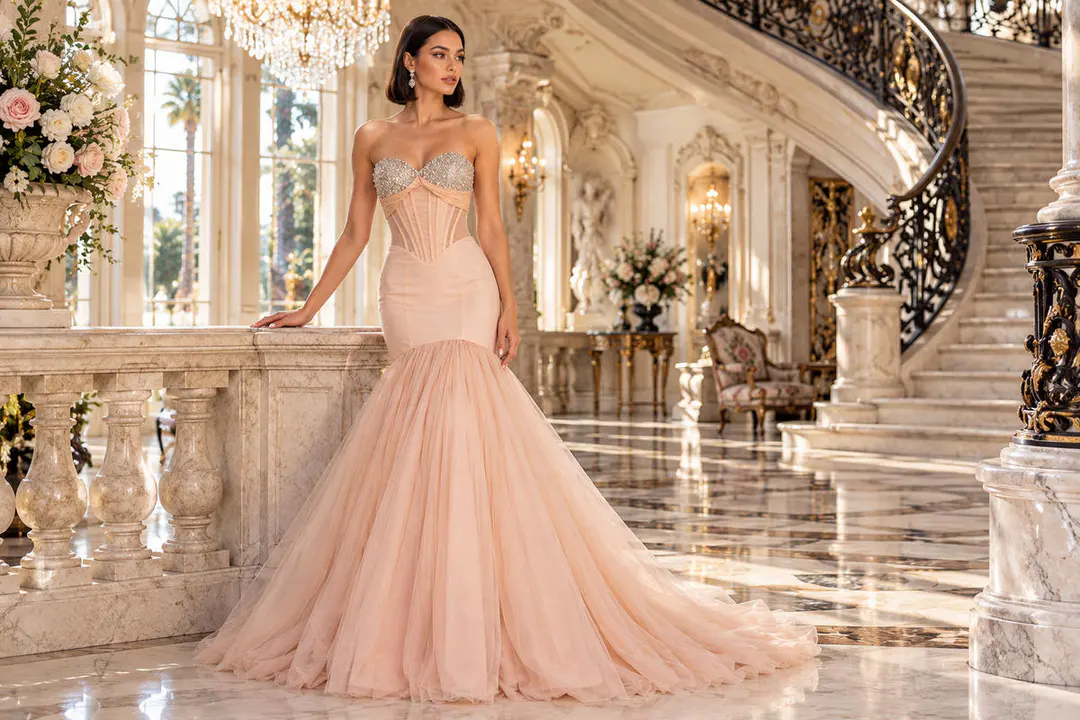
The train is the portion of the gown that extends behind the main hem. The names below generally move from shorter to longer, although exact measurements can vary between designers.
- Train. Train is the general term for fabric that extends behind a floor-length gown beyond the main back hem.
- Sweep train. A sweep train is a short extension that lightly trails behind the dress.
- Court train. A court train extends farther than a sweep but remains relatively manageable compared with longer ceremonial trains.
- Chapel train. A chapel train creates a more noticeable extension behind the bride and is common on formal bridal gowns.
- Cathedral train. A cathedral train is substantially longer and creates a larger visual extension behind the gown.
- Royal or monarch train. A royal or monarch train is an exceptionally long train intended to create significant ceremonial scale.
- Bustle. A bustle is a method of securing or lifting the train after the ceremony so less fabric remains on the floor. The exact bustle method depends on the gown.
- Overskirt. An overskirt is an additional skirt layer worn over the main gown. Some designs make it removable.
- Crinoline. A crinoline is an underskirt or structural layer used to create or maintain skirt volume.
- Horsehair braid. Horsehair braid is a flexible structural trim that can be sewn into hems or skirt edges to help fabric hold a defined shape.
Wedding dress fabric terms
Fabric names matter because they describe more than surface appearance. Weight, stiffness, transparency, movement, and reflection can all change depending on the textile.
- Satin. Satin describes a smooth, often reflective surface created through a particular weave. Different fibers and weights can produce very different kinds of satin.
- Mikado. Mikado is a heavier, more structured fabric with a smooth surface and enough body to hold defined shapes.
- Crepe. Crepe has a comparatively matte surface and a fluid or lightly textured character depending on the specific type.
- Chiffon. Chiffon is lightweight, sheer, and fluid, so it is often layered over another fabric or lining.
- Organza. Organza is lightweight and sheer but has more crispness and structure than chiffon.
- Tulle. Tulle is a net-like fabric that can be soft or firm. It is frequently used in skirts, veils, overlays, and illusion sections.
- Lace. Lace is an open decorative textile created through patterned threads or motifs. Lace is a category rather than one single fabric type.
- Chantilly lace. Chantilly lace is known for a finer net ground and delicate floral or decorative patterns.
- Guipure lace. Guipure lace connects motifs with thicker threads or bars instead of relying on a fine net background, giving it a more substantial appearance.
- Appliqué. An appliqué is a decorative motif attached to another fabric rather than created directly as part of that base textile.
- Embroidery. Embroidery creates decoration with stitched thread or other materials applied to the fabric surface.
- Beading. Beading refers to beads attached to the gown for texture, pattern, or reflection.
- Sequins. Sequins are small reflective pieces attached to the fabric. Their density and placement can range from isolated accents to full-surface coverage.
- Jacquard. Jacquard is fabric with a pattern woven directly into the textile rather than printed onto its surface.
- Brocade. Brocade is a patterned woven fabric that often has a more substantial surface and visible raised design.
Jovani's lace wedding dress guide provides a closer look at how lace types and placement change a bridal gown.
Sheer and detail terminology
Product descriptions often use the next few terms to explain areas that look transparent, layered, or highly finished.
- Illusion mesh. Illusion mesh is a fine sheer fabric used to create the appearance of open skin while providing a base for straps, necklines, sleeves, appliqués, or embellishment.
- Illusion back. An illusion back uses sheer material across part of the back so decorative motifs or closures can appear to sit with minimal visible support.
- Button loop. A button loop is a small fabric or thread loop that secures around a button. Bridal gowns may use rows of loops and covered buttons along the back.
- Zipper closure. A zipper closure uses a concealed or visible zipper to open and secure part of the gown, often at the back or side.
- Lace-up back. A lace-up back uses cords or ribbons threaded through loops or eyelets to close the bodice.
Bridal appointment and ordering terms
Some of the most confusing wedding dress terms do not describe the gown at all. They describe how the dress is shown, ordered, or adjusted.
- Sample gown. A sample gown is the store's try-on version of a style. It may have been tried by multiple shoppers and may not be the size you eventually order.
- Trunk show. A trunk show is a limited-time event when a boutique receives a larger or special selection from a designer or collection for appointments.
- Made-to-order. Made-to-order generally means a gown is ordered for a customer after the style and size are selected rather than taken directly from the boutique floor. The exact production process depends on the designer and retailer.
- Off-the-rack. Off-the-rack means you purchase the physical gown that is already available rather than waiting for a new order to be produced or delivered.
- Alterations. Alterations are changes made after purchase to adjust the gown's fit, length, bustle, straps, sleeves, or other details. The available changes depend on the construction of the exact gown.
Jovani sells through authorized retailers and does not provide tailoring or alteration services itself. Ask the retailer how alterations are handled for the gown you are considering.
How to use bridal vocabulary during an appointment
You do not need to speak like a dressmaker. Bridal vocabulary is most useful when it helps you describe what you are responding to.
Instead of saying that you dislike an entire dress, you might realize that you like the A-line skirt but want a square neckline instead of a sweetheart. You may like the lace but prefer less appliqué, or want the same silhouette with a shorter train.
That level of specificity makes it easier for a consultant to bring you another gown that changes the right element.
The same approach works online. When a product page mentions Mikado, Basque waist, chapel train, illusion back, or detachable sleeves, you can separate those individual features instead of treating the gown as one unfamiliar design.
Which wedding dress terms matter most when comparing two gowns?
Start with silhouette, waistline, neckline, sleeve or strap style, fabric, and train. Those features create most of the visible difference between two dresses.
Then look at construction and surface details.
A satin A-line with a square neckline and sweep train belongs to a very different design family from a lace mermaid gown with an illusion bodice and cathedral train, even if both are ivory bridal dresses.
The vocabulary gives you a consistent way to compare them.
What brides ask about wedding dress terminology
These questions cover the terms that often cause confusion before or during a bridal appointment.
What are the most important wedding dress terms to know?
Start with silhouette, neckline, waistline, fabric, sleeve style, and train. Those six categories explain most of what you will hear when a consultant describes a gown.
What is the difference between a mermaid and trumpet wedding dress?
The main difference is where the skirt begins to release. Mermaid styles generally stay fitted longer, while trumpet styles usually begin widening earlier and more gradually.
What is the difference between chiffon, organza, and tulle?
Chiffon is soft and fluid, organza is sheer but crisper, and tulle has a visible net structure. Each can behave differently depending on weight and layering.
What does illusion mean on a wedding dress?
Illusion usually refers to sheer mesh or tulle used to support a neckline, sleeve, back, or decorative motif while remaining visually unobtrusive.
What does made-to-order mean for a wedding gown?
Made-to-order means the retailer places an order after you select the style and size instead of selling you the exact floor sample. Production and delivery details vary by designer and store.
Do I need to know all 75 wedding dress terms before shopping?
No. Knowing the major categories is enough for your first appointment. Use the rest of the glossary as a reference when a consultant or product page introduces a term you have not seen before.
Use this vocabulary to describe the features you actually want, then compare those details on real gowns through an authorized Jovani retailer.