
1 Colors
Mermaid Wedding Dresses
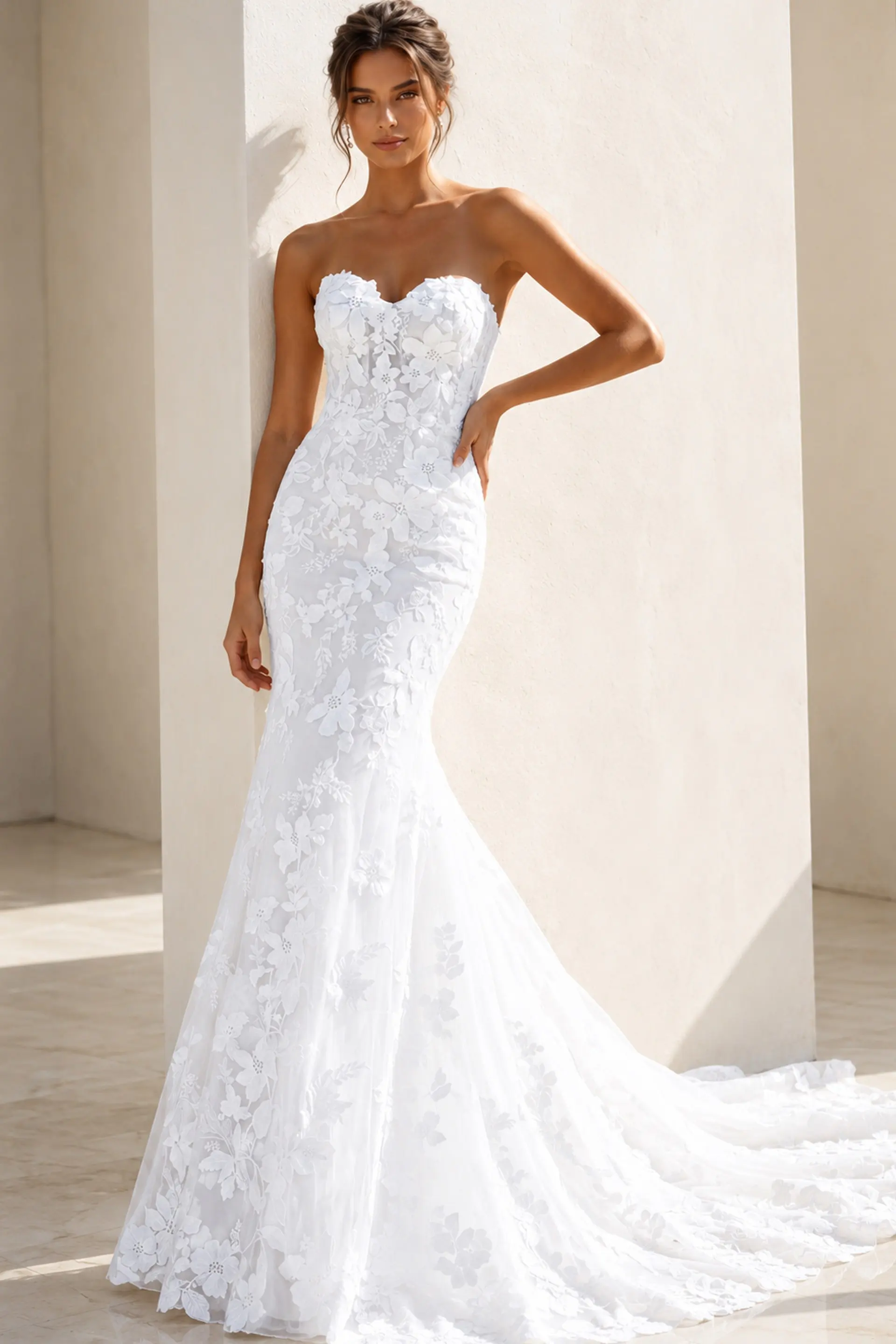
Mermaid wedding dresses create a sculpted bridal silhouette by following the bodice, waist, and hips before releasing into a wider skirt. Jovani interprets the shape in smooth crepe and satin, floral lace, layered tulle, and embellished fabrics, with flare points ranging from restrained to more dramatic. Compare how closely each gown follows the thigh, where the skirt begins to open, and how the train extends the back profile. Strapless corsetry, off-the-shoulder necklines, sheer panels, dimensional appliques, and clean seam work give the silhouette different levels of structure and detail while keeping the defining mermaid proportion clear.
Products
1 Colors
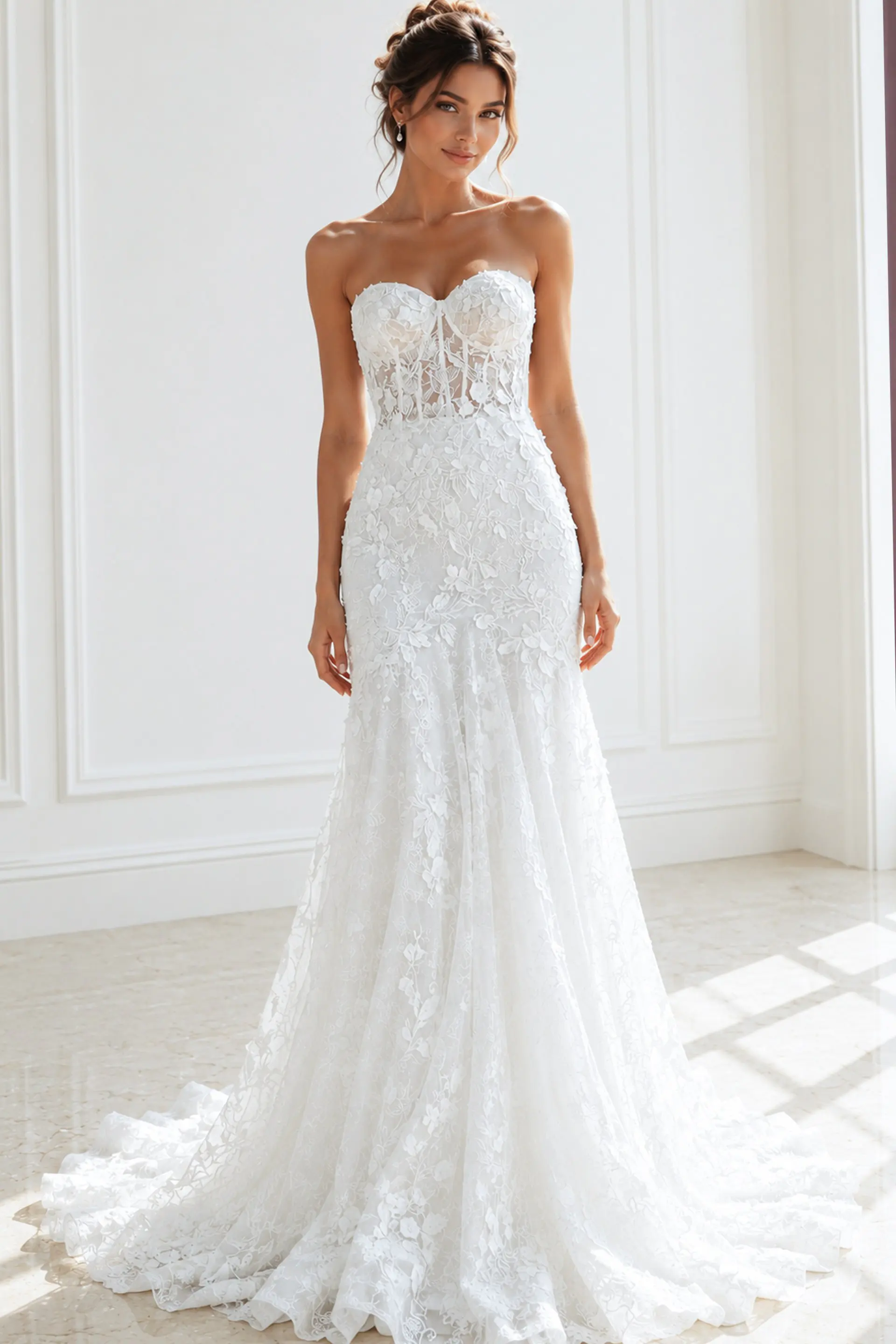
Jovani JB02836 Off White Strapless Embroidered Bridal Dress
1 Colors
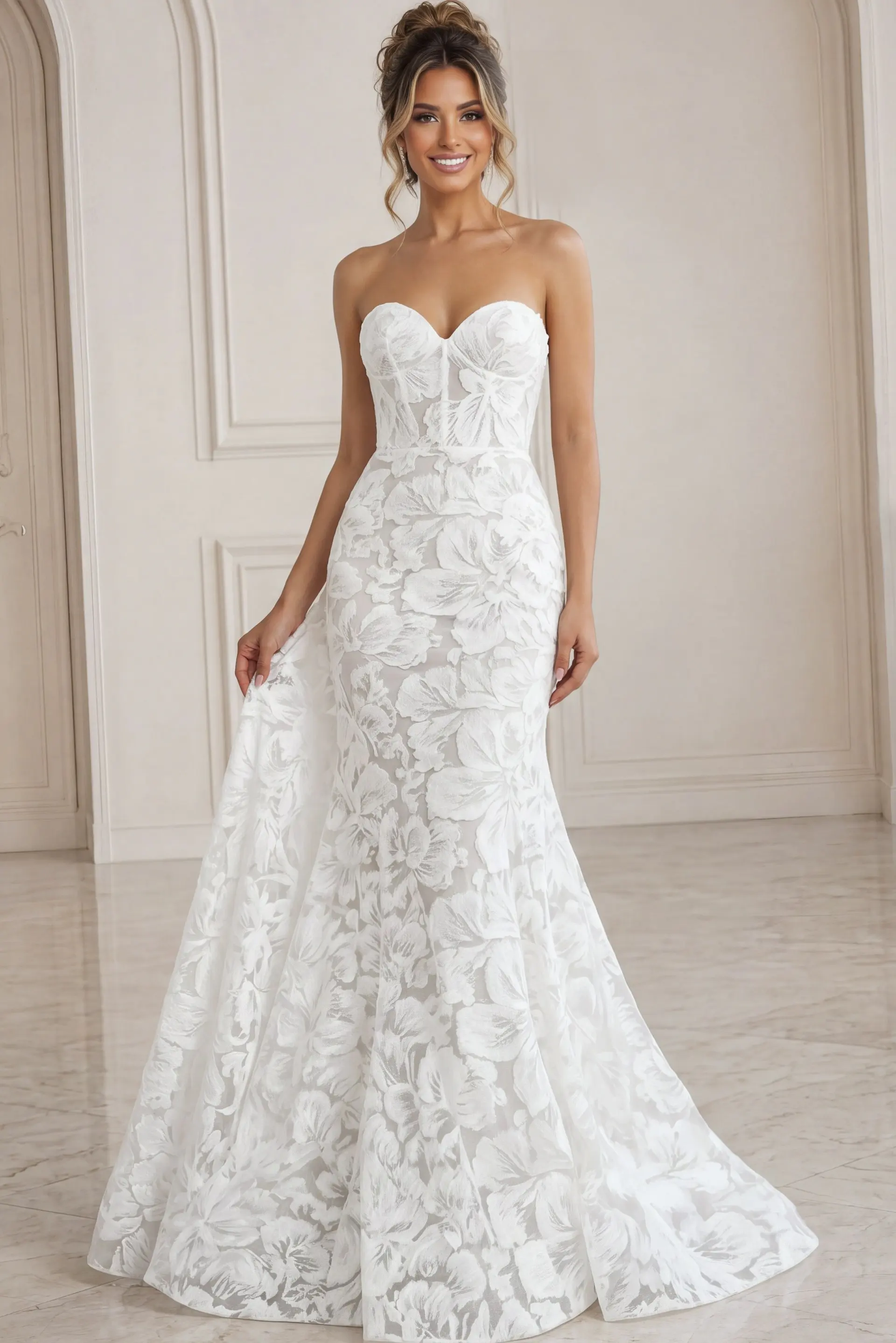
Floral Lace Bridal Gown With Sparkle Tulle JB99067
1 Colors
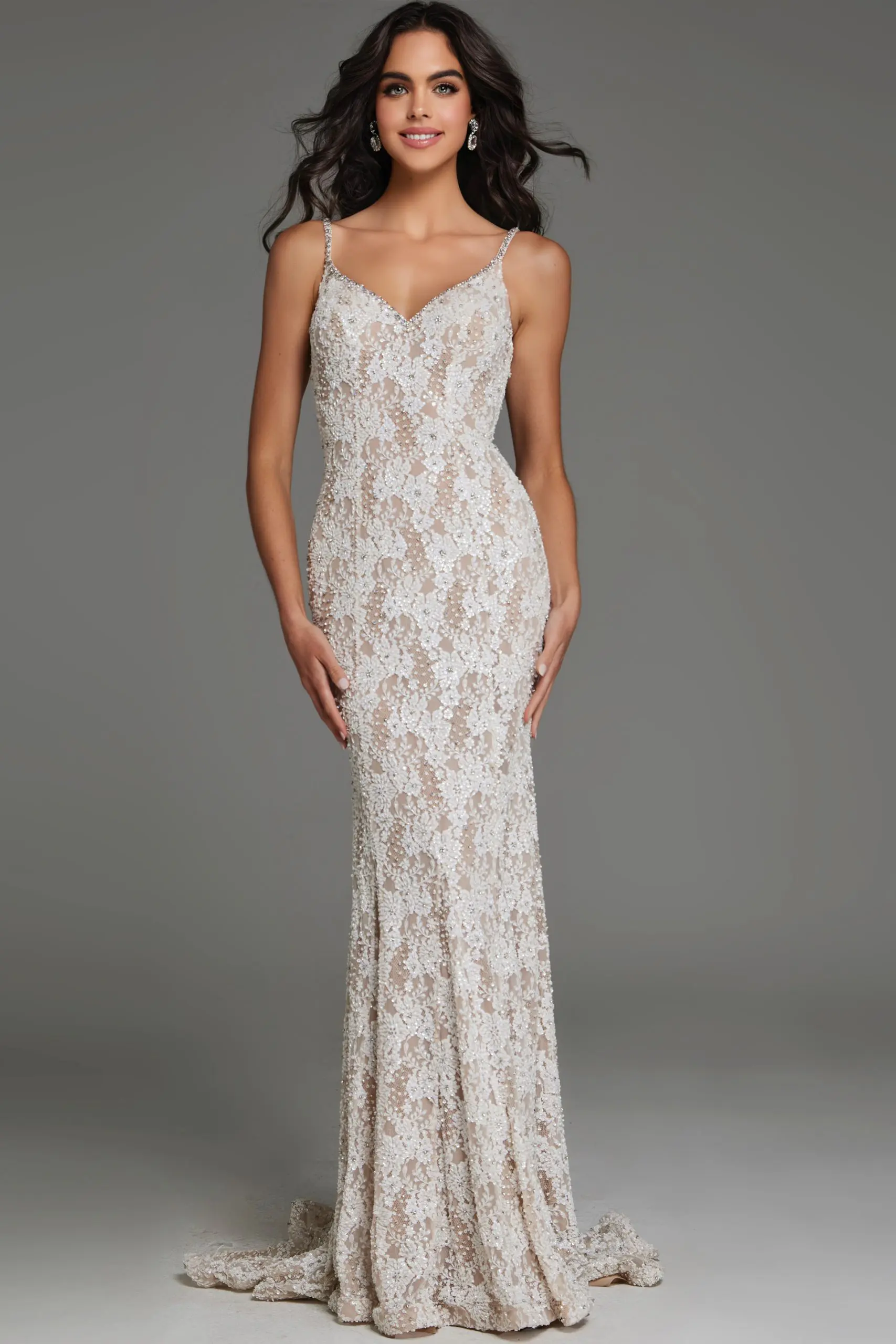
Delicate Lace Bridal Dress with Spaghetti Straps S60534
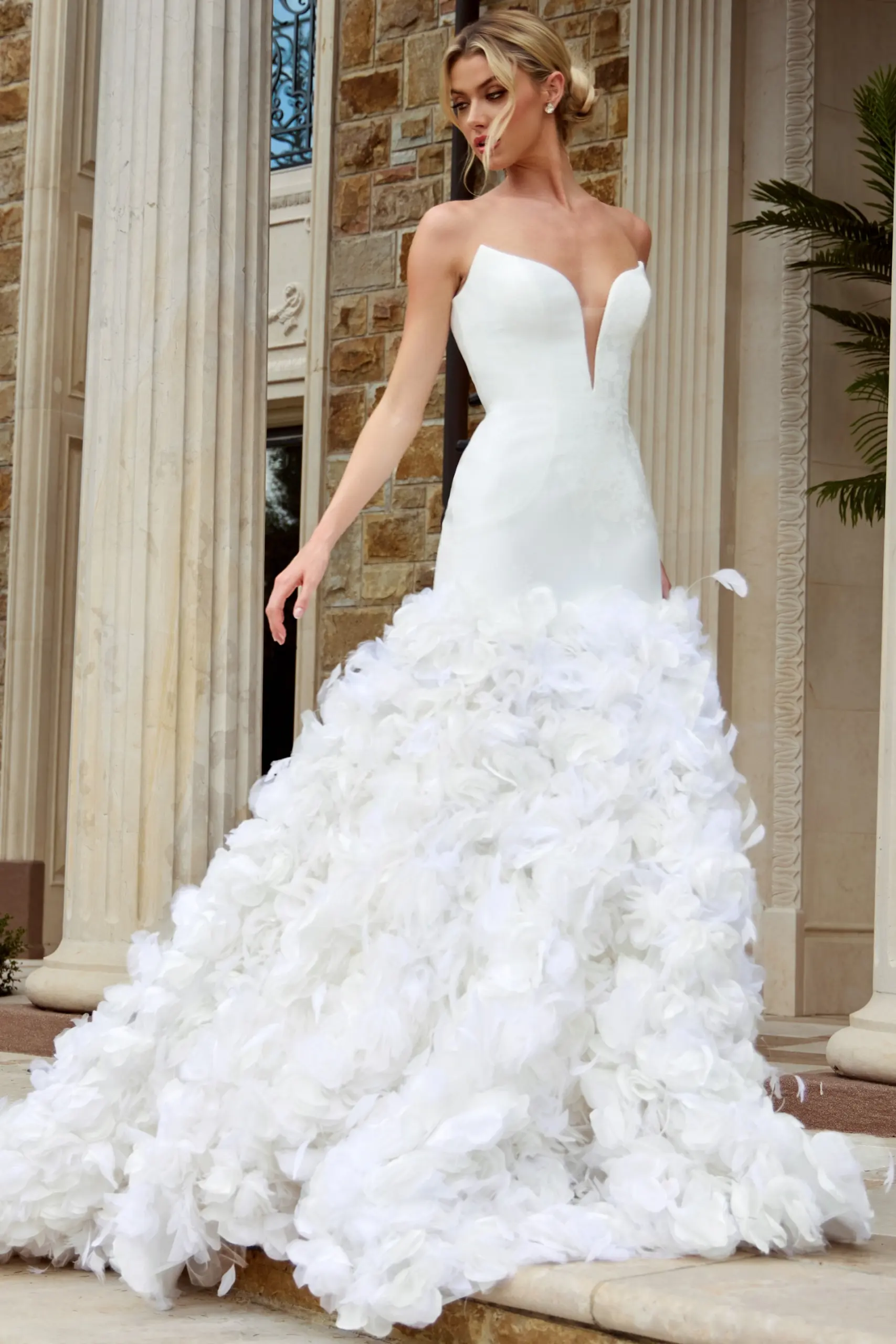
1 Colors
Strapless Mermaid Wedding Dress with 3D Floral Skirt JB45121
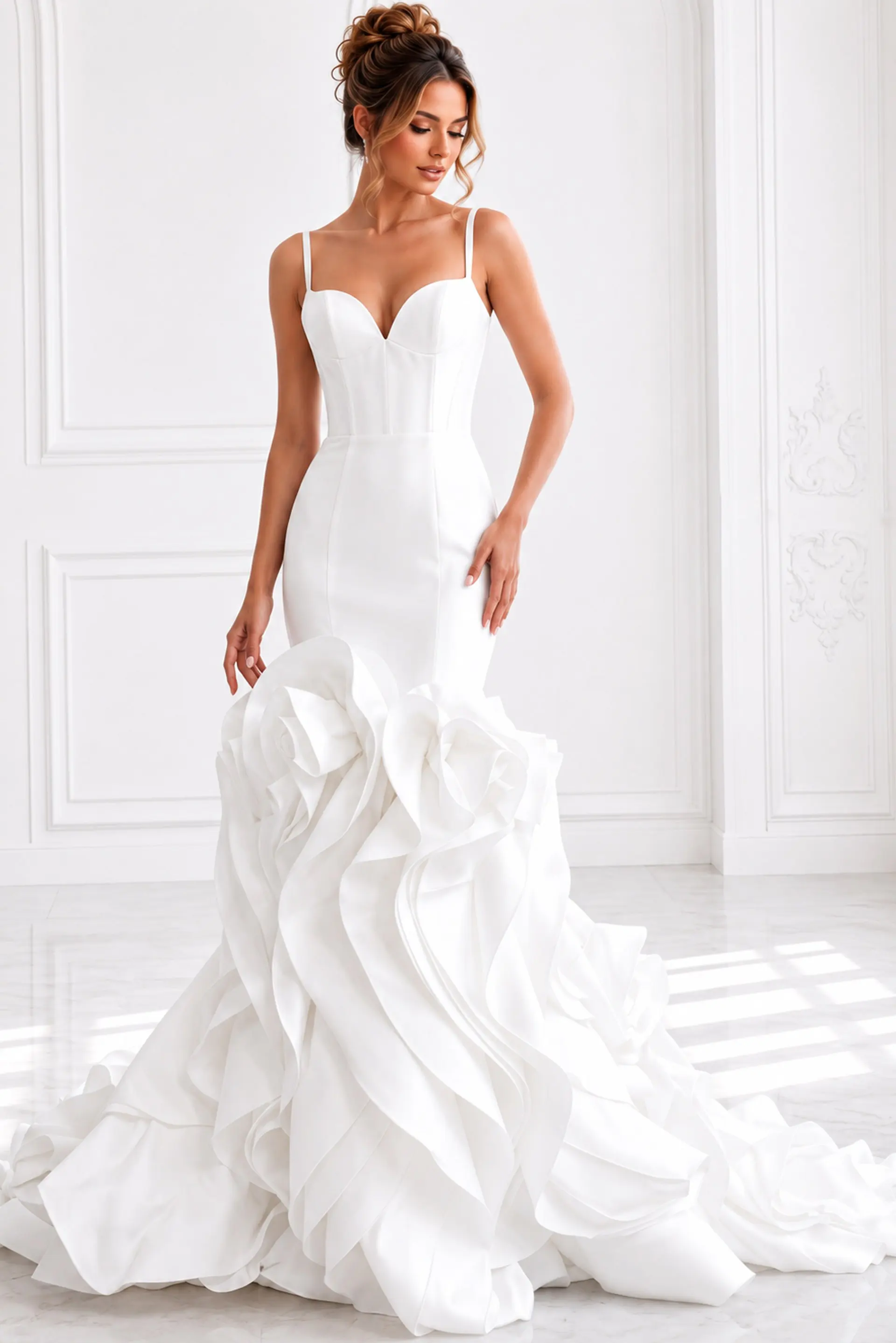
1 Colors
Sculpted Ruffled Mermaid Bridal Gow JB45569
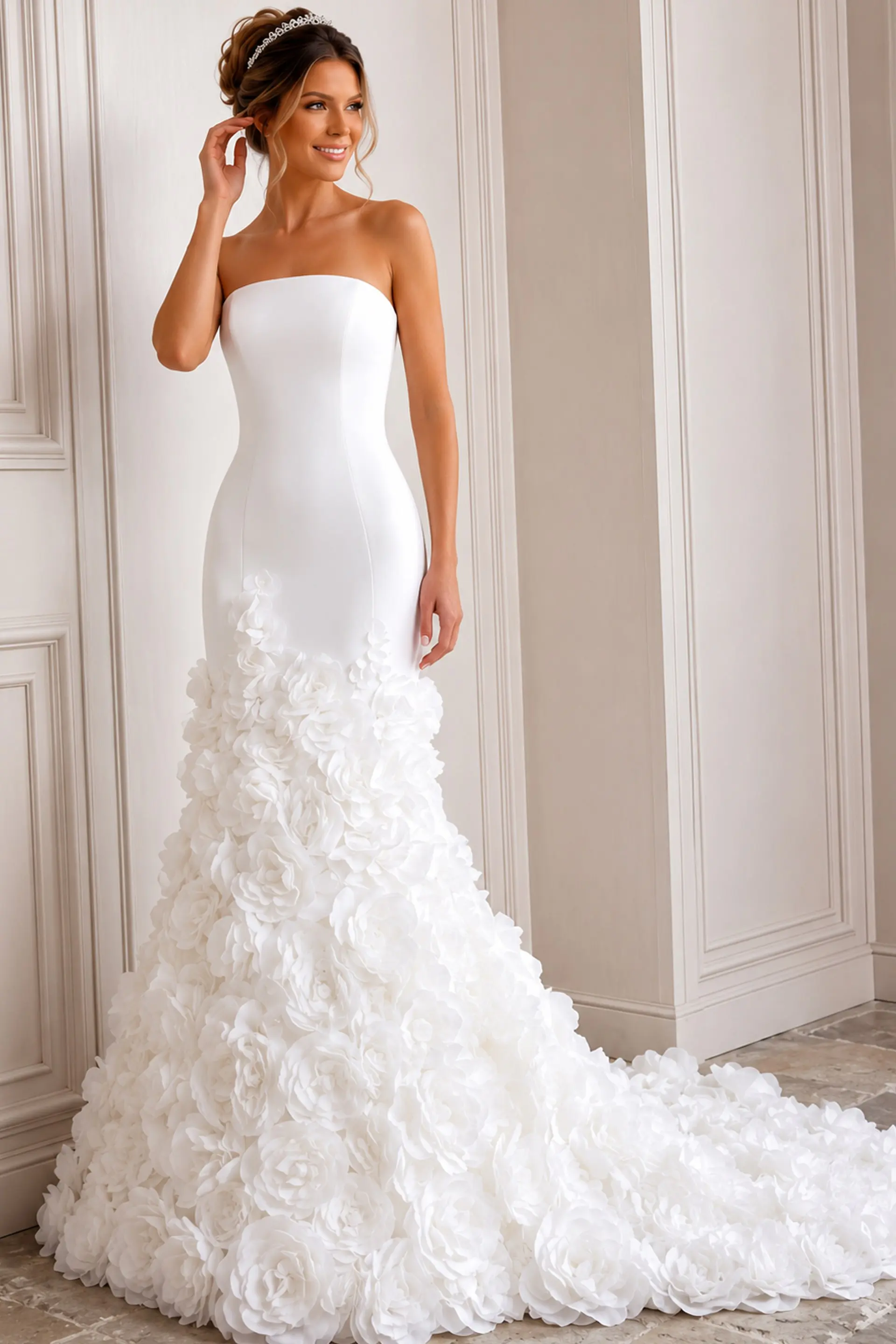
2 Colors
Strapless Mermaid Wedding Dress with 3D Floral Train JB45120
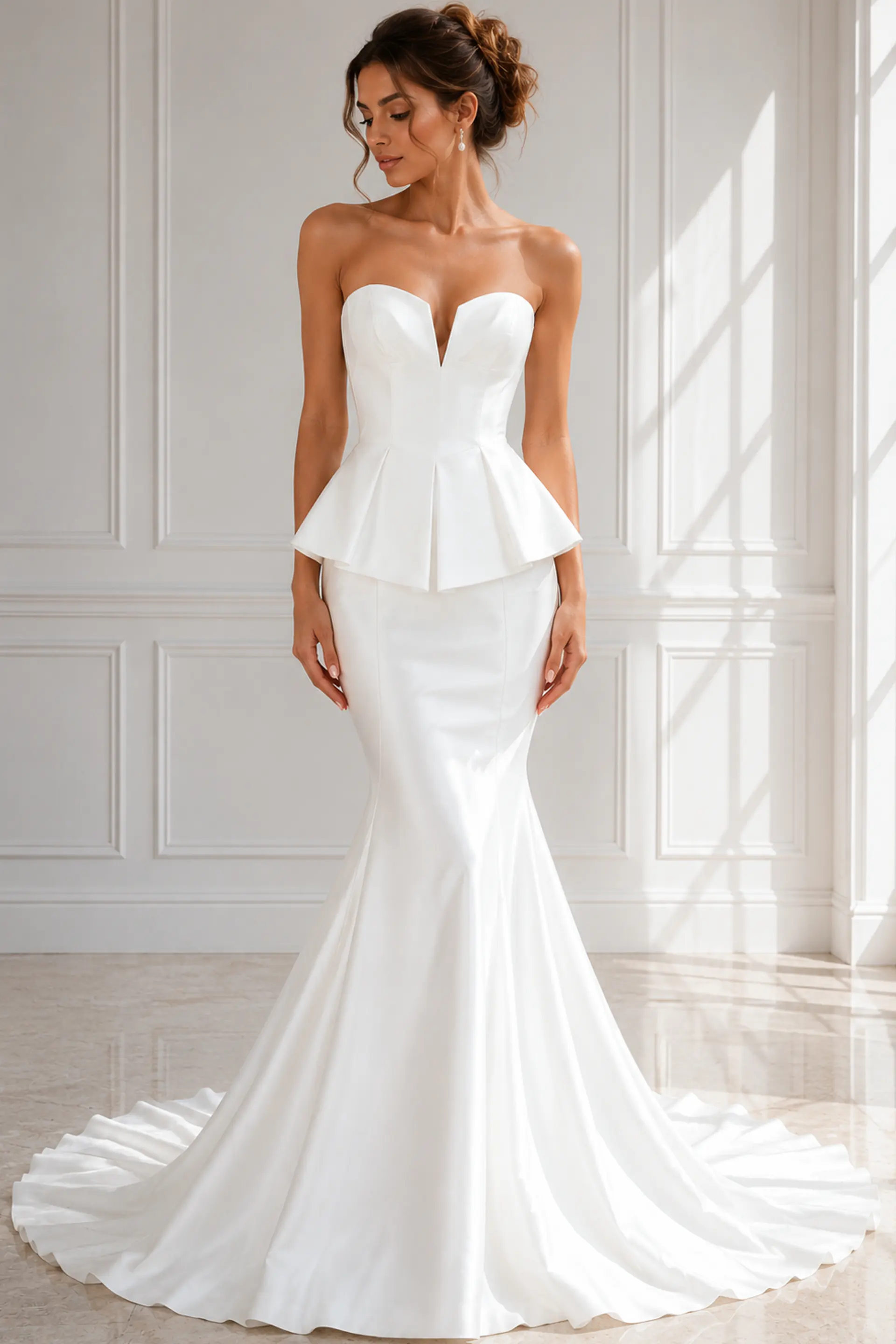
1 Colors
Peplum Bridal Gown With Structured Fitted Skirt JB49072
1 Colors
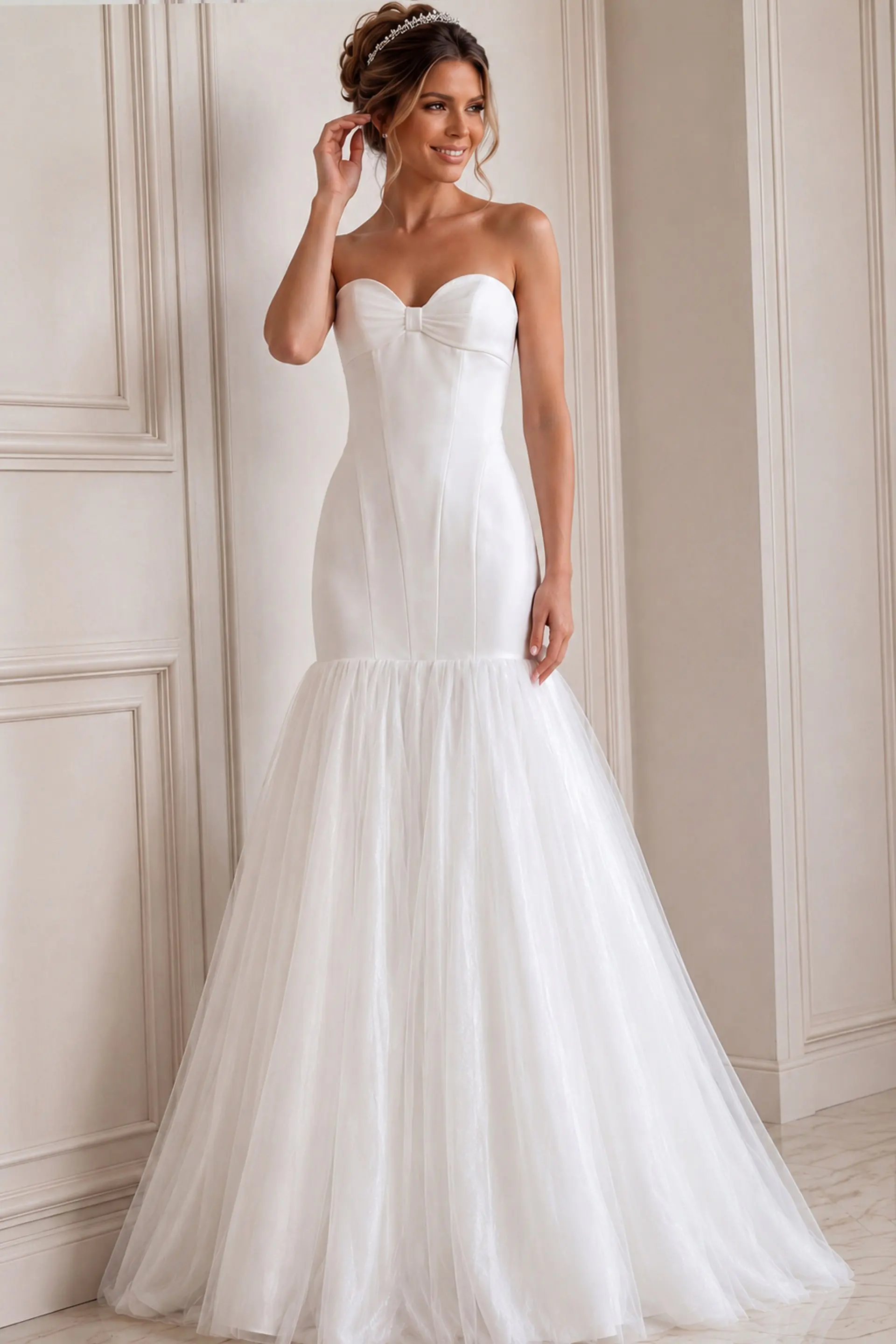
Strapless Mermaid Wedding Dress With Tulle Skirt JB45361
1 Colors
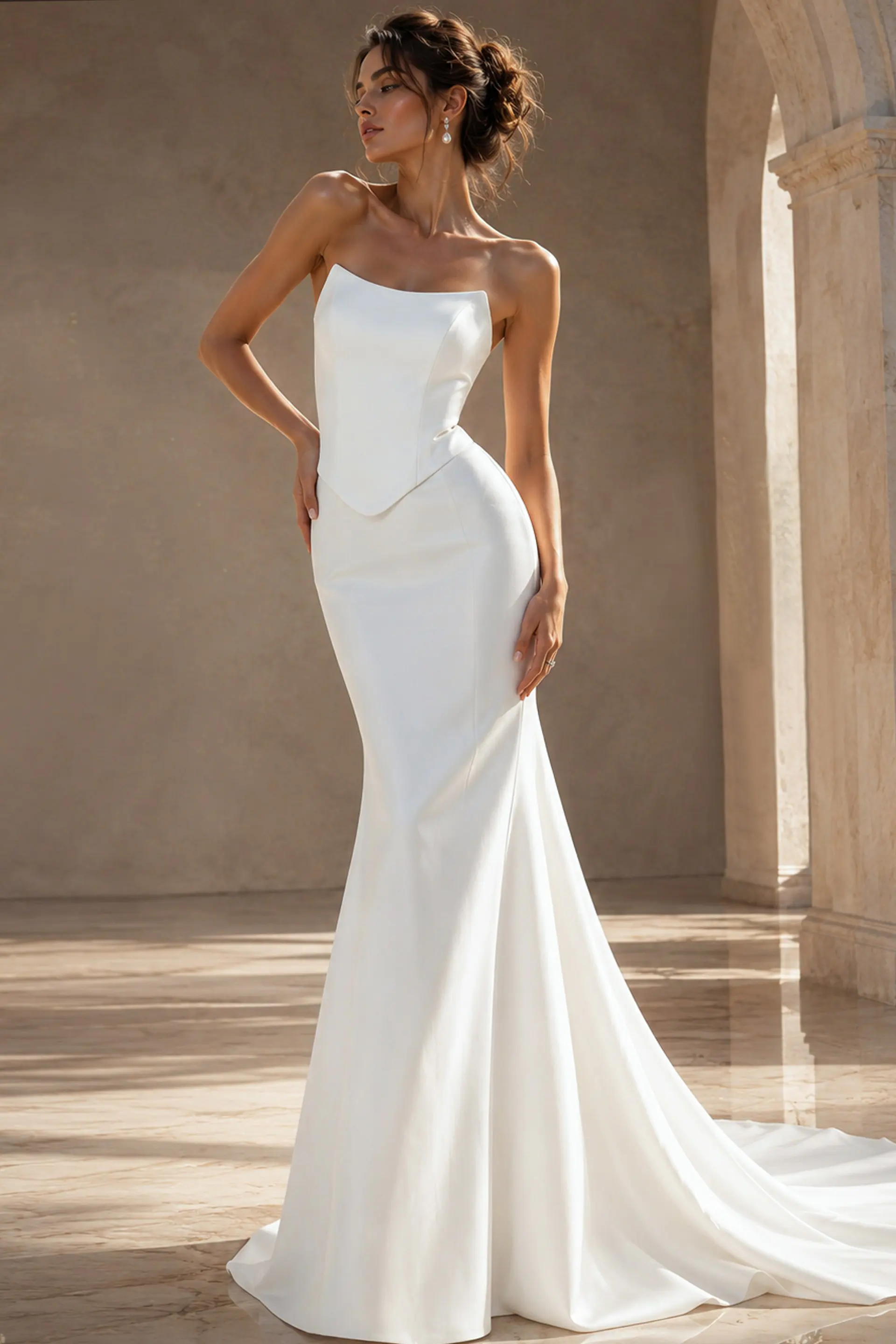
Strapless Crepe Bridal Gown With Button Detail Train JB49077
1 Colors
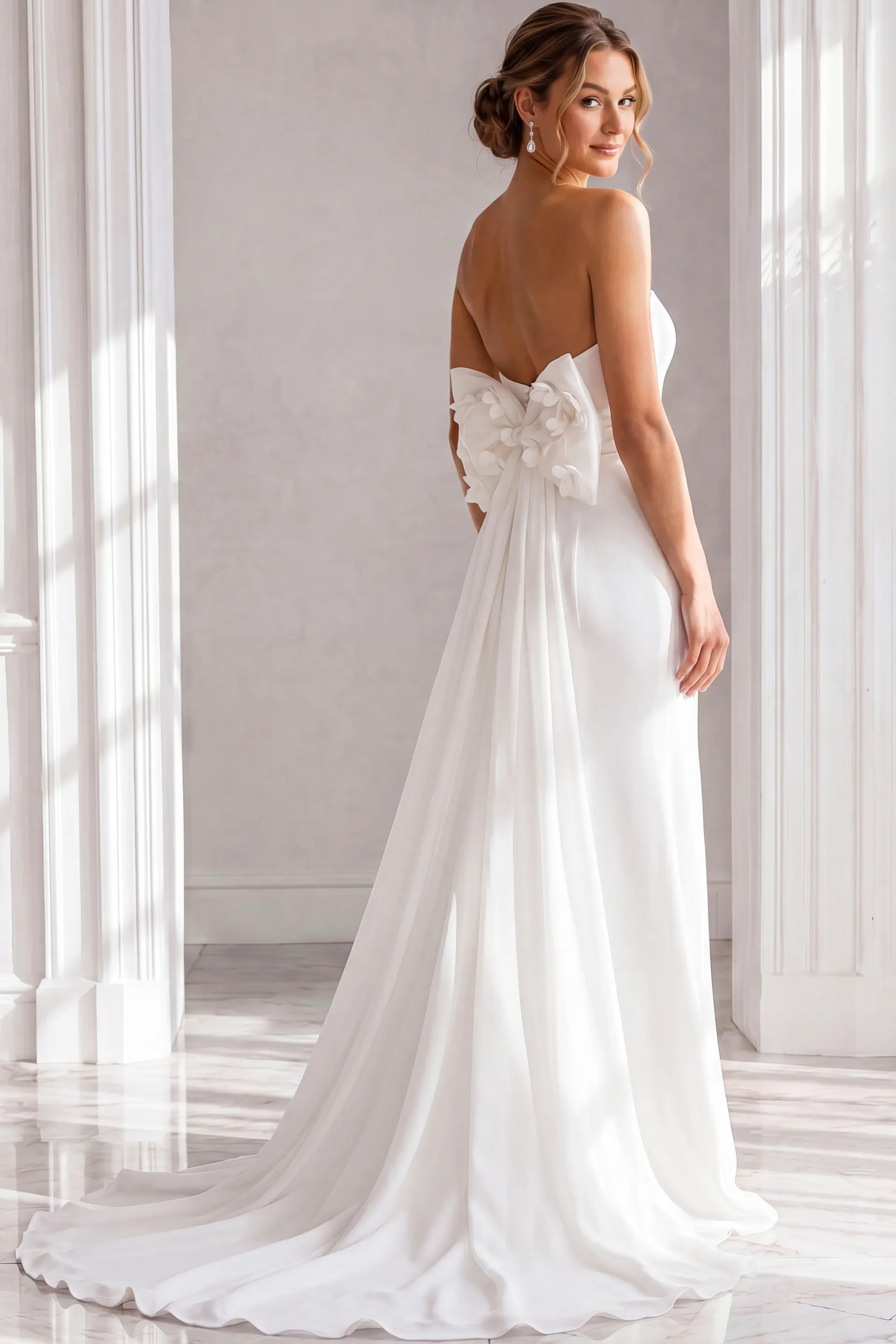
Strapless Fitted Gown with Oversized Bow Back Detail JB45113
7 Colors
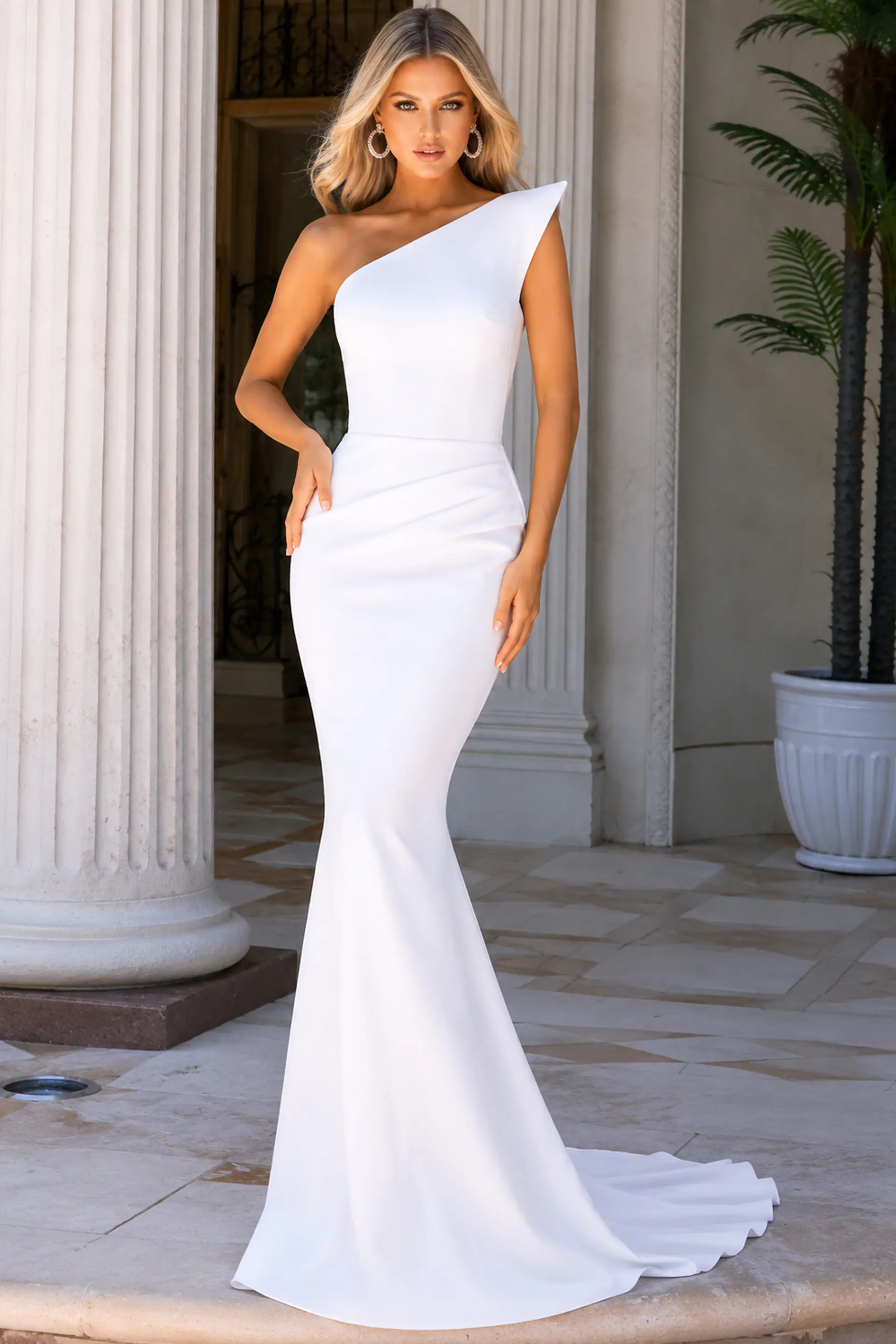
One Shoulder Fitted Bridal Gown With Clean Silhouette 40301
1 Colors
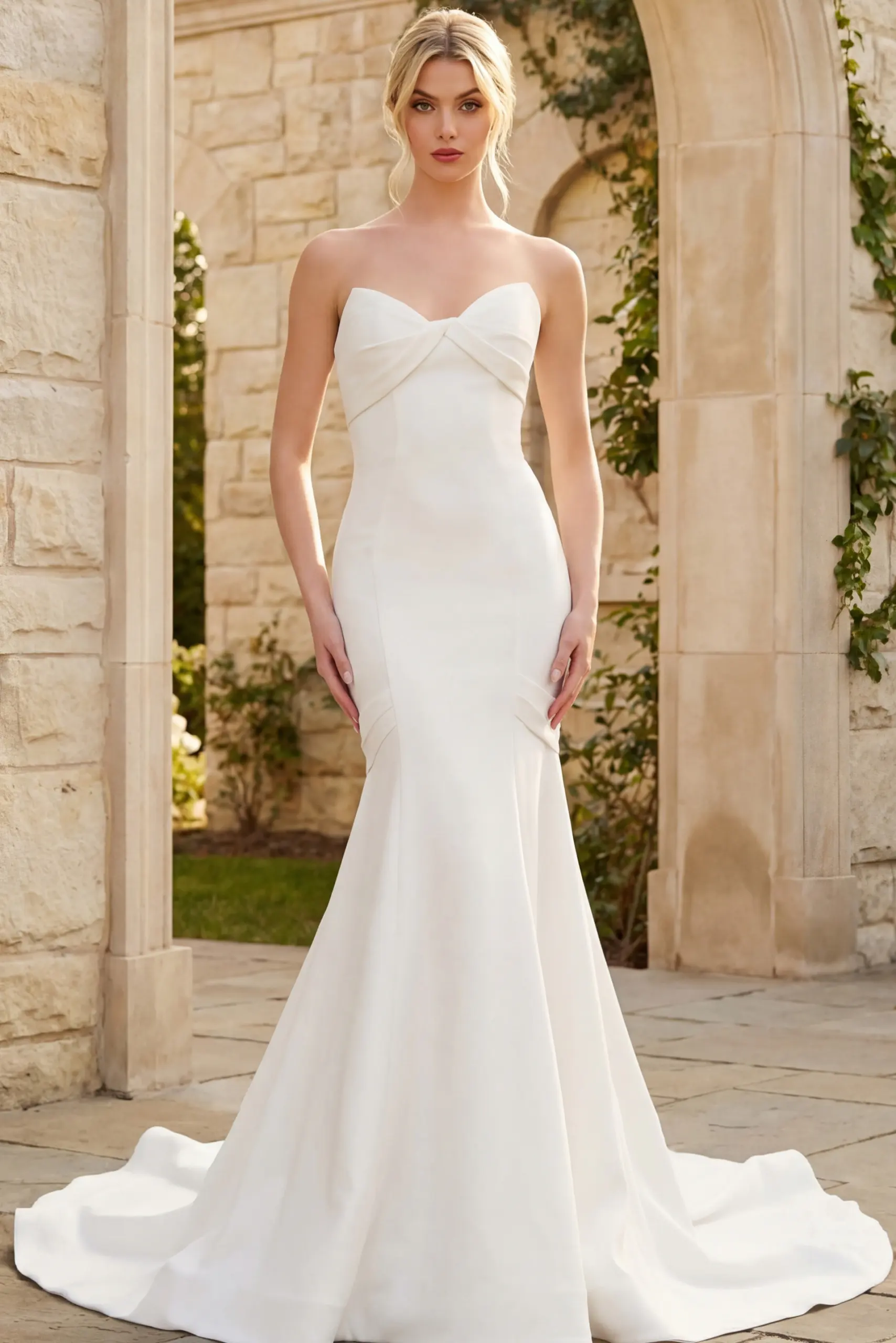
Strapless Mermaid Bridal Gown With Clean Silhouette JB47389
1 Colors
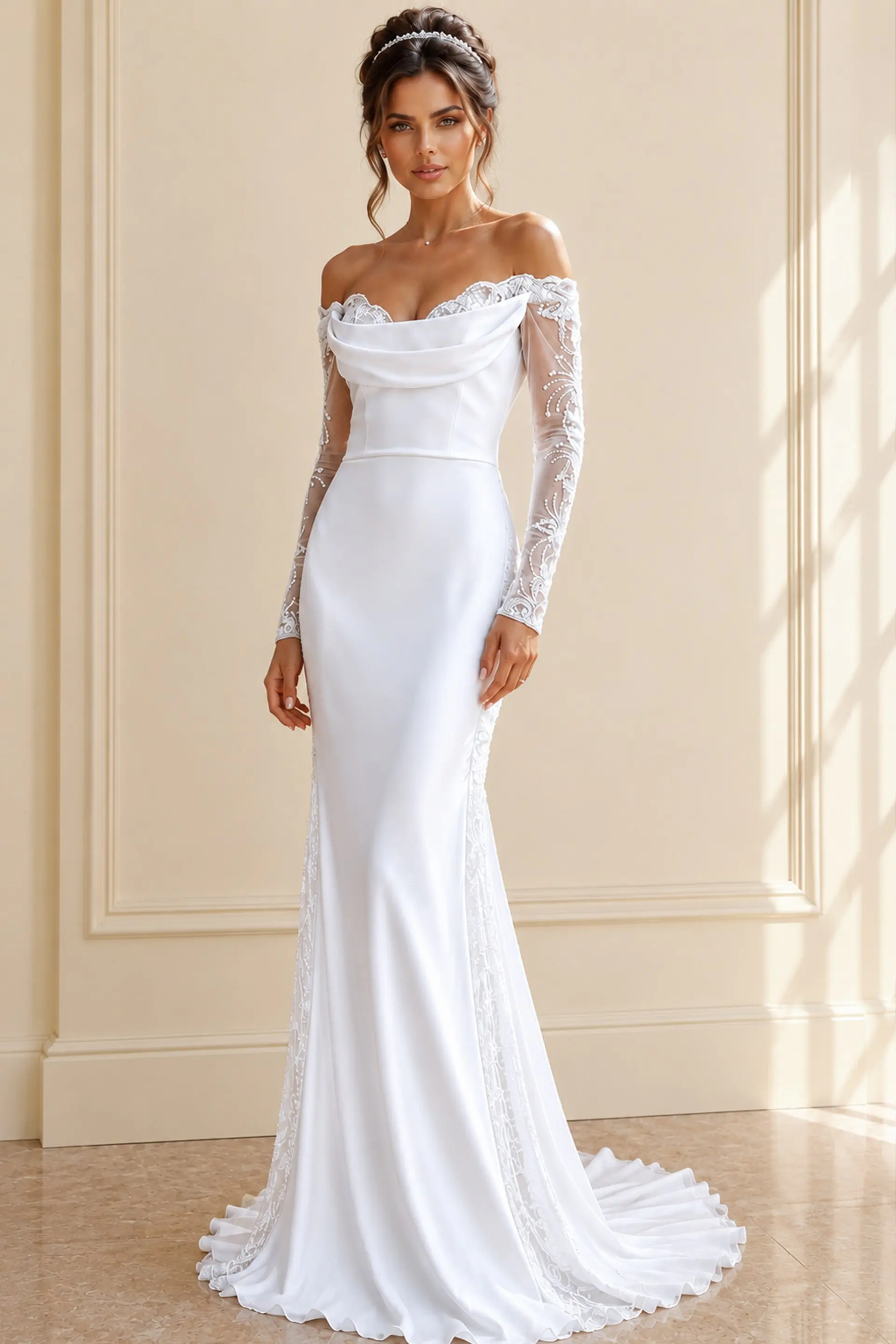
Elegant Off Shoulder Fitted Bridal Gown JB41163
1 Colors
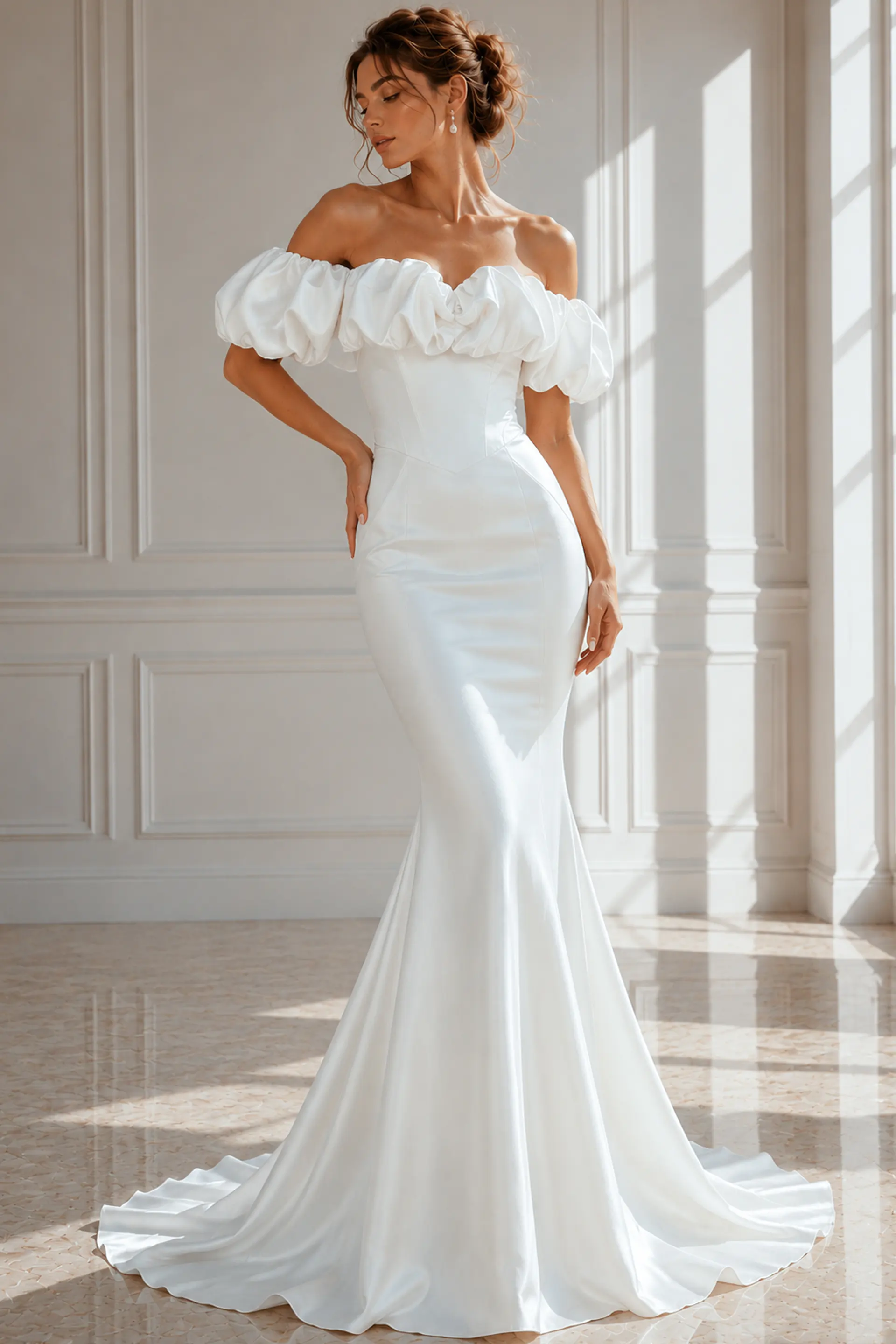
Off the Shoulder Satin Bridal Gown with Ruffled Sleeves and Train JB43896
1 Colors
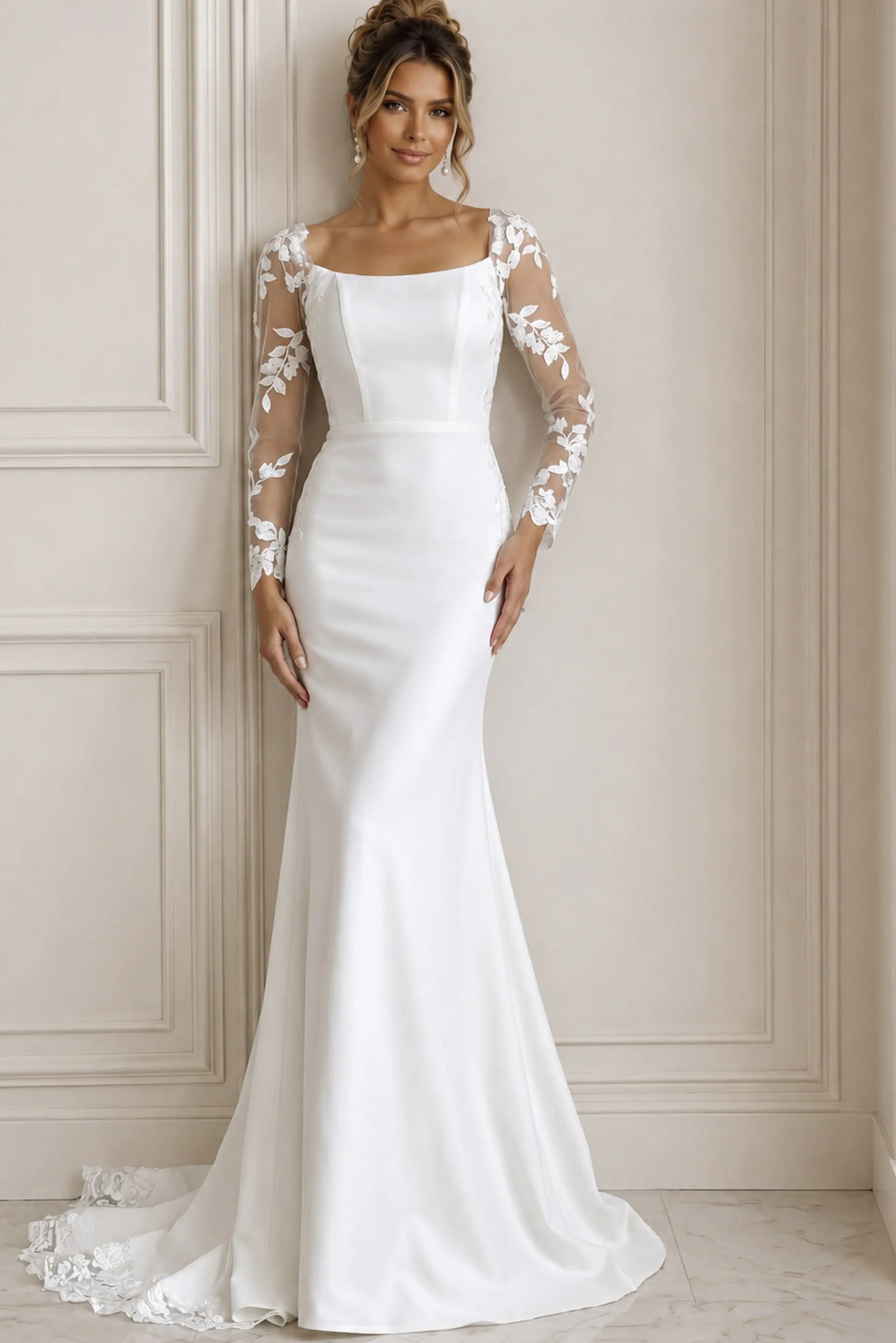
Ivory Long Sleeve Sheath Bridal Dress JB42297
Trending Now
About This Category
Planning a wedding and looking for the perfect dress? Mermaid wedding dresses are all the rage right now. They’re figure-flattering, elegant, and sure to make you feel like a princess on your big day. We have a huge selection of mermaid wedding dresses to choose from in every color, style, and size. You’re sure to find the perfect one for you. And our prices are unbeatable – so you can stay within your budget without sacrificing quality or style. Discover for your dream mermaid wedding dress today.
Mermaid Wedding Dresses Defined by Fit and Flare
The defining feature of mermaid wedding dresses is the relationship between a close fit through the upper body and a skirt that opens lower on the figure. A gown that stays narrow through the thigh before releasing near the knee creates a sharper contrast between the fitted upper section and the flare. If the skirt begins to widen slightly higher, the transition appears softer and can allow more visual movement through the lower half. Brides comparing the broader bridal assortment can use Wedding Dresses as a reference point for how mermaid proportions differ from fuller or straighter silhouettes.
The contour through the torso also matters. Some mermaid gowns are highly structured through the bust and waist, while others rely on softer seaming and stretch fabrics to follow the body. For a closer comparison of body-skimming construction without requiring a pronounced lower flare, Fitted Wedding Dresses show how sheath and streamlined fitted shapes create a different balance between contour and movement.
Flare Placement, Skirt Volume, and Proportion
Flare placement is one of the most useful details to compare within this silhouette. A low flare keeps the line narrow for longer and makes the lower skirt feel more dramatic. A higher release introduces width sooner, reducing the contrast through the thigh while preserving the mermaid effect. Layered tulle, ruffles, or dimensional floral appliques can amplify the skirt, while crepe and satin usually produce a cleaner transition from the fitted upper body into the hem.
The difference becomes especially clear beside A-Line Wedding Dresses, where the skirt begins opening around the waist instead of remaining close through the hips and upper legs. That change in release point affects both the visual proportion and the way the dress moves as the wearer walks.
Crepe, Satin, Lace, and Tulle in Mermaid Bridal Gowns
Fabric has a strong influence on how a mermaid wedding gown holds its contour. Crepe creates a smooth, matte surface that makes seam placement, waist definition, and the flare line easy to read. Satin introduces more sheen and visual weight, which can make a sculpted bodice and clean skirt feel more architectural. Both fabrics work well when the primary focus is cut rather than surface decoration.
Lace changes the silhouette by adding pattern and texture across the fitted areas. Floral motifs may continue from the bodice through the hips and into the train, visually connecting the upper and lower portions of the gown. Brides who want to compare lace density, transparency, and applique placement across several silhouettes can also browse Lace Wedding Dresses. Tulle introduces a lighter-looking flare and can support layered skirts, sparkle effects, or three-dimensional floral details without the same surface weight as satin.
Bodice Structure and Neckline Balance
Because the skirt stays close to the body before opening, the bodice has a major role in balancing the silhouette. Corset construction, visible boning, paneled seams, and structured cups can create a more defined upper line and help hold the shape through the waist. Strapless necklines leave the shoulders open and direct attention toward the bodice and flare, while sweetheart shapes introduce curvature and straight necklines create a cleaner geometric edge. The Strapless Wedding Dresses collection provides another way to compare how bodice support and neckline construction change across fitted and fuller bridal silhouettes.
Off-the-shoulder, asymmetrical, and one-shoulder designs shift the visual emphasis across the upper body. These necklines can broaden, angle, or lengthen the top line of the gown, changing how the fitted torso relates to the width of the skirt below. The strongest comparison is between neckline, waist position, and flare point rather than evaluating any one detail separately.
Trains, Back Details, and Movement
The back view is especially important on a mermaid silhouette because the fitted upper section and expanding skirt continue into the train. A clean sweep or chapel train extends the line without adding substantial volume, while lace appliques, ruffles, layered tulle, or dimensional flowers can make the train a more prominent design feature. Open backs, covered buttons, corset lacing, and sheer panels also affect where attention falls when the gown is viewed from behind.
Movement depends on more than train length. Stretch in the fabric, lining, seam placement, and the point where the skirt releases all influence walking and sitting. A narrower lower section may create a more sculpted profile, while an earlier or softer flare can provide additional room through the lower skirt. Comparing these construction details is particularly useful for brides who want a close-fitting silhouette without treating every mermaid gown as structurally identical.
Choosing Between Clean and Detailed Mermaid Styles
A practical way to narrow the collection is to compare contrasting versions of the same silhouette. Place a clean crepe gown beside a floral lace design, or a restrained satin flare beside layered tulle. The difference quickly shows whether the preference is driven by contour, surface texture, skirt volume, or embellishment. Beading and crystals can highlight corset seams or the waist, while three-dimensional flowers and ruffles place more emphasis on the transition into the skirt and train.
Jovani's mermaid bridal designs range from minimal, seam-led gowns to highly textural styles, but the central proportion remains the same: a defined upper body followed by a lower release. Looking closely at flare placement, fabric behavior, bodice support, neckline, and train construction makes it easier to compare dresses that may appear similar at first glance and select the version of the silhouette that best matches the intended movement and level of detail.
Sexy Mermaid wedding Gowns
Prepare for a wedding like no other. Jovani mermaid wedding dresses are designed specifically for a bride who wants to look her best on her special day. Start at $1,150.
Reserve your dress now, Make a statement
Start your big day off on a confident note in a Jovani captivating mermaid dress! Its eye-catching illusion tulle skirt makes for a gorgeous display as you walk down the aisle. Mermaid wedding dresses give a statement look that will stand out on your big day without taking away from any of the other details. styles ranging from elegant to sexy, so there is a style perfect for any bride.
A mermaid or trumpet wedding dress design provides shape and sophistication. This top dress style offers many necklines for brides including the classic sweetheart, straight strapless, high sheer bodices and off-the-shoulder looks. This waistline enhancing look draws attention to your curves beautifully. This can be taken to a dramatic place with layers of ruffles, tulle or sheer detailing. For a more simple mermaid wedding dress, you could opt for a silk ivory design with clean minimal lines. A sweeping train is always a comfortable and chic feature to include in your look.
Let them swoon
No matter how big or small your gown budget is, there's a silhouette here perfect for every shape and size. Find the dress that fits your style and personality from our extensive collection!
Effortless elegance
You'll feel like royalty when you wear a Jovani effortless strapless mermaid wedding dress.
Modern Mermaid Style
The Jovani mermaid bridal style comes in a variety of fabulous styles from fit-and-flare silhouettes to fit-and-flare embellished A-line cuts with lace detailing or floral details.
Flexible Fabric Options
Create your perfect mermaid style wedding dress with a variety of fabric options like silk, taffeta, tulle, lace, sequins, organza, and more.
A Modern Fit
Designed specifically for a contemporary bride with a unique shape, the Jovani mermaid gown will show off everything you want to see without skimping on coverage.
Say Yes To A Mermaid Wedding Dress
Fulfill your mermaid wedding dress dreams with a stunner mermaid gown from Jovani
Get a Custom Fit, Miraculous sweetheart neckline Mermaid Fit
Have you ever wanted to feel like a modern day princess on your big day? Well now it's possible!
A Sophisticated Silhouette
Maintain an air of sophistication and grace on your wedding day! high neckline mermaid silhouette is just as timeless as it is elegant!
Beautiful Beading Detail
beautiful beaded styles from jovani mermaid gowns collection features intricate beadwork detail at the bodice, waistline, hemline, and at each side seam, making it look like royalty!
Gown silhouette
Jovani mermaid silhouette elegantly hugs your body through to your hips, making for an instant hourglass body type.
Full skirt. Curve enhancing.
A full skirt creates a full head of flowing chiffon material cascading over the gown, beautifully flowing down all sides of the dress while giving a light, airy feel on your body.
Strapless bodice with romantic look
A strapless bodice provides a nonrestrictive feel while still highlighting a feminine neckline, perfect for highlighting a one-of-a-kind necklace or sparkling jewellery.