
Wedding Dress Bustle Types for Different Bridal Trains
Start by comparing three wedding dress bustle types on your own train. An American bustle lifts the train over the skirt, a French bustle folds it under, and a ballroom bustle tucks it away for an even hem. Ask your tailor to pin the options so you can see which protects the details you love and lets you move easily.
What Does a Wedding Dress Bustle Do?
A bustle lifts and secures an attached train for the reception without cutting it off. A bridal tailor adds or positions attachment points such as buttons, loops, or ties during alterations. If you’re still comparing wedding dresses (opens in new tab), look at the back and hem as closely as the front. The amount of fabric and where it folds matter more than the name of the silhouette.
The Wedding Dresses 101 guide (opens in new tab) puts train length in context, from a short sweep to a cathedral train. A short train may need little adjustment, while a longer or heavier train can require several points to lift it evenly. The tailor can show you what your gown needs after checking the hem with your wedding shoes.
How Do American, French, and Ballroom Bustles Differ?
The main difference is where the train goes once it’s fastened. Compare the outside drape, the folds under the skirt, and the finished hem before choosing.
American Bustle
An American bustle, also called an over-bustle, lifts the train onto the outside of the skirt. You’ll see the fold from behind, even if the fasteners blend into the dress. When trying on A-line bridal gowns (opens in new tab), look at what the outer drape covers. If the fold hides a row of buttons or interrupts a lace border, ask whether shifting the pickup points improves the view.
French Bustle
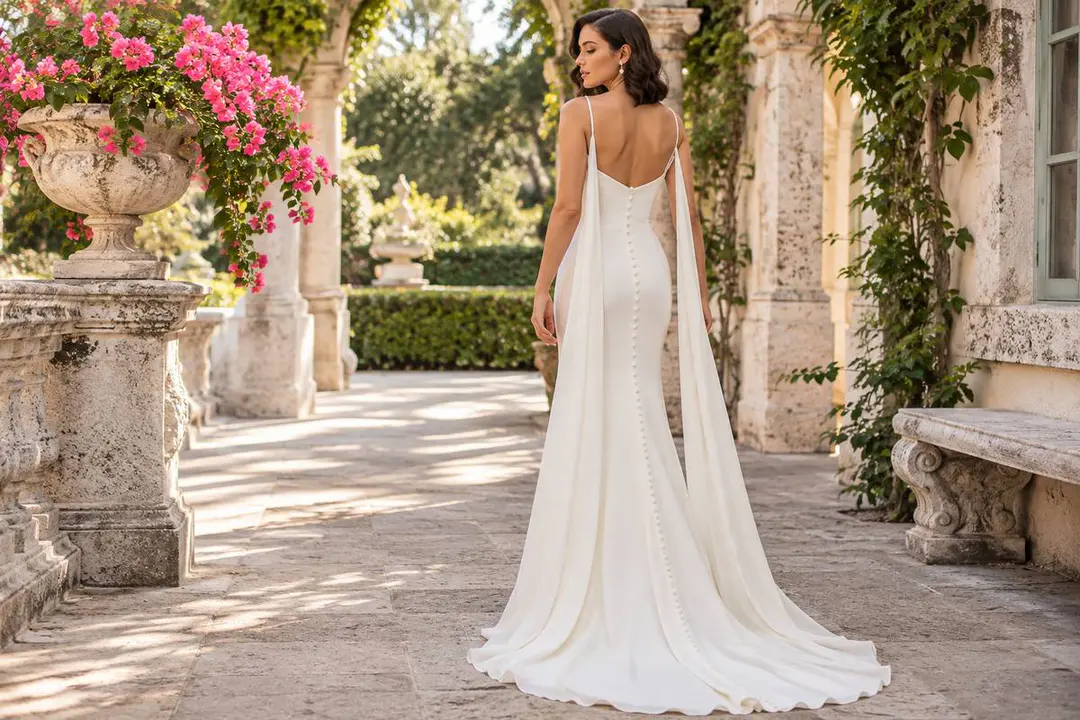
A French bustle, or under-bustle, draws the train underneath, leaving the fasteners inside and a visible fold at the back. On fitted wedding dresses (opens in new tab), check where that fold sits so it doesn’t pull across the hips or change where the skirt flares. Jovani’s ivory crepe sheath JB07139 has decorative back buttons. On a dress like this, compare how much of the button line each pinned option leaves visible.
Ballroom Bustle
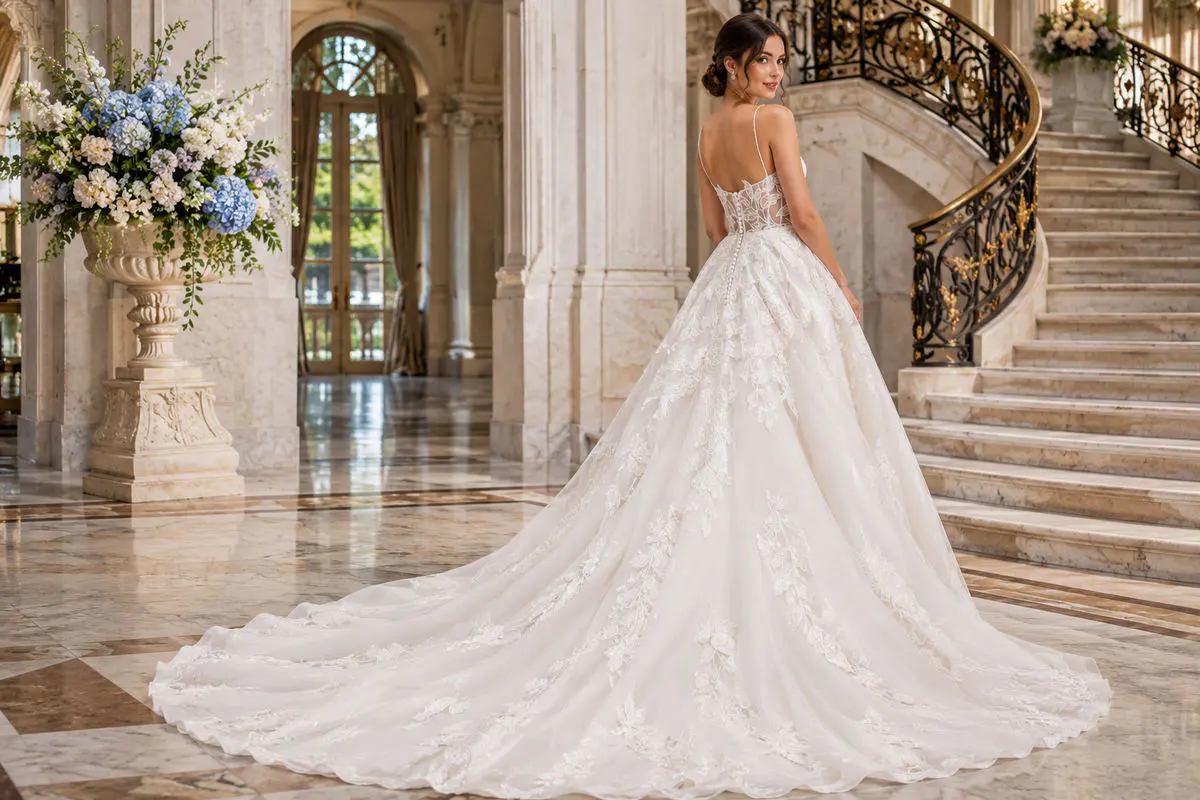
A ballroom bustle lifts the train inside the skirt so the back reads as a floor-length hem. The name describes the finish, not a requirement to wear a ball gown. With layered lace wedding dresses (opens in new tab), check each layer separately so the lining clears the floor too. Jovani JB43863 has a layered tulle skirt, floral lace appliqué, and a chapel train, all worth checking when the skirt is pinned.
What Are the Other Ways to Lift or Remove a Train?
If the three main options don’t give you the look you want, ask about a center gather, a folded-under finish, or a removable train. The right alternative depends on how much fabric needs to move and where you want it to sit.
- An Austrian bustle gathers the train vertically at the back, often with a drawstring. Ask to see what the gathers do to a large motif.
- A train-flip bustle folds the train underneath to shorten it and can leave a fuller-looking hem. Tailors may use different names for similar finishes, so show a reference photo.
- A bow bustle lifts the train from the outside, with the fastening concealed by a bow or sash. Check whether the folds hang evenly.
- A wrist loop lets you hold up a light train briefly, but it leaves one hand occupied. It’s better for a short walk or a photo than for a whole reception.
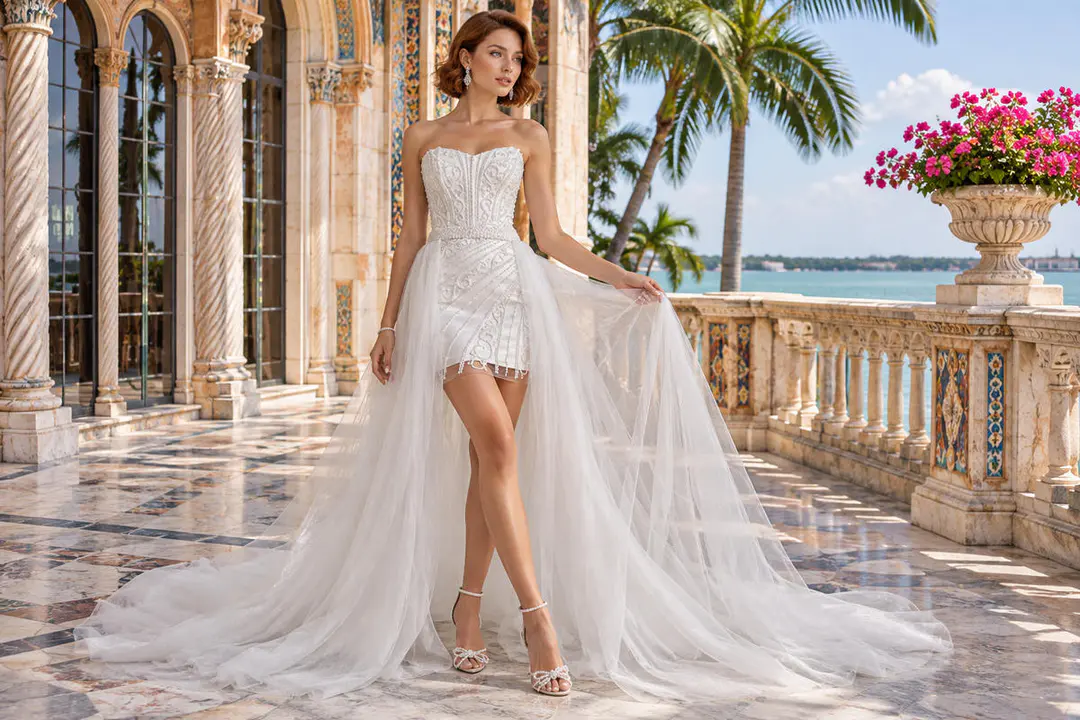
A detachable train comes off rather than folding into the skirt. On Jovani JB22274, the long tulle train detaches to reveal a short dress. If you prefer to change outfits instead of managing an attached train, bridal reception dresses (opens in new tab) offer a separate second look.
How Do You Choose a Bustle for Your Wedding Dress?
Choose the bustle that clears the floor, keeps the gown’s shape, and can be fastened by your helper. Use the guide to wedding dress construction (opens in new tab) to identify the layers and details you want the tailor to preserve. Then compare the pinned options in the shoes you’ll wear, viewing the back and side at standing height.
Watch for a zipper that pulls, an outer layer that twists, or lining that drops below the finished hem. Turn, sit, and take a few steps backward. If a fold hides the detail you wanted to keep, ask what changes if the tailor moves a pickup point or supports another layer separately.
Practice Before the Reception
Bring the person who will fasten the bustle to a fitting and have them try it after the tailor demonstrates. Record the order of the fasteners and take a photo of the finished back. The wedding dress alterations guide (opens in new tab) explains where the bustle fits in the larger tailoring schedule.
If you’re still choosing your gown, ask an authorized Jovani retailer (opens in new tab) to show you the train and its layers from the back. Bring a photo of the bustle finish you like so you can discuss it before your alterations appointment.
Frequently Asked Questions
Does Every Wedding Dress Need a Bustle?
No. A dress with no train or a train designed to detach generally doesn’t need one. If there’s even a short attached train, test it in the shoes you’ll wear and see whether it catches underfoot.
When Should You Bustle a Wedding Dress?
Bustle the dress after the photos you want with the train down and before entering a crowded reception or going onto the dance floor. If the schedule is tight, decide with your photographer and helper where you’ll make the switch.
How Much Does It Cost to Add a Bustle?
Ask for a quote after the tailor pins the train. The number of attachment points, the layers involved, and whether any points need reinforcement can change the cost. Ask if the bustle is priced separately from the hem.
Will the Fasteners Show When the Train Is Down?
They can, especially on smooth fabric with no pattern to hide a loop or button. Look at the released train from a few feet away at the fitting and ask how the tailor plans to place the fasteners.