
How to Choose Bridesmaid Dresses: Colors, Styles and Timeline
The best way to choose bridesmaid dresses is to set the wedding dress code, select a color plan, and agree on a comfortable fit before anyone orders. One shared detail can unite different silhouettes. A clear budget and ordering schedule then keep the bridal party coordinated without requiring everyone to wear an identical dress.
Start with the ceremony setting, then ask each attendant about coverage, movement, and alterations. Jovani offers occasionwear that may suit coordinated bridal parties, although it does not currently list a dedicated bridesmaid collection. Availability, matching colors, and ordering details should be confirmed through an authorized retailer.
How Do You Choose Bridesmaid Dresses for the Whole Party?
Choose one unifying feature first, then decide which details each bridesmaid can customize. A consistent color, fabric family, or hemline usually creates enough visual connection. This approach works especially well when attendants have different heights, fit preferences, or coverage needs.
Start With the Invitation and Venue
A black-tie ballroom wedding generally calls for long, polished attire. A relaxed garden ceremony may allow softer fabrics and shorter hemlines. Browse wedding guest dress options for possible styles, but check whether the chosen designs are suitable for attendants and available in the required colors.
Choose a Matching Rule Everyone Understands
You might request the same fabric and color with different necklines, or the same length in several coordinated shades. Put the rules in writing, including acceptable sleeve coverage and embellishment. Avoid sending only inspiration photographs, since they leave too much room for interpretation.
Pick a Color Palette That Works in Real Light
Bridesmaid dress colors should complement the wedding setting and remain distinct from the bride’s gown. Compare actual fabric samples under daylight and warm indoor lighting. The same blue or rose shade may appear different in matte crepe, glossy satin, and sheer chiffon.
One Color or a Coordinated Mix?
One color makes shopping instructions simpler, but a tonal palette allows more flexibility. Choose two or three defined shades rather than asking everyone to interpret “dusty pink” independently. The maid of honor color guide explains how to distinguish that role without breaking the party’s color story.
Test Color Against Fabric and Silhouette
The surface of a dress matters as much as its color label. A softly shaped A-line formal gown can create a different visual effect from a fitted satin design in a similar shade. Request photographs of the actual garment, including the back, before approving a look for the group.
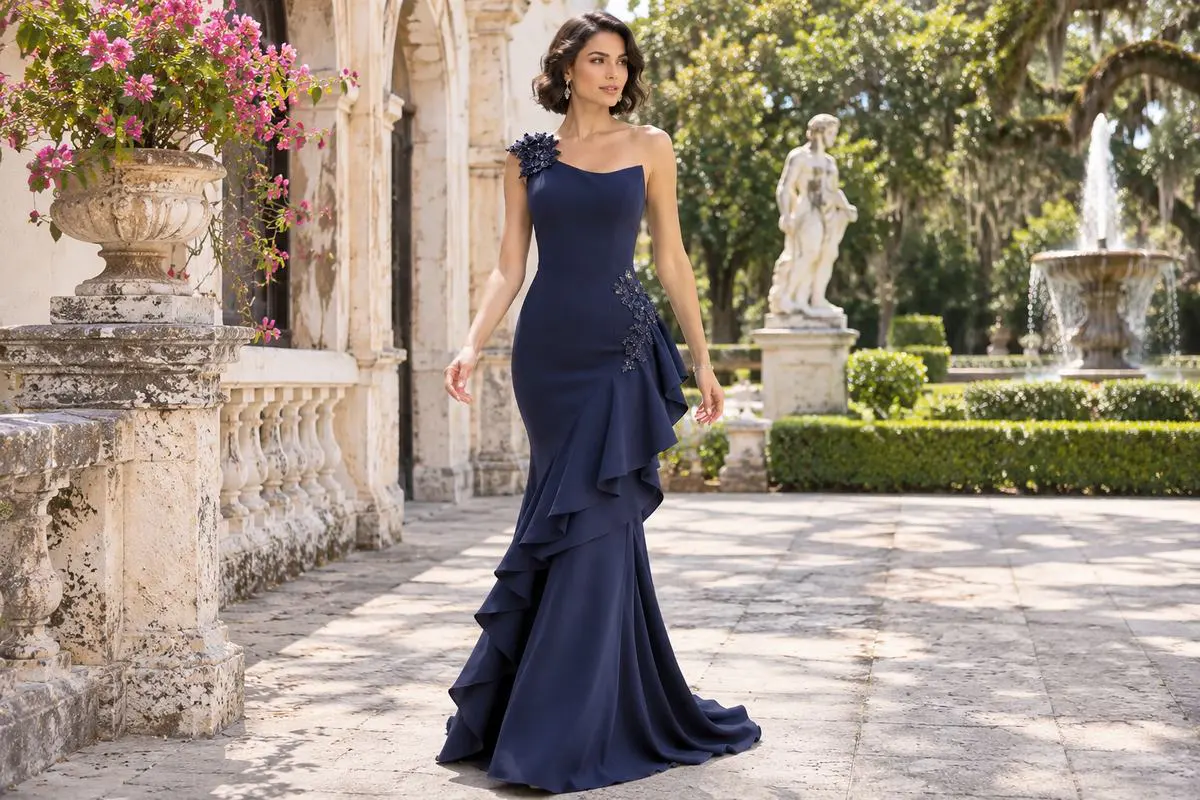
Jovani style 48982 illustrates why checking options matters. Its published details list a floor-length one-shoulder crepe mermaid silhouette with a layered ruffle skirt. Listed colors include hunter, light blue, navy, and plum. Those choices support a tonal discussion, but they do not establish matching stock for an entire party.
Compare Silhouettes, Lengths and Dress Fabrics
Fit should be tested while sitting, walking, and raising the arms. A silhouette that photographs well while standing may feel restrictive during the reception. Let attendants compare proportions rather than assigning every person one supposedly flattering body-shape formula.
A-Line, Column and Fitted Shapes
A-line skirts release from the waist and generally provide more room through the hips. Columns make a straighter outline, while fitted and mermaid cuts need careful checks at the seat and knees. For formal ceremonies, compare floor-length wedding guest styles and inspect the hem with the actual shoes.
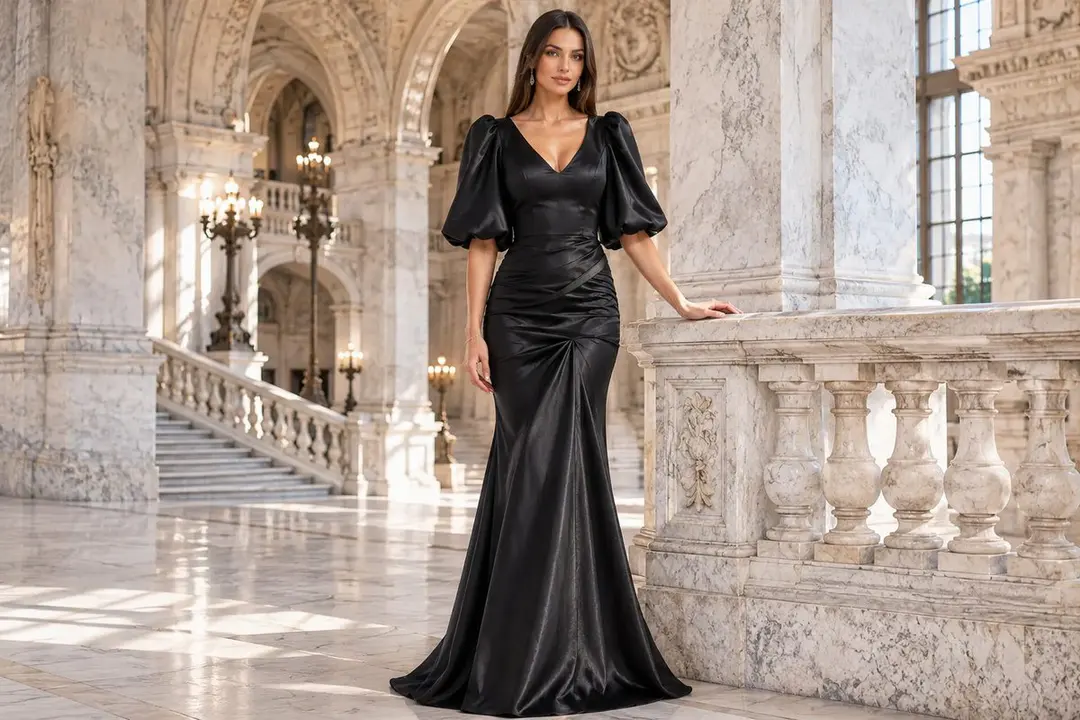
For example, Jovani style 43818 is a floor-length satin mermaid dress with puff sleeves and a ruched waist. It is listed in black, emerald, red, and royal. A group could use its features as a fitting reference, but each attendant should assess the structured cut for comfort.
Chiffon, Satin, Crepe and Velvet
Chiffon moves softly and works well for airy skirts. Satin reflects light and emphasizes folds, while crepe tends to show a cleaner matte line. Velvet offers visual depth for cooler settings. Compare formal evening dress designs by fabric and construction before committing to a unified look.
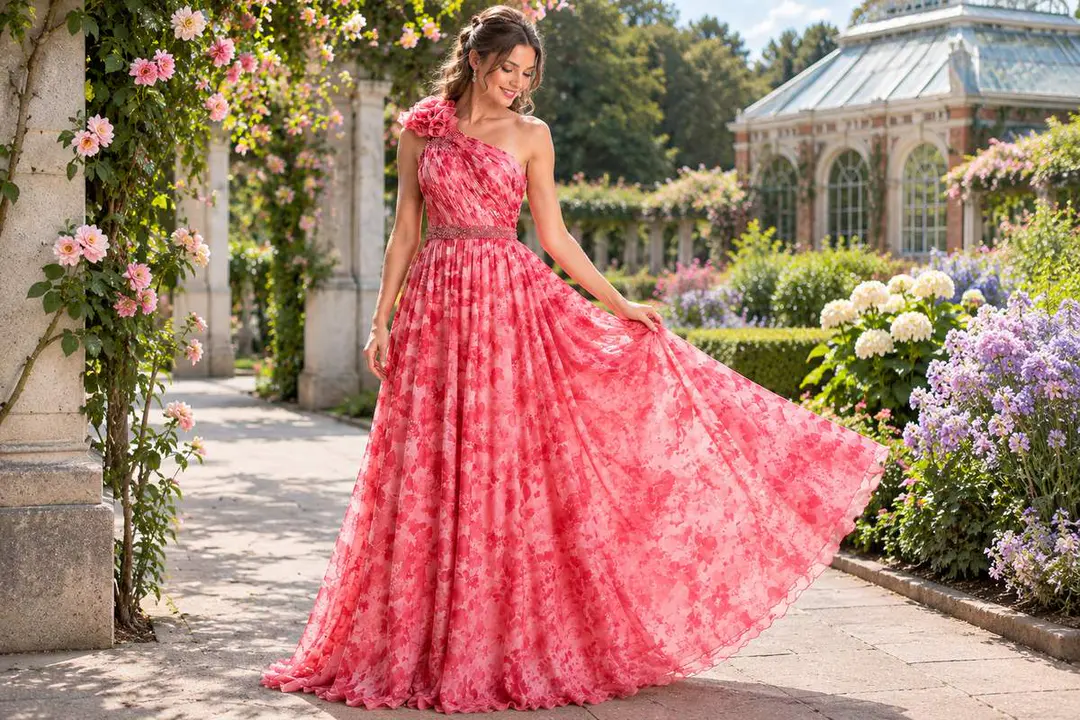
Jovani style 49018 is a one-shoulder A-line gown in floral-print chiffon with a flowing skirt and cutout back. Its published color is pink multi. It illustrates movement and print, but a single print is not automatically appropriate for a uniform bridal party.
Build a Bridesmaid Dress Shopping Timeline
Start planning months before the wedding so colors, sizes, deliveries, and alterations can be confirmed in sequence. An early planning target of six to eight months is useful for many weddings, not a guaranteed Jovani production timeline. Ask the retailer for dates specific to the dresses and quantities requested.
Before Ordering
Agree on the budget, fabric, length, approved colors, and who places each order. Ask the boutique to confirm style numbers, size availability, written policies, estimated arrival, and whether different colorways can be ordered together. Get a documented answer before anyone pays a deposit.
After Delivery and During Alterations
Try each dress on promptly and inspect color, seams, closures, and length. Schedule fittings with the intended shoes and undergarments. Any alterations involving beading, a train, or a complex hem should be assessed by the person doing the work rather than assumed inexpensive.
Set Expectations for Cost and Bridal Party Etiquette
The couple should communicate attire expectations and costs before attendants commit to specific dresses. Who pays varies across families and cultural traditions, so there is no universal rule. Share an approximate total that includes alterations, shoes, undergarments, and any required accessories.
Keep the Outfit Appropriate for the Role
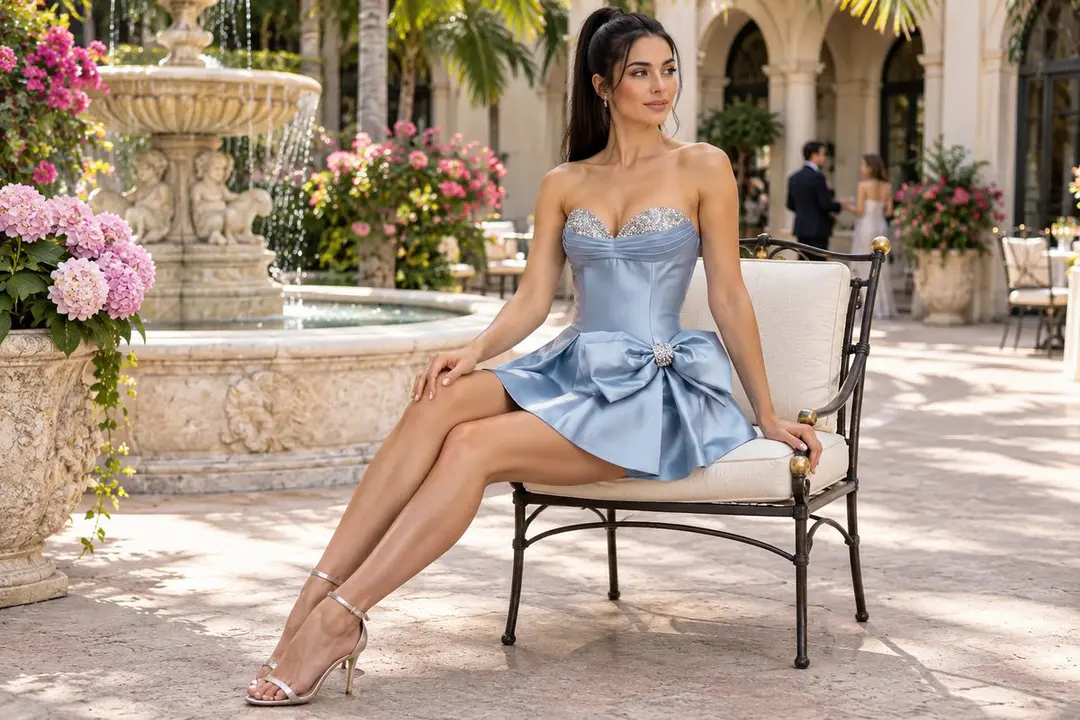
A bridal party outfit should support the ceremony, not compete with the couple’s requested aesthetic. For a casual celebration, short and cocktail dresses may be worth considering if the bride approves the length and formality. A mini dress does not meet every wedding dress code.
Include Younger Attendants Thoughtfully
A junior bridesmaid may need a separate silhouette and coverage level even when her color coordinates with the group. Let the child and her parents evaluate the fit. The junior bridesmaid dress etiquette guide provides age-specific considerations without forcing adult styling onto younger attendants.
Coordinate With Family Outfits and Wedding Photography
Coordinate the attendants’ palette with the couple’s outfits and nearby family roles, but do not insist that everyone match exactly. Share confirmed color choices with parents who want to coordinate. Jovani’s mother of the bride color guide offers a separate framework for the family’s outfits without changing the bridesmaids’ own dress code.
For photographs, compare the approved pieces together in similar light when possible. A soft sage chiffon dress may appear lighter beside a glossy emerald satin gown. If you mix colors, repeating the same length or overall fabric finish can help maintain visual continuity.
Finalize Shoes, Comfort and Purchase Details
Choose practical shoes for the venue and arrange hems around the actual heel height. Have everyone test sitting, walking up steps, and dancing before the final fitting. A beautiful photograph is not enough if the wearer needs to adjust the bodice constantly.
- Confirm every attendant has the correct style, size, color, and order confirmation.
- Record delivery and fitting dates, including the person responsible for alterations.
- Check the final hem, coverage, closures, and accessories before the wedding week.
If you are considering Jovani for coordinated bridal-party attire, use the official Find a Store directory to contact an authorized retailer. Ask which sizes and colors can be supplied for your group before choosing the final dress plan.
Frequently Asked Questions
Can bridesmaids wear printed dresses?
Yes, if the couple approves a defined print plan. Choose a shared color family or repeat one floral motif to avoid unrelated patterns. Check whether the print reads consistently across different dress shapes.
What if a bridesmaid is between two sizes?
Choose the size using the designer’s actual measurements and professional fitting advice. Ask a tailor which areas can be adjusted before ordering. Do not assume everyday clothing sizes correspond to formalwear sizing.
What if someone joins the bridal party late?
Use an approved alternative from available stock rather than promising an exact match. Prioritize matching color depth, formality, and hemline, then confirm delivery with the retailer. Tell the group about the change before final fittings.
Can bridesmaid dresses be worn again?
Yes, some can work for later formal events. Simple crepe columns, satin midis, and dresses without ceremony-specific details may be easier to restyle. Rewear potential should support the group’s decision, not override fit or wedding requirements.