
How to Measure for a Wedding Dress: Bust, Waist, Hips and Hem
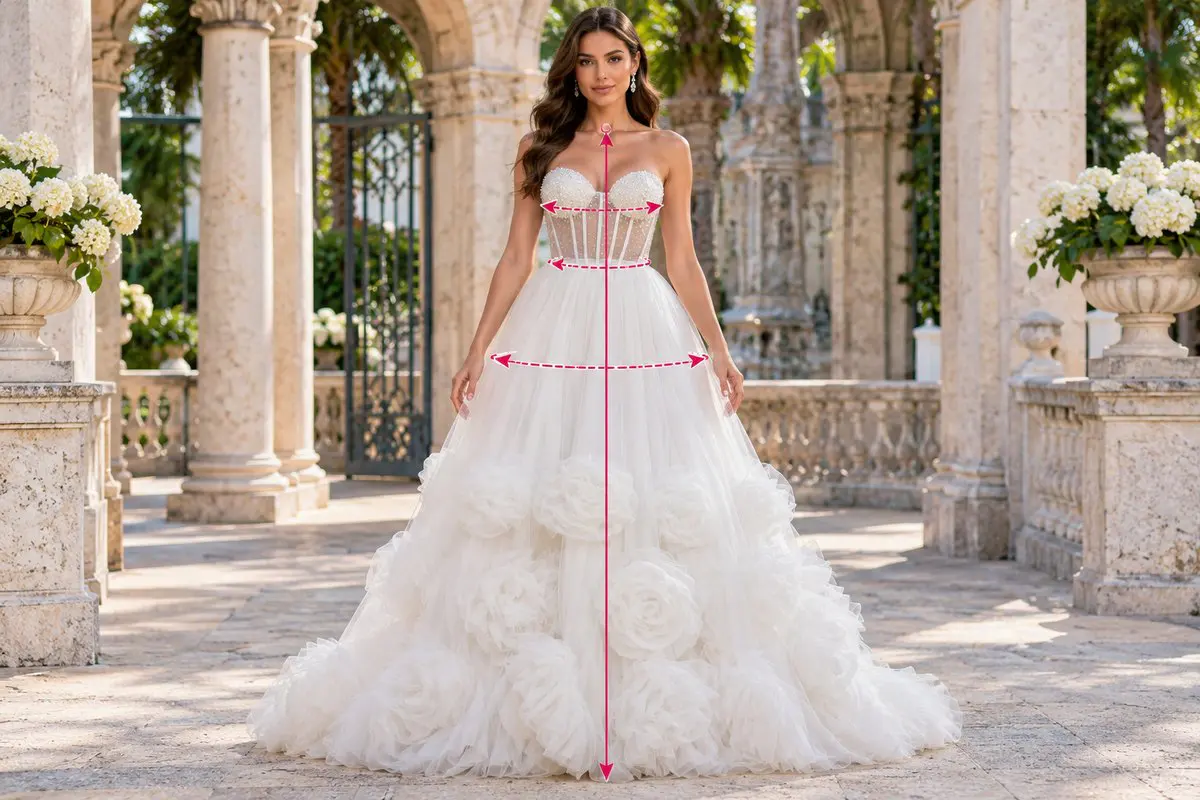
To measure for a wedding dress, record your full bust, natural waist, fullest hips, and the length required for the front hem. Use a soft tape, stand naturally, and repeat each reading. Hollow-to-hem starts at the base of your neck, not at your shoulder.
Take these measurements before selecting a size from a designer chart. The cut of bridal dress styles can change which areas need the closest fit, but accurate body measurements are the starting point.
What Should You Prepare Before Measuring?
Use a flexible tailor’s tape, a full-length mirror, and a place to record inches and centimeters. Wear the bra and undergarments you expect to use with the gown. A second person can keep the tape level, especially at your back.
Stand with your feet together, shoulders relaxed, and weight evenly distributed. Breathe normally without pulling in your stomach. If you are still comparing silhouettes, the Wedding Dresses 101 guide explains the wider choices that follow your initial measurements.
Where Do You Measure the Bust, Waist and Hips?
These three circumferences establish the basic sizing reference. For every reading, keep the tape flat against the body and parallel to the floor. It should touch your clothing or skin without digging in.
Bust: Around the Fullest Point
Wrap the tape under your arms and across the fullest part of your bust. Check in the mirror that the back section is level. Keep your shoulders down and do not lift your chest to increase the number.
Your chosen undergarments can affect the reading. This is especially relevant for strapless bridal dresses, where the bodice must stay secure without shoulder straps. Record the actual measurement rather than tightening the tape to imitate support.
Waist: Around Your Natural Waistline
Find the narrowest comfortable part of your torso, usually near the point where you crease when bending sideways. Stand upright before measuring. Do not assume the dress seam sits at the same height as your natural waist.
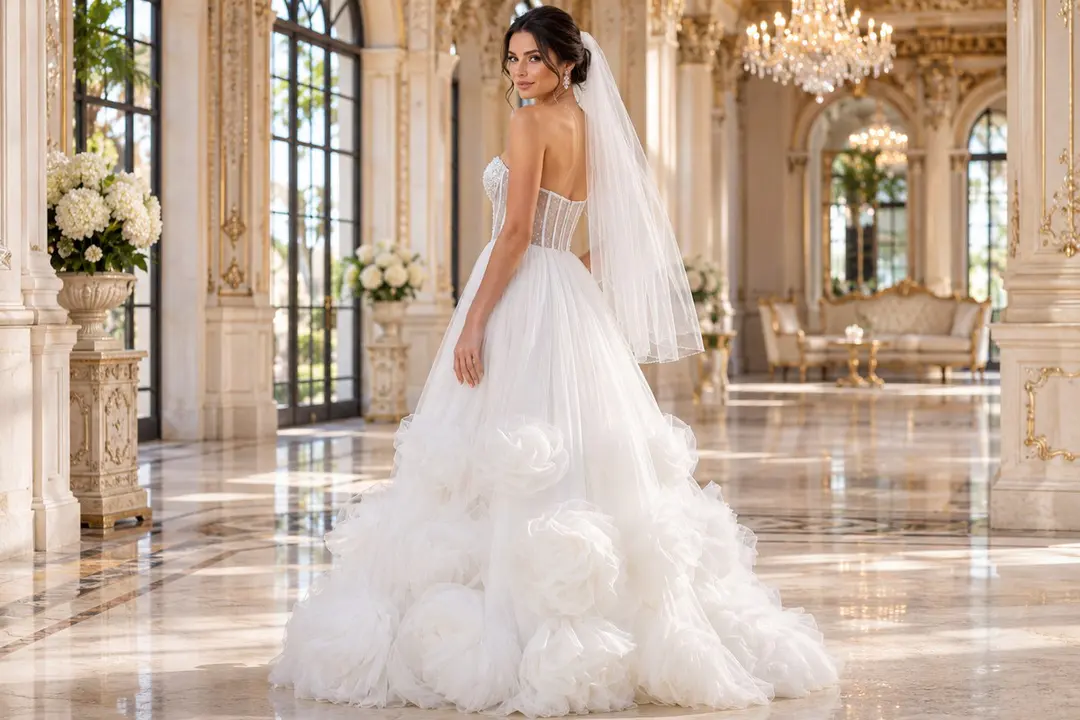
In A-line bridal gowns, the bodice defines the waist before the skirt widens. Jovani style JB42782 pairs a corseted bodice with a tulle skirt and rosette details. Record where your natural waist sits as well as its circumference.
Hips: Around the Fullest Part
Bring the tape around the fullest area of your hips and seat, not automatically across the hip bones. Keep your feet together, check the tape behind you, and take the reading without compressing your body.
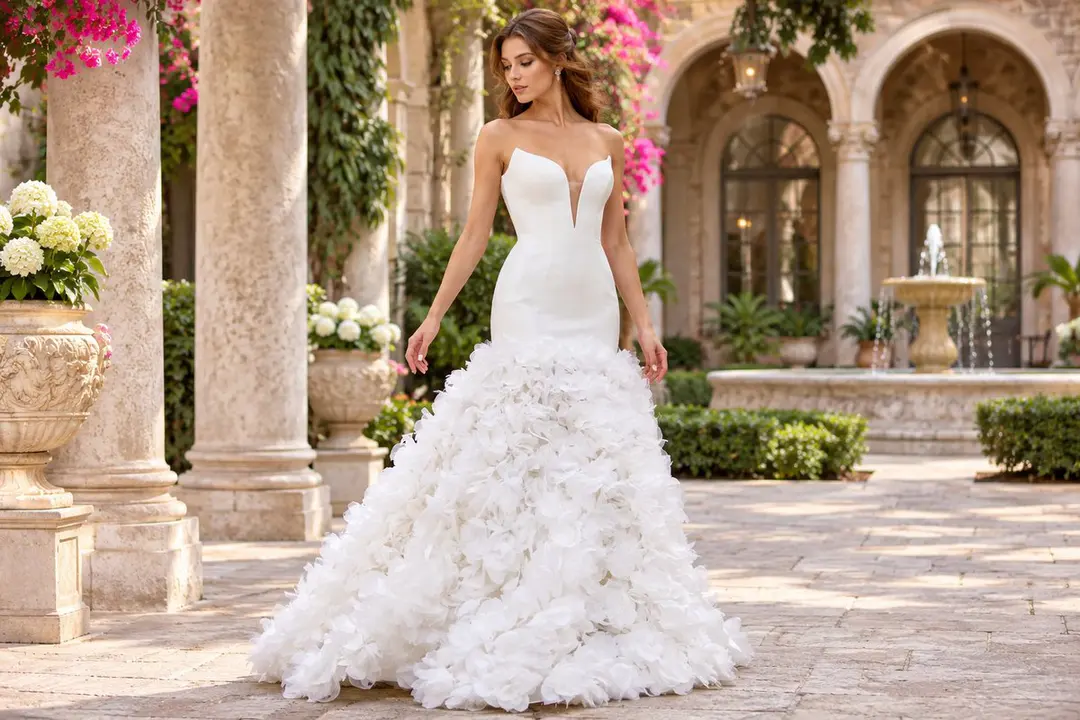
Hip accuracy matters when considering mermaid bridal silhouettes. Jovani style JB45121 has a fitted mermaid bodice and a layered crepe-and-tulle floral skirt. A fitted upper skirt follows the hips more closely than a full skirt does.
How Do You Measure Hollow to Hem Correctly?
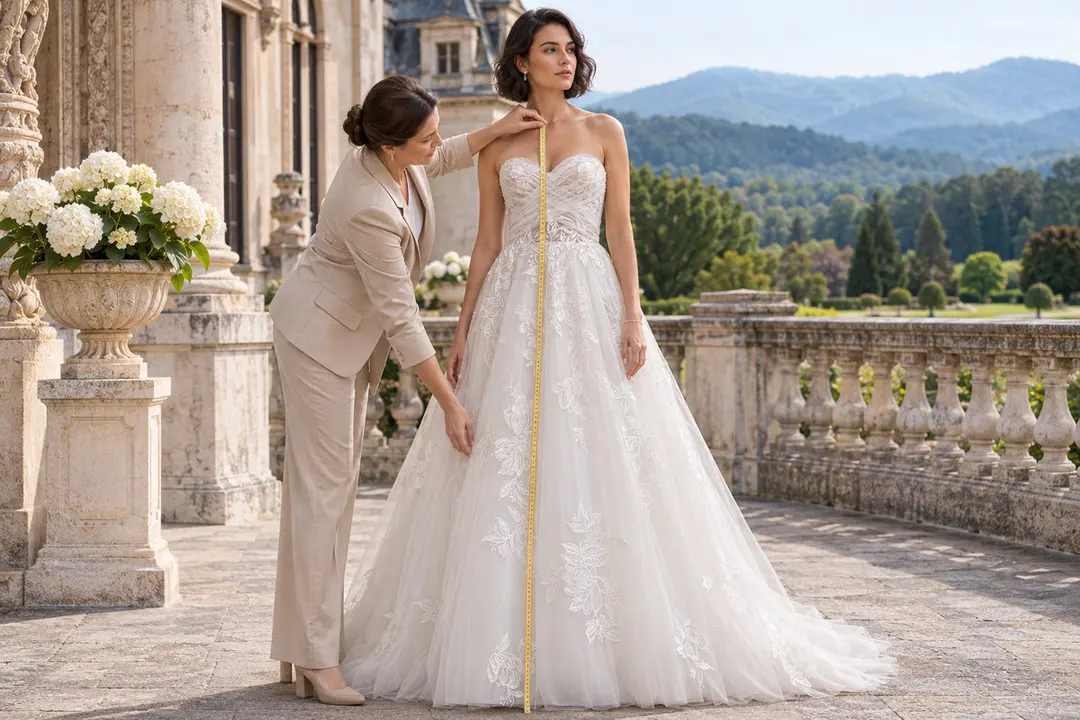
Hollow-to-hem is the front length from the small hollow at the center base of your throat to your intended dress hem. It is not a waist measurement, a train measurement, or the same as your total height.
Measure to the Intended Front Hem
Put on shoes with your planned heel height and any underskirt that changes the gown’s volume. Ask a helper to hold the tape at your throat hollow and follow the maker’s specified path to the desired front hem. Stand straight and face forward.
For a floor-length dress, decide where the front hem should end relative to the floor. A train extends behind the dress and is assessed separately. If you cannot keep the tape positioned accurately, have your bridal retailer or alterations specialist remeasure.
Check Which Length Your Designer Requests
Jovani’s published size guide labels its standard length measurement from the center top of the shoulder to the hem. That starting point differs from hollow-to-hem, so do not substitute one number for the other. Follow the instructions attached to the specific product.
Length also changes with skirt construction. For close-fitting bridal designs, check where the skirt releases around your legs and how the front hem clears your shoes. The desired front length still needs confirmation with the retailer.
How Should You Compare Measurements With a Bridal Size Chart?
Use all three body circumferences against the chart for the actual dress, not your usual jeans or streetwear size. Jovani’s general chart shows size 8 at 36 inches bust, 29.5 inches waist, and 39.5 inches hips. Jovani also states that its size guidance is product-specific.
If your measurements fall across several sizes, note the largest area that needs room and ask the retailer how the gown is cut. Its waist placement and internal lining matter as much as the number. The wedding dress anatomy guide explains these construction details.
Which Measuring Errors Should You Avoid?
The most common problems are a twisted tape, an altered posture, and measuring over bulky clothes. These errors can change a recorded number before you even compare sizes.
- Keep the tape horizontal for the bust, waist, and hips.
- Remeasure if the first two readings do not agree.
- Write down your units, footwear height, and undergarments.
- Do not subtract inches to make a tighter bodice seem possible.
A measurement can identify a starting size, but it cannot prove a bodice will stay in place. Jovani’s strapless gown fit tests explain why support also depends on construction and movement checks.
What to Record on Your Wedding Dress Measurement Sheet
Keep one dated set of measurements and show it to your bridal retailer. Include the body numbers and the conditions under which you took them. A short, complete record makes it easier to spot a changed measurement at a later fitting.
- Full bust, natural waist, and fullest hips, with units
- Hollow-to-hem only if the designer requests it
- Barefoot height and planned heel height
- Undergarments, petticoat, and intended front hem position
- Any fit concern or difference between repeated readings
When Should a Bridal Professional Recheck Your Measurements?
Ask for a professional check when you cannot reach the correct tape position or your readings differ noticeably. Recheck before a final size decision if your undergarments or heel height have changed. A retailer can also explain whether your gown needs an additional torso or shoulder measurement.
For a heavily structured bodice, a full skirt, or a difficult hem, have the chosen gown assessed in person. Your measurements guide the order; the fitting confirms movement, support, and length. A trained specialist can also explain which adjustments are realistic for that design.
Bring your measurement sheet to an authorized Jovani bridal retailer. Use Jovani’s store locator to find a location and ask about product-specific sizing and fitting support.
Frequently Asked Questions
Should I wear a bra when taking wedding dress measurements?
Yes, wear the bra you plan to use if the dress requires one. If the gown has built-in cups or a low back, tell the retailer what you wore while measuring.
What if my bust and hips suggest different dress sizes?
Choose a size only after checking the fit requirements of the specific design with the retailer. A fitted skirt and a structured bodice may each limit how much adjustment is practical.
Does hollow-to-hem include the wedding dress train?
No, hollow-to-hem usually describes the intended front length, not the train behind you. Confirm the designer’s exact instructions because some styles and ordering systems define length differently.
Can I use my usual dress size instead of measuring?
No, take fresh bust, waist, and hip measurements before comparing bridal sizes. Use the actual product chart, then have a retailer review any difference between your measurements and the listed dimensions.