
The moment you stand in front of a mirror and realize you have found the gown you will walk down the aisle in is an unforgettable milestone. The fabric falls beautifully, the silhouette flatters your figure, and the vision for your special day finally feels real. However, the journey to achieving a flawless bridal look does not end the moment you leave the boutique with your dream dress in hand. Purchasing the gown is simply the foundational first step. To achieve that breathtaking, second-skin fit seen in bridal magazines and on high-fashion runways, every bride must undergo the careful, specialized process of wedding dress alterations.
Even the most exquisitely constructed designer gowns require meticulous personalization to match the exact contours, posture, and proportions of an individual’s body. Standard sizing, even in luxury fashion, is merely a starting point. The female form is entirely unique, with distinct curves, shoulder widths, and waistline placements. When a bride invests in a high-quality garment, she is essentially purchasing a masterfully crafted canvas that a skilled tailor will then sculpt specifically for her. Jovani designs are celebrated globally for their structural integrity, premium fabrics, and exceptional hidden corsetry, providing the ideal architectural base for a tailor to work their magic. Understanding the nuances, terminology, and requirements of this tailoring process ensures that you approach your fittings with confidence and total peace of mind.
The Foundation of a Flawless Fit
The transition from a standard boutique size to a custom-tailored masterpiece is a collaborative effort between the bride and her dedicated tailoring team. This journey begins long before the first pin is placed on the fabric. While the emotional excitement of finding the perfect wedding dress is the absolute peak of the shopping experience, the technical work that follows behind the scenes is what ultimately guarantees comfort on the actual day. You want to be able to breathe comfortably, sit for a formal dinner, raise your arms for a toast, and dance effortlessly without constantly pulling up a slipping bodice or tripping over an unruly hem.
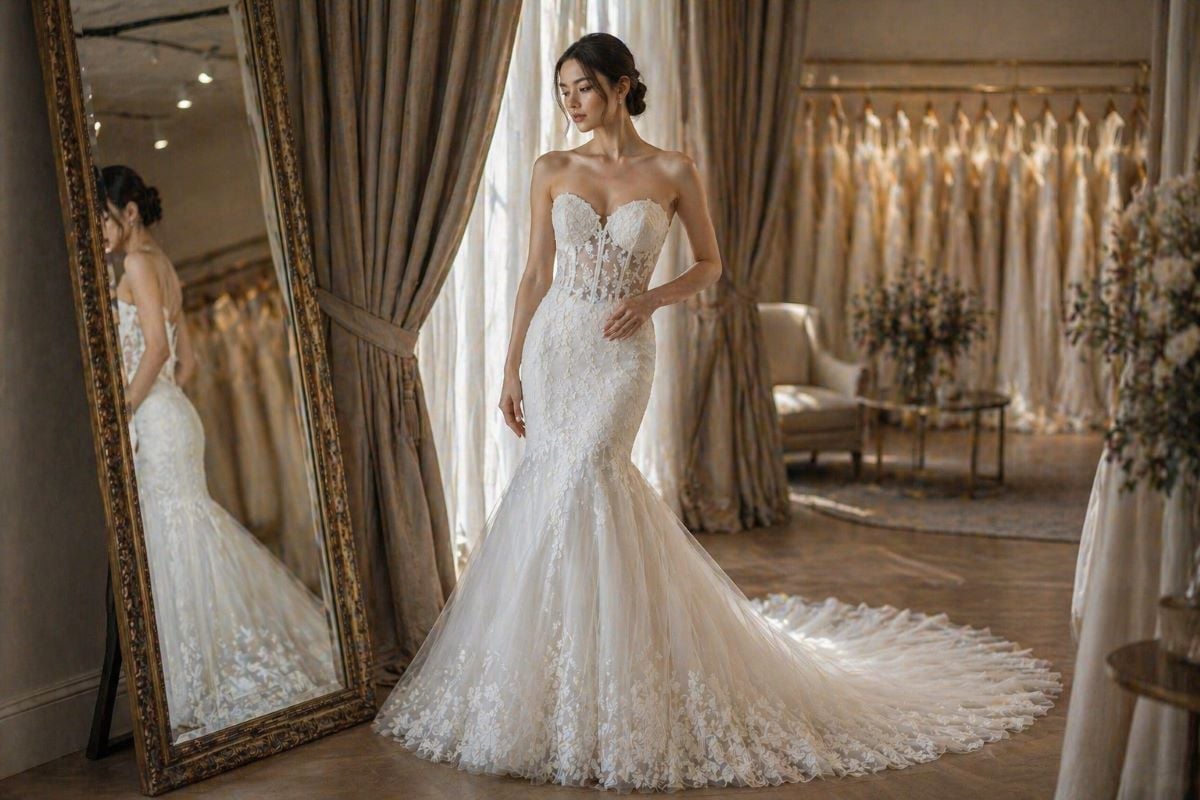
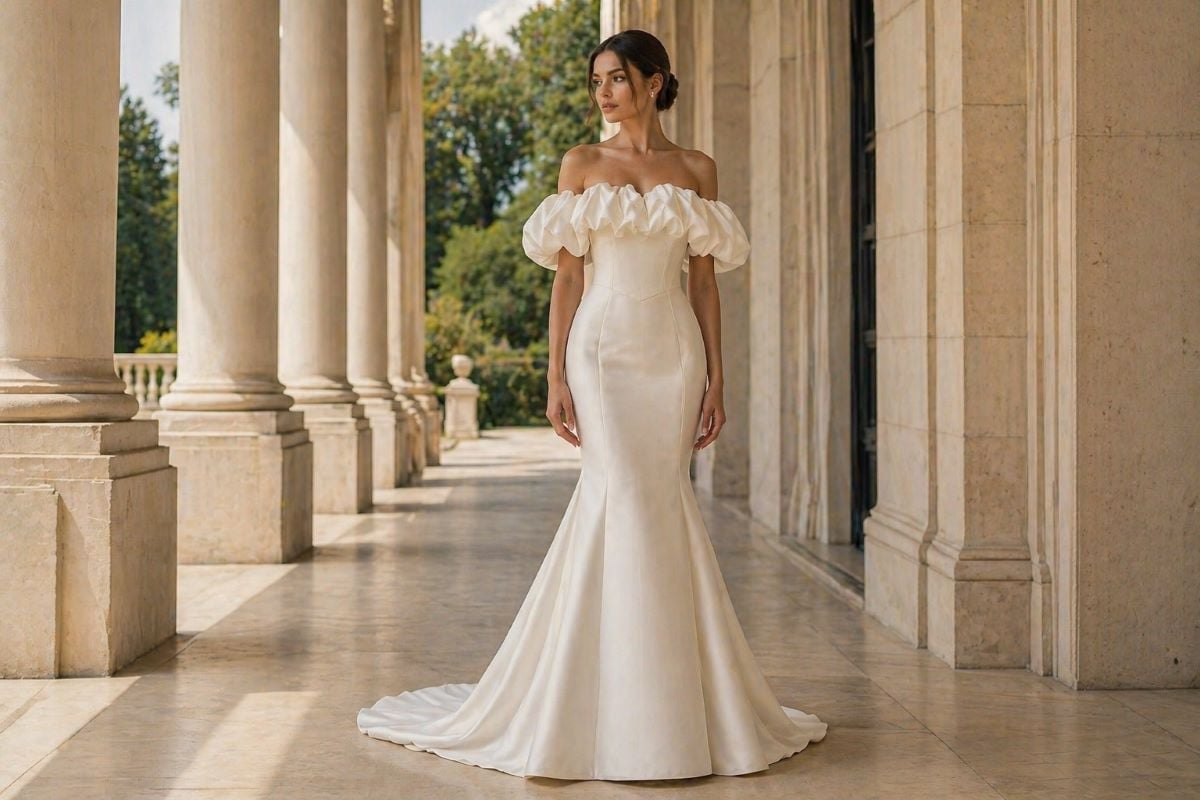
A luxury gown should feel secure, acting almost as a second skin that supports rather than restricts. This requires precise adjustments to the bust, waist, hips, and the curvature of the lower back. For example, dramatic silhouettes rely entirely on exact measurements to maintain their intended aesthetic. The tailoring required for structured mermaid wedding dresses involves careful contouring through the waist, hips, and upper thighs. The fabric must hug the body to create that signature, show-stopping hourglass effect before the skirt flares out at the knee. If the fit is even slightly off—too tight across the thighs or too loose around the hips—the dress can restrict your natural movement or fail to provide the intended sculpted impact. Working with a specialist who understands the complex inner architecture of bridal garments is non-negotiable.
Bridal Dress Fitting Timeline
Timing is everything when it comes to bridal tailoring. Rushing the process in the final weeks leads to unnecessary stress, while starting too early can result in frustrating fit issues if your body naturally fluctuates in the months leading up to the main event. Establishing a reliable bridal dress fitting timeline is essential for a smooth, stress-free experience.
First Fitting (8-12 Weeks Out)
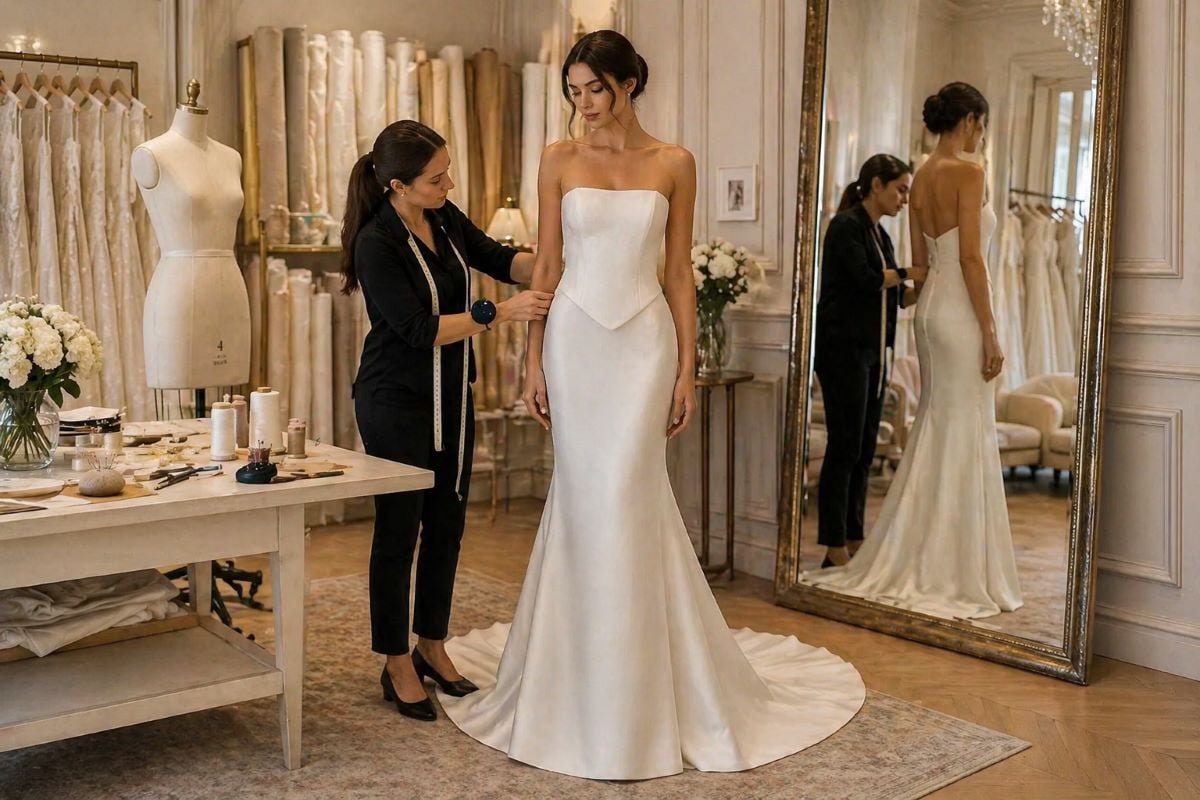
Generally, your first fitting should be scheduled approximately two to three months before the wedding. During this initial consultation, the tailor will assess the overall fit and begin pinning the major structural adjustments. The focus here is heavily on the bodice, the side seams, and the overall silhouette. This is the crucial time to speak up about how the dress feels. Is the boning digging in? Is the neckline sitting exactly where you envisioned? Clear communication here sets the stage for the rest of the process.
Second Fitting (4-6 Weeks Out)
The second fitting usually occurs about a month before the wedding day. At this stage, the major structural changes pinned during the first visit have been sewn in. The gown should now fit the contours of your body beautifully, allowing the tailor to shift their focus to the wedding dress hem and bustle. Hemming a gown accurately requires you to wear the exact shoes you will wear on your wedding day—changing heel heights later will ruin the hemline. The tailor will ensure the fabric grazes the floor seamlessly, typically leaving a quarter-inch clearance so you can walk smoothly.
Final Fitting (2-3 Weeks Out)
A third fitting is scheduled a few weeks out from the event. This is your final quality-control review to confirm that every seam is flawless, the zipper lays flat, and the dress feels incredibly comfortable. Importantly, this is the appointment where you should bring your maid of honor or mother. The seamstress will teach them exactly how to secure your gown and properly hook the bustle for the reception.
Essential Dress Adjustments
The scope of work required during wedding dress alterations varies drastically depending on the style of the gown, the internal boning, and the specific fabrics used. However, there are a few standard adjustments that almost every bride will experience on her tailoring journey.
Taking in the Bodice
The most common alteration is taking in a bridal gown at the side seams or the bust area. It is standard industry practice to order a dress based on your absolute largest body measurement and then have a professional tailor the rest of the garment down. A gown that accommodates the hips might be noticeably loose in the bust, requiring the tailor to carefully unpick the side seams, reshape the upper bodice, and reconstruct the armholes for a flush fit against the chest.
The Hem and Bustle
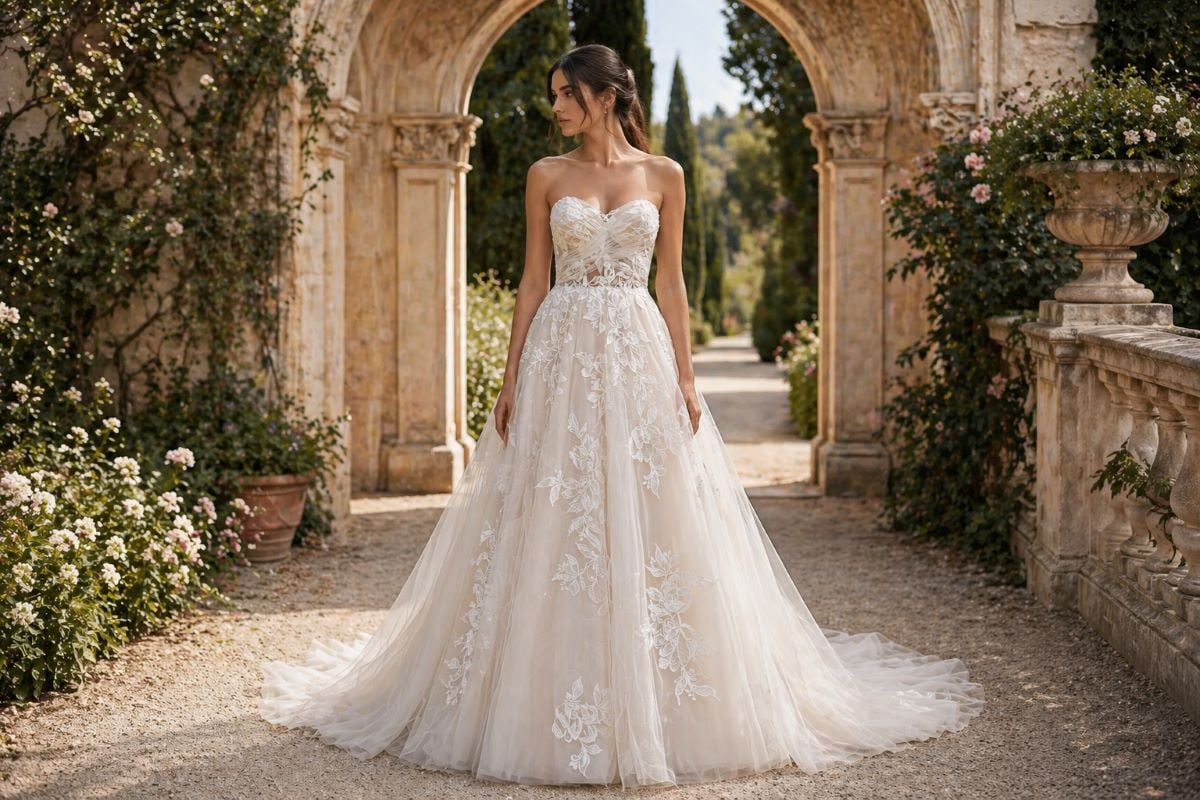
Length adjustments and bustling are equally critical and time-consuming. While form-fitting styles require complex hip adjustments, classic A-line silhouettes or voluminous ballgowns often demand significantly more attention to the hemline and the engineering of the bustle. The bustle is a vital tailoring technique that utilizes hidden hooks, buttons, and ribbons to lift the long train of the dress off the floor, allowing the bride to move freely during the reception. The specific type of bustle chosen depends heavily on the volume of the skirt and the visual aesthetic of the dress.
Modifying Sleeves
Sleeves present a unique tailoring challenge. For brides who opt for elegant long sleeve wedding dresses, achieving a slim, sophisticated sleeve without entirely restricting the mobility of the arms requires an experienced hand. The tailor must expertly balance a snug, modern fit with enough structural give in the armhole to allow the bride to comfortably raise her arms for joyous hugs, bouquet tossing, and dancing.
Handling Intricate Fabrics
The overall complexity of your tailoring experience is heavily influenced by the raw materials used in your gown’s construction. Premium luxury fabrics require specialized handling techniques, and altering them is a deeply labor-intensive process.
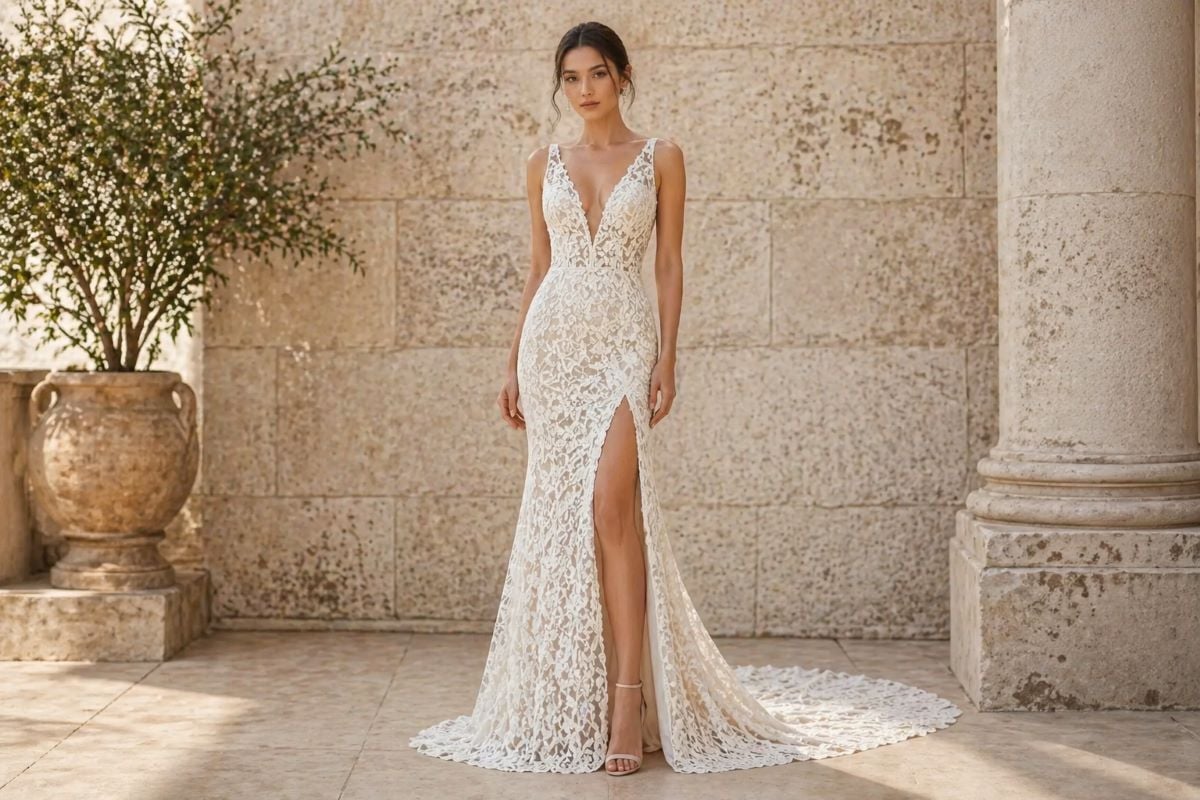
For instance, altering lace bridal fabrics is an incredibly delicate task. A tailor cannot simply run a sewing machine in a straight line through a custom lace pattern without visibly destroying the romantic design. Instead, they must carefully remove individual lace appliqués entirely by hand, structurally adjust the underlying solid fabric, and then meticulously re-sew the appliqués back onto the newly sized dress so that the floral or geometric pattern appears uninterrupted. This invisible, artistic work is exactly why delicate lace bridal designs often require substantially more time in the alterations studio.
Similarly, gowns adorned with extensive crystal beadwork, sequins, or pearls present their own distinct set of tailoring challenges. When altering heavily beaded gowns, the seamstress must carefully un-bead the fabric by hand around the targeted seams to prevent the sewing machine needles from breaking. After the dress is taken in or let out, the tailor must laboriously re-bead the adjusted areas by hand to ensure the sparkling design flows naturally over the new seams. Furthermore, the sheer physical weight of these luxury embellishments means the tailor must engineer a reinforced bustle to safely support the heavy train.
Customizing Your Bridal Vision
Beyond simply achieving the right physical fit, alterations provide a brilliant opportunity for customizing a wedding look. Many brides use the tailoring process to add bespoke, personal touches that elevate a beautiful designer gown into something entirely their own.
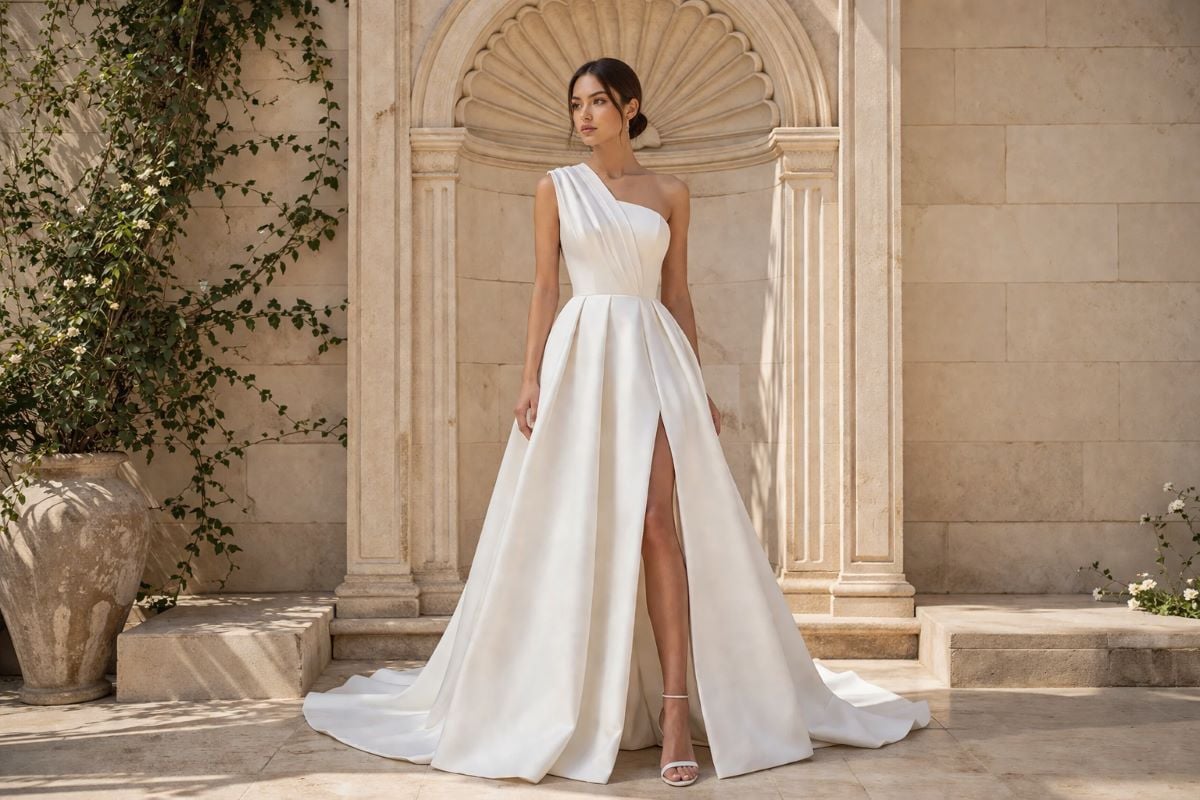
This customization might include adding delicate, draping off-the-shoulder straps to a strapless gown, reshaping a modest straight neckline into a deeply romantic sweetheart plunge, or adding hidden layers of crinoline and tulle to a skirt for a dramatic increase in volume. Modern brides also frequently request the addition of high, leg-baring slits hidden within layers of chiffon, or the creation of custom, detachable elements like removable long sleeves that offer a two-in-one look for the ceremony and reception.
Budgeting for Alterations
A common oversight in early bridal planning is failing to budget adequately for tailoring. Because every single dress design is unique and every bride’s body is different, the cost to alter a wedding gown is rarely a predictable flat rate. The final price depends entirely on the complexity of the gown’s inner construction, the delicacy of the exterior fabrics, the geographical location of the boutique, and the specific extent of the customized changes required.
Simple, straightforward adjustments—such as a basic front hem on a minimalist crepe gown and a traditional single-point bustle—will naturally be more affordable. Conversely, major structural overhauls, custom neckline transformations, and extensive beadwork or lace manipulation will increase the overall financial investment significantly.
Rather than looking for the cheapest local option or a standard dry-cleaner, it is absolutely crucial to invest in a dedicated bridal seamstress. Bridal tailoring is a specific, artisan craft that requires a deep understanding of complex corsetry, structural boning, and the handling of luxury textiles. Entrusting a premium, meticulously designed Jovani gown to a true specialist ensures that the artistic integrity of the original design is preserved while being flawlessly adapted to celebrate your unique silhouette.
Wedding Dress Alterations FAQs
1. How many fittings are standard for wedding dress alterations?
Most brides require exactly three separate fittings to achieve perfection. The first fitting involves pinning the major structural changes and side seams. The second focuses on refining that fit, checking the hem with your bridal shoes, and creating the bustle. The third serves as a final quality-control check and a dressing tutorial for your bridal party.
2. What is the average cost to alter a wedding gown?
Tailoring costs vary widely based on your location, the experience level of the seamstress, and the complexity of the work. While minor, basic adjustments might cost a few hundred dollars, extensive bodice restructuring, working with heavy all-over beading, or manipulating intricate lace appliqués can increase the investment significantly, sometimes ranging from $500 to over $1,000. Always factor alterations securely into your initial dress shopping budget.
3. Can a bridal gown be sized up if it is too small?
Taking a dress in is always significantly easier and less risky than letting it out. However, many high-quality designer bridal gowns are constructed with a small amount of extra folded fabric within the interior side seams, known as a seam allowance. A skilled tailor can usually let a high-quality dress out by one to two standard sizes, but this depends entirely on the specific construction and fabric of the garment.
4. What happens if I lose or gain weight after my first fitting?
This is a common concern. Most experienced bridal seamstresses anticipate minor weight fluctuations due to wedding-planning stress. To ensure a smooth process, try to maintain your target weight by the time of your first fitting. If a significant weight change occurs between the first and second fitting, notify your seamstress immediately so they can adjust their timeline and approach.
5. Can I change the neckline of my wedding dress during alterations?
Yes, modifying the neckline is a very popular customization. A talented seamstress can often transform a straight strapless neckline into a subtle sweetheart, deepen a V-neck, or use excess fabric from the hem to build up a neckline for more modest coverage. Discuss these desires during your very first consultation to ensure the dress’s underlying structure can support the change.
Discover the exceptional craftsmanship, structural perfection, and timeless elegance of our bridal collections by exploring the full range of Jovani wedding dresses today.