
Bridal Size vs Street Size: How to Read a Wedding Dress Chart
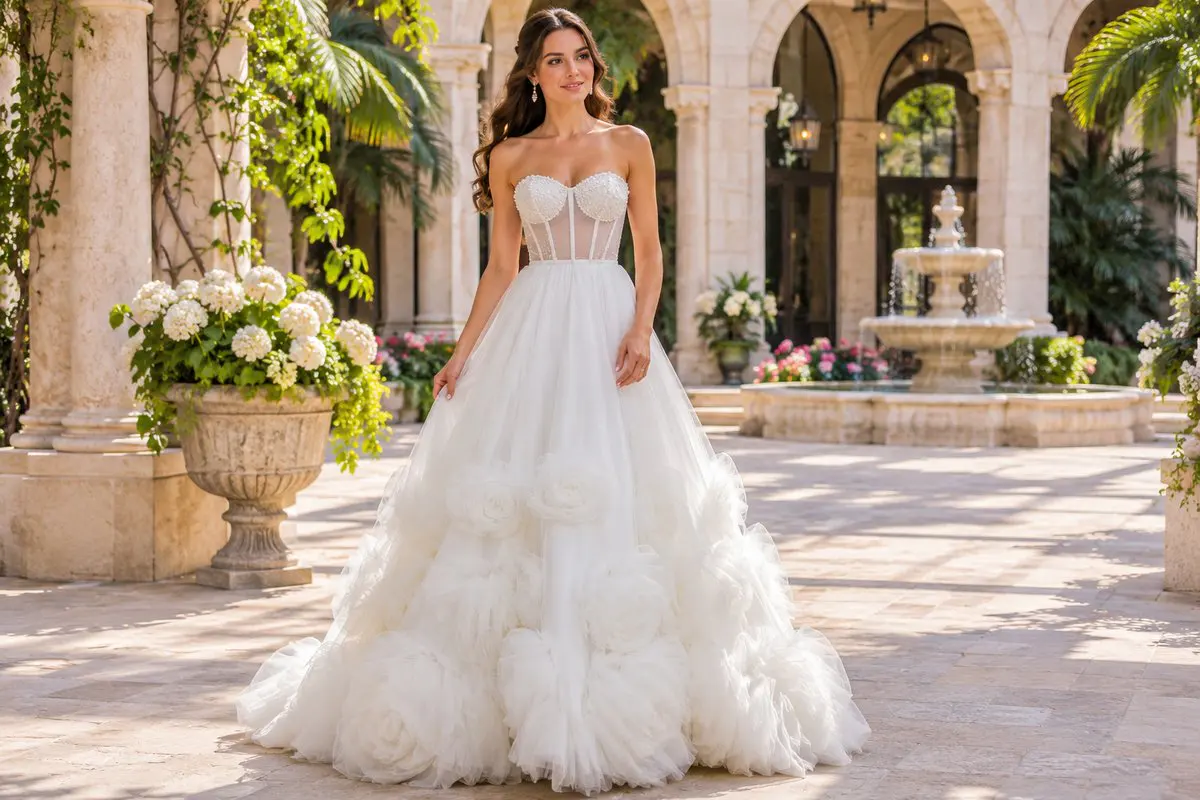
Bridal size vs street size is not a fixed conversion. Wedding gown labels often differ from everyday clothing labels, and designers use different measurement charts. Choose the size that accommodates your bust, waist, and hips in the specific dress. Treat the number on the label as a reference, not a fit verdict.
Start with the design rather than your usual jeans size. Jovani offers wedding dresses with different skirt shapes and bodice structures. Those details determine which measurements must fit closely and which areas leave more room.
Why Bridal Size vs Street Size Is Not a Simple Conversion
Street sizing describes the labels used for everyday clothing. Bridal sizing describes the labels on wedding dresses, which may follow a different measurement scale. One designer might call your measurements a size 10, while another uses size 12. Neither number tells you how the actual garment will sit.
You may hear that bridal dresses run two sizes larger than streetwear. That can happen, but it is not a dependable ordering formula. Jovani says its dresses generally run true to size while noting that fabric and design affect fit. Its Wedding Dresses 101 overview provides broader context on choosing bridal styles.
How Do You Read a Wedding Dress Size Chart?
Read a wedding dress size chart by comparing your body measurements with the bust, waist, and hip columns for the actual style. Use inches with inches or centimeters with centimeters. A matching label alone does not confirm enough room through a fitted bodice or skirt.
Follow this sequence before agreeing to an order:
- Record your current full bust, waist, and hip measurements without adding extra inches.
- Find the manufacturer's chart for the exact style, not a generic street-size conversion.
- Locate the first size that accommodates the measurements constrained by that silhouette.
- Ask the retailer to assess excess room, seam allowances, and any proposed alterations.
Start with Measurements, Not the Tag
For bust, keep the tape around the fullest point without tightening it. Check the waist at the point specified by the brand, and measure the hips consistently. Jovani's public chart describes the hip point as eight inches below the waist. Have someone confirm that the tape remains level.
An A-line bridal design has a defined upper body and a skirt that opens outward. That often makes bust and waist fit more restrictive than hip circumference. Still, confirm the exact dress construction before discounting any measurement.
Check What the Size Chart Actually Covers
Bust, waist, and hips are circumferences; length is a separate measurement. Jovani measures dress length from the center of the shoulder to the hem. This is not interchangeable with a hollow-to-hem measurement. Check the hem using your planned footwear and ask which length the retailer records.
A Jovani Size Chart Example You Can Follow
Jovani's published chart gives size 14 measurements of 40 inches at the bust, 33.5 at the waist, and 43.5 at the hips. Size 16 lists 42, 35, and 46 inches. These figures show why comparing a single column can produce the wrong decision.
Imagine your measurements are a 39-inch bust, 34-inch waist, and 43-inch hips. Size 14 covers the bust and hips but lists less room than your waist measurement. Size 16 accommodates all three measurements on this chart. The retailer must still check the actual product chart and alteration plan before recommending it.
This example also explains why larger is not automatically better. A size chosen for the waist can need work at the upper body. In fitted wedding gowns, that adjustment may be more involved than in a loose skirt. The chart identifies a starting point, not the final fitted shape.
How Silhouette Changes the Size You Should Consider
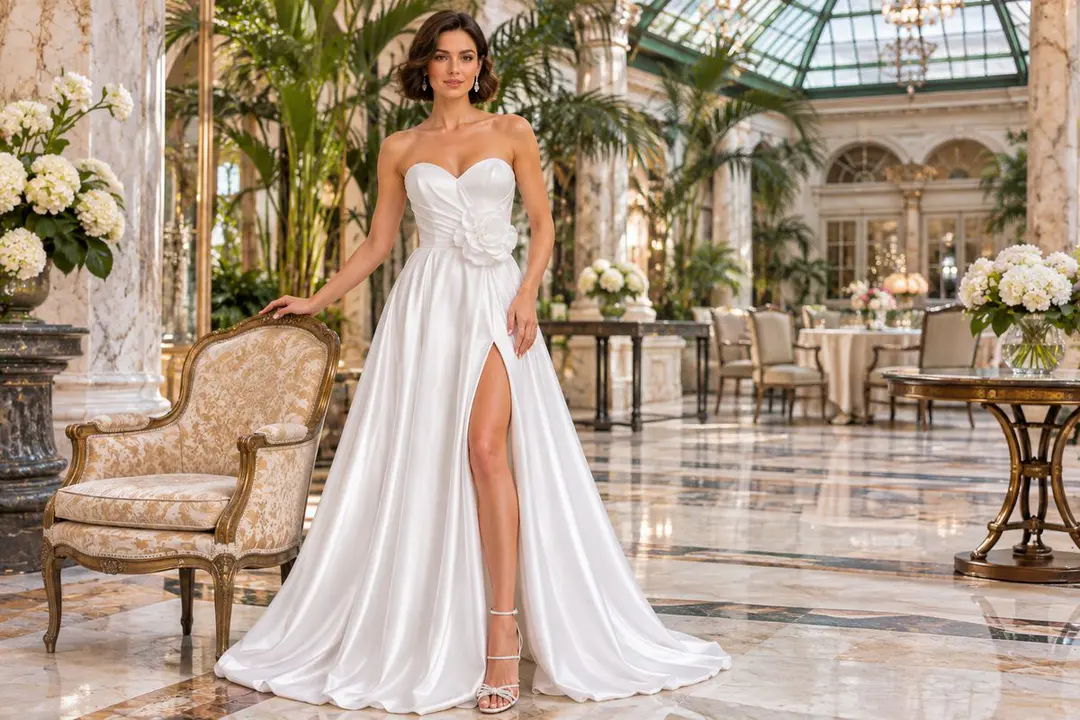
The same measurements can lead to different fitting concerns across dress silhouettes. Jovani style JB42782 is a floor-length, strapless A-line design with a tulle skirt. Its bodice fit deserves particular attention because the skirt has more volume below the waist.
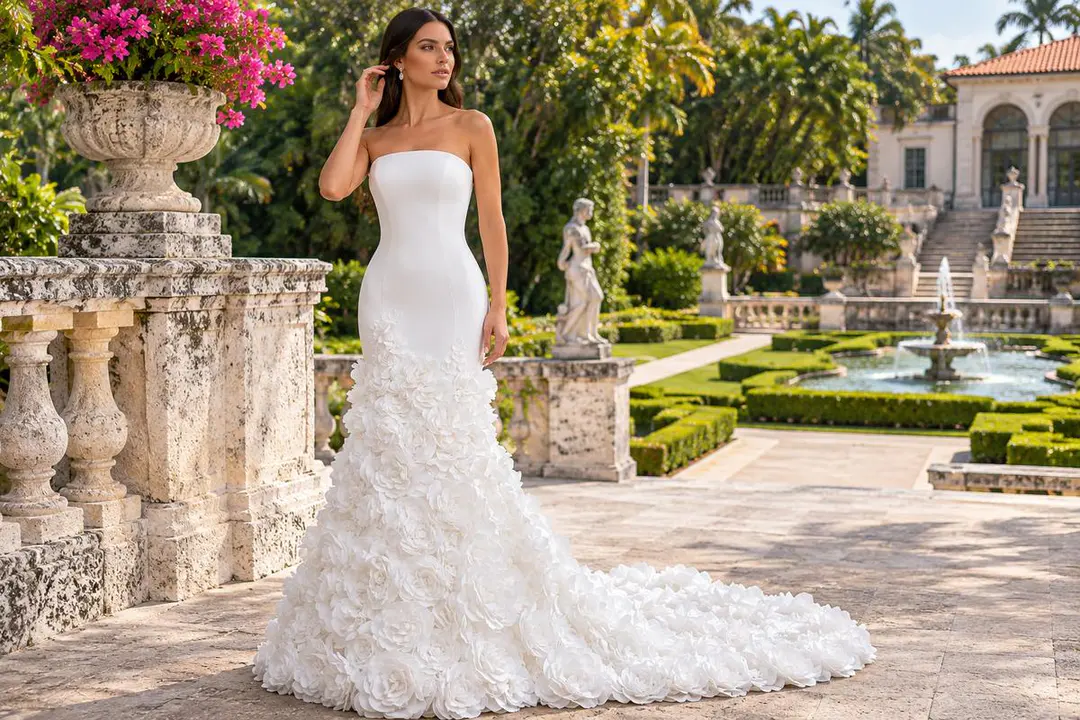
Jovani style JB45120 is a mermaid gown with a fitted bodice, crepe and organza, and a long floral train. Here, hip and upper-leg movement matters along with waist and bust fit. Compare mermaid bridal silhouettes with fuller skirts before deciding which size feels secure while moving.
What If Your Bust, Waist and Hips Fall Between Sizes?
Choose a starting size that does not squeeze the least adjustable area, then review the excess elsewhere with a bridal fitter. The biggest numerical measurement is not necessarily the deciding one. Placement of seams, stretch, lining, and bodice support change which area limits the fit.
Structured Bodices Need Close Attention
A structured strapless bodice must stay secure without crushing the ribs or lifting at the neckline. Jovani style JB40825 has a sweetheart neckline, satin fabric, and a corset-style bodice. Ask how that particular construction can be adjusted before assuming a smaller label will provide better support.
Alterations Are Not a Substitute for Correct Sizing
Letting out a dress depends on its seam allowances, lining, and decoration. Taking one in may also involve rebuilding a neckline or shifting appliqués. The wedding dress shopping guide helps you prepare for a retailer appointment; ask the fitter to document the recommended size and planned adjustments.
Questions to Ask Before Ordering a Wedding Gown
Bring written measurements and identify the exact style number. Ask for the chart linked to that gown, not only a general size table. Confirm which measurement controls the order and what the boutique expects to alter. Record the answer before approving the size.
Detailed fabrics can complicate alterations. In lace bridal designs, moving appliqués may require additional work to preserve the pattern. Discuss feasible seam changes, overall fit, and the return or order policy with the authorized retailer.
A Final Size Check Before Your Bridal Appointment
Recheck your measurements close to the ordering appointment. Bring the undergarments you expect to wear, then test the sample while standing, sitting, and walking. A clipped sample can illustrate a silhouette, but it cannot prove that an unaltered dress in another size will fit.
Ask for a written plan covering the style number, chart used, proposed size, and likely tailoring. Jovani's wedding dress alterations guide explains how adjustments affect the bodice and skirt. Confirm any unusual construction with the tailor rather than relying on a general rule.
A correct bridal size starts with measurements, not a streetwear label. Visit an authorized Jovani retailer to review the exact gown chart and its fit before ordering.
Frequently Asked Questions
Is a Bridal Size 12 the Same as a Street Size 12?
No. A bridal size 12 and a street size 12 may represent different measurements. Compare the bust, waist, and hip figures for the specific wedding dress rather than relying on matching numbers.
Should I Automatically Go Up Two Sizes for a Wedding Dress?
No. Two sizes is not a universal conversion. Jovani says its dresses generally run true to size, and fit changes with fabric and design. Start with the product chart and a retailer fitting.
What If My Waist Matches a Different Size Than My Bust?
Choose a size that accommodates the most restrictive fitted area, then ask about tailoring. A structured bodice may need different adjustments from an A-line skirt. Confirm the decision against the exact gown chart.
Can a Wedding Dress Be Let Out After Ordering?
Sometimes, but the available room depends on seam allowances and construction. Lace placement, lining, and boning can limit adjustments. Ask the alterations specialist to assess the actual gown before ordering a smaller size.