
Winter Wedding Dresses for Brides: What to Wear in Cold Weather
A winter wedding dress for the bride should suit the ceremony, feel comfortable indoors, and work with a proper outer layer. Cold weather changes how you travel, take photographs, and manage a train. It does not mean you must wear heavy sleeves or give up your preferred silhouette.
Start with the venue and its heating, then choose the shape, fabric, and coverage. A gown that works for a candlelit hotel ceremony may need a different arrival plan for snowy garden portraits.
What Should a Bride Wear to a Winter Wedding?
The strongest winter bridal look combines a ceremony-appropriate gown with practical layers for the time spent outdoors. Start by browsing bridal gowns for the silhouette you want, rather than selecting a dress only because it looks warm. A tailored coat or wrap can handle the walk to the venue.
Check the ceremony room, photography location, and reception space before deciding on coverage. The broader Wedding Dresses 101 resource explains bridal shapes and design details; this guide focuses on how those choices work during a winter celebration.
Choose a Bridal Silhouette for the Ceremony Setting
Winter wedding dresses for brides can be full and dramatic or narrow and simple. The best cut depends on the room, the path between locations, and how easily you can move in your skirt.
A-Line and Ball Gowns for Formal Indoor Venues
An A-line keeps definition at the waist while allowing space to walk and sit. Browse A-line wedding dresses when you want an elegant shape without the bulk of a very full skirt. For a larger ballroom, a ball gown can feel proportional to the setting, provided its train is manageable.
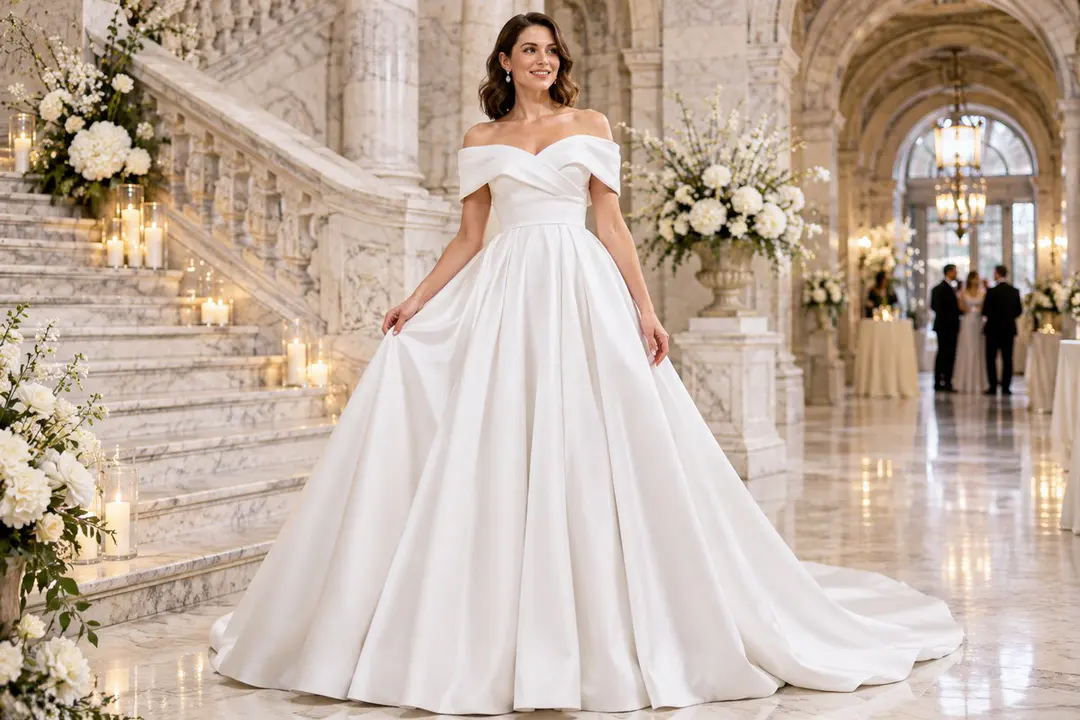
Jovani style JB45169 provides a real example: a white satin ball gown with a structured waist, full skirt, and floor-length design. Its off-the-shoulder straps leave the shoulders exposed, so an arrival layer still matters.
Fitted and Sheath Gowns for Smaller Spaces
A sheath works well for a restaurant, city ceremony, or venue with narrow passages. Fitted bridal gowns offer a controlled outline under a coat and usually need less space than a large skirt. Check that the hem and train stay clear of wet steps and crowded doorways.
Balance Fabric, Lining, and Indoor Comfort
Choose fabric for the gown's structure and appearance, then check its actual lining and layers. Satin can create a smooth, defined shape, while lace adds visible texture. Neither fabric guarantees warmth on its own; construction and exposure time matter more than the fabric name.
Jovani style JB43896 illustrates a satin mermaid shape with an off-the-shoulder neckline and ruffled sleeves. For a softer surface, lace wedding dresses include fitted and fuller designs with different amounts of lining. Ask to see the inside of any gown before assuming a sheer panel provides insulation.
If the reception room is warm, prioritize a comfortable lining and breathable movement. Keep a heavier coat for travel instead of choosing layers that make the dress uncomfortable throughout dinner and dancing.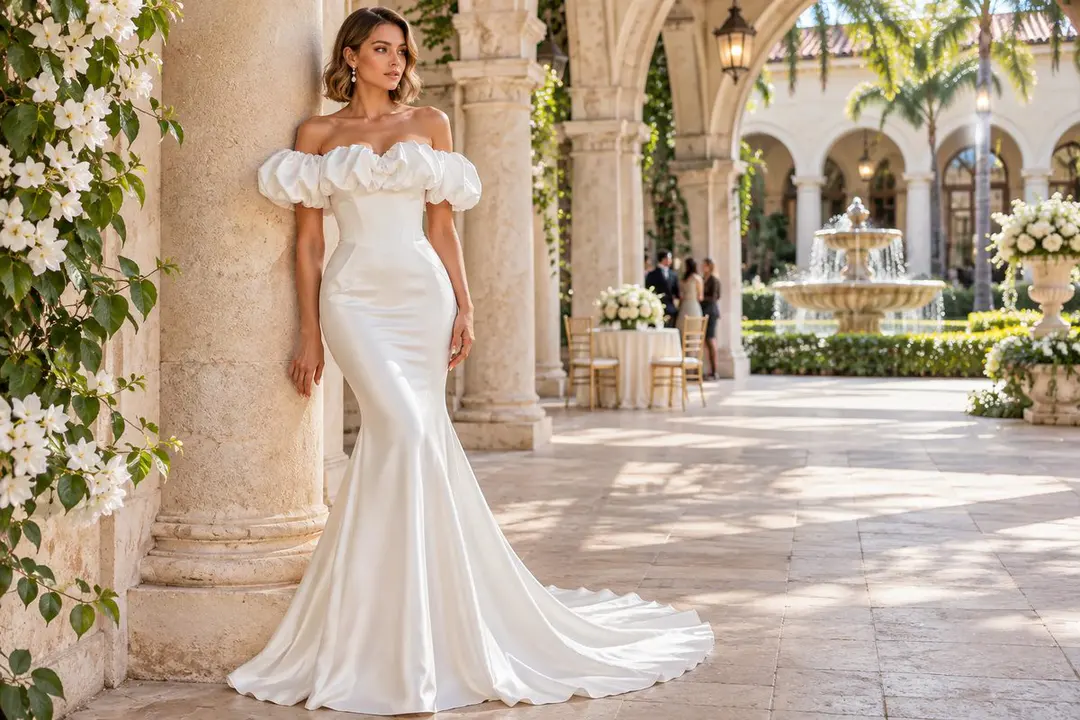
Choose Sleeves and Necklines That Fit the Day
Long sleeves are an option, not a winter requirement. Sheer lace or illusion sleeves create visual coverage but provide limited protection in the cold. Lined sleeves offer more coverage, although fit and freedom of movement still need testing.
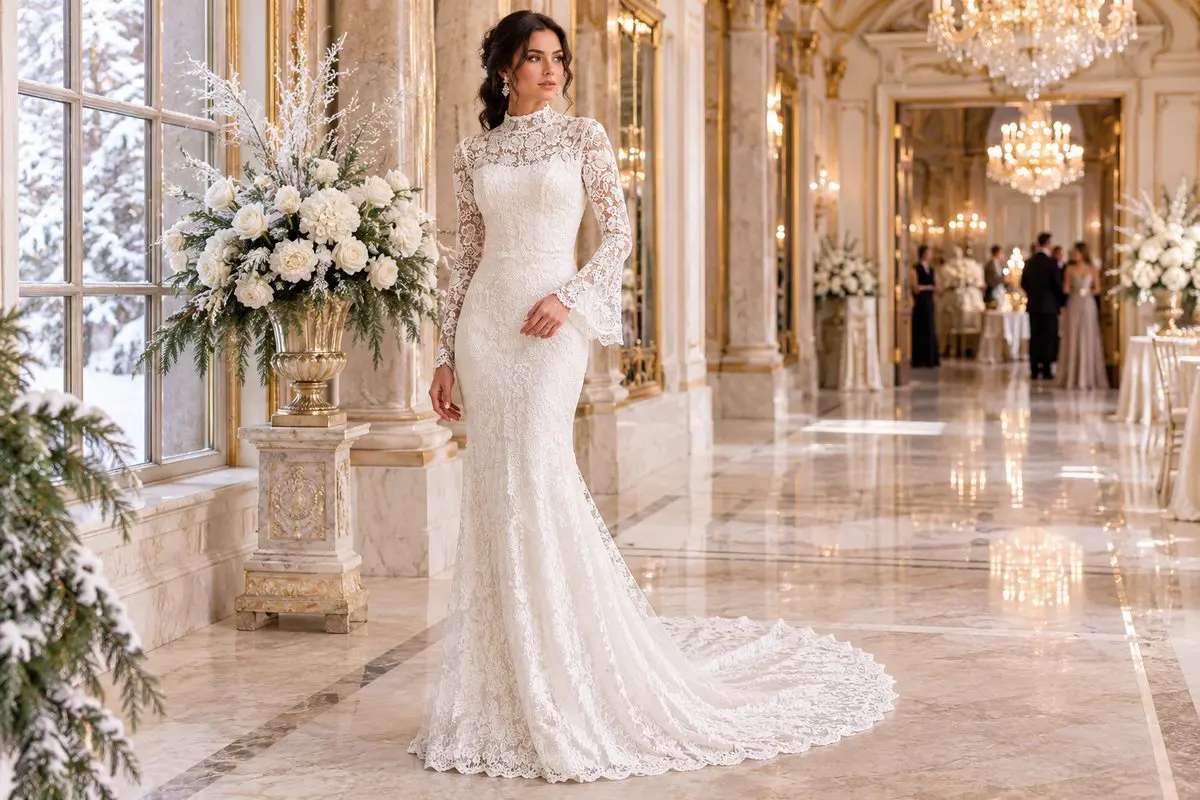
Jovani style JB45767 has a high illusion neckline, allover lace, and long sheer sleeves. Its floor-length sheath shape also includes a train. Brides comparing sleeve constructions can read the long-sleeve wedding dress guide before choosing between fitted, lined, and sheer options.
A strapless or off-the-shoulder gown can work beautifully for an indoor winter ceremony. Coordinate a coat, cape, or wrap for arrivals and outdoor photographs, and practice removing it without disturbing the hairstyle.
Plan for Outdoor Portraits, Snow, and Wet Ground
A short outdoor portrait session calls for different preparation than a ceremony held outside. Arrange a warm waiting area, keep the gown covered during transfers, and ask someone to lift the train on wet paths. A dress should not be dragged across salt, slush, or icy pavement.
Closed-toe shoes with dependable traction are usually more practical for a cold arrival than delicate open sandals. You can change footwear indoors if the final hem works with both pairs. Discuss heel heights and bustling during wedding dress alterations before the final fitting.
Check whether the venue has steps, gravel, or long outdoor walkways. Plan photographs near a sheltered entrance when possible, and keep a clean surface available for setting down a long train.
Style the Look for the Reception
Your reception may feel much warmer than the journey there. If your ceremony dress has a full skirt or detailed train, consider whether you want a simpler second look. Second-look bridal dresses range from short styles to longer options, so you can choose a change that suits your party and venue.
Keep accessories manageable. Choose gloves that can come off easily, a wrap that does not snag lace, and jewelry that will not catch on the neckline. Try each piece together before the event, not just in separate fittings.
Final Checks Before You Choose a Winter Bridal Gown
At your appointment, sit down, walk several steps, and raise both arms in the gown. If you plan to wear a coat, try it over the actual neckline and sleeves. A beautiful dress that bunches beneath outerwear may need a different layer, not a different dress.
Bring the shoes you intend to wear indoors and explain any outdoor shoe change to the alterations specialist. Ask the retailer about availability, delivery, fitting arrangements, and store policies. Confirm these details for your chosen style rather than assuming every dress has the same timeline.
The right winter wedding dress for a bride is one she can enjoy from the first photograph to the final dance. Take your shortlist and outerwear ideas to an authorized Jovani retailer, using the official store locator to find a boutique with bridal selections.
Frequently Asked Questions
Can a bride wear a sleeveless wedding dress in winter?
Yes. A sleeveless bridal gown works for a heated indoor ceremony when the bride plans a suitable coat or wrap for outdoor travel. Coverage is a styling choice, not a seasonal rule.
What fabric works best for a winter bridal gown?
Start with fabric that suits the silhouette, then examine the lining and layers. Structured satin supports a defined shape, while lace can add texture. Warmth depends on the complete garment and outerwear.
What shoes should a winter bride wear?
Choose closed-toe shoes with stable soles for cold or wet entrances. For indoor photographs or dancing, a second pair can work if both heel heights are considered during hemming.
How can a bride protect her wedding dress from snow?
Keep the train lifted during transfers and avoid dragging the hem over snow, slush, or road salt. Arrange a helper and a clean indoor place to lower the skirt before photographs.