
What Can Be Altered on a Wedding Dress Without Changing Its Design?
Most wedding dresses can be shortened, taken in, adjusted at the straps, or given a bustle without losing their original shape. Larger size changes, moved boning, and rebuilt lace panels are less predictable. What can be altered on a wedding dress ultimately depends on its seams, support, and fabric placement.
The useful distinction is not simply possible versus impossible. It is whether the finished gown will still look and move like the design you chose. Have a bridal alterations specialist assess the actual dress before authorizing any cutting.
Which Wedding Dress Alterations Usually Preserve the Original Look?
Small fit corrections usually carry the lowest design risk. The goal is to remove excess fabric, secure a neckline, or control the train while keeping the intended proportions. Start with the features you already like in a range of bridal gowns, rather than purchasing a style that needs to be rebuilt.
- Shortening a plain hem, while allowing for the lining and any shaped edge.
- Taking in modest fullness through usable seams without moving key design details.
- Shortening existing straps or refining cups when the support structure allows it.
- Adding a properly placed bustle to lift a train for the reception.
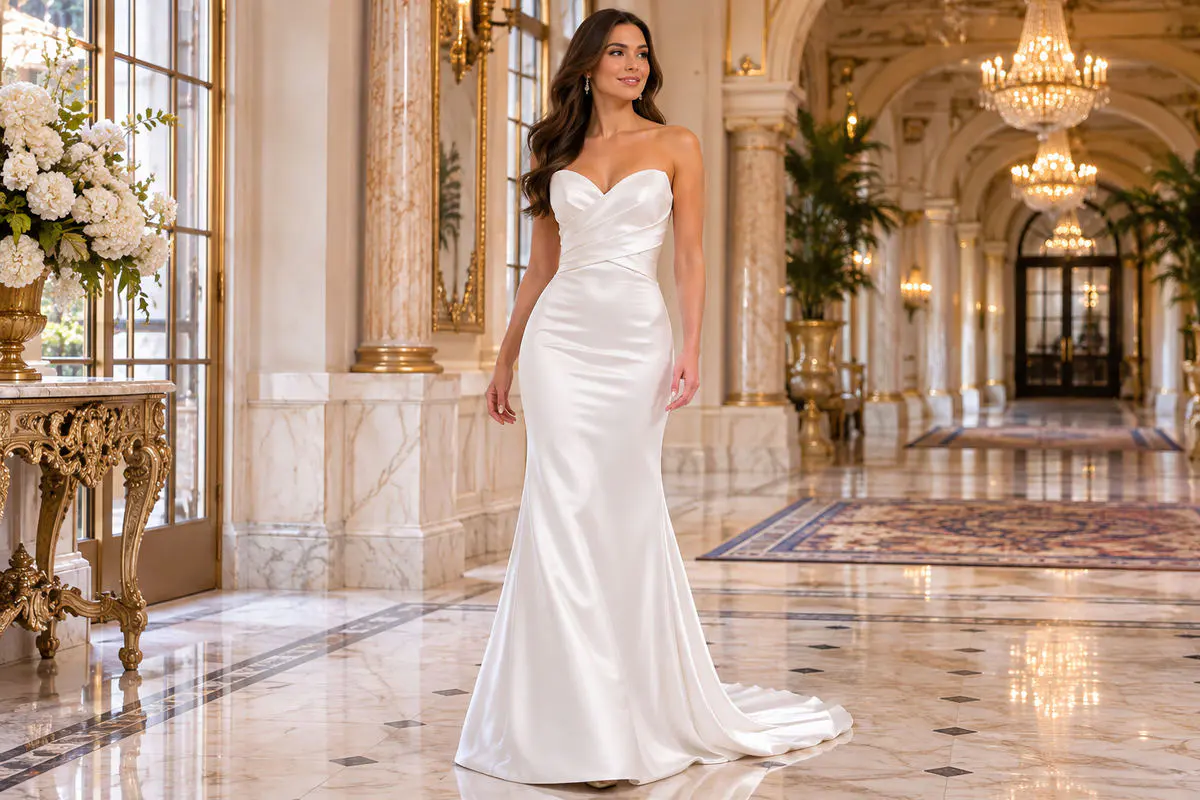
For example, Jovani JB45837 is an ivory satin sheath with a sweetheart neckline, draped bodice, low back, and sweep train. Its clean lines make the position of every seam visible. A tailor should assess how a proposed adjustment affects that drape, not assume satin is automatically easy to alter.
How Much Can You Take In or Let Out?
Taking in a gown is often more achievable than letting one out. Even then, the safe amount is determined by the pattern pieces and any details crossing the seam. A size number alone cannot establish the limit.
Taking in the bust, waist, or hips
An alterations specialist may remove modest fullness at side seams or shaping seams. On fitted bridal silhouettes, even a small adjustment can shift the position of the hip curve or skirt flare. Ask to see the pinned shape from the front, side, and back before sewing begins.
Watch for a zipper that twists, a waistline that moves, or seams that stop lining up. Those are signs to reassess the proposed change rather than keep tightening.
Letting out and moving structural elements
Letting out requires usable seam allowance, and some fabrics retain old needle marks. Moving cups, boning, or a zipper may involve several connected layers. The wedding dress construction guide explains why the visible outer fabric tells only part of that story.
If the needed width exceeds the available allowance, adding panels may visibly change the garment. Ask the specialist to show you the inside seam and explain exactly where any extra fabric would come from.
Can You Shorten a Hem or Add a Bustle Without Changing the Design?
Usually, yes, but the hem finish and train construction determine the method. A simple front hem is different from a layered skirt with a lace border. A bustle changes the train for movement, not the gown’s permanent ceremony length.
Hemming a layered or decorated skirt
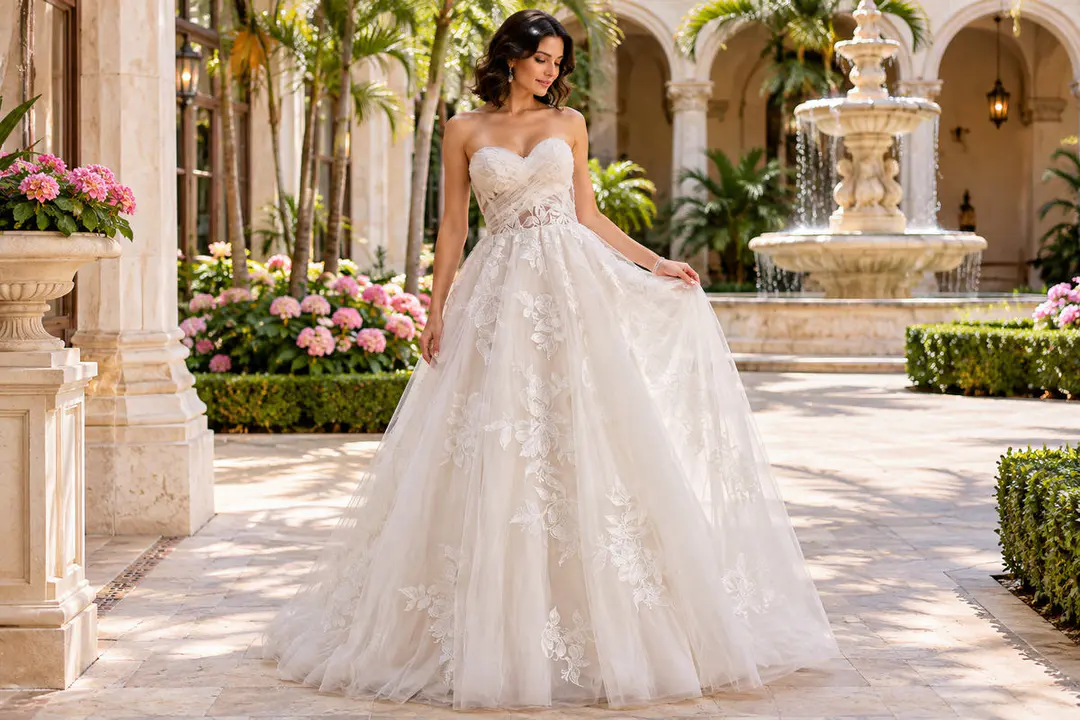
Jovani JB43191 features ivory and nude tulle with lace appliqué, a full A-line skirt, and a structured bodice. Altering a decorative hem may require lifting and replacing motifs. Compare A-line wedding dresses carefully because skirt fullness and layer count change the work involved.
Check whether the tailor intends to shorten from the bottom or another seam. Ask what happens to the lace border, lining, and front-to-back proportion.
Adding a bustle while keeping the train
A bustle should support the train without pulling the back bodice or distorting the skirt. Ask how the gown looks with the bustle both secured and released. Jovani’s broader wedding dress alterations guide addresses fitting appointments and the tailoring process.
Can Straps, Sleeves, and Necklines Be Changed Safely?
Small corrections may preserve the intended design. A completely new neckline or added sleeve can instead require reconstruction of the bodice and its support. Confirm the difference before placing an order.
Low-impact adjustments
Shortening an existing strap or adjusting a sleeve opening can improve comfort if the armhole and neckline remain balanced. The absence of straps makes bodice fit especially important in strapless bridal styles. Check security while breathing, turning, and raising your arms.
Changes that become a redesign
Turning a straight neckline into a deep plunge may expose internal supports. Adding sleeves can alter shoulder movement and require matching fabric. Replacing a zipper back with lacing may change tension across the entire bodice. These are design decisions, not routine fit corrections.
What Makes Lace, Beading, and Illusion Panels More Restrictive?
Decoration crossing a seam makes an adjustment more complex. Lace motifs may need removal and reapplication, while beads near a stitch line may need careful handling. Sheer mesh can expose a new seam that opaque fabric would hide.
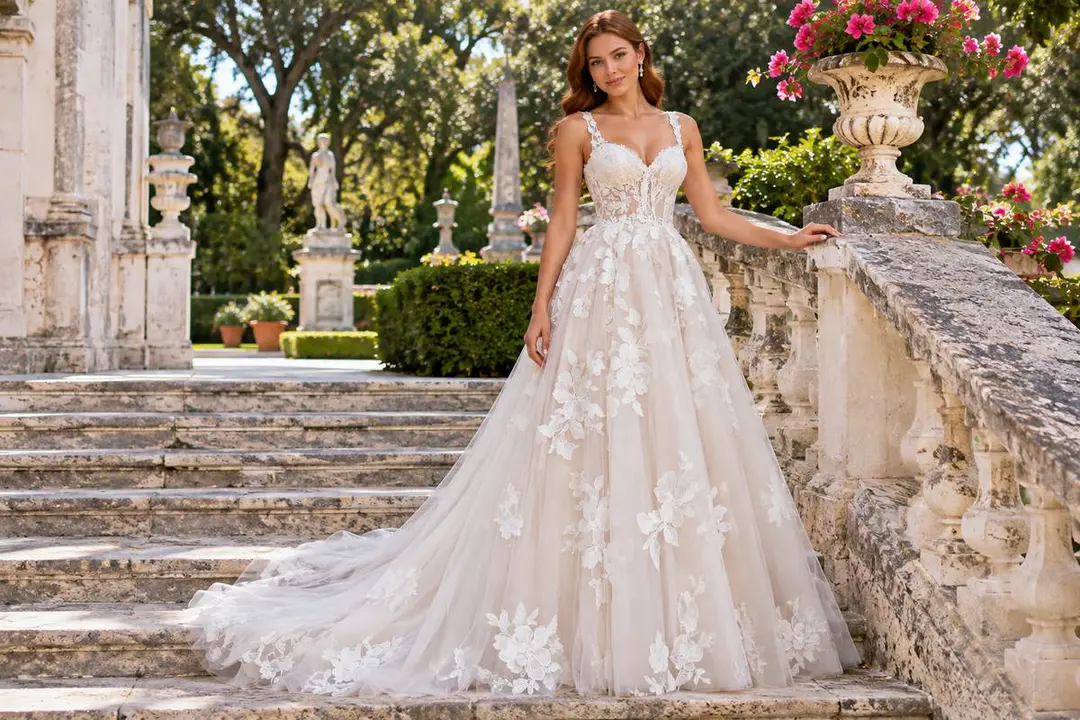
Jovani JB99062 has champagne-ivory lace appliqué on tulle, a sheer illusion bodice, and a layered A-line skirt. On lace wedding gowns, ask which motifs can be repositioned and whether the original pattern will still look continuous after sewing.
Adding lining may also change contrast and transparency. Removing it can expose internal seams. Ask for a pinned preview and a clear description of any decorative pieces that cannot be restored exactly.
How to Review an Alteration Before Approving It
A practical fitting assessment protects the details that drew you to the gown. For broader style context, the Jovani Wedding Dresses 101 guide explains the original design features worth comparing.
- Bring the wedding shoes and intended undergarments so hem and bodice decisions use the correct fit.
- Point to the neckline, waist seam, flare point, lace border, and train details you want preserved.
- Ask the specialist to identify seam allowance, boning, lining, and any trim affected by each change.
- Review the dress pinned from multiple angles, then sit, walk, turn, and raise your arms.
- Get the proposed work, possible visual changes, fitting plan, and charges in writing before cutting.
Do not rely on a clipped store sample to prove what the ordered size will allow. An assessment of the actual gown is more useful than a promise based on photographs.
When Is a Different Wedding Dress the Better Choice?
Choose another gown if the proposed work would shift its silhouette, require substantial new panels, or remove the feature you most admire. Turning a fitted shape into a full ball gown is a redesign, not a fitting alteration.
The same caution applies if a lace border cannot be matched or a bodice needs complete reconstruction. A similar style with a closer starting fit may preserve your preferences and avoid unnecessary risk. Jovani does not provide alteration services; discuss the scope with an independent bridal specialist or your retailer’s recommended professional.
Compare the construction and fit of bridal dresses in person through an authorized Jovani retailer, then confirm the tailoring possibilities before committing to a gown that needs major changes.
Frequently Asked Questions
Can wedding dress alterations be reversed?
Some can be revised if fabric and seam allowance remain. A cut hem, removed trim, or substantial reconstruction may be permanent. Ask which operations are reversible before work begins.
Can a secondhand wedding dress be altered?
Yes, if its fabric, seams, closures, and previous alterations are sound. Have a bridal specialist inspect it before purchase, especially if there are old needle marks or missing decorative pieces.
Should I choose my wedding shoes before a hem fitting?
Yes. Bring the shoes you plan to wear, or another pair with the same heel height. Changing heel height afterward can affect floor clearance and how the train falls.
Does Jovani perform wedding dress alterations?
No. Jovani does not provide tailoring or alteration services. Ask your authorized retailer whether it offers fittings or can refer you to an experienced local bridal alterations specialist.