
Wedding Dress Anatomy: Bodice, Waistline, Skirt, Train, Lining & Support
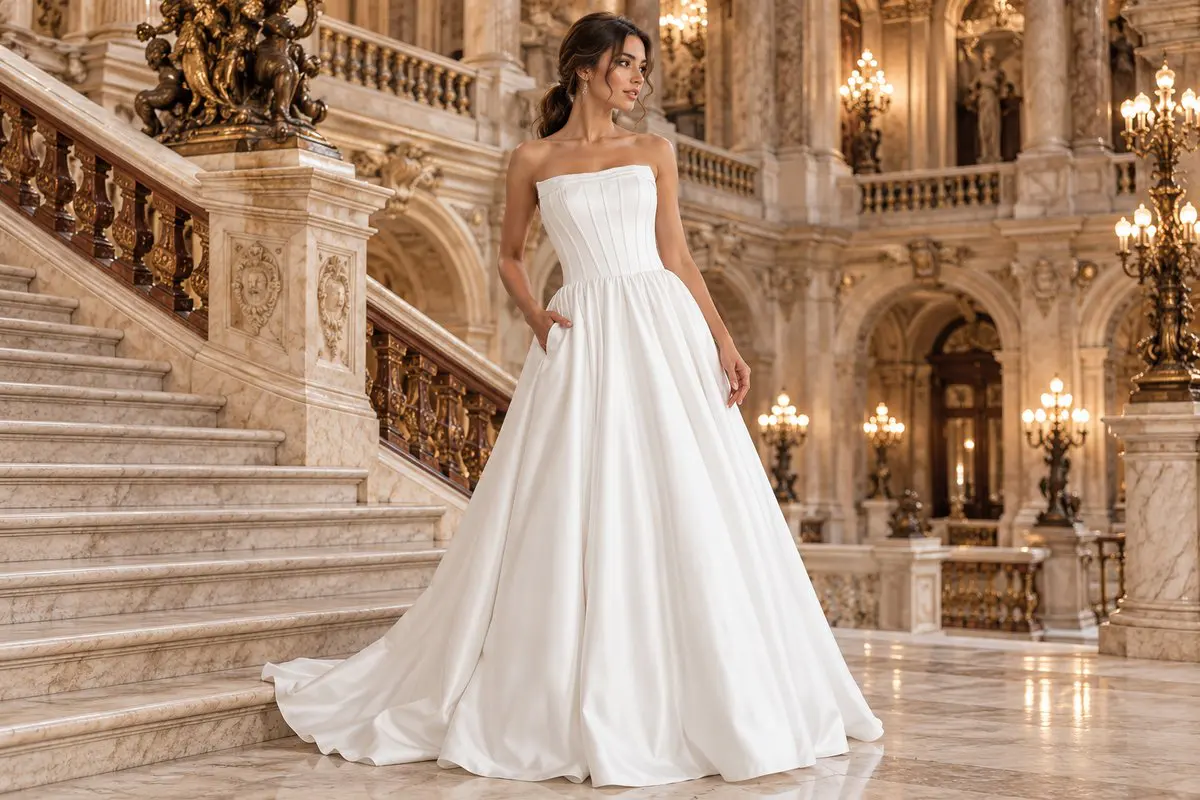
Wedding dress anatomy is the way the main parts of a bridal gown work together. The bodice shapes the upper section, the waistline controls where the skirt begins, the skirt creates the overall silhouette, and the train extends the design behind the bride.
Inside the gown, lining and structural support can affect how the dress sits, moves, and feels. Those internal details vary from one style to another, so understanding the terminology helps you compare actual gowns more carefully.
What are the main parts of a wedding dress?
The main parts of a wedding dress are the bodice, waistline, skirt, train, lining, and any internal support built into the specific gown. Each part affects the dress differently, from neckline stability and waist placement to movement, coverage, and overall silhouette.
These components should be considered together rather than as separate design choices. A fitted bodice paired with a full skirt behaves very differently from the same bodice attached to a narrow sheath skirt.
If you are new to bridal terminology, Jovani's Wedding Dresses 101 provides a broader introduction to wedding dress styles before you look at each structural part in detail.
The bodice forms the upper structure of the gown
The bodice is the part of the wedding dress that covers the torso above the skirt. It usually includes the neckline and may also include straps, sleeves, cups, panels, seams, or internal structure depending on the design.
The bodice plays a major role in how securely the upper part of the gown sits.
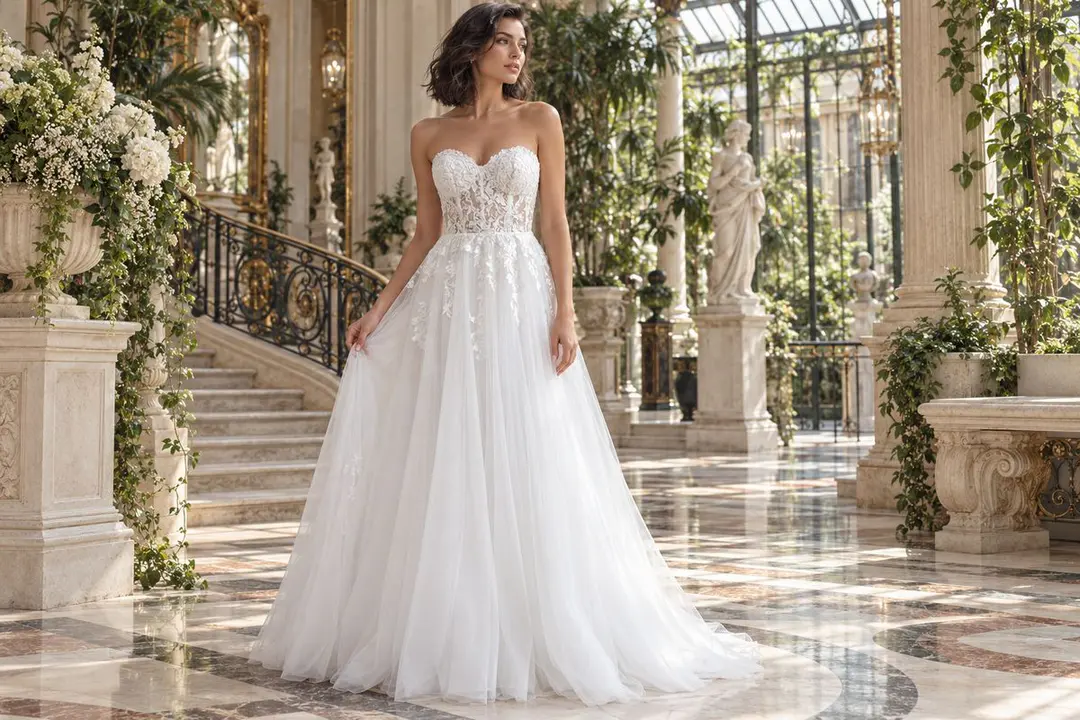
Neckline and bodice shape work together
A sweetheart, straight, square, V-neck, halter, or high neckline changes the visible shape of the bodice.
The neckline should not be evaluated only from the front. Look at the side and back as well, especially if the design is strapless, low-backed, or asymmetric.
The neckline also affects how much the bodice needs to stay stable without help from straps or sleeves.
Seams and panels shape the bodice
Many bodices use vertical or curved seams to create shape.
These seams may be more visible on smooth fabrics such as satin or crepe and less obvious under lace or embellishment.
The number and placement of seams vary by gown. Their presence does not automatically tell you how much support the dress provides.
Strapless bodices need careful fit checks
A strapless dress depends more heavily on the actual bodice fit because there are no shoulder straps helping to keep the neckline in place.
Check whether the top edge remains stable when you raise your arms, sit, turn, and walk.
Jovani's current strapless wedding dresses show how the same open neckline can appear with A-line, mermaid, ball gown, and fitted skirts.
The waistline controls where the bodice becomes the skirt
The waistline is the transition point between the bodice and skirt.
Changing that point can change the entire proportion of the gown even when the neckline and skirt fabric stay the same.
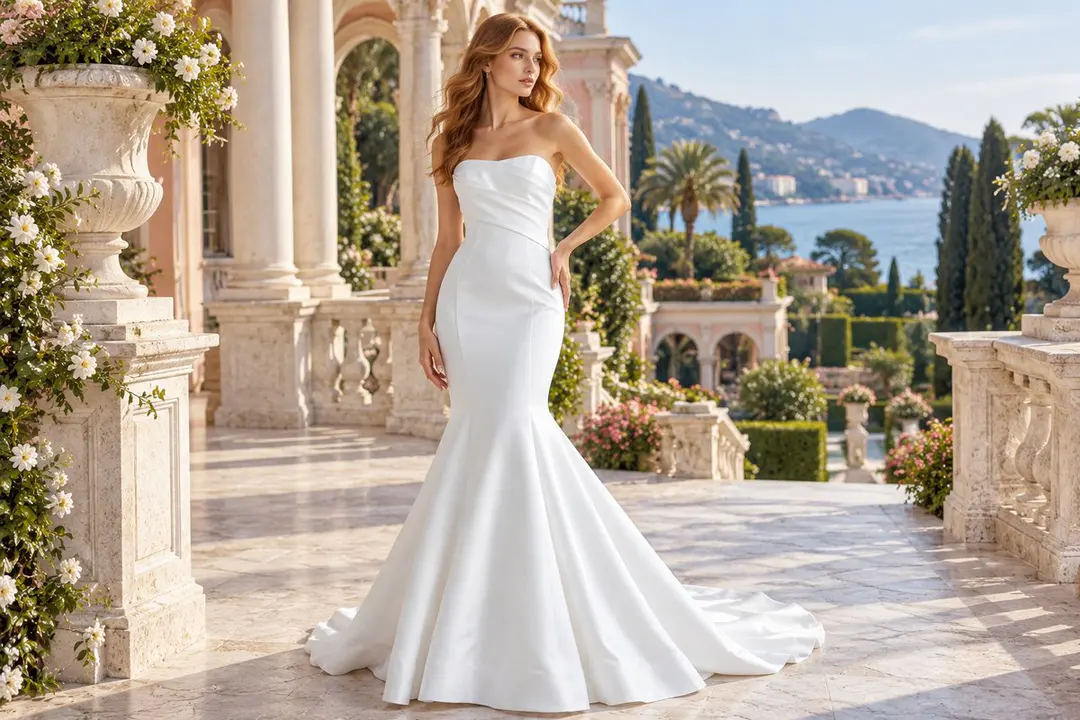
Natural waist
A natural waistline usually sits close to the body's natural waist and creates a clear division between bodice and skirt.
It is common in A-line and ball gown designs because it gives the skirt an obvious point from which to open.
Basque waist
A Basque waist extends lower at the center front, usually creating a V-shaped or curved point.
This changes the transition between bodice and skirt and can give a gown a more architectural appearance.
The exact depth and shape vary by design, so compare the gown from the front and side rather than relying on the label alone.
Drop waist
A drop waist places the transition lower on the torso before the skirt begins.
This can make the bodice section appear longer and can change where skirt volume starts.
Because the transition sits lower, movement and fit should be checked through sitting and bending as well as standing.
Empire waist
An empire waist places the skirt transition higher, usually beneath the bust.
This creates a very different construction from a natural or dropped waist because the skirt begins much earlier.
The style is less common in some current bridal collections but remains useful terminology when comparing wedding dress anatomy.
The skirt creates most of the wedding dress silhouette
The skirt is the section below the waistline.
Its width, flare point, fabric, layers, and hem determine whether the gown reads as narrow, flowing, fitted, or highly voluminous.
This is where wedding dress anatomy overlaps with silhouette terminology.
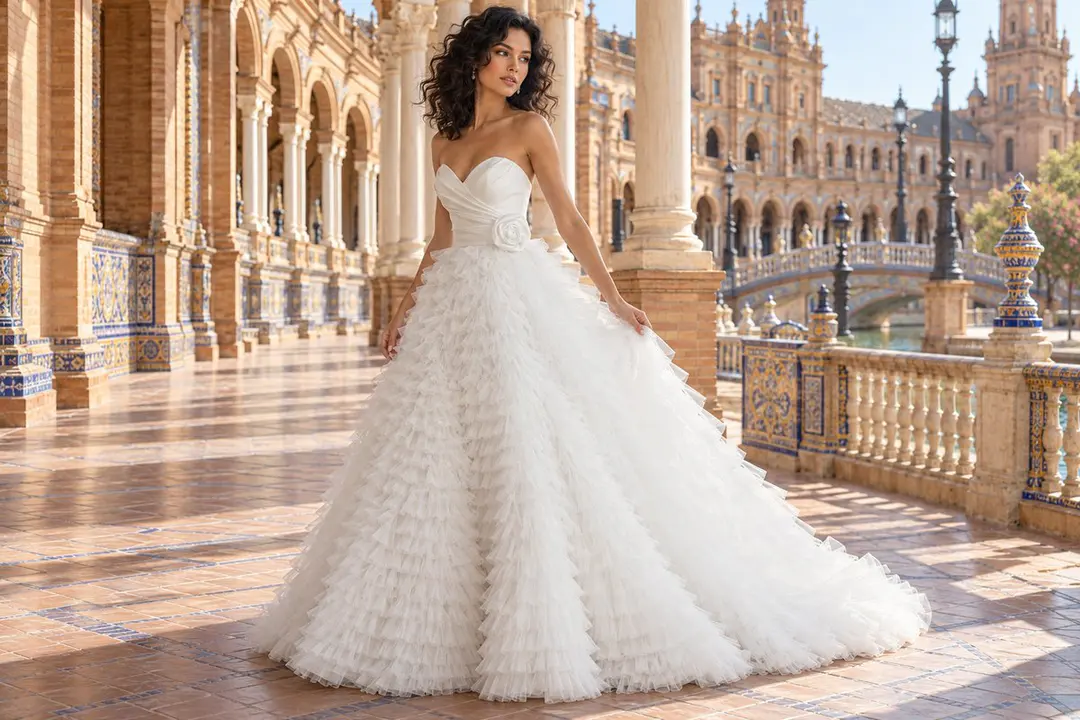
A-line skirts open gradually
An A-line skirt begins closer to the body near the waist and becomes wider toward the hem.
The amount of flare can be subtle or substantial.
Jovani's A-line wedding dresses show how waist placement, fabric weight, and layer count can change the same basic skirt structure.
Ball gown skirts create greater volume
A ball gown uses much more skirt volume than a standard A-line.
That volume may come from fabric layers, underskirts, petticoats, tulle, or other structural choices depending on the individual gown.
The important practical check is how easily you can control the skirt while walking, turning, sitting, and moving through doorways.
Fitted skirts stay closer before releasing
Mermaid, trumpet, sheath, and other fitted silhouettes keep the skirt closer to the body for more of its length.
The point where the skirt begins to release affects stride and movement.
If you are comparing narrower bridal silhouettes, Jovani's fitted wedding dresses show several ways a skirt can stay close through the waist and hips before changing direction.
The train extends the skirt beyond the hem
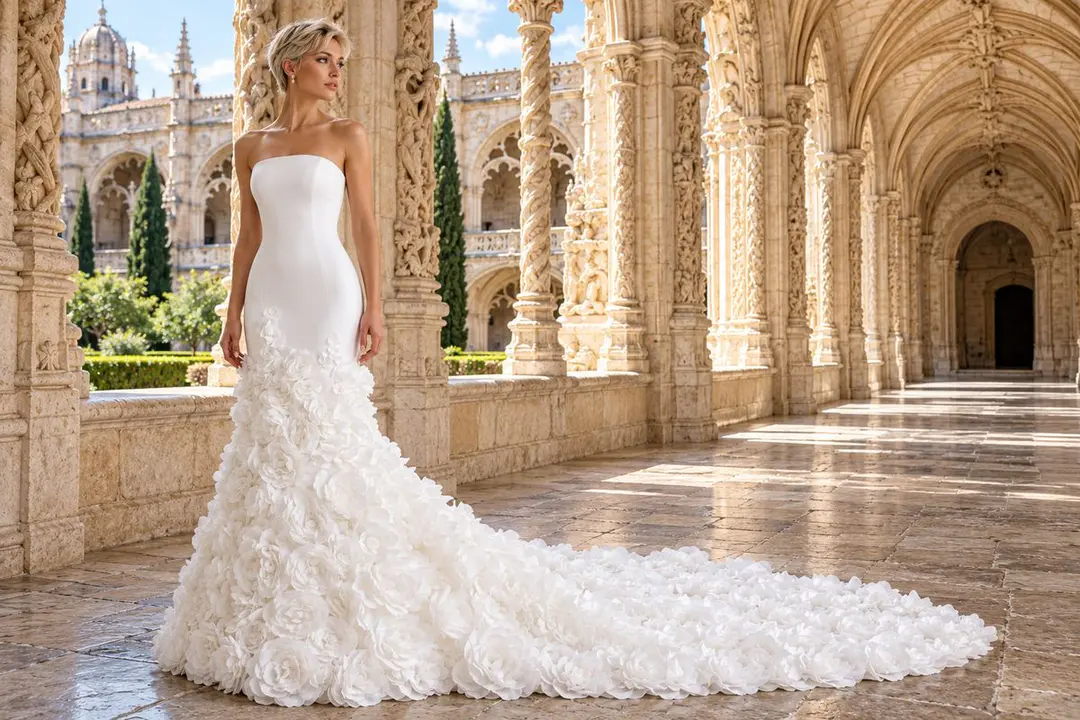
The train is the portion of the gown that continues behind the wearer.
It may be a small extension of the skirt or a major design feature that adds substantial length.
Train length affects both appearance and logistics.
Shorter trains are easier to manage
A sweep or similarly short train adds some extension behind the gown without creating a large amount of fabric on the floor.
This can make walking and reception movement easier, although the exact experience still depends on the skirt and fabric.
Longer trains create more floor contact
Longer trains increase the amount of fabric trailing behind the dress.
That can create more visual scale during the ceremony, but it also means more fabric to manage on stairs, during photographs, and when moving through the reception.
The venue should be considered before choosing a very long train.
Detachable trains change the gown between ceremony and reception
Some wedding dresses use detachable overskirts or trains.
These can create one silhouette for the ceremony and a more compact version afterward.
Do not assume every detachable piece works the same way. Check where it attaches, how securely it sits, and whether the attachment remains comfortable.
Lining changes coverage, feel, and how the outer fabric reads
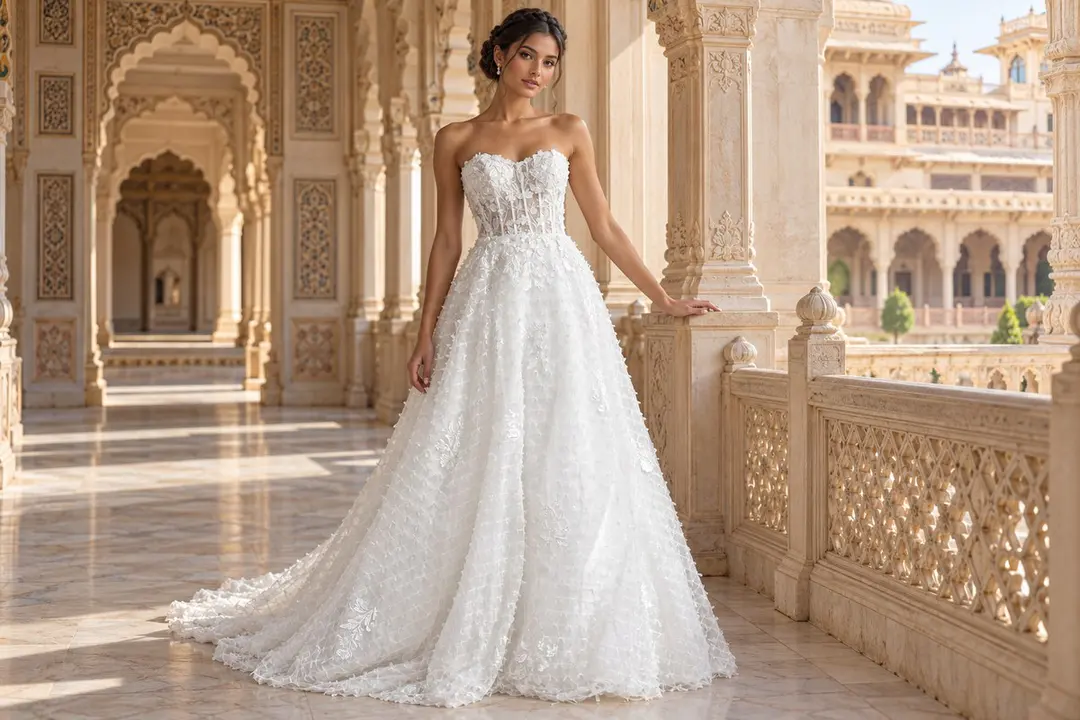
Lining is the fabric layer placed inside part or all of the wedding dress.
Its role can include coverage, comfort, opacity, and creating a smoother inner surface beneath lace, tulle, beading, or other outer materials.
Not every section of every gown is lined the same way.
Fully lined areas create more opacity
A fully lined bodice or skirt places an additional fabric layer beneath the outer material.
This can change the color depth and reduce transparency.
The effect depends on the lining color and the outer fabric.
Partial lining creates intentional contrast
Some wedding gowns combine lined and sheer sections.
For example, a bodice may use lining through one area while leaving lace or mesh more transparent somewhere else.
That contrast is part of the design and should be checked in daylight as well as fitting-room lighting.
Jovani's lace wedding dresses provide useful examples of how lining and sheer areas can change the appearance of the same surface material.
Skirt lining can affect movement
The inner layer of a skirt can change how freely the outer fabric moves.
A gown with several internal layers may behave differently from a visually similar dress with fewer layers.
When trying the gown, move the full skirt rather than judging only the outer fabric with your hands.
Wedding dress support is not the same in every gown
Support refers to the structural elements that may help a wedding dress hold its shape or remain stable on the body.
This is one area where shoppers should avoid assumptions.
A structured appearance does not prove that a dress contains one specific type of internal support.
Boning may be used in some bodices
Boning is a narrow structural element that may be placed inside bodice seams or panels.
It can help the bodice hold its shape, but the amount, material, and placement vary by gown.
Do not assume every corset-look bodice contains the same boning system.
Cups may be built into some gowns
Some wedding dresses include cups or shaped bust sections.
Others may be designed to work with separate undergarments.
The presence of cups does not automatically determine the level of support, so check the actual garment and how it fits you.
Corset-style construction varies widely
The word corset can describe several visual and structural approaches.
Some gowns use visible corset-inspired seams or lace-up backs, while others include more internal structure.
Ask about the specific gown instead of treating corset as a guarantee of a particular construction.
Outer fabric and internal construction do different jobs
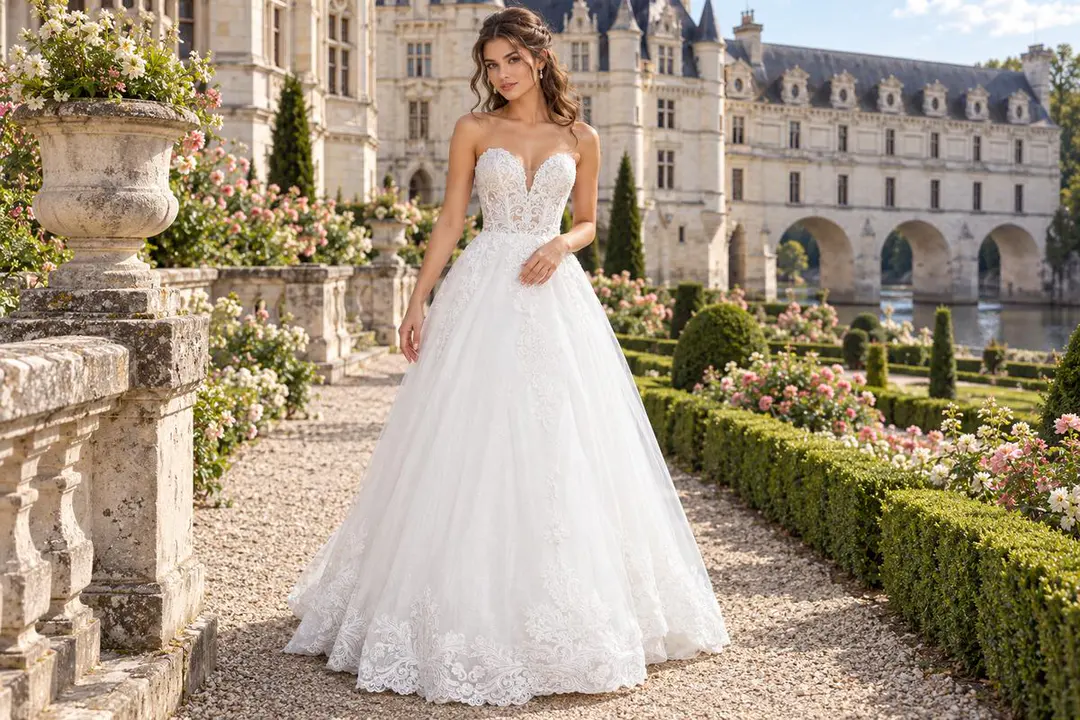
It helps to separate what you see from what is happening inside the gown.
Satin, crepe, lace, tulle, and other outer fabrics determine much of the visible surface.
Internal elements such as lining, seams, cups, boning, closures, and underskirts affect how the gown holds its shape and sits on the body.
The two systems work together, but they are not interchangeable.
A gown can look very soft on the outside and still include substantial internal structure. Another can look sculpted because of the fabric itself while using a different internal approach.
Closures are part of wedding dress anatomy too
The back or side closure affects both appearance and function.
Wedding gowns may use zippers, buttons, hooks, lace-up sections, or combinations of several closure types.
The visible closure should be checked with the dress fully fastened.
Buttons may be decorative or functional depending on the design. A lace-up back may change how the bodice is adjusted, while a zipper creates a fixed closure point.
Do not force a closure that feels unusually tight. Fit should be evaluated with the gown fully secured.
The hem is the finishing edge of the skirt
The hem is the lower edge of the wedding dress.
On a floor-length gown, its position is directly affected by shoe height.
This is why wedding dress length should be judged with footwear close to what you expect to wear.
A hem that looks correct barefoot may sit very differently with heels.
The train begins beyond the back hem, so hem length and train length should be evaluated separately.
How the parts of a wedding dress work together
Wedding dress anatomy matters because changing one component affects the others.
A lower waist changes where the skirt begins. A heavier skirt can change how the bodice feels. A long train adds more fabric behind the gown. A sheer bodice may depend on lining placement for its final appearance.
This is why judging a wedding dress from one front-facing photograph is difficult.
Look at the front, side, and back. Then walk, sit, turn, and check the dress in more than one lighting condition.
For a broader comparison of how these components create different overall shapes, Jovani's guide to popular wedding dress silhouettes is the better next step.
What to inspect during a bridal appointment
When you try on a gown, start at the top and work downward.
Check whether the neckline stays in place, then notice where the waistline sits. Look at where the skirt begins to flare and how much fabric you need to control.
Turn around and inspect the closure, back construction, and train.
Finally, look inside the gown enough to understand the lining and any visible support features.
You do not need to become a garment technician. You only need enough information to compare one dress with another accurately.
What shoppers ask about wedding dress anatomy
These questions cover the parts of a bridal gown that shoppers most often encounter during appointments and product research.
What is the bodice of a wedding dress?
The bodice is the upper section of the gown above the skirt. It includes the neckline and may include straps, sleeves, seams, cups, boning, or other structural elements depending on the specific design.
What is the waistline of a wedding dress?
The waistline is the point where the bodice transitions into the skirt. Common placements include natural, Basque, drop, and empire waists, and each one changes the proportion of the gown.
What is the difference between the skirt and the train?
The skirt is the main lower section of the dress, while the train is the portion that extends behind the gown beyond the back hem. A dress can have a full skirt with a short train or a narrow skirt with a long train.
Are all wedding dresses lined?
No. Lining varies by design and may cover the entire gown or only selected areas. Some dresses intentionally combine lined sections with sheer lace, mesh, or tulle.
Do all wedding dresses have boning or built-in cups?
No. Some gowns include boning, cups, or other internal support, while others use different construction. Check the actual dress rather than assuming these features are standard.
Why does wedding dress anatomy matter when shopping?
Understanding the parts of the gown helps you compare fit, movement, coverage, and construction more accurately. It also makes it easier to explain what you like or dislike during a bridal appointment.
Once you understand how the bodice, waistline, skirt, train, lining, and support work together, compare the real construction and movement of the gown in person through an authorized Jovani retailer.