
Winter weddings trade golden hour for candlelight, garden aisles for grand rooms, and light layers for real ones. The season rewards guests who dress into the cold instead of pretending it is not there, because the difference between shivering through the toasts and enjoying them comes down to fabric, sleeves, and a smart plan for the journey between car and venue. This guide starts where winter dressing actually starts, with the fabric, then works through color, layering, holiday season formality, and the practical details that keep the whole look intact from a snowy arrival to the last dance.
Which Dresses Work Best for a Winter Wedding?
The best winter wedding guest dresses lean on substantial fabrics like velvet, heavy satin, crepe, and brocade in deep jewel tones or rich neutrals. Long sleeves and a planned outer layer handle the cold, floor length suits black tie evenings, midi lengths with tights suit cocktail attire, and white and ivory stay off limits in every season.
Fabric Comes First in Winter
In summer a guest chooses a color and finds a fabric to match, but winter reverses the order. Velvet is the fabric of the season, warm to the touch, rich under candlelight, and forgiving over a long evening, and our full guide to velvet wedding guest dresses covers the colors and cuts that keep it modern. Heavy satin and mikado hold a sculptural shape, crepe gives a clean line with real warmth, and brocade or jacquard adds pattern without a single bead.
Sheen matters more in winter than in any other season, because reception lighting runs low and warm. A little luster in satin or a scatter of beadwork catches candlelight beautifully, and understanding the difference between matte and shiny fabrics helps you decide how much glow the venue can carry.
Colors That Glow in Low Light
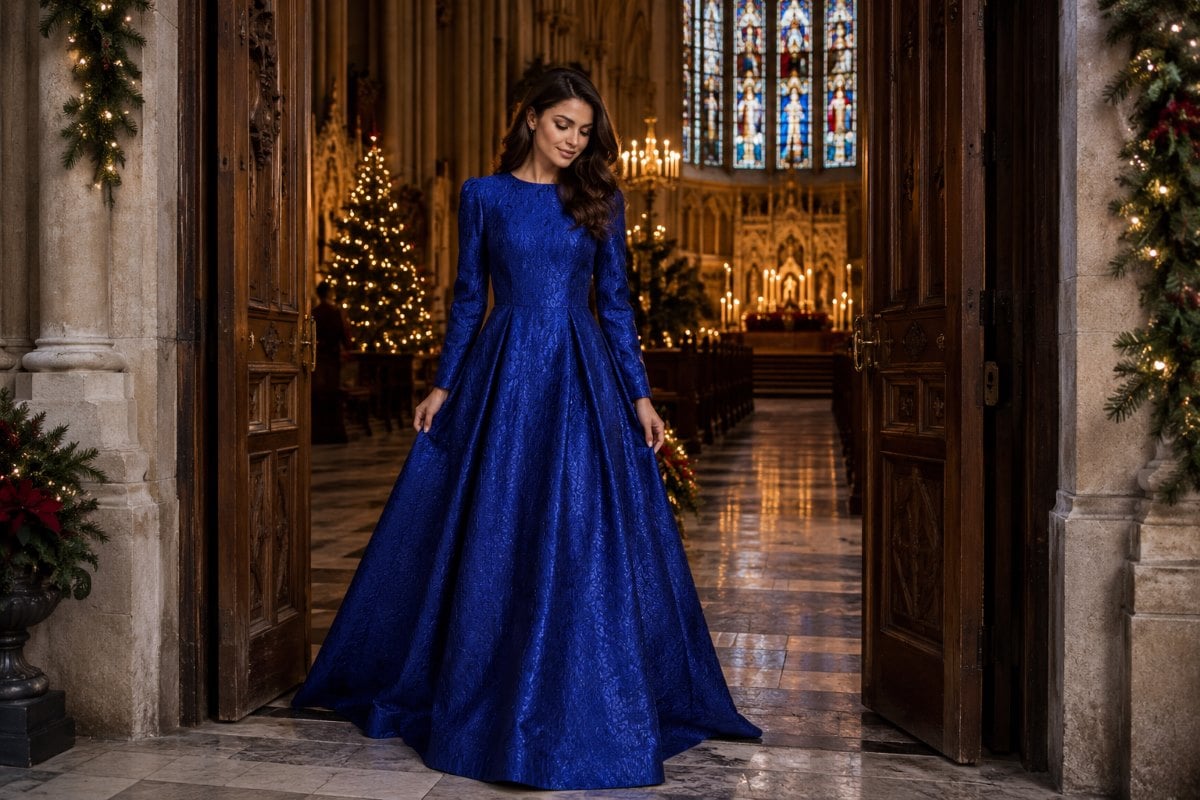
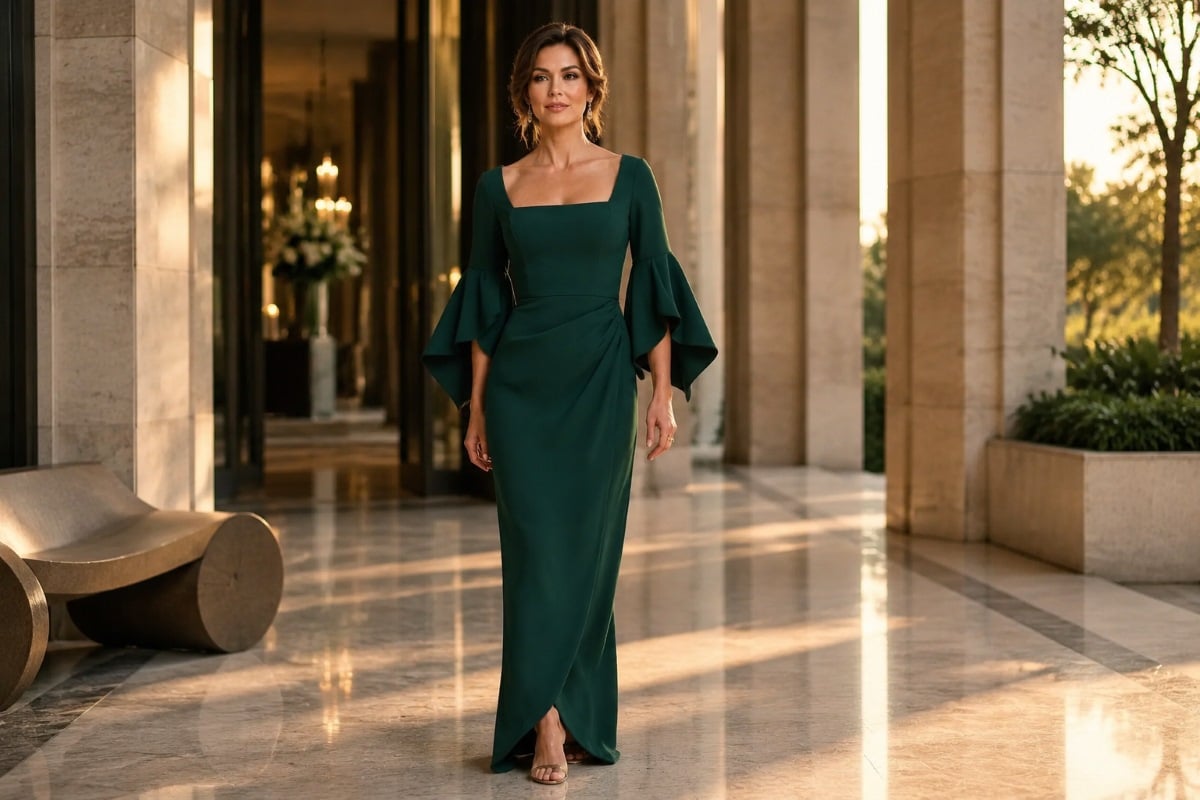
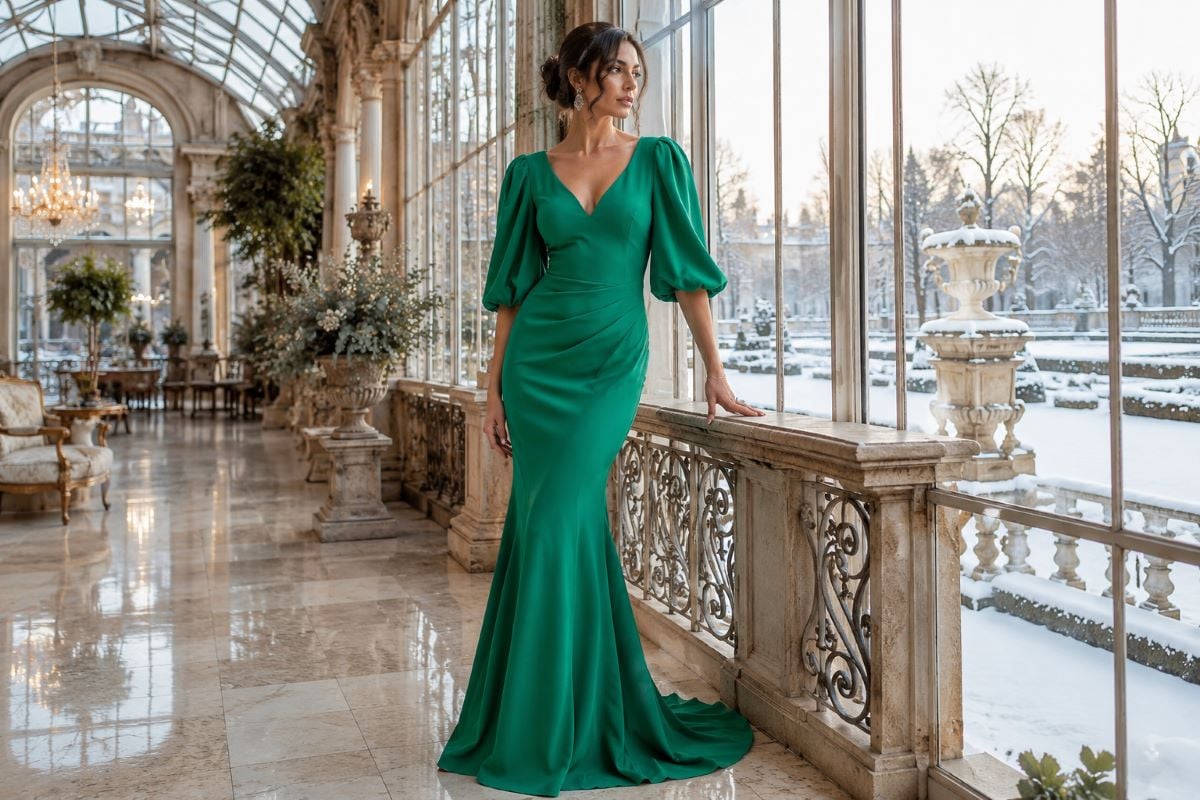
Winter palettes are deep and luminous. Emerald, sapphire, ruby, amethyst, and garnet feel celebratory in dim rooms, while forest green, midnight navy, chocolate, charcoal, and true black read polished rather than somber when the fabric has texture. Metallic golds and bronzes suit evening receptions, and a deep berry or wine shade flatters nearly everyone in winter light.
The question of winter white comes up every season, and the answer does not change with the weather. White, ivory, cream, and near white champagne belong to the bride at every wedding, so a guest drawn to pale shades should reach for silver grey, icy blue, or soft taupe instead, all of which capture the frosted mood without crossing the line.
Sleeves, Layers, and the Journey In
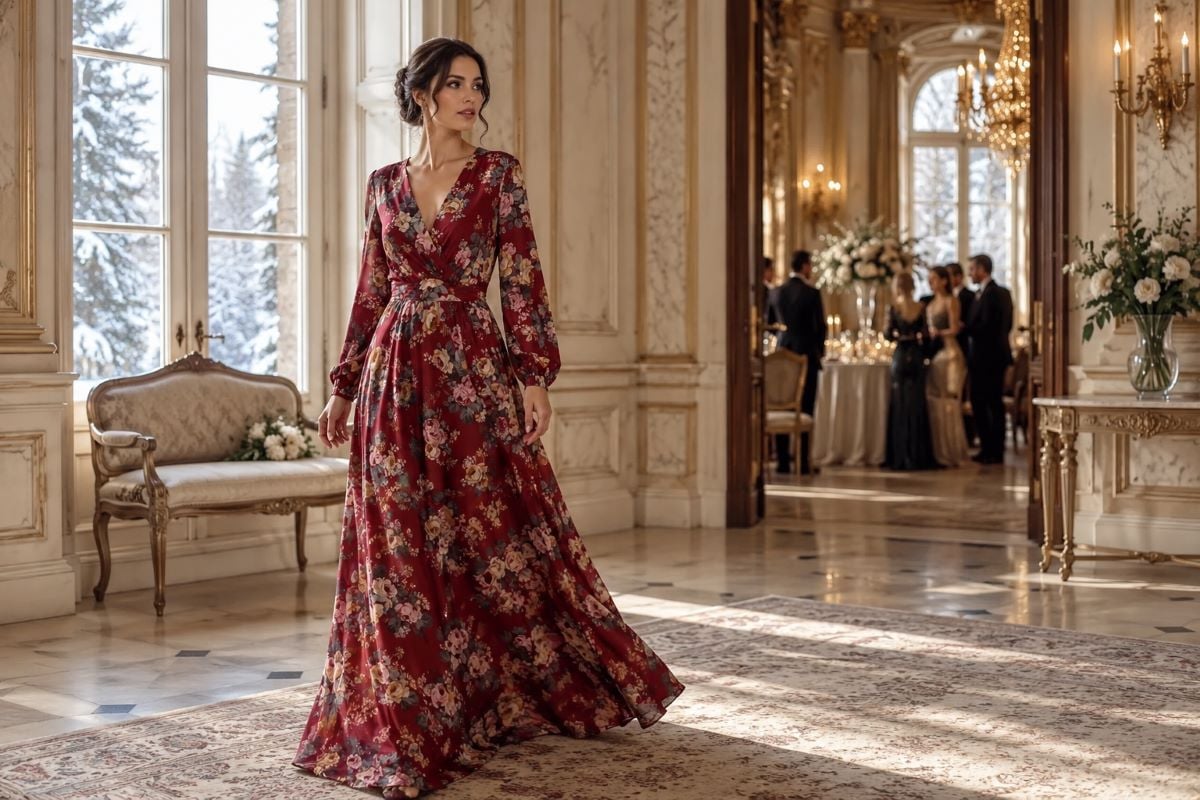
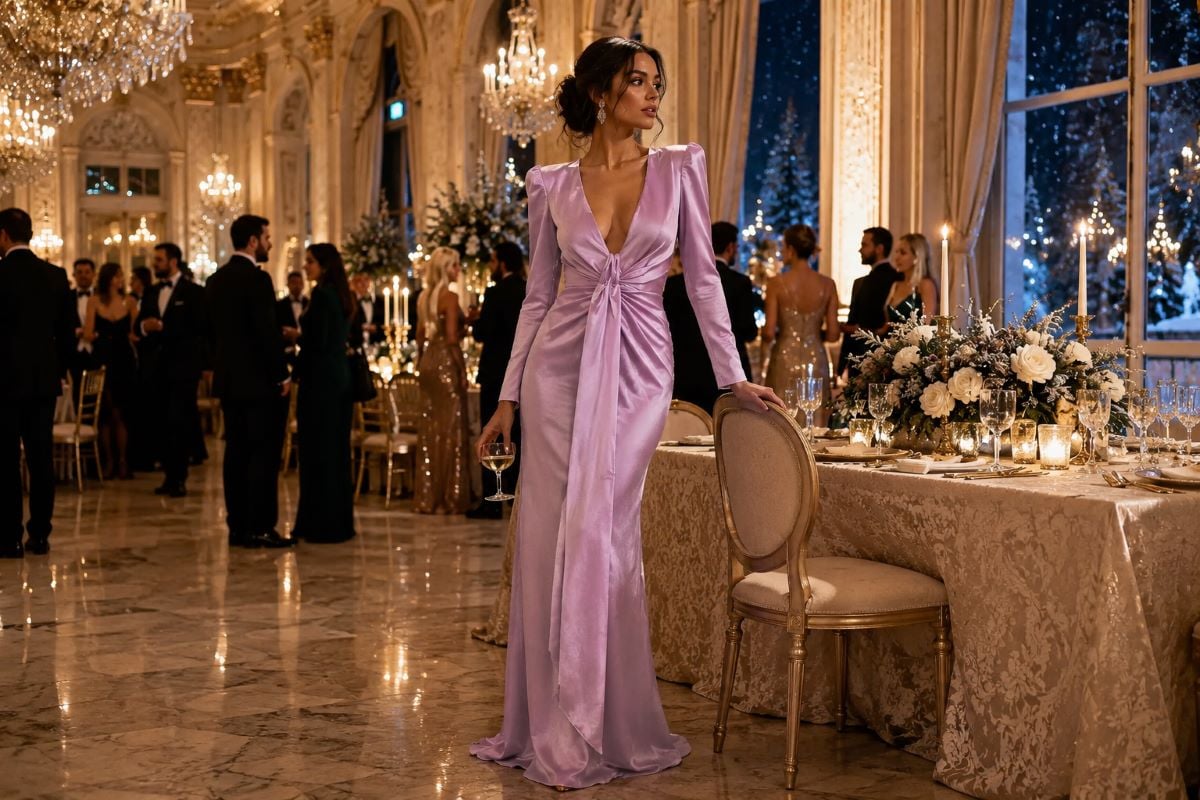
Long sleeves are the easiest winter decision a guest can make, since they add warmth inside the dress itself and photograph elegantly in every silhouette from column to A-line. Illusion and lace sleeves offer coverage with lightness, and our advice on styling long sleeve dresses shows how to balance a covered arm with an open neckline.
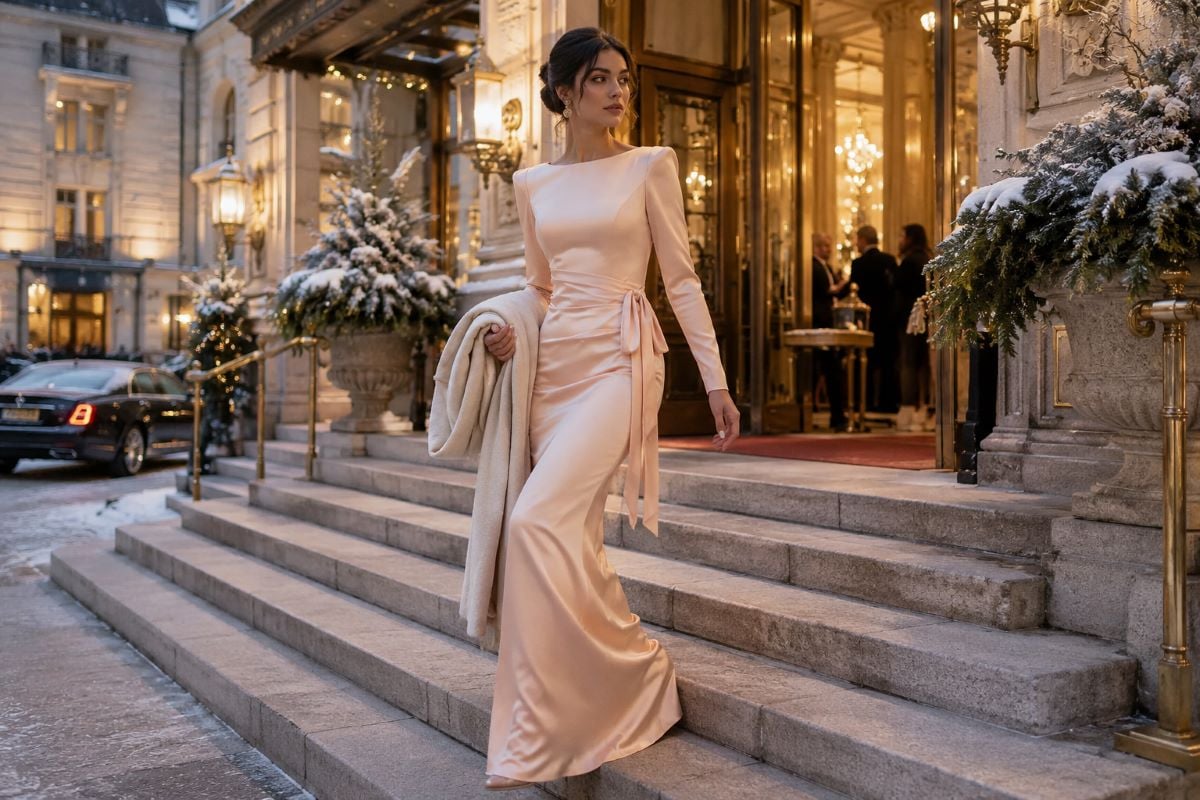
The layer you arrive in deserves as much thought as the dress. A casual puffer over a formal gown breaks the look in every photo taken near the door, so plan a tailored coat, a faux fur stole, or a pashmina in a complementary shade. For built in drama, wearing a cape evening dress solves the layering question inside the design itself, since the cape moves with the gown instead of hiding it.
Holiday Weddings and Black Tie Evenings
Winter carries more formal invitations than any other season, between holiday weekend celebrations and new year festivities that lean dressy by nature. If the invitation names the most formal code, the full rules in what to wear to a black tie wedding apply, which for winter means a floor length gown in a substantial fabric rather than a floaty one.
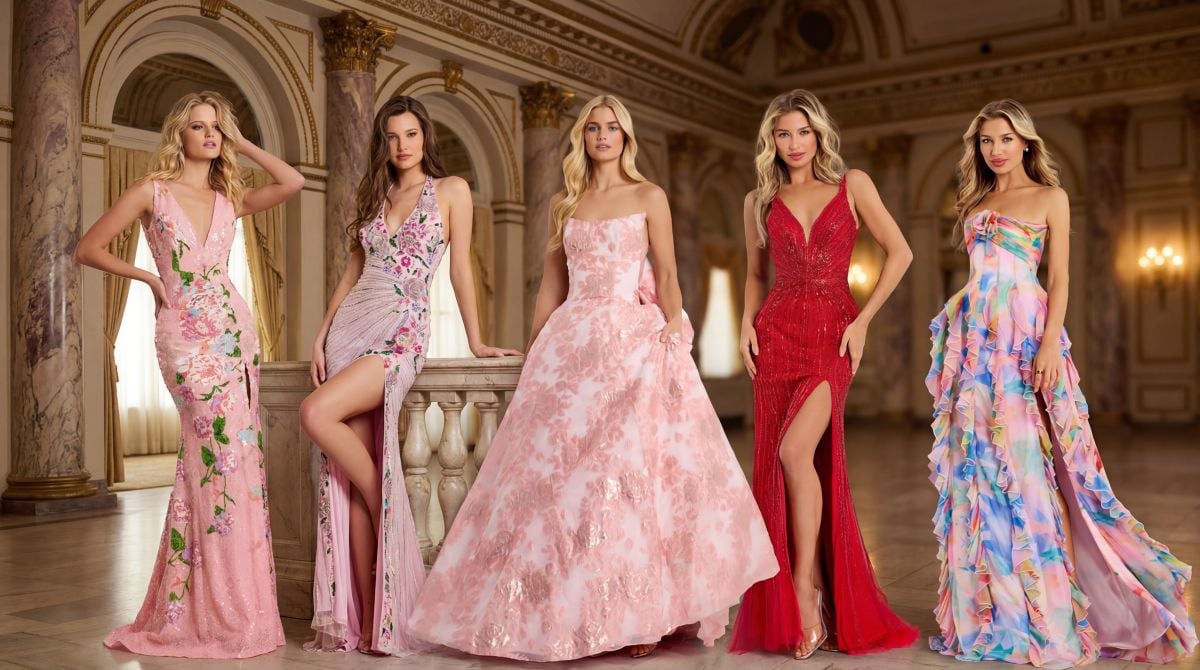
Sequins and metallics earn their place in this stretch of the calendar. A fully sequined gown that might feel loud at a spring garden ceremony reads festive and correct at a December reception, especially in deep green, midnight blue, black, or gold. Keep the sparkle concentrated in the dress and let the jewelry stay quiet, so the look feels celebratory rather than busy.
Silhouettes and the Practical Details
Structured silhouettes suit the season best. Column and sheath gowns in crepe, A-lines in mikado or velvet, and long sleeve fit and flare shapes all hold their line under a coat and move well indoors. Sheer or opaque tights in black or a tonal shade add real insulation under a midi or knee length dress, and closed toe pumps with a block heel manage icy pavement far better than thin stilettos. Many guests travel in boots and change shoes at the venue, which protects both the shoes and the hem.
When you begin browsing, filter the season’s palette and fabrics through the wedding guest gowns collection and shortlist styles with sleeves or layering potential before falling for anything strapless.
Winter Wedding Guest Dress Questions
Cold weather invitations raise a familiar set of questions, and the short answers below settle them.
What colors should a guest wear to a winter wedding?
Deep jewel tones like emerald, sapphire, ruby, and amethyst suit winter weddings best, along with rich neutrals like midnight navy, forest green, chocolate, charcoal, and black. Metallic gold and bronze work for evening receptions, while silver grey and icy blue offer a pale option that never reads bridal.
Can you wear velvet to a winter wedding?
Yes, velvet is one of the most fitting choices a winter wedding guest can make. It brings warmth, depth, and a formal finish in jewel tones and dark neutrals, and it works at every level of formality from a velvet midi at a cocktail reception to a floor length velvet gown at black tie.
Is winter white acceptable for a wedding guest?
No, winter white falls under the same rule as every other white. Shades that could photograph as white, ivory, or cream belong to the bride regardless of season, so guests who want a light, frosty look should choose silver grey, icy blue, or pale taupe instead.
Can you wear a short dress to a winter wedding?
A knee length or midi dress works for cocktail and semi formal winter weddings when it is paired with tights, closed toe shoes, and a proper outer layer. For black tie or formal evening receptions, floor length remains the expected standard whatever the temperature.
What do you wear over a dress to a winter wedding?
Choose an outer layer that matches the formality of the dress, such as a tailored wool coat, a faux fur stole, a velvet wrap, or a cashmere pashmina in a complementary shade. The layer appears in arrival photos and coat check moments, so treat it as part of the outfit rather than an afterthought.
Are sequins appropriate for a winter wedding?
Yes, sequins suit winter weddings well, especially evening and holiday season celebrations where low light rewards sparkle. Keep the color deep, such as emerald, midnight blue, black, or gold, and balance a fully sequined dress with simple shoes and restrained jewelry.
A winter wedding gives a guest permission to wear the richest fabrics in the closet, so choose the velvet, the sleeves, and the layer with intention, then see how they feel in person at an authorized Jovani retailer near you.