
How to Steam a Wedding Dress Safely by Fabric
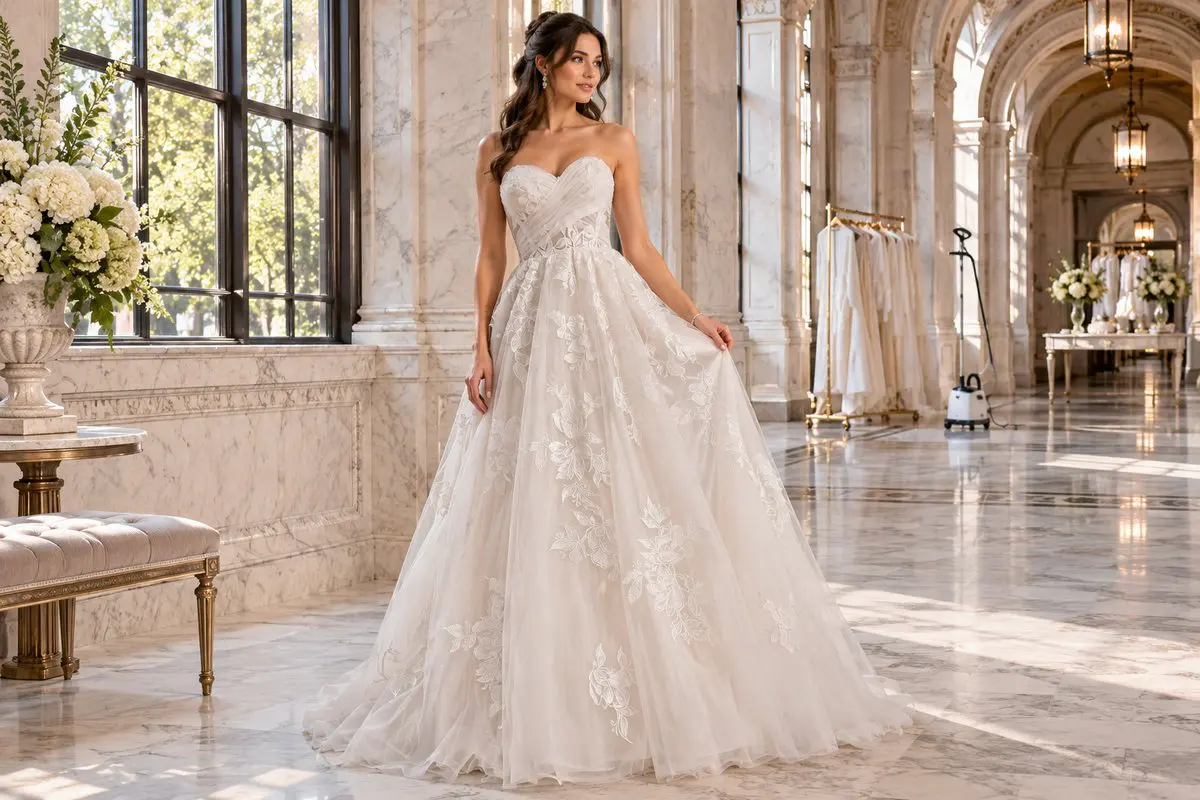
How to steam a wedding dress safely starts with its care label, not the steamer. Hang the gown first, and use gentle steam only when its fabric and decorations permit it. Satin, tulle, lace, and structured bridal fabrics need different handling. If instructions are unclear, ask a bridal specialist rather than risk a mark on the dress.
Can You Steam a Wedding Dress Without Damaging It?
Yes, a wedding dress can often be steamed without damage when the care instructions allow it and you test an inconspicuous area first. Heat, moisture, and a hot steamer head can still change the finish or loosen delicate details. Compare the fabrics and construction found across Jovani bridal gowns before deciding which areas need attention.
Check both the outer fabric and the lining, then inspect beading, glued crystals, embroidery, and stiff seams. A fabric that tolerates steam does not guarantee that every trim will. The Wedding Dresses 101 guide explains the parts of a bridal gown; your retailer can confirm care instructions for the exact design.
Prepare the Gown Before Removing Wrinkles
A safe setup helps prevent new creases and accidental water spots. Start early enough to let the dress dry completely before it goes into a garment bag. Keep the gown away from makeup, drinks, and any surface that could catch its train.
- Read the sewn care label and any instructions from the boutique. If steaming is prohibited or the fabric is unknown, stop.
- Hang the dress using its internal support loops on a secure, sturdy hanger. Place a clean white sheet beneath the hem and train.
- Fill the steamer as directed, preferably with distilled water. Release the first burst away from the dress to check for droplets.
- Test a hidden seam or lining area, allow it to dry, and inspect for spotting, gloss, puckering, or color change.
Hold the steamer away from the fabric, move continuously, and work in small sections without pulling a wet panel. Never steam a wedding dress while someone is wearing it. For an A-line bridal gown, separate the skirt layers so moisture does not collect between them.
How to Steam a Wedding Dress by Fabric
The safest technique depends on the textile, its backing, and the dress construction. Begin with the gentlest setting permitted by the care label and avoid fixed temperature rules. When an area does not respond quickly, stop rather than adding more heat.
Satin and Crepe
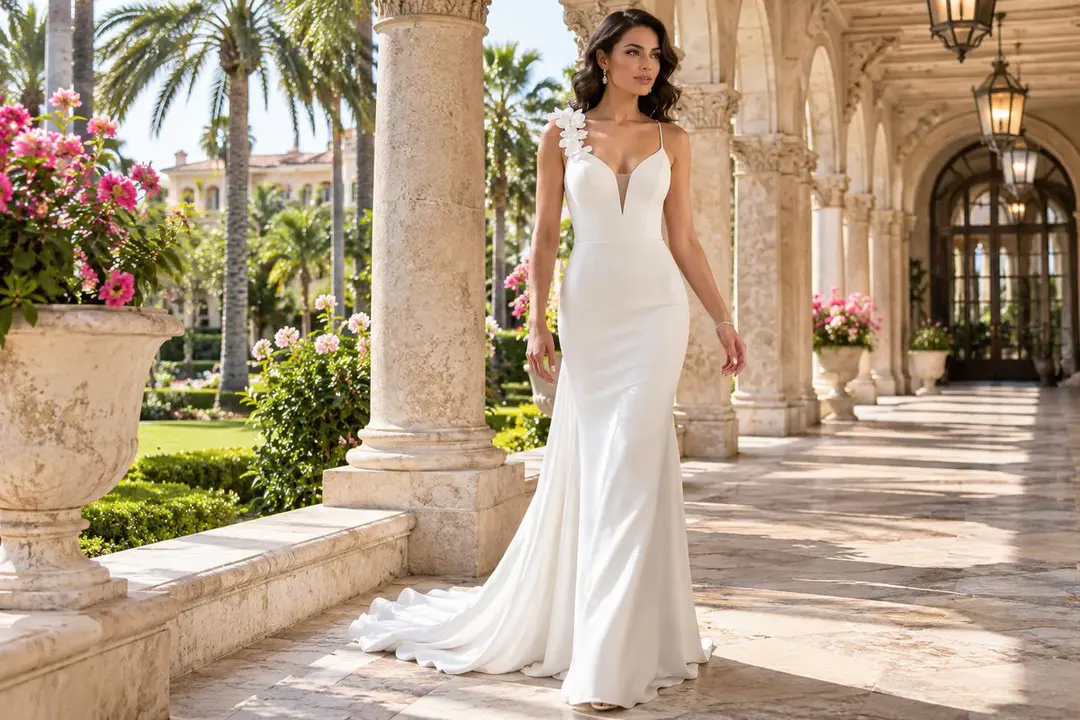
Satin can show water marks and unwanted shine, especially where the surface is smooth and reflective. If steaming is approved, test first and approach from the reverse or lining side without touching the face. Jovani lists a strapless satin sheath with a slit and a crepe bridal gown with a button-detail train, showing how different finishes call for separate checks.
Crepe can hold visible fold lines even when it hangs smoothly elsewhere. Give the garment room to relax before applying moisture, and never press a hot plate against a fitted panel. Structured mermaid bridal styles deserve extra care around darts and seams, where pulling can change the intended shape.
Tulle and Chiffon
Tulle and chiffon are light, but that does not make them heatproof. If approved by the maker, pass steam gently from a distance and treat one layer at a time. Let each layer fall naturally before deciding whether a second pass is needed. Keep the nozzle away from synthetic netting and avoid stretching damp material.
A tulle overskirt may look wrinkled because several layers are pressed together, not because every layer needs steam. Separate the layers and inspect their edges first. A soft skirt on A-line wedding dresses often needs space to hang more than repeated treatment.
Lace and Embroidered Layers
Lace requires attention to both the visible pattern and the fabric underneath it. Direct steam can affect delicate threads, appliqués, or adhesive-backed decoration, so consult the label and work on the backing only if permitted. Jovani offers floral lace gowns with sparkle tulle, making careful inspection of each layer particularly relevant.
Before treating an embroidered section, look for loose thread ends and raised motifs that could catch the steamer. A specialist is the safer choice for fragile heirloom lace or dense appliqué. Compare the construction of lace bridal dresses before assuming two similar-looking gowns can be handled the same way.
Mikado and Other Structured Fabrics
Mikado, organza, and taffeta may depend on crisp folds or a firm surface finish. Oversteaming can soften a planned shape or leave marks, especially where a bodice meets a sculpted skirt. Ask the salon whether a particular panel needs professional pressing rather than more steam.
Do not flatten pleats, draped folds, or structural seams to make them look perfectly smooth. Those details may be intentional. Hang the garment correctly, inspect it in natural light, and treat only unwanted creases confirmed by the bridal specialist.
Protect Beading, Bodices, and Long Trains
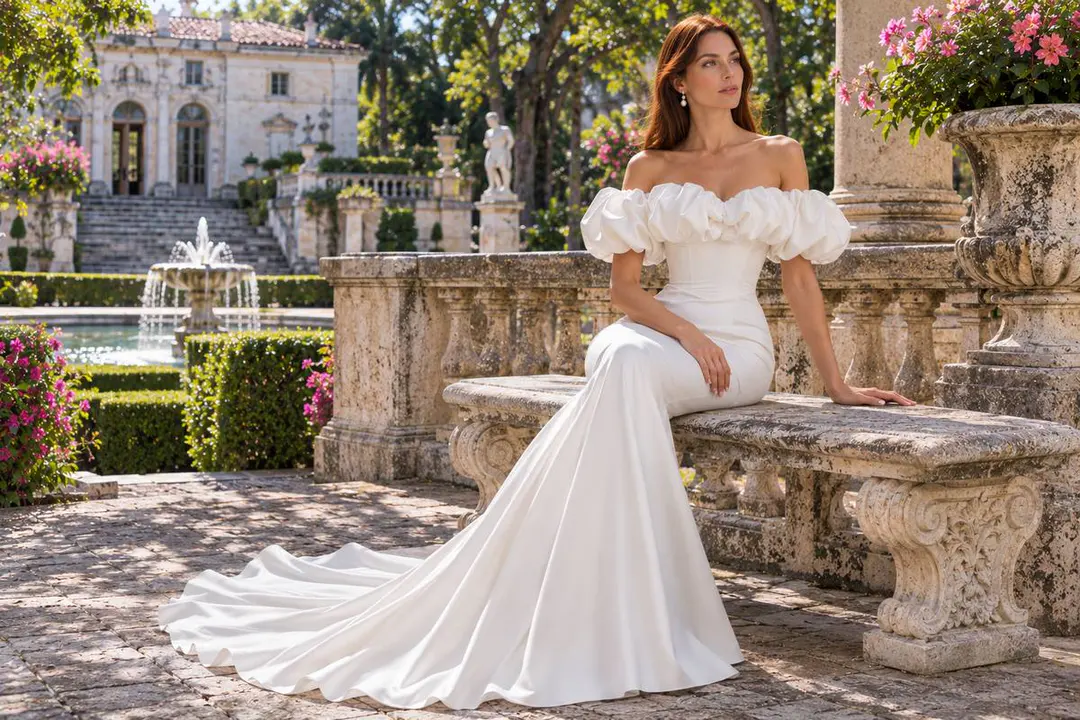
Beading and long trains need their own handling plan because weight and decoration can complicate wrinkle removal. Jovani offers a beaded corset wedding dress with a train, which illustrates why the bodice and the skirt should not receive identical treatment. The beaded wedding dress guide explains how embellishment placement changes the gown.
Heavily Decorated Areas
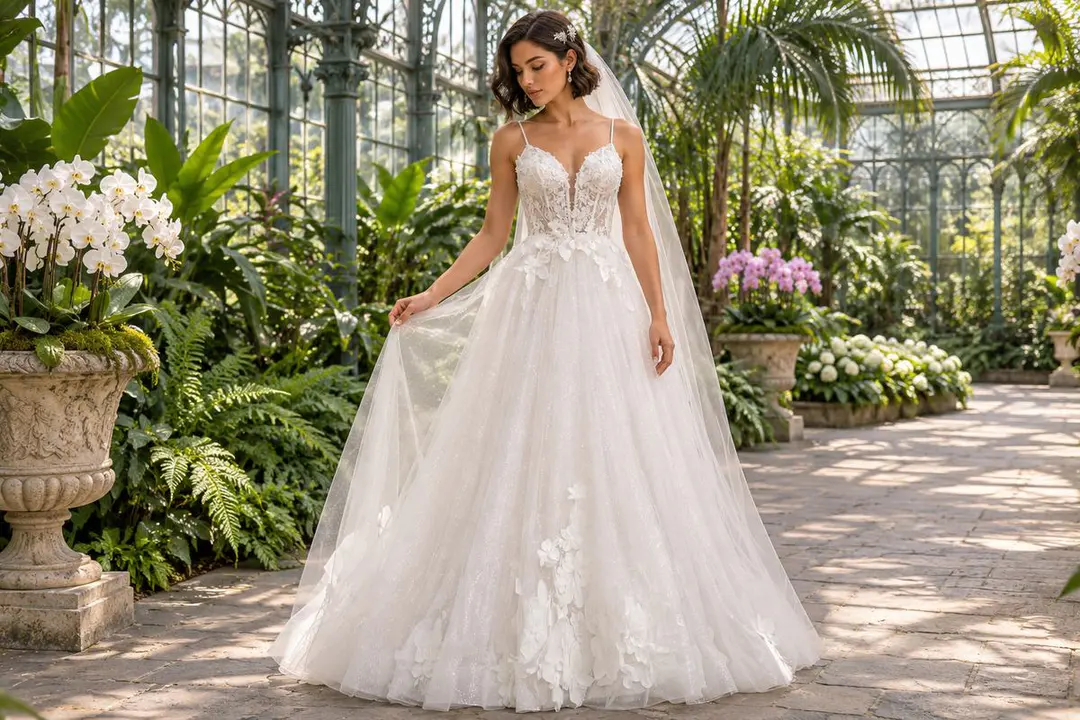
Avoid directing steam onto beads, sequins, crystals, or glued motifs. Some finishes can warp, and moisture may affect adhesives or threads. If a care label permits steaming nearby fabric, keep the embellished panel out of the steam path. A heavily decorated bridal gown with beading is a strong candidate for professional care.
Trains, Bustles, and Multiple Layers
Support the train rather than letting it drag across the floor. Check the folds beneath the bustle and the lining before attempting treatment, then let each approved layer hang freely. If alterations have changed the hem or bustle, ask the seamstress where steam can safely reach. The wedding dress alterations guide provides context for those structural adjustments.
When Hanging Is Better Than Steaming
Hanging is the first choice for light creases when the fabric can safely support its own weight. Give the skirt space and inspect it after it has relaxed. If the label forbids steam, the material is uncertain, or a test leaves a mark, leave further treatment to a bridal professional.
Avoid using a shower-filled bathroom as an automatic substitute for a steamer. Moisture and condensation are hard to control around silk, delicate linings, and embellishments. A professional can decide whether pressing, steaming, or no treatment is appropriate.
Finish With a Care Check Before the Ceremony
After any approved steaming, let the dress cool and dry completely before returning it to a breathable garment bag. Check the neckline, side seams, skirt edges, and underside of the train for dampness or a new mark. Do not pack the garment while it feels warm or moist.
For a final check, photograph the gown in even lighting so you can distinguish a true crease from a designed drape. A clear image also helps your boutique assess any issue remotely. If the finish still looks uneven, pause the home treatment rather than repeating the same pass.
If you need fabric-specific help before your wedding, use Jovani’s authorized retailer locator to find a boutique. Ask the team to review your gown’s care label and recommend a safe pressing or steaming service.
Frequently Asked Questions
Can you steam a satin wedding dress at home?
Only when the label and bridal specialist permit it. Test the lining or another concealed area first, keep the steamer off the satin surface, and stop if moisture leaves a mark.
How do you remove wrinkles from wedding dress tulle?
Start by hanging the tulle skirt with the layers separated. If its care instructions allow steam, use gentle passes at a distance and avoid touching the netting with a hot nozzle.
Should a wedding dress be steamed before or after alterations?
Arrange the final fabric treatment after alterations are finished, subject to the seamstress’s advice. Fresh stitching, bustle points, and layered hems should be checked before heat or moisture is applied.
What if a wedding dress still has wrinkles after steaming?
Stop home steaming if one careful, approved pass does not improve the crease. A bridal specialist can assess whether the mark needs professional pressing or is part of the intended fabric texture.