
Cape Evening Dresses: How to Choose, Style, and Wear One
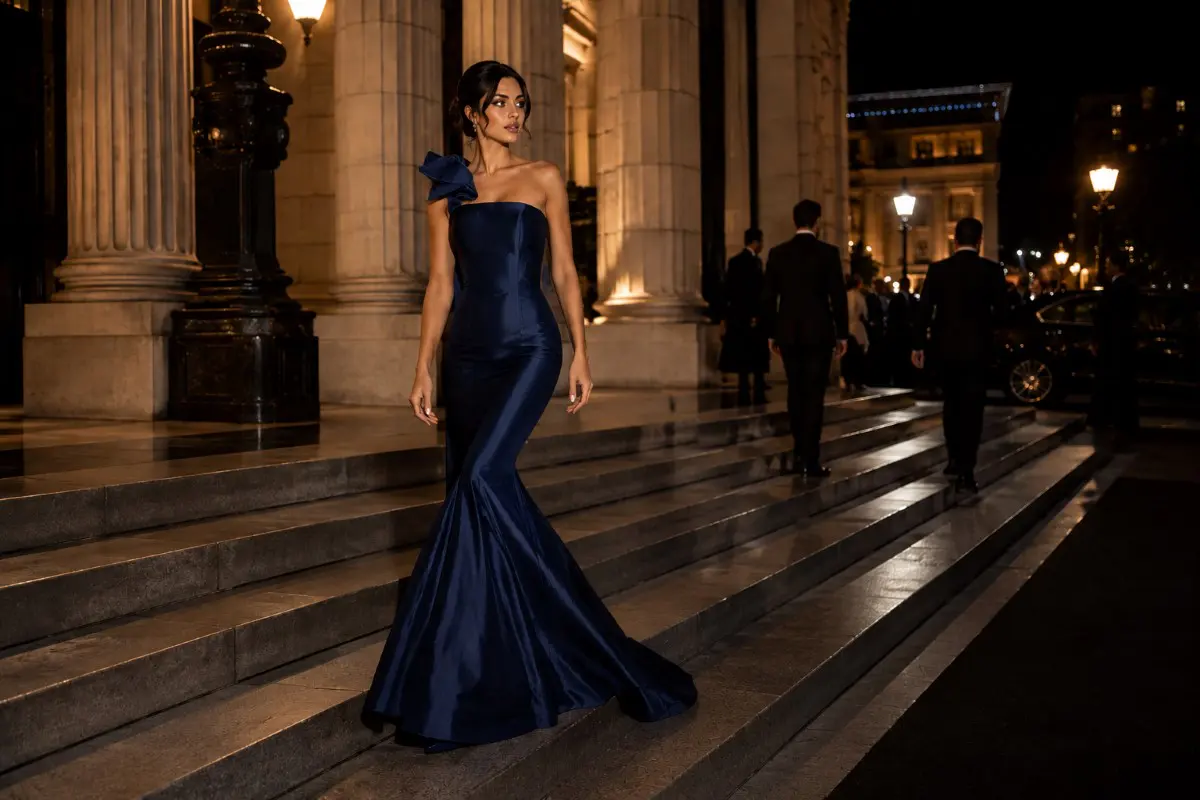
If there is one detail that turns a beautiful gown into a moment, it is a well-designed cape. The drape of fabric flowing from the shoulders as a woman walks, the way it catches the air during a turn, the soft theater of it in photographs, all of it explains why the cape gown has become one of the most quietly powerful choices in modern formal wear. It signals confidence without volume, drama without embellishment, and presence without effort. The cape gown does what every woman wants a formal dress to do: it makes the simple act of moving across a room feel like an event. It is also one of the few formal details that genuinely improves with movement, since the cape is essentially designed to be seen as you walk. This guide walks through everything you need to choose one well, from the different kinds of capes and how each one behaves, to the silhouettes they pair with best, the fabrics that make a cape come alive, the occasions that genuinely call for one, and how to wear and move in a cape with ease.
What a cape evening dress actually is
The term cape covers more variety than most people realize, and knowing the differences helps enormously when you are shopping or describing what you want. At its simplest, a cape is a flowing extension of fabric attached to the shoulders or back of a gown, creating movement and visual drama without adding weight to the body of the dress itself. The shape, length, and attachment point of that fabric is where the variations live.
- Attached capes. The cape is sewn into the gown and moves as one piece with the dress. The look is cohesive and architectural, since the cape and the gown are designed together as a single design statement.
- Detachable cape trains. The cape is built to be removed, usually after the ceremony or the formal photographs, leaving a clean floor-length gown for the reception. This offers the drama of a cape for the entrance and the freedom of a simpler silhouette for dancing.
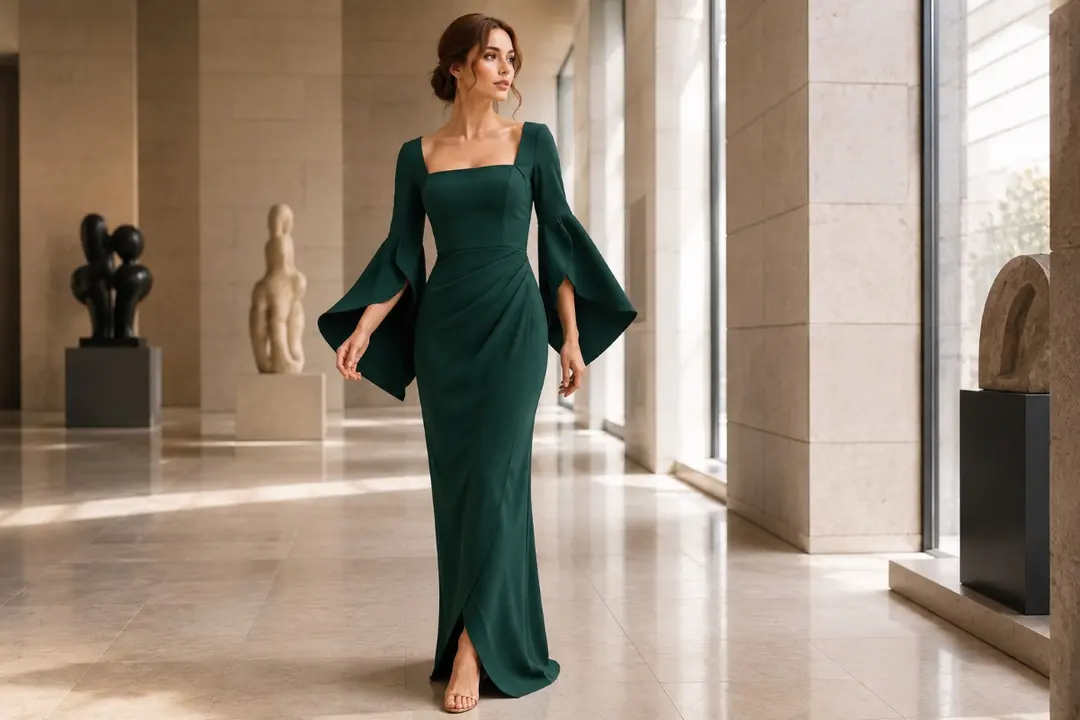
- Cape sleeves. A shorter variation where fabric extends from the shoulder seam and drapes down the arms rather than the back. The effect is elegant arm coverage with a modern, draped feel rather than a traditional sleeve.
- Cape collars and shoulder drapes. Smaller, more architectural variations where the cape sits high at the shoulder or neckline, creating a sculptural detail rather than full flowing fabric. These read as the most modern and editorial.
The shape, fabric, and length of the cape all determine how dramatic the look becomes. A floor-length cape train commands the room. A wrist-length cape sleeve is a refined design detail. Both qualify as cape gowns, but they create very different impressions.
Why the cape evening dress is having a moment
A design detail does not stay popular for decades unless it does something specific well. The cape gown has earned its place in formalwear for several real reasons, and understanding them helps you decide whether one is right for you.
First, it adds drama without weight. Heavy beading, full ball gown skirts, and elaborate embellishment can make a gown feel imposing to wear. A cape adds visual impact through pure shape and movement, so the dress can feel light on the body while still reading as theatrical. Second, it photographs beautifully from every angle. Many gowns are designed primarily for the front view, but a cape creates visual interest from the side and the back as well, which matters at any event where you will be photographed walking, standing in groups, or moving across a stage. Third, it offers elegant coverage. For women who prefer not to show bare shoulders or arms, a cape provides flowing coverage that feels considered and modern rather than apologetic. The styles in the cape evening gowns collection were designed with exactly these qualities in mind, with capes engineered to drape and move correctly rather than hang stiffly. Fourth, the cape brings an editorial quality to a gown, the kind of detail that reads as runway or red carpet rather than off-the-rack formalwear. That sense of design intention is what makes a cape gown stand apart in a room.
Silhouettes that pair beautifully with a cape
A cape interacts with the silhouette of the gown beneath it, and some shapes carry it better than others. Knowing the pairings helps you picture how a cape will actually look on a given dress.
A mermaid silhouette and a cape make a particularly striking combination. The fitted body of the mermaid contrasts beautifully with the flowing movement of the cape above, creating a dynamic interplay between structure below and drama above. The styles among mermaid evening dresses show how a fitted lower half supports a cape's movement particularly well. A sheath or column gown with a cape creates one of the most editorial looks in formalwear, with the clean vertical line of the dress emphasizing the architectural sweep of the cape behind. This is the silhouette that reads most modern and most editorial, and it suits a confident, design-aware aesthetic. The clean lines of long evening gowns are the natural starting point for this look, and the range of long formal dresses includes the floor-length foundations that work best with a cape.
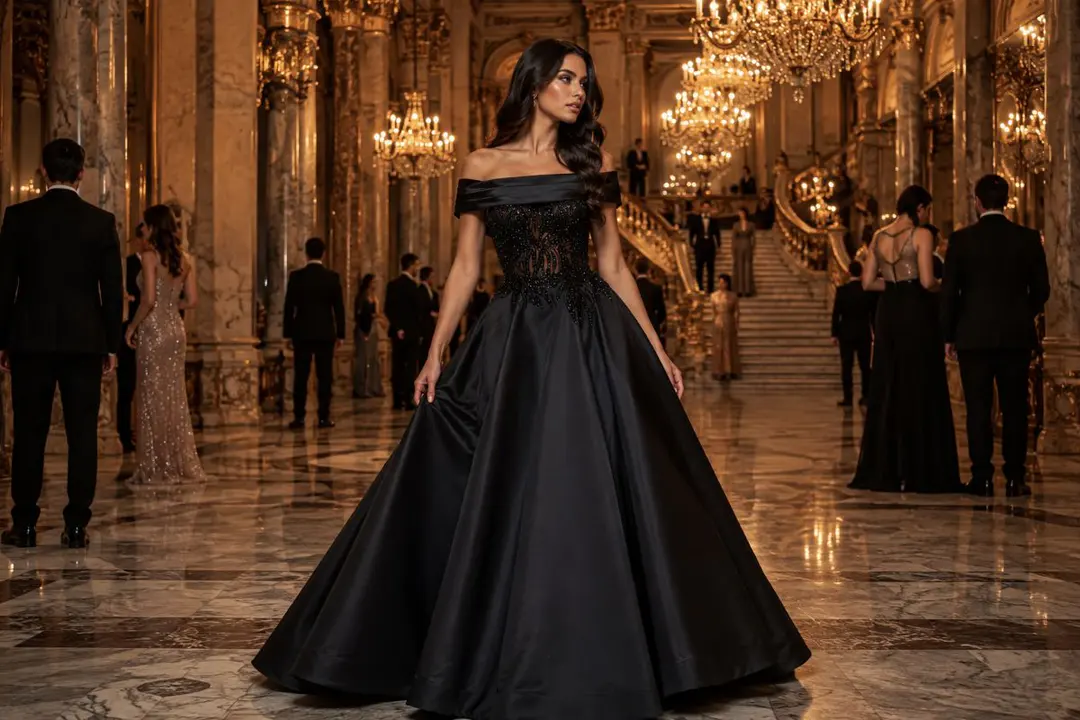
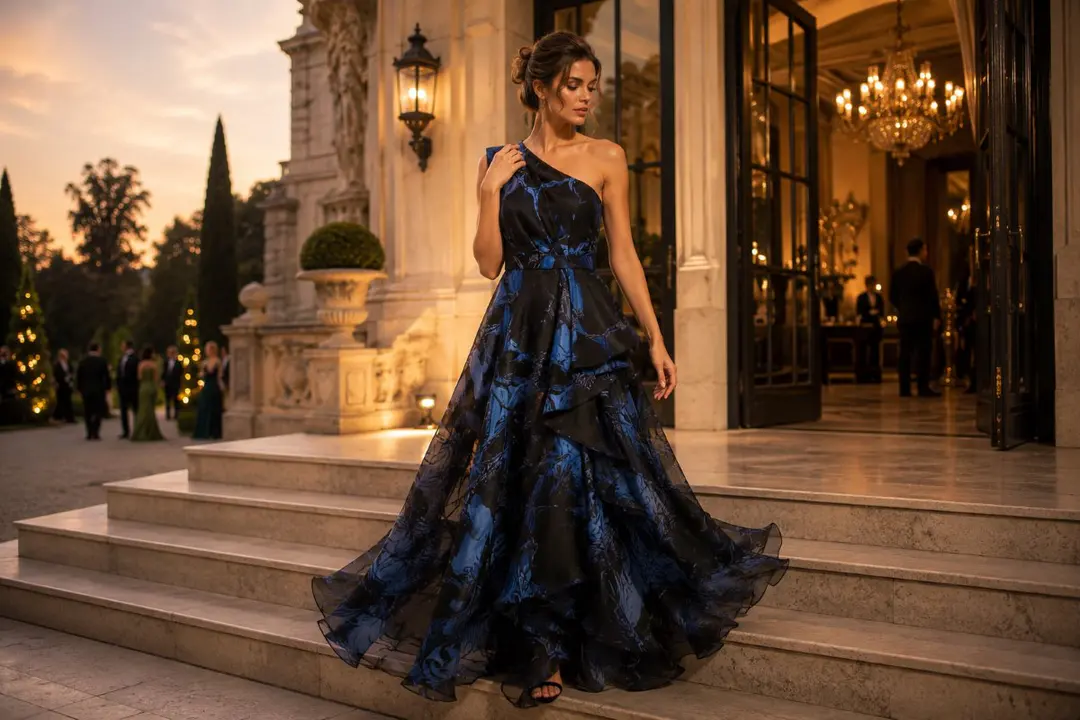
An A-line or fit-and-flare with a cape softens the architectural feel and brings a more romantic quality, with the cape flowing alongside the skirt's movement. A one-shoulder gown can pair with an asymmetric cape that flows from the bare shoulder, creating a striking diagonal line that is one of the most distinctive looks in evening wear, and the styles among one-shoulder evening dresses show how an asymmetric line plays with a cape detail. A full ball gown with a cape becomes the most dramatic and ceremonial option of all, suited to the most formal occasions. The principle in every pairing is balance. A cape is itself a statement, so the gown beneath it benefits from clean lines that let the cape speak, rather than competing with the cape through additional volume or heavy embellishment.
When to wear a cape evening dress
A cape is wonderful for the right occasion and overdressed for the wrong one. Matching the cape to the event is what makes the look read as intentional rather than misjudged.
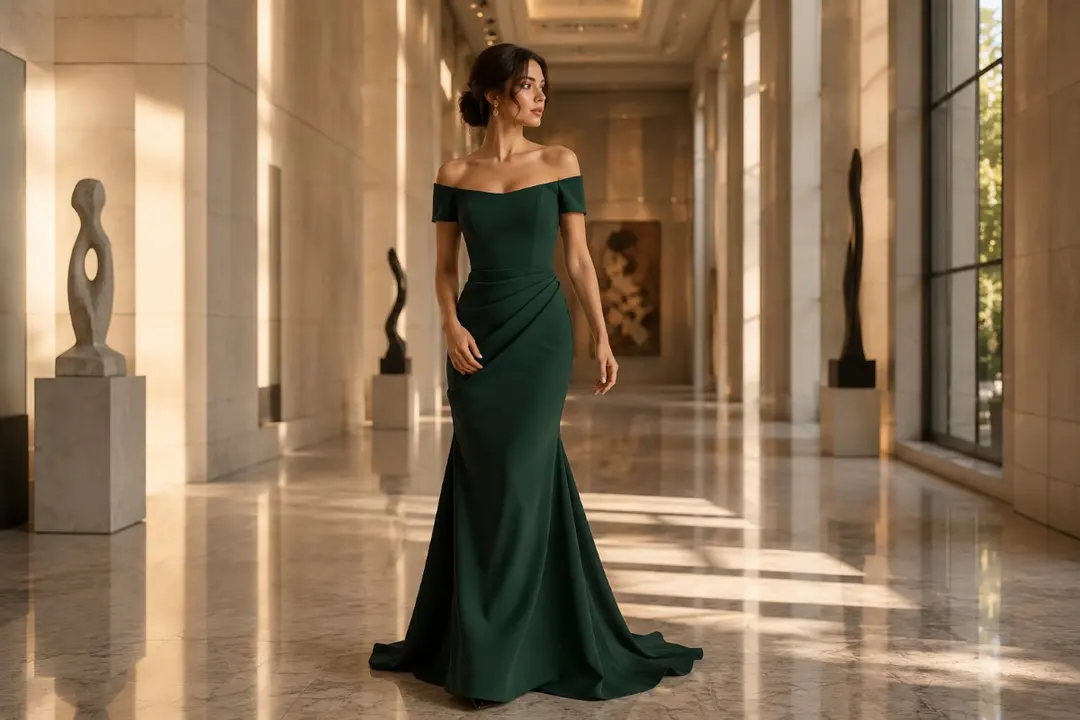
The strongest occasions for a cape evening dress are those built around presence and entrance. Black-tie galas, charity balls, and formal evening events welcome the theatricality a cape brings, and the cape adds the gravitas these occasions are built around. Red carpet and high-profile events are a natural home for the most dramatic capes, since these occasions reward editorial drama, and a cape gives photographers something to capture from every angle, complementing the spirit of our red carpet evening dresses guide. Award ceremonies and ceremonial moments are flattered by the formality of a cape. Black-tie weddings as a guest can work with a more subtle cape gown, although the cape should never be so dramatic that it competes with the bride. For occasions that call for elegance with coverage, including more conservative or modest events, a cape provides flowing coverage that is genuinely fashion-forward rather than apologetic, and the principles in our guide to modest evening dresses apply naturally to cape choices.
Where a cape works less well is at events with a great deal of close mingling, tight spaces, or active dancing, since a long cape can become cumbersome among crowds. A more casual cocktail event or a daytime occasion rarely calls for the drama a cape introduces. Matching the cape's drama to the event's formality is the entire trick. For broader help with reading the occasion, our piece on how to choose an evening dress for a night event walks through how the occasion shapes the dress.
Wearing and moving in a cape gown
The practical question every woman asks about a cape is how it actually feels to wear, and the honest answer is that a well-designed cape is surprisingly easy. The fabric is light, the attachment points are reinforced to support the weight, and the cape is built to move with you rather than against you.
That said, a few practical habits make the experience effortless. When walking, take smooth, unhurried steps and let the cape follow you naturally rather than fighting it. The cape is meant to move on its own, and rushing creates the only situations where the fabric tangles. For seated moments, sweep the cape behind you with your hand before sitting so you do not sit on it or crush it against the chair back. For embraces and close conversation, the cape stays out of the way naturally because it falls behind the shoulders. For dancing, a long cape is the one situation where caution helps, since unrestricted movement can lead to stepping on or pulling at the fabric. This is exactly why detachable capes are such a popular choice for events with a reception, since the cape stays on for the entrance and photographs and then detaches for the dance floor. If your event involves significant dancing, choose a detachable cape, a shorter cape, or a cape sleeve rather than a long flowing cape train.
Styling a cape evening dress
A cape is already a statement, so the styling around it should support the drama rather than compete with it. Restraint is what allows the cape to do its work.
Let the cape lead. Keep jewelry minimal, since heavy necklaces or large statement pieces compete with the visual flow of the cape across the shoulders and back. A pair of clean, refined earrings is often the best companion. Shoes should be comfortable and refined, since a cape gown is usually worn for a long event of standing and walking, and an elegant heel you can move in serves you better than a delicate one that becomes painful. A small clutch keeps the look uncluttered. For hair, an updo or a sleek style works particularly well with a cape, since loose flowing hair across the back can compete with the cape's lines. A polished, considered hairstyle frames the face and lets the cape have the back of the gown. Makeup should stay polished but not heavy, since the drama is already in the gown. The principle is that the cape is the focal point, and everything else supports rather than challenges it. The same logic of letting one design element lead applies to formal sleeves, as our piece on sleeve choices for formal dresses explains.
Fabrics that make a cape work
A cape lives or dies by its fabric, more than almost any other element of a gown. The same cape shape in different materials produces dramatically different results, so understanding what to look for is genuinely useful.
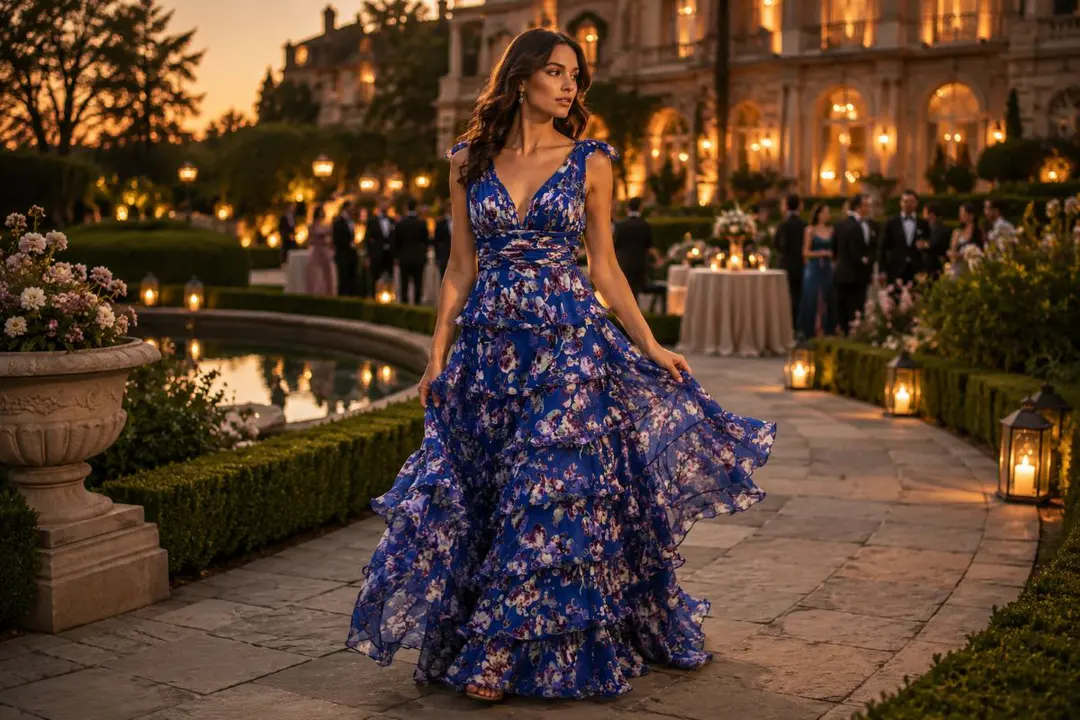
Lightweight, flowing fabrics give a cape its signature movement and natural grace. Chiffon is the most romantic and the most aerial, catching even the slightest breath of air and creating soft, photogenic drift across a room. Georgette behaves similarly with a touch more weight. Lightweight silk or silk-blends offer the most luxurious drape and the most refined sheen, although they require careful handling. Soft tulle works for sheer, ethereal cape effects, especially over a colored lining that shows through.
Heavier fabrics create a different kind of drama. A cape in a structured satin or mikado feels architectural and sculptural rather than ethereal, holding its shape rather than rippling, which suits the most formal and ceremonial settings. Beaded or embellished capes add light-catching detail to the movement, although the weight increases the importance of strong attachment construction so the cape does not sag from the shoulders. The fabric of the cape should usually match or complement the fabric of the gown beneath, since two clashing textures, such as a heavy beaded gown with a delicate chiffon cape, can look disjointed rather than designed together. The cape and the gown should read as a single, cohesive design, which is why buying a gown with the cape engineered as part of it produces a far better result than improvising with a separate piece. This level of fabric and construction thinking is exactly where Jovani's New York design studio has built its reputation, since a cape is one of those details where quality construction shows itself within minutes of putting the gown on.
Common questions about cape evening dresses
What is a cape gown?
A cape gown is a formal evening dress with a flowing extension of fabric attached to the shoulders or back, creating dramatic movement and visual interest. Capes come in several variations, including attached capes built into the gown, detachable cape trains that can be removed for the reception, cape sleeves that drape down the arms, and architectural cape collars.
When should I wear a cape gown?
Cape gowns suit highly formal occasions built around presence and entrance, such as black-tie galas, charity balls, red carpet events, award ceremonies, and high-profile evening events. They are less suited to casual cocktail parties, daytime events, or events with very tight, crowded spaces, where the cape can become cumbersome.
What silhouettes work best with a cape?
Mermaid silhouettes pair particularly well with capes, creating contrast between the fitted lower half and the flowing cape above. Sheath and column gowns with capes read as the most modern and editorial. A-lines feel romantic, one-shoulder gowns with asymmetric capes create striking diagonal lines, and ball gowns with capes become the most ceremonial.
Can I dance in a cape gown?
Yes, although a long flowing cape train is the one situation where caution helps. The simplest solution is to choose a detachable cape that comes off for the reception and dancing, leaving a clean floor-length gown. A cape sleeve or a shorter cape allows free movement and works well for events with significant dancing.
Are cape sleeves the same as a cape?
Cape sleeves are a variation of the cape, where the fabric extends from the shoulder seam and drapes down the arms rather than flowing across the back as a full cape would. They give the visual softness of a cape with the elegant coverage of a sleeve, and they read as more refined than dramatic.
Is a cape gown appropriate for a wedding as a guest?
A subtle cape gown can be appropriate at a black-tie wedding, but it should never be so dramatic that it competes with the bride. Cape sleeves or a modest cape detail in a non-bridal color is far safer than a long, sweeping cape train, which can pull focus during the ceremony or photographs.
The cape evening dress remains one of the most quietly powerful choices in formal wear, and the right one transforms not just a look but how you move through an evening. When you are ready to find a gown that turns walking across a room into a moment, browse the latest cape designs and floor-length silhouettes through an authorized Jovani retailer.