
When a wedding invitation arrives for a date in late autumn or winter, the fabric question becomes as important as the dress itself. Lightweight chiffon that felt perfect for a summer garden ceremony reads as thin and out of season in a candlelit December ballroom. This is where velvet comes into its own. A velvet wedding guest dress brings warmth, depth, and a sense of occasion that suits cold-weather weddings beautifully, but it also carries specific considerations that a guest needs to handle thoughtfully, from staying seasonally appropriate to never competing with the couple. This guide walks through why velvet works so well for fall and winter weddings, which celebrations suit it, how to choose a color and silhouette that respect the occasion, and how to keep the look elegant rather than overdone.
Why velvet suits a fall or winter wedding guest
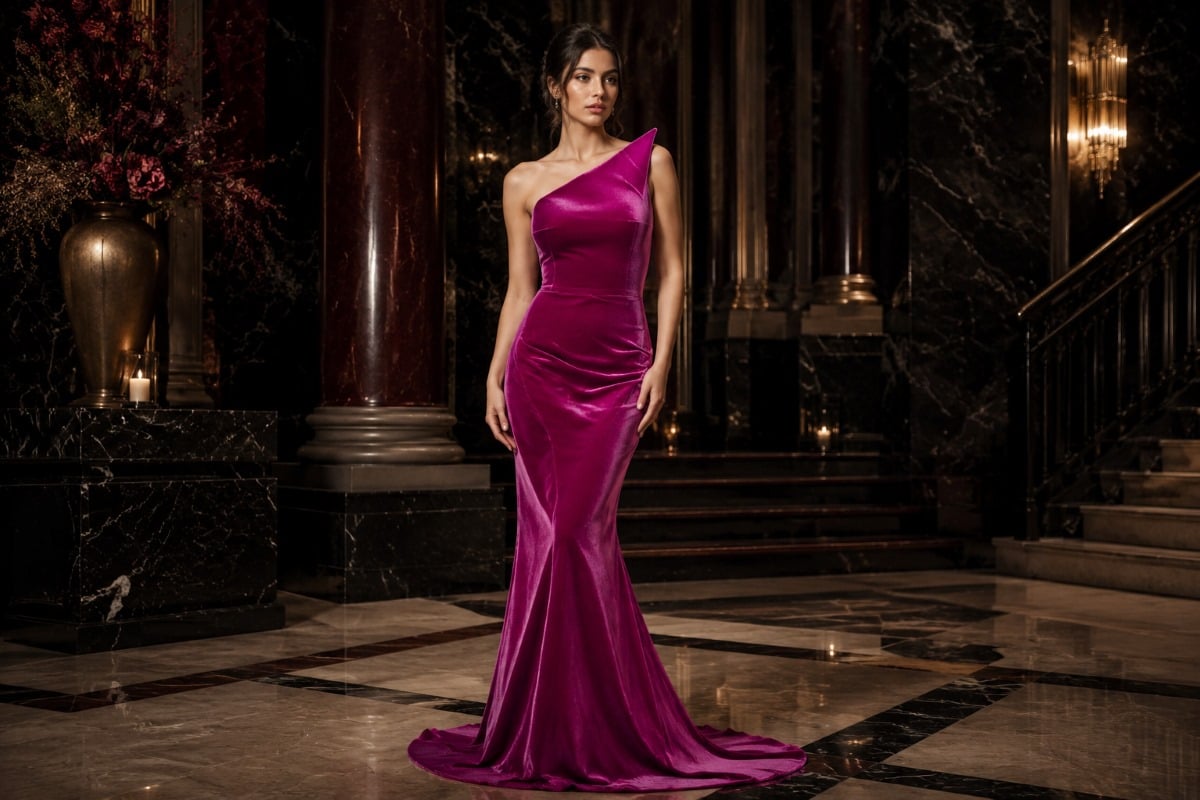
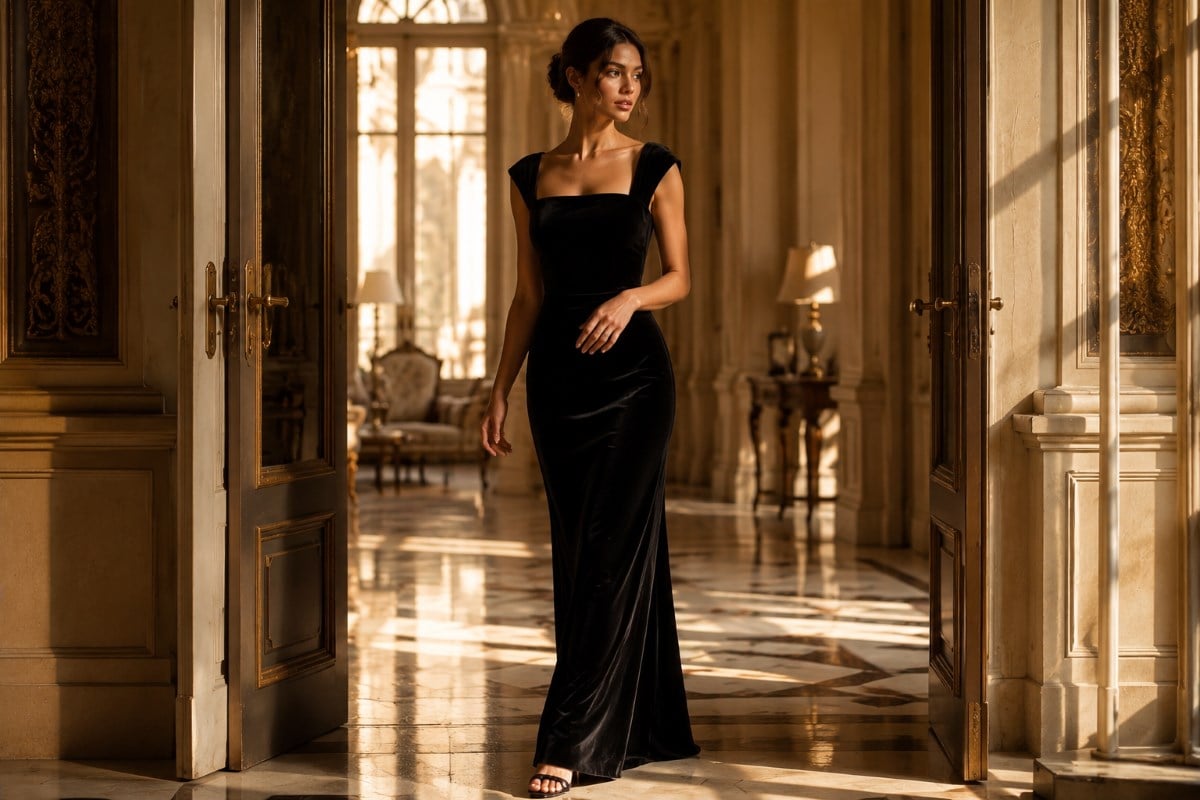
Velvet is fundamentally a cool-weather fabric, and that seasonal character is the first reason it works for the right wedding. As temperatures drop, formal attire naturally shifts toward richer textures and deeper colors, and velvet sits at the center of that shift. It provides genuine warmth in drafty venues and chilly evening ceremonies, which matters more than people expect when a celebration runs for hours. Beyond the practical comfort, velvet has a visual depth no other fabric matches, since it absorbs light rather than reflecting it, giving colors an intensity and richness that reads as quietly luxurious. The styles among wedding guest gowns show the level of polish a wedding calls for, and velvet meets that standard while adding seasonal warmth and depth.
Velvet also photographs exceptionally well, which is a real consideration at an event built around photographs. Its light-absorbing quality gives the fabric a soft, dimensional look in pictures, and deep colors appear especially rich under the warm lighting typical of an evening reception. The fabric’s natural sense of occasion suits the refined mood of a formal winter wedding, reading as regal and intentional rather than casual. For a guest who wants to look polished and feel comfortable in cold weather, velvet answers both at once, which is exactly why it has become such a reliable choice for the colder months. The key is using it in its natural season, since velvet in high summer feels out of place.
Which weddings suit a velvet dress
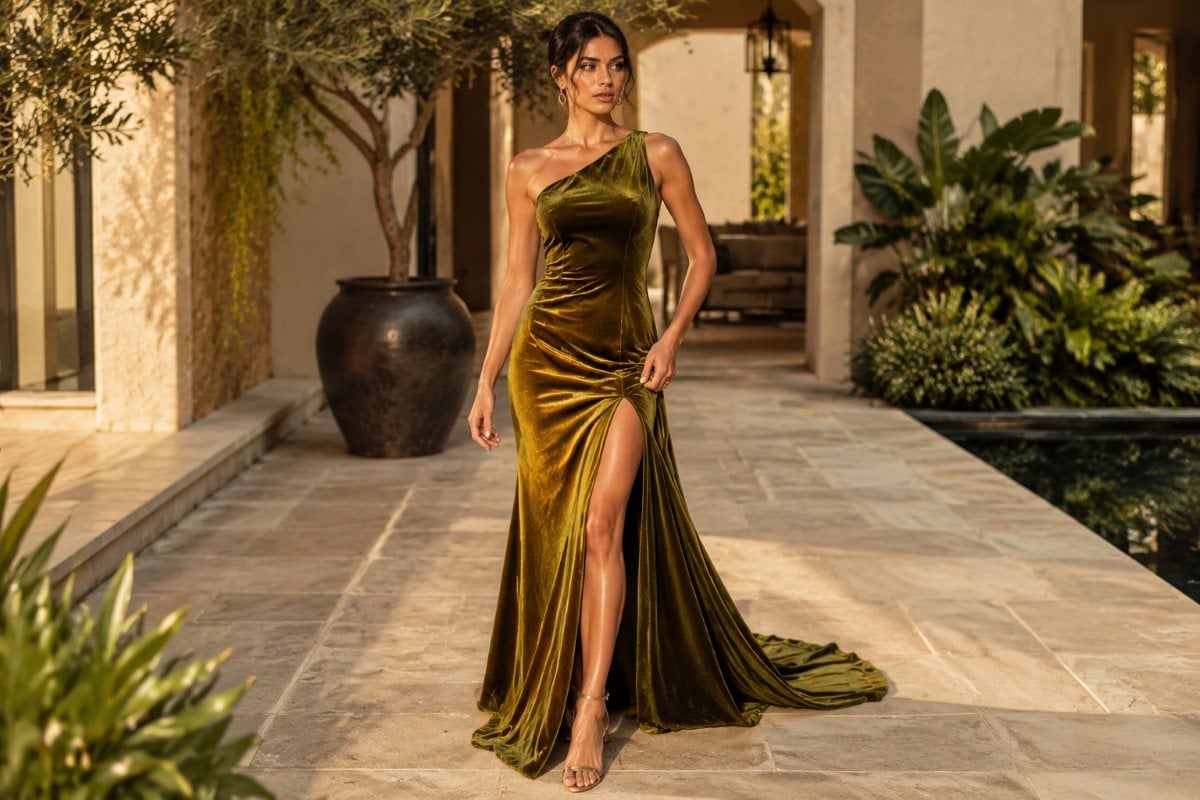
Velvet suits some weddings far better than others, and matching it to the right celebration is what keeps it appropriate. It reads as most fitting at formal and evening weddings held in fall and winter, where its richness and warmth feel seasonal and the formal setting supports its opulence. A black-tie winter wedding, a holiday celebration, a ballroom reception, or a candlelit evening ceremony are all natural homes for velvet. At these events, a velvet dress in a deep, sophisticated color reads as elegant and perfectly in keeping with the season and the formality.
Velvet is the wrong choice for a warm-weather or casual wedding, and being honest about that matters. A summer wedding, a beach ceremony, or an outdoor daytime celebration calls for light, breathable fabrics, and velvet would feel heavy and out of season in those settings. The fabric’s whole character depends on cool weather and a degree of formality, so a guest should reserve it for the kind of wedding that genuinely supports it. When the season and the formality line up, velvet is a standout choice, and when they do not, a lighter fabric is the better call. Reading the dress code and the time of year together is the surest way to know whether velvet fits a particular wedding.
Keeping velvet elegant rather than costume
Velvet carries a specific risk that lighter fabrics do not: styled carelessly, it can tip from sophisticated into costume, since the fabric has deep associations with period dress, theatrical wardrobe, and holiday-pageant looks. The difference is almost always in the styling rather than the dress itself, and the same velvet dress can read as modern and chic or as theatrical depending on the cut, color, and accessories. For a thorough breakdown of how to keep velvet firmly on the elegant side, the guidance in velvet cocktail dress styling covers exactly what pushes velvet toward costume and how to style around it, which applies to a wedding guest just as much as to a cocktail look. The short version for a wedding is to choose a modern, clean cut, a sophisticated color, and restrained accessories, all of which keep velvet reading as the contemporary, luxurious choice it can be.
Color rules for a velvet wedding guest dress
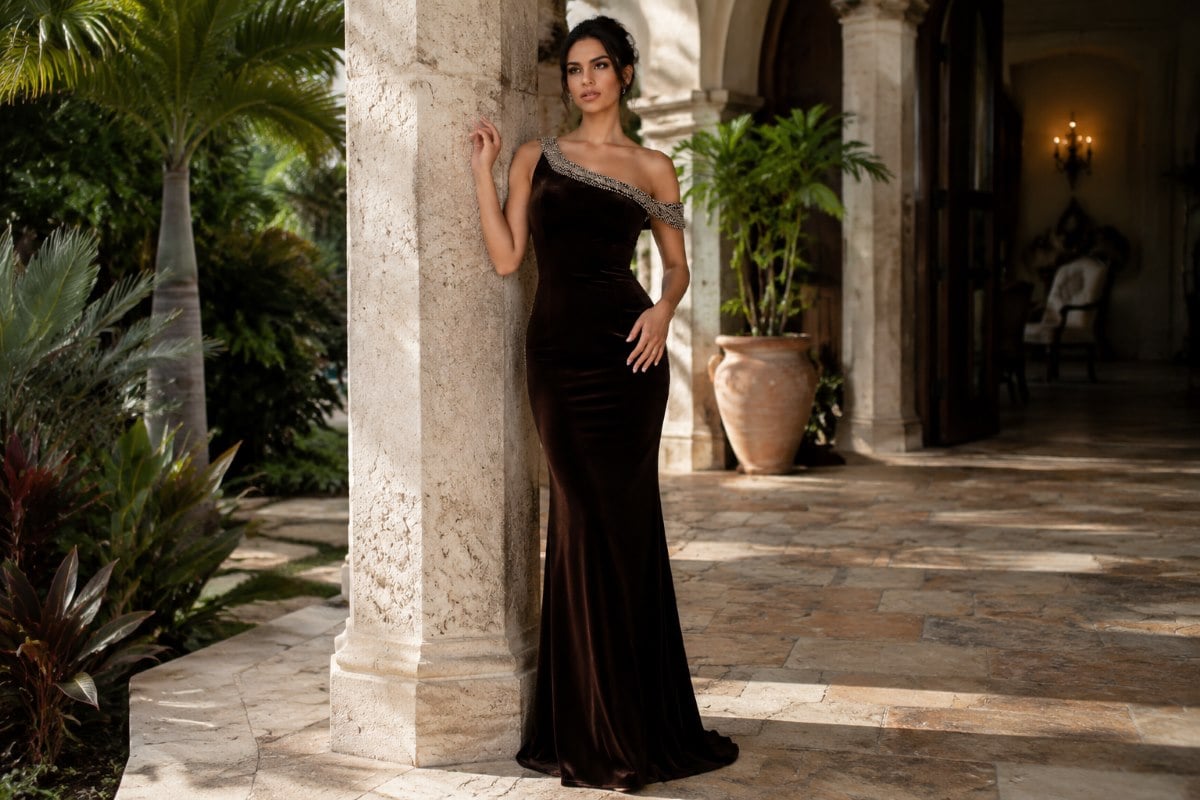
Color carries much of the elegance in velvet, and the wedding-guest rules shape the choice in two ways. First, the universal wedding rule applies: avoid white, ivory, cream, and pale champagne, since those belong to the bride, and steer clear of anything that could photograph as bridal. Second, velvet’s light-absorbing depth means it wears jewel tones and deep shades especially beautifully, which happily aligns with what reads as seasonally appropriate for fall and winter. Emerald green, burgundy, deep navy, plum, and rich sapphire all look intense and luxurious in velvet, and all are widely accepted, sophisticated choices for a guest. Among these deep shades, navy is one of the safest and most versatile, reading as formal without the starkness of black, and the styles among navy wedding guest dresses show how well a deep blue suits a winter celebration.
Among these, a few colors are particularly safe and flattering. A deep navy or black velvet reads as formal and timeless, sitting comfortably at evening and black-tie weddings, and the styles among black wedding guest dresses show how a classic dark shade keeps a look refined.
Red velvet deserves a specific note, since it photographs as deep and slightly muted rather than aggressively bright, which makes it an opulent, appropriate choice for winter weddings when handled with restraint. The etiquette around wearing red as a guest is worth understanding before committing to it, and the guidance in can you wear red to a wedding covers when and how a guest can wear the color elegantly without it reading as too bold for the occasion.
The styles among red wedding guest dresses show the range of shades that work, from deep burgundy to oxblood, all of which suit velvet and the winter season. Whatever color a guest chooses, checking whether the couple has color preferences and avoiding the bridal palette keeps the choice respectful and considerate.
Not competing with the couple
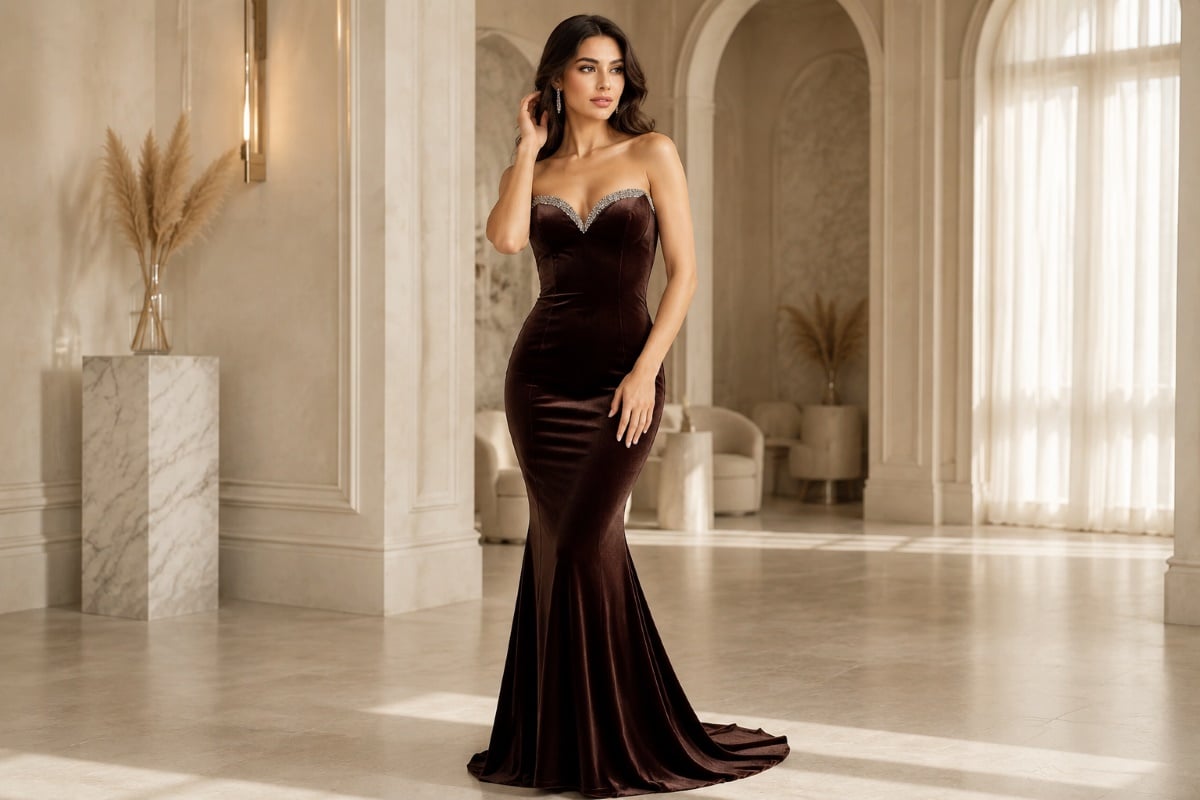
Velvet is an opulent, attention-catching fabric, which makes the guest’s golden rule especially relevant: complement the celebration rather than compete with it. The goal is to look polished and seasonal without pulling focus from the couple, and a few principles keep velvet firmly in considerate territory. Matching the dress to the formality of the wedding, choosing a silhouette that is elegant rather than overtly dramatic, and keeping the overall effect refined all help. Velvet already carries richness on its own, so it rarely needs an over-the-top cut or heavy embellishment to make its impression, and restraint is what keeps it reading as tasteful. The broader principles of wedding guest dress etiquette apply to velvet as much as to any fabric, since the goal is always to honor the couple’s day rather than draw the eye away from it.
Silhouette and coverage play into this as well, since a velvet dress that suits a wedding guest tends to be elegant and appropriately covered rather than revealing. The stretch velvets common today combine the fabric’s traditional richness with modern mobility, so a guest can choose a comfortable, flattering shape that moves well through a long evening. Sleeves are a natural fit for a velvet winter dress, adding both warmth and coverage while reading as seasonally elegant. The broader range of velvet dresses shows how the fabric works across silhouettes, so a guest can find a shape that flatters her while staying appropriate for someone else’s wedding. Choosing an elegant, covered silhouette in a deep color is the most reliable way to look beautiful without ever competing for attention.
Construction and why quality matters
Velvet is a fabric where quality makes a visible difference, because the way it is constructed determines whether it drapes beautifully or feels heavy and stiff. Because velvet is inherently thick, the skill lies in how a designer manipulates it through strategic draping and tailoring so it flatters the natural shape rather than adding bulk. A well-made velvet dress falls cleanly and moves with the wearer, while a poorly constructed one can look heavy or shapeless. Jovani has built dresses in its New York studio since 1983, and that long focus on construction, including internal structure like steel boning and supportive linings, is what allows a substantial fabric like velvet to read as elegant and move comfortably through a long celebration. The quality of the velvet itself matters too, since a rich, well-finished velvet reads as luxurious while a cheap one can look flat or worn, which is part of what separates a sophisticated wedding guest look from one that falls short.
Practical considerations for the day
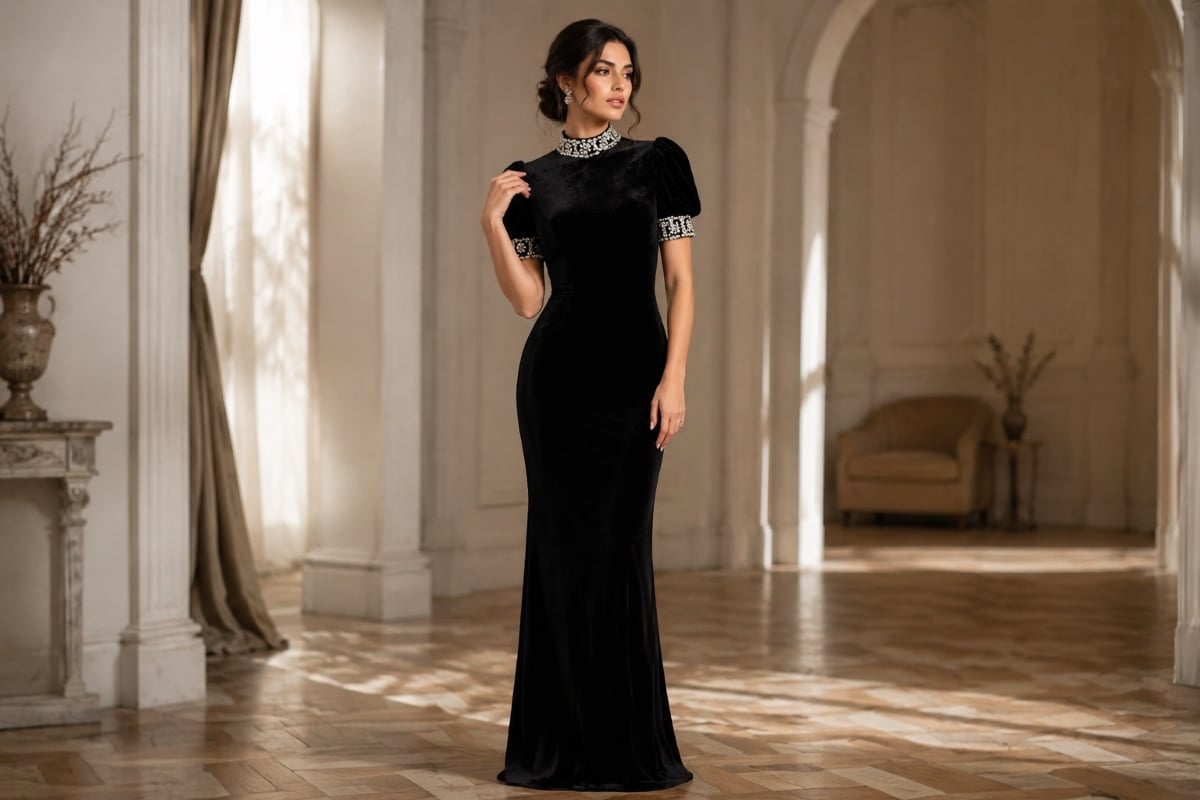
A few practical points make a velvet dress work smoothly for a winter wedding. Warmth is velvet’s built-in advantage, but a guest arriving in cold weather still needs a thoughtful layer for the journey and any outdoor moments. A layer chosen for formal wear, rather than a casual winter coat, keeps the whole look intact from arrival to reception. The fabric’s warmth also means a guest should consider the venue, since a heated indoor reception can feel warm in velvet over a long evening, making a sleeveless or short-sleeve velvet style a comfortable choice for a very warm room.
Comfort and movement matter across a long wedding day, and the stretch velvets common now make this easier than the heavy velvets of the past. A guest will be sitting, standing, greeting people, and likely dancing, so a velvet dress with some give and a flattering, comfortable fit serves far better than a stiff one. The fabric also resists wrinkling reasonably well, which helps it look smooth after a car ride or a long evening, though it benefits from careful storage to protect the pile. Planning for warmth, comfort, and the specific venue ensures a velvet dress feels as good as it looks throughout the celebration.
Is a velvet wedding guest dress right for you?
A velvet wedding guest dress suits a guest attending a formal or evening wedding in fall or winter, who wants warmth and richness and is comfortable styling an opulent fabric with restraint. It rewards someone who loves deep jewel tones, who appreciates a fabric with genuine seasonal character, and who is attending the kind of formal cold-weather celebration that supports velvet’s luxury. For that guest, at the right wedding, velvet offers warmth, depth, and a standout seasonal elegance.
For a guest attending a summer, beach, or casual daytime wedding, velvet is the wrong choice, and a lighter fabric will serve far better. The fabric depends entirely on cool weather and a degree of formality, so reserving it for the right season and setting is essential. There is no wrong answer here, only the question of whether the wedding genuinely suits velvet. When the season, the formality, and the styling all line up, velvet is one of the most beautiful choices a cold-weather wedding guest can make, offering comfort and richness in equal measure.
Frequently asked questions velvet wedding guest dress
Can you wear velvet to a wedding as a guest?
Yes, velvet is a beautiful choice for a wedding guest, provided the season and formality suit it. Velvet works best at formal and evening weddings held in fall and winter, where its warmth and richness feel seasonal and appropriate. It provides comfort in cold venues, photographs beautifully, and reads as elegant and intentional. The keys are choosing a sophisticated color that avoids the bridal palette, selecting an elegant and appropriately covered silhouette, and styling it with restraint so it complements the celebration rather than competing with the couple.
What season is velvet appropriate for a wedding?
Velvet is a cool-weather fabric, so it is appropriate for fall and winter weddings. Its warmth, depth, and richness feel seasonal and luxurious in cooler months, particularly at evening and formal celebrations. Velvet is not suited to summer, beach, or warm outdoor weddings, where it would feel heavy and out of season and where light, breathable fabrics are the better choice. Reserving velvet for cold-weather, more formal weddings is what lets it read as a deliberate, sophisticated choice rather than feeling out of place.
What color velvet should a wedding guest wear?
Deep jewel tones and rich shades suit velvet best and align well with fall and winter formality. Emerald green, burgundy, deep navy, plum, and sapphire all look intense and luxurious in velvet and are widely accepted guest colors. Navy and black velvet read as especially timeless and formal. The universal wedding rule still applies: avoid white, ivory, cream, and pale champagne, since those belong to the bride, and avoid anything that could photograph as bridal. Checking whether the couple has color preferences is always a thoughtful step.
How is a velvet wedding guest dress different from a velvet cocktail dress?
The main difference is the occasion and the etiquette that comes with it. A velvet cocktail dress is chosen for a cocktail party or evening event, where the focus is on the wearer and there are no rules about not upstaging anyone. A velvet wedding guest dress must follow guest etiquette: avoiding the bridal palette, choosing an elegant and appropriately covered silhouette, matching the wedding’s formality, and never competing with the couple. The fabric and its styling principles overlap, but the wedding context adds considerations around color, coverage, and restraint.
Is velvet too warm to wear all evening at a wedding?
Velvet provides genuine warmth, which is an advantage in cold venues but worth considering for a heated indoor reception over a long evening. For a very warm room, a sleeveless or short-sleeve velvet style keeps a guest comfortable while still reading as seasonal. Modern stretch velvets are also lighter and more breathable than the heavy velvets of the past, making them comfortable for extended wear. Considering the specific venue and choosing the sleeve length accordingly ensures a velvet dress stays comfortable from the ceremony through the reception.
Does velvet wrinkle or travel well?
Velvet resists wrinkling reasonably well compared with fabrics like satin, which helps it look smooth after a car ride or a long evening. It does, however, benefit from careful storage to protect the pile, since crushing the fabric can leave marks. Hanging the dress rather than folding it and giving it room helps preserve its look. For a guest traveling to a wedding, velvet is generally a forgiving fabric to transport, but treating it gently and hanging it on arrival keeps it looking its best for the celebration.
If a warm, richly colored velvet dress sounds like the right choice for a cold-weather wedding you are attending, the best next step is to see how the fabric drapes and which colors suit you in person, which you can do by visiting an authorized Jovani retailer.