
How Should a Wedding Dress Fit? Four Signs to Check
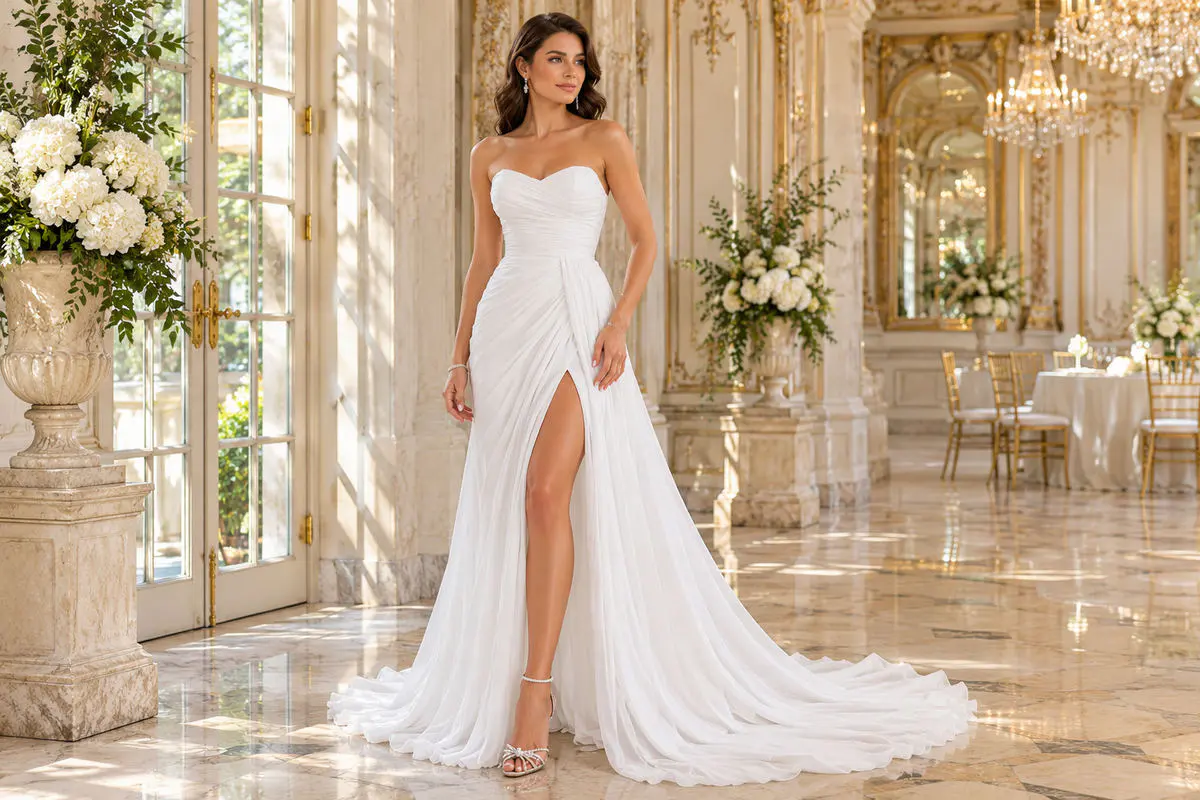
A wedding dress fits correctly when the neckline stays put and the waist sits where the design intends. The seams shouldn’t pull, and the front hem should clear your shoes as you walk. The dress can feel close without making it hard to breathe or sit. Fasten it fully before you judge, since clips and open closures can change how it hangs.
Start with the gown as it is meant to be worn, including its closure and the undergarments you plan to use. The Wedding Dresses 101 guide (opens in new tab) puts the fitting in context, but these checks focus on what the dress is doing on your body.
How Should the Neckline Sit?
The neckline should stay in its intended position without cutting in, rolling outward, or leaving a gap you have to keep adjusting. Look from the side as well as the front. A low neckline or open back can be part of the design, but one side lifting away from you may be a fit issue.
In strapless bridal styles (opens in new tab), try lowering your arms and check whether the top edge returns to its starting position. Jovani’s ivory chiffon style JB43897 has a strapless sweetheart neckline and intentional ruching. Read the fit at the edge itself. The planned gathers below it are part of the design, but an edge that slips repeatedly is worth showing the fitter.
If a neckline gaps on one side, show the fitter where the gap opens and whether it changes with movement. The guide to wedding dress anatomy (opens in new tab) explains how the neckline relates to the rest of the bodice. A change at the strap or cup can affect the top edge, so don’t assume the whole bodice needs to be taken in.
Where Should the Waist of a Wedding Dress Sit?
Check where the design places the waist before deciding it sits too high or low. A natural waist usually sits near the crease you find when you bend to one side. A Basque waist dips at the front, and a dropped waist sits lower by design. A lower seam alone is not a sign the dress is too long in the torso.
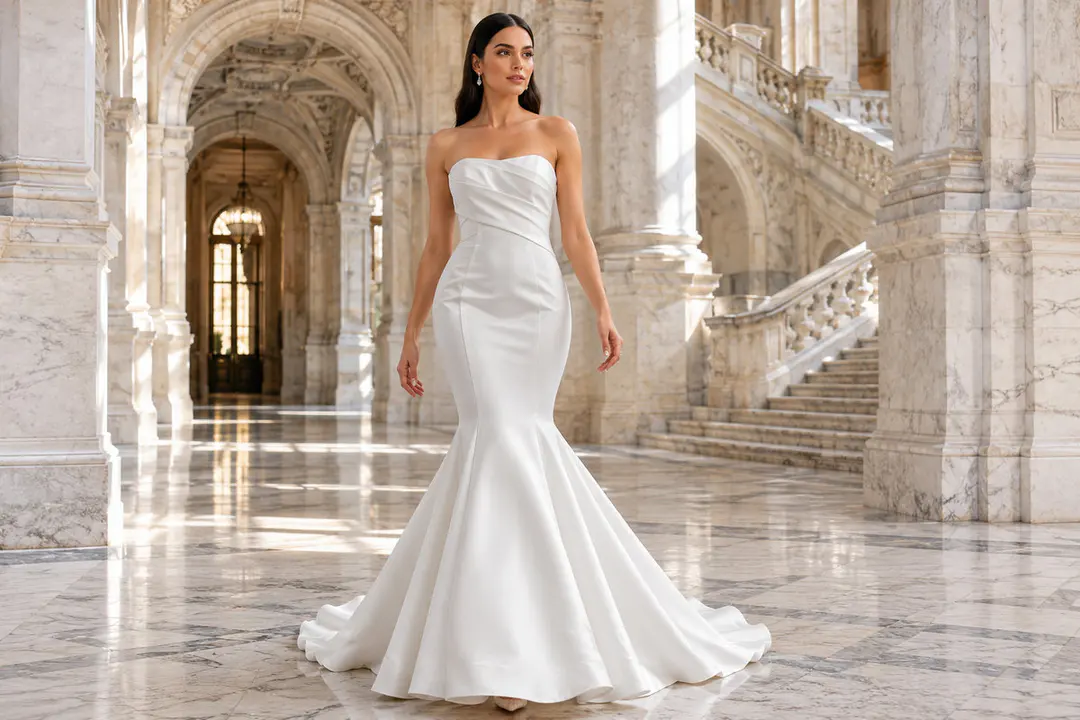
Many A-line bridal gowns (opens in new tab) start to widen near the waist, while a mermaid skirt typically flares lower down. Jovani’s strapless satin mermaid style JB24282 flares near the knee. Don’t use that point to judge where the waist should sit. Instead, check whether the bodice bunches above the waist or the seam shifts when you sit.
When comparing wedding dresses (opens in new tab), ask the stylist to show you the intended waistline on a product photo or unpinned sample. Look for the same shape on your dress rather than expecting every waist seam to be level across the front.
What Do the Seams and Closure Tell You About Fit?
Seams should follow their intended path without straining, twisting, or pushing into your skin. Look for changes between standing and sitting, rather than reading one wrinkle as a verdict. A fold built into the gown should not be mistaken for a pull line.
Look for Lines That Form Under Tension
Look where a line begins and where it ends. Lines that develop across the hips or lead into a side seam when you sit can indicate strain. On fitted wedding dresses (opens in new tab), note which movements make the fabric pull and whether the line disappears when you stand. If it returns each time, show the fitter that movement.
Check the Closure From the Back
Ask someone to check whether the zipper lies flat once it’s closed. If the zipper bows or the fabric puckers beside it, ask the fitter to inspect the closure and surrounding seams. A bump could come from how the fabric is sewn or from pressure elsewhere in the bodice, so don’t use it alone to choose a larger size.
How Should the Hem Fall With Your Wedding Shoes?
For a floor-length gown, the front hem should let you walk without catching your toes. A train can extend behind you by design. Judge the front hem in your actual wedding shoes and ask someone else to look at the back.
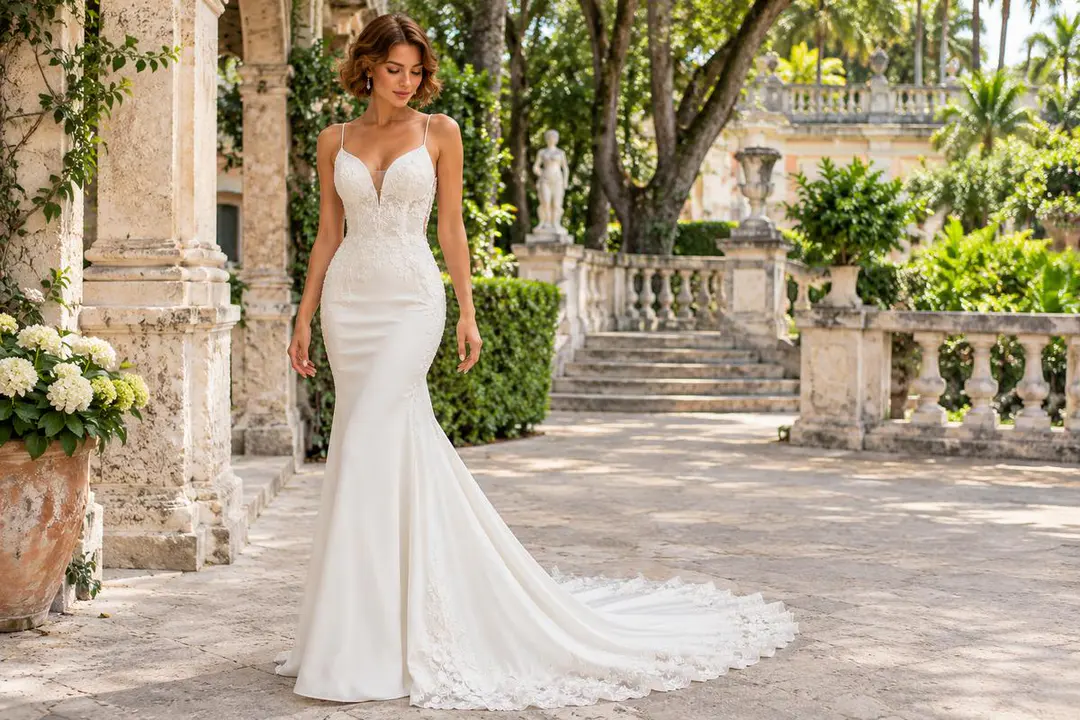
On lace wedding dresses (opens in new tab), look at the lining and the outer edge separately. Jovani’s floor-length sheath JB43322 has floral lace appliqué and a deep V-neck. On a gown with a decorative outer layer, identify exactly which fabric catches underfoot before asking about a hem adjustment. If you plan to change shoes, check the front hem in both pairs.
Bring the Fit Issue to Your Fitter
Point out the symptom and the position where it shows up. For example, a neckline that gaps only when you lean forward gives the fitter a clearer starting point than a request to tighten the dress. The wedding dress alterations guide (opens in new tab) explains which adjustments a specialist may consider.
Ask to see what changes when the fitter pins the area. If pinning the neckline puts pressure on the waist or shifts a side seam, say so before the change is sewn. A good adjustment should address the fit issue without creating another one.
If you’re deciding whether a sample needs a small adjustment or a different cut, ask an authorized Jovani retailer (opens in new tab) to compare both options with you in person.
Frequently Asked Questions
Should a Wedding Dress Feel Tight?
It can feel snug, but you should be able to breathe and sit normally. If you cannot relax your shoulders or take a full breath, ask the fitter to check for pressure.
Is It Normal for a Sample Wedding Dress to Be Clipped?
Yes. Clips can help you see how a sample would look in a closer fit, but they can also change the neckline and waist position. Ask which parts of the fit you can judge in the sample.
Can Shapewear Change How a Wedding Dress Fits?
Yes. It can change how the lining and waistband sit. Wear the same undergarments at each fitting if you plan to wear them at the wedding.
What If the Dress Fits My Waist but Not My Hips?
Don’t size down to match the waist alone. Ask the fitter to check whether the skirt has enough room through the hips for you to sit. Then discuss whether adjusting the waist or choosing a different cut makes more sense.