
Wedding Guest Dresses for Dancing: Fit and Movement Guide
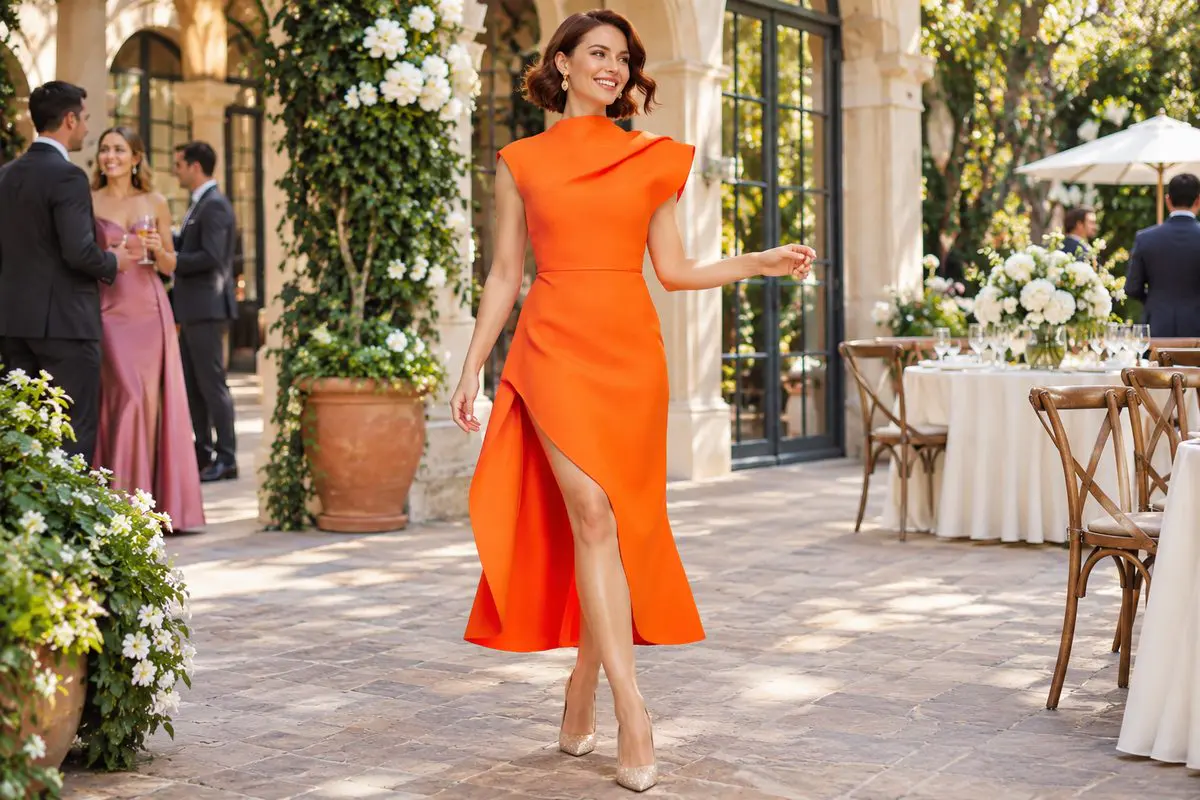
The best wedding guest dresses for dancing let you sit through the ceremony, walk naturally, and enjoy the reception without constant adjustments. Start with a skirt that allows a full stride and a bodice that stays secure when you move. Then choose a length and fabric that respect the invitation.
You can compare wedding guest dresses (opens in new tab) by movement as well as appearance. This guide focuses on an active reception, rather than repeating a general catalog of dress silhouettes.
Which Wedding Guest Dress Shapes Make Dancing Easier?
A-line and fit-and-flare shapes usually offer room below the waist, making turns and side steps easier. A fitted sheath can also work when its construction gives you enough stride. The deciding factor is what happens when you move, not the silhouette name.
Look at A-line guest dress styles (opens in new tab) when you want a defined waist with a freer skirt. Inspect the lining too, since an airy outer layer can still cover a narrow inner skirt.
A-line and fit-and-flare skirts
These shapes release fabric around the hips or thighs, so the skirt can follow a dance step without pulling across the knees. Extra ruffles may add volume, however. Check that they do not catch your hands or shoes.
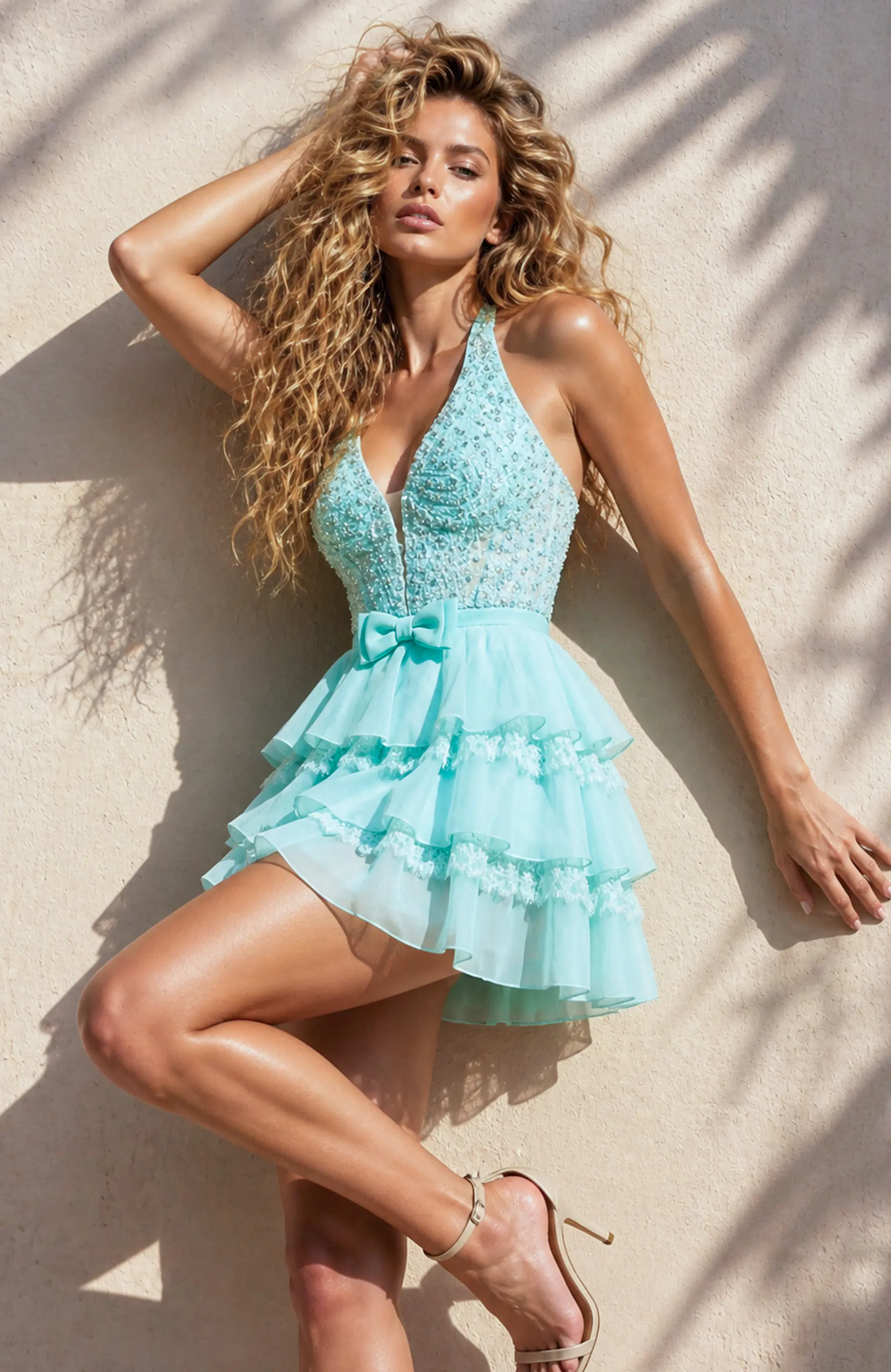
Jovani's Tiered Ruffle Mini Dress has a halter neckline, a lace bodice, and a tiered chiffon skirt with a defined waist. Its short A-line shape offers one concrete example to assess for room during turns, provided the invitation permits a mini length.
Sheath, column, and close-fitting designs
A narrow skirt needs a walking allowance from a slit, vent, pleat, or suitable stretch. Otherwise, the dress may be comfortable while standing but restrictive on the dance floor. Test the actual garment rather than assuming a slit guarantees comfort.
What Should You Test in the Fitting Room?
Run a brief movement test before choosing a reception outfit. Wear shoes close to your intended heel height, and repeat each action without holding the dress in place. A secure fit should let you move without repeatedly pulling fabric upward or smoothing it down.
- Sit fully in a chair, then stand without tugging at the waist or hem.
- Walk several normal steps and turn in both directions.
- Lift your hands for a greeting and try a small side-to-side dance step.
- Check the neckline, straps, slit, lining, and rear hem after moving.
For a different decision framework, Jovani’s wedding guest dress cuts guide (opens in new tab) explains how the main silhouettes look and fit. The movement checks here help you decide whether a particular garment is practical for dancing.
Keep the Bodice Secure Without Restricting Your Arms
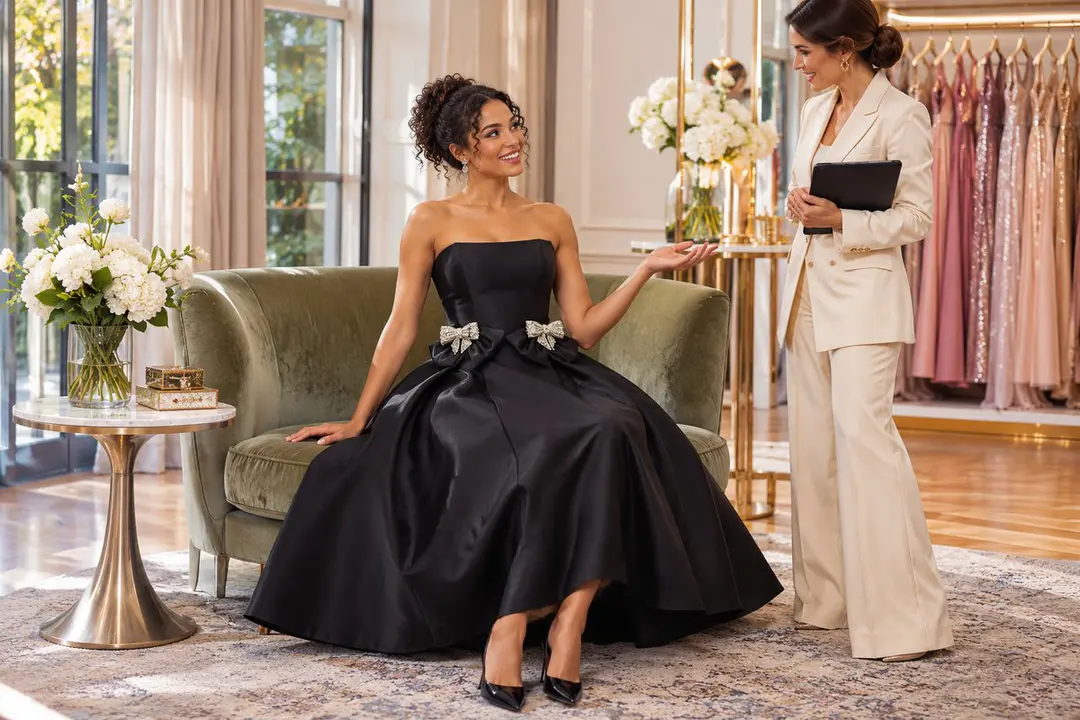
A reliable dance dress should stay in place when you turn, raise an arm, or lean slightly forward. Try the arm movement you would use for a hug. If the neckline shifts every time, ask the retailer whether fit adjustments are realistic before choosing that design.
Strapless styles need particular attention to bodice structure and circumference. They are not automatically uncomfortable, but they must feel stable without being painfully tight. Shoulder straps can offer a different kind of security, though their placement also needs checking.
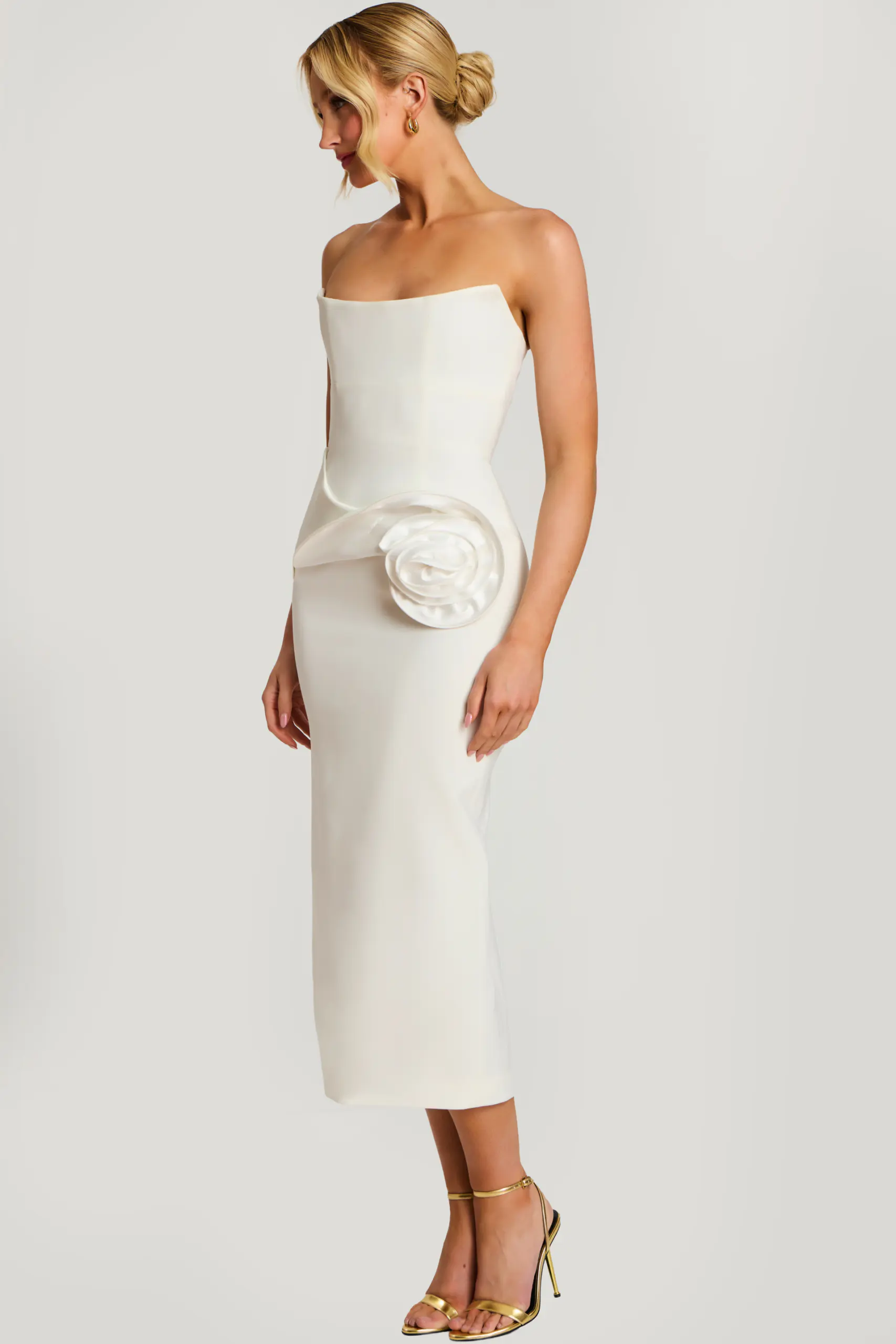
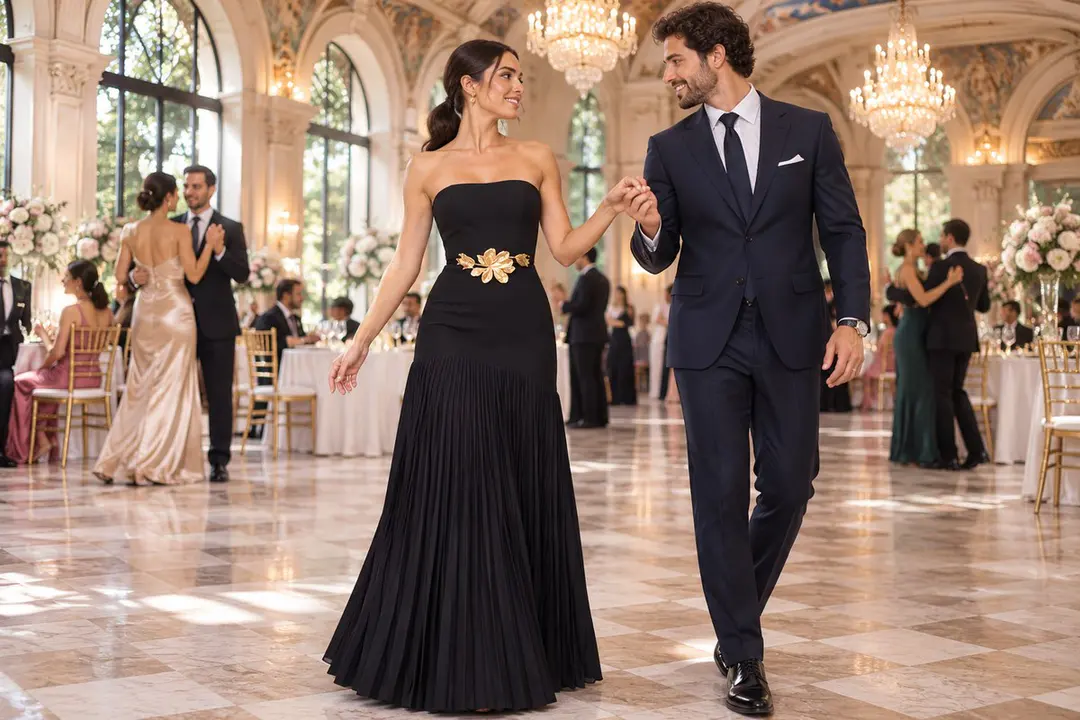
Jovani's Elegant Strapless Midi Dress with Satin Rose Detail has a structured bodice, satin fabric, a sheath silhouette, and a straight zip-up back. Compare its secure upper fit with the freedom you feel at the hips and knees during a small dance step.
Match Dress Length to the Wedding and Dance Floor
A hem should suit the dress code while leaving your shoes clear. For a cocktail or semi-formal event, knee-length wedding guest options (opens in new tab) may offer practical clearance. Confirm that a short skirt stays comfortable when seated, not just when standing.
For formal invitations, long wedding guest gowns (opens in new tab) may be more appropriate. Check whether the front hem brushes the floor and whether the lining bunches at your feet. A floor-length gown can work for dancing when its skirt and hem allow safe movement.
Avoid treating the gown length as the only test of formality. The invitation matters first, and the wedding guest etiquette guide (opens in new tab) explains what different codes generally expect. Personal comfort should be balanced with those expectations.
Does Fabric Matter as Much as Silhouette?
Yes. A flexible or flowing material can improve movement, but the lining, seams, and bodice determine how the whole dress behaves. Chiffon may float over the legs, while structured satin can retain its shape. Neither choice guarantees comfortable dancing by itself.
Check whether layers cling to one another after a turn. Watch for heavy beading at the hips and rough seams that rub when you sit. If a dress has a slit, verify that its opening remains comfortable throughout a normal stride.
Choose Shoes and Accessories That Stay Put
Shoes can make an otherwise comfortable outfit difficult to wear. Test the dress with the footwear you plan to use at the reception. If you switch into flats, check that the longer hem will not drag after the change.
Jovani’s wedding guest shoe guide (opens in new tab) covers footwear by dress length and venue. Keep accessories compact enough that a clutch, loose scarf, or oversized embellishment will not interfere with dancing or greeting guests.
When a Shorter Party Dress Makes More Sense
A short dress can be a practical option for a lively reception when the invitation permits cocktail or semi-formal attire. Consider short wedding guest outfits (opens in new tab) with a secure neckline and a skirt that sits comfortably. A mini is less suitable for formal or black-tie invitations.
If you prefer more coverage, a midi can provide a useful middle ground. Compare both lengths while sitting and taking a few steps. The best choice is the one that meets the event expectations without requiring constant adjustment.
Make the Final Decision Before the Wedding
Choose the dress that passes the movement test while meeting the couple’s dress code. Confirm any planned tailoring with the retailer, especially if a fitted skirt needs a change. Never rely on an unapproved alteration to make an uncomfortable dress wearable.
For a closer comparison of wedding guest dresses for dancing, visit an authorized Jovani retailer (opens in new tab) with your intended shoes and ask to try the movements that matter at your reception.
Frequently Asked Questions
What is the best wedding guest dress for dancing?
Choose an A-line or fit-and-flare dress with a secure bodice and room to take a full stride. Other silhouettes can also work if their fabric and construction allow movement.
Can you dance in a fitted wedding guest dress?
Yes, if the fitted skirt permits a comfortable stride and turn. Test any slit, back vent, or stretch in the actual dress instead of judging movement from its photographs.
Is a midi or maxi dress better for a wedding reception?
A midi can make hem management easier, while a maxi may better suit a formal dress code. Choose according to the invitation and test whether your planned shoes clear the hem.
Should you change shoes before dancing at a wedding?
Change shoes if a more comfortable pair will help you move safely. Check your hem with both shoe heights beforehand, especially when wearing a long dress.