
Wedding Dress Fabrics That Wrinkle, Crease, Snag or Stretch
Silk satin, chiffon, organza and taffeta are the wedding dress fabrics that wrinkle and crease most, while heavier satin, mikado and stretch crepe hold up best. Tulle, lace and beaded mesh snag most easily. Stretch crepe and jersey give with your body, and mikado barely moves at all.
That matters on a long wedding day. A gown may ride in a car, sit through dinner and brush against gravel and a bracelet clasp before the last dance. Knowing how each fabric reacts helps you choose a dress that still looks finished in the late photos.
If the fabric names are still new to you, our Wedding Dresses 101 guide (opens in new tab) covers the basic terms first.
Wrinkle, Crease, Snag or Stretch: What Each Term Means
Wrinkles, creases, snags and stretch are four different problems, and each one points to a different fabric quality.
- Wrinkle: soft, random folds from sitting, packing or humidity. Most wrinkles relax with hanging or gentle steam.
- Crease: a sharp line pressed in by a hard fold or by weight over time. Creases in crisp fabrics can stay visible after steaming.
- Snag: a thread or mesh cell caught and pulled out of place by jewelry, hardware, shoe ornaments or rough surfaces.
- Stretch: how much the fabric gives under tension. Some give is comfortable, but too much can bag at the seat or let a hem grow longer.
Fiber, weave and weight decide all four. Two gowns labeled satin can behave very differently, so read the fabric details on each of the wedding dresses (opens in new tab) you shortlist instead of relying on the fabric name alone. On Jovani product pages, the fabric appears in the features table along with the silhouette, neckline and length.
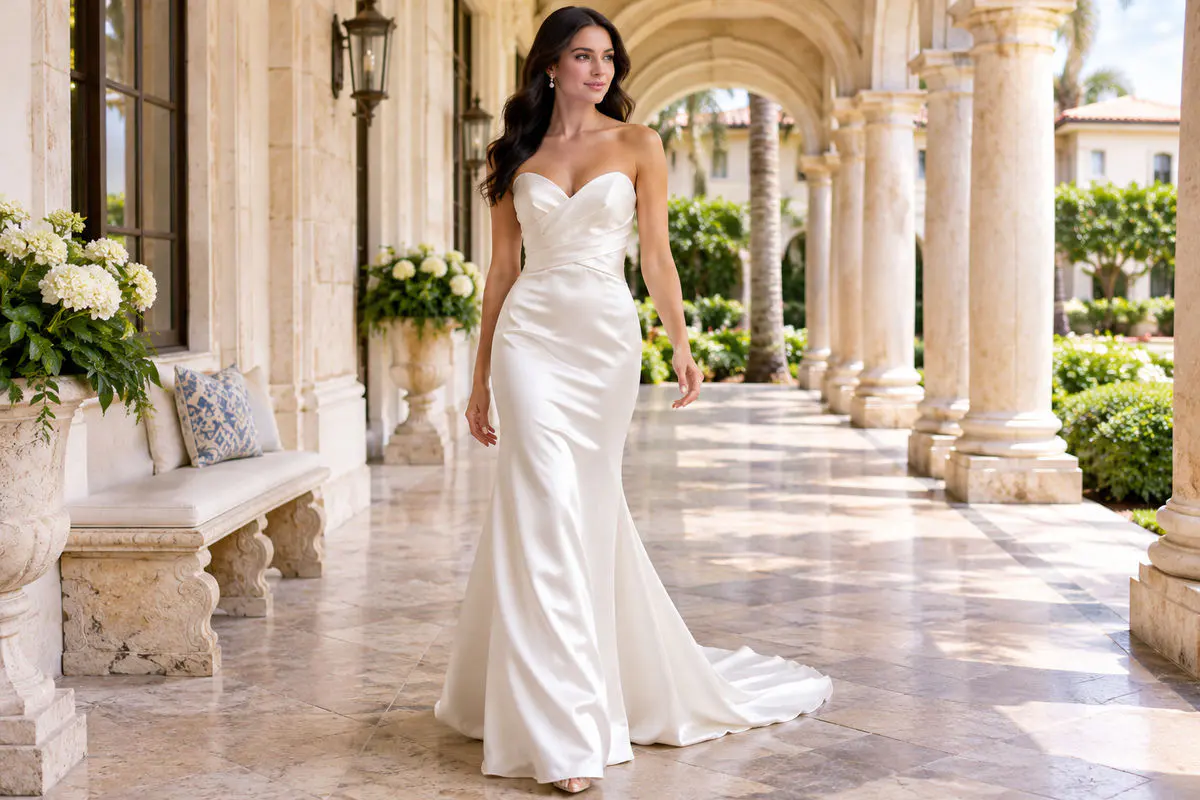
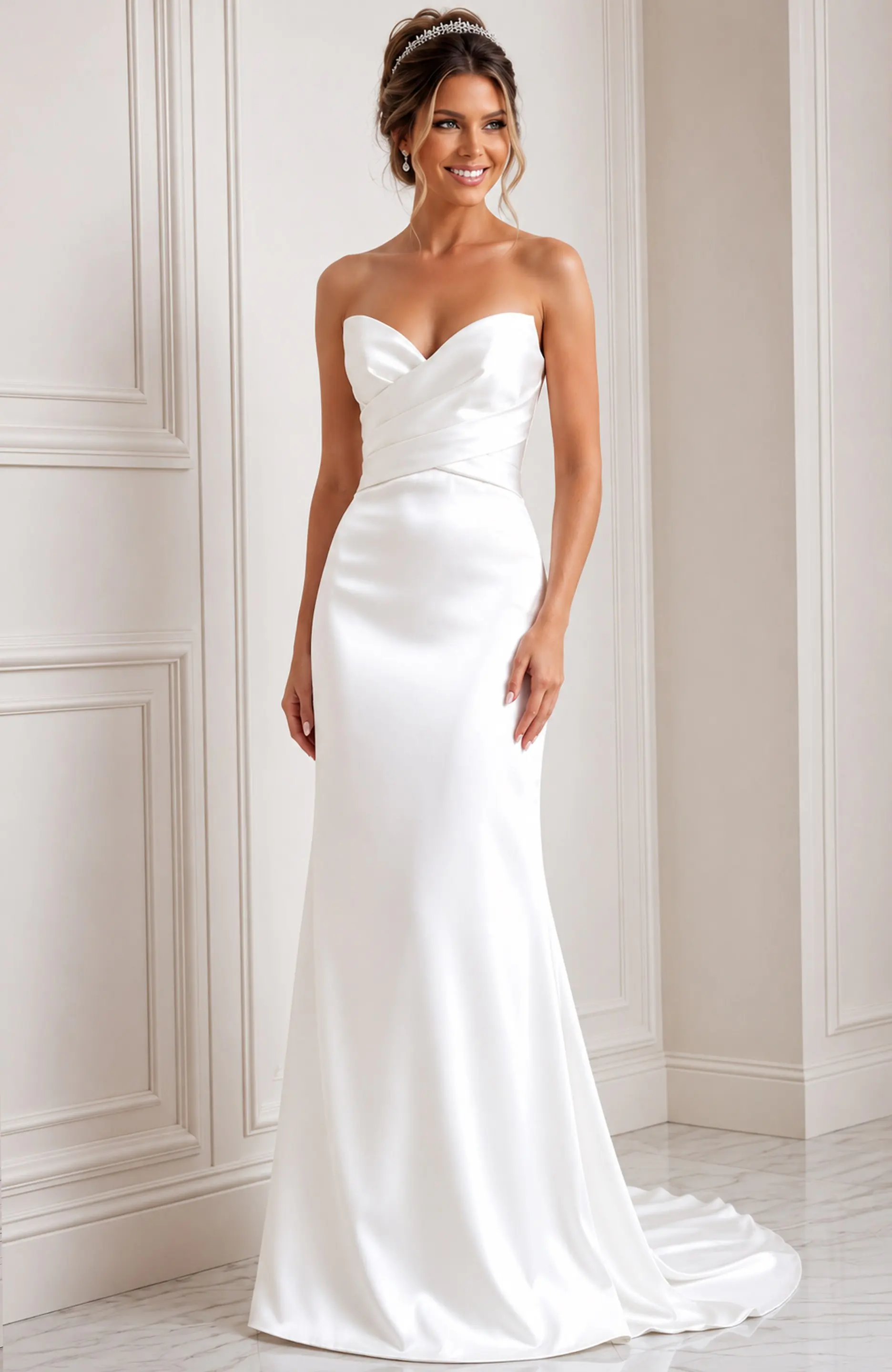
Jovani's Satin Strapless Sheath Wedding Dress shows why satin weight matters. The satin runs from a draped bodice into a smooth skirt and a soft sweep train, with a low back finished by a bow. On a close line like this, any crease reads clearly.
Which Wedding Dress Fabrics Wrinkle and Crease Most?
Lightweight woven fabrics wrinkle and crease most, especially in silk. Fiber matters too: polyester and nylon versions usually bounce back faster than silk versions of the same weave.
Fabrics Most Likely to Wrinkle or Crease
- Silk satin and charmeuse: the fluid, liquid-looking satins wrinkle under pressure and show every fold under light.
- Chiffon: soft, sheer layers crumple easily, especially in silk, though they also release wrinkles quickly with steam.
- Organza: crisp and light, so a hard fold can leave a sharp line across a sleeve or overskirt.
- Taffeta: its crisp hand holds creases, and a crushed skirt can keep visible lines.
- Cotton and linen: popular for casual and courthouse looks, but both wrinkle within minutes of sitting.

Fabrics That Resist Wrinkles Best
Heavier satins, often sold as duchess satin, resist everyday wrinkles better than thin satins because their dense weave springs back. Mikado holds its shape well too, and our comparison of satin and mikado wedding dresses (opens in new tab) explains how the two differ in weight and structure. A hard fold in a box or bag can still leave a defined line in either fabric.
Stretch crepe and scuba crepe also resist soft wrinkles, but thinner crepe can keep a fold line where it was pressed flat in storage.
Silhouette changes how much wrinkling shows. On Jovani's mermaid wedding dresses (opens in new tab), crepe creates a smooth, matte surface while satin adds more sheen and visual weight. That sheen catches light along every fold, so a satin mermaid needs more careful handling before photos than a matte crepe one.
Which Fabrics Snag Most Easily?
Open, textured fabrics snag most easily. Tulle, lace, beaded mesh and sequined fabrics have loops, edges and threads that catch on jewelry, hardware and rough surfaces. Tightly woven satin, mikado and crepe have smooth surfaces with little to grab, so they rarely snag in normal wear.
Tulle and Net Layers
Tulle is a fine mesh, and each opening can catch a prong, a heel or a splinter. A pulled cell can run or tear, and soft tulle is hard to mend invisibly. Layered tulle also flattens when pressed, so a skirt can look crushed after a car ride.
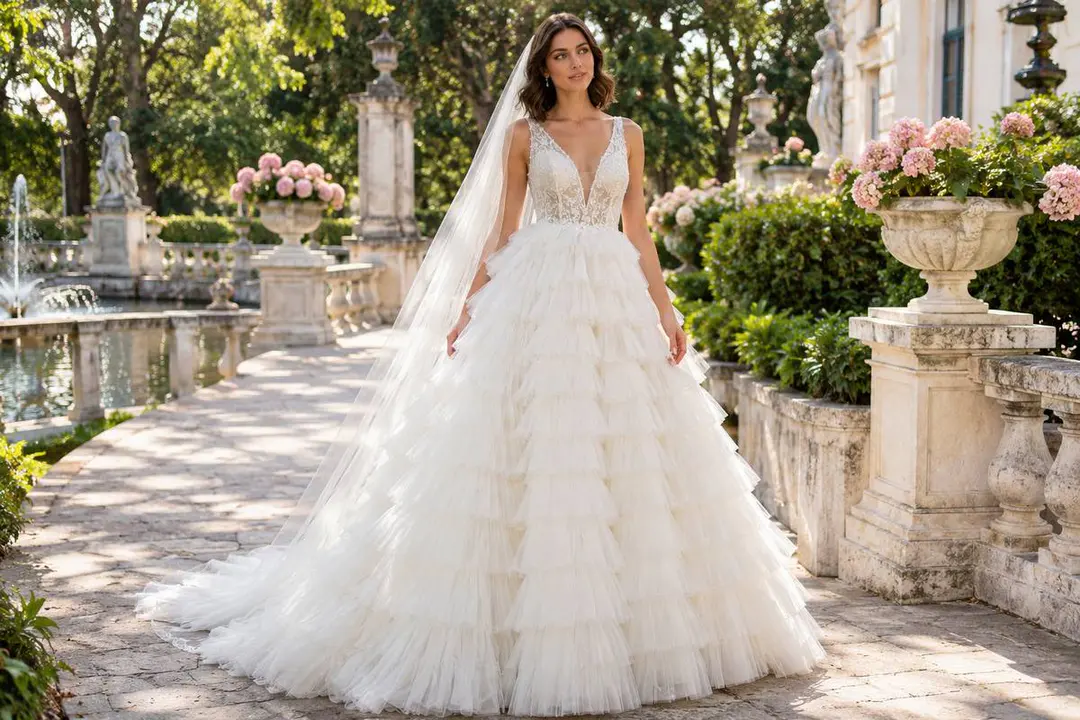
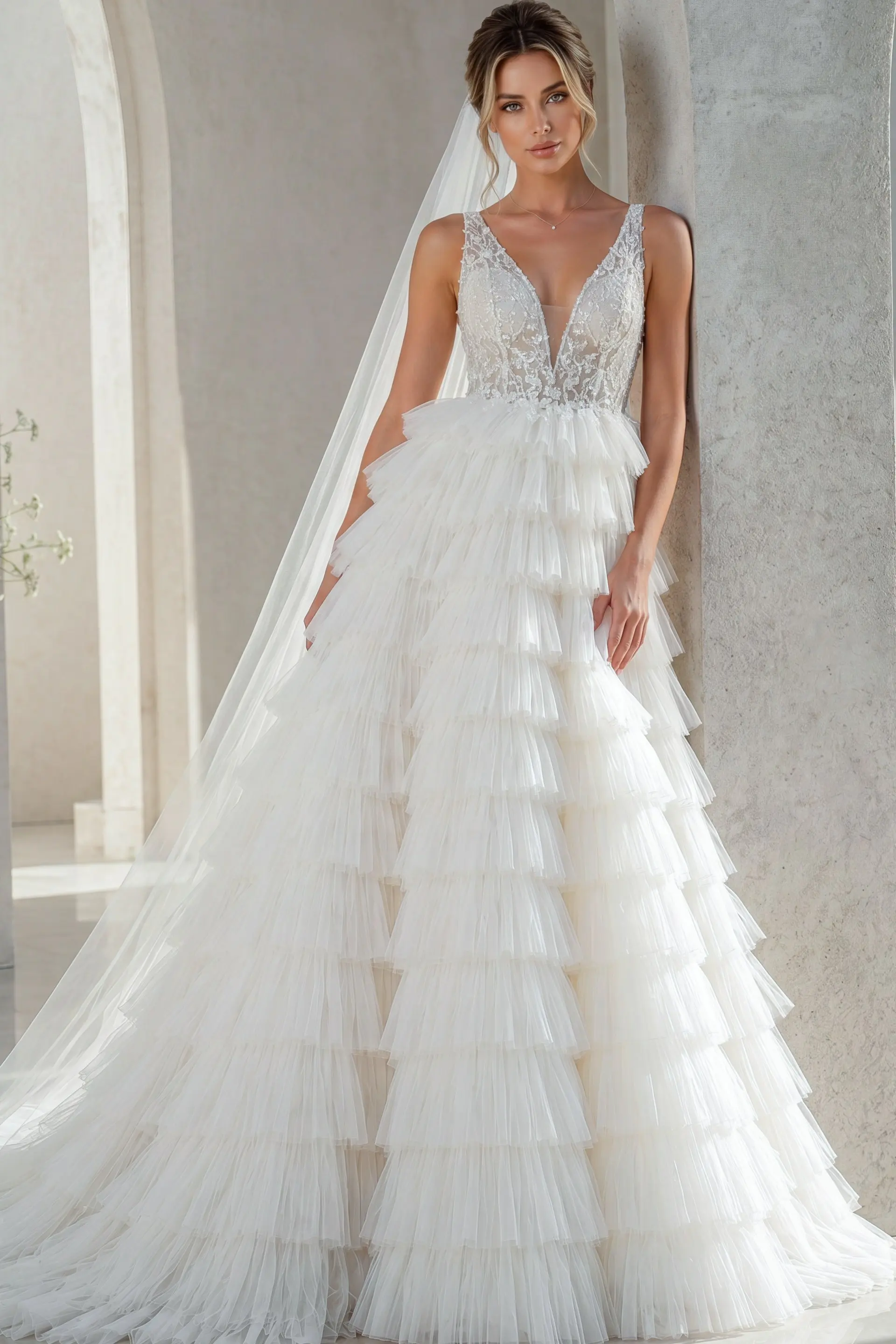
Jovani's Lace Bodice Ball Gown with Layered Tulle Skirt shows the tradeoff. Its tiered tulle ruffles give the skirt volume and movement, and the beaded bodice sits over sheer panels with wide straps. A skirt like this rewards smooth jewelry and a clear path down the aisle.
Lace, Appliqués and Beading
Lace snags at its raised motifs and open edges rather than across its surface. Jovani's lace wedding dresses (opens in new tab) page notes that floral appliqué gives a clearer motif with more visible edges than fine embroidered tulle. Those raised edges are the parts most likely to catch a bracelet or a ring.
Beading adds a second risk. Loose thread ends near beads can catch, and a pulled thread may loosen the stones next to it. Ask your consultant to check the stitching around heavy embellishment at each fitting.
Which Wedding Dress Fabrics Stretch, and When Does It Matter?
Stretch crepe, scuba crepe, jersey and power mesh have the most give, while mikado, duchess satin, taffeta and organza barely stretch. Give makes a fitted gown easier to sit, dance and breathe in. It also changes how alterations and final fittings should be timed.

Fabrics With Built-In Give
Stretch fabrics usually blend a fiber such as polyester with spandex, which lets a close silhouette follow the body without pulling at the seams. Jovani's fitted wedding dresses (opens in new tab) page lists stretch crepe and scuba crepe as separate fabric filters. It also notes that smooth crepe emphasizes tailoring, darts, seams and the outline of the waist and hips.
The tradeoff is visibility. Stretch crepe shows what sits underneath, so bring your actual shapewear and bra to every fitting. A heavier stretch crepe smooths more than a thin one.
Fabrics That Hold Their Size, and One Exception
Mikado, duchess satin, taffeta and organza hold their size, which is why they suit structured bodices and full skirts. The fit has to be right in the seams, because the fabric will not give to cover a tight spot.
Bias cut is the exception. Satin or chiffon cut on the diagonal gains give and can lengthen slightly as it hangs, so set those hems after the gown rests on a hanger. Heavy beading can also pull fabric, and Jovani's beaded wedding dresses (opens in new tab) page notes that the added weight of beadwork makes construction particularly important.
How to Test Wedding Dress Fabric at Your Fitting
A five-minute check at your appointment tells you more than any fabric chart. Ask your consultant before handling a sample, then run these tests on the gown itself.
- Read the label. Check the fiber content on the inside tag or the product page, since polyester satin and silk satin behave differently.
- Do the hand test. With permission, hold a hidden inside layer, such as the lining or the underside of the hem, in your palm for a few seconds. Release it and watch whether the folds fall out.
- Sit down. Sit in the gown for a few minutes, then stand and check the lap, the back of the skirt and the waist for lines.
- Move like it is the wedding day. Raise your arms, bend to hug someone and take a few dance steps to see where the fabric pulls or bags.
- Look for catch points. Check where your bracelet, ring, belt or shoe ornaments touch tulle, lace or beading.
- Ask about the hem. Find out how the hem and train will be finished and whether a bustle can lift them off the ground.
Take phone photos after the sit test. Creases that look minor in a mirror can show clearly in a flash photo.
Matching Fabric to Your Venue, Travel and Timeline
Your schedule should shape the fabric choice as much as the look does. A gown that travels and moves through several locations needs a forgiving fabric.
- Long drives or flights: stretch crepe and heavier satin arrive in better shape than silk chiffon or organza. Tulle packs well but needs room to fluff back out.
- Garden, barn or vineyard venues: grass, gravel and rough boards catch tulle and lace hems, so plan a bustle and a clear path.
- Hot, humid days: silk and thin satin crease more easily in humidity, so keep the gown hanging in a cool room until you dress.
Even the most forgiving fabric needs a final touch before the ceremony. Our guide to steaming a wedding dress by fabric (opens in new tab) explains how to release wrinkles from satin, crepe, tulle and lace without damaging them.
Common Mistakes That Cause Wrinkles and Snags
Most wedding day wrinkles and snags start with handling, not with the fabric itself.
- Folding the gown into a bag or box for days, which sets creases into crisp fabrics such as organza and taffeta.
- Hanging a heavily beaded gown by its shoulder straps instead of the inner hanger loops, which can stretch the shoulders.
- Wearing a bracelet with prongs or open settings against a tulle or lace skirt.
- Steaming too close or too long over satin and beading, which can leave marks or loosen threads.
The fastest way to learn these fabrics is to feel them side by side. An authorized Jovani retailer can show you satin, crepe, tulle and lace gowns in person, so you can run the sit test and the hand test before you order. Find a Jovani retailer near you (opens in new tab) to book an appointment.
Frequently Asked Questions
Does chiffon wrinkle easily?
Yes, chiffon wrinkles easily, especially silk chiffon. Polyester chiffon releases wrinkles faster with gentle steam, and because the fabric is so light, most soft folds relax once it hangs freely.
Can a snag in tulle or lace be repaired?
Usually, yes, if it is caught early. A bridal seamstress can often ease a pulled lace thread back or reattach a loose appliqué, while a hole in tulle may need a hidden patch. Do not cut a pulled thread yourself.
What wedding dress fabric is best for a destination wedding?
Stretch crepe or a lightweight polyester chiffon is usually the easiest choice for travel. Both pack with less creasing than silk satin or organza, and both are lighter to carry. Bring the gown on board in a garment bag when the airline allows it.
Will sitting in the car wrinkle my wedding dress?
A short ride rarely leaves lasting marks, but a long one can press lap creases into satin, taffeta and chiffon. Lift the train and outer skirt so you sit on the lining, spread the extra fabric loosely around you and check the gown before photos.