
The mermaid silhouette is one of the most dramatic shapes in bridal fashion. Fitted closely through the bodice, waist, and hips before flaring out at or below the knee, it traces the body’s natural lines and creates a sculpted, hourglass effect that photographs beautifully and reads as confident and modern. It is not the right shape for every bride or every wedding, and part of choosing well is understanding when a mermaid shines and when another silhouette serves you better. This guide walks through how to choose a mermaid wedding dress, from who it suits to fabrics, construction, movement, and styling, so you can wear the dramatic shape with complete confidence.
The mermaid rewards a bride who knows what she is choosing. It is the most body-conscious of the popular silhouettes, which means it asks more of both the gown and the wearer than a forgiving A-line does, but the payoff is a sculpted, photogenic line that few other shapes can match.
Choosing a mermaid is partly about the look you want and partly about understanding how the silhouette works, because the fitted construction has real implications for fit, comfort, and movement that a fuller skirt does not. A mermaid rewards a bride who understands what she is choosing and embraces it. The considerations below cover what actually matters when you are deciding whether the sculpted shape is right for you and your wedding.
What makes a mermaid a mermaid
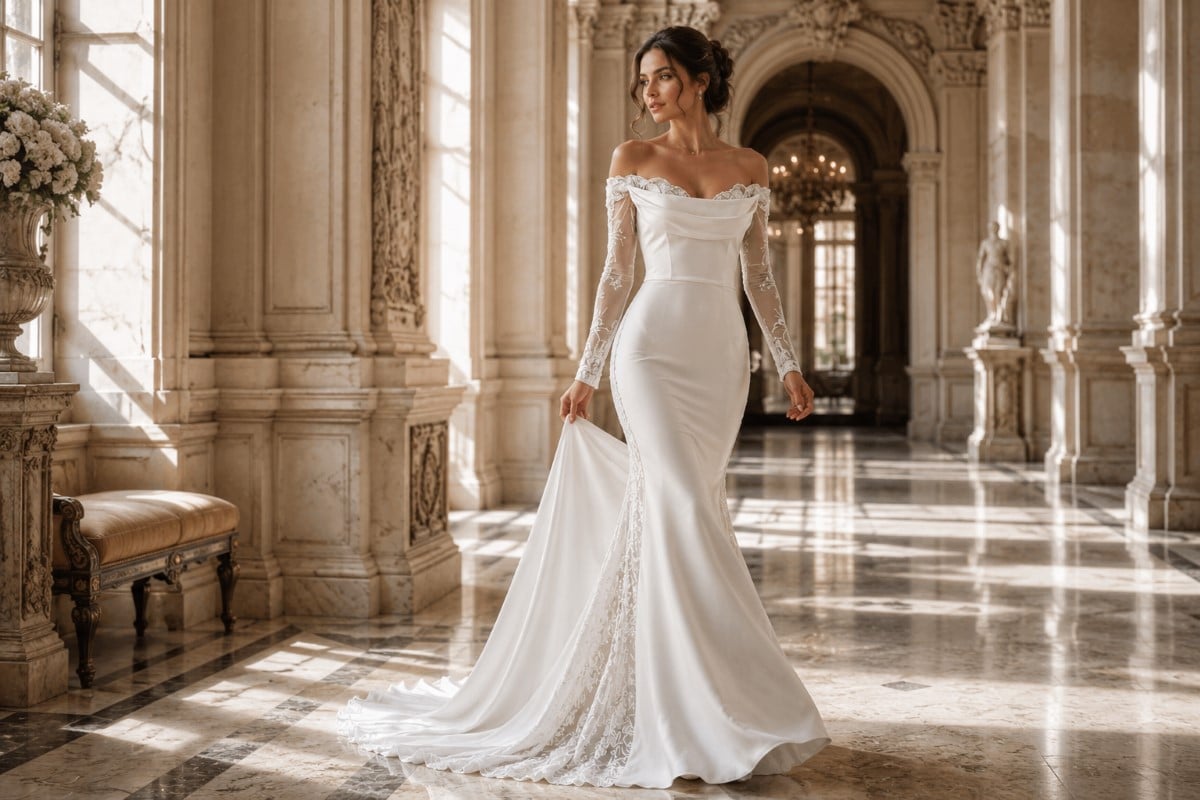
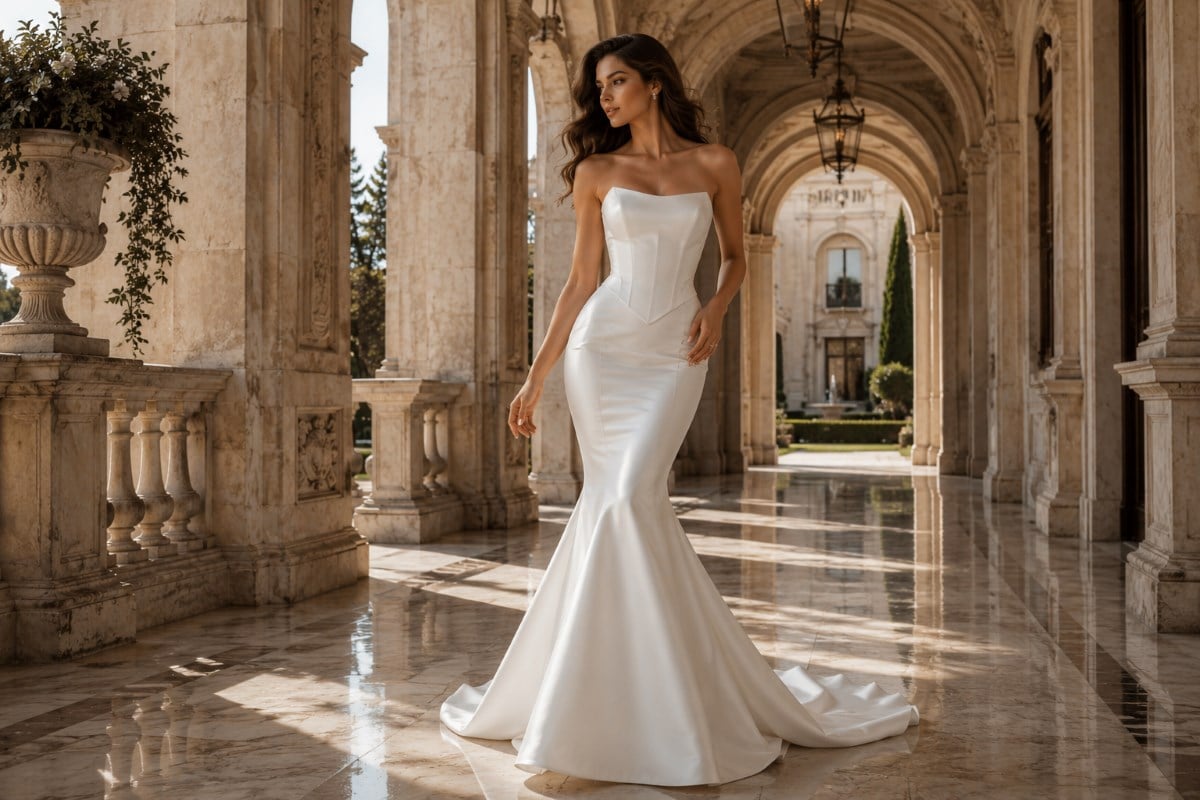
The mermaid silhouette is defined by its fit. It contours closely to the chest, waist, and hips, following the body’s natural shape, and then flares out dramatically at or below the knee into a wider skirt. This creates the signature hourglass effect and the fitted-then-flared line that gives the silhouette its name. The flare can be subtle or dramatic, and where exactly it begins affects both the look and how the dress moves.
A close cousin worth knowing is the trumpet silhouette, which begins its flare slightly higher, typically around mid-thigh. This subtle shift gives a trumpet a bit more mobility than a true mermaid while keeping much of the same body-conscious drama, which makes it a useful compromise for a bride who loves the fitted look but wants an easier time moving. Understanding the difference helps you describe what you want, and the range of mermaid wedding dresses shows how the flare varies across styles.
Who the mermaid suits
The mermaid is a confident choice, and it flatters in specific ways that are worth understanding. For an hourglass figure, the silhouette follows the body’s natural lines from bust through hip, emphasizing curves the bride already has. For a straighter figure, the fitted bodice and the dramatic flare at the knee create the appearance of curves, adding shape where there is less. In both cases, the silhouette draws attention to the body, which is part of its appeal and part of what makes it a bolder choice.
Because the mermaid is so body-conscious, it rewards a bride who feels confident showcasing her shape and wants a dramatic, sculpted look. It is genuinely flattering across body types when the construction is right, which is the key qualifier. A well-built mermaid with strong internal structure shapes and supports the body, creating a smooth, intentional line rather than a tight one. This is true across sizes, and our guide on plus size wedding gowns covers how a fitted silhouette can be both supportive and confident on a curvier bride.
Fabric and how it shapes the silhouette
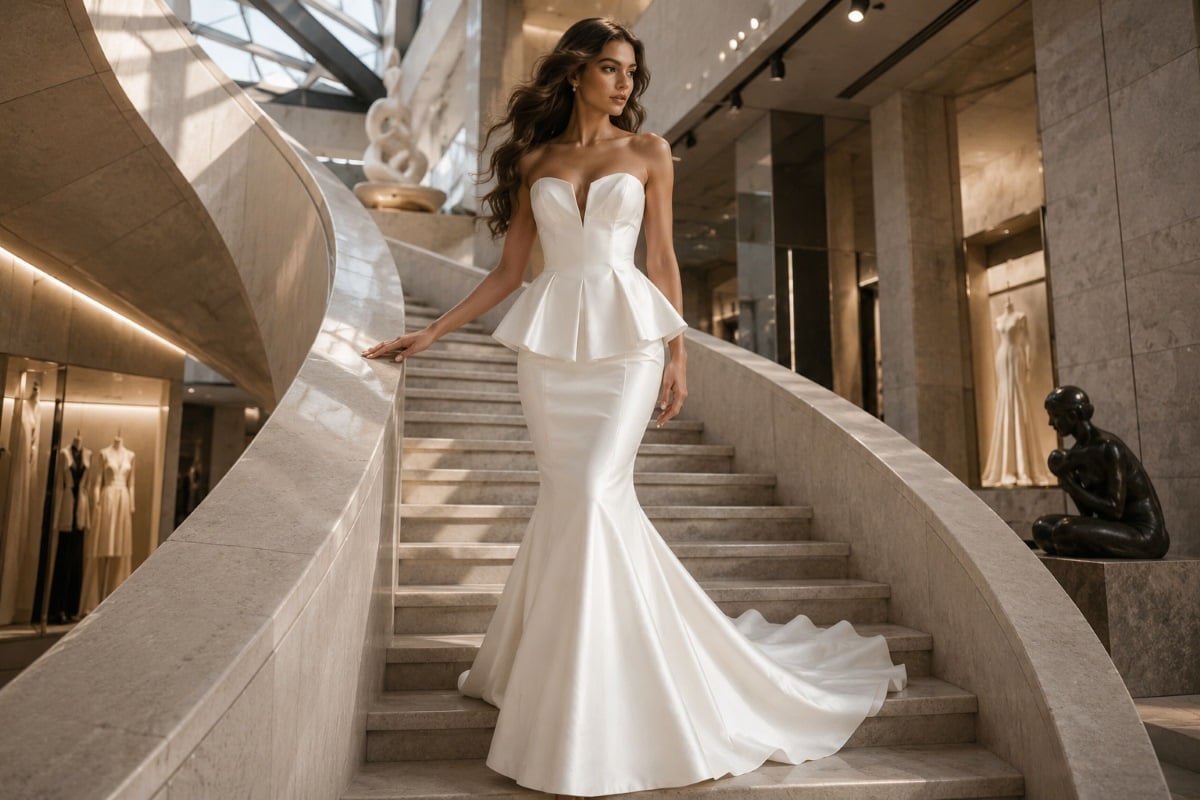
The fabric of a mermaid gown affects both its look and how the silhouette reads, so it is worth understanding the options. Satin gives a mermaid a sleek, glossy elegance that emphasizes the sculptural shape and catches light cleanly, suiting a formal, modern look. Crepe offers a smooth, matte line that skims the body and holds its shape, reading as contemporary and refined. Both structured fabrics suit the mermaid’s need for a clean, body-following line.
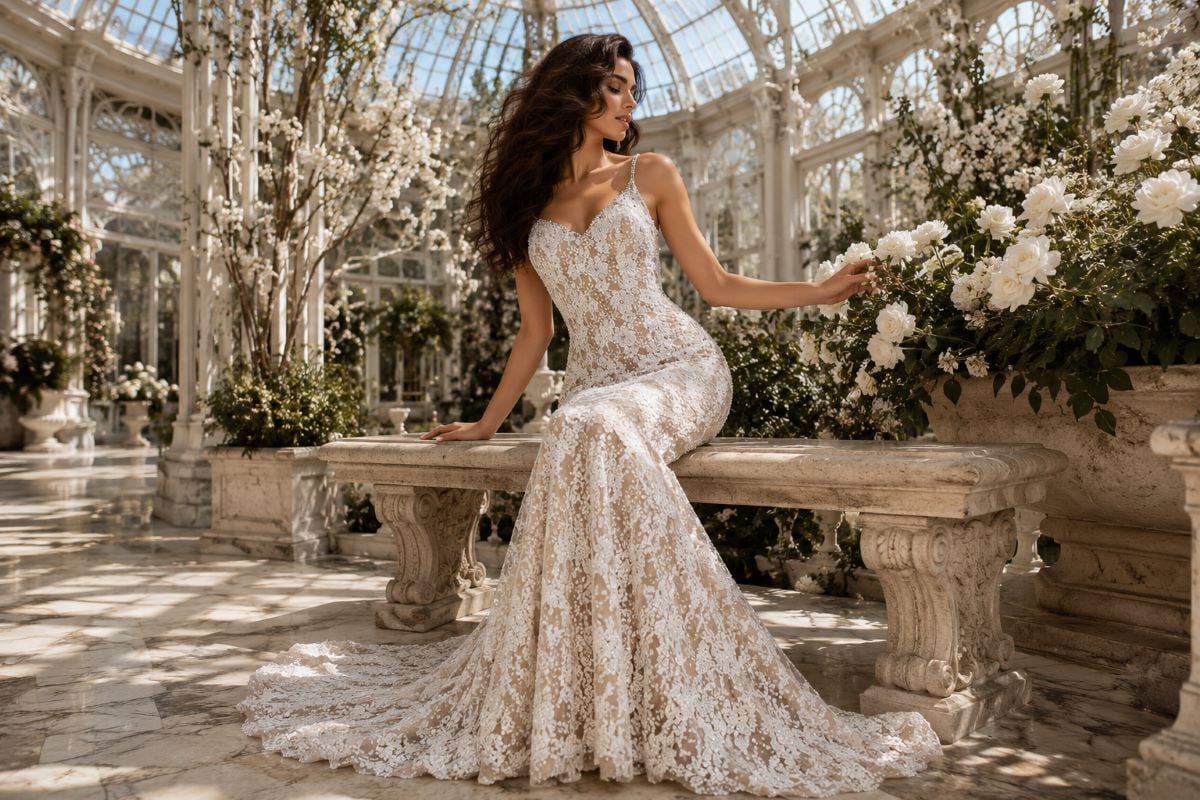
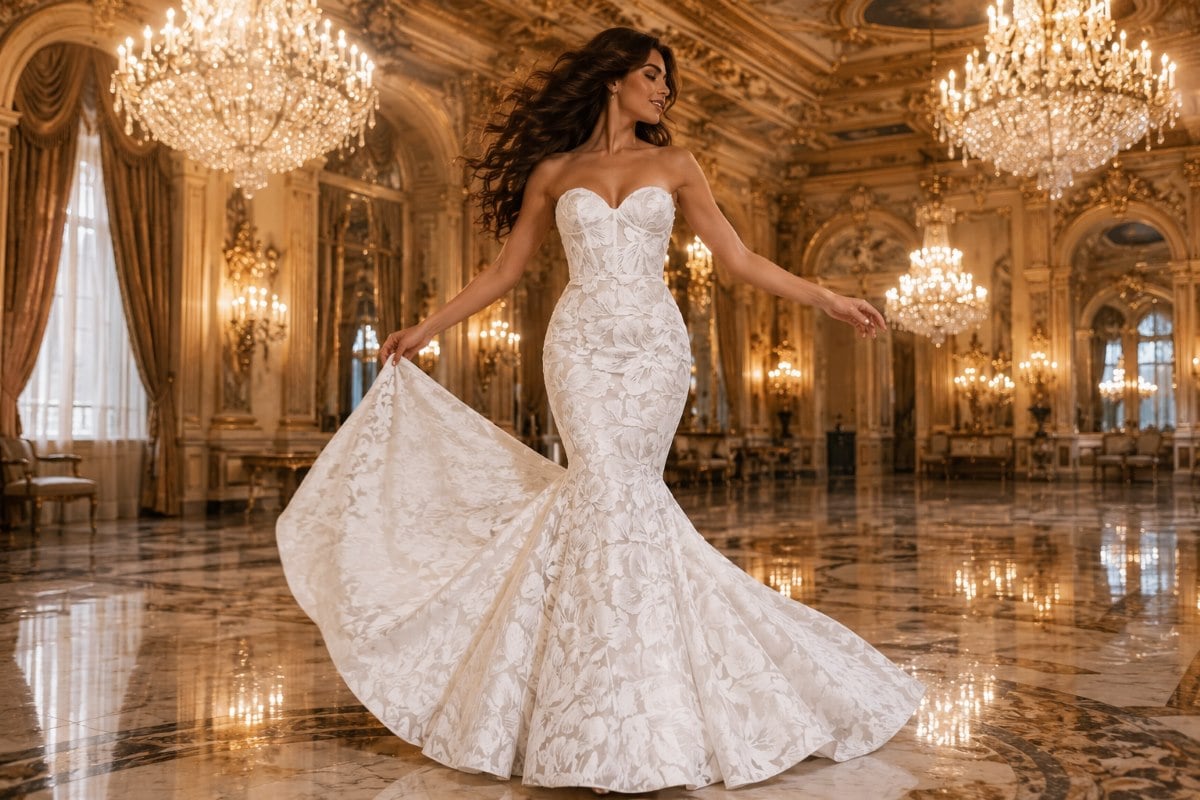
Lace brings romance and texture to a mermaid, with the pattern following the lines of the figure for one of the most striking bridal looks, combining the drama of the silhouette with the softness of lace. The range of lace wedding dresses shows how lace reads across a fitted shape.
Beading adds sparkle that highlights the sculpted form, with the embellishment catching light across the curves, and the styles among beaded wedding dresses show how embellishment emphasizes a mermaid’s shape. The fabric is part of choosing the mermaid, since it determines whether the silhouette reads as sleek, romantic, or glamorous, and the same fitted shape can feel completely different depending on whether it is satin, lace, or beaded.
Construction is everything
More than almost any other silhouette, the mermaid depends on its internal construction, because the fitted shape only works when the structure underneath supports it. A well-built mermaid uses boning, a supportive lining, and often power mesh to smooth and shape the body, creating the sculpted line cleanly rather than clinging or pulling. Without that structure, a fitted gown can look tight and uncomfortable rather than sculpted and elegant.
This is why construction quality matters so much for a mermaid, and why the difference between a beautiful one and a disappointing one is largely invisible from the outside. The internal architecture, the boning, the mesh, the lining, is what holds the shape and supports the body, letting the bride move and breathe comfortably while the silhouette stays smooth. When trying a mermaid on, pay attention to how it feels as well as how it looks, since a well-constructed one feels secure and supported rather than restrictive. The range of fitted wedding dresses shows how body-conscious silhouettes rely on strong internal structure.
Movement, dancing, and the practical realities
The mermaid’s fitted construction affects movement in a way worth planning for, because the narrow skirt through the knee changes how you walk, sit, and dance. Walking in a true mermaid requires shorter steps, and sitting may need a moment of adjustment to accommodate the narrow skirt. This is simply part of the silhouette, and most brides adapt quickly, but it is worth knowing before you choose.
For dancing, a mermaid works best when the design accounts for movement, whether through a kick pleat at the back of the skirt, stretch in the fabric through the lower skirt, or a flare that begins high enough to allow stride. If you plan to dance a great deal, look for a mermaid with one of these features, or consider a trumpet, which begins its flare higher and allows more mobility. Thinking about the flow of your wedding day, the ceremony, the photos, the dancing, helps you choose a mermaid that performs across all of it. A gown that looks beautiful but restricts movement undercuts the day, so movement deserves real consideration.
It is worth being honest with yourself about the trade-off a mermaid asks for. In exchange for its sculpted, photogenic line, it offers less ease than a softer silhouette, and a bride who wants to forget about her gown and simply move through the day may find a mermaid asks for more attention. None of this is a reason to avoid it, but it is a reason to choose it deliberately. The brides who love their mermaid most are the ones who chose it knowing exactly what it offers and what it asks, and embraced both as part of the look they wanted.
Necklines that suit a mermaid
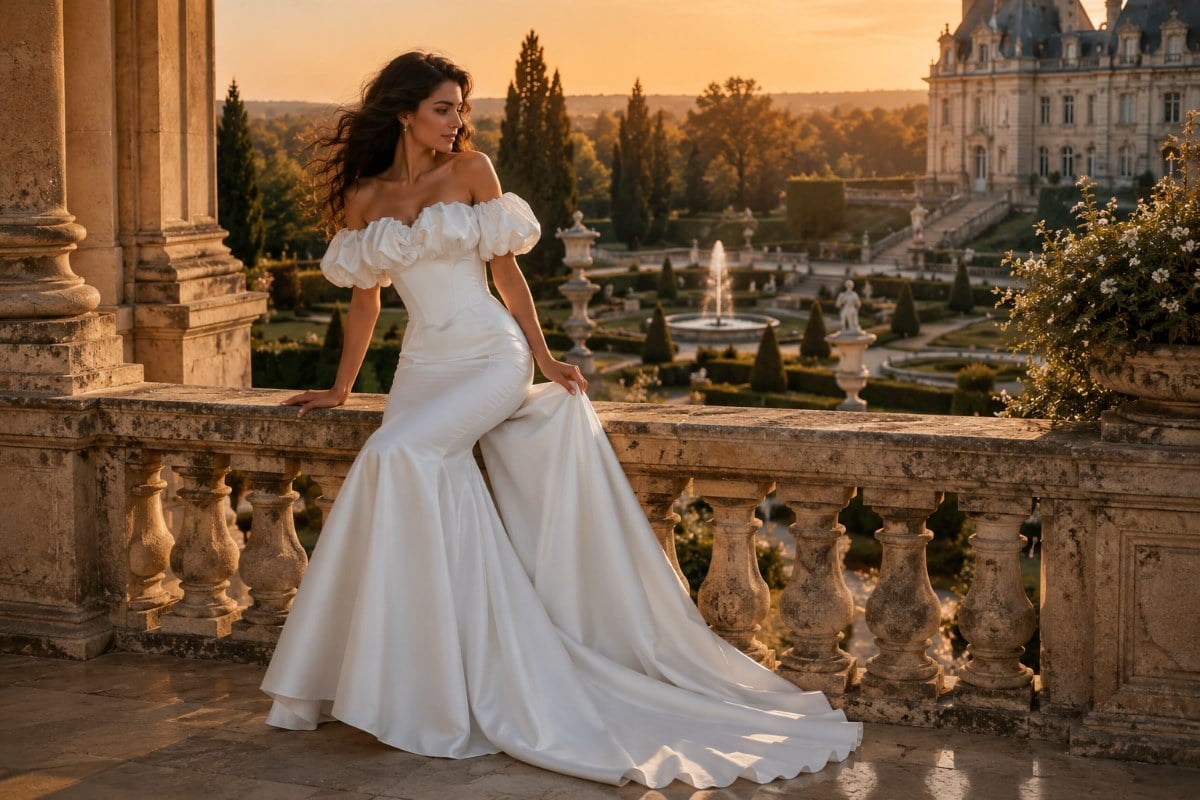
The mermaid’s dramatic silhouette pairs with a range of necklines, and the choice shapes the overall feel. A sweetheart neckline is a classic mermaid pairing, framing the upper body softly and balancing the fitted line below. A strapless or off-the-shoulder neckline emphasizes the sculpted shape and reads as modern and confident. A V-neck elongates the upper body and adds a vertical line that complements the silhouette’s length.
For a bride who wants more coverage, an illusion neckline or sleeves keep the dramatic silhouette while adding modesty, and lace is a particularly graceful way to do this on a mermaid. The neckline is worth choosing to balance your proportions and the look you want, since it draws the eye to the upper body while the silhouette draws it to the figure. To see how the foundational shapes and their variations compare, our guide to wedding dress silhouettes lays them out together.
Alterations and the precise fit
A mermaid demands precise tailoring more than almost any other silhouette, because the fitted construction relies on exact measurements to create its sculpted effect. The tailoring involves careful contouring through the waist, hips, and upper thighs, where the fabric must follow the body closely. If the fit is even slightly off, too tight across the thighs or too loose at the hips, the silhouette loses its intended effect or restricts movement.
This is why a mermaid benefits from an experienced bridal seamstress who understands the inner architecture of a fitted gown. The fit through the hips and the placement of any kick pleat are delicate adjustments that require skill, and getting them right is what makes the difference between a mermaid that looks sculpted and one that looks merely tight. Budgeting time and choosing a skilled seamstress protects the look, and our guide on wedding dress alterations covers what fitting a structured silhouette actually involves.
Styling a mermaid gown
A mermaid is already a statement, so the styling around it should support rather than compete with the silhouette. Refined jewelry, an elegant clutch, and sophisticated shoes complete the look without tipping it toward overdone. Because the silhouette draws the eye to the figure, restraint in the accessories keeps the focus where the gown intends it. The neckline guides the jewelry, with a bare sweetheart inviting a pendant and a detailed neckline pairing better with earrings alone.
The veil and hair should also harmonize with the drama of the silhouette. A sleek updo suits the modern lines of a mermaid, while soft waves soften a romantic lace version. The principle throughout is balance, letting the sculpted silhouette be the focal point and choosing every other element to frame it. A mermaid rarely needs much else, since the shape carries the drama on its own.
A note on quality
The mermaid is the silhouette where construction quality shows most clearly, because the fitted shape lives or dies on the structure beneath it. Jovani has designed formalwear since 1983, working from a studio in the New York garment district under design director Julie DuRocher, and the brand builds its gowns with steel boning, power mesh support, smooth linings, and precise tailoring that create the sculpted line cleanly and comfortably. For a bride choosing a mermaid, that attention to internal architecture is what separates a silhouette that flatters and supports from one that merely clings.
Frequently asked questions mermaid wedding dress
Who looks best in a mermaid wedding dress?
The mermaid flatters across body types when the construction is right. For an hourglass figure, it follows the body’s natural lines and emphasizes existing curves. For a straighter figure, the fitted bodice and dramatic flare create the appearance of curves. It rewards a bride who feels confident showcasing her shape and wants a dramatic, sculpted look. The key qualifier is strong internal construction, which shapes and supports the body so the silhouette reads as sculpted rather than tight. Confidence matters as much as figure here, since the silhouette draws the eye to the body and rewards a bride who wants exactly that.
What is the difference between a mermaid and a trumpet?
Both are fitted silhouettes, but they differ in where the flare begins. A true mermaid contours closely through the hips and flares at or below the knee, creating the most dramatic shape and requiring shorter steps. A trumpet begins its flare slightly higher, around mid-thigh, which gives more mobility while keeping much of the same body-conscious drama. A trumpet is a useful compromise for a bride who loves the fitted look but wants an easier time walking and dancing.
Can you dance in a mermaid dress?
Yes, though it works best when the design accounts for movement. Look for a mermaid with a kick pleat at the back of the skirt, stretch in the fabric through the lower skirt, or a flare that begins high enough to allow stride. These features let you dance comfortably despite the fitted construction. If you plan to dance a great deal, prioritize one of these features or consider a trumpet silhouette, which begins its flare higher and allows more mobility. Many brides also keep a mermaid for the ceremony and photos and change into something lighter for the reception, which sidesteps the question entirely.
Does a mermaid need more alterations than other silhouettes?
Generally yes, because the fitted construction relies on exact measurements to create its sculpted effect. The tailoring involves careful contouring through the waist, hips, and upper thighs, and even a slight misfit can lose the intended effect or restrict movement. A mermaid benefits from an experienced bridal seamstress who understands the inner architecture of a fitted gown, so budget time and choose a skilled professional to get the precise fit the silhouette requires.
What neckline works best with a mermaid?
A range of necklines suits a mermaid. A sweetheart is a classic pairing that frames the upper body and balances the fitted line below. A strapless or off-the-shoulder neckline emphasizes the sculpted shape, and a V-neck elongates the upper body. For more coverage, an illusion neckline or sleeves keep the dramatic silhouette while adding modesty, with lace a particularly graceful option. Choose the neckline to balance your proportions and the look you want. Because the silhouette already commands attention at the body, a simpler neckline often reads as the most elegant, letting the shape lead.
Is a mermaid too formal for a casual wedding?
A mermaid can read as overdressed at a very casual wedding, where its formal drama may feel like too much. A casual outdoor or beach wedding often suits a softer, less formal silhouette like an A-line. The mermaid shines at a formal evening wedding, a ballroom, or any celebration where its sculpted drama matches the setting. Matching the silhouette to the formality of your wedding ensures it reads as appropriate as well as beautiful. A useful test is to picture the venue and the rest of the celebration, since a gown that suits a grand ballroom can feel out of step at a relaxed garden lunch.
Finding your dress
A mermaid wedding dress is one of the most dramatic and sculptural shapes in bridal fashion, tracing the body’s lines and creating an hourglass effect that reads as confident and modern. With strong construction, a fabric that suits the look you want, a design that allows movement, and precise tailoring, the silhouette becomes a striking, flattering choice for the bride who wants to showcase her shape. When you are ready to find the right one, explore the collection of wedding gowns and visit an authorized Jovani retailer to try mermaid styles in person.