
The Best Cocktail Dress Silhouettes to Elongate Petite Frames
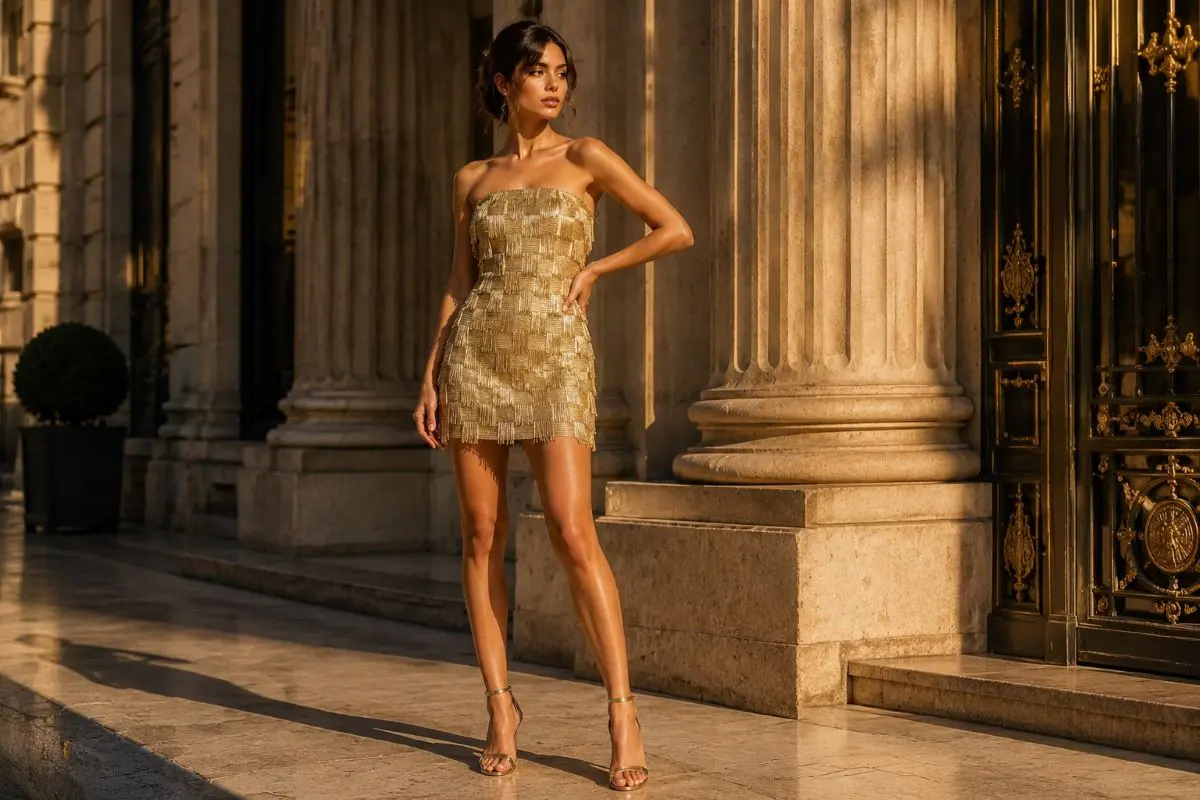
Height has nothing to do with how striking a woman looks in a cocktail dress, but the silhouette she chooses has everything to do with it. A petite frame is not a limitation, it is simply a set of proportions, and proportions respond predictably to the right cut, the right hemline, and the right placement of the waist. The trouble is that most cocktail dresses are designed for an average height, so a petite woman who picks the wrong shape can end up looking shorter than she is, swallowed by fabric that was never positioned for her body. This guide takes the guesswork out of it. It walks through the cocktail dress silhouettes that genuinely lengthen a shorter frame, explains why each one works, and shows how a few smart decisions can make a petite woman look effortlessly tall in any room.
Why Silhouette Matters More Than Height for Petite Women
Before getting into specific shapes, it helps to understand what is actually happening when a dress flatters or fails a petite frame. The eye does not measure height directly. It reads proportion, line, and where the body appears to break.
How the eye reads vertical line
When someone looks at a figure, the eye travels along whatever lines the clothing creates. An unbroken vertical line, from shoulder down through the hem, reads as length. A horizontal break, such as a thick contrasting belt or a skirt that hits at the widest part of the calf, stops the eye and visually divides the body into shorter segments. This is the entire mechanics behind dressing a petite frame. The goal of elongating cocktail dress silhouettes is never to hide anything. It is to keep the eye moving smoothly up and down rather than stopping it partway. Once you understand that principle, choosing among cocktail gowns becomes far more intuitive, because you can look at any dress and predict whether its lines will lengthen you or cut you in half.
Where the waist sits changes everything
The single most powerful tool for a petite woman is waist placement. The eye assumes that everything below the waistline is leg. When the defined waist of a dress sits higher than the natural waist, the legs appear longer and the whole figure reads as taller, even though nothing about the body has changed. When the waist sits low or disappears entirely into a shapeless cut, the legs look shorter and the frame looks compressed. This is why cocktail dresses for petite women should almost always have a clear, well placed waistline. It is not about cinching tightly. It is about giving the eye a marker placed in the most flattering possible spot. Understanding how to look taller in a cocktail dress really comes down to this principle, and nearly every recommendation in this guide traces back to it. The same logic applies to longer formal wear too, and the companion guide to flattering evening gowns for shorter frames shows how waist placement and vertical line carry over to floor length styles.
The Most Elongating Cocktail Dress Silhouettes
With those principles established, here are the specific shapes that consistently lengthen a petite frame. The strongest petite cocktail dress silhouettes all share a common trait, a clear vertical line and a well placed waist, and each one works for a clear, identifiable reason that matters more than memorizing a list.
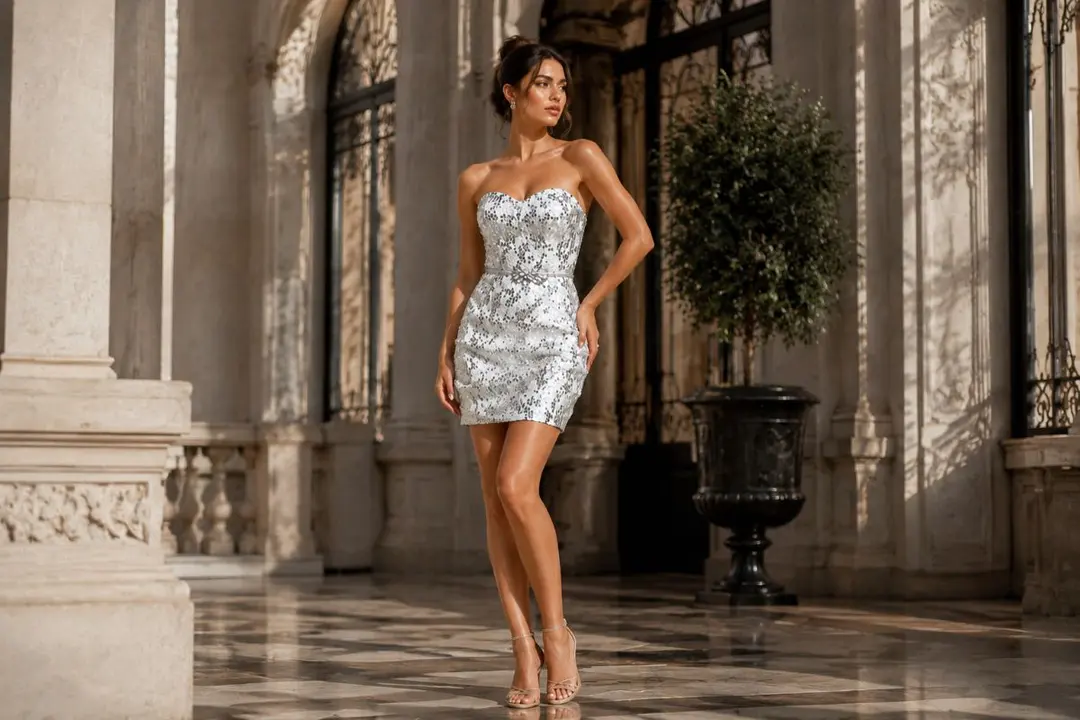
The fit and flare silhouette
If a petite woman could choose only one shape, the fit and flare would be the safest pick. It is fitted through the bodice, defines the waist crisply, then flares gently into the skirt. That structure does exactly what a petite frame needs. The fitted bodice draws a clean vertical line down to a clearly marked waist, and because the flare begins at the waist, the eye reads the entire skirt as leg. The result is a longer looking lower body and a balanced overall shape. The flare also adds a touch of movement without volume that overwhelms a smaller figure. Among fit and flare cocktail dresses, a petite woman should look for a skirt that flares moderately rather than dramatically, since an enormous skirt can swing the balance too far and shorten the look. A controlled, knee skimming flare is the sweet spot.
The sheath and the fitted column
At the opposite end of the structure scale sits the sheath, a slim dress that follows the natural line of the body from shoulder to hem without flaring. The sheath works for petite women because it creates one continuous, uninterrupted vertical line, with no horizontal break anywhere to stop the eye. It is sleek, modern, and quietly powerful, and it photographs beautifully because the line is so clean. The fitted column belongs in this same family, hugging the body lightly all the way down. The one caution is hemline. Because a sheath relies entirely on its unbroken line, the hem must hit at a flattering point, ideally at or just above the knee, so the leg below it looks long rather than cropped. A sheath that ends mid calf can shorten a petite frame, so length matters more here than in almost any other style.
The A line silhouette
The A line is the gentle middle ground between the fit and flare and the sheath. It is fitted through the shoulders and bust, then widens steadily toward the hem in the shape of the letter A. It flatters petite women because it skims rather than clings, defines the upper body, and creates a smooth line outward without the pronounced waist break of a fuller skirt. It is forgiving, comfortable, and works across a wide range of body types, which makes it a reliable choice for a woman who wants something easy and universally flattering. For a petite frame, the most elongating A line is one that stays narrow enough through the skirt to avoid adding visual width, since too much spread can pull the eye sideways and undercut the lengthening effect.
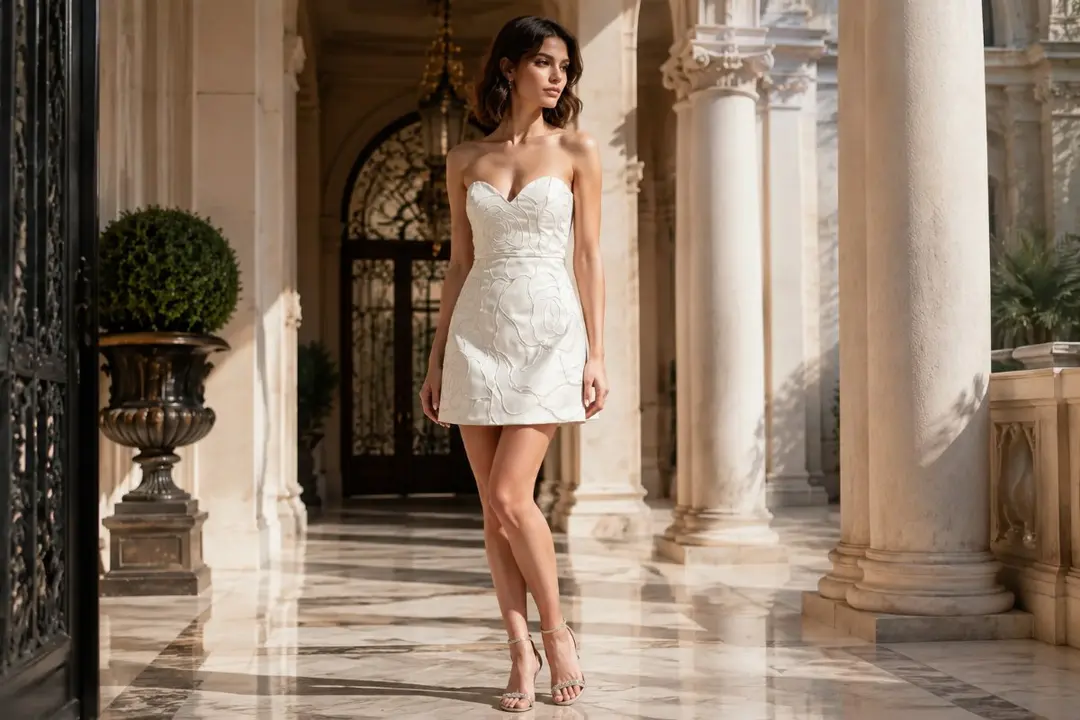
The wrap and faux wrap silhouette
The wrap dress earns its reputation among petite women, and especially among those with a fuller bust. It crosses over the body and ties at the waist, which produces two flattering effects at once. The diagonal lines of the wrap draw the eye along the body rather than across it, and the V neckline it creates opens up the upper body and lengthens the appearance of the neck and torso. A V neckline is one of the most reliably elongating details available, because it pulls the eye upward and adds vertical space to the chest. The adjustable tie also means the waist sits exactly where it is most flattering, which removes the common petite problem of a waistline landing in the wrong place. For a curvier petite figure, the wrap balances proportion better than almost any other cocktail shape.
The one shoulder silhouette
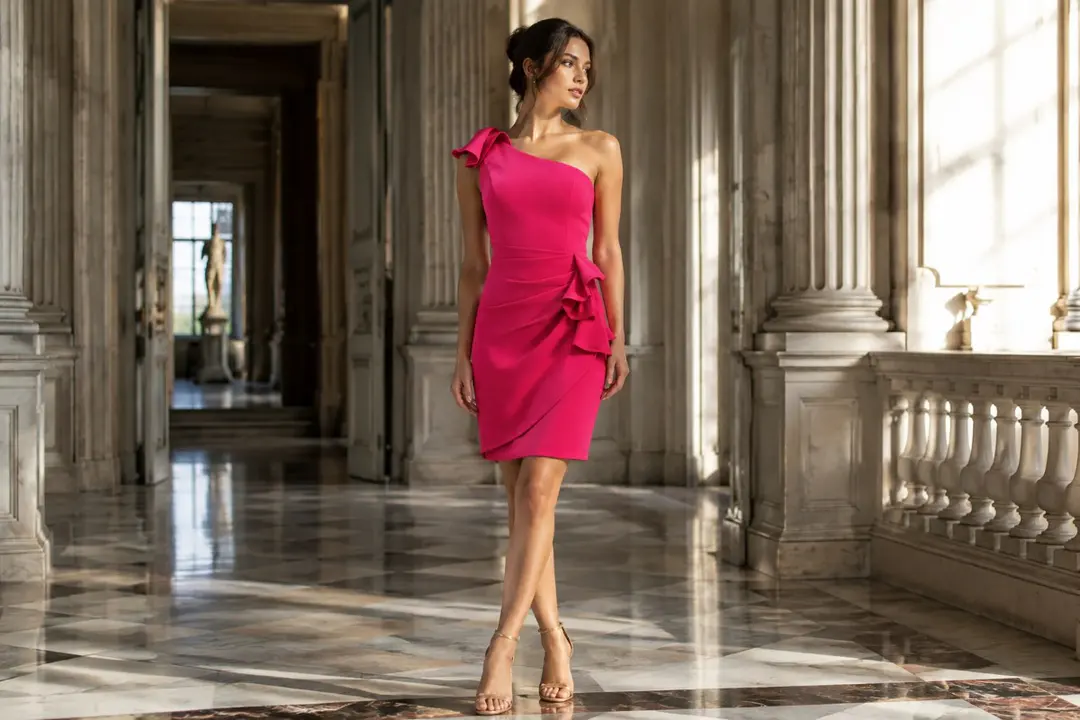
For a petite woman who wants something with more presence, an asymmetric neckline is a quietly clever choice. A one shoulder cocktail dress, cut with a single shoulder neckline, creates a diagonal line across the upper body, and that diagonal does the same work as the wrap's crossover. It keeps the eye moving on an angle rather than letting it settle on a flat horizontal shoulder line. The asymmetry adds interest and a sense of modern polish without relying on volume or print, both of which can overwhelm a smaller frame. It is proof that a petite woman does not have to choose the plainest dress in the room to look tall. She simply needs the detailing to work with her proportions rather than against them.
Silhouettes Petite Women Should Approach With Care
Knowing what to favor is only half the picture. It is just as useful to understand which shapes tend to work against a petite frame, and why, so the choice is informed rather than fearful.
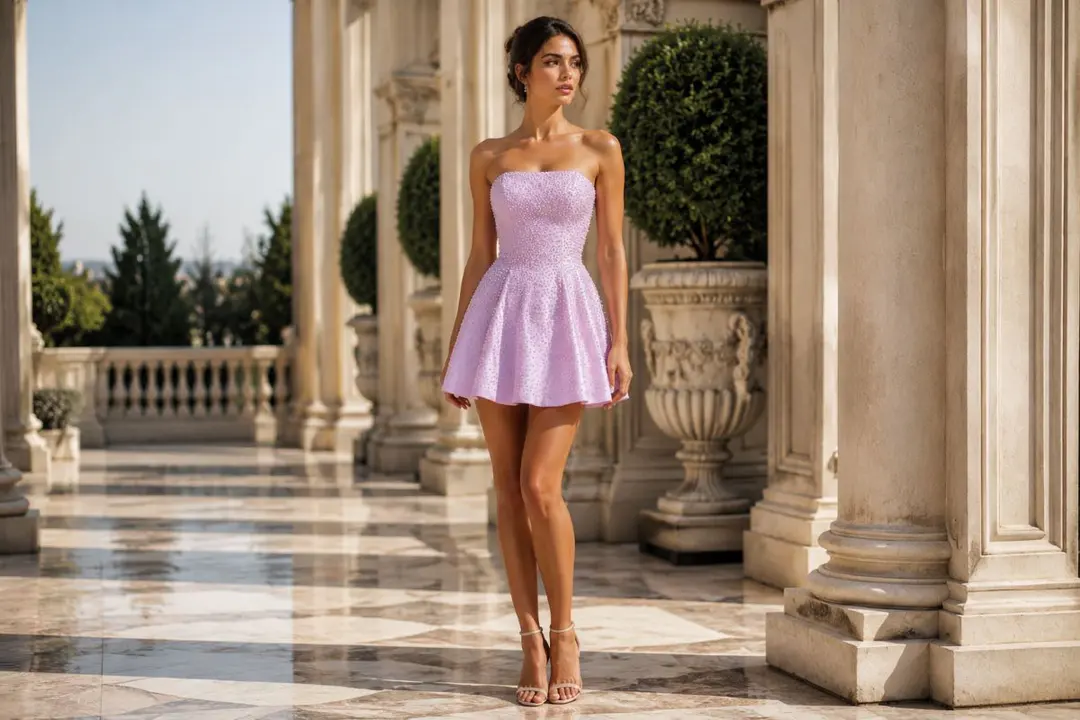
Dropped waists and shapeless cuts
The drop waist is the clearest example of a silhouette that fights a petite frame. By placing the waistline at the hip rather than the natural waist, it shortens the appearance of the torso's lower half and, more damaging, shortens the legs, since the eye reads less of the body as leg. Shapeless, waistless shifts cause a related problem. With no waist marker at all, the eye has nothing to travel toward and the figure reads as one undefined block. Neither shape is forbidden, and a confident woman can wear what she loves, but a petite frame has to work harder to carry them. If a drop waist or a loose shift is the goal, a defined belt at the natural waist or careful tailoring can recover some of the lost length.
Volume, heavy detail, and difficult hemlines
Excess volume is the other common pitfall. A very full skirt, layers of stacked ruffles, or a large scale print can visually swallow a petite woman, because the fabric becomes larger than the frame carrying it. The fix is not to avoid detail entirely but to scale it down, choosing one feature rather than several competing ones and keeping prints small and proportionate. Hemline deserves a final word here. Midi lengths that stop at mid calf are the most frequent petite styling mistake, because they cut the leg at its widest point and visually remove inches of height. When a petite woman wants a longer hem, the answer is a precisely tailored midi rather than an off the rack one. A carefully chosen a tailored midi style hemmed to hit just below the knee or at the slimmest part of the lower leg can look elegant and long, while the same dress left unaltered can shorten the frame considerably.
The Details That Lengthen a Petite Cocktail Look
Silhouette is the foundation, but several smaller decisions either reinforce or undermine it. These are the finishing details that complete a petite cocktail look.
Necklines, color, and vertical detailing
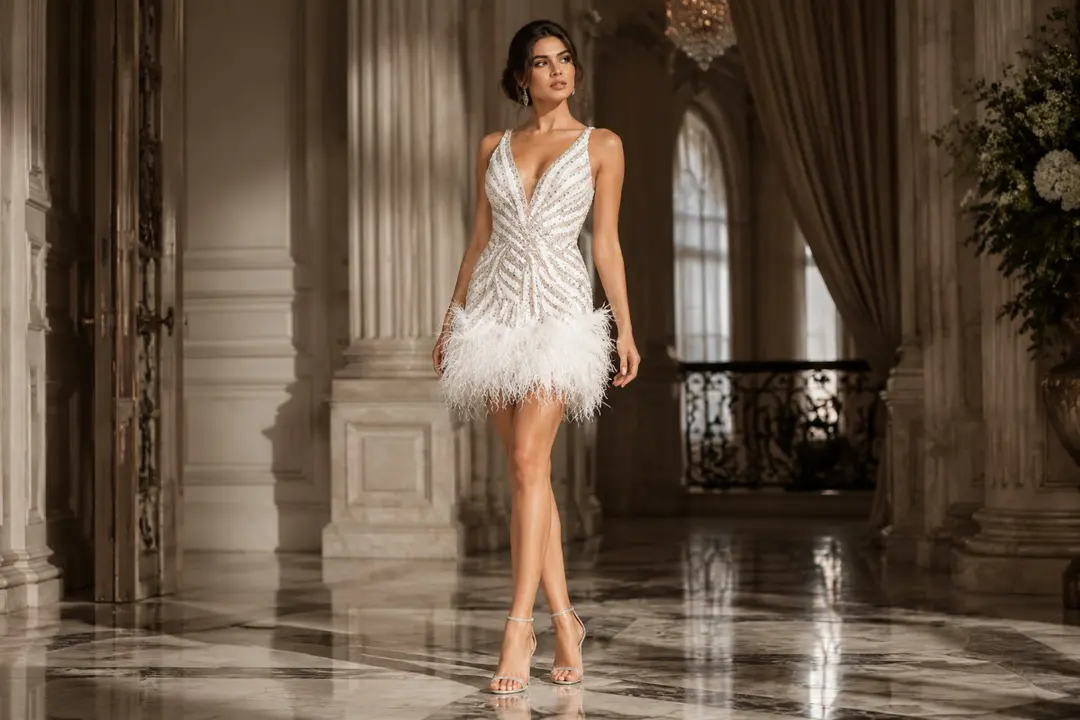
Necklines that open the upper body are a petite woman's ally. V necks, sweetheart necklines, and scoop necks all draw the eye upward and add vertical space, while a high, closed neckline can compress the look of the torso. Color is just as influential. A single color from shoulder to hem creates the longest possible line, which is part of why a classic little black dress is such a dependable petite choice. It delivers an unbroken column of color with no horizontal interruption. Deep, rich tones such as navy, burgundy, and emerald work the same way. When a petite woman wants pattern or texture, vertical detailing is the answer. Vertical seams, vertical beading, a center front slit, or a long vertical panel all guide the eye up and down and add perceived height, where horizontal stripes or wide color blocking do the opposite.
Fabric, structure, and the role of heels
Fabric choice quietly shapes how a dress sits on a petite frame. Lightweight, structured fabrics hold a clean line and follow the body without adding bulk. Heavy, stiff fabrics can stand away from a smaller frame and add visual weight, while very thin clingy fabrics can highlight every line without offering any structure. A fabric with a little body, enough to hold its shape but not so much that it overwhelms, is ideal. Delicate textures suit petite women well when the scale is kept small, which is why fine lace cocktail gowns can flatter a shorter frame as long as the lace pattern is proportionate rather than oversized. Footwear then completes the line. A heel, even a modest one, extends the leg and adds height, and a nude or skin matched heel creates the longest unbroken line of all by blending the foot into the leg. A petite woman does not need a towering heel. She needs one that continues the vertical line the dress has already started.
Why Tailoring Is the Petite Woman's Most Important Step
This is the part of petite dressing that most guides skip, and it is arguably the most important. Most cocktail dresses, including beautifully made designer styles, are cut and graded for an average height. That means the waistline, the hem, and sometimes the strap length are positioned for a taller frame. A petite woman who buys a dress and wears it straight off the rack is often wearing a dress whose proportions sit slightly wrong on her body, even when the silhouette itself is a flattering one.
Tailoring corrects this, and it is the difference between a dress that looks acceptable and one that looks made for her. A hem raised to the right length transforms how long the leg appears. Straps shortened so the waist seam lands at the natural waist restore the high waist effect that creates height. A bodice taken in slightly so the dress follows the frame cleanly removes the excess fabric that reads as bulk. None of these are major alterations, and none are expensive compared with the dress itself, yet together they do more for a petite silhouette than almost any other single decision. The honest guidance for any petite woman is to budget for alterations as part of buying the dress, not as an afterthought. A quality cocktail dress in the right silhouette, then tailored to her exact proportions, will always outperform a more expensive dress worn unadjusted. The brand a woman chooses matters for fabric, construction, and how well a dress holds its shape through a long evening, but the fit to her specific height is something a skilled tailor delivers, and it should never be skipped.
Putting It All Together for a Petite Cocktail Look
The petite woman who looks effortlessly tall in a cocktail dress is not taller than anyone else in the room. She has simply made a series of small, deliberate choices that all point the eye in the same direction. She chose a silhouette with a clear, well placed waist, such as a fit and flare or a wrap. She kept the line clean and uninterrupted, avoiding heavy horizontal breaks. She chose a neckline that opens the upper body and a color or vertical detail that lengthens it. She selected a hemline that flatters the leg, added a heel that continued the line, and had the dress tailored so every proportion landed where it should. Not one of those choices is dramatic on its own. Together they are the entire difference. The best cocktail dress styles for short women are not a separate, smaller category of fashion. They are simply the styles whose lines and proportions happen to work with a petite frame, chosen with intention and finished with a good tailor.
FAQs About Cocktail Dresses for Petite Women
1. What is the most flattering cocktail dress silhouette for a petite woman?
The fit and flare is the most reliably flattering choice. Its fitted bodice and clearly defined waist draw a clean vertical line, and because the skirt flares from the waist, the eye reads the whole lower half as leg, which lengthens the frame. The sheath and the wrap are close runners up, since both create a continuous line and a well placed waist that add perceived height.
2. What dress length looks best on petite women?
A hemline at or just above the knee is the safest length for a petite frame, because it shows the most leg and keeps the vertical line long. Mid calf midi lengths are the most common mistake, since they cut the leg at its widest point. If a longer hem is desired, the dress should be tailored so it lands just below the knee or at the slimmest part of the lower leg.
3. Can petite women wear midi cocktail dresses?
Yes, but the midi needs to be chosen and tailored carefully. An off the rack midi often hits at an unflattering point on a shorter frame. A midi that is hemmed precisely, has a slimmer cut, or includes a slit can maintain a long leg line. Pairing it with a heel further protects the proportion and keeps the look elongated.
4. Why does waist placement matter so much for petite frames?
Because the eye assumes everything below the waistline is leg. When a dress places its defined waist at or slightly above the natural waist, the legs appear longer and the whole figure reads as taller. A low waist or a shapeless cut with no waist marker has the opposite effect, shortening the legs and compressing the frame.
5. Do petite women need to have cocktail dresses altered?
In most cases, yes, and it is the most important step. The majority of cocktail dresses are cut for an average height, so the hem, waist seam, and straps are positioned for a taller frame. Minor alterations to the hem length, strap length, and bodice fit reposition those proportions for a petite body and make the biggest single difference in how tall and polished the dress looks.
6. What necklines elongate a petite figure?
Open necklines that draw the eye upward work best. V necks, sweetheart necklines, scoop necks, and asymmetric one shoulder cuts all add vertical space to the upper body and lengthen the appearance of the neck and torso. High, closed necklines tend to compress the torso and are less elongating for a shorter frame.