
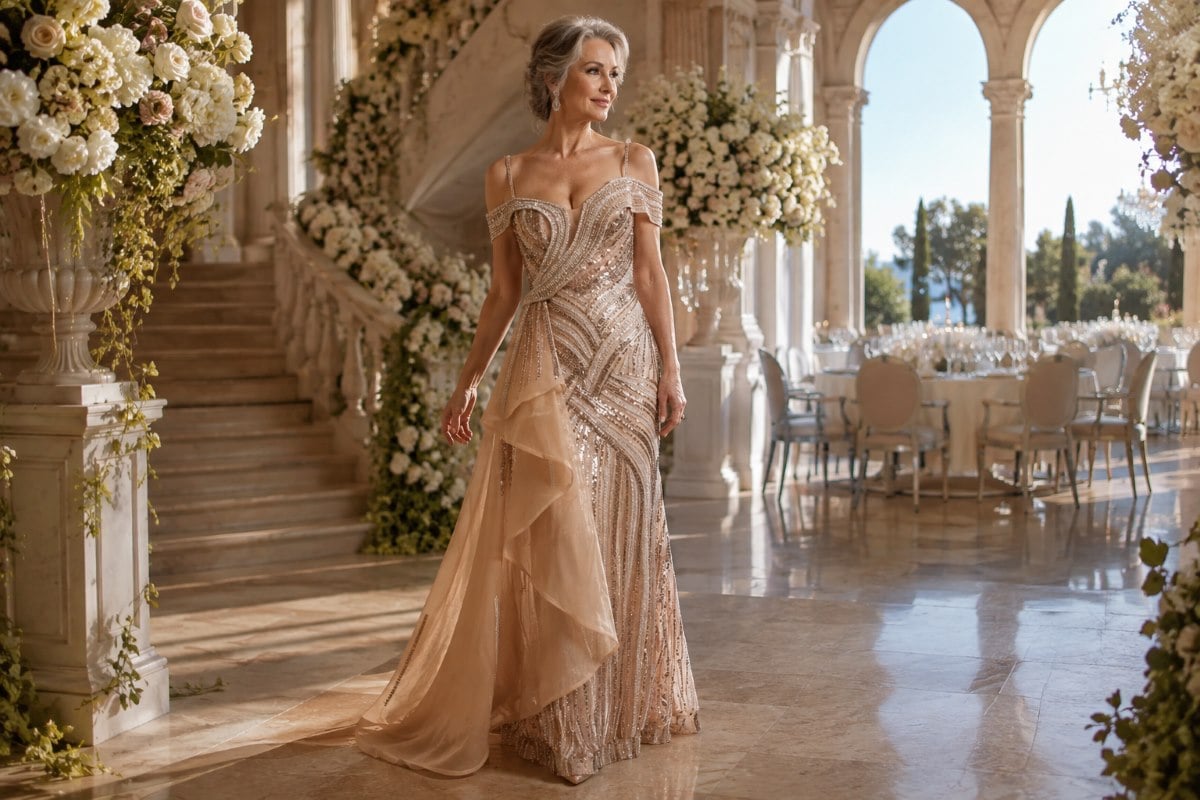
Most advice written for the grandmother of the bride carries a faint note of instruction about what she ought to tone down. That framing is worth setting aside, because it gets the role wrong. The grandmother of the bride is a guest of honor at a family occasion, she appears in the formal portraits, she is seated with the immediate family, and she has the same range of choices as anyone else at the wedding. What she does have is a specific set of practical realities and one coordination question that nobody explains clearly. This guide covers how the family coordination actually works, the color rules that genuinely apply, how to match the formality of the wedding, the silhouettes and coverage options worth knowing, and how to stay comfortable across a day that often runs twelve hours.
The role, and why the dress gets attention
The grandmother of the bride occupies a particular position at a wedding. At most weddings she is seated in the front rows and sometimes escorted in during the processional, she is included in the formal family photographs, and she is frequently the person guests want to greet. In practical terms this means the dress is seen closely, photographed repeatedly, and worn for a long time.
That combination is what shapes the decision. A dress that looks beautiful for twenty minutes and becomes uncomfortable by the third hour is the wrong dress no matter how it photographs. Equally, a dress chosen purely for comfort that reads as underdressed in the family portrait will be a small regret every time those pictures are looked at. The goal is a dress that satisfies both, and that is entirely achievable once the constraints are clear.
The useful starting point is that grandmother of the bride attire and mother of the bride attire occupy the same category. The formality, the color rules, and the silhouettes are shared, and the range of mom of the groom dresses is the natural place to look rather than a separate and narrower selection.
How to coordinate with the rest of the family
This is the question grandmothers actually ask and the one most guides skip: is there a protocol, and does she need to check with anyone? There is, though it is a courtesy rather than a rule.
There is an informal order to who chooses first
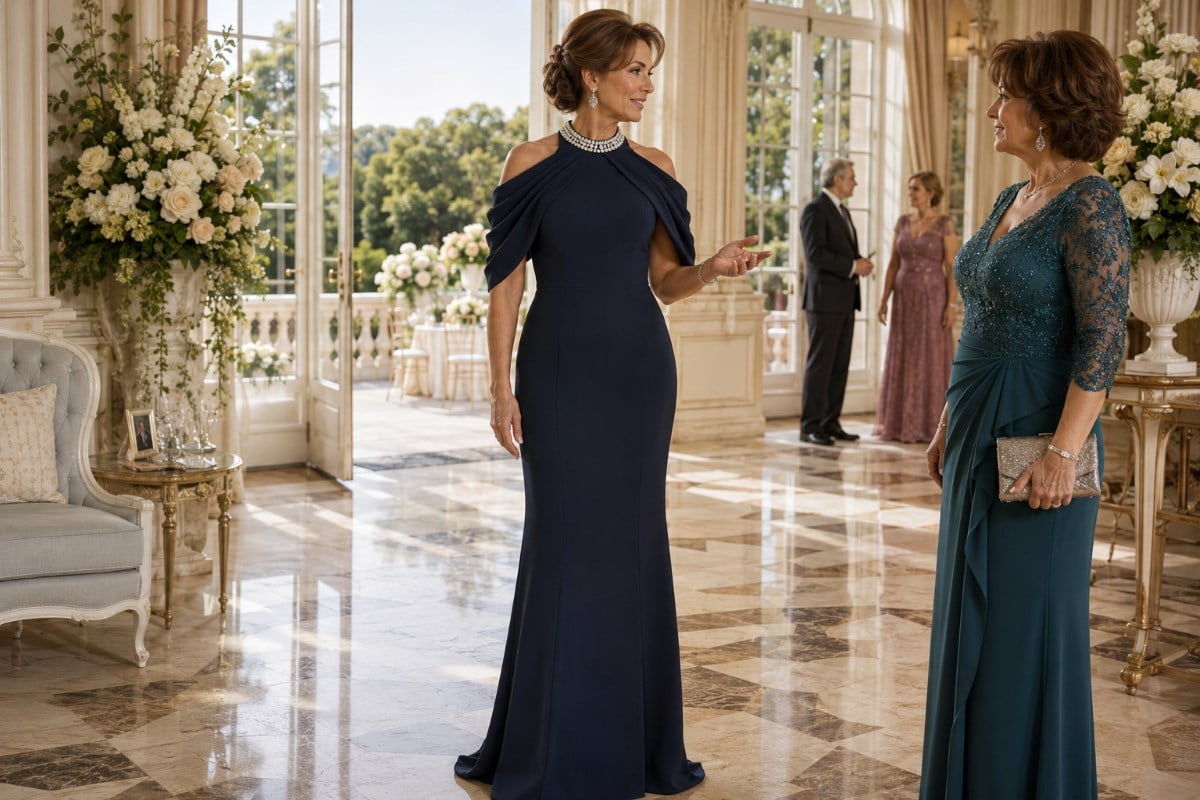
The usual sequence runs from the bride outward. The bride sets the overall palette and formality, often through the bridesmaid colors and the invitation. The mothers of the couple then choose, traditionally with the mother of the bride selecting first and the mother of the groom coordinating with that choice. Grandmothers usually choose after the mothers have settled. This is not about rank; it is simply the most efficient way to avoid two people in adjacent portraits wearing the same shade. A short conversation with the bride or the mother of the bride about the palette resolves nearly every potential clash before it happens.
Coordinating is a courtesy, not an obligation
Coordinating does not mean matching, and it certainly does not mean being assigned an outfit. It means choosing a color that sits comfortably in the same family as the rest of the wedding party rather than fighting it, and avoiding an exact match with the bridesmaids, which can make a grandmother look like part of the bridal party in photographs. Beyond that, the style, the silhouette, and the level of detail are entirely her own. If a grandmother wants a beaded gown while the mothers have chosen something restrained, that is a difference in personal taste rather than a breach of etiquette. The broader conventions in the guide to mother of the bride dress etiquette apply almost entirely to grandmothers as well.
The color rules that actually apply
There are fewer genuine color rules than most articles suggest, and it helps to separate the real ones from the inherited habits.
The one rule that holds without exception is to avoid white, ivory, cream, and anything that reads as bridal. This is about the photographs as much as the ceremony, since a pale neutral standing beside the bride in a portrait can read as a second white dress. Champagne and light gold are usually fine, but if a shade could be mistaken for ivory in a photograph, it is worth checking against the bride’s dress rather than guessing.
The second rule is softer: avoid an exact match with the bridesmaid color. Being near it is fine and often looks intentional. Being identical makes a grandmother look like she has been assigned to the lineup.
Beyond those two, color is really open. Black is entirely acceptable at most modern weddings and reads as elegant rather than somber, particularly in an evening setting and particularly when the fabric has some life to it. Jewel tones photograph beautifully, navy and deep plum are reliably flattering, and metallics work well at formal evening weddings. The one thing worth avoiding is a shade chosen because it seems expected rather than because it suits her, since a color someone feels good in reads as confidence in every photograph. The detailed treatment in the piece on what color the mother of the bride should wear covers the same ground in more depth.
Matching the formality of the wedding
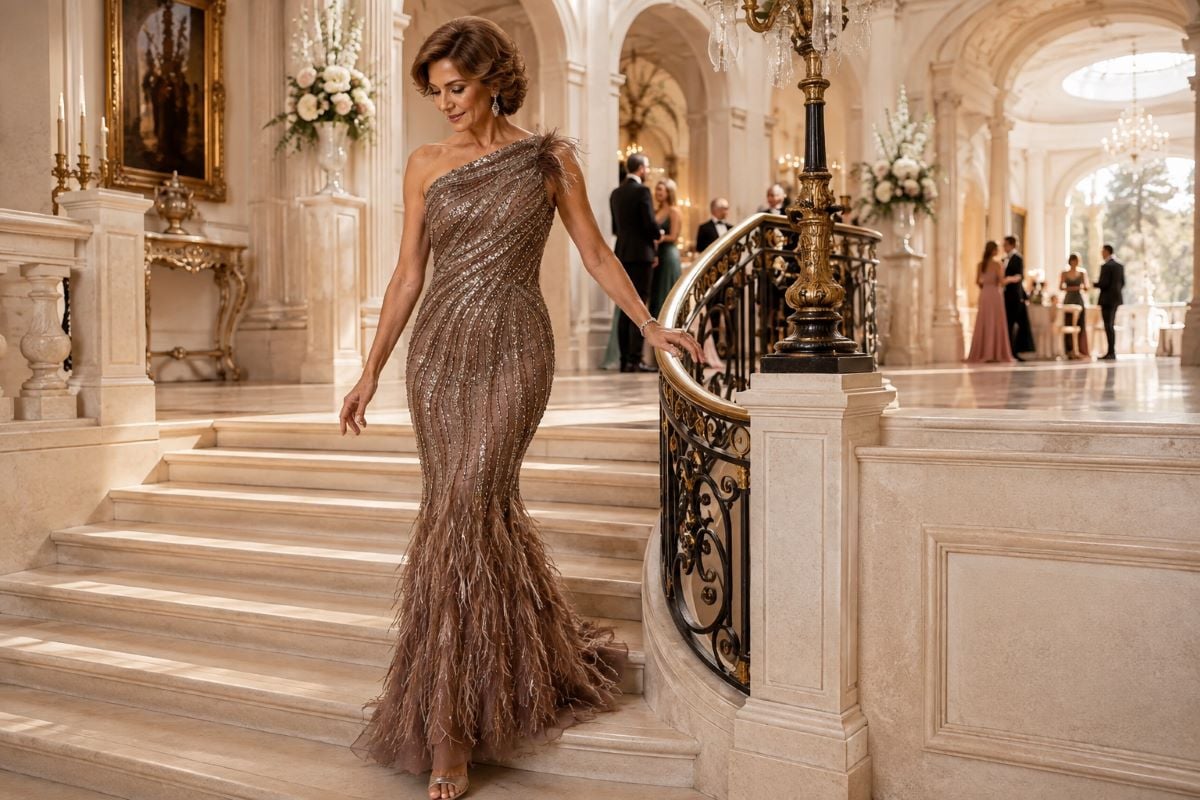
The dress code on the invitation applies to the grandmother exactly as it applies to any other guest, with one adjustment: because she is in the formal photographs, it is generally better to sit at the upper edge of the code rather than the lower one.
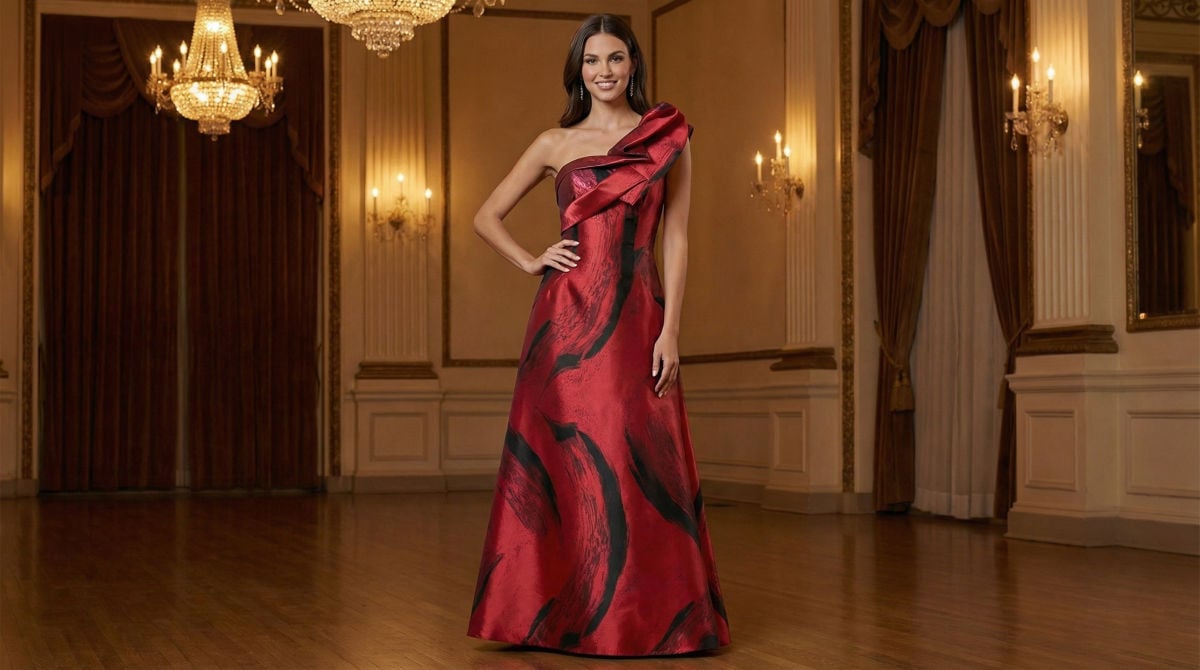
For a black-tie or formal evening wedding, a floor-length gown is the natural answer. For a semi-formal or cocktail wedding, a midi, tea-length, or floor-length dress all work, and the choice is a matter of preference rather than correctness. For a daytime or garden wedding, lighter fabrics and softer colors suit the setting, and a midi length is often the most practical. For a small civil ceremony, a refined dress or a tailored ensemble is entirely appropriate without a gown.
The reference point that resolves most uncertainty is the mothers. Dressing at roughly the same level of formality as the mother of the bride is almost always right, and it is a far more reliable guide than any general rule about what grandmothers should wear. The range of wedding guest gowns shows how the same wedding can be dressed for at several levels.
Silhouettes and coverage options
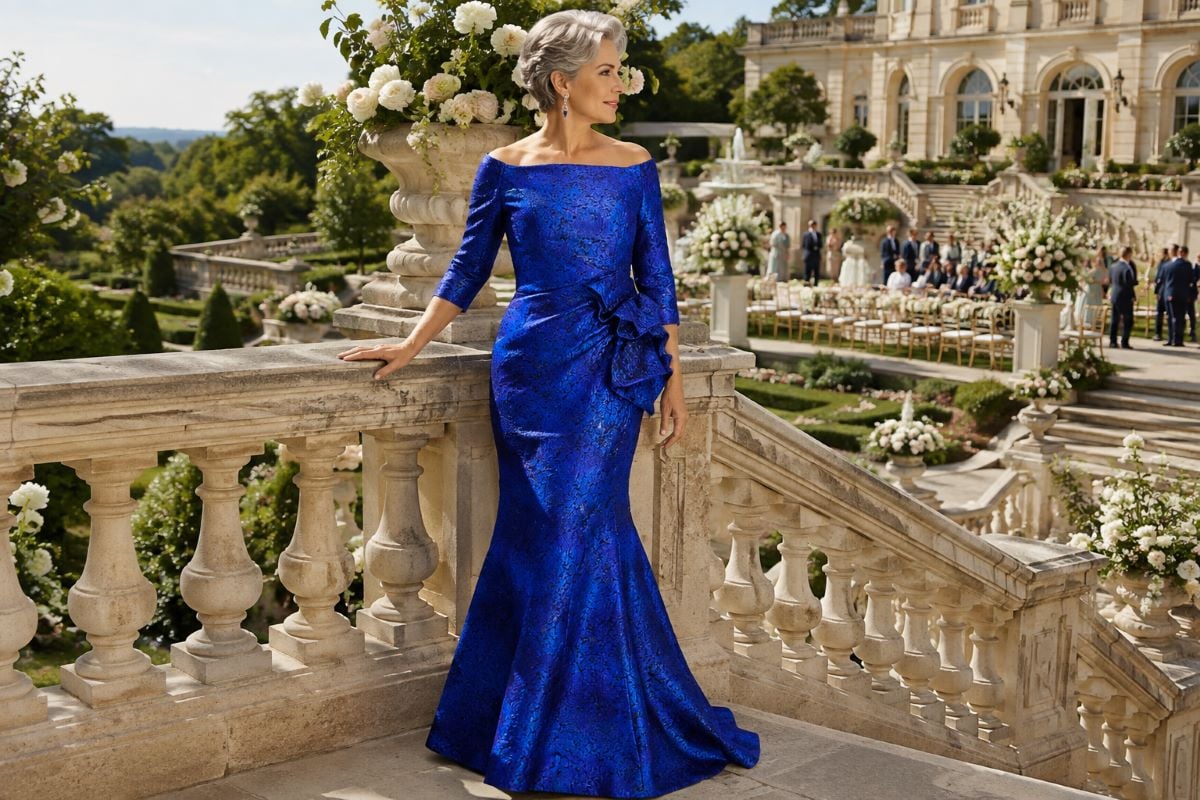
Every silhouette in formalwear is available here, and the choice comes down to what feels good to wear for a long day rather than to any category rule. A-line and fit-and-flare shapes are popular because they define the waist without gripping through the hip, which stays comfortable across a long event. A sheath or column reads as sleek and modern. A softly draped gown moves easily and photographs beautifully.
The styles among A-line mother of the bride dresses show the shape that most reliably combines a defined waist with room to move.
Jackets and wraps make coverage adjustable
The single most useful feature in this category is a layer that can be added or removed. A matching jacket, a bolero, a capelet, or a wrap lets one dress work across a ceremony that may expect covered shoulders, an air-conditioned reception room, and a warm dance floor later in the evening. It also means the level of coverage is a decision made on the day rather than at the point of purchase, which removes a great deal of pressure from the choice. A dress with a beautiful bodice underneath a removable jacket effectively gives you two looks.
Separates and tailored alternatives work just as well
There is no requirement that this be a dress at all. A tailored jumpsuit reads as modern and formal, and it removes the question of hem length on uneven ground entirely. A dressy trouser suit is entirely appropriate at most weddings and is often the most comfortable option for a long day. A top and skirt combination allows two different fits, which solves the common problem of a dress that fits well at the waist and not at the bust or the reverse. The styles among jumpsuits show the alternative at a formal level.
Sleeves deserve a brief note. Many grandmothers prefer some sleeve coverage, and there is a wide range available, from a cap sleeve to a three-quarter to a full long sleeve in lace or chiffon. This is a preference rather than an expectation, and a sleeveless dress with a wrap is equally correct. The styles among long sleeve mother of the bride dresses show the covered end of the range.
Accessories that finish the look
Jewelry works best when it is chosen to suit the neckline rather than added by habit. A detailed or beaded neckline is complete on its own and needs only earrings, while a plain neckline leaves room for a necklace. Pearls remain a natural fit for the role without being obligatory, and a single considered piece reads better than several competing ones.
Shoes are a practical decision as much as an aesthetic one. A block heel or a low, stable heel handles grass, gravel, and long periods of standing far better than a stiletto, and a polished flat is entirely appropriate at any level of formality. Whatever the height, the shoes should be worn in before the day and brought to the fitting so the hem is set correctly against them.
A small clutch or a structured handbag with a strap suits the occasion, and a strap is worth considering since it leaves both hands free for greeting guests and holding a drink. A wrap, pashmina, or matching jacket completes the outfit and solves the temperature problem discussed above. If a walking stick or cane is part of the day, choosing one that suits the outfit rather than a hospital-issue version is a small detail that makes a real difference in photographs.
Comfort across a long day
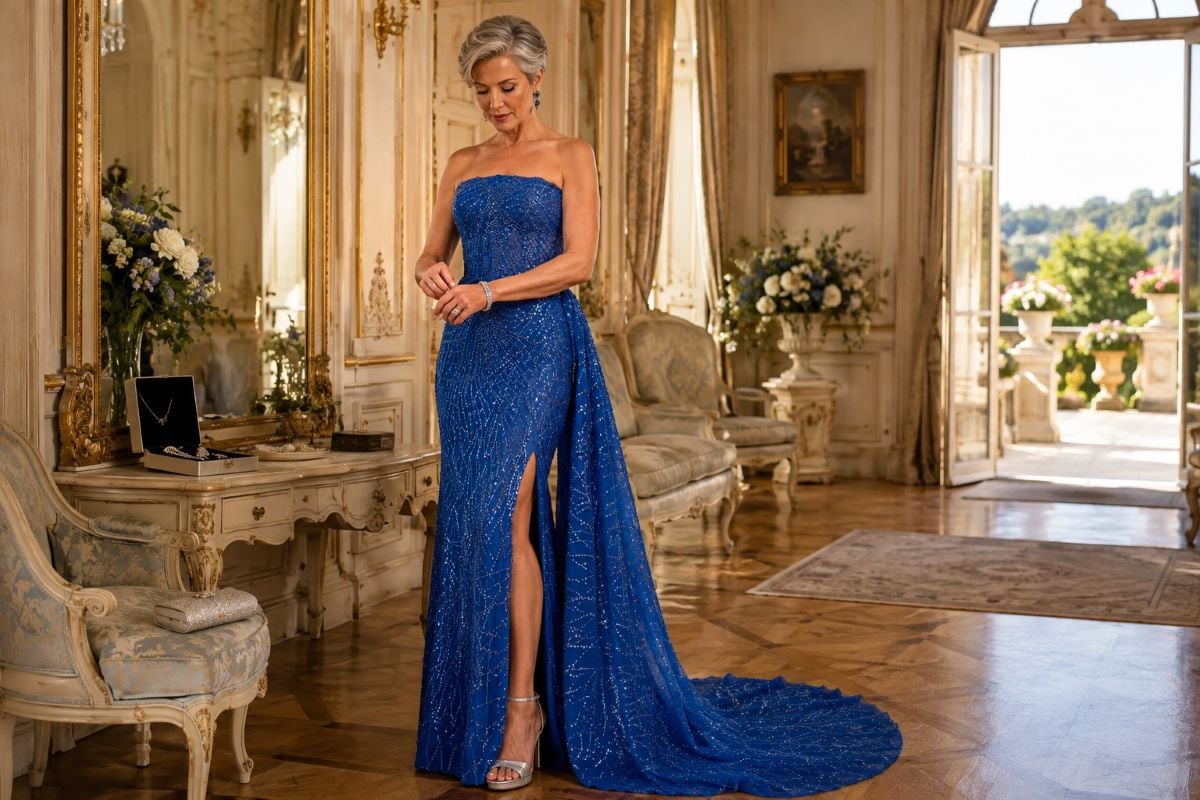
A wedding day frequently runs from a morning preparation through to a late reception, and the practical realities deserve as much attention as the aesthetics. Sitting is the first one. A ceremony can last forty-five minutes and a dinner considerably longer, so a dress should be tried sitting down and not only standing, since a skirt that rides up or a bodice that digs when seated will define the whole day.
Temperature is the second. Ceremony venues are often cool and reception rooms are often warm, sometimes within the same hour. This is the argument for a layer more than any style consideration.
Footing is the third and it is frequently overlooked. Grass, gravel, cobbles, and stairs all appear at weddings, and a floor-length hem combined with an unfamiliar heel is a genuine hazard. Choosing a shoe that is stable and already broken in, and having the hem set to that exact shoe, prevents most problems. If a walking aid is part of the day, a slightly shorter hem and a skirt with room to move make it easier rather than harder to use.
Finally, plan the fit around the actual body on the day rather than a target. A dress that fits comfortably is the one that photographs well, because ease shows and tightness shows just as clearly. The advice in the mother of the bride sizing guide applies directly here.
Dressing for the photographs
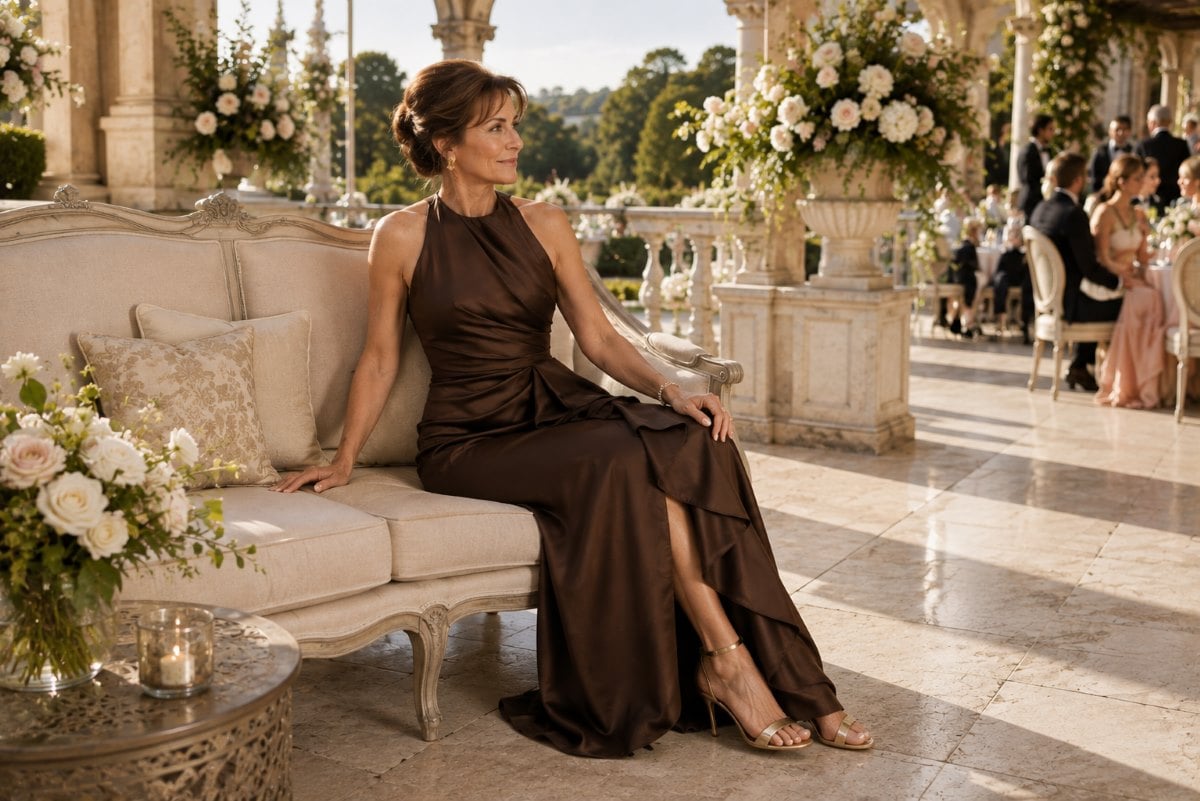
The grandmother of the bride appears in the formal family portraits, which are among the images the couple will keep longest, so a few photographic considerations are worth knowing. Solid colors photograph more cleanly than busy prints, which can read as visual noise in a group shot. A neckline that frames the face draws attention upward in a portrait. Fabrics with a soft sheen or a subtle texture read as rich under indoor lighting, while very high-shine fabrics can produce bright flare under a flash.
Group photographs also reward a little coordination in tone rather than in exact shade. If the mothers are in deep colors, a deep color sits well beside them. If the palette is soft, a soft shade blends into it. This is the practical reason the coordination conversation is worth having, and it takes about two minutes.
Timing, fit, and alterations
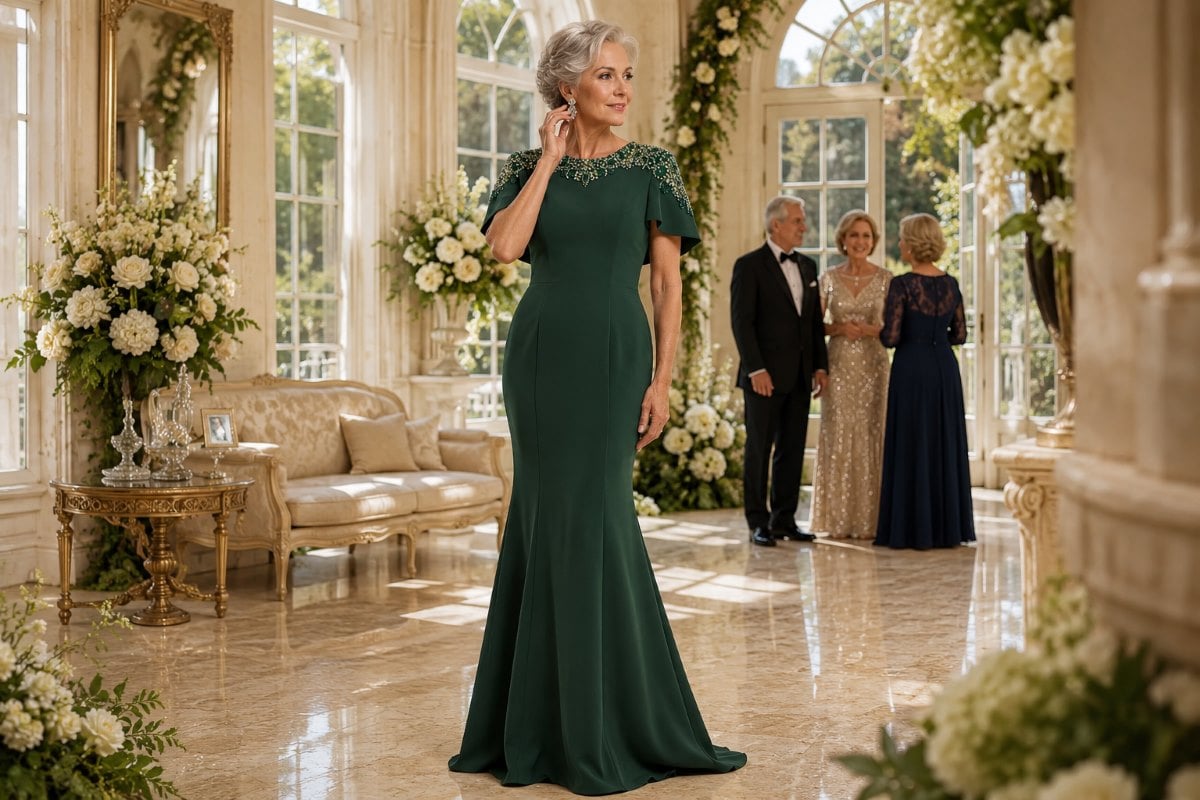
Formal dresses in this category frequently need alterations, and the sequence matters. Buy early enough that there is time for two fittings, since a first fitting establishes the changes and a second confirms them. Bring the actual shoes to the fitting so the hem is set correctly, and bring the foundation garments you intend to wear, since they change the fit through the bodice more than people expect.
If the wedding is several months away and measurements may change, a bodice with some built-in adjustability, or a style that does not depend on a precise waist measurement, gives useful room. And leave a margin at the end: collecting a dress the week before the wedding removes the option to fix anything that is not right.
What it actually comes down to
The whole question comes down to something simple. The grandmother of the bride should wear something she likes, at roughly the same formality as the mothers, in a color that is not bridal and not an exact match for the bridesmaids, in a fit and fabric she can wear comfortably for twelve hours. Everything else is preference.
There is no style that becomes unavailable in this role and no obligation to be understated. Beading, color, a strong neckline, a modern silhouette, and trousers are all equally open. The only genuine constraints are the two color rules and the practical demands of a long day, and both are easy to work with once they are stated plainly. To find a dress that suits the celebration, the photographs, and a long day on your feet, explore the current styles through an authorized Jovani retailer.
What Grandmothers Ask Before the Wedding
What should the grandmother of the bride wear?
Something she likes, at roughly the same level of formality as the mothers of the couple, in a color that is not bridal and not an exact match for the bridesmaids, and in a fit she can wear comfortably for a long day. Grandmother of the bride attire sits in the same category as mother of the bride attire, so the same formality, colors, and silhouettes apply. Beyond the two color rules, the choice is entirely a matter of personal preference.
Does the grandmother of the bride need to coordinate with the mothers?
It is a courtesy rather than a rule, and it prevents an easily avoidable problem. The usual sequence runs from the bride outward: the bride sets the palette, the mothers choose, and grandmothers choose after that. Coordinating means sitting in the same color family rather than matching, and avoiding an exact match with the bridesmaid shade. A short conversation with the bride or the mother of the bride about the palette resolves nearly every potential clash.
What colors should the grandmother of the bride avoid?
Only two restrictions apply. Avoid white, ivory, cream, and anything that reads as bridal, since a pale neutral beside the bride in a portrait can look like a second white dress. And avoid an exact match with the bridesmaid color, which can make a grandmother look like part of the lineup. Beyond those, color is open. Black is entirely acceptable at most modern weddings, and jewel tones, navy, plum, and metallics all photograph beautifully.
Can the grandmother of the bride wear a long dress or a jumpsuit?
Yes to both. A floor-length gown is the natural answer for a black-tie or formal evening wedding, and midi or tea-length works well for semi-formal and daytime celebrations. A tailored jumpsuit or a dressy trouser suit is equally appropriate at most weddings and is often more comfortable for a long day, with the added advantage of removing any concern about a hem on grass or stairs.
Does the grandmother of the bride need sleeves?
No. Sleeves are a preference rather than an expectation, and many people simply find them more comfortable. The range available runs from cap sleeves to three-quarter to full long sleeves in lace or chiffon. A sleeveless dress worn with a wrap, bolero, or matching jacket is equally correct and has the practical advantage that coverage becomes a decision made on the day rather than at the point of purchase.
How far in advance should the dress be bought?
Early enough to allow two fittings, since the first establishes the alterations and the second confirms them. Bring the actual shoes so the hem is set correctly and the foundation garments you plan to wear, as both change the fit more than expected. Leave a margin at the end rather than collecting the dress the week of the wedding, which removes any chance to correct something that is not quite right.