
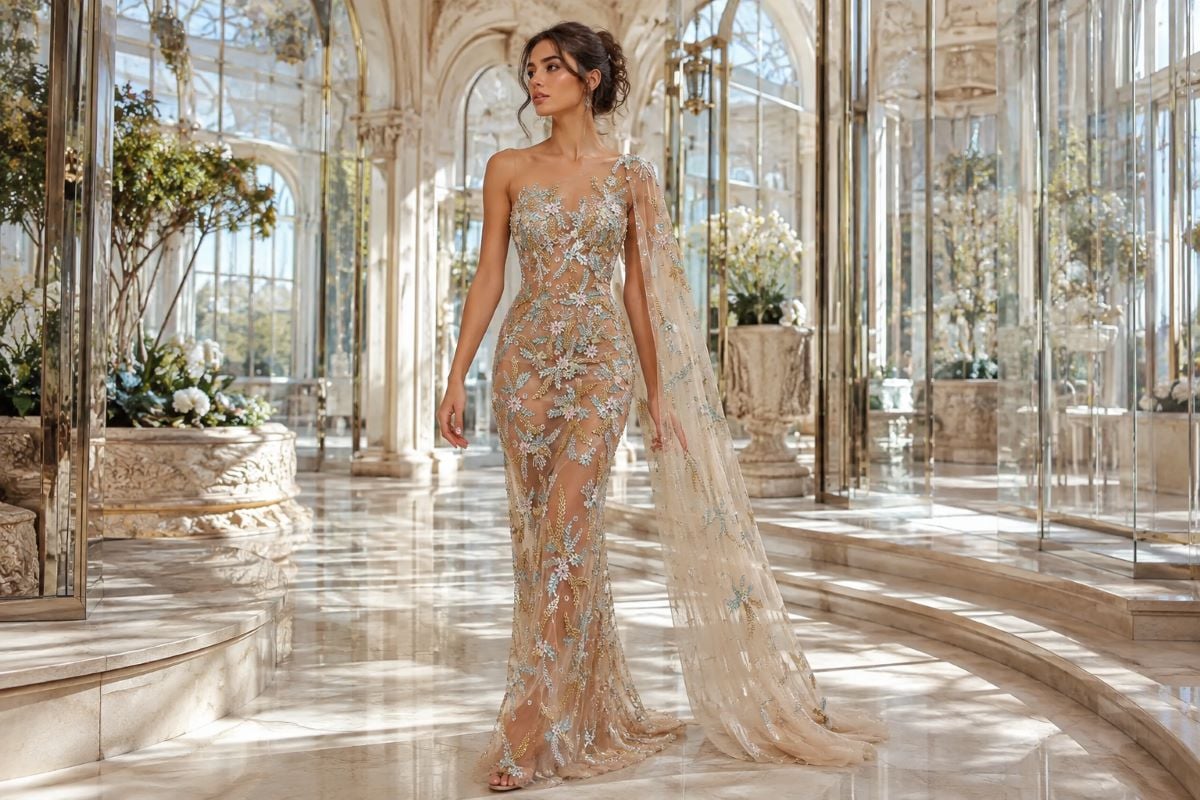
An illusion neckline is one of the cleverest solutions in formal dressmaking, and most people wearing one could not tell you how it works. The effect is simple to describe and hard to achieve: beading, lace, or embroidery appears to sit directly on the skin, floating above a bodice with no visible means of support. What is actually happening is that a panel of fine sheer mesh, matched as closely as possible to the wearer’s skin tone, is carrying that detail and filling in what would otherwise be an open neckline. The mesh disappears and the design appears to hover. This guide explains how illusion panels work, where they show up beyond the neckline, why they solve problems that no other technique solves as neatly, and the honest limitations worth knowing.
What an illusion neckline actually is
An illusion neckline is a sheer panel that fills in the area above a structured bodice, extending the dress upward toward the collarbone, shoulders, or a high neck without adding visible fabric. The bodice underneath does the supporting work while the sheer panel carries whatever decoration the design calls for.

The mesh is the whole technology
The fabric doing the work is a fine, stable net, usually a tulle or a power mesh, chosen because it is nearly invisible at a distance while still being strong enough to hold beading and lace appliqué without sagging. Power mesh has some stretch and a little compression, which is why it sits smoothly against the body rather than bagging at the collarbone. The panel is generally attached to the top edge of the bodice and finished at the neck, shoulder, or armhole, and it may be a single layer or doubled where more support is needed. Everything the illusion effect achieves comes from this one material: a fabric strong enough to build on and fine enough to vanish.
Skin tone matching decides whether it works
This is the make-or-break detail and the reason illusion looks extraordinary on some dresses and obvious on others. When the mesh is close to the wearer’s skin tone, the eye reads the beading as sitting on skin and the panel genuinely disappears. When it is not, the panel reads as exactly what it is: a piece of sheer fabric with decoration on it. A mesh that is too light reads as a gray or milky film over the chest, and one that is too dark reads as a shadow. Quality manufacturers offer illusion panels in a range of nude tones for this reason, and it is worth checking the match in daylight rather than under store lighting, since artificial light flatters the mismatch. If the shade is close but not perfect, a dress where the panel is heavily covered in appliqué is far more forgiving than one where large areas of bare mesh show.
What an illusion neckline lets a dress do
The reason illusion panels are so widespread in formalwear is that they resolve a genuine tension between how a dress looks and how it functions. A strapless or deeply cut bodice has to be engineered carefully to stay in place, and the more open the design, the more the construction has to compensate. An illusion panel lets a designer keep the structural bodice where it is needed and add the appearance of openness above it.
In practice this means several things at once. A dress can appear to have a plunging neckline while the wearer is fully supported and secure, because the plunge is filled with mesh and the actual bodice sits at a sensible height. A gown can appear to be strapless while illusion straps or sleeves carry weight across the shoulders. Beading can appear to trail across the collarbone or up the neck, which is impossible on bare skin and simple on a mesh panel.
The functional benefit is the one people notice on the night. A dress with an illusion neckline generally requires less adjusting than a truly open one, because there is more holding it in place. The styles among illusion prom dresses show the technique across a range of formal silhouettes.

Where illusion panels appear beyond the neckline
Once you know what to look for, illusion turns up all over formal design, and the neckline is only the most common application.
An illusion back does the same job in reverse, allowing a gown to appear open to the waist while a mesh panel keeps the bodice anchored and the wearer secure. This is one of the most useful versions, because a really backless dress limits what support can be built in, while an illusion back gives a designer somewhere to attach structure. The styles among backless prom dresses show how open backs are engineered, and illusion is one of the main ways it is done.
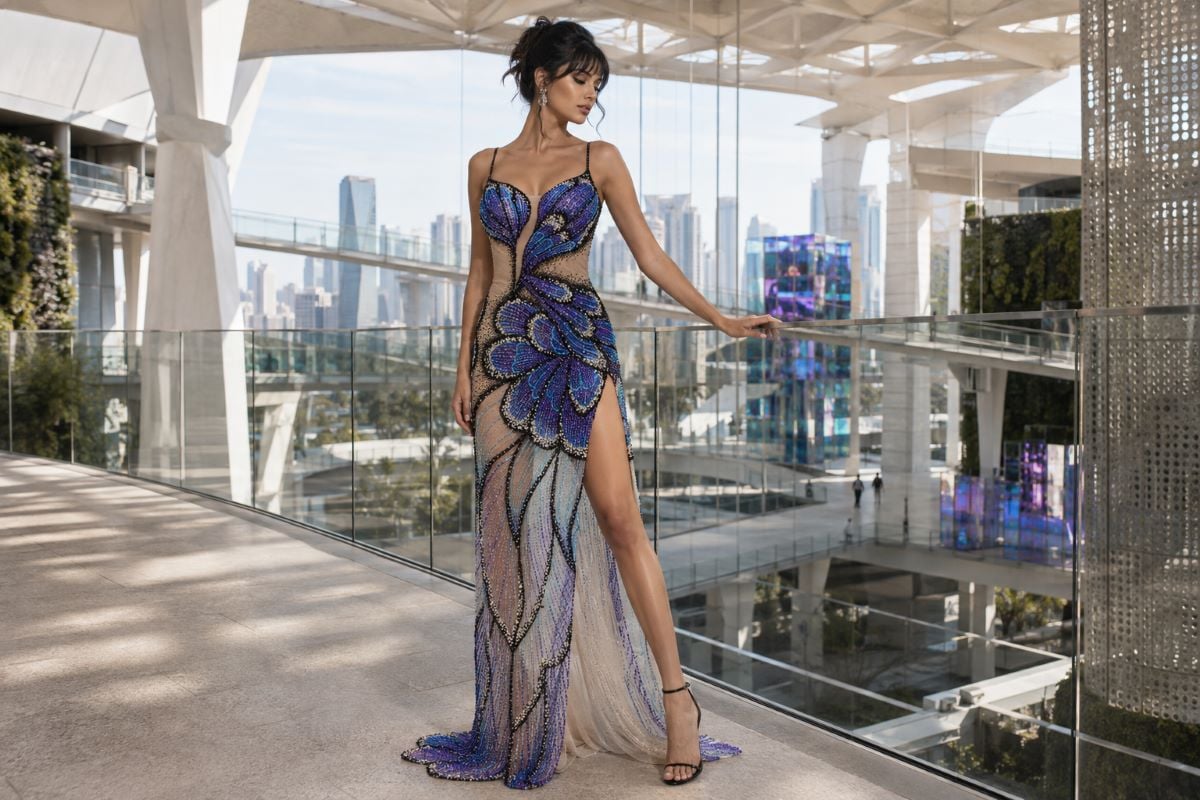
Illusion sleeves let a design carry lace or beading down the arm without the weight or warmth of a lined sleeve. Illusion side panels create the appearance of a cutout while keeping the bodice as a single connected structure, which is considerably more secure than an actual cutout. An illusion high neck extends a design all the way to the collar with a sheer panel, giving the coverage of a high neckline with none of the visual heaviness. For the wider context of how necklines are shaped, the overview of high neck evening dresses shows the covered end of the range.
Why illusion suits a dress code
There is a practical application of illusion that gets very little attention and matters a great deal to a lot of people. Many formal events have coverage expectations, whether that is a school dance with a published dress code, a religious ceremony, a bat mitzvah, a quinceañera Mass, or a conservative family gathering. An illusion panel is often the neatest way to satisfy those expectations without sacrificing the design.
A dress with an illusion neckline covers the chest, an illusion back covers the back, and illusion sleeves cover the arms, so the garment satisfies a coverage requirement in the plain sense while still reading as open and current. This is why illusion appears so often on dresses designed for teenagers and for religious occasions: it is useful rather than merely decorative. It is worth noting that some dress codes specify opaque coverage rather than any coverage, so if a specific rule applies, checking it before buying saves difficulty later.
The same logic serves anyone who prefers more coverage for their own reasons. An illusion panel gives modesty without the visual weight of solid fabric across the chest, which is why it appears frequently in the more covered end of formalwear. The styles among modest mother of the bride dresses show the technique used for coverage rather than drama.
Who illusion necklines flatter
Illusion is broadly flattering, but it earns its reputation through two specific effects rather than through general prettiness.
Support without visible straps
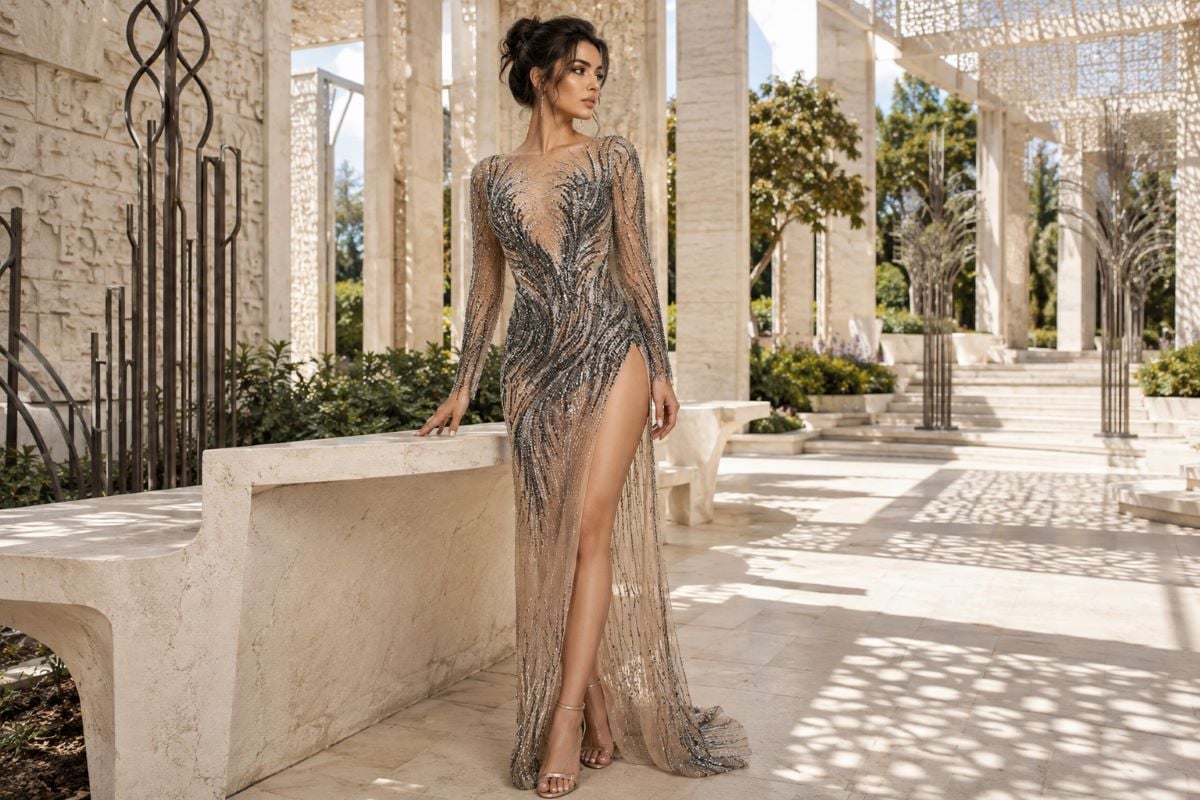
For anyone with a fuller bust, the usual tension is between wanting a strapless or open neckline and wanting to feel secure in it. An illusion panel resolves that directly, because the structural bodice can sit where it needs to for support while the neckline above it reads as open. Illusion straps and sleeves can also carry weight across the shoulders invisibly, which takes strain off the bodice. The result is a dress that looks open and behaves like a supported one.
Coverage without visual weight
For anyone who wants more coverage across the chest, shoulders, or back but does not want the blocky look that solid fabric can create, illusion is the answer. Solid fabric across the décolletage shortens the neck visually and can broaden the upper body. A sheer panel with scattered beading covers the same area while keeping the visual line open, so the eye still travels up to the face. This is also why illusion works so well on a high neckline, where a solid version would read as heavy and the sheer version reads as delicate. The guide to the best necklines for different body shapes covers how neckline choice interacts with proportion more broadly.
The honest drawbacks
Illusion has real limitations and a shopper deserves to know them. The first and largest is the color match already discussed. When the mesh does not match, the effect fails completely, and there is no styling fix for it. This is the single thing most worth checking in person.
The second is fragility. Fine mesh snags. Rings, bracelets, watches, zippers, rough seat backs, and jewelry clasps will all catch it, and a pulled thread in a sheer panel is very visible because there is nothing behind it to hide the damage. Repairs on illusion mesh are possible but rarely invisible, so a little care through the evening is worth it.
The third is warmth and feel. A mesh panel across the chest and arms is another layer against the skin, and although it is light, it does trap some heat. Some people also find the texture of mesh against the neck uncomfortable over a long evening, particularly on a high illusion neckline. This is entirely individual, which is why wearing the dress for a few minutes rather than a few seconds during a fitting is the only way to find out.
The fourth is quality variation. Cheap illusion mesh is the fastest way to make an expensive-looking dress look inexpensive, because poor mesh has a gray cast, a slight shine, or a stiffness that stops it lying flat. Good mesh is matte, supple, and sits against the skin without standing away from it. This is a difference you can see at arm’s length once you know to look. For the wider question of sheer fabric and what sits beneath it, the guidance on what to wear under a sheer dress is a useful companion.
Caring for illusion mesh
Care follows directly from the fragility. Store the dress hanging with room around it rather than pressed against other garments, since compression can crease mesh in ways that are difficult to remove. Steam rather than pressing, and keep the steamer moving and at a distance, because direct heat can melt synthetic mesh instantly and that damage is permanent.
Through the evening, be a little mindful of jewelry. Removing a ring before adjusting the dress, and choosing a bracelet without a rough clasp, prevents most snags. When taking the dress off, ease it rather than pulling, since mesh has less give than the fabrics around it.
Cleaning should be professional, and it is worth pointing out the illusion panel specifically so the cleaner handles it separately from the main body of the dress. The range of evening gowns shows how often illusion appears across formal design, which is a good argument for learning to look after it.
Three things to check in daylight
Illusion is one of the few techniques where a fitting room verdict can be wrong, because store lighting hides the thing that matters most. Check the color match first and check it in daylight, holding the panel against the skin of your chest rather than your hand, since the two are rarely the same tone. If the panel is heavily decorated, a slight mismatch matters far less, so judge the match against how much bare mesh is actually visible.
Check the quality of the mesh second. It should be matte rather than shiny, supple rather than stiff, and it should lie flat against the collarbone without standing away or wrinkling. Any visible sheen or gray cast will read from across a room.
Check how the panel is attached third, since the join between the mesh and the solid bodice is where cheap construction shows. A clean, flat seam that follows the design line looks deliberate, while a puckered or bulky join draws attention to exactly the thing the technique is meant to hide.
Chosen well, an illusion neckline gives you a dress that looks more open than it is, feels more secure than it looks, and lets beading and lace sit where they otherwise could not. It is the rare technique that serves appearance, comfort, and coverage at the same time. For how the cut sits among current formal necklines, the overview of trending evening dress necklines places it in context. To see how illusion panels are constructed across prom, evening, and occasion gowns, explore the current styles through an authorized Jovani retailer.
Sheer Panels, Common Questions
What is an illusion neckline?
An illusion neckline is a sheer panel, usually fine tulle or power mesh matched to the wearer’s skin tone, that fills in the area above a structured bodice. It extends the dress upward toward the collarbone, shoulders, or a high neck without adding visible fabric. The bodice underneath does the supporting work while the sheer panel carries any beading, lace, or embroidery, which is what creates the effect of decoration floating directly on the skin.
Does an illusion neckline have to match your skin tone?
As closely as possible, and this is the detail that decides whether the effect works. When the mesh is close to your skin tone, the eye reads the beading as sitting on skin and the panel disappears. A mesh that is too light reads as a milky film across the chest and one that is too dark reads as a shadow. Check the match in daylight rather than store lighting, and hold the panel against your chest rather than your hand, since the tones usually differ.
Why do designers use illusion panels?
They resolve a genuine conflict between how a dress looks and how it functions. A deeply cut or strapless bodice needs careful engineering to stay secure, and the more open the design the more the construction must compensate. An illusion panel lets the structural bodice sit where support requires while the neckline above appears open. It also allows beading to trail across the collarbone or up the neck, which is impossible on bare skin, and it means the dress needs less adjusting through the evening.
Is an illusion dress appropriate for a school dance or religious event?
Often yes, and this is one of the most practical uses of the technique. An illusion neckline covers the chest, an illusion back covers the back, and illusion sleeves cover the arms, so a dress can satisfy coverage expectations while still reading as open and current. This is why illusion appears so frequently on dresses designed for teenagers and religious occasions. Some dress codes specify opaque coverage rather than any coverage, so check the specific rule before buying.
Do illusion panels snag easily?
Yes, and this is the main practical drawback. Fine mesh catches on rings, bracelets, watch clasps, zippers, and rough seat backs, and a pulled thread is very visible because there is nothing behind the panel to hide it. Repairs are possible but rarely invisible. Removing rings before adjusting the dress, choosing bracelets without rough clasps, and easing the dress off rather than pulling it will prevent most damage.
How do you tell good illusion mesh from cheap mesh?
Look for three things. Good mesh is matte rather than shiny, since any sheen destroys the effect by announcing that fabric is present. It is supple rather than stiff, so it lies flat against the collarbone instead of standing away or wrinkling. And the seam joining it to the solid bodice is clean and flat rather than puckered or bulky, since that join is where poor construction shows most clearly and where the eye is drawn to exactly what the technique should hide.