
Taffeta is the fabric you choose when you want a dress to hold a shape. Where soft fabrics follow the body, taffeta stands away from it, creating volume, holding a pleat, and keeping a skirt full from the first photograph to the last dance. It also does something no other formal fabric quite manages: it makes a sound. That faint, papery rustle as you move is one of the most recognizable signatures in formalwear, and for a great many people it is the reason they fell in love with a taffeta dress in the first place. This guide covers what taffeta actually is, how silk taffeta differs from its modern alternatives, the silhouettes the fabric is genuinely built for, the honest drawbacks worth knowing before you buy, and how to care for a taffeta dress so it keeps its structure.
What taffeta actually is
Taffeta is a crisp, smooth, tightly woven fabric with a subtle sheen, traditionally made from silk and today produced from a range of fibers. The name arrived in English through Old French and Italian from the Persian word tāfta, meaning woven or twisted, which is a fair description of how the fabric is made. It has been used for formal clothing for centuries and remains a staple of ball gowns, structured evening wear, and bridal design.
A tight plain weave is what makes it crisp
Taffeta is made with a plain weave, the simplest structure in textiles, where warp and weft threads cross over and under one another at right angles. What makes taffeta distinctive is how tightly and finely that weave is packed, often with the yarns twisted before weaving. The result is a fabric with very little give and very little drape, which is precisely the point. A dense, tight weave resists folding, so the fabric holds whatever shape it is cut into rather than collapsing softly against the body. This is why a taffeta skirt stays full without needing heavy underskirts to prop it up.
The rustle has a name
The sound taffeta makes has its own term in the textile world: scroop. It is caused by the tightly twisted, tightly woven fibers moving against one another, and it is most pronounced in silk taffeta. Some people love it and consider it part of the occasion, since a dress that announces your arrival has a certain presence. Others find it distracting in a quiet room, particularly at a ceremony. It is worth knowing before you buy rather than discovering it in the fitting room, because the degree of scroop varies considerably between a fine silk taffeta and a softer synthetic one.
Silk taffeta and its modern alternatives
Not all taffeta behaves the same way, and the fiber it is made from changes the experience of wearing it more than most shoppers expect. Silk taffeta is the original and remains the finest version. It has a soft, natural luster rather than a hard shine, breathes far better than synthetic alternatives, and produces the most refined version of the signature rustle. It is also the most expensive and the most sensitive, since silk marks with moisture and generally requires professional cleaning.
Polyester taffeta is by far the most common in ready-to-wear formalwear, and modern versions are considerably better than their reputation suggests. It holds structure beautifully, resists creasing better than silk in some weights, takes color brilliantly, and costs a fraction of silk. The tradeoff is breathability, since a densely woven synthetic traps heat. Acetate taffeta sits between the two, softer in the hand than polyester with a good luster, though it is weaker when wet and more sensitive to heat.
There is also a variation worth looking for by name. Shot taffeta, sometimes called iridescent or two-tone taffeta, uses one color in the warp and a different color in the weft. The result is a fabric that shifts between two shades as it moves and as the light changes, which gives a dress remarkable depth without any embellishment at all. The overview of the best fabrics for luxury evening dresses covers where taffeta sits among the other formal materials.
The silhouettes taffeta is built for
Because taffeta holds shape rather than following the body, it suits a specific family of silhouettes extremely well and suits the rest of them poorly. Knowing which is which saves a great deal of disappointment.
Ball gowns and full skirts hold their shape
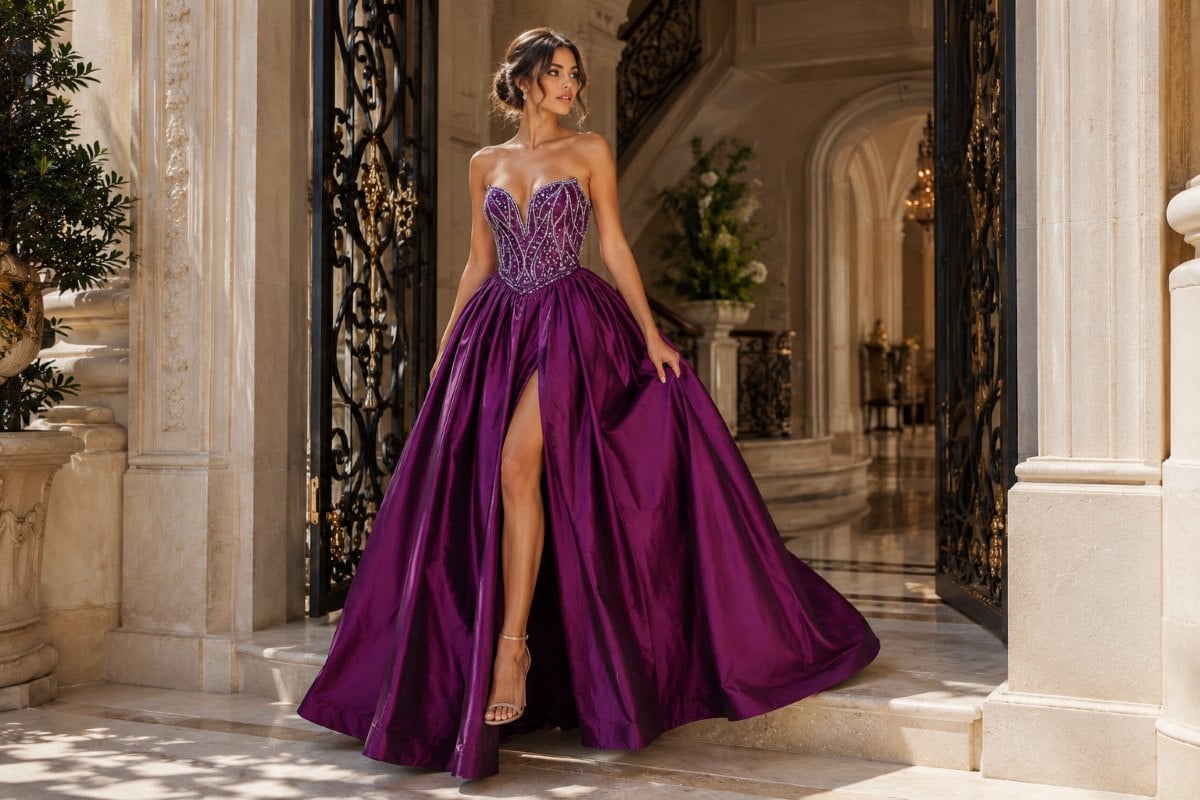
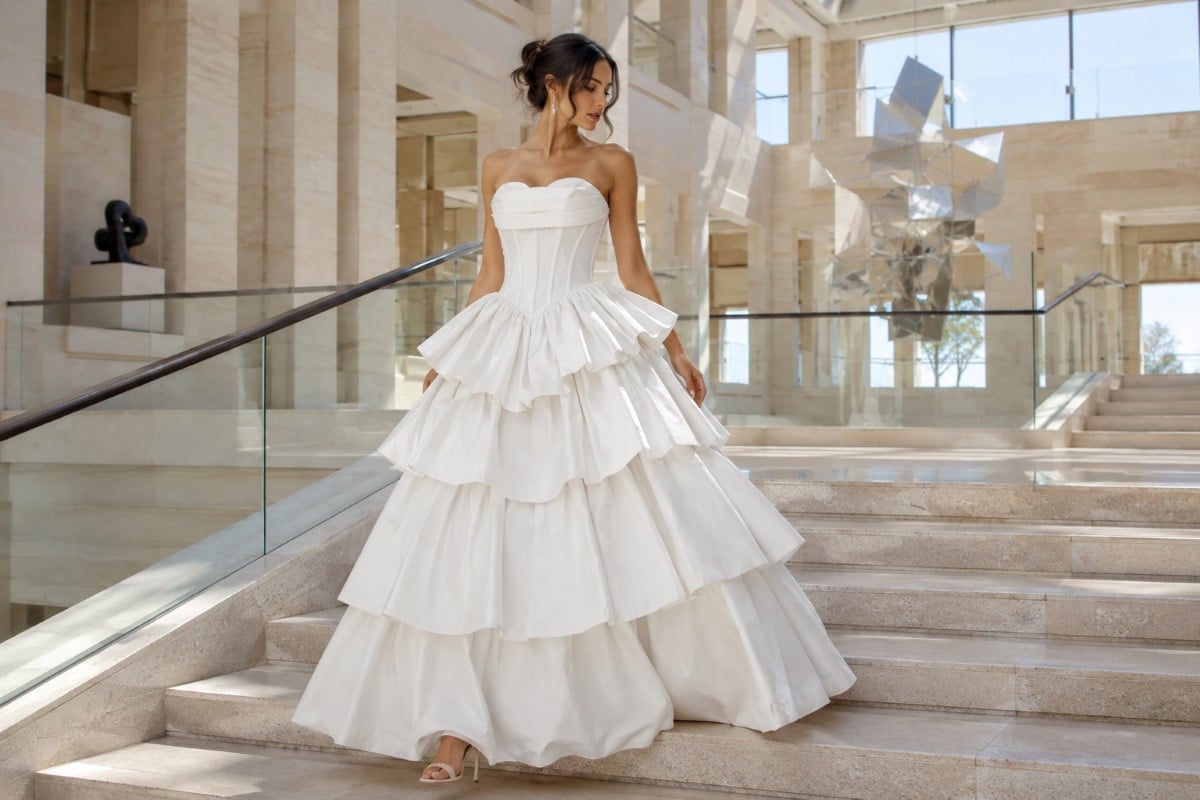
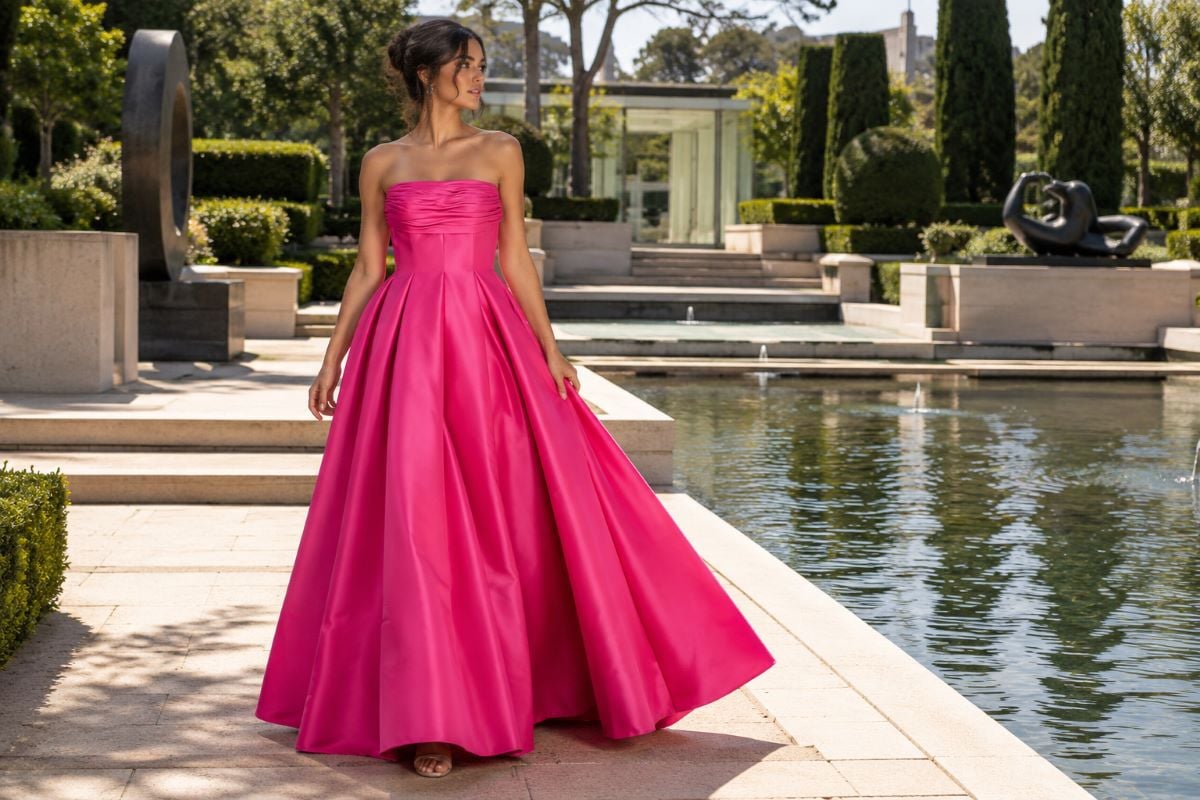
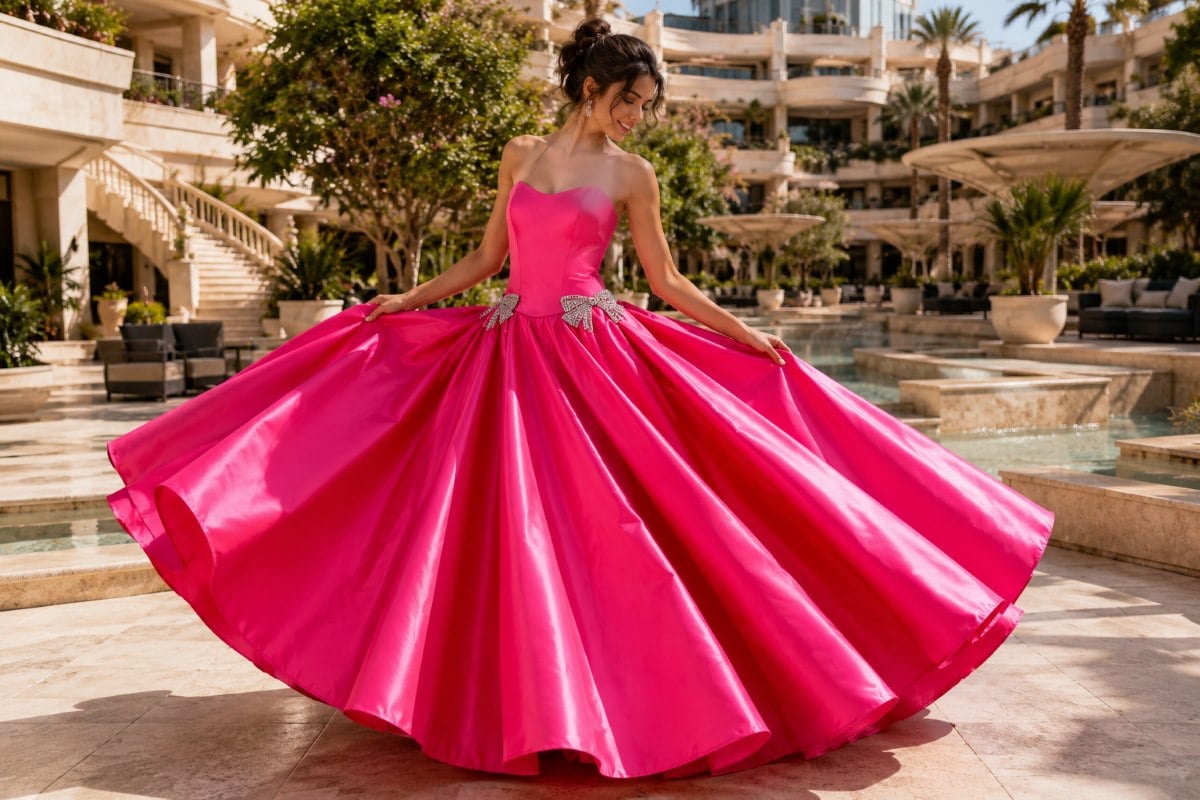
The full skirt is where taffeta earns its reputation. A ball gown cut in taffeta holds its volume from the waist outward without needing the weight that other fabrics would require, because the fabric is doing the structural work itself. The skirt keeps a clean, sweeping line as you walk and returns to shape after you sit, rather than crushing flat. This is the fabric behind a great many of the most architectural formal skirts, and it is why taffeta and the ball gown silhouette have been paired for well over a century. The styles among ball gown prom dresses show how much shape a structured fabric can hold.
Structured bodices and architectural detail
Taffeta is also excellent above the waist, where its crispness supports a fitted, structured bodice and keeps clean lines from softening. It takes a sharp pleat and holds it, which makes it a favorite for pleated bodices, folded details, and origami-style construction. It handles a peplum, a bow, or a sculpted neckline without any of those elements going limp over the course of an evening. If a dress design depends on a shape holding itself up, taffeta is usually somewhere in it, either as the face fabric or as the internal structure underneath.
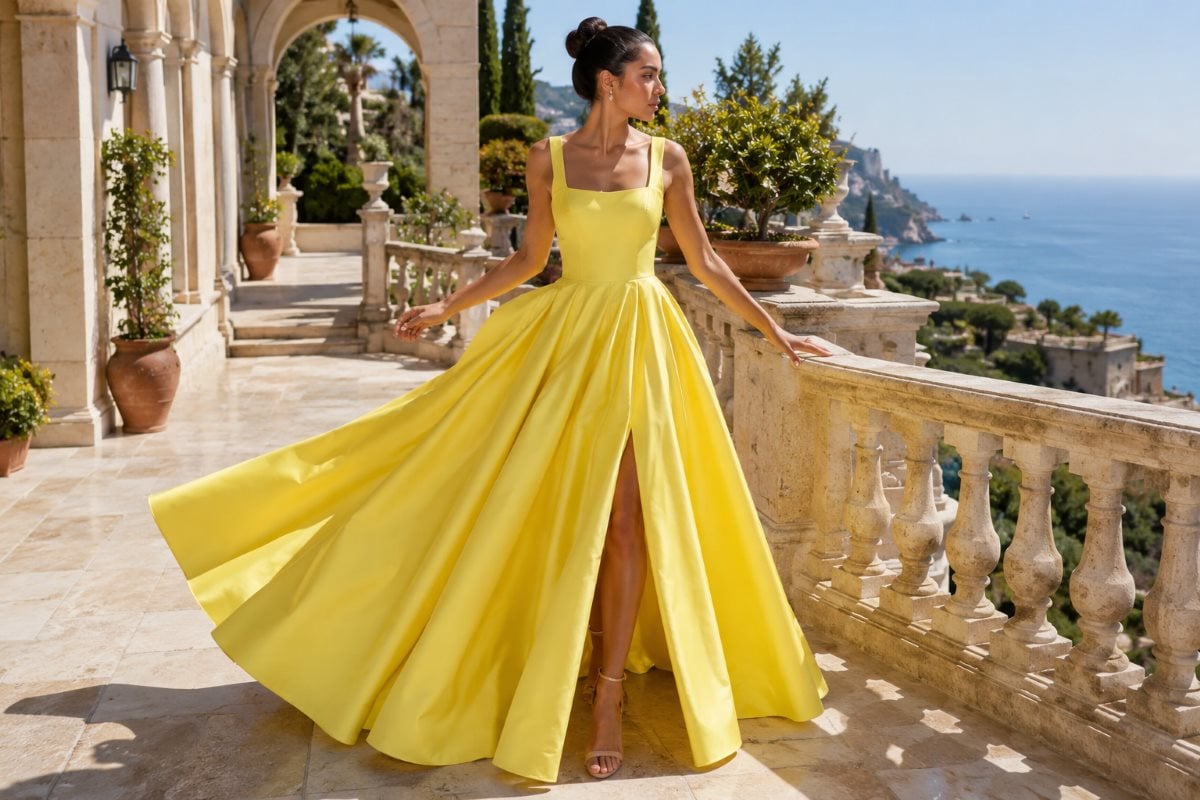
Where taffeta does not belong is any design that depends on soft movement. A column dress meant to skim the body, a bias-cut slip, or a gown intended to float will all fight the fabric rather than work with it. Taffeta cut close to the body reads as stiff rather than sleek, and it will crease sharply wherever it bends. If soft drape is what you want, satin, crepe, and chiffon are the fabrics to look at instead. The satin prom dresses show what the smoother, more fluid alternative looks like on a formal gown.
The styles among taffeta prom dresses show the fabric working the way it was designed to, holding a full skirt and a clean bodice line without collapsing.
What taffeta does that other fabrics cannot
Taffeta offers a particular combination that is really hard to replicate. It creates volume without weight, which matters more than it sounds. A gown that achieves the same fullness through heavy fabric or multiple layers becomes physically tiring to wear over a long evening, while taffeta produces the shape through the weave itself and stays comparatively light on the body.
It also holds a crisp edge. A pleat, a fold, or a sharp seam stays sharp, so a dress with architectural detail still reads as architectural at midnight rather than having softened into something vague. This durability of shape is why taffeta is used so often as an internal lining in structured formalwear, quietly keeping a skirt full and a bodice clean underneath a more delicate face fabric.
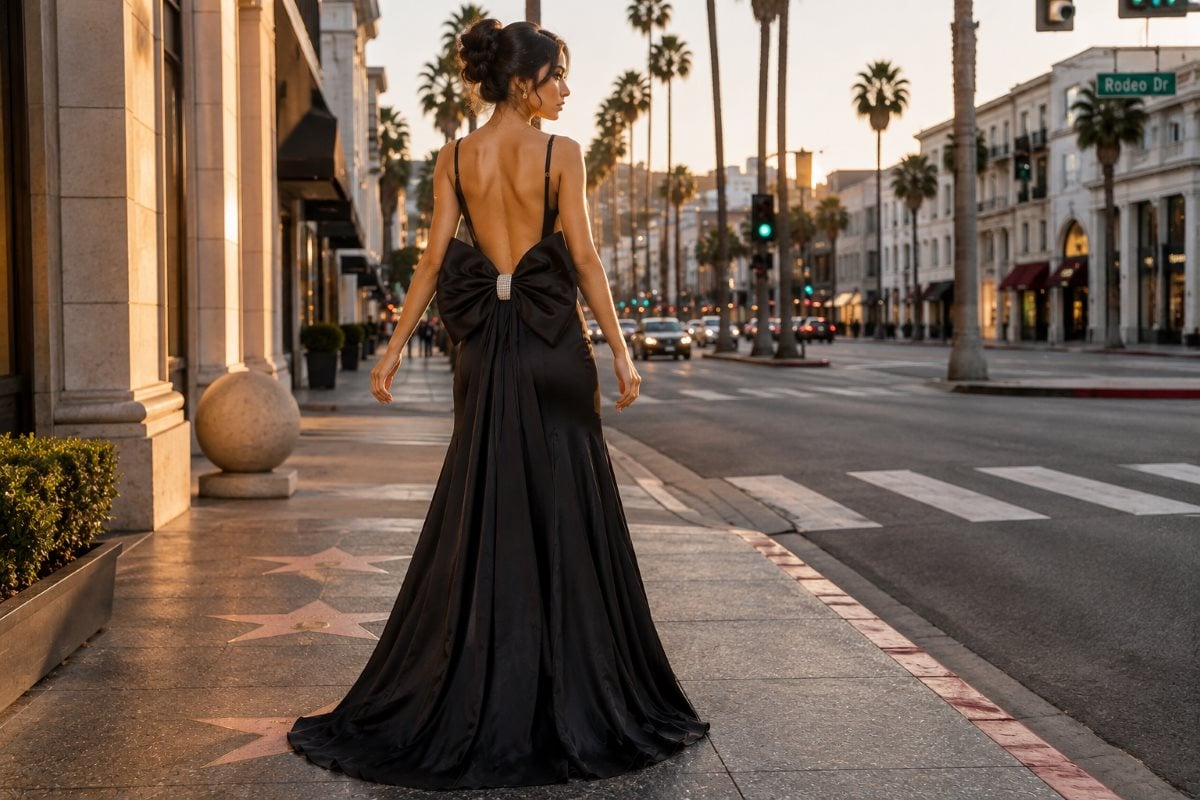
Then there is the sheen. Taffeta has a low, dry luster rather than the wet gloss of satin, and it reflects light in broad planes rather than in liquid highlights. On camera this reads as rich and dimensional, catching light along the ridges of every fold. It photographs with more depth than a matte fabric and with less glare than a high-shine one, which is a useful middle ground for a heavily photographed event. The range of formal dresses shows how differently formal fabrics behave under lighting.
Taffeta against the other structured fabrics
Anyone considering taffeta is usually also looking at mikado, duchesse satin, and brocade, since all four hold a shape. The differences are worth knowing because they are not interchangeable.
Mikado is heavier and smoother, with a subtle sheen and a much more modern, sculptural quality. It holds a shape as firmly as taffeta but without the rustle and with far less creasing, which makes it the more forgiving choice for a long event. Duchesse satin is heavier still and glossier, closer to a liquid surface with body behind it, and it reads as the most traditionally bridal of the group.
Brocade holds structure through a woven pattern rather than through weave density, so it brings visual interest that the others do not, at the cost of more weight and more warmth. Taffeta’s particular advantage over all three is that it creates volume with the least weight, which is why it appears so often in full skirts. Its disadvantage is the creasing, which is worse than any of the other three. If you want the volume without the creasing, mikado is usually the answer; if you want the volume without the weight, taffeta is.
The honest drawbacks worth knowing
Taffeta has real limitations, and anyone recommending it without mentioning them is not being straight with you. The first is creasing. Because the fabric holds any shape it is put into, that includes shapes you did not intend. Sitting for a long dinner in a taffeta skirt can leave fold marks across the lap, and unlike a soft fabric that shakes out, taffeta creases can be stubborn. In practice this is manageable, since most creases fall out of a full skirt as you move and stand, but a fitted taffeta dress will show them more clearly.
The second is warmth. A tightly woven fabric does not breathe freely, and synthetic taffeta breathes least of all. For an air-conditioned ballroom this is rarely an issue, and the structure means the fabric is not sitting against your skin the way a clingy dress would. For a long outdoor event in heat, it is worth considering carefully, and silk taffeta is meaningfully more comfortable than polyester in that situation.
The third is that taffeta is less forgiving to alter. The tight weave shows needle marks where a seam has been let out, and the fabric does not ease into a curve the way a softer material will. This is worth knowing if you expect significant alterations, since it means getting the size close from the start matters more than usual. For practical advice when a crease does appear, the guidance on dealing with dress wrinkles covers what is safe to do at home.
Colors and light on a taffeta dress
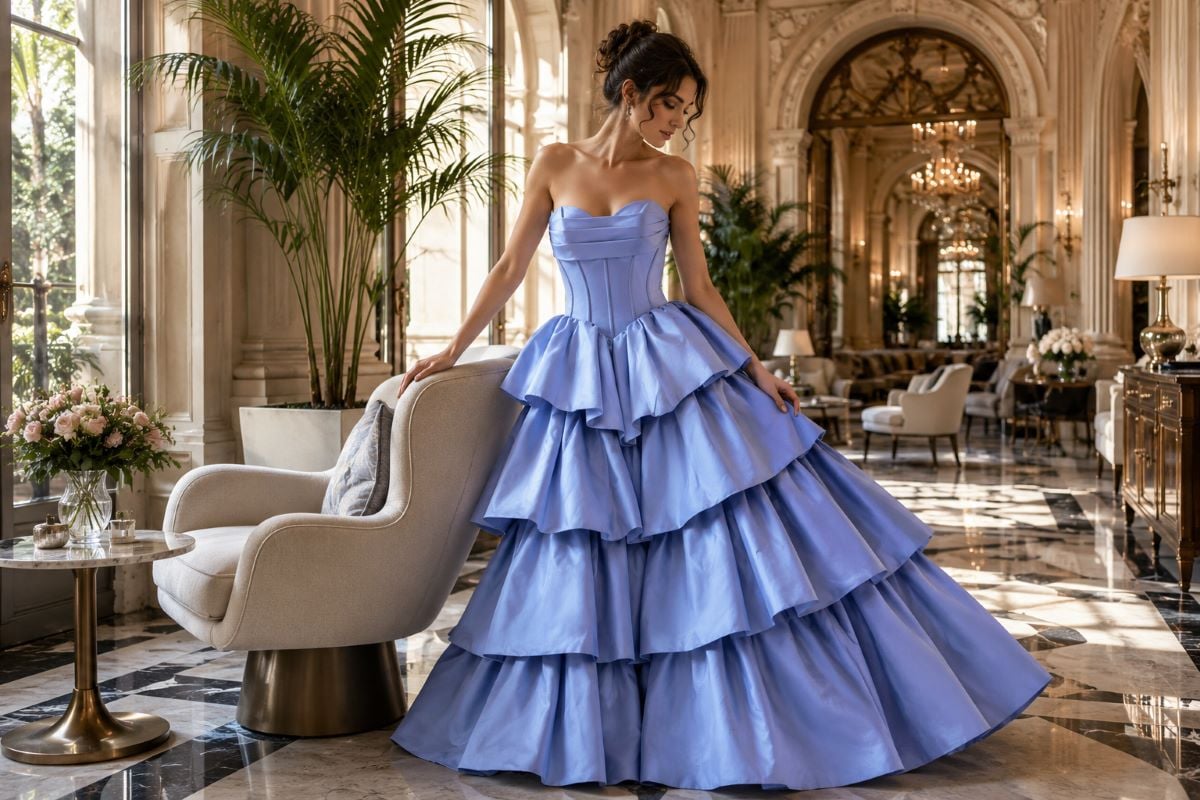
Taffeta has an unusual relationship with color because of how its surface handles light. The dry, broad sheen means a single color reads as several tones at once across the folds of a skirt, with bright highlights along the ridges and deep shadow in the valleys. This gives even a simple, unembellished taffeta dress a great deal of visual interest.
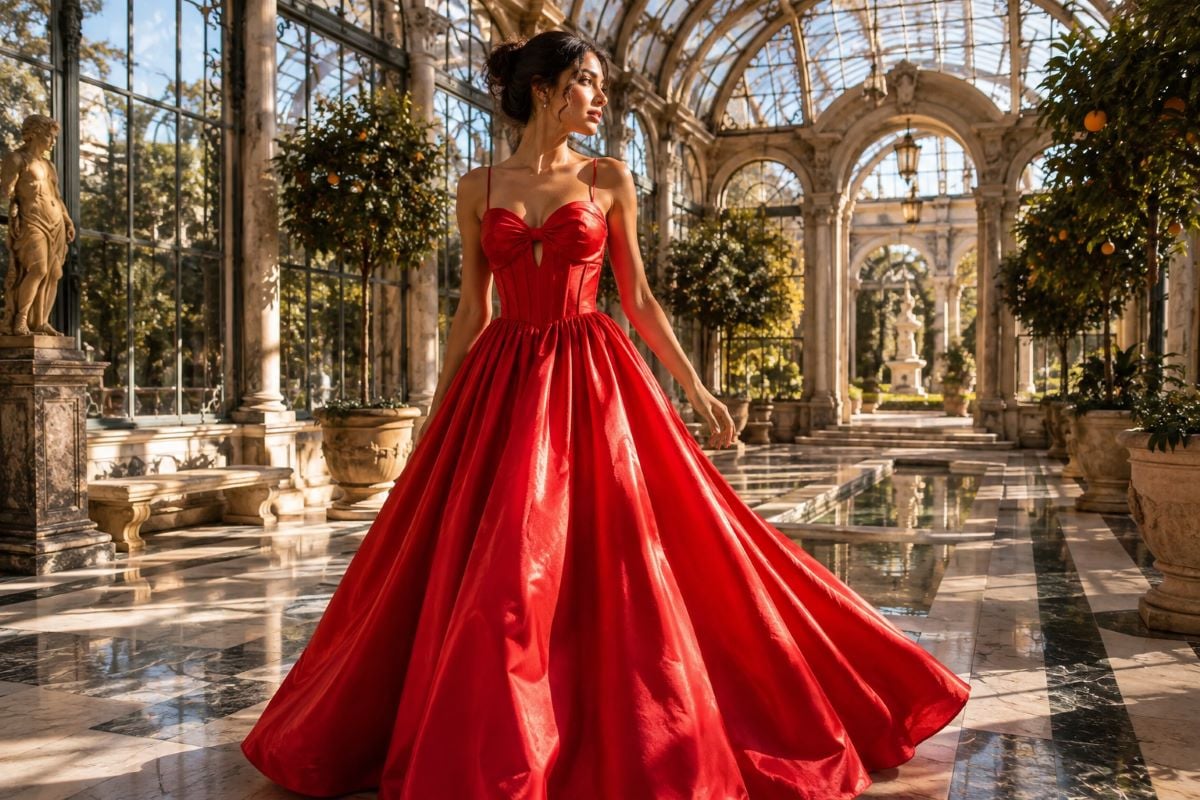
Rich, saturated colors take particular advantage of this. Deep reds, sapphire, emerald, and plum all gain dimension in taffeta that they would not have in a matte fabric. Classic black taffeta reads as sculptural rather than flat. Pale colors work beautifully too, since the sheen keeps them from looking washed out, and shot taffeta in two related pastels produces a soft shifting effect that is difficult to achieve any other way.
Taffeta is also a traditional choice in celebrations that call for a full, formal skirt, where the fabric’s ability to hold volume suits the occasion and the photographs that come with it. The styles among quinceañera gowns show how a structured fabric supports a ceremonial silhouette.
Caring for a taffeta dress
Taffeta rewards a little attention, and the care is more about what to avoid than about complicated routines. Store the dress hanging on a sturdy hanger in a breathable garment bag, giving the skirt room rather than crowding it against other garments, since pressure is what sets a crease. Never fold a taffeta dress for storage if you can avoid it.
For creases, steam rather than pressing directly with a hot iron. Hanging the dress in a room with steam works for light marks, and a handheld steamer held slightly away from the fabric handles the rest. If you must press, use a low setting with a pressing cloth between the iron and the fabric, since direct heat can flatten the sheen permanently and, on acetate or polyester, can damage the surface outright. Silk taffeta in particular is sensitive to water marks, so a steamer should not be held close enough to drip.
Cleaning should be professional. Taffeta is not a fabric to test in a home machine, and this is true of synthetic versions as well as silk. Telling the cleaner which fiber the dress is made from helps them choose the right process. For a fuller account of handling formal fabrics safely, the guide to caring for delicate evening dress fabrics covers the practical routines.
Judging taffeta in the fitting room
When you are assessing a specific taffeta dress, a few checks tell you most of what you need. Handle the fabric and listen to it, since the amount of scroop tells you a great deal about the fiber and the tightness of the weave, and it also tells you whether you will enjoy wearing it. Look at how the skirt holds itself when nobody is touching it, because that standing shape is what you will be wearing all evening.
Check the lining next. A quality taffeta gown is lined so that the crisp fabric is not sitting directly against your skin, and a good lining also helps the skirt keep its line. Then look at the seams and any pleating, since taffeta shows construction quality plainly: a well-made pleat in taffeta is sharp and even, and a poorly made one puckers in a way that softer fabrics would hide.
Finally, be honest with yourself about the event. Taffeta is the right answer for a formal evening where you want presence, volume, and a shape that holds through hours of photographs. It is the wrong answer for a long, warm outdoor day or for a look that depends on soft, fluid movement. Chosen for the right occasion, a taffeta dress delivers something no soft fabric can match: a silhouette that looks exactly as designed from the moment you arrive until the moment you leave. To see how structured taffeta translates across ball gowns, fitted bodices, and architectural detail, explore the current styles through an authorized Jovani retailer.
Everything You Wanted to Know About Taffeta
What is taffeta fabric?
Taffeta is a crisp, smooth, tightly woven fabric with a subtle sheen, traditionally made from silk and now also produced in polyester, acetate, and other fibers. It uses a plain weave with finely twisted yarns packed tightly together, which gives it very little give and very little drape. That stiffness is the point: taffeta holds whatever shape it is cut into rather than falling softly against the body, which makes it a staple of ball gowns and structured formalwear.
Why does taffeta make a rustling sound?
The sound has a name in the textile world: scroop. It comes from the tightly twisted, tightly woven fibers moving against one another, and it is most pronounced in silk taffeta. Some people consider it part of the appeal, since it gives a dress presence as you move. Others find it distracting in a quiet setting such as a ceremony. The amount varies considerably between a fine silk taffeta and a softer synthetic version, so it is worth listening to a dress before committing to it.
Does a taffeta dress wrinkle easily?
It creases more readily than soft fabrics, and this is taffeta’s main drawback. Because the fabric holds any shape it is put into, that includes fold marks from sitting for a long time. In practice most creases fall out of a full skirt as you stand and move, since the volume works them loose, but a fitted taffeta dress shows them more clearly. Steaming rather than pressing is the safe fix, and hanging the dress with room around it prevents most creasing in storage.
Is silk taffeta better than polyester taffeta?
Silk taffeta is finer in several respects: it has a softer natural luster rather than a hard shine, breathes considerably better, and produces the most refined version of the rustle. It is also far more expensive and more sensitive to moisture. Modern polyester taffeta holds structure beautifully, takes color brilliantly, and resists creasing well in some weights, with reduced breathability as the tradeoff. For a long or warm event, silk is meaningfully more comfortable; for structure and value, polyester performs well.
What silhouettes work best in taffeta?
Taffeta suits anything that needs to hold a shape. Ball gowns and full skirts are where it excels, since the fabric creates volume without the weight other materials would require. It also works beautifully for structured bodices, sharp pleating, peplums, bows, and sculpted necklines, because it takes a crisp edge and keeps it. It suits soft, body-skimming designs poorly, since a column or bias cut in taffeta reads as stiff rather than sleek and creases sharply wherever it bends.
Is taffeta hot to wear?
It can be, because a tightly woven fabric does not breathe freely, and synthetic taffeta breathes least of all. This is rarely a problem in an air-conditioned venue, and the structure of the fabric means it stands away from the body rather than clinging, which helps. For a long outdoor event in warm weather it deserves genuine consideration, and silk taffeta is noticeably more comfortable than polyester in that situation because the natural fiber breathes.