
Some dresses stand still and some dresses move. A flowy dress belongs firmly in the second group, and that movement is the whole point of it. The fabric follows you rather than holding its own shape, so the dress ripples when you walk, settles when you stop, and lifts in the smallest breeze. It is one of the most forgiving and most photogenic things you can wear to an occasion. It is also one of the most misunderstood, because the word flowy makes many people picture something shapeless, and a well-made flowy dress is nothing of the sort. This guide explains what actually makes a dress flowy, which fabrics create real movement, how to get flow without losing shape, who the style flatters, and how a flowy dress performs at a formal event, on a dance floor, and in photographs.
What actually makes a dress flowy
A flowy dress is one cut in a fabric that falls softly and follows the body rather than standing away from it. The quality has almost nothing to do with the silhouette and almost everything to do with the material, which is why two dresses cut from the same pattern can behave in completely different ways.
Drape is the property that matters
Drape describes how readily a fabric bends and folds under its own weight, and it is the single technical property behind every flowy dress. A fabric with high drape collapses into soft, close folds and follows the line of the body. A fabric with low drape holds its own shape and stands away from you. Neither is better in the abstract, but they produce entirely different garments. A ball gown skirt needs low drape so the volume holds. A flowy dress needs high drape so the fabric moves. When a dress hangs limply on the rail and then comes alive the moment someone walks in it, high drape is what you are seeing.
Weight and weave decide how a fabric falls
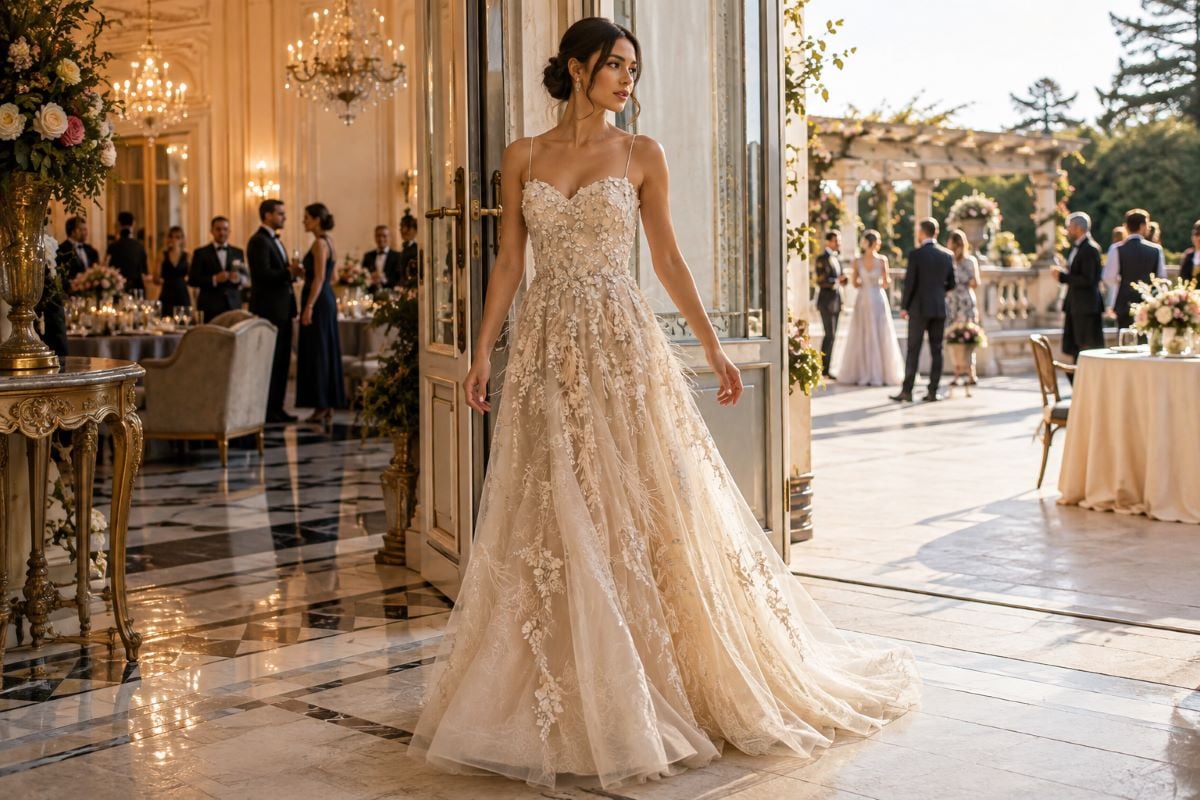
Two things determine drape more than anything else: how heavy the fabric is and how tightly it is woven. Light, loosely woven fabrics with fine yarns fold easily and float. Heavier or densely woven fabrics resist folding and hold structure. There is a useful exception worth knowing, because weight alone does not decide the outcome. A heavy but very flexible fabric, such as a good silk charmeuse or a fluid velvet, drapes beautifully and creates deep, rich folds rather than floating ones. The weight pulls it down while the flexibility lets it fold, which produces a slower, more liquid kind of movement than a light chiffon gives you.
The fabrics that create real movement
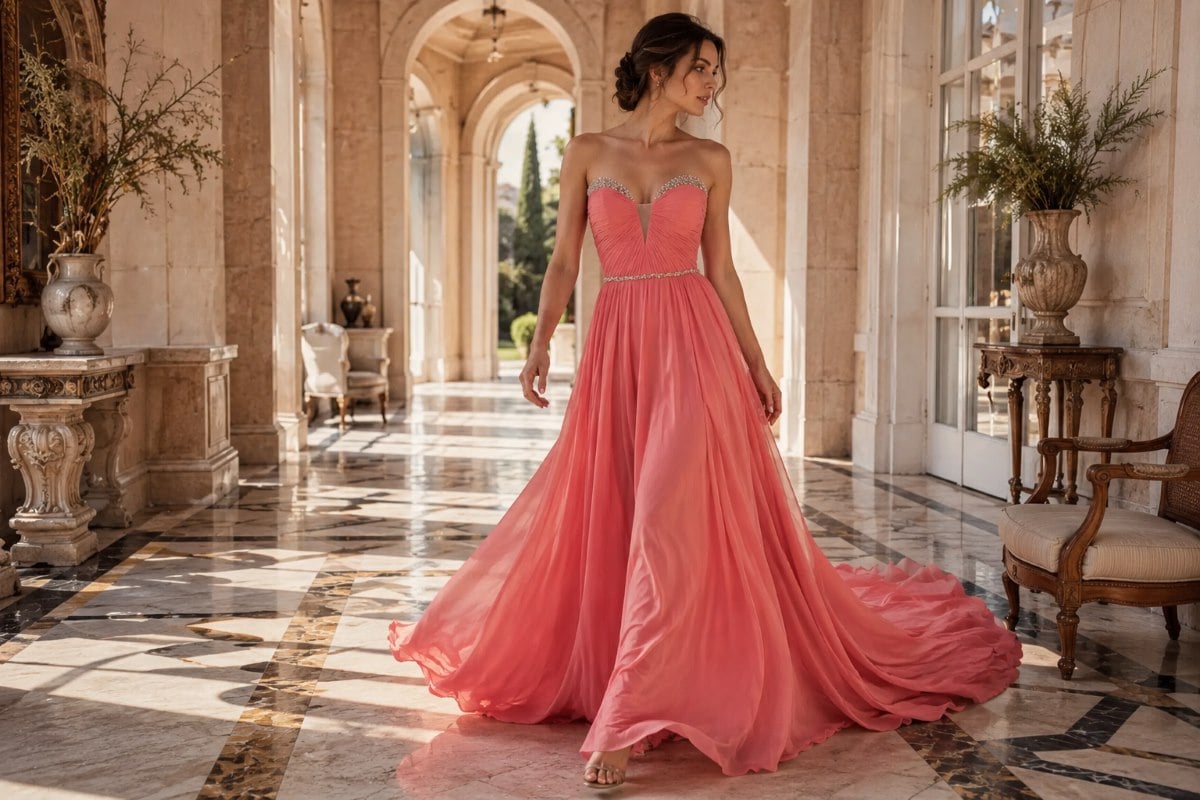
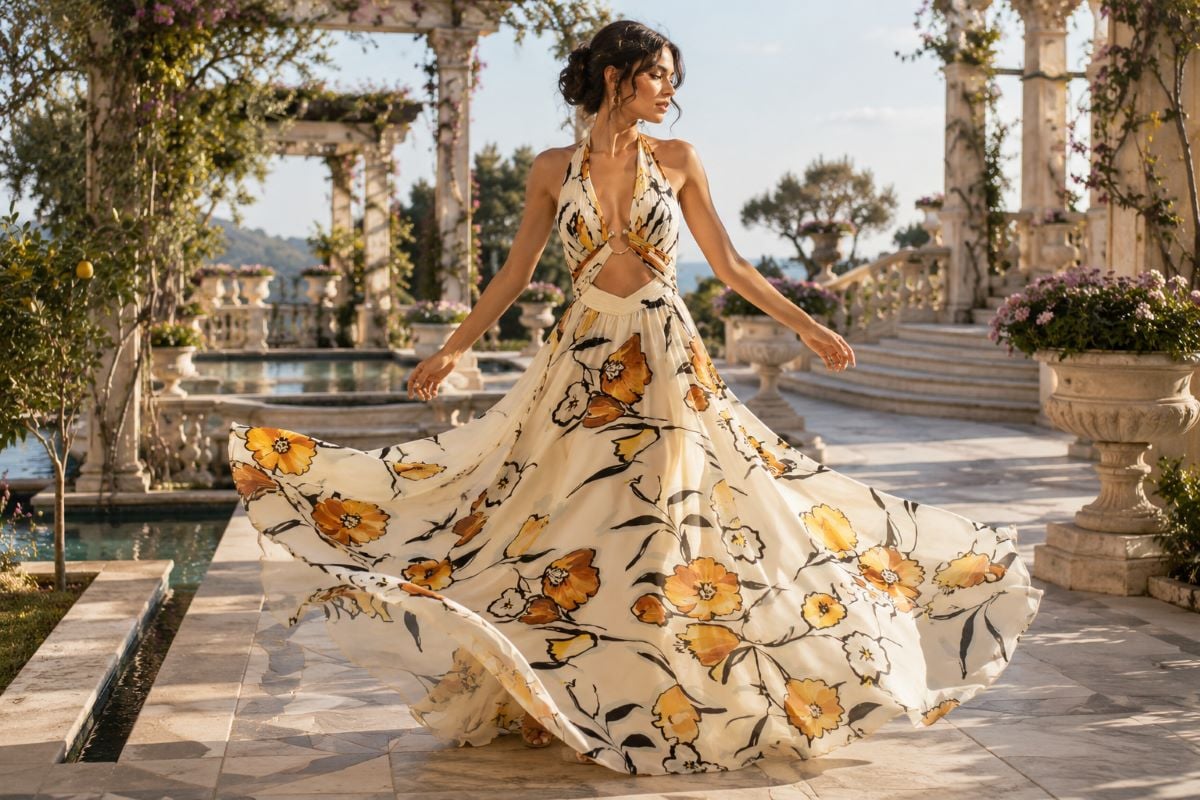
Once you know to look at drape, the fabric list sorts itself quickly. Chiffon is the most recognizable flowy fabric in formalwear, sheer and feather-light with a slightly grainy surface, and it is what gives so many gowns their floating overskirt. Georgette is chiffon’s slightly heavier relative, a little more opaque and with more body, which makes it a good choice when you want movement without transparency.
Crepe brings a different kind of flow. Its pebbled surface and matte finish give it a fluid, weighty fall that skims rather than floats, and it is why crepe reads as modern and understated on a long dress. Charmeuse and other satin weaves flow like liquid and catch light along every fold, which produces the most sensual movement of the group. Fine net and tulle create the airiest movement of all, though they need multiple layers and a good lining to work. The overview of popular evening dress fabrics covers how each of these behaves across different silhouettes.
It is equally useful to know which fabrics will never give you flow, because choosing one of these and hoping for movement is a common disappointment. Taffeta, mikado, brocade, and heavy duchesse satin all have low drape by design. They hold shape beautifully and produce architectural silhouettes, but they stand away from the body rather than following it. If movement is what you are after, these are the wrong starting point no matter how the dress is cut. The chiffon styles among chiffon prom dresses show what genuine flow looks like on a formal gown.
Flowy does not mean shapeless
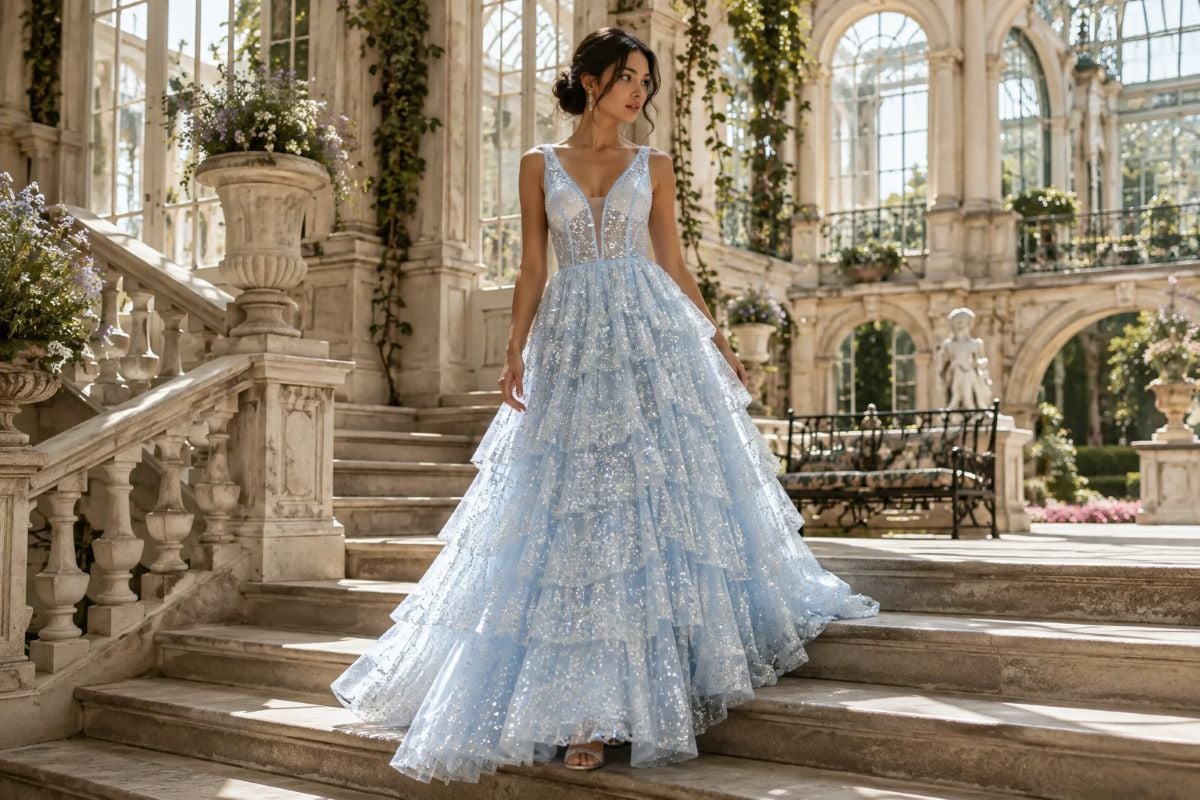
This is the fear that stops most people from trying a flowy dress, and it is worth addressing directly, because it comes from a real risk. Fabric that follows the body will also follow a shapeless cut, so a badly designed flowy dress genuinely can read as a sack, particularly when it hangs straight from the shoulders with nothing to interrupt the line. The solution is not to avoid flow. It is to look for the structure that holds it.
A defined waist keeps the shape
The most reliable way to keep a flowy dress from reading as shapeless is a waist that is actually defined somewhere. That definition can come from a seam, a fitted bodice, a subtle gather, or a belt built into the design. Without it, soft fabric simply falls from the shoulders in a straight line and hides the body entirely. With it, the same fabric reads as graceful, because the eye has a point of reference and can see the shape underneath the movement. The guide to evening dresses that highlight the waistline covers how different constructions create that definition.
A fitted bodice with a flowing skirt is the reliable formula
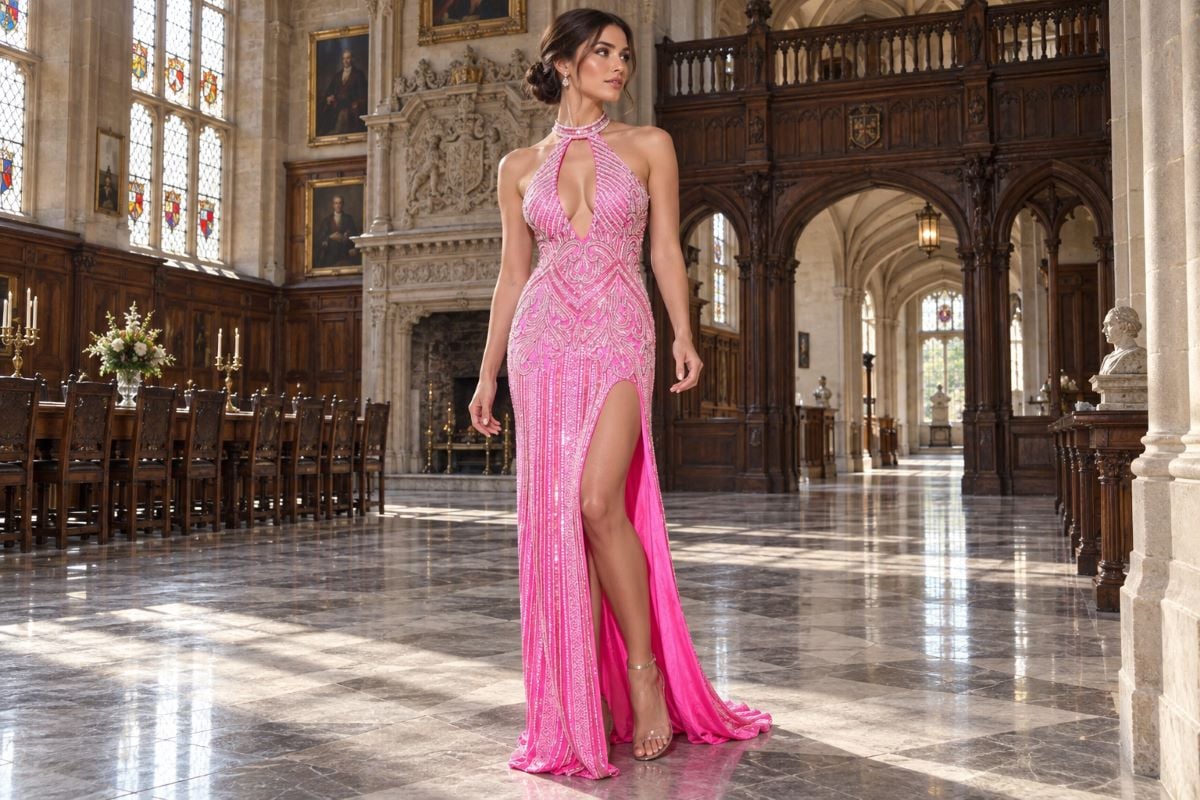
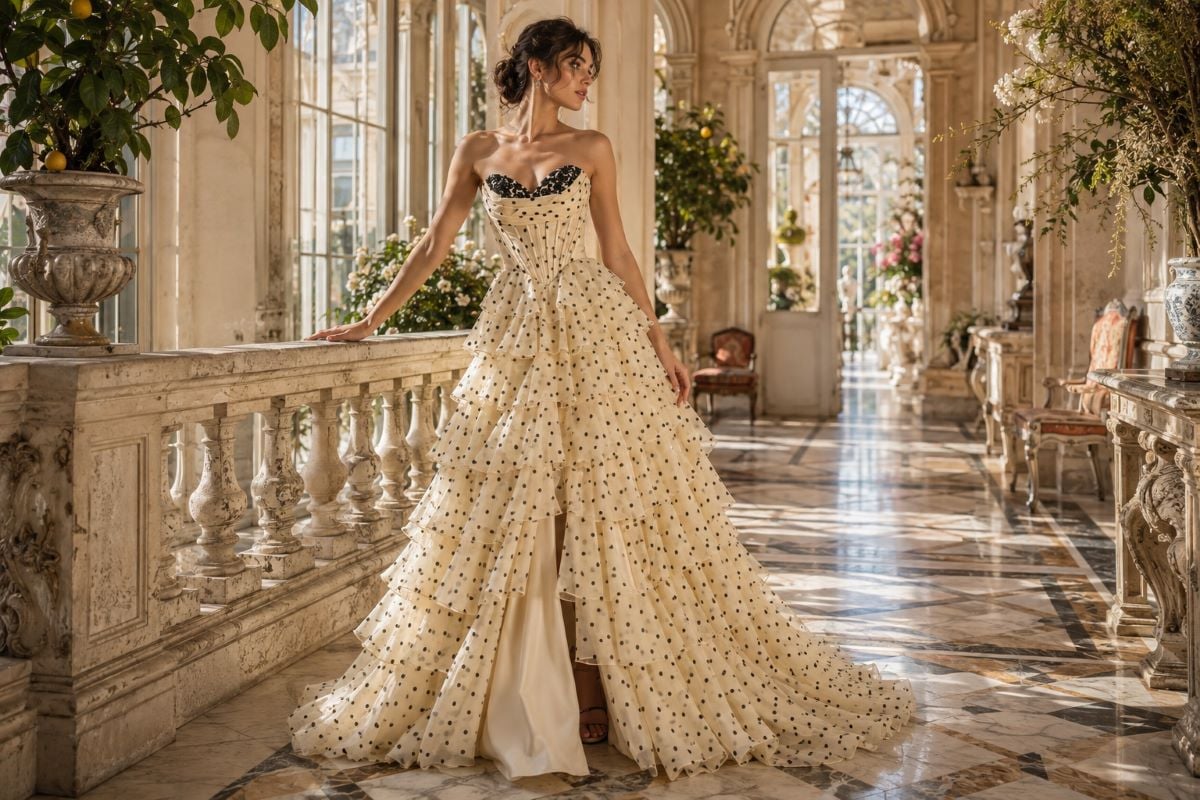
The most dependable construction in flowy formalwear pairs a structured, fitted bodice with a soft, flowing skirt. The bodice does the shaping work, holding the upper body cleanly and often supported internally with boning or a firm lining, while the skirt carries all the movement. You get the flattering line of a fitted dress at the top and the ease and drama of a flowy one below. This is the formula behind a great many evening gowns, and it is the answer for anyone who loves how a flowy skirt moves but does not want the whole dress floating away from them. The A-line evening dresses show the shape at its most classic, fitted through the bodice and released gently from the waist.
Who a flowy dress flatters
Flowy dresses have a reputation for being universally flattering, and the reputation is largely deserved, though the reasons are more specific than the reputation suggests. Because the fabric skims rather than clings, it does not define every line of the body underneath, which is really forgiving through the midsection, the hips, and anywhere else you would rather not have a dress mapping your exact outline.
For a fuller figure, a flowy skirt glides over the hips and thighs and creates a long, unbroken line, particularly when the waist is defined above it. For a slimmer or straighter frame, the movement of the fabric adds softness and the impression of curve where a rigid fabric would sit flat. For anyone who is pregnant, recovering, or simply wants a dress that will fit comfortably regardless of how the day goes, the give in a flowy cut is a practical advantage that structured fabrics cannot offer.
The one thing worth watching is proportion. A very voluminous flowy dress on a petite frame can overwhelm, so a lighter fabric, a narrower skirt, and a waist defined a little higher usually work better than a full floating gown. Length matters here too, since a hem that ends at the narrowest point of the calf tends to flatter more than one that ends at the widest. The range of formal dresses shows how different proportions of flow read on a formal silhouette.
Flowy dresses at formal events
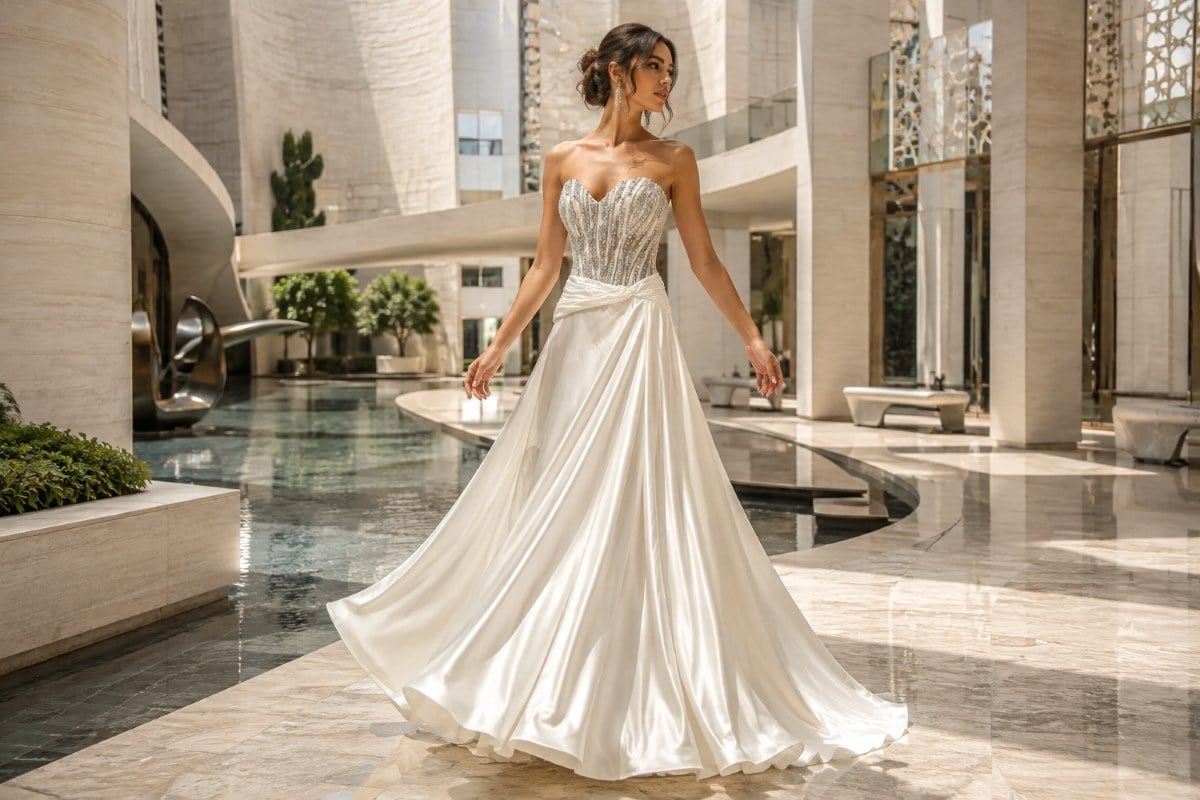
A flowy dress is often assumed to be the casual option, and for formalwear that assumption is simply wrong. Some of the most formal gowns ever made are built from the softest fabrics, because flow reads as luxurious when the fabric quality is high and the construction is serious.
For a prom or a formal dance, a flowy gown has a practical advantage that a structured one does not: you can actually move in it. A soft skirt lets you walk, sit through dinner, and dance without managing the dress, and it will not crush the way a stiff fabric can after several hours. The styles among flowy prom dresses show how much movement a formal gown can carry while still reading as a proper occasion dress.
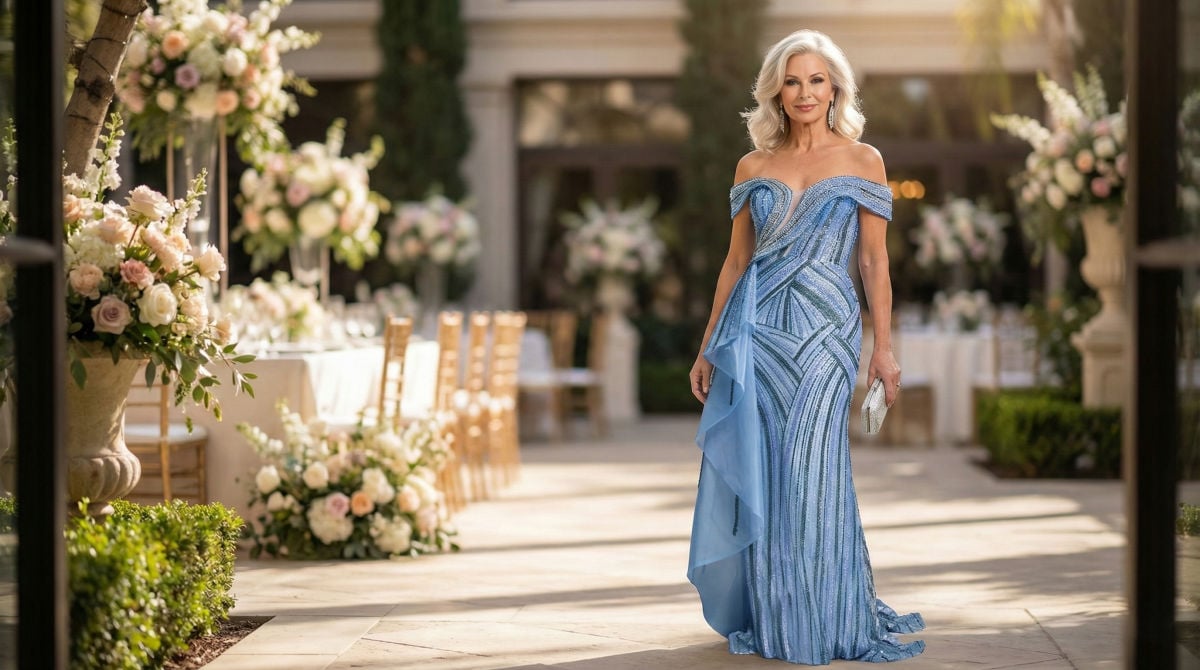
For a wedding guest, a flowy dress handles the long, mixed day well, moving from a ceremony to a reception without becoming uncomfortable. For the mother of the bride or groom, a soft fabric is often the most comfortable choice across a demanding day of standing, greeting, and photographs, and it flatters without gripping. The chiffon mother of the bride dresses show how a flowing fabric reads at that level of formality.
How a flowy dress behaves in motion and on camera
The reason flowy dresses have such staying power in formalwear is that they perform in exactly the situations where formal dresses are seen. Understanding that behavior helps you choose one deliberately rather than hoping for the best.
In photographs, a flowy dress gives a photographer something a structured dress cannot: movement they can catch. A skirt lifted mid-step, a fabric caught in a turn, or a hem settling after a spin all read as alive in a way that a static silhouette does not. This is why so much formal photography involves someone being asked to walk toward the camera or turn on the spot. If you know your event will be heavily photographed, flow is an asset rather than a risk.
On a dance floor, the same property becomes purely practical. Soft fabric moves with you rather than resisting, and it recovers its shape rather than holding creases from being sat on. The tradeoff worth planning for is the hem. A long flowy skirt is light enough to be stepped on and light enough to catch the air, so knowing how to manage it makes the evening easier. The advice on walking in a long dress covers the small adjustments that keep a floor-length skirt out of your way.
Outdoors, flow behaves differently again. A light chiffon will lift in wind, which looks beautiful in a photograph and can be inconvenient in life. If your event is outdoors and exposed, a slightly heavier flowing fabric such as crepe or georgette gives you the movement without the constant management that pure chiffon demands.
What to look for on the rail
A flowy dress reveals itself in three ways, and none of them happen while it hangs still. First, look at how the fabric falls on the hanger and then how it moves when the dress is lifted or turned, since drape reveals itself in motion rather than at rest. Second, find where the shape is held, which usually means locating the waist seam or the fitted portion of the bodice, because that is what keeps the dress from reading as shapeless. Third, check the lining, since soft and often sheer fabrics need a well-made lining underneath to hang properly and to sit comfortably against the skin.
One last thing worth checking is the hem. Soft fabrics are light enough to be stepped on and light enough to lift in a draft, so a flowy skirt should clear the floor with your actual shoes on rather than by an estimate. Care is the last consideration, and it is straightforward. Flowing fabrics are usually fine and delicate, so they should hang rather than fold, be steamed rather than pressed with a hot iron, and be handled gently around jewelry and rough surfaces that can pull a fine weave. Stored properly on a padded hanger in a breathable garment bag, a flowy dress keeps its fall indefinitely, since there is no structure inside it to collapse. To see how chiffon, crepe, and other soft fabrics translate into a formal silhouette with real movement, explore the current styles through an authorized Jovani retailer.
Common Questions About Flow and Drape
What is a flowy dress?
A flowy dress is one cut in a fabric that falls softly and follows the body rather than standing away from it. The quality comes almost entirely from the material rather than the silhouette, which is why two dresses cut from the same pattern can behave completely differently. The technical property behind it is drape, meaning how readily a fabric bends and folds under its own weight. High drape produces soft, close folds and movement; low drape holds shape and stands away from the body.
Which fabrics make a dress flowy?
Chiffon is the most recognizable, sheer and light with a floating quality. Georgette is slightly heavier and more opaque, giving movement without transparency. Crepe has a matte, pebbled surface and a fluid, weighty fall that skims rather than floats. Charmeuse and satin weaves flow like liquid and catch light along every fold. Fine net and tulle create the airiest movement. Taffeta, mikado, brocade, and heavy duchesse satin will not give you flow, since they are designed to hold shape.
Do flowy dresses look shapeless?
They can, but only when the design lacks structure. Fabric that follows the body will also follow a shapeless cut, so the answer is to look for where the shape is held rather than to avoid flow altogether. A defined waist, whether from a seam, a fitted bodice, or a built-in gather, gives the eye a reference point and keeps the dress from falling in a straight line from the shoulders. The most reliable construction pairs a fitted bodice with a flowing skirt.
Are flowy dresses flattering?
Generally yes, and for specific reasons. Because the fabric skims rather than clings, it does not map every line of the body underneath, which is forgiving through the midsection and hips. On a fuller figure, a flowy skirt glides over the hips and creates a long line. On a slimmer frame, the movement adds softness and the impression of curve. The main thing to watch is proportion, since a very voluminous flowy dress can overwhelm a petite frame.
Can a flowy dress be formal enough for a black-tie event?
Yes. The assumption that flow means casual is simply wrong for formalwear. Some of the most formal gowns are built from the softest fabrics, because flow reads as luxurious when the fabric quality is high and the construction is serious. What makes a dress formal is length, fabric quality, and construction rather than stiffness. A floor-length gown in fine chiffon or silk crepe with a well-built bodice is entirely appropriate at the most formal events.
How do you care for a flowy dress?
Flowing fabrics are usually fine and delicate, so care is mostly about avoiding damage rather than complicated maintenance. Hang the dress on a padded hanger rather than folding it, store it in a breathable garment bag away from direct light, and steam rather than pressing with a hot iron, since heat can mark fine weaves. Be a little mindful around jewelry, zippers, and rough surfaces that can pull a delicate fabric. Because there is no internal structure to collapse, a well-stored flowy dress keeps its fall indefinitely.