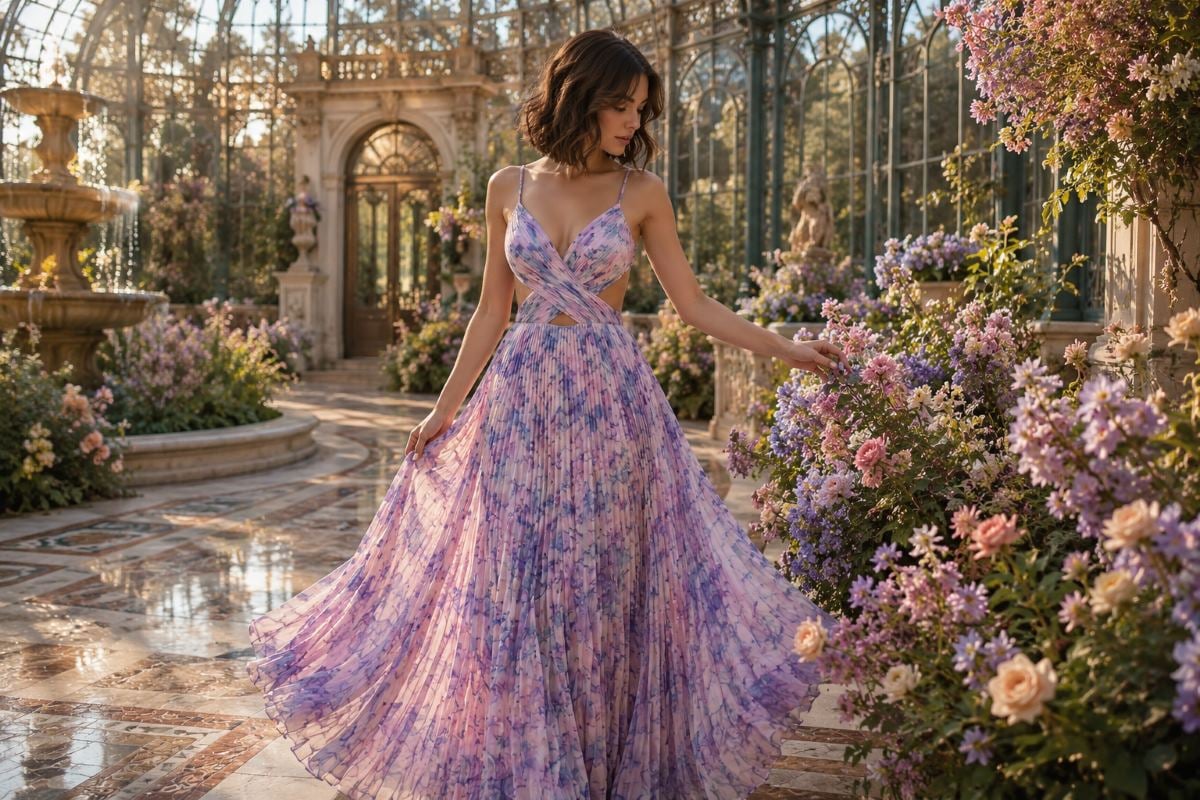


Beading does something to a gown that flat fabric and printed shine cannot. The weight and texture of hand-applied crystals, pearls, and sequins create dimension, and as a bride moves through a ceremony and reception, the beadwork shifts and catches light differently with every step. A beaded wedding dress signals occasion and investment in quality, and unlike trendy details that date quickly, fine beadwork reads as timeless across decades. This guide walks through how to choose a beaded wedding dress, from the types of beading to placement, weight, color, and care, so you can find a gown that sparkles in a way that feels right for you.
Beading also sits on a spectrum, from a barely-there dusting of crystals to a fully encrusted gown, and where you fall on that spectrum is the first real decision. Some brides want a gown that reads as quietly luminous up close, while others want one that catches every light in the room, and beadwork can do either.
Choosing beading is partly about the level of sparkle you want and partly about understanding how beadwork is made and where it sits, because the type, density, and placement of beading shape a gown’s character far more than a quick glance suggests. A scattered dusting of crystals reads completely differently from a densely encrusted bodice, and knowing the distinctions makes the search easier. The considerations below cover what actually matters when you are choosing how much sparkle is right for your wedding.
Why beading reads as special
Beading offers more than surface shine, and that depth is the point. The weight and texture of hand-applied beading create dimension that flat sequins or printed shimmer cannot match, giving a gown a richness you can feel as well as see. When light hits beadwork from different angles as the bride moves, it shifts and sparkles in a way that reads as alive, drawing attention without overwhelming the silhouette.
A beaded gown also signals quality and occasion. Fine beadwork takes hours of skilled hand-work per gown, which is part of why it reads as luxurious and investment-worthy, and why it suits a wedding, where the occasion calls for exactly that sense of significance. Unlike trendy embellishments that feel dated within a season, intricate beadwork remains timeless across decades of bridal fashion. The full collection of beaded wedding dresses shows how beading ranges from subtle to dramatic.
The types of beading
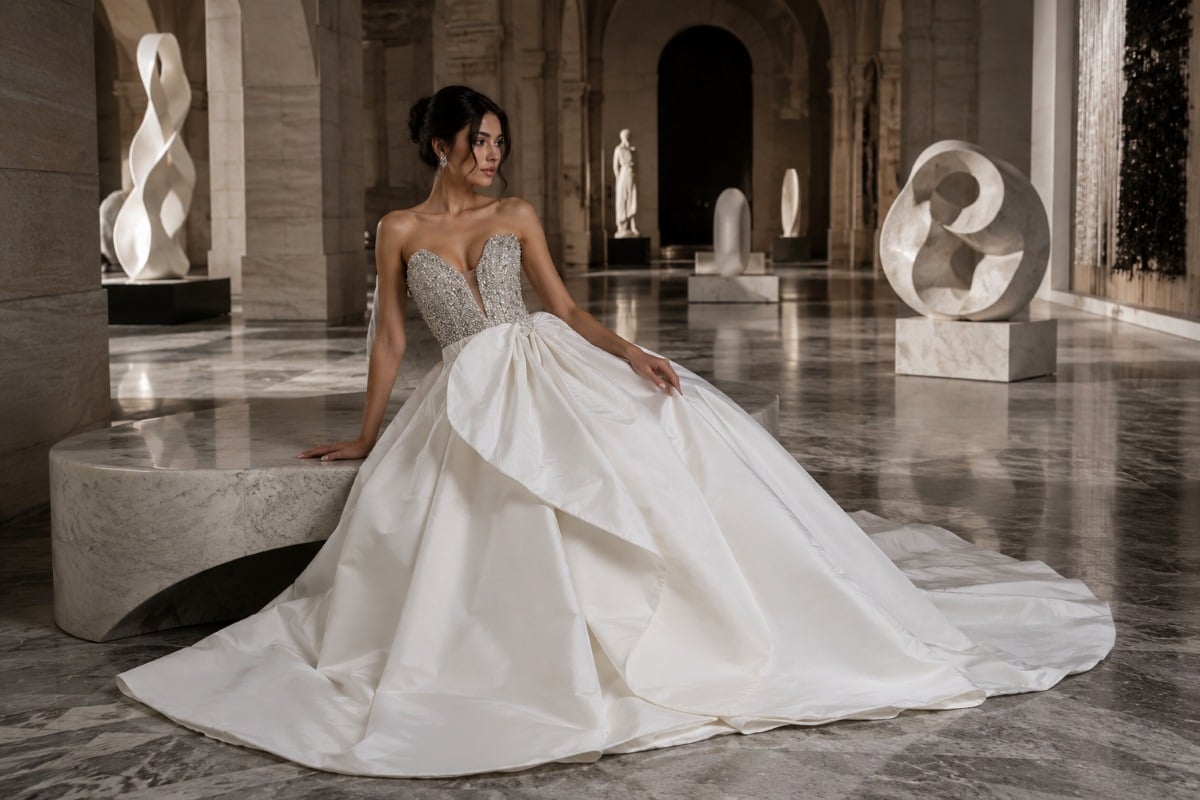
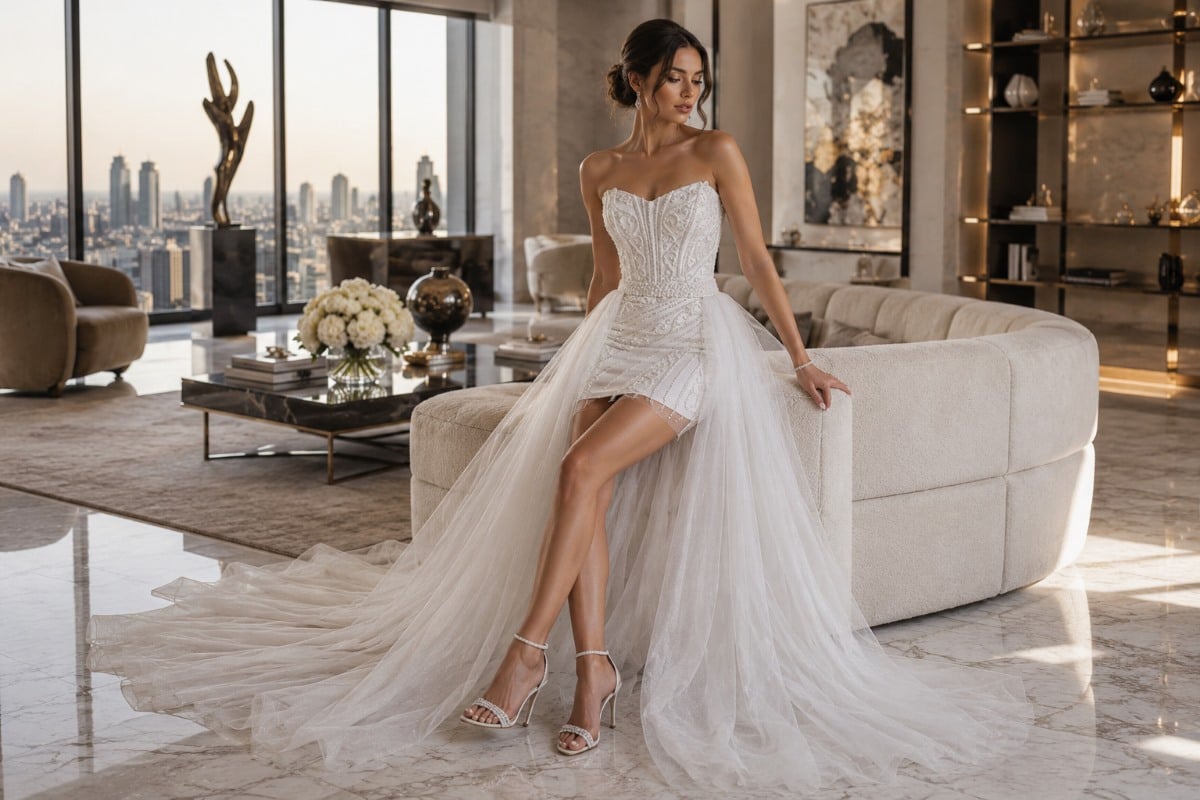
Knowing the types of beadwork helps you picture the effect and recognize quality. Crystals create the brightest, most reflective sparkle, catching light sharply and reading as glamorous. Pearls offer a softer, more classic luster, reading as romantic and traditional rather than flashy. Sequins lie flatter and create a continuous shimmer, while micro-beading uses tiny beads to add fine texture and subtle dimension across a surface.
Many gowns combine these, using crystals for highlights, pearls for softness, and micro-beading for texture, which creates depth and visual interest. The type of bead determines the character of the sparkle, so a bride who wants bright glamour leans toward crystals, while one who wants soft romance leans toward pearls. Understanding the options helps you choose a gown whose sparkle matches the mood you want, from understated to dazzling.
Patterns and where beading sits
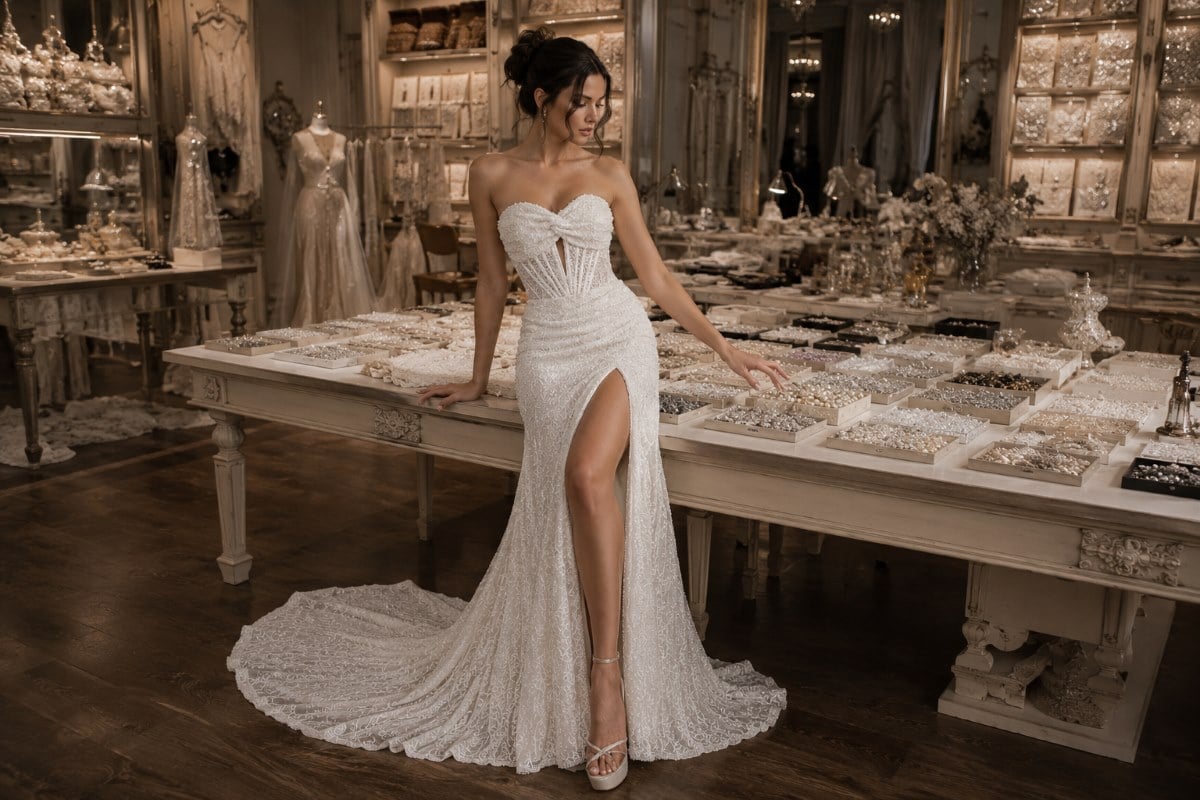
The pattern and placement of beading shape the whole effect of a gown. Beadwork appears in patterns ranging from geometric, Art Deco lines that read as structured and vintage-glamorous, to organic floral motifs that read as soft and romantic. The pattern sets the tone as much as the type of bead does, so a geometric beaded gown feels different from a floral one even with the same crystals.
Placement matters just as much. Heavier beading concentrated along the bodice and hips defines the figure and creates a focal point at the upper body, while lighter, scattered beading extends across a skirt without adding bulk, creating a softer effect. An all-over beaded gown reads as the most dramatic and glamorous, enveloping the bride in sparkle, while beading at the bodice with a smoother skirt reads as more balanced. Understanding where you want the sparkle helps you choose a gown whose effect matches your vision, and how beading interacts with current bridal styles is covered in our guide to designer wedding dress trends.
Beading across silhouettes
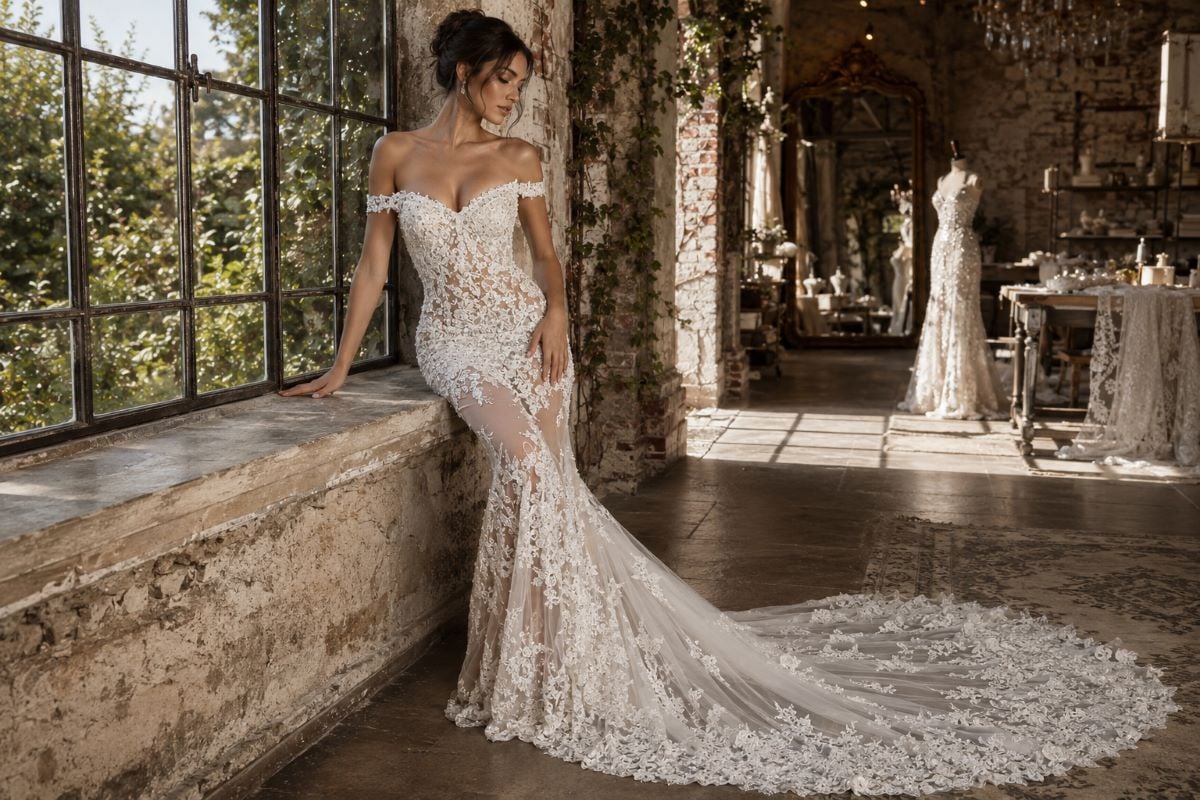
Beading works across nearly every bridal silhouette, and the pairing shapes the look. On a fitted or mermaid silhouette, beading highlights the sculpted shape, with the sparkle catching light across the curves and emphasizing the body-conscious line. A beaded mermaid is one of the most glamorous bridal looks, combining the drama of the silhouette with the richness of beadwork, and the range of mermaid wedding dresses shows how embellishment reads across a fitted line.
On an A-line or fuller skirt, beading reads as more romantic, with scattered beadwork drifting across the skirt or concentrated at the bodice for a softer effect. Beading also pairs beautifully with lace, where beads are applied over a lace pattern to add sparkle to the texture, creating a layered, dimensional effect. The combination of lace and beading is one of the most romantic, and the range of lace wedding dresses shows how the two work together.
Beading can even sit on sleeves, adding sparkle to the arms, which you can see across long sleeve wedding gowns. A beaded sleeve is a refined way to carry sparkle to the upper body while keeping coverage, which suits a bride who wants both glamour and a more covered look, and it reads as especially elegant for a fall or winter celebration.
Weight, comfort, and construction
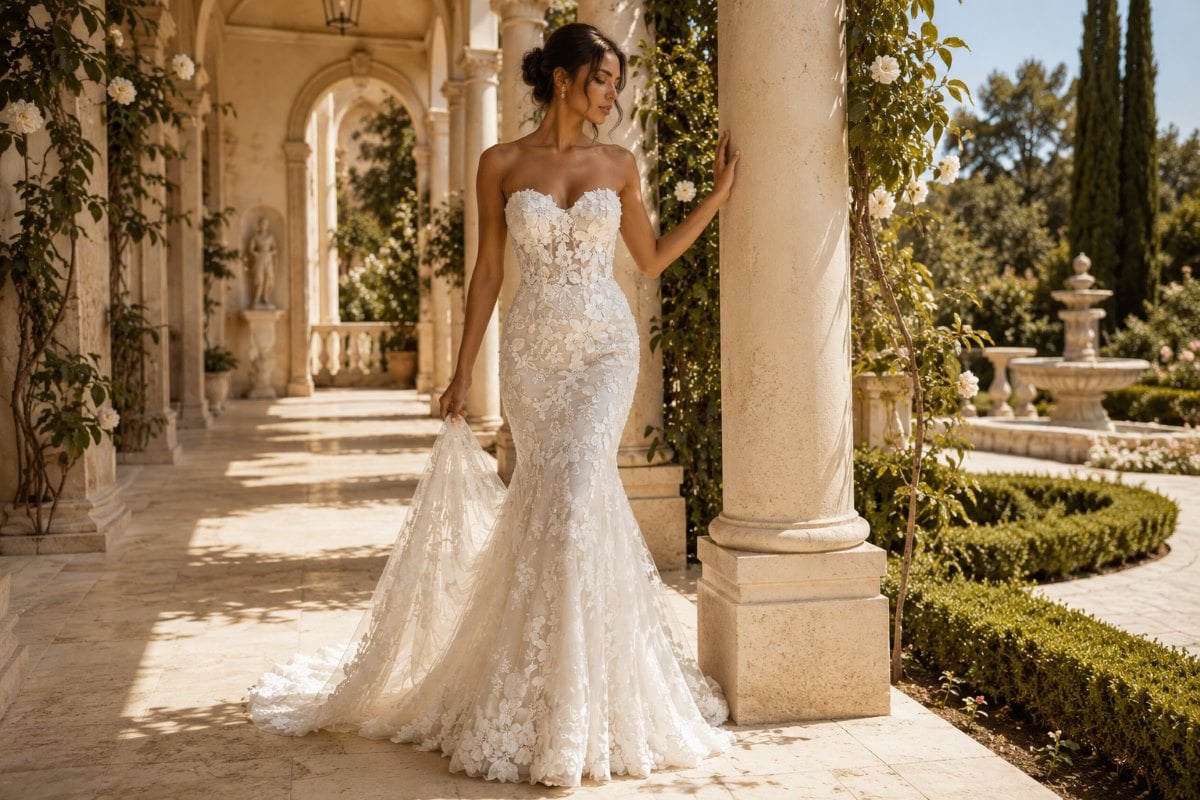
Beading adds weight, which is a practical consideration worth understanding before you choose. A heavily beaded gown is noticeably heavier than a plain one, and an all-over beaded gown can be quite substantial, which affects both comfort and how the gown needs to be constructed. This is not a reason to avoid beading, but it is a reason to consider how much beadwork suits a long day of wearing, especially if your wedding involves a great deal of standing and dancing.
Good construction handles the weight of beading so the gown stays comfortable and holds its shape. A well-built beaded gown distributes the weight, supports it with a structured bodice and lining, and secures each bead so it stays in place through hours of wear. Beads should be sewn individually rather than glued or machine-applied, which keeps them secure and lets the beadwork move naturally with the fabric. When trying a beaded gown on, notice both the weight and how securely the beading is attached, since quality construction makes a heavy gown feel manageable.
It is also worth thinking about how the level of beading suits the formality of your wedding. A heavily encrusted gown reads as grand and formal, which suits an evening ballroom or a black-tie celebration, while a lightly beaded gown reads as softer and more versatile, suiting a wider range of settings. A dusting of beading at the bodice can add just enough sparkle for a daytime or garden wedding without reading as overdressed, while an all-over beaded gown makes its strongest statement under evening lights. Matching the amount of sparkle to the setting keeps the gown reading as appropriate as well as beautiful.
Color and how beading reads
The color of the beading and the fabric beneath it affect how a beaded gown reads, giving more options than a single shade suggests. Clear crystals over white or ivory read as bright and classic, while beads in a slightly warmer or tonal shade create a softer, more dimensional effect. Pearl beading reads as warm and romantic regardless of the base, while crystal beading can read cooler and more glamorous.
Some beaded gowns use beading in a subtly different tone from the fabric, which adds depth and keeps the sparkle from reading as flat. When choosing, it helps to see the beading in different lighting, since beadwork that looks subtle in daylight can read as dramatic under evening venue lighting. The way a beaded gown catches light at your particular venue is worth considering, since the lighting at an evening reception brings out beadwork in a way daylight does not.
Caring for a beaded gown
Beading requires care, both during the wedding and in alterations, which is worth understanding before you choose a heavily beaded gown. Beads can snag, so handling the gown carefully and being mindful of jewelry and rough surfaces protects the beadwork. Storing a beaded gown properly, supported so the weight does not strain the fabric, preserves it for the future.
Alterations on a beaded gown are particularly involved, because a seamstress cannot simply sew through beadwork. To take in or let out a beaded gown, the tailor must carefully remove the beads by hand around the seams to prevent needles from breaking, make the adjustment, and then re-apply the beads by hand so the pattern flows naturally over the new seams. The weight of heavy beading also means the gown may need a reinforced structure to support it. This delicate, time-consuming work is why beaded gowns benefit from an experienced bridal seamstress, as our guide on wedding dress alterations explains.
Styling a beaded gown
A beaded gown is already sparkling and detailed, so the styling around it should stay restrained to avoid clutter. A heavily beaded bodice pairs best with simple jewelry, such as classic diamond or pearl studs, rather than a competing statement necklace, which would tangle with the beadwork and overwhelm the upper body. Letting the gown’s sparkle lead and keeping the accessories understated reads as more elegant than layering shine on shine. Our guide on accessorize your wedding dress covers how to build a look around a heavily embellished gown.
The veil and hair should also stay simple beside a beaded gown, letting the beadwork be the sparkle of the look. A clean veil and a refined hairstyle keep the focus on the gown, while a heavily embellished headpiece would compete. The principle throughout is balance, letting the beading be the focal point and choosing every other element to support it. A beaded gown rarely needs much else, since the sparkle carries the glamour on its own.
A note on quality
The quality of beadwork separates a gown that sparkles beautifully from one that looks cheap or sheds beads through the night. Jovani has designed formalwear since 1983, working from a studio in the New York garment district under design director Julie DuRocher, and the brand applies beading by hand using crystals, micro-beading, and sequin detailing that take hours of skilled work per gown, secured individually so beads stay in place through hours of wear. With steel boning and fully lined interiors that keep the beadwork smooth against the body, the construction supports the weight of embellishment. For a bride choosing beading, that attention to how beadwork is applied and supported is what keeps the sparkle looking refined from the ceremony through the last dance.
Frequently asked questions beaded wedding dress
What types of beading are used on wedding dresses?
Crystals create the brightest, most reflective sparkle and read as glamorous. Pearls offer a softer, classic luster that reads as romantic and traditional. Sequins lie flatter for a continuous shimmer, and micro-beading uses tiny beads for fine texture. Many gowns combine these for depth, using crystals for highlights, pearls for softness, and micro-beading for texture. The type of bead determines the character of the sparkle, so choose based on whether you want bright glamour or soft romance. Mixed beadwork, where several types appear in one gown, tends to read as the most luxurious, since the varied surfaces catch light in different ways.
Is a beaded wedding dress heavy?
A heavily beaded gown is noticeably heavier than a plain one, and an all-over beaded gown can be quite substantial. This affects comfort over a long day, especially with a great deal of standing and dancing. Good construction handles the weight by distributing it, supporting it with a structured bodice and lining, and securing each bead. When trying a beaded gown on, notice both the weight and how securely the beading is attached, since quality construction makes a heavy gown feel manageable. If weight is a real concern, a gown with beading concentrated at the bodice rather than all over gives the sparkle with far less heft.
How should beads be attached to a quality gown?
Beads should be sewn individually by hand rather than glued or machine-applied, which keeps them secure and lets the beadwork move naturally with the fabric. Hand-applied beading stays in place through hours of wear and reads as more refined, while glued or carelessly applied beads can shed or look flat. When evaluating a beaded gown, check that the beadwork feels securely attached and is sewn rather than glued, which is a clear sign of quality construction.
Can a beaded wedding dress be altered?
Yes, but it is involved work. A seamstress cannot sew through beadwork, so to take in or let out a beaded gown, the tailor must remove the beads by hand around the seams, make the adjustment, and re-apply the beads so the pattern flows naturally over the new seams. The weight of heavy beading may also require a reinforced structure. This delicate, time-consuming work is why beaded gowns benefit from an experienced bridal seamstress, so budget time and choose a skilled professional.
How do I style a beaded wedding dress?
Keep the styling restrained, since the gown is already sparkling and detailed. A heavily beaded bodice pairs best with simple jewelry like diamond or pearl studs rather than a competing statement necklace, which would tangle with the beadwork. Keep the veil and hair simple too, letting the beadwork be the sparkle of the look. The principle is balance, letting the beading be the focal point and choosing every other element to support rather than compete with it. A clean, undecorated veil works especially well, since it frames a beaded gown without adding more shine to an already luminous look.
Will beading look the same in daylight and evening?
Not exactly, which is worth considering. Beadwork that looks subtle in daylight often reads as more dramatic under evening venue lighting, since the lighting at a reception brings out sparkle in a way natural light does not. When choosing, see the beading in different lighting if you can, and consider the lighting at your particular venue. A gown beaded for an evening reception may sparkle more than expected, while one chosen in bright daylight may read more subtly outdoors.
Finding your dress
A beaded wedding dress brings dimension, sparkle, and a sense of occasion that flat fabric cannot match, with light that shifts and catches as you move through the day. With the right type of beading, a pattern and placement that suit your vision, construction that supports the weight, and restrained styling that lets the sparkle lead, a beaded gown becomes a glamorous, timeless choice. When you are ready to find the right one, explore the collection of wedding outfits and visit an authorized Jovani retailer to try beaded styles in person.