
How Strapless Wedding Dresses Stay Up: Support and Fit Tests

How do strapless wedding dresses stay up without shoulder straps? A fitted bodice transfers support around the torso and waist, while internal structure helps the neckline keep its position. Boning, shaped cups, closures, and sometimes a waist stay work together. A bride should be able to breathe, sit, and move without repeatedly pulling the gown upward.
How Do Strapless Wedding Dresses Stay Up?
Strapless wedding dresses stay up through a stable fit around the upper torso and waist, reinforced by the particular gown’s internal construction. The neckline itself should not carry the entire skirt’s weight. Compare Strapless Wedding Dresses by their structure, then test the actual garment rather than relying on its appearance in photographs.
A firm bodice feels supported, not painfully compressed. It should stay aligned while you take ordinary steps and raise your arms. Jovani’s Wedding Dresses 101 introduces bridal silhouettes and necklines; the key question here is what keeps one specific open neckline secure during movement.
Why the Waist Matters More Than a Tight Neckline
A secure waist area helps resist the downward pull of a wedding skirt. If the bodice slips at the waist, tightening the top edge alone may cause discomfort without solving the movement. The actual balance depends on the shape, weight, and structure of the gown.
A waist stay is useful when the design includes one
A waist stay is an internal band that may fasten separately around the waist. It can help stabilize a gown and distribute some skirt tension away from the neckline. Not every strapless dress includes one. Ask to see the inside before assuming it is present.
The skirt changes the support requirement
A fuller skirt and a narrow fitted skirt place different demands on the bodice. Compare Wedding Dresses with their full skirts, closures, and waist placements in mind. The heaviest-looking dress is not automatically the best supported, and a lighter style still needs a stable neckline.
What Boning, Cups, and Closures Actually Do
Boning helps the bodice keep its vertical shape, cups shape the bust area, and closures maintain the intended fit. Each has a different job. The existing Wedding Dress Construction 101 article explains construction terms in detail. For strapless stability, check how those pieces work together on your body.
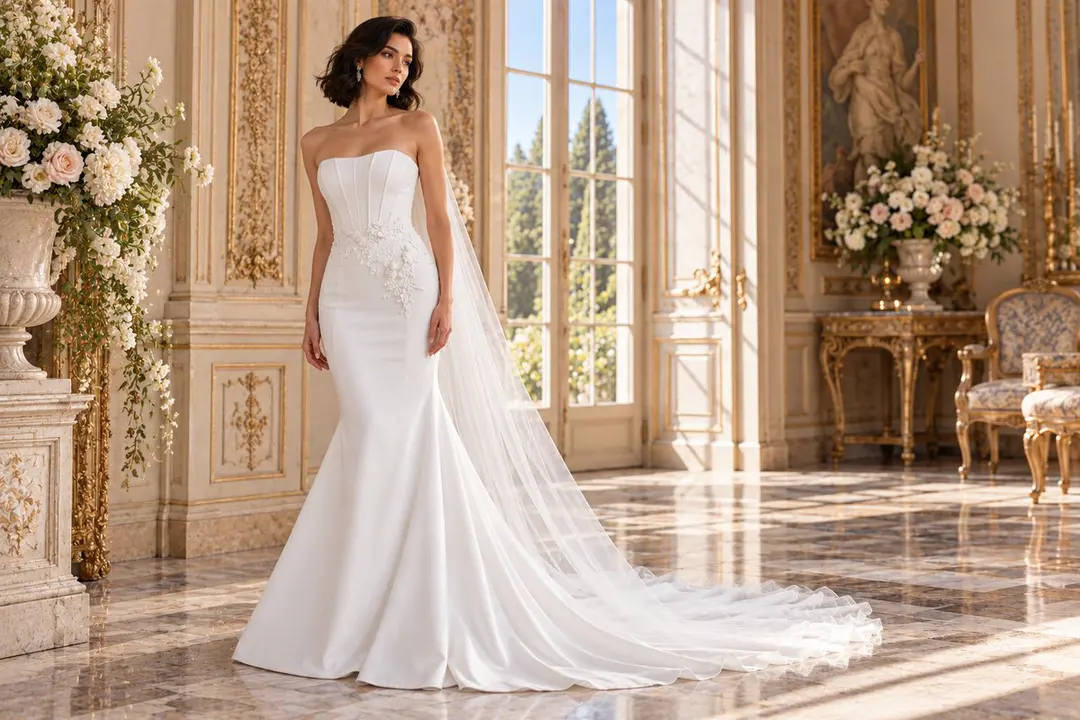
Boning supports shape but cannot fix poor sizing
Boning can help prevent a bodice from folding or rolling down. Its material and placement vary between gowns. A rigid panel that presses sharply into the ribs is not proof of stronger support. Ask the fitter to check the torso length and boning position.
Built-in cups and the back closure must fit together
Cups can provide shape and coverage, but they are not a substitute for correctly fitted side seams and waist structure. A zipper should close smoothly without pulling the neckline down. A lace-up back may offer adjustment, but it should not compensate for a fundamentally incorrect size.
Which Fitting Tests Reveal a Slipping Strapless Gown?
Test a strapless wedding dress with the closure fully secured and the undergarments you plan to wear. The goal is to identify shifting before alterations, not to force the dress to remain upright. Ask someone to observe the neckline from the side and back.
- Raise both arms, lower them, and check whether the neckline returns to the same height.
- Sit in a chair, stand again, and notice whether the top edge rolls outward.
- Walk several steps, turn, and take a small dance step without holding the bodice.
- Breathe deeply and lean forward slightly to check gaping or pressure points.
- If the skirt has a train, walk with its intended weight rather than holding all the fabric off the floor.
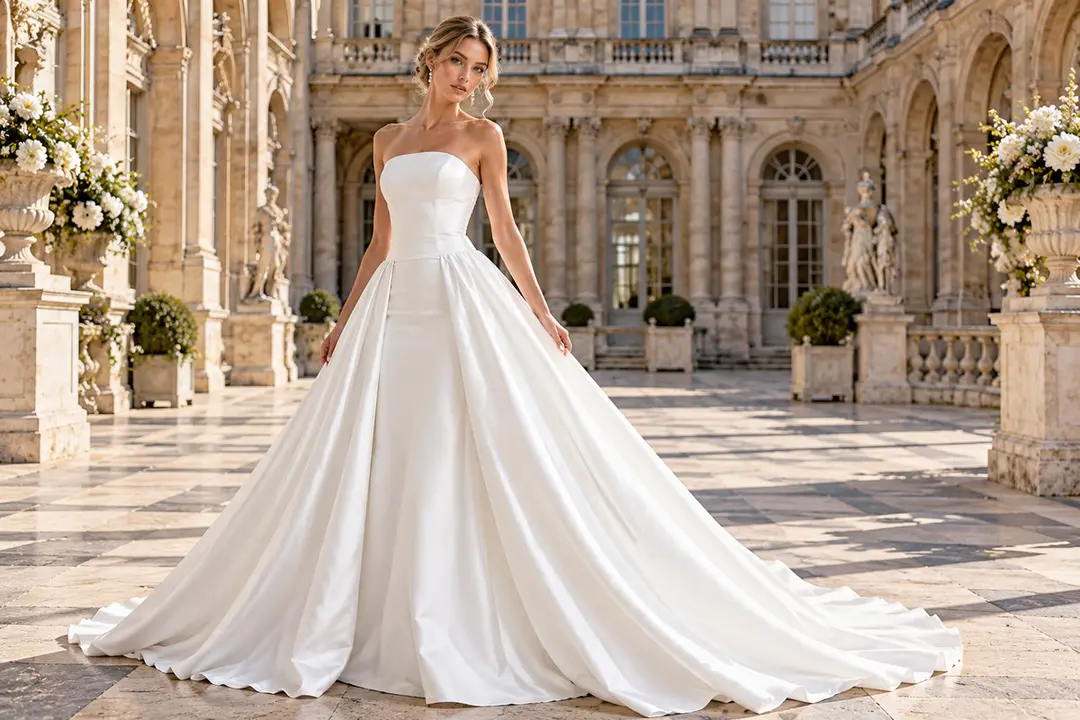
A structured A-Line Wedding Dresses design may have a fitted upper section and a fuller skirt. Jovani style JB40784 is listed with an off-white satin fabric, sweetheart neckline, and corset back. Those product details help you choose a fitting comparison, but they do not verify the unseen boning or cups in a particular sample.
How Can You Tell Whether the Problem Is Fit or Construction?
Repeated slipping points to a problem that needs inspection, but the cause can differ. A loose waist may let the whole dress descend. Incorrect cup depth can create a gap even if the waist feels secure. Boning that digs may indicate a torso-length or placement mismatch.
Read the pattern of movement
If the entire neckline drops, ask about waist and ribcage fit first. If only one side gapes, examine the cup shape and side seam. If the back rises while the front falls, ask the specialist to inspect the bodice balance and closure position.
Know when an alteration requires rebuilding
Some gowns need only a modest adjustment through the side seams. Moving internal boning, changing cup positions, or adding a waist stay may require more extensive work. The alterations specialist should inspect the actual sample before promising any change. A second appointment is more useful than relying on fashion tape.
Close-fitting Fitted Wedding Dresses can make changes in torso balance especially obvious. Jovani style JB43816, for example, has a straight strapless neckline, pleated bodice, and low back in its listed details. The low-back design makes a full front, side, and back fitting check particularly valuable.
Compare Jovani Strapless Styles Without Assuming Hidden Features
Jovani publishes design details that help narrow your fitting options. Style JB40784 pairs a sweetheart neckline with satin and a corset back. Style JB43816 uses a straight neckline, crepe with lace accents, and a low back. Compare the actual pieces to confirm their internal support.
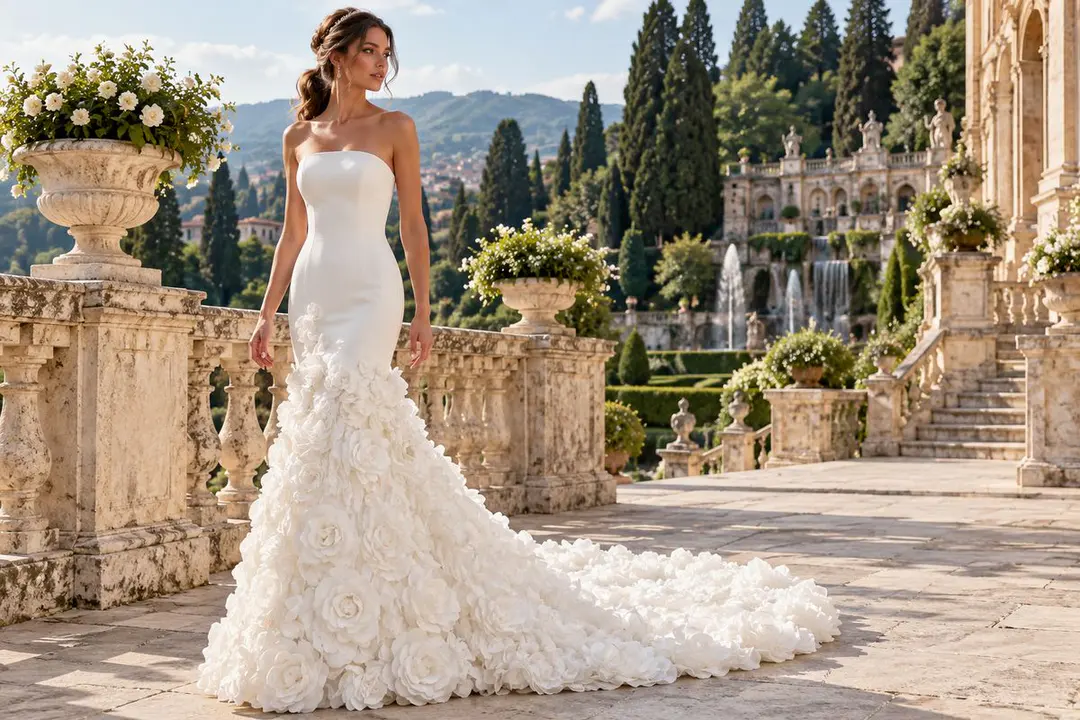
For a different silhouette, Jovani style JB45120 lists a straight strapless neckline, crepe and organza, and a mermaid skirt with a long train. Browsing Mermaid Wedding Dresses helps you compare that fitted skirt profile with fuller options. These published specifications describe the exterior design; they do not confirm an individual gown’s cup system or waist stay.
Designer Q&A: Questions to Ask at Your Bridal Appointment
Use these questions with the designer, retailer, or alterations specialist who can inspect your chosen gown. They are practical prompts, not statements from an unpublished Jovani designer interview. Ask for answers about the actual dress rather than accepting a general claim that every strapless gown supports itself the same way.
Can you show me what is inside this bodice?
Ask where the boning ends, whether cups are attached, and whether an independent waist stay is present. Check the lining and seams gently with the consultant. A corset-inspired look does not guarantee one particular internal construction method.
Which adjustments are realistic before my wedding?
Ask whether the waist, bust cups, neckline edge, or closure can be adjusted without changing the intended shape. Bring your planned undergarments and footwear to the fitting. Jovani’s wedding dress alterations guide explains the wider process; your fitter must confirm what is possible for this garment.
If you want to compare support and comfort in person, use Jovani’s Find a Store service to locate an authorized retailer and arrange a bridal fitting.
Frequently Asked Questions
Can a strapless wedding dress stay up without built-in cups?
Yes. A strapless gown can remain secure without built-in cups if its fit and other structural features provide suitable support. The exact answer depends on the garment and the wearer’s needs. Test the gown with your planned undergarments.
Does every strapless bridal gown have a waist stay?
No. A waist stay is included in some designs, not all strapless wedding dresses. Ask the retailer to show you the inside. If you need additional anchoring, consult a bridal alterations specialist before assuming one can be added.
Should a strapless wedding gown feel very tight?
No. It should feel secure around the torso without painful pinching or restricted breathing. If the top edge must be tightened excessively, the bodice may need a different fit or design. Check the gown while sitting and moving.
Will fashion tape stop a strapless wedding dress from sliding?
No, not reliably if the main problem is an unstable bodice. Tape can help with a small neckline-edge issue, but it cannot replace correct waist fit or structural support. Identify the cause with a qualified fitter first.