
Most prom dresses are a single color, which is exactly why a print stands out. When a room is full of solid gowns, a floral, an abstract pattern, or a watercolor print reads as individual, like the dress was chosen by someone who knows her own taste. For a teen who wants to look like herself rather than like everyone else in the photos, a print prom dress is one of the easiest ways to do it. This guide walks through how to choose a pattern that suits you, from the type of print to its scale, color, and fabric, so the dress feels personal and photographs beautifully.
Choosing a print is a little different from choosing a solid dress, because the pattern carries a lot of the personality. A small, soft floral reads as romantic and gentle, while a bold, large-scale pattern reads as confident and dramatic. The trick is matching the print to the mood you want and to the way it sits on the body, and the considerations below make that simple. The goal throughout is a dress that looks current, feels comfortable to move and dance in, and stays right for a high-school setting.
Why a print works for prom
Prom is a night for personality, and a print is personality you can wear. Where a solid gown relies entirely on its silhouette and color, a print adds a second layer of character through the pattern itself. Girls who choose prints usually want a dress that feels distinctly theirs, and a pattern delivers that without needing loud cuts or heavy embellishment to make a statement. The print does the standing out.
A pattern also photographs in a way a solid color cannot. Under venue lighting and in the dozens of photos that get taken across the night, a print adds dimension and movement that keeps the dress visually interesting from every angle. A floral catches the eye in a group shot, an abstract pattern reads as artistic in a close-up, and a watercolor print shifts softly as you move. The full range of print prom gowns shows how varied the patterns can be, from delicate to bold. A print also has a practical advantage that solid dresses do not share, which is that small marks or creases tend to disappear into the pattern rather than standing out, so a printed gown often looks fresh from the first photo to the last even after a full night of dancing.
The main types of prints
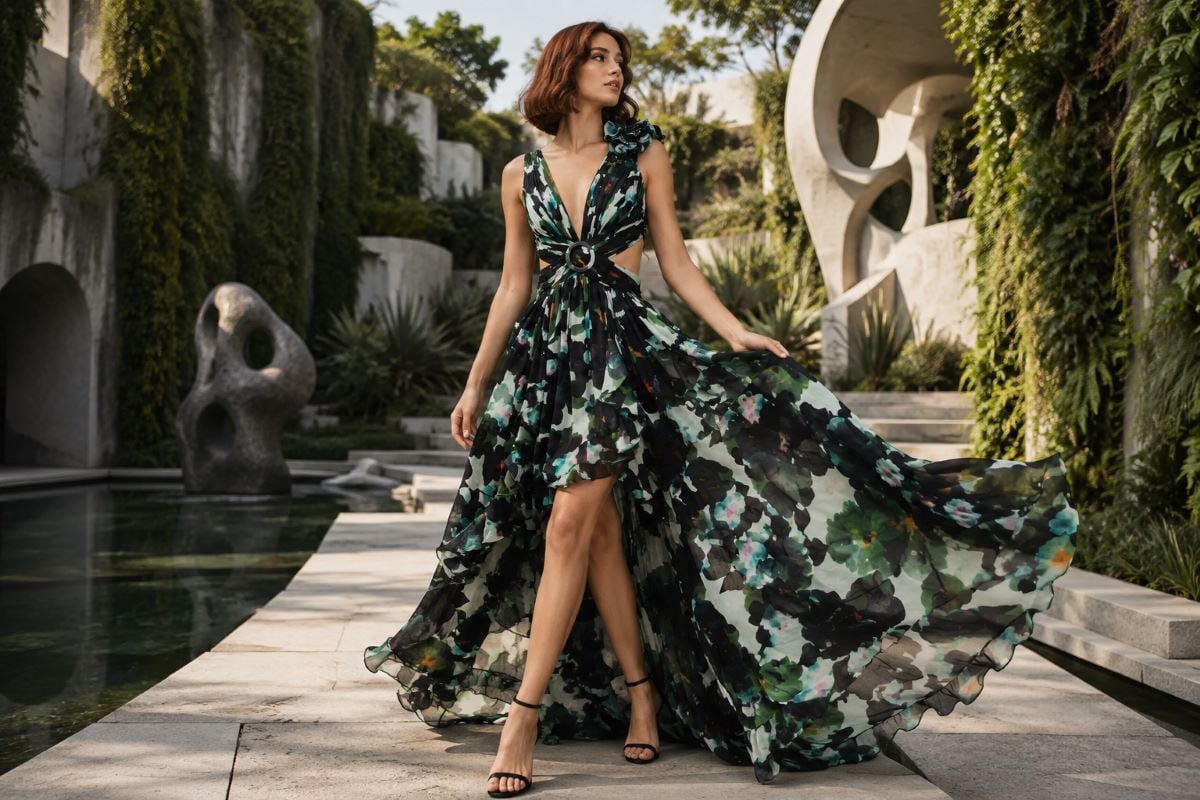
Prints fall into a few broad families, and knowing them helps you describe what you want. Floral prints are the most popular, and they range from small, delicate blooms that read as sweet and romantic to large statement flowers that make a bold impression. A small floral suits a girl who wants subtle pattern and a soft look, while a large floral suits one who wants the print to be the centerpiece of the dress.
Abstract prints include watercolor effects, brushstroke patterns, and artistic shapes, and they read as modern and creative, like wearable art. Geometric prints feature structured patterns like stripes and chevrons, which feel graphic and contemporary. Tropical and botanical prints add bold color with leaf and nature motifs, which suit a summer mood. Each type creates a different feeling depending on its scale and color intensity, so it is worth thinking about which one matches the impression you want to make.
Scale matters as much as the pattern
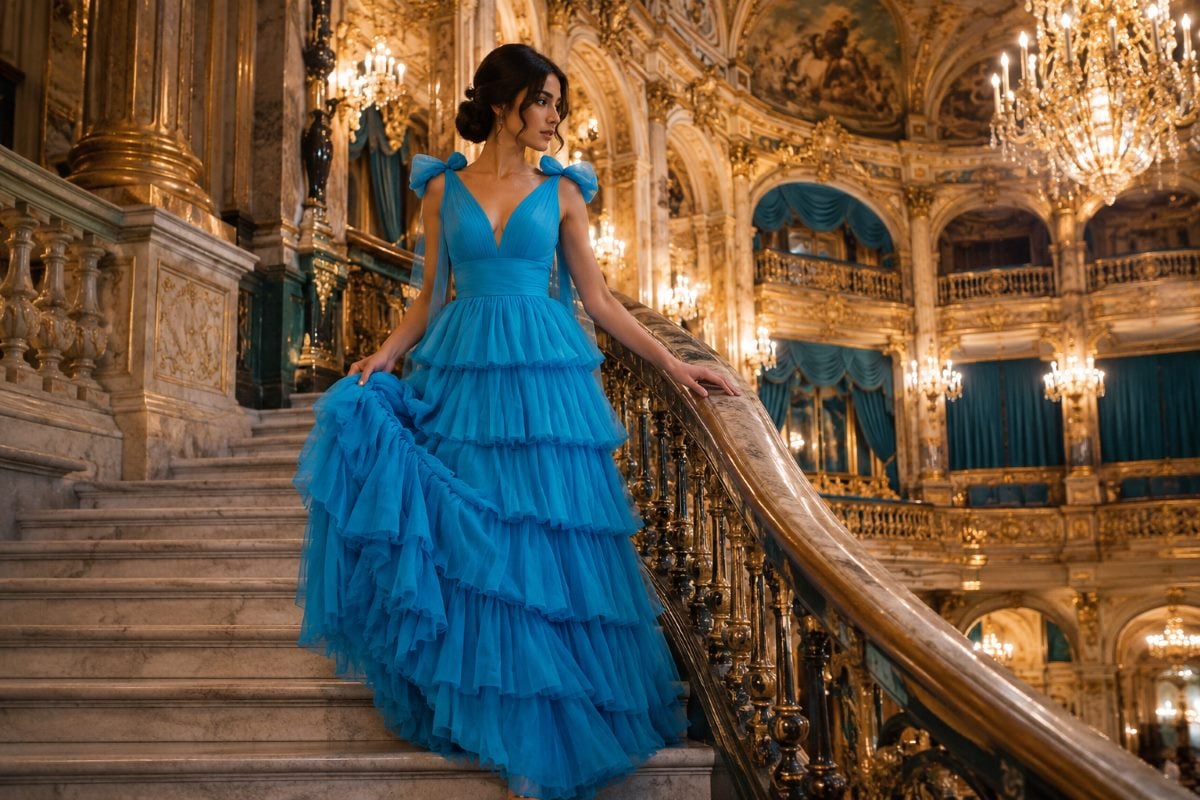
The scale of a print, meaning how large or small the pattern is, changes the whole effect of the dress and how it sits on the body. A small-scale print reads as delicate and is easy to wear, blending into a soft overall look. A large-scale print reads as bold and confident and turns the pattern into the focal point. Neither is better, but they suit different people and different moods.
Scale also interacts with proportion. A very large print can read as overwhelming on a petite frame, while a tiny print can lose its impact at a distance on a fuller skirt. The most flattering choice usually balances the scale of the print to the silhouette of the dress and the frame of the wearer. A medium-scale floral on an A-line, for example, reads as balanced and pretty without tipping into either extreme. Trying a print on and seeing how it photographs from a few steps back is the best way to judge whether the scale works for you.
How fabric changes a print
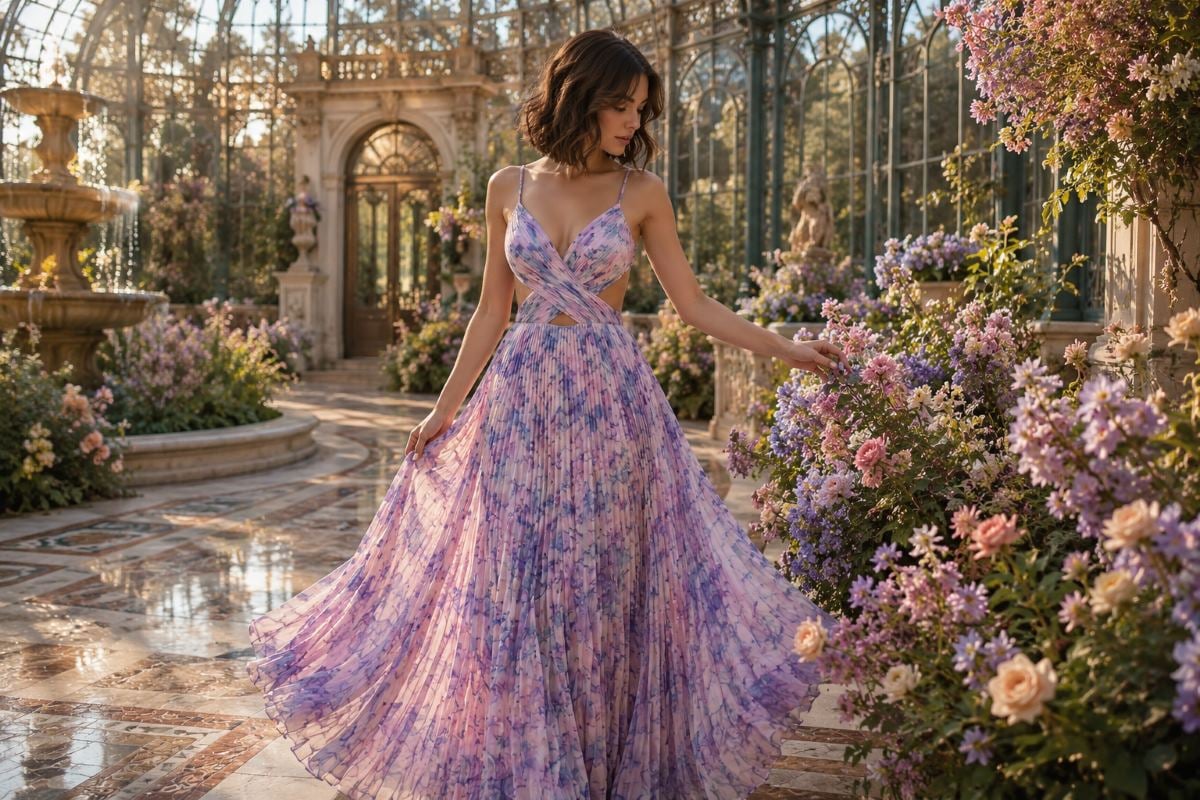
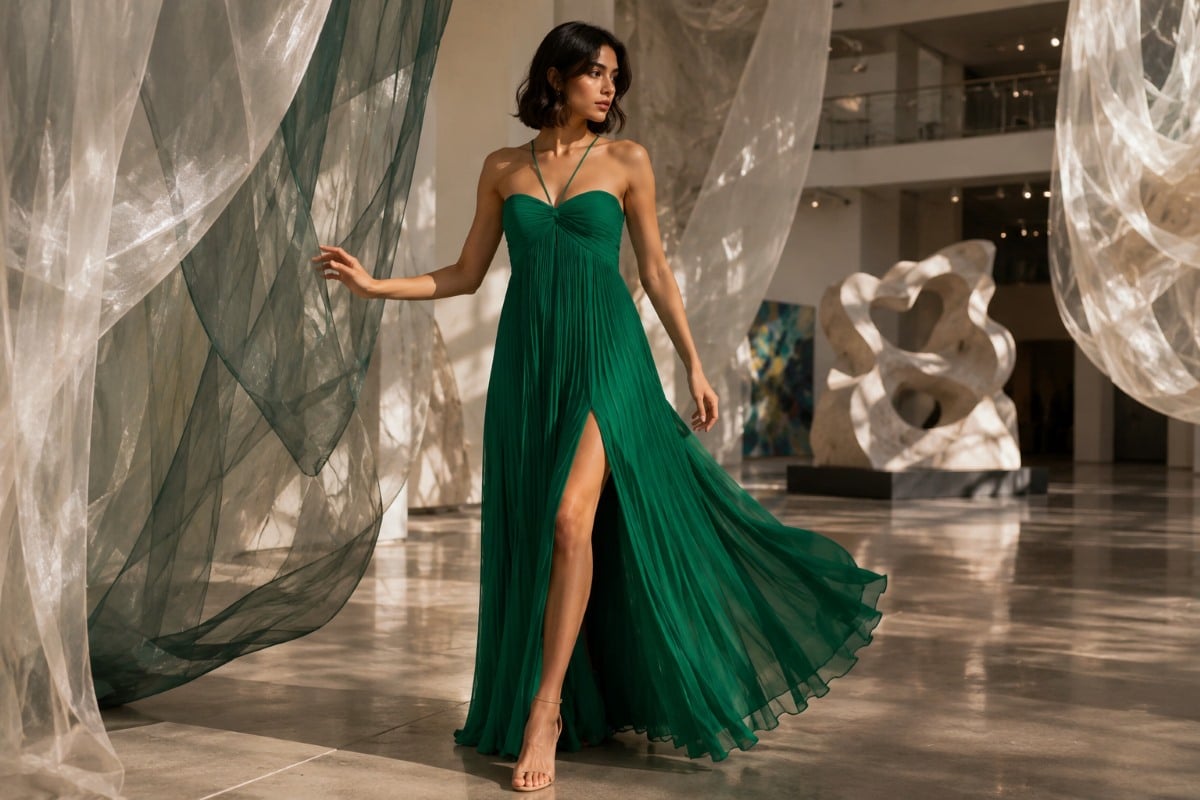
The same pattern looks different depending on the fabric it is printed on, which is one of the most useful things to understand when shopping for a print prom dress. On chiffon, a print reads as soft, and the colors shift gently as the fabric moves, which suits a romantic, flowing look. On satin, the smooth surface gives the pattern sharp, clean edges and rich color saturation, which makes the print look crisp and polished. A printed sequin fabric adds sparkle to the pattern, layering shine over the design.
This means the fabric is part of choosing the print, not a separate decision. If you want a dreamy, gentle effect, a floral on chiffon delivers it. If you want the pattern to look sharp and saturated, a print on satin is the better choice. For a fuller understanding of how each fabric behaves and which suits the look you want, our prom dress fabric guide compares how satin, chiffon, and other materials carry color and movement differently.
Choosing colors within a print
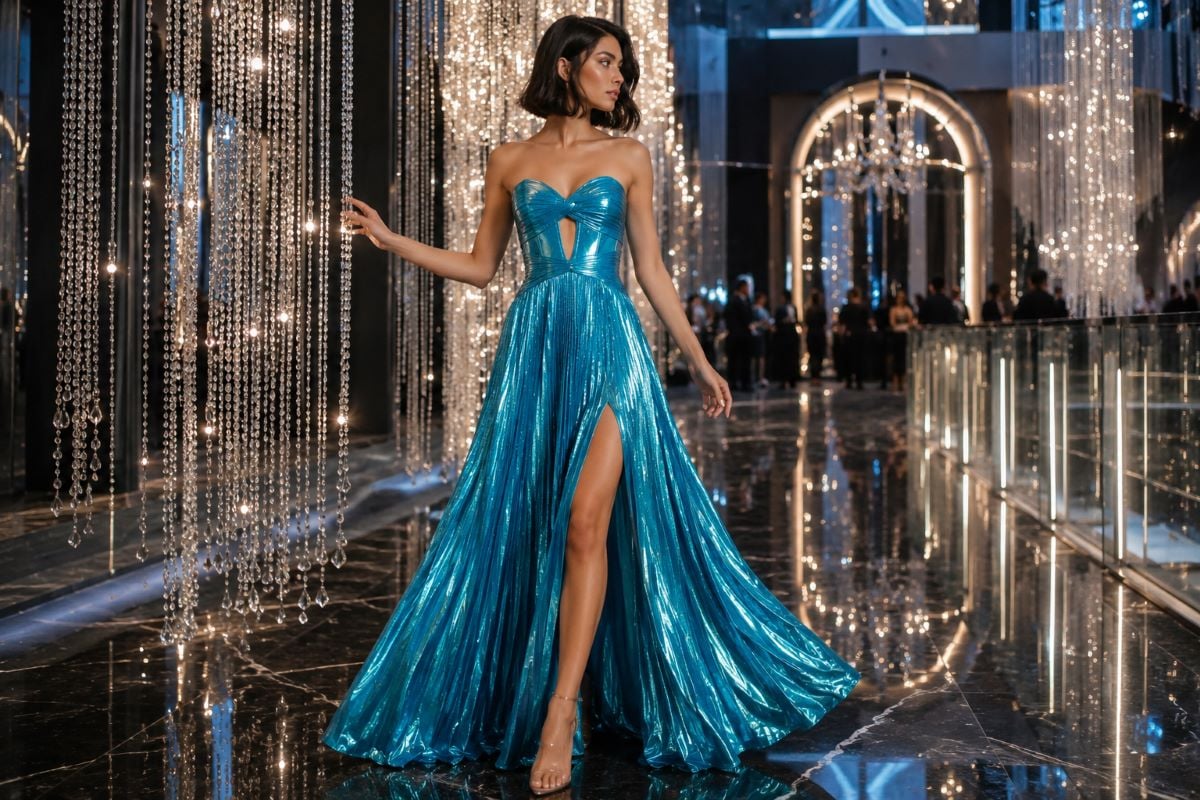
A print is a collection of colors working together, so the color choice for a printed dress is really about which palette suits you. Soft pastel florals in blush, sage, and dusty rose read as romantic and gentle, and they flatter a soft, springlike look. Dramatic colors in deeper or brighter shades make maximum impact in photos and suit a girl who wants the dress to be bold. The full color spectrum is available in prints, which is part of their appeal.
When judging color, think about how the palette reads under the lighting at your venue and how it sits against your skin tone. Prints with a clear dominant color tend to read more cleanly than ones with too many competing shades, and a palette that includes a tone you love wearing will always feel more like you. The pattern gives you freedom that a solid color does not, so use it to pick something that feels expressive rather than safe.
Silhouettes that suit a print
A print works across many silhouettes, but a few carry a pattern especially well. An A-line is a reliable choice because the gentle flare gives the print room to show across the skirt while the defined waist keeps the shape clean and flattering. The A-line also reads as age-appropriate and easy to move in, which matters for a night of dancing. The styles among our A-line prom dresses show how the silhouette frames a pattern without overwhelming it.
A flowing silhouette suits a soft floral or watercolor print especially well, because the movement of the fabric brings the pattern to life as you walk and dance. The lighter, airier feel of a flowy prom dress lets a print drift and shift, which is part of what makes a printed chiffon gown feel romantic and alive in motion.
For a sharper, more structured look, a print on a smooth fabric reads cleaner, and you can see how that crispness reads on our satin prom gowns, where the surface gives a pattern defined edges. A structured silhouette in a smooth fabric holds the print steady and sharp, which suits a girl who wants the pattern to read as bold and precise rather than soft and drifting.
Keeping it comfortable and age-appropriate
Prom is a high-school dance, so the dress should be one you feel comfortable and confident in for a long night, and one that suits a school setting. A print makes this easy in a quiet way, because the pattern itself provides plenty of visual interest, which means the dress does not need to rely on a revealing cut to make an impression. A printed A-line or a flowing printed gown can look beautiful and current while keeping coverage and comfort at the center, which is exactly what makes a dress work for a teen.
If you or your parents want extra coverage, a print pairs naturally with a higher neckline, a fuller skirt, and a fit that skims rather than clings. A pattern reads as expressive on a more covered silhouette just as well as on a bolder one, so modesty and personality are not a trade-off. The styles in our modest prom dress guide show how a covered cut can still feel modern and stylish, and a print fits right into that approach. The most important thing is choosing a dress you feel genuinely at ease wearing, since confidence is what makes any dress look its best.
Length and the school setting
Length is partly a style choice and partly a practical one. A long printed gown reads as formal and dramatic, giving the pattern a full canvas, while a shorter printed dress reads as fun and is easy to dance in. Both work for prom, and the right one depends on the look you want and your school’s expectations. If your school has guidance on dress length for the event, check it before you fall in love with a particular dress, since some schools set rules on hemlines.
Understanding how different lengths read helps you picture the dress in the room. A floor-length print makes a statement and photographs as elegant, while a knee-length or midi printed dress feels lighter and more playful. Our dress length guide covers how each hemline reads and which suits different settings, which is a useful reference when you are deciding how formal you want your printed look to be.
A note on quality
A print is only as good as the fabric it is printed on and the construction underneath it. A cheaply made printed dress can look muddy under lighting and lose its shape by the end of the night. Jovani has designed prom and formalwear since 1983, working from a studio in the New York garment district under design director Julie DuRocher, and the brand focuses on fabrics that keep color true under both natural and indoor lighting, with steel boning and full lining built into the bodice so the dress stays supportive and comfortable through hours of dancing. For a printed dress, that attention to how color reads and how the dress holds up is what keeps the pattern looking sharp from the first photo to the last.
Frequently asked questions print prom dress
Are printed dresses a good choice for prom?
Yes, a print prom dress is a great way to stand out in a room full of solid-color gowns. The pattern adds personality and reads as individual, and it photographs with dimension and movement that a solid color cannot match. Prints suit girls who want a dress that feels distinctly theirs, and they work across many silhouettes and lengths, so there is a printed option for almost any style preference. A print also feels less likely to clash with the photos, the decorations, or what friends are wearing, since the pattern reads as its own statement rather than competing as a single block of color.
What kind of print should I choose?
It depends on the mood you want. A small, delicate floral reads as romantic and soft, a large statement floral reads as bold, an abstract or watercolor print reads as modern and artistic, and a geometric print feels graphic and contemporary. Think about the impression you want to make and choose the print family that matches it, then judge the scale and color against your frame and the lighting at your venue. There is no wrong answer here, only the print that feels most like you, so trust your instinct about which pattern you keep coming back to.
How does the scale of a print affect the dress?
Scale changes the whole effect. A small-scale print reads as delicate and blends into a soft overall look, while a large-scale print becomes the focal point and reads as bold. Scale also interacts with proportion, since a very large pattern can overwhelm a petite frame and a tiny one can lose impact at a distance. The most flattering choice balances the scale of the print to the silhouette and the wearer’s frame.
Does the fabric change how a print looks?
Yes, significantly. The same pattern reads as soft on chiffon, where colors shift gently with movement, and as sharp and saturated on satin, where the smooth surface gives the print clean edges. A printed sequin fabric adds sparkle over the pattern. Choosing the fabric is part of choosing the print, so match it to the effect you want, whether dreamy and flowing or crisp and polished.
Can a printed prom dress be modest?
Absolutely. A print provides plenty of visual interest on its own, so the dress does not need a revealing cut to make an impression. A pattern reads as expressive on a higher neckline, a fuller skirt, and a fit that skims rather than clings, just as well as on a bolder silhouette. Modesty and personality work together in a printed dress, which makes it an easy choice for a teen who wants coverage and style. A covered printed dress can still feel completely current and far from plain, since the pattern carries the personality that a revealing cut would otherwise be doing.
Is a print harder to accessorize than a solid dress?
It is actually easier in one sense, because the print already provides the visual interest, so the accessories can stay simple. Delicate jewelry and a single complementary color in your shoes or clutch let the pattern lead, while heavy or competing accessories can clutter the look. Pull one color from the print for your accessories and keep the rest understated, and the dress stays the focus. A neutral metallic shoe and a small clutch in one of the print’s colors is a reliable combination that finishes the look without fighting the pattern.
Finding your dress
A print prom dress is one of the most expressive choices you can make, adding personality through pattern in a way a solid color never can. With a print family that matches your mood, a scale that suits your frame, a fabric that carries the pattern the way you want, and a silhouette that keeps the look comfortable and age-appropriate, you can walk in looking like yourself and feeling confident all night. When you are ready to find the right one, explore the full range of prom gowns and visit an authorized Jovani retailer to try printed styles in person and see how they move and photograph for yourself.