
Prom dress fabric decides more than the color or the silhouette does, and prom fabric is the part most shoppers pick last. It sets how the dress moves when you walk, whether it clings or skims, how warm you get by the third hour, and how much you end up adjusting it during the night.
The same cut in satin and in chiffon produces two completely different dresses, which is why prom fabric material is worth deciding early. This guide covers what each prom dress material actually does, which ones suit which silhouettes, and the trade-offs nobody mentions in a product description.
Which prom dress fabric should you choose?
What is the best fabric for a prom dress? It depends on what the night asks of you rather than on which fabric is best in general. For a long evening with a lot of dancing, stretch crepe and jersey are the most comfortable, since they move with you and resist creasing. For photographs and shine, satin reflects light and deepens color better than anything else. For a warm or outdoor venue, chiffon and organza stay light and breathable. For volume, tulle gives fullness without weight. For cooler months, velvet adds depth and warmth. The one thing to check on any of them is the lining, because a thin unlined fabric will show every line underneath.
Every prom dress material compared
| Fabric | How it behaves | Best silhouettes | Trade-off |
|---|---|---|---|
| Satin | Smooth and glossy, reflects light, drapes closely | Mermaid, column, fitted bodices | Shows every line underneath and creases sharply |
| Chiffon | Sheer and very light, floats when you move | A line, empire, flowy skirts | Snags easily, needs a good lining |
| Tulle | Net-like, adds volume with almost no weight | Ball gowns, layered skirts | Can itch without lining, catches on jewelry |
| Crepe | Matte with a slight texture, holds a crisp seam | Column, sheath, tailored A line | Less dramatic than shiny fabrics |
| Jersey | Stretches, follows the body, very comfortable | Fitted and bodycon styles | Least structured, shows everything |
| Velvet | Dense pile, deep matte color, warm | Column, long sleeves, bodices | Hot indoors, and pile flattens under pressure |
| Organza | Crisp and sheer, holds shape better than chiffon | Structured skirts, overlays, sleeves | Can look stiff if there is too much of it |
| Taffeta | Crisp and slightly shiny, rustles when you move | Ball gowns, structured skirts | Audible, and creases show clearly |
| Lace | Openwork over a lining, texture without weight | Bodices, sleeves, overlays | Snags, and the lining decides how it reads |
| Sequin | Discs on a base fabric, heavy and reflective | Fitted styles, bodices | Heavy, no stretch, and can scratch |
Satin, and what people get wrong about it
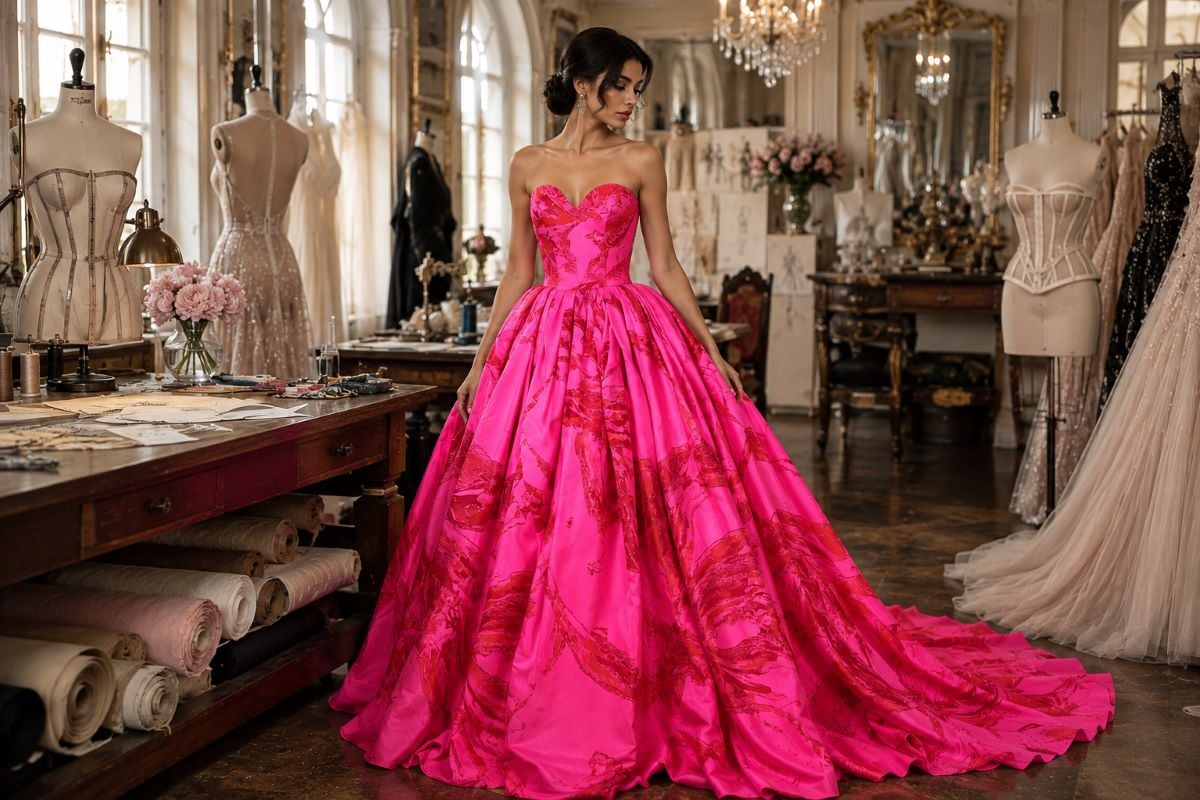
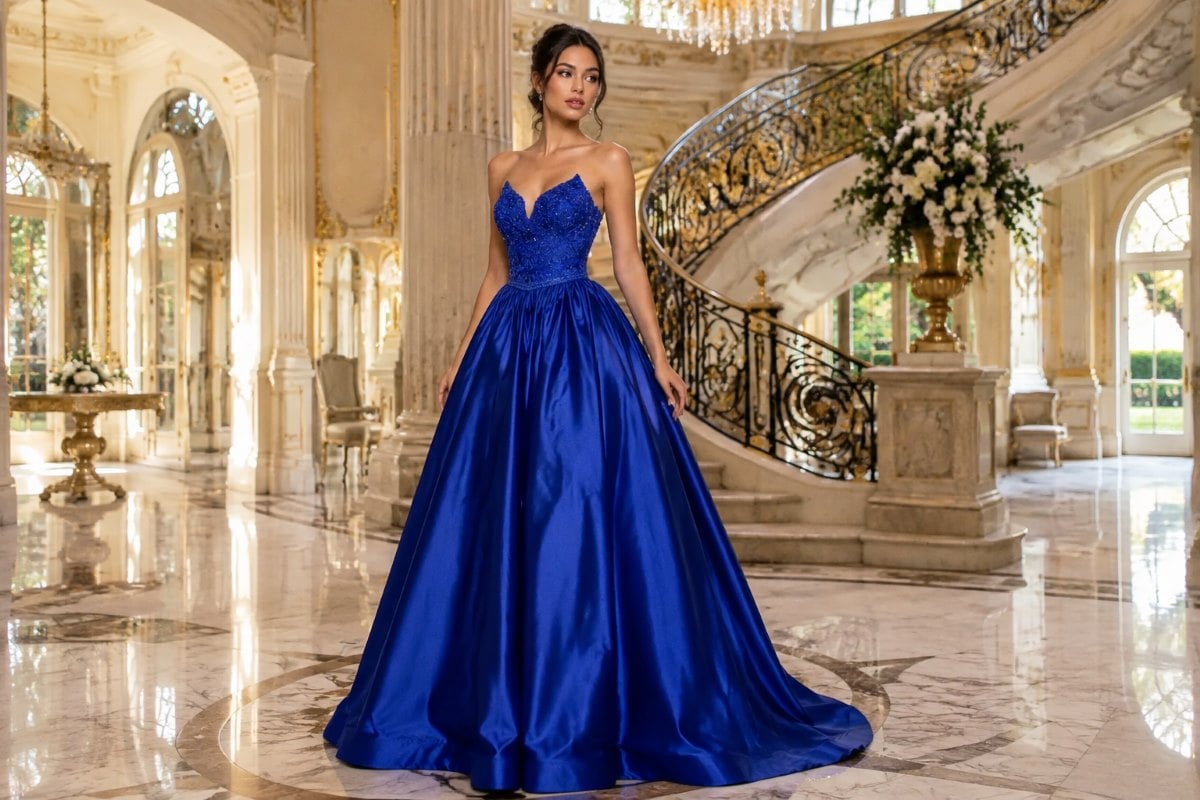
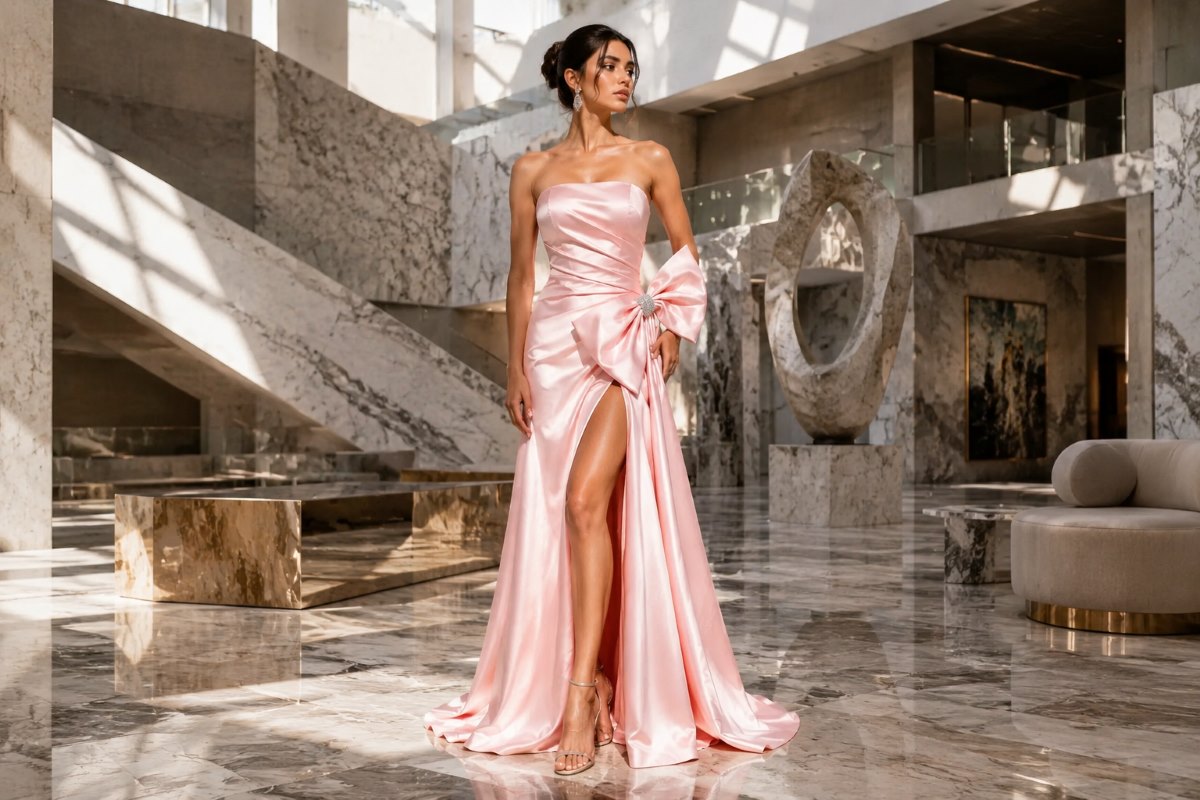
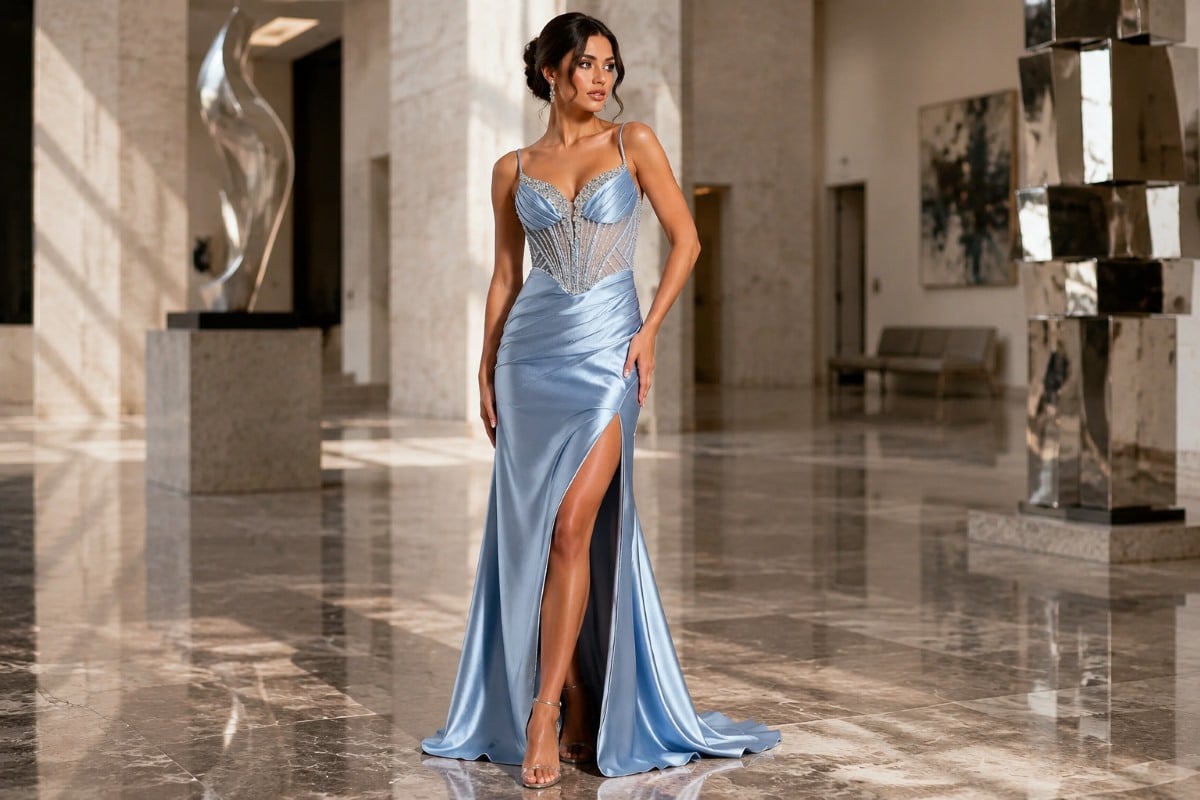
Satin is the fabric most people picture when they imagine a formal gown, and it earns that reputation because it reflects light along the fabric as you turn. That moving highlight is why a plain satin gown reads as expensive with no embellishment at all.
What matters far more than most descriptions admit is the weight. A heavy structured satin holds its own shape and skims the body. A thin, cheap satin clings, shows every seam and edge underneath, and is the single most common reason a gown looks less impressive in person than in a photograph.
Satin also creases sharply and holds those creases, so hang it at full length as early as possible and never fold it into a case if you can avoid it.
Chiffon, organza and the light fabrics
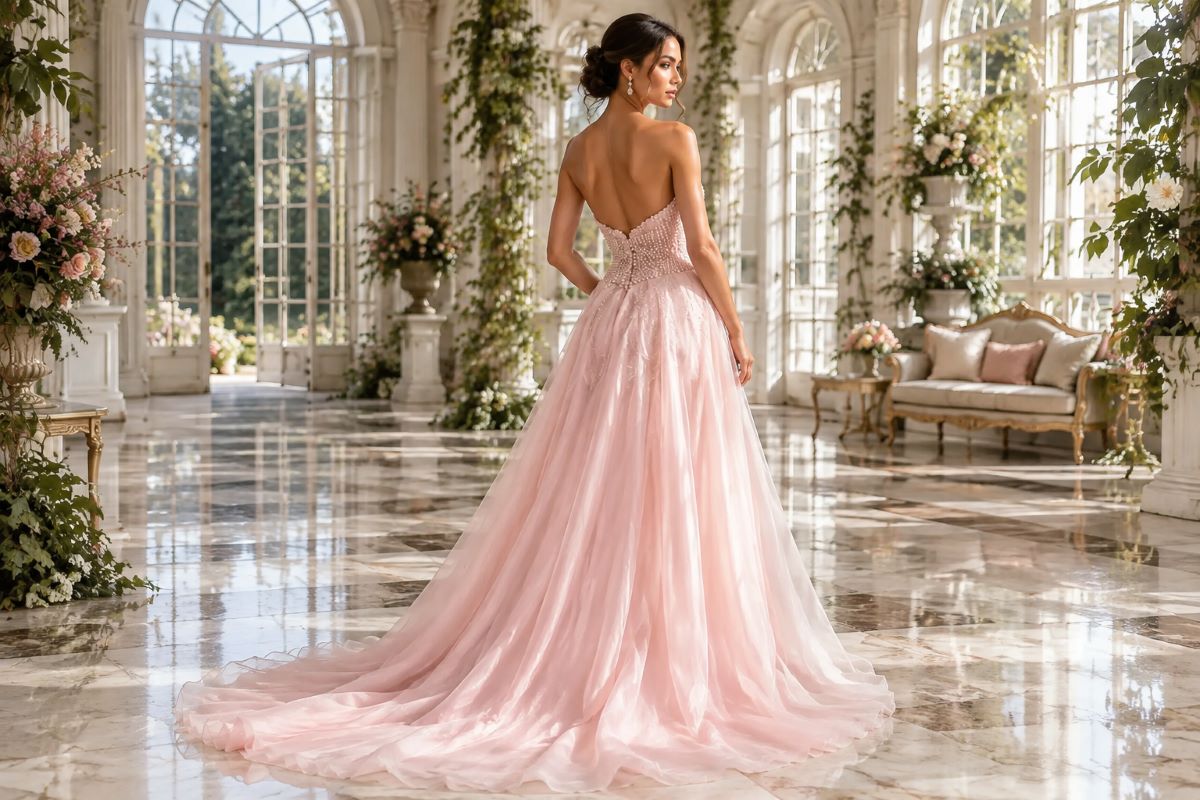
Chiffon is the fabric to choose when you want movement. It keeps travelling for a moment after you stop, which is what creates the floating effect in photographs and video. A chiffon gown is also the most comfortable option for a warm room or an outdoor venue.
Because chiffon is sheer, everything depends on the lining underneath. A well-lined chiffon dress skims beautifully. An unlined one is a different garment entirely, so check what is under it before you buy.
Organza looks similar but behaves differently. It is crisper, holds a shape rather than draping, and is used for structured skirts and overlays where chiffon would collapse. If you want volume without weight, organza does that better than any other sheer fabric.
Tulle and taffeta for volume
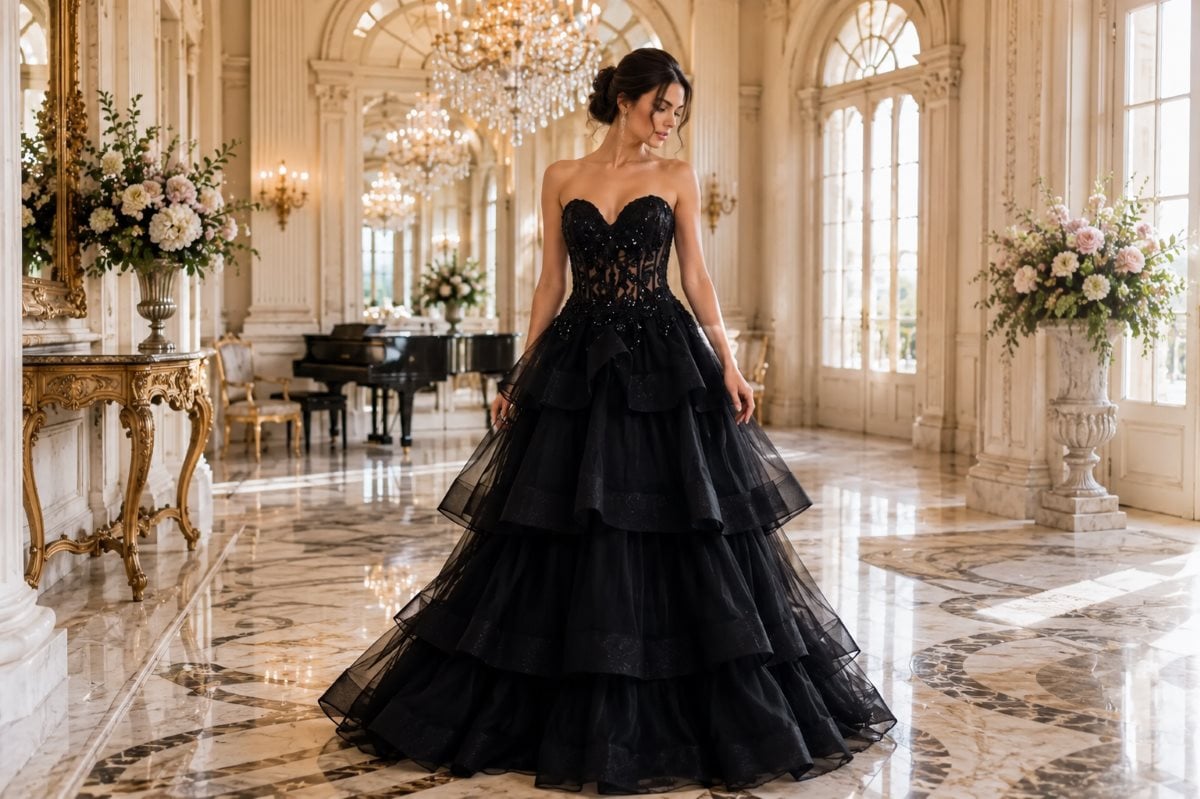
Tulle is how a full skirt achieves fullness without weight, since the net structure holds air rather than fabric. A tulle skirt can look enormous and weigh very little.
The practical points are that tulle can itch against bare legs without a proper lining, and it catches on rings, bracelets and watch clasps. Ask about the lining specifically rather than assuming.
Taffeta is the other volume fabric and it behaves almost oppositely. It is crisp, holds sharp structured shapes, and has a slight sheen. The thing nobody mentions is that taffeta rustles audibly when you move, which some people love and some find distracting through a whole evening.
Velvet, lace and texture
Velvet is the richest looking fabric in the group because the pile absorbs light rather than reflecting it, which creates depth that photographs beautifully in warm lighting. A velvet gown belongs to cooler-season events, since it is genuinely warm to wear indoors.
The one caution with velvet is pressure. Sitting for a long stretch flattens the pile where you sat, and a flattened patch does not always recover fully.
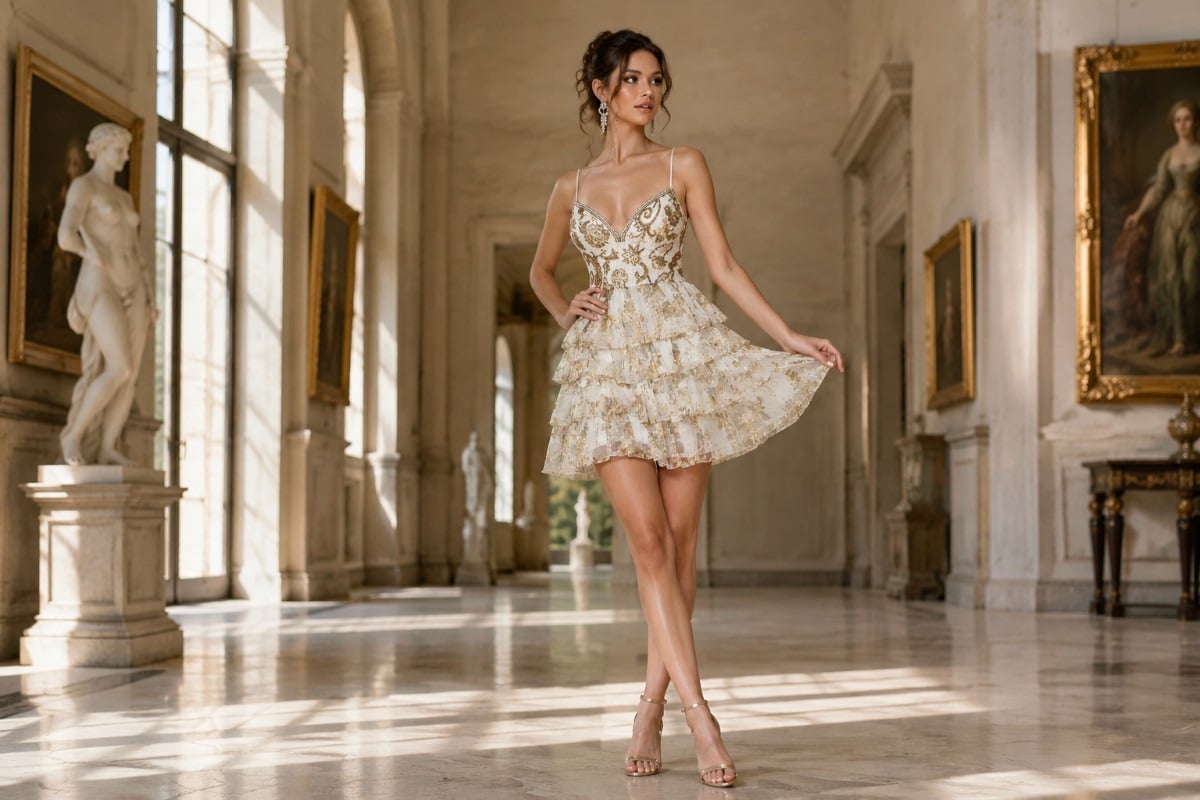
Lace works differently because it is always over something, so the lining decides how it reads. Fine chantilly lace over a matching lining looks soft and romantic. The same lace over a contrasting lining reads much bolder. A lace gown gives texture without weight, which is why it works on sleeves and bodices where beading would be heavy.
Sequins and the weight question
A sequin gown is the heaviest option here by a wide margin, because the sequins sit on a base fabric and add their weight to it. That weight is worth testing rather than assuming, so walk in one before deciding.
Sequins also have no stretch. The base may, but a densely sequinned panel does not move at all, which makes fit more critical than on any other fabric. And the edges can scratch bare arms over a long evening, which is worth checking on the inside of a bodice.
What you get in return is unmatched reflectivity. Nothing else catches light the way sequins do, particularly under a flash.
Comfort, and choosing for the actual night
The question most worth asking is what the evening involves. A long night with dinner and dancing rewards stretch crepe or jersey, because both move with you, resist creasing and let you sit through a meal comfortably.
Venue temperature matters more than people expect. Velvet, taffeta and heavy beading all hold heat, so a crowded indoor room in a warm month is the wrong place for them. Chiffon, organza and light crepe all breathe.
The last check applies to every fabric on this page: look at the lining. A good lining is what makes a fabric skim rather than cling, and it is the difference between a gown that looks the same at midnight as it did at seven and one that does not.
Prom Dress Fabric Questions
What is the best prom dress material for dancing?
Stretch crepe and jersey are the most practical, since both move with you, resist creasing and let you sit through dinner comfortably. Chiffon is the best light option and stays cool in a warm room. Avoid heavy sequins and taffeta if dancing is the priority, since weight and stiffness both work against you.
Which prom fabric photographs best?
Satin reflects light along the fabric as you turn, which deepens color and reads as expensive without any embellishment. Sequins catch the most light, especially under a flash. Velvet photographs richly in warm lighting but can look flat under bright overhead light.
What prom gown fabric works best for a warm venue?
Chiffon and organza are the most breathable, and light crepe also works well. Velvet, taffeta and heavily beaded fabrics all hold heat and are better suited to cooler months. If the room will be crowded, weight matters as much as the fabric type.
Why does the same dress look different in satin and chiffon?
Because satin drapes closely and reflects light while chiffon floats and diffuses it. Satin follows the line of the body, chiffon skims away from it. The same cut in each produces two genuinely different dresses, which is why fabric is worth choosing before silhouette.
Does prom material affect how much a dress costs?
Yes, and weight is usually the reason prom material prices vary so widely. Heavier satin, good crepe, silk and dense beading all cost more per yard and take more skilled work to construct. A thin polyester satin and a heavy structured satin can look identical online and behave completely differently in person.
What should I check on any fabric before buying?
The lining. It decides whether a fabric skims or clings, whether tulle itches, and how lace reads. Then check the weight by walking in the dress, and sit down in it, since a fabric that feels fine standing can behave differently once you are seated for a meal.
Feeling the fabric in person
Fabric is the one thing a screen cannot convey at all. Weight, drape and how a material behaves when you move are physical properties, and two gowns described identically online can feel completely different in the hand.
Narrow your shortlist by fabric rather than by color first, then handle each option at an authorized Jovani retailer, walking and sitting in the ones you are serious about.