
Choosing a Mother of the Bride dress for a beach wedding takes a different kind of planning than dressing for a ballroom or church ceremony. A coastal setting brings sun, wind, sand, humidity, and bright natural light, and those details change what feels comfortable and what photographs well. The goal is still elegance, but it needs to be the kind of elegance that works in real conditions, not the kind that looks perfect only when you are standing still indoors.
Many families choose the beach because it feels meaningful and relaxed, and mothers want to match that energy without looking underdressed. The best beach gowns feel polished, breathable, and easy to move in, so you can focus on the moment rather than on adjusting a hemline or fighting the wind. That is why beach wedding attire has its own set of practical standards worth understanding before you shop.
What should the mother of the bride wear to a beach wedding? Choose a floor length or midi gown in a light fabric such as chiffon, crepe, or lightweight lace, in a soft neutral, muted metallic, or coastal blue. Keep the hem clear of the sand, skip heavy embellishment, and pair it with a wedge or flat sandal you can actually walk in. The same guidance applies whether you are the mother of the bride or the mother of the groom.
What the Beach Changes About Formalwear
Beach weddings are beautiful, but they are not predictable. Sand shifts under your feet during the walk to the ceremony space. Ocean breezes can catch a skirt or pull at a wrap. Sunlight highlights texture, sheen, and even small wrinkles in a way indoor lighting does not. These factors influence silhouette, fabric, length, and neckline choices.
This is where many mothers benefit from thinking like a stylist rather than a shopper. Instead of starting with the most formal option, start with what works outdoors, then build formality through fabric and finishing. The most common outdoor mistakes are the same every season: heavy materials, clingy construction, and hems that are difficult to manage on uneven ground. Browsing the full range of mother of the bride dresses with those three filters in mind narrows the list quickly.
Beach Wedding Dress Codes, From Formal to Casual
Beach weddings run across three levels of formality, and knowing which one you are dressing for settles most of the other decisions. Read the invitation first, and if it says nothing, ask the couple rather than guessing.
Beach formal is the most structured version, usually an evening ceremony on a deck or a resort terrace, with men in light suits. A floor length gown in a fluid fabric is exactly right here, and this is the only tier where a small sweep at the hem is manageable.
Beach semi-formal is the most common. A midi or maxi dress in a breathable fabric works, dressy sandals replace heels, and the overall look should read as polished without feeling stiff against a sand backdrop.
Beach casual is the most relaxed tier, often a morning or midday ceremony directly on the sand. A flowing midi, a soft maxi, or elegant separates all work, and flats or low wedges are the sensible footwear. Even at this level, a mother should stay a step dressier than a general guest, since you will be in the formal family photographs.
Silhouettes That Feel Natural on Sand
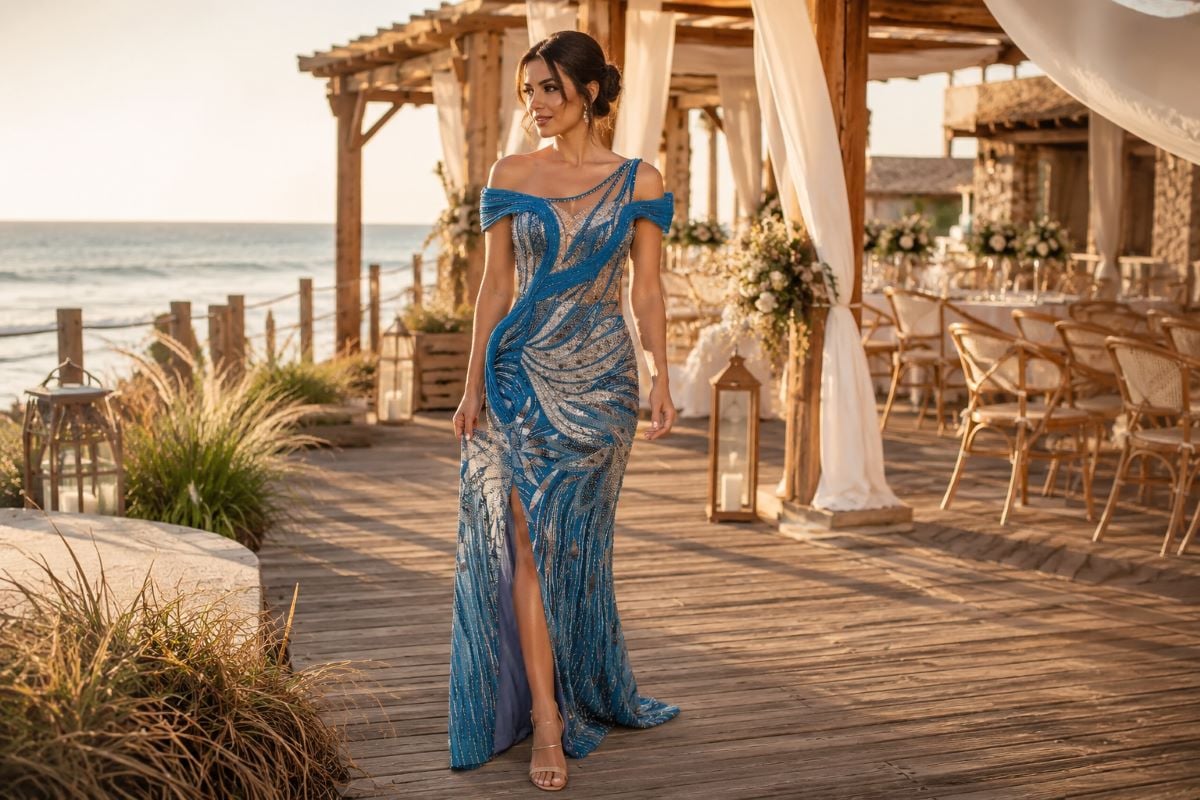
Soft, balanced silhouettes tend to work best for beach settings because they move well and do not restrict walking. A line mother of the bride dresses remain a top choice for good reason. They hold shape at the bodice and float through the skirt, which looks graceful in wind and feels comfortable in warm weather.
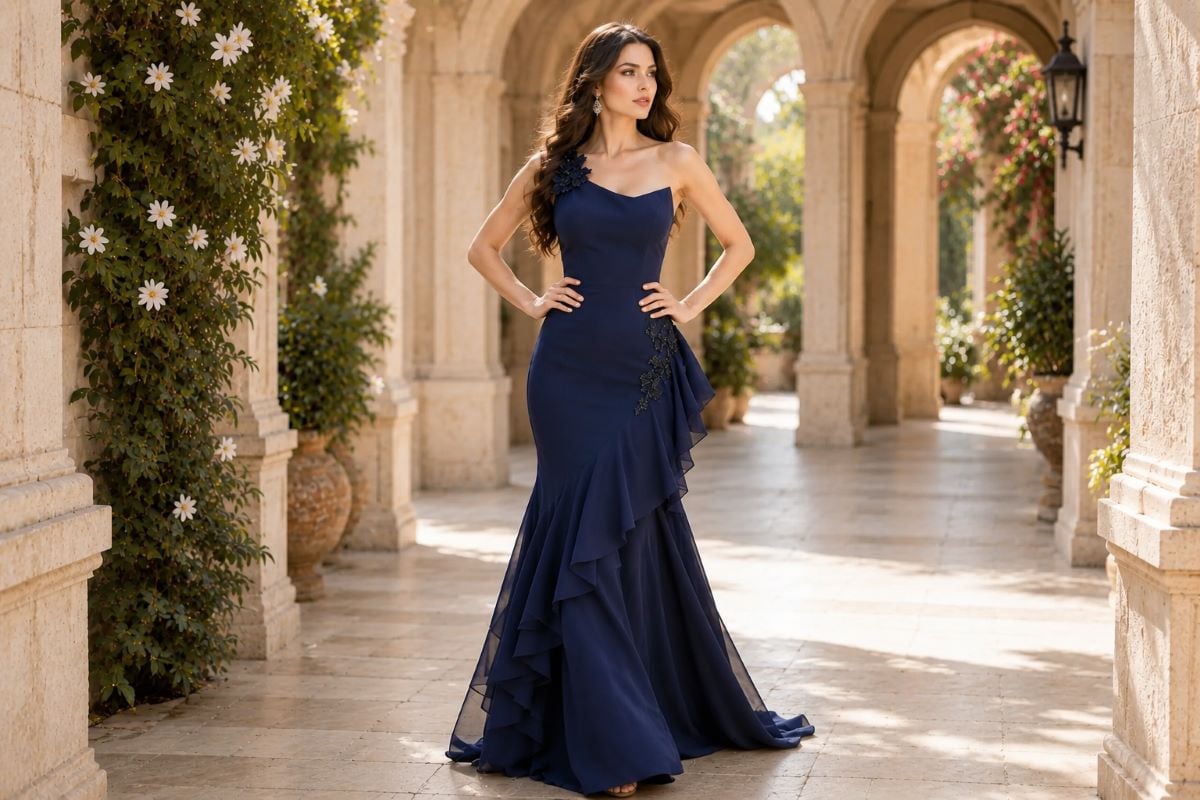
More fitted silhouettes can also work, but the construction needs to allow movement. If the venue is on firm sand or a deck, a mermaid shape can look striking while still feeling appropriate, especially when the flare is controlled rather than dramatic. For mothers who prefer simplicity, sheath mother of the bride dresses offer a clean profile that feels modern without extra volume, and these streamlined shapes are often the easiest to manage across a whole day.
Length Choices That Match the Setting
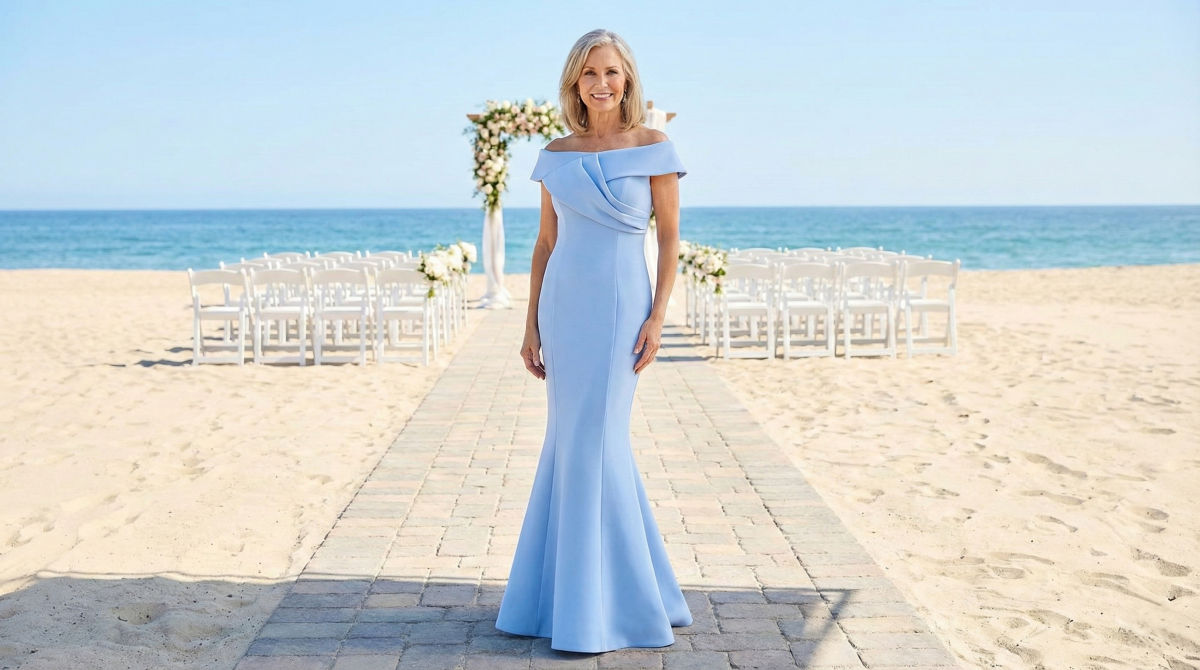
Length is one of the biggest comfort factors in a coastal ceremony. A full length hem can look beautiful, but it should not be heavy or overly long. Long mother of the bride dresses work best when the skirt is light and the hem sits at a practical length that will not drag through sand. If the ceremony is close to the shoreline, even a small train collects sand quickly, so clean hems make life easier.
For daytime weddings or more relaxed beach venues, shorter lengths feel more natural. Short mother of the bride dresses are popular for beach weddings because they reduce the stress of walking and avoid a hem that constantly brushes the sand. They also suit celebrations that involve outdoor mingling or moving between locations.
What to Wear on Your Feet at a Beach Wedding
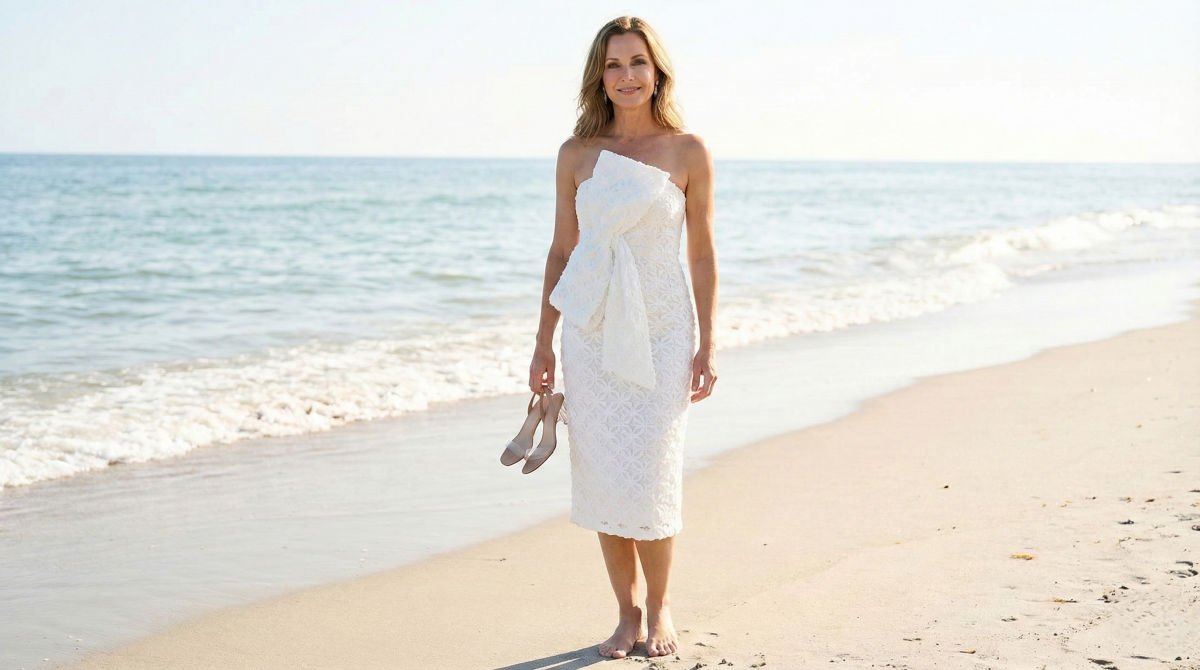
This is the question most beach guides skip, and it is the one that decides how your day actually goes. A stiletto sinks into dry sand within two steps, and no amount of practice fixes that. Plan your shoes at the same time as the gown, not the night before.
A wedge is the most reliable heel for sand, because the weight spreads across the whole sole instead of concentrating on a single point. A low block heel behaves similarly and works well on a deck or a paved aisle. A dressy flat sandal is the safest choice of all, particularly for a ceremony directly on the shoreline.
Many mothers carry two pairs, wearing flats or going barefoot for the ceremony on the sand and changing into a heel for the reception once there is a hard floor. If the bride is barefoot and the aisle is soft sand, going barefoot yourself is entirely appropriate and often more graceful than fighting the ground. Whatever you choose, keep the rest of the look in the same register, and our guide on how to accessorize a mother of the bride dress covers shoes, bag, and jewelry as one decision.
Fabrics That Perform in Heat and Wind
Fabric matters more at the beach than almost anywhere else. Breathability, weight, and drape determine whether a gown feels comfortable or becomes distracting. Chiffon is ideal for coastal settings because it moves beautifully, breathes well, and looks soft in bright light. Crepe and lightweight lace over a smooth lining behave almost as well.
Some fabrics simply do not belong on sand. Heavy satin traps heat, velvet is unwearable in humidity, thick organza holds its shape but fights every breeze, and heavy silk shows perspiration. Satin can work for an evening ceremony if the weight is light and the construction is considered, but it is the exception rather than the rule. Our full guide to mother of the bride dress fabrics compares how each one drapes and photographs.
In coastal light, texture reads clearly, so refined fabrics often look more expensive and more intentional than busy detailing. That is why coastal gowns as a category tend to prioritize movement and comfort first, then add elegance through fabric and silhouette rather than weight.
Sleeves, Necklines, and Comfortable Coverage
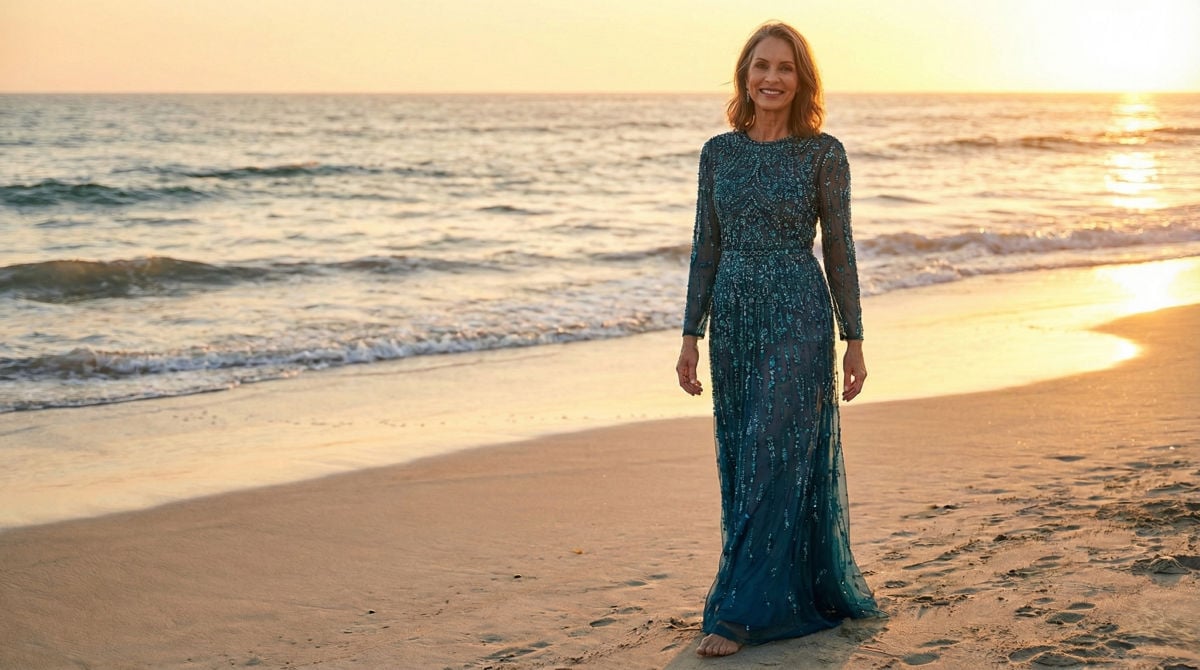
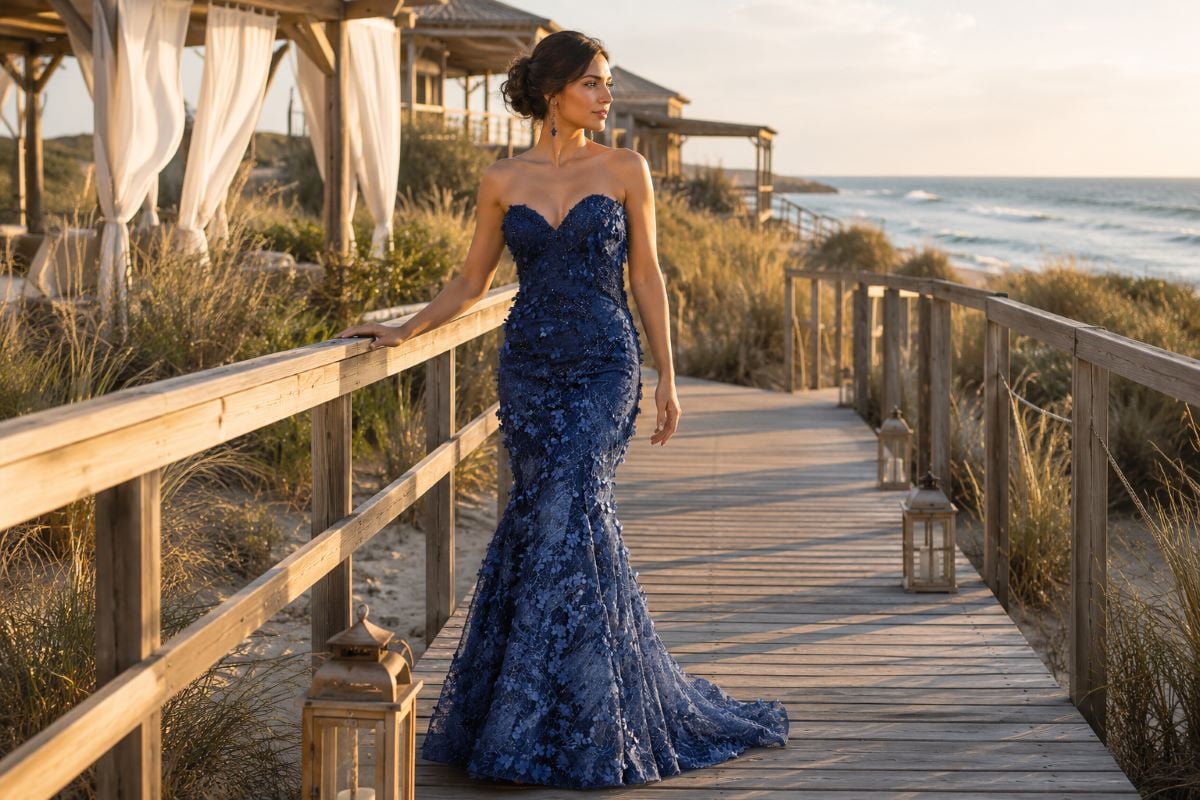
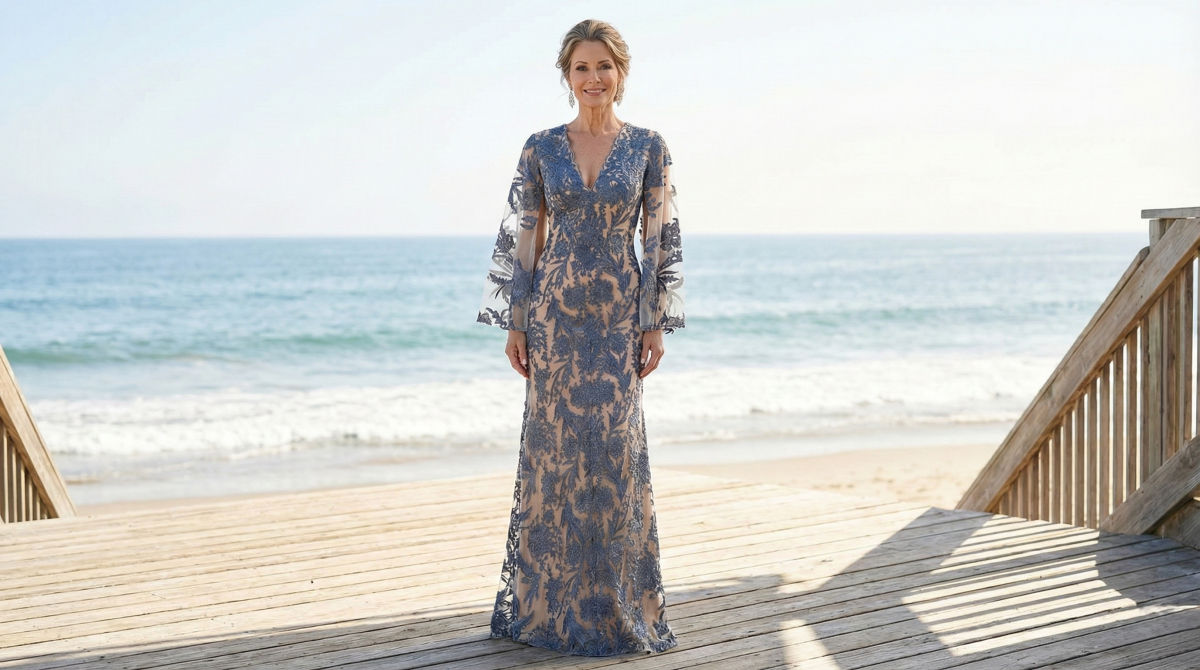
Beach weddings often happen in warm weather, but mothers still want coverage options that feel confident and appropriate. Sleeveless designs are common because they allow airflow, and they pair well with structured bodices that stay secure in photographs. For mothers who prefer more coverage, long sleeves work beautifully when they are light, sheer, or softly draped rather than heavy.
Necklines matter too, especially with wind. A neckline that sits securely is far easier to wear than one you keep adjusting, and a well fitted bodice with comfortable straps makes a bigger difference than adding extra layers. The balance most mothers are looking for is tasteful coverage that still breathes and does not read as overly formal for the setting.
Bring one light layer regardless of the forecast. Beach evenings cool quickly once the sun drops, and indoor receptions are often heavily air conditioned, so a wrap or shawl earns its place in sunset photographs as well as at the dinner table.
Fit and Comfort Across Body Types
Comfort becomes even more important outdoors, because beach weddings often include longer walks, standing in sand, and moving between ceremony, photographs, and reception. A gown that feels fine indoors can feel restrictive outdoors if it is too heavy or too tight, which is why supportive construction at the bodice and waist matters so much.
The plus size mother of the bride dresses range focuses on support, structure, and breathable comfort, all of which are especially helpful in a beach setting. Petite mothers benefit from proportioned design that reduces the need for major hemming, since hem control is a practical issue on sand. If a grandmother is attending, comfort and graceful coverage deserve the same attention in outdoor heat.
Color That Looks Right in Coastal Light
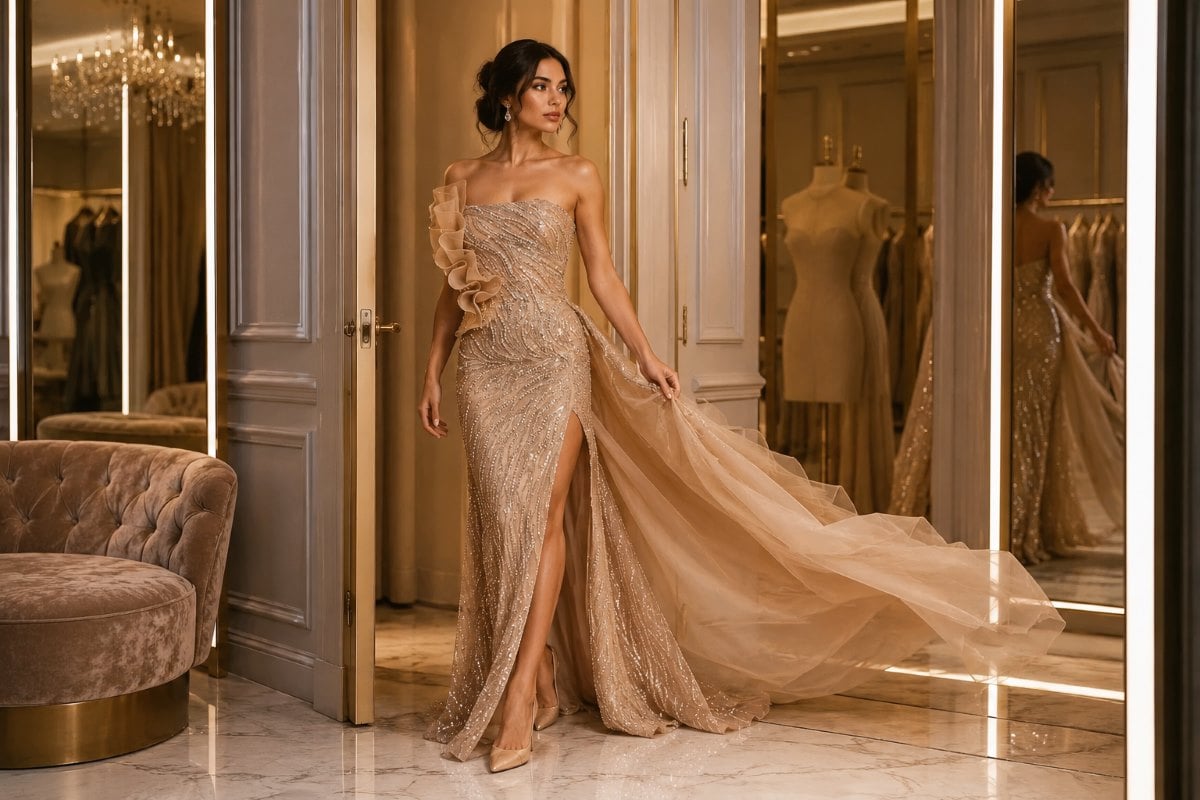
Bright sun and reflective sand change how colors appear. Very pale tones can wash out in midday light, while very dark shades can feel heavy for a daytime ceremony. Soft neutrals, muted metallics, and gentle blues look beautiful against an ocean backdrop, and warmer coastal shades such as coral, dusty rose, and soft gold hold up well in strong sunlight.
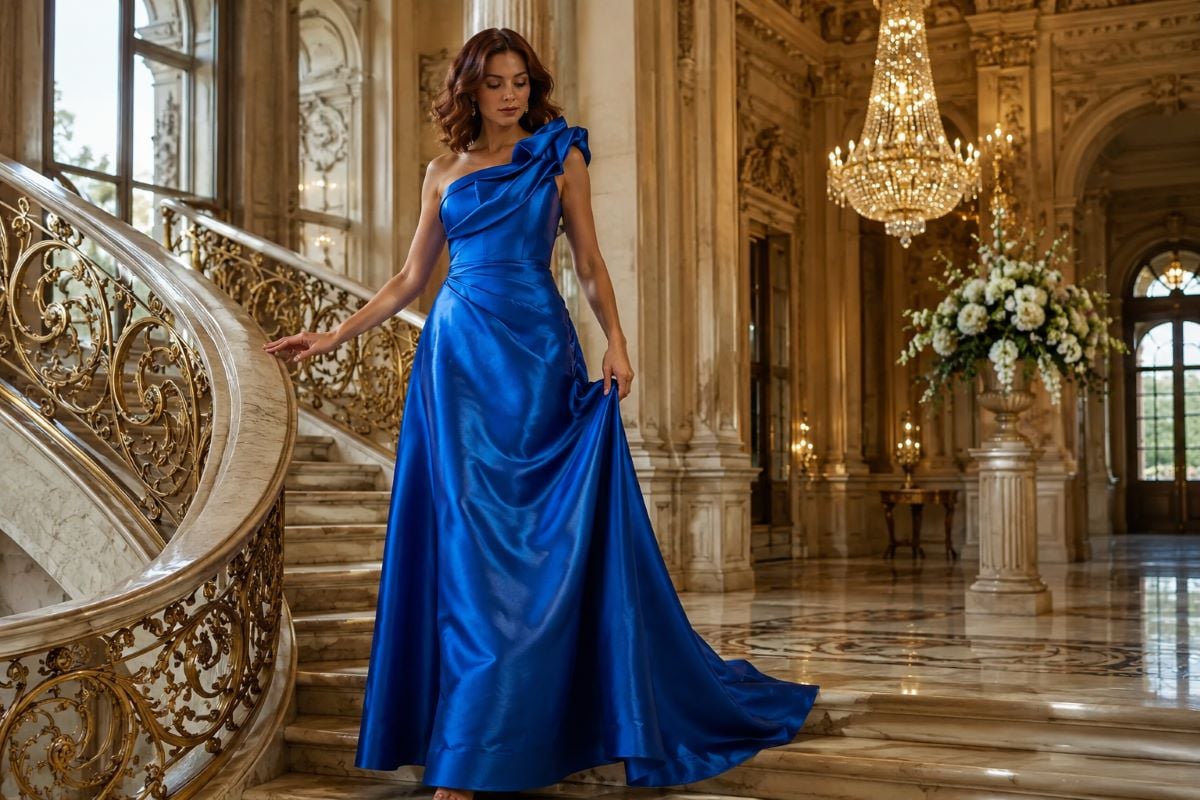
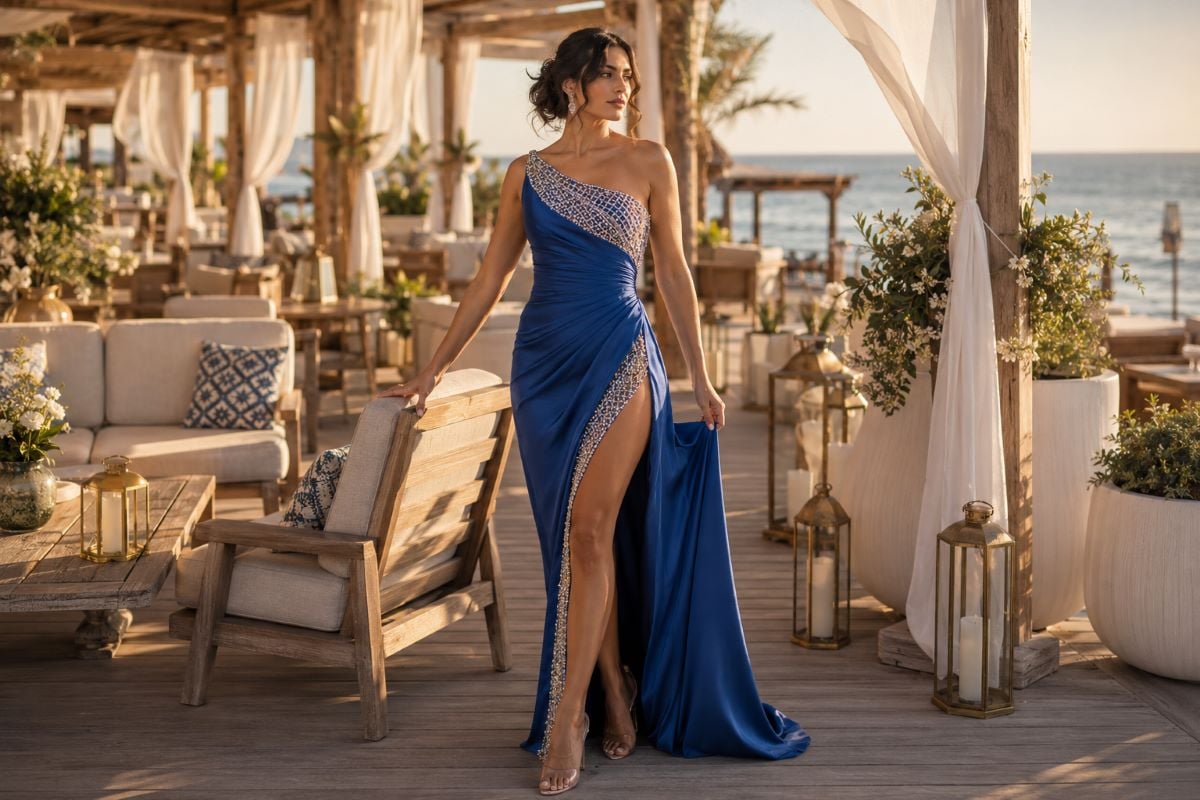
Blue mother of the bride dresses are a particularly smart choice for late afternoon or sunset ceremonies, because the color sits comfortably with the setting and photographs well. Shades that complement the environment almost always beat shades that compete with it.
One rule does not change at the beach. White, ivory, and anything close enough to read as ivory in bright light still belong to the bride, and coastal sunlight makes pale neutrals look lighter than they do in a fitting room. Our guide on what color the mother of the bride should wear works through the rest of the etiquette.
Details That Look Refined Without Adding Weight
Beach weddings usually look best when the gown feels refined rather than overloaded. Sunlight already adds sparkle to water and sand, so heavy embellishment can feel out of place. When detail is used, it works best when it is subtle and intentional, like a clean drape, a softly shaped neckline, or a light texture that catches the light without adding weight.
Salt air and wind argue for the same restraint in accessories. Delicate earrings, a simple bracelet, or one statement ring sit better than layered pieces that tangle in a breeze. Hair follows the same logic, since humidity undoes anything that needs constant maintenance, and loose waves, a braid, or a soft chignon all hold their shape better than a sleek set. Our guide to hairstyles for formal gowns covers which shapes survive a long day outdoors.
If You Are the Mother of the Groom
Everything on this page applies to you as well. The fabric, length, footwear, and color guidance for a beach ceremony does not change based on which side of the family you are on, and the same gowns work for both roles.
What does change is the order of decisions. Traditionally the mother of the bride chooses first and shares her color, then the mother of the groom picks something complementary at a similar level of formality. Modern weddings are more relaxed about this, but one message with a photograph still prevents two mothers arriving in the same shade. Our guide to mother of the bride and groom dress etiquette sets out who decides what.
Blue is the shade both mothers reach for most often at a coastal wedding, which is exactly why it is worth coordinating rather than assuming. Our guide on whether the mother of the groom can wear blue covers how to share that shade without clashing.
Bringing the Whole Look Together
A beach gown works when every part of it suits the conditions. Light fabric, a hem that clears the sand, secure straps, shoes you can walk in, one layer for the evening, and a color that belongs to the setting rather than fighting it. Get those six right and the gown takes care of itself.
If the wedding is a destination celebration, plan how the gown travels as carefully as you plan what it looks like, and our guide on how to travel with a formal dress covers packing, hanging, and steaming on arrival.
For a wedding at the other end of the calendar, where the problems are cold entrances and heavy fabrics rather than sand and humidity, our guide to mother of the bride dresses for winter weddings covers that season instead.
Once you have narrowed the list to two or three gowns, visit an authorized Jovani retailer and try them on with the shoes you plan to wear. Walking a few steps in the full outfit tells you more than any photograph will.
Beach Wedding Mother of the Bride Questions
What shoes should the mother of the bride wear on sand?
A wedge, a low block heel, or a dressy flat sandal. A stiletto sinks into dry sand almost immediately, so save narrow heels for a deck or an indoor reception. Many mothers wear flats for the ceremony and change once they reach a hard floor.
Can the mother of the bride wear a long dress to a beach wedding?
Yes, as long as the fabric is light and the hem sits clear of the sand. Floor length suits an evening or beach formal ceremony particularly well. Avoid trains, since even a small sweep picks up sand within a few steps.
What fabrics work best for a beach wedding?
Chiffon, crepe, and lightweight lace over a smooth lining all breathe well and move with the breeze. Heavy satin, velvet, thick organza, and heavy silk are the ones to avoid, since they trap heat and photograph stiffly in bright coastal light.
What colors suit a beach wedding best?
Soft neutrals, muted metallics, coastal blues, and warm shades such as coral, dusty rose, and soft gold all read well in strong sunlight. Skip white and ivory, and be careful with very pale neutrals, since bright light makes them look lighter still.
Does the mother of the groom wear the same style at a beach wedding?
Yes. The fabric, length, and footwear guidance is identical for both roles. The usual order is that the mother of the bride chooses first and shares her color, then the mother of the groom selects something complementary at the same level of formality.
How do I travel with a gown to a destination beach wedding?
Carry it on rather than checking it, use a garment bag, and hang it as soon as you arrive so the creases relax. Book a steam at the hotel if the fabric needs it, and pack your shoes and wrap with the gown so nothing gets separated in transit.