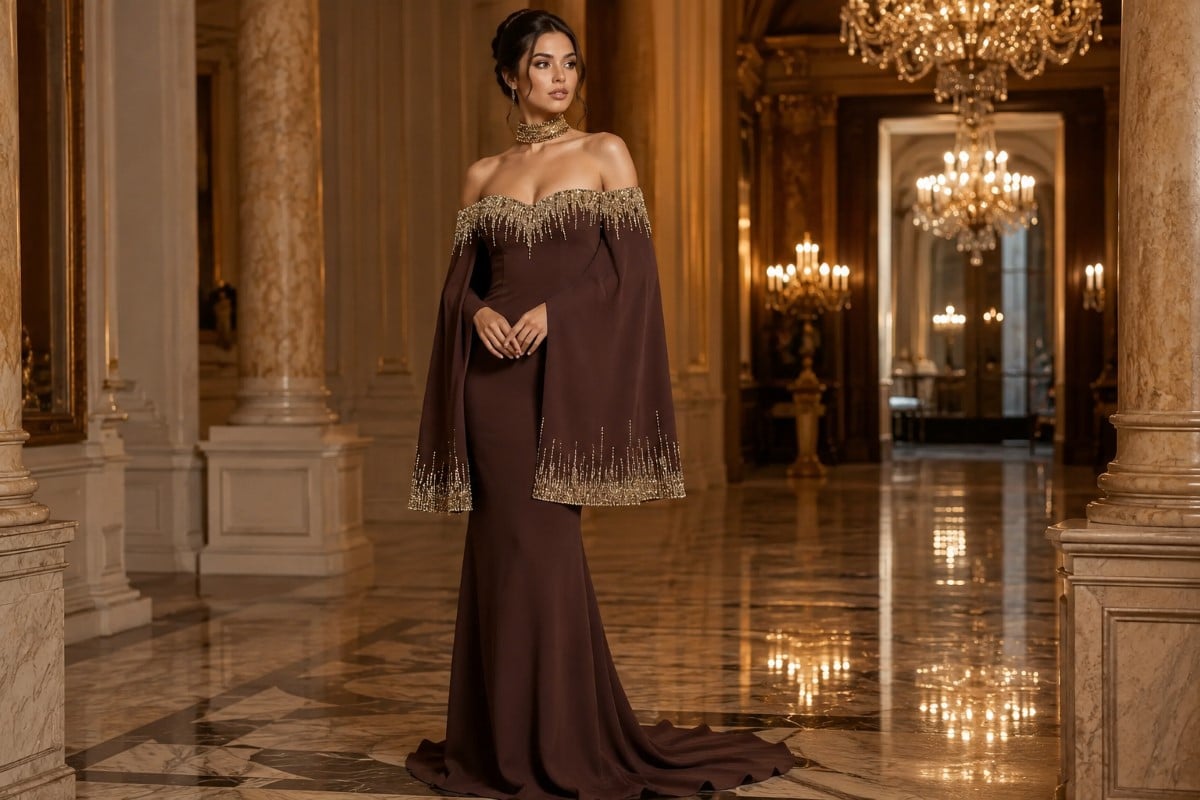

Choosing a Mother of the Bride dress for a winter wedding comes with its own set of expectations and opportunities. Winter weddings tend to be more formal, often held in elegant indoor venues with evening ceremonies, refined lighting, and a polished dress code. This season allows mothers to lean into richer fabrics, thoughtful structure, and designs that feel complete rather than excessive.
Unlike warm-weather celebrations, winter events call for gowns that provide warmth, coverage, and visual depth. A well-designed winter gown feels intentional and finished, balancing comfort with sophistication so you can enjoy the ceremony and the reception without distraction. That is why deciding on your look early in the planning process makes a noticeable difference.
What should the mother of the bride wear to a winter wedding? Start with a floor length gown in a heavier fabric such as velvet, crepe, or fully lined satin, in a deep jewel tone or a dark neutral. Add sleeves or a higher neckline for coverage, then finish the outfit with a wrap, stole, or matching jacket you can remove indoors. The dress is only half the answer in winter, and the layer over it is what makes the look work from the car to the dance floor.
How Winter Weddings Shape Style Choices
Winter weddings are usually more structured than outdoor or summer events. Ballrooms, historic venues, hotels, and formal halls are common, and guests are often dressed in tuxedos and eveningwear. This environment naturally supports gowns with longer lengths, refined silhouettes, and luxurious materials.
This is where winter attire differs from seasonal alternatives. Lighter summer fabrics and casual cuts tend to feel out of place in a winter setting, while gowns designed for colder months emphasize lining, structure, and a sense of presence that matches the tone of the event. Everything below applies just as well if you are the mother of the groom, since the two roles follow the same seasonal logic.
Silhouettes That Feel Right in Winter
Winter weddings favor silhouettes that look polished and intentional. Flowing shapes still have their place, but winter gowns often benefit from more defined structure.
A line mother of the bride dresses remain a strong choice because they offer balance and elegance without excessive volume. These silhouettes work beautifully in formal indoor spaces and flatter a wide range of body types.
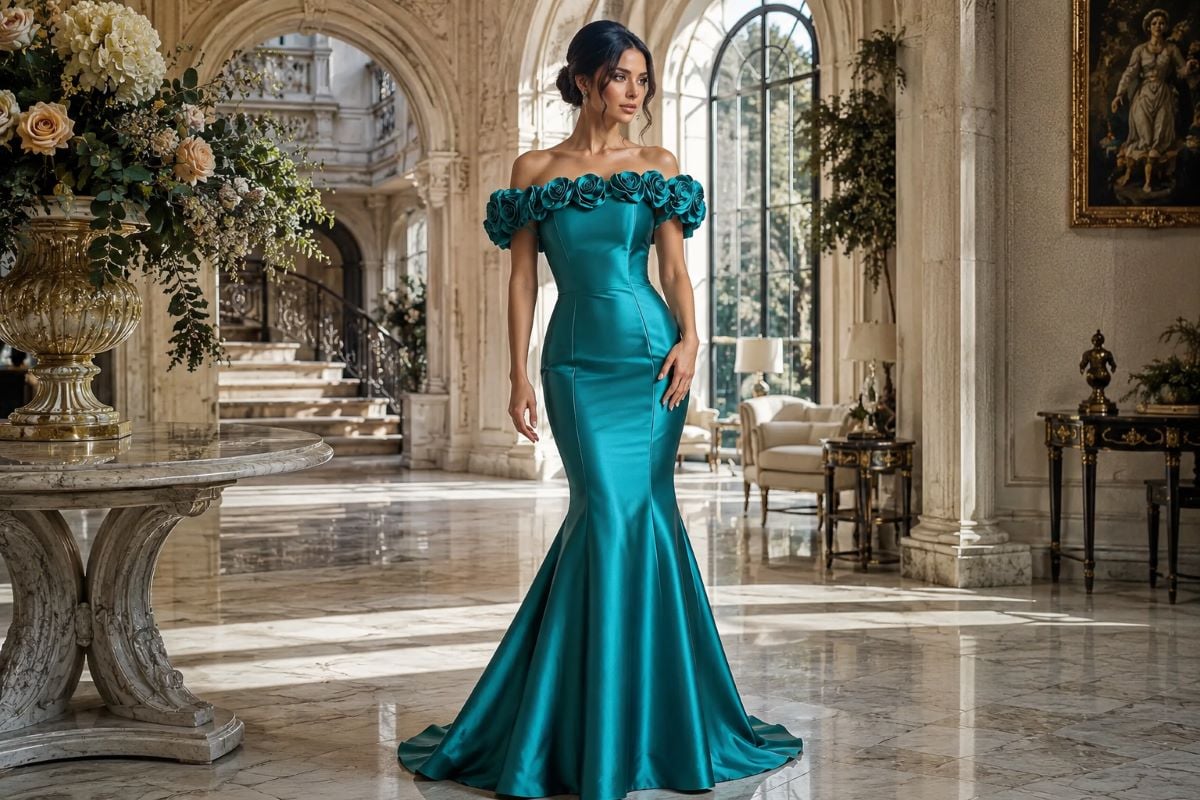
More sculpted mermaid styles can also be appropriate for winter weddings, especially evening ceremonies. When the fabric has weight and a little stretch, these gowns feel refined rather than restrictive. For mothers who prefer clean lines, sheath shapes offer a streamlined profile that pairs well with winter fabrics and formal accessories.
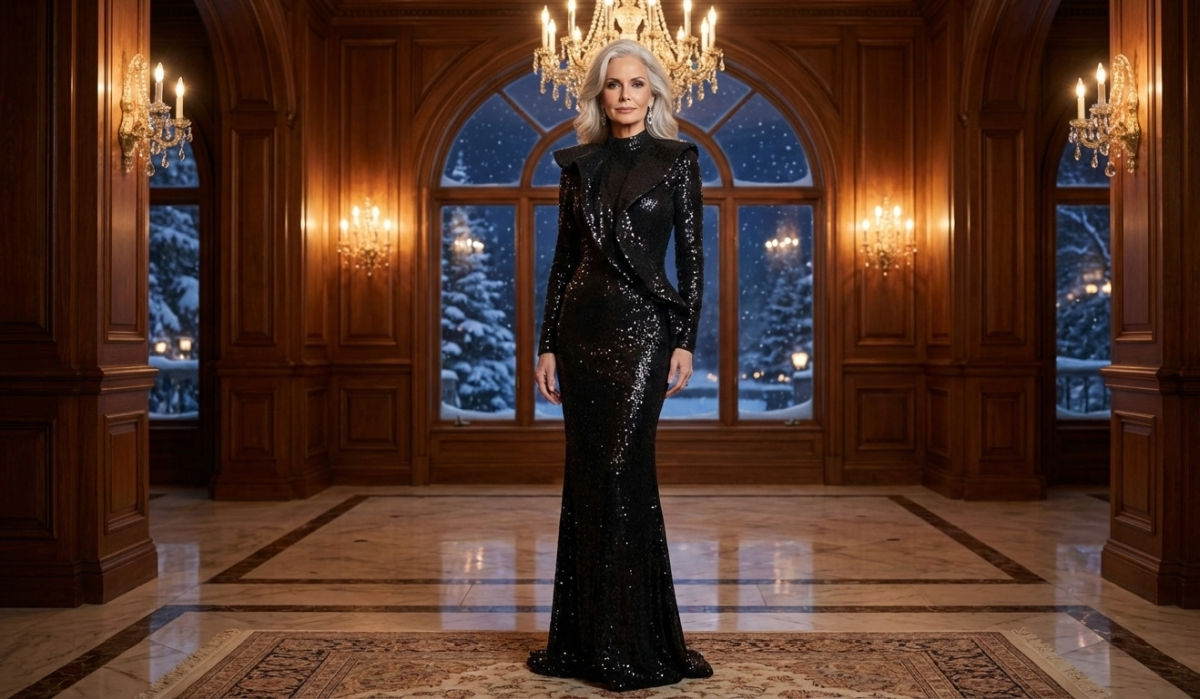
Length and Coverage for Cold Weather
Length plays an important role in winter wedding attire. Floor-length gowns are the standard for formal winter celebrations, offering both elegance and warmth.
Long mother of the bride dresses feel especially appropriate for evening ceremonies, where a full-length silhouette creates a refined and balanced look.
Shorter hems are not off the table. A midi or tea length gown works well for a daytime winter wedding, a lunch reception, or a smaller venue, as long as the fabric has real weight and the finish is tailored. Pair a shorter length with opaque hosiery and closed-toe shoes and it reads as seasonally correct rather than underdressed.
Coverage matters as much as length. Sleeves, higher necklines, and layered designs help maintain warmth while reinforcing the formal nature of a winter event.
Fabrics That Work Best for Winter Gowns
Winter is the season where fabric truly defines the look. Heavier, richer materials not only provide warmth but also give the gown more presence under evening lighting.
Velvet is a standout choice for winter weddings, offering depth, softness, and a rich finish. Satin and crepe also work well when fully lined, creating smooth silhouettes that feel substantial without appearing heavy. Our full guide to mother of the bride dress fabrics compares how each one drapes and photographs.
Lace remains a popular option when layered thoughtfully or combined with long sleeves. In winter, lace tends to look more refined when paired with solid linings and clean construction.
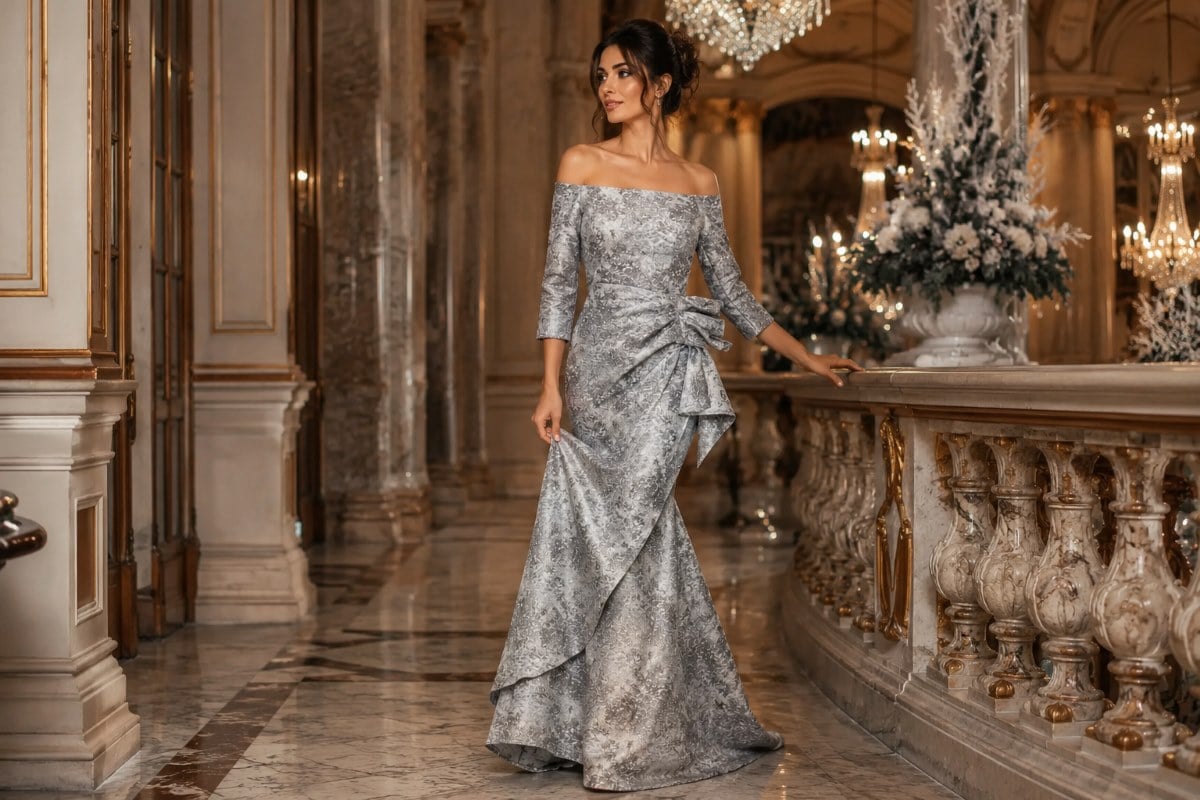
Sleeves and Necklines That Feel Intentional
Sleeves are a natural feature of winter gowns and often become a design highlight rather than a practical necessity. Many mothers gravitate toward long sleeve mother of the bride dresses, which provide warmth while maintaining a polished appearance.
Necklines also tend to be more structured in winter. Higher necks, bateau shapes, and softly curved v necklines frame the face and pair well with winter accessories. If you are weighing the options, our guide to the best necklines for mother of the bride dresses works through which shape suits which frame.
What to Wear Over Your Dress in Winter
The dress is only part of a winter outfit. What you wear over it decides whether you are comfortable walking from the car to the entrance, standing through an outdoor photo, or sitting near a door that keeps opening. Plan this piece at the same time as the gown rather than the week before.
A wrap or stole is the most flexible option. It drapes over the shoulders for the ceremony, comes off in seconds for dinner, and folds small enough to leave on the back of a chair. Our guide to wraps and shawls for mother of the bride dresses covers which fabrics suit which gowns.
A matching jacket or bolero is the most polished option, because it reads as part of the outfit rather than something added on top. It suits a sleeveless gown particularly well, letting you cover your arms through the ceremony and remove the layer for the reception without the look falling apart.
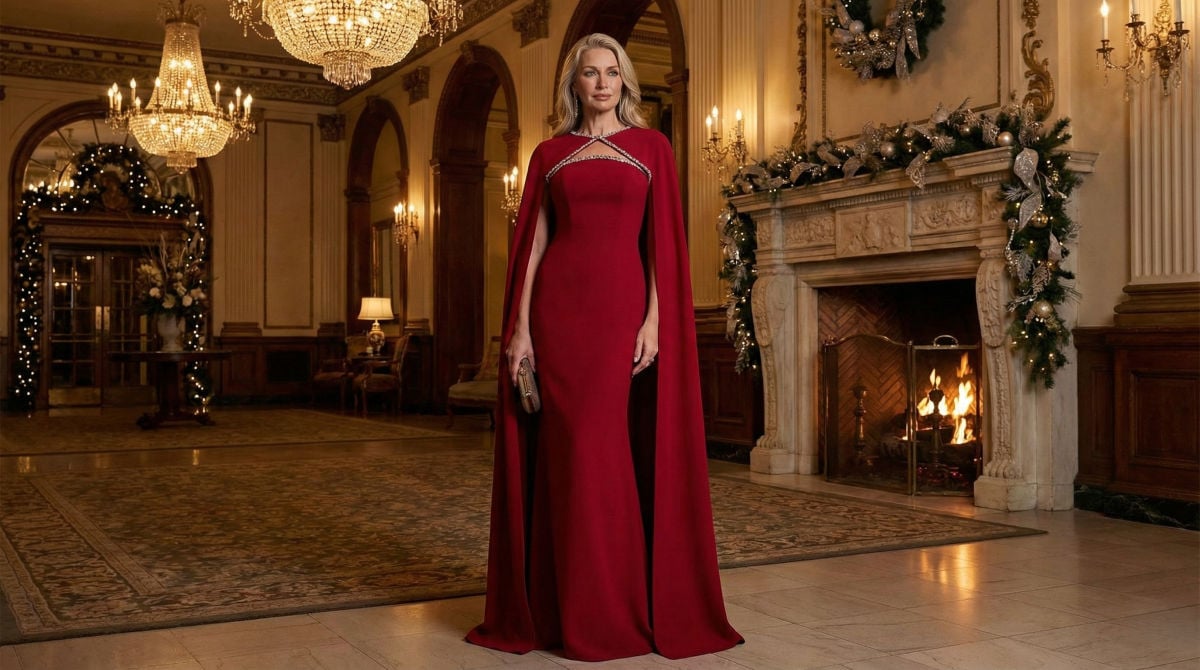
A cape or capelet gives you the most drama and works beautifully with a sleek column or sheath gown, since the volume sits on top rather than on the dress itself. For the walk in from the car, a plain dark formal coat long enough to cover the hem is worth having, even if nobody photographs it.
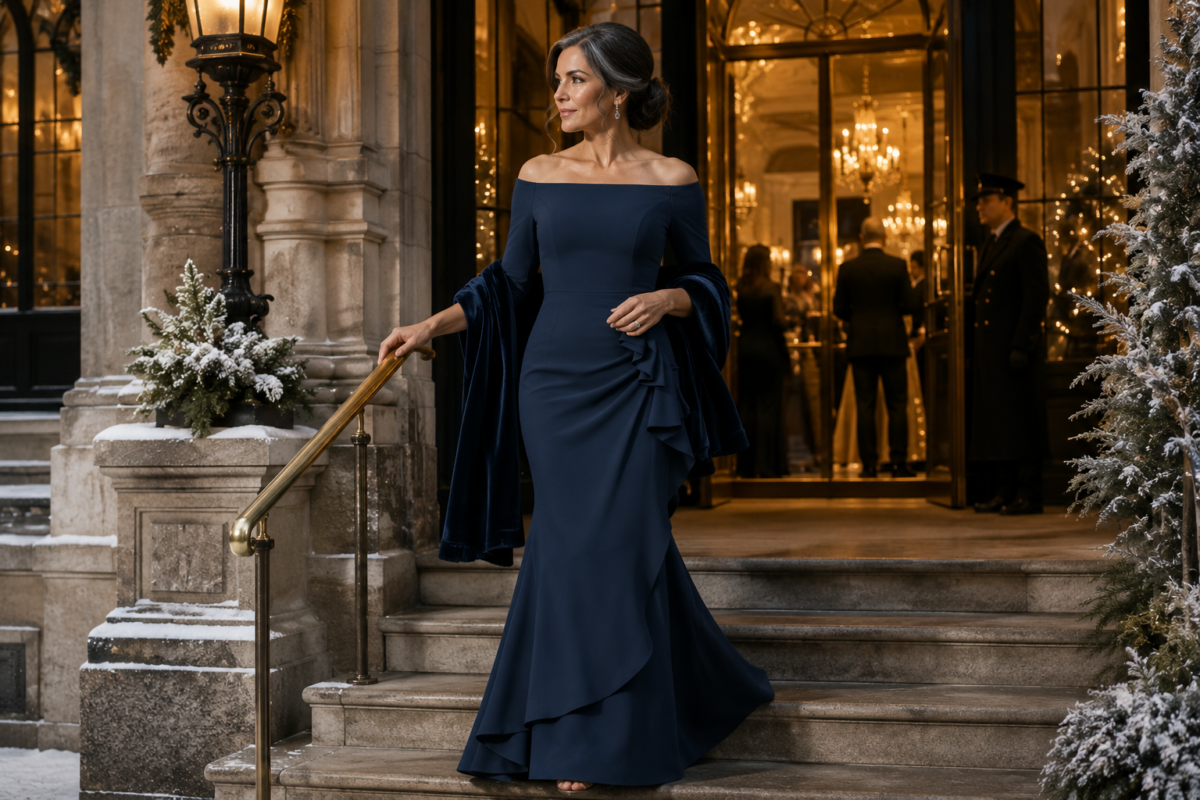
Staying Warm Without Overheating
Winter venues are rarely one temperature. The entrance is cold, the ballroom is warm, and the dance floor gets hot faster than anyone expects. The goal is a look you can adjust rather than one built for a single temperature.
That is why a removable layer beats a heavy gown. A fully lined dress in a medium weight fabric with a wrap over it gives you more control than a thick gown you cannot take anything off. If the ceremony is in a cold church or an outdoor space, plan for that hour specifically instead of dressing for the whole day at once.
Footwear deserves the same thought. Closed-toe shoes are the winter standard, and a block heel handles gravel, snow-salted paths, and long receptions better than a thin stiletto. Keep a second pair in the car if the walk in is difficult. The right finishing pieces pull it together, and our guide on how to accessorize a mother of the bride dress covers jewelry, bags, and shoes as one decision rather than three.
Fit, Comfort, and Wearability
Winter weddings are often long events, with extended ceremonies, cocktail hours, and receptions. Comfort matters just as much as appearance, especially when you are moving between outdoor and indoor spaces.
Thoughtful construction makes a noticeable difference. Supportive bodices, smooth linings, and secure closures allow the gown to feel comfortable throughout the evening. This is particularly important across the plus size mother of the bride dresses range, where proper structure gives you confidence without restriction. Petite mothers also benefit from winter gowns designed with proportion in mind, since heavy fabrics can overwhelm a smaller frame if the cut is not right.
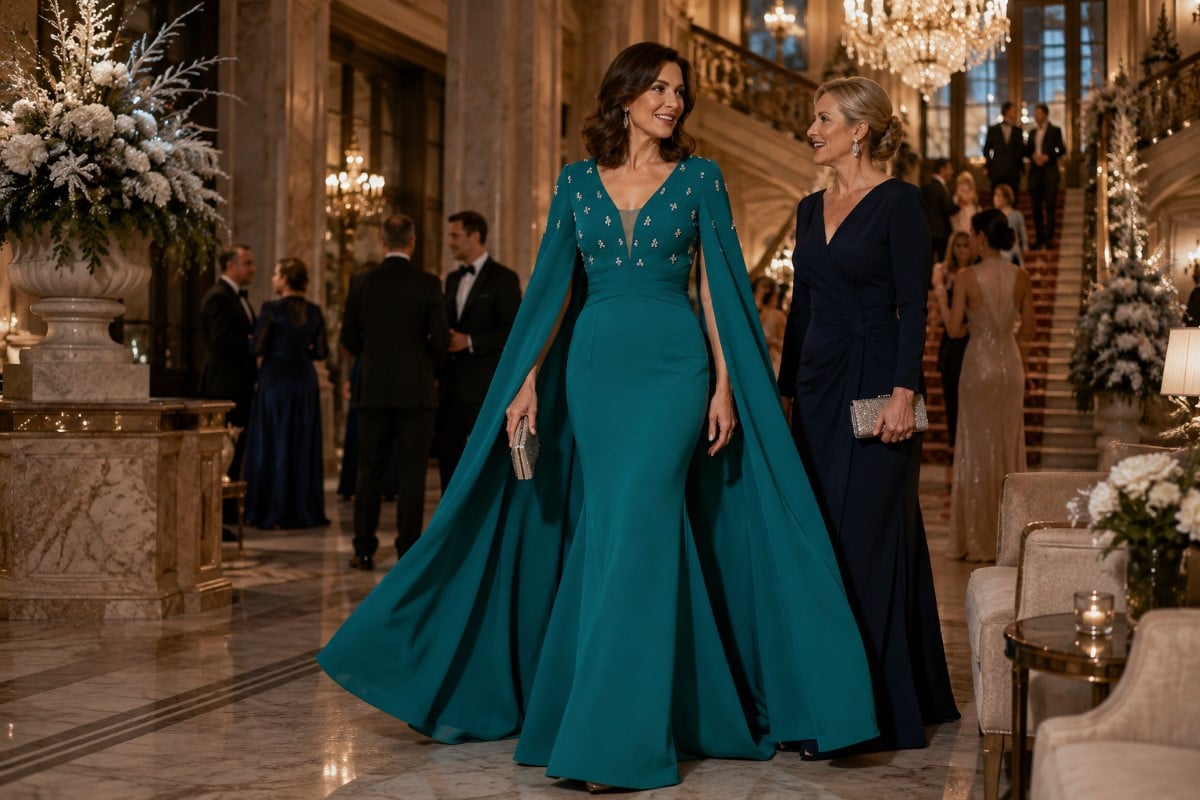
Color Choices for Winter Elegance
Winter weddings invite deeper, richer color palettes. Jewel tones, dark neutrals, and metallic shades feel seasonally appropriate and photograph beautifully under warm indoor lighting.
Black mother of the bride dresses remain a classic choice for winter evening weddings, offering timeless sophistication. Navy, deep green, burgundy, and muted metallic tones are also popular, especially for black-tie or formal celebrations.
Some shades simply do not sit well in this season. Bright pastels, turquoise, and pale spring colors tend to look thin against winter lighting and dark venues, and they can read as though the outfit was chosen for a different month. If you love a lighter shade, choose a deeper or warmer version of it instead. The wider question of which colors suit the role is covered in our guide on what color the mother of the bride should wear.
Black deserves its own note, since some families still hesitate over it at a wedding regardless of the season. Our guide on whether the mother of the bride can wear black works through the venue, the culture, and the conversation to have with the bride first.
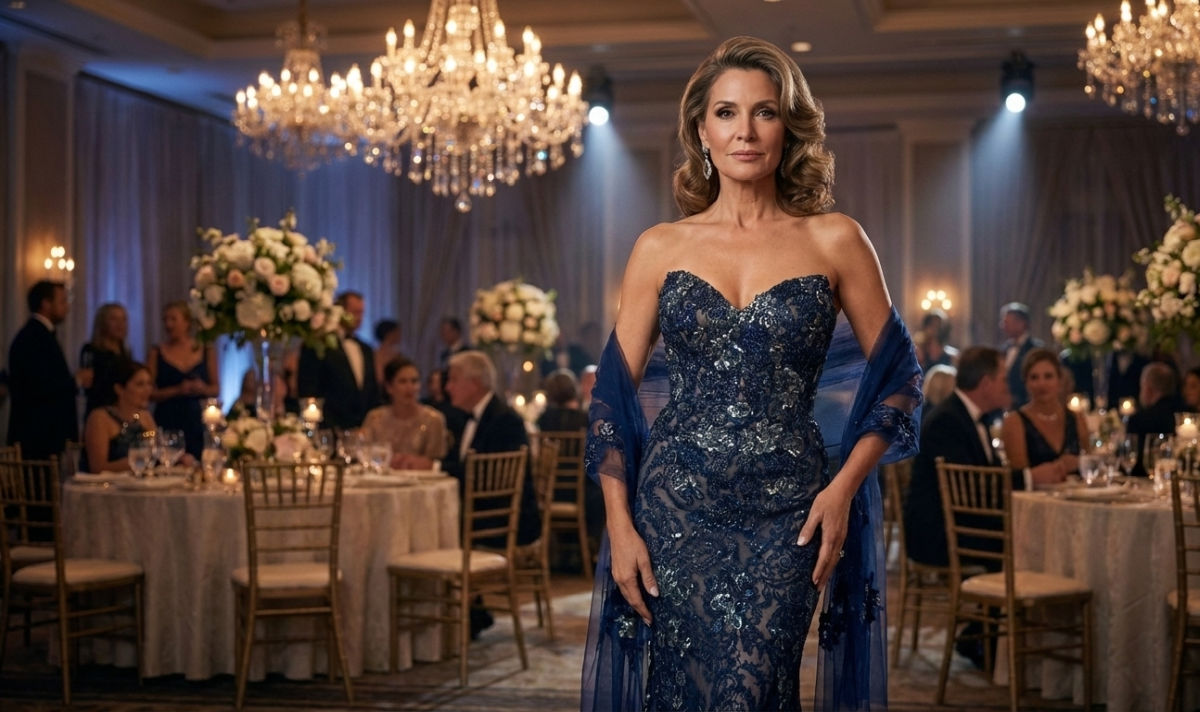
Details That Suit the Season
Winter gowns often benefit from restraint when it comes to detail. Instead of heavy sparkle, designers focus on texture, draping, and clean lines.
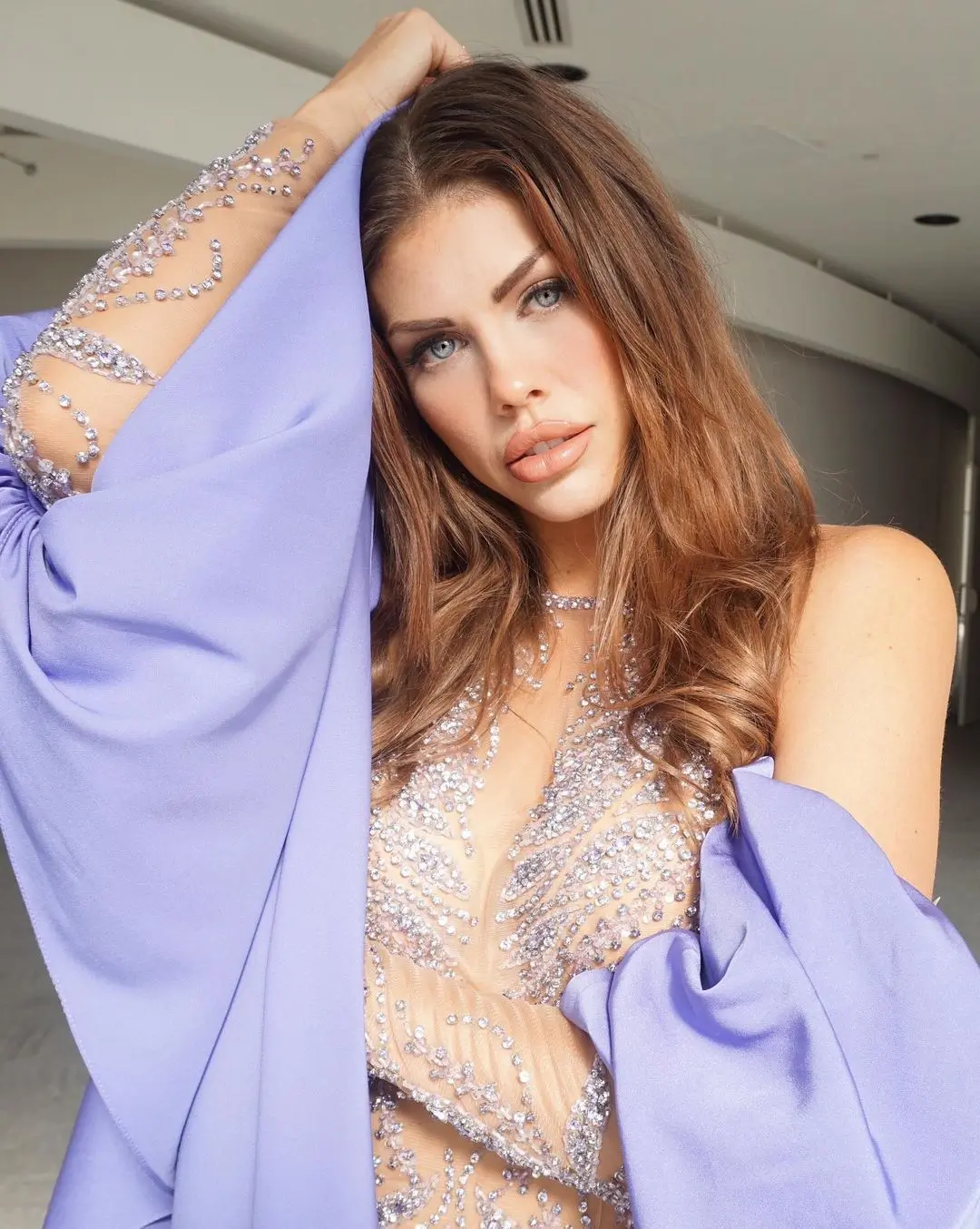
Subtle embellishment of the kind found across beaded mother of the bride dresses works beautifully when it is applied thoughtfully, along the neckline or the cuffs rather than across the whole gown. The key is balance, because winter elegance comes from refinement rather than excess.
Why Winter-Specific Design Matters
The best mother of the bride dresses for winter weddings are designed with season, venue, and formality in mind. They are not adaptations of summer dresses, but pieces created to feel complete in colder months, with the lining, weight, and coverage built in rather than added later.
If the wedding you are dressing for falls in another season, the logic changes with it, and our guide to the spring mother of the bride dress covers the lighter fabrics and softer shades that suit warmer months.
For a destination celebration in the sun, our guide to beach wedding gowns handles heat, sand, and sea breeze, which are a very different set of problems from the ones on this page.
Once you have narrowed your choice to two or three gowns, visit an authorized Jovani retailer to try them on with the wrap or jacket you plan to wear, since the layer changes how the whole outfit reads.
Winter Mother of the Bride Questions
What should the mother of the bride wear over her dress in winter?
A wrap or stole is the most flexible choice, since it covers your shoulders for the ceremony and comes off easily indoors. A matching jacket or bolero looks the most finished, and a cape suits sleek column gowns. Bring a plain dark formal coat for the walk in from the car.
Does a winter mother of the bride dress need long sleeves?
No. Long sleeves are popular in winter and they solve the warmth question inside the dress itself, but a sleeveless gown works just as well when you pair it with a wrap, bolero, or jacket you can remove once you are seated.
What fabric is best for a winter wedding gown?
Velvet, heavier crepe, and fully lined satin are the strongest winter choices, because they hold their shape, add warmth, and look richer under evening lighting. Lace works well over a solid lining. Light chiffon and thin jersey tend to feel out of season.
Can the mother of the bride wear a short dress to a winter wedding?
Yes, for a daytime ceremony, a lunch reception, or a smaller venue. Choose a midi or tea length in a substantial fabric, then add opaque hosiery and closed-toe shoes so the look reads as deliberate rather than out of season.
What colors work best for a winter wedding?
Jewel tones such as emerald, sapphire, and burgundy, along with dark neutrals and muted metallics, suit winter lighting and formal indoor venues. Bright pastels and turquoise are the shades most likely to look out of place.
When should the mother of the bride buy her winter dress?
Aim for two to three months before the wedding, once the bridal party colors and the dress code are confirmed. That leaves room for alterations and for finding a wrap or jacket that actually matches, which is harder to do at the last minute.