
Two Mothers, One Wedding: How to Coordinate Without Competing
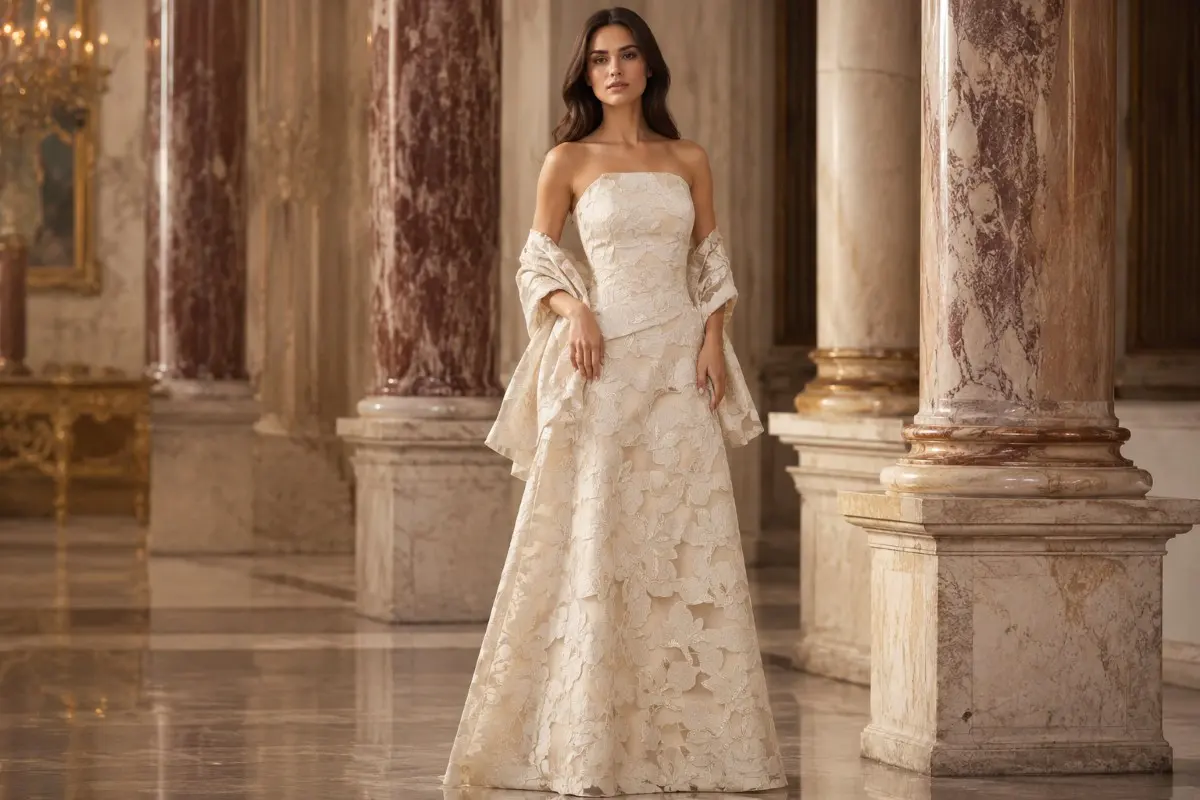
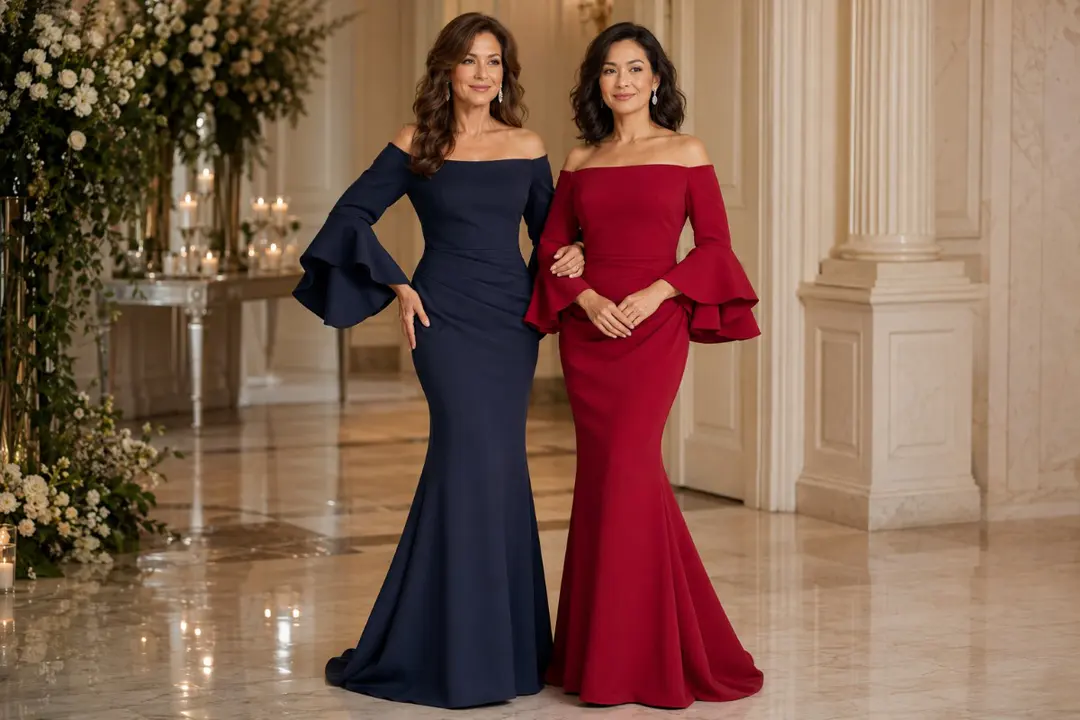
Two women, two dresses, and one set of wedding photographs that will hang on family walls for the next forty years. The mother of the bride and the mother of the groom rarely plan their outfits together, yet they end up standing side by side in nearly every formal portrait taken that day. When their looks work together, the pictures feel calm and balanced. When the looks clash, the eye catches it instantly, and so does every guest in the room. This guide walks through the etiquette, the timing, and the practical decisions that help both mothers look their best without either one feeling overshadowed. The goal is coordination, not a contest, and getting there is far easier than most families expect.
Why Coordination Between the Two Mothers Matters More Than People Expect
Most wedding advice centers on the bride, the groom, and the wedding party. The two mothers are often left to sort out their attire alone, which is exactly how mismatches happen. Coordination here is not about vanity. It is about the visual record of the day and the comfort of two families joining together for the first time in a formal setting.
What coordination without competition actually means
Coordination means the two mothers wear looks that belong in the same photograph. It does not mean matching. Two dresses can share a formality level, a length, and a general color temperature while still looking clearly distinct from one another. Competition shows up in the opposite behaviors. It appears when one mother dresses far more formally than the other, when she chooses a louder color to pull attention, or when she copies the bride's vision so closely that the choice reads as a statement. The healthiest mindset treats the wedding as a shared family celebration rather than a stage with a spotlight. Once both mothers understand that the photographs are the real point, the urge to outshine quietly fades on its own.
The photography reason behind nearly every etiquette rule
There is a practical reason the eye notices a mismatch so fast. A camera frames the families as a group, and the brain reads that group as a pattern. Anything that breaks the pattern, whether a much shorter hem, a brighter shade, or a far more casual fabric, becomes the first thing a viewer looks at. That is why etiquette asks both mothers to stay within the same visual range. It is not about rules for their own sake. It is about keeping the bride and groom as the focus and making sure neither mother is accidentally pulled out of the harmony of the image. When you understand that the photographs drive the etiquette, every other decision in this guide becomes much simpler to make.
Who Chooses First, and Why the Tradition Still Helps
The oldest guideline in this corner of wedding planning is straightforward. The mother of the bride selects her dress first, then shares the details so the mother of the groom can choose something that complements it. The tradition is far less rigid than it once was, but it still solves a genuine problem.
The mother of the bride and groom dress etiquette behind the order
The reason this order exists is sequencing. Someone has to go first, and giving that role to the bride's mother keeps the process moving forward. Once she has chosen, the mother of the groom has a clear reference point for color, length, and formality. Many modern families treat this loosely, with a friendly phone call rather than a formal announcement, but the underlying mother of the bride and groom dress etiquette still holds. One mother sets the direction, and the other responds to it. When you browse mother of the groom gowns early in the planning window, you give the second mother the lead time she needs and you remove the guesswork from her search entirely.
How to make the first move without seeming controlling
The bride's mother sometimes worries that choosing first looks like she is dictating the day. It does not have to feel that way at all. The tone of the conversation makes the whole difference. Choosing first is a courtesy, not a claim, and the same mother of the groom dress etiquette applies in reverse, since the groom's mother responds to that first choice with a complementary look rather than an identical one. A short, warm message that shares the basics and invites input keeps the dynamic friendly. The mother of the groom, for her part, should not read the first choice as a restriction. She is being handed information so she can make a confident decision, not a command she must obey. When both women see the order as teamwork, the tradition does exactly what it was always meant to do, which is keep two people from solving the same problem blind.
The Conversation That Prevents Almost Every Problem
Nearly every coordination mishap traces back to a conversation that never happened. The two mothers each assumed the other would reach out, or they felt awkward about contacting a near stranger, so they shopped in isolation and hoped for the best. A single early conversation removes most of that risk.
A simple script for the first call or message
The conversation does not need to be long or formal. The mother of the bride can open it as soon as she has a sense of her own dress. A message as plain as this works well: "I found my dress for the wedding. It is a floor length gown in a soft navy. I wanted to share that early so you have plenty of time to find something you love. There is no need to match, I just thought it would help to know the color and length." That is the entire job. The message shares the three facts that matter, which are color, length, and formality, and it openly removes the pressure to coordinate too tightly. If the bride's mother has not reached out by roughly five months before the wedding, the groom's mother should feel free to ask directly. A polite, friendly nudge is always better than a quiet guess.
What to share, and what to leave open
Share the color, the dress length, and the general formality. Those three details give the second mother everything she needs to choose well. Leave the rest open. There is no need to share the brand, the exact silhouette, the neckline, or the price. Over sharing can make the second mother feel boxed in, as though she has to hunt for a near twin of the first dress. The purpose of the exchange is direction, not duplication. A good rule is to give enough information to prevent a clash and little enough to leave real room for personal style. Each mother should still end up in a dress that feels genuinely like her own.
Color: How to Complement Without Matching
Color is where coordination is won or lost. Two well chosen colors can sit beautifully together in a photograph. Two careless ones can fight for attention or, just as bad, look like an accidental uniform. Good mother of the bride dress color etiquette starts with reading the wedding itself before reading any color wheel.
Reading the wedding palette correctly
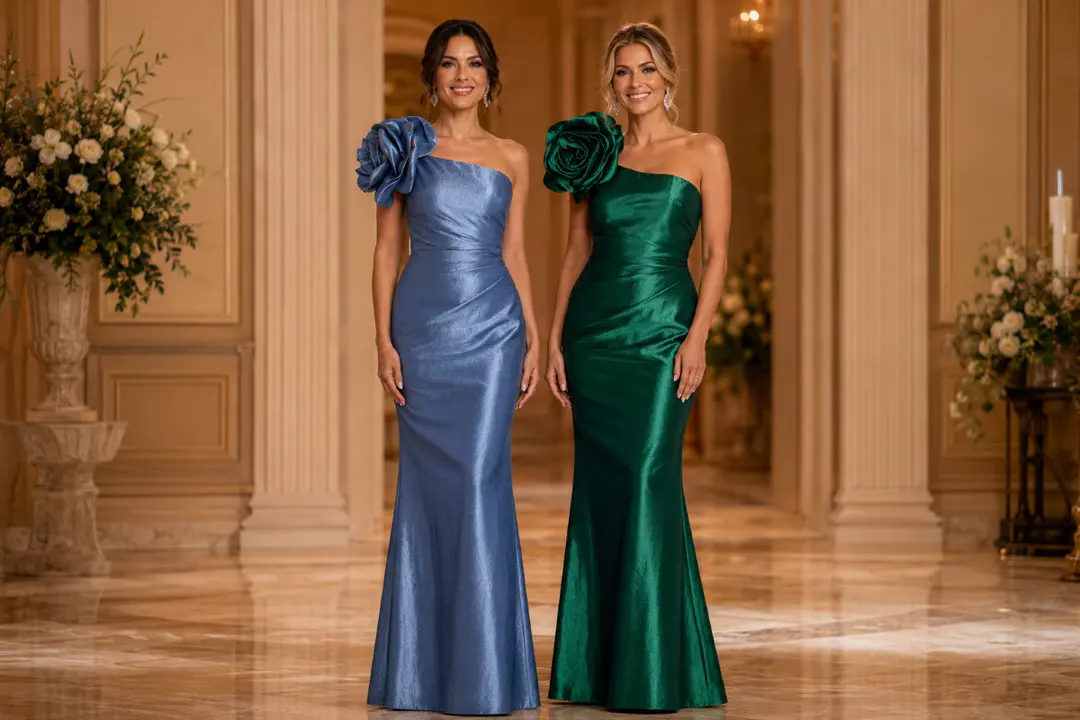
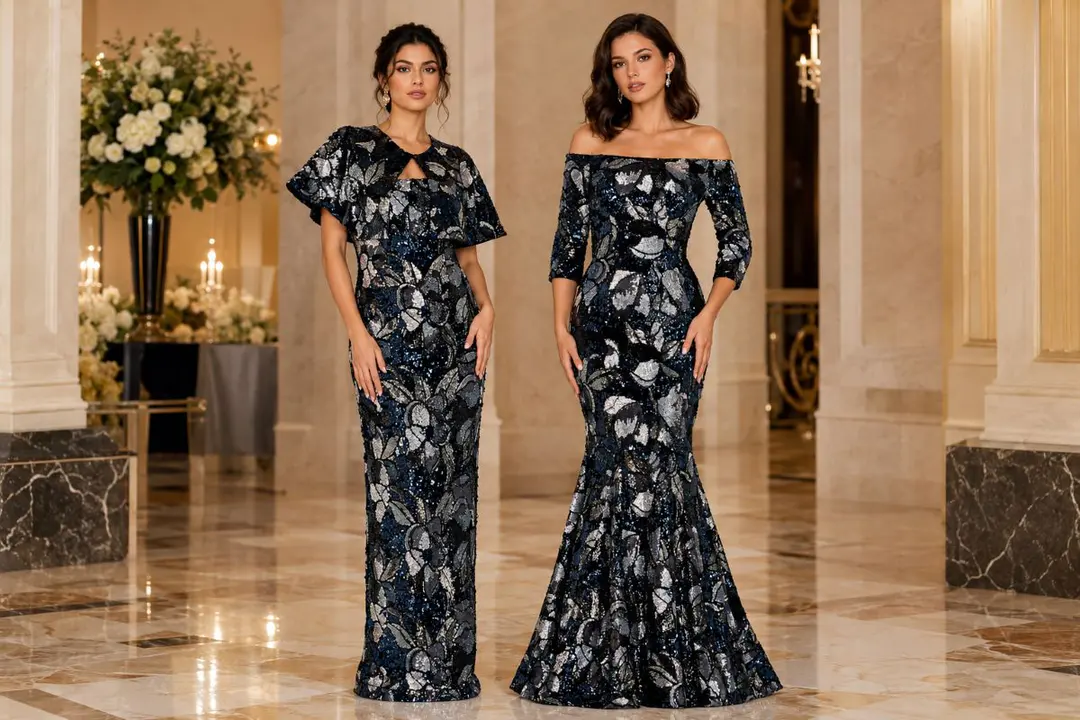
Start with the wedding's color palette, which usually shows up in the invitations, the flowers, and the bridesmaid dresses. Both mothers should choose colors that live comfortably alongside that palette without copying the bridesmaids directly. If the wedding leans toward soft, muted tones, a bright jewel tone can feel out of place, and the reverse is also true. The two mothers then need to differ from each other. The simplest method for choosing complementary dress colors is to pick shades from the same family but a clear step apart. If the bride's mother wears navy, the groom's mother might choose a soft pewter, a muted plum, or a deep teal. The colors should look intentional together, like two notes in the same chord. For evening weddings, richer shades photograph especially well, and many mothers find that classic evening gowns in navy, emerald, or charcoal give them real depth without brightness.
Colors both mothers should usually avoid
A few colors carry built in risk. White, ivory, and champagne belong to the bride, and both mothers should stay away from anything that reads as bridal in a photograph, even under softer lighting. Solid black is no longer forbidden and can look refined at a formal evening wedding, though it is worth a quick check with the couple, since some families still see it as somber. Bright red is the other shade to handle with care, because it pulls the eye hard in a group photo and can unintentionally compete with the wedding party. The safest territory for both mothers sits in the wide middle range of muted, confident colors that flatter rather than shout. When in doubt, the bride's preference settles it. She often has a clear vision for how the whole family looks together, and asking her is never the wrong move.
Length, Formality, and Fabric: Staying in the Same Visual Range
Color tends to get the most attention, but length, formality, and fabric do just as much quiet work. Two mothers can wear different colors and still look fully coordinated when these three elements line up.
Matching the formality of the day
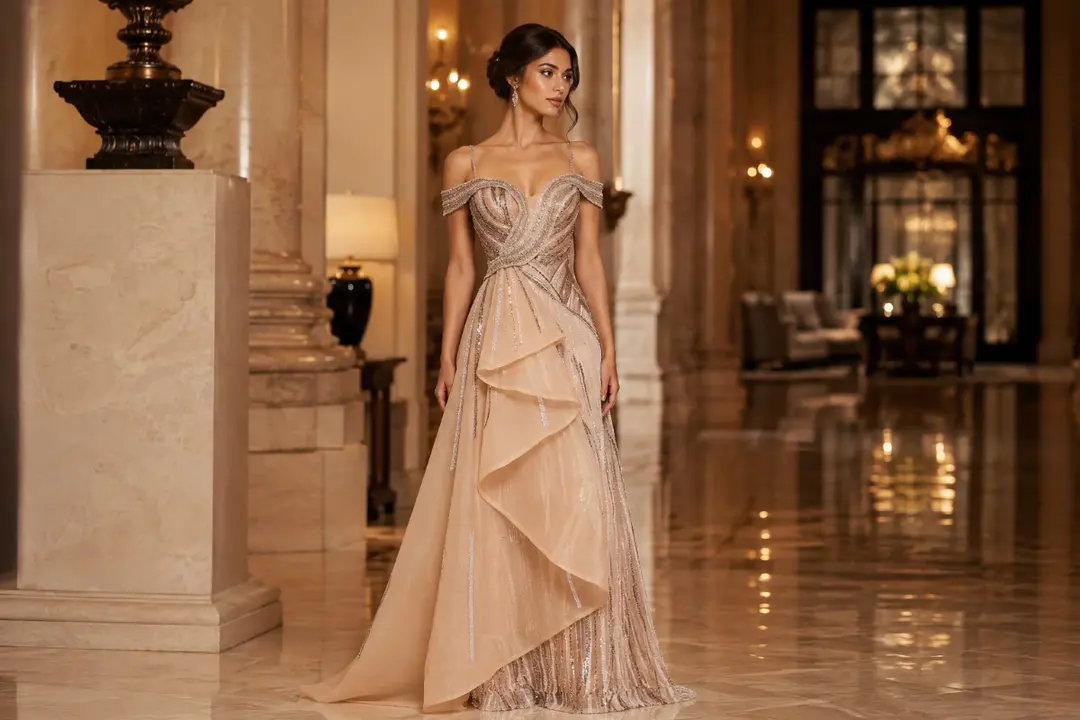
The first question is how formal the wedding is. A black tie evening reception, a midday garden ceremony, and a relaxed destination wedding each call for a different level of dress, and both mothers need to land at the same level. Matching wedding formality between the two mothers is the single most reliable way to keep the photos balanced. If one arrives in a heavily beaded floor length gown and the other in a simple knee length dress, the portraits look uneven no matter how lovely each dress is on its own. For a formal or black tie wedding, both mothers should plan on long, structured gowns. For a semi formal or daytime celebration, refined cocktail length styles can suit both women, as long as they agree on the approach together. The exact formality matters less than the agreement itself.
Why length should track the bridesmaids
Length deserves its own attention because it is the easiest mismatch to spot. If the bridesmaids are in floor length dresses and one mother arrives in a tea length style, the eye jumps straight to the shorter hem in every group shot. The mothers do not need to match the bridesmaids exactly, but they should respect the same general length range. When the wedding party is long, both mothers are usually safest in floor length gowns that keep the line of the group unbroken across the portraits. When the bridesmaids wear shorter dresses, the mothers have more freedom to do the same. The rule is not about copying the wedding party. It is about not breaking the visual line they create.
Fabric and texture as quiet coordination tools
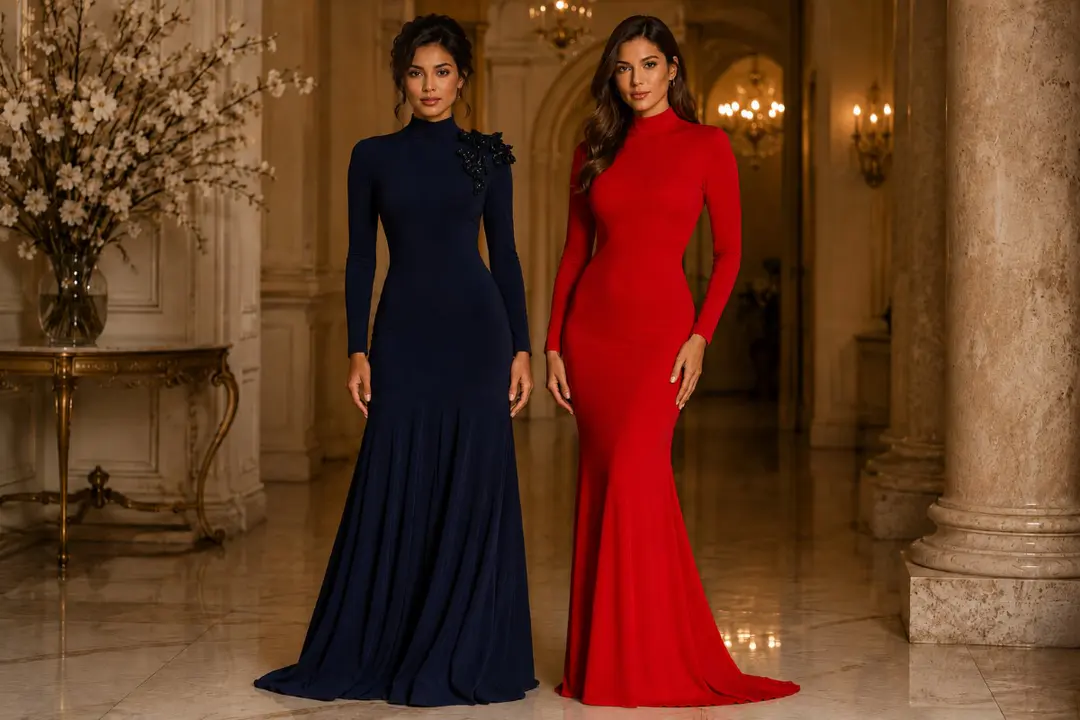
Fabric is the most overlooked coordination tool, and it is one of the most useful. Season guides the choice. Lightweight chiffon, crepe, and lace suit spring and summer weddings, while satin, brocade, and heavier textured fabrics carry fall and winter celebrations. The two mothers do not need the identical fabric, but they should aim for the same weight and season, so one does not look dressed for July while the other looks dressed for December. Sleeves are part of this conversation too. Coverage is a personal choice, and many mothers prefer long sleeve mother of the bride dresses for comfort, for the formality of an evening event, or simply for how they photograph. A mother who wants more coverage and one who prefers a sleeveless look can still coordinate easily, as long as the formality and the length stay aligned. Texture, weight, and season are the subtle signals that tell a viewer the two looks belong together.
When Coordination Gets Complicated: Stepmothers, Divorce, and Blended Families
Standard etiquette assumes one mother of the bride and one mother of the groom. Many weddings are not that simple, and advice that ignores this leaves real families without any guidance at all.
Divorced parents and multiple mother figures
When a bride or groom has both a mother and a stepmother, both women may want to dress for the occasion, and both deserve to feel included. The couple should set the tone here, since they know the family history and the comfort level between everyone involved. A practical approach is for the biological mother to follow the traditional order and choose first, then for the stepmother to coordinate in a complementary color a clear step away. The two should avoid matching, which can look like a pointed statement, and avoid clashing, which reads as tension in the photos. If relationships are strained, the bride or groom can act as the quiet middle point, passing along color and length details so the two women never have to negotiate directly. Fit and comfort matter just as much as color in these situations. Every mother figure should be in something she genuinely feels good in, and a wide size range helps, since plus size mom of the groom dresses built with the same construction and quality as standard sizes let every woman in the family find a confident fit.
Cultural and family-tradition differences
Some families bring specific cultural expectations to wedding attire, from particular colors that carry meaning to traditional garments worn for part of the day. When the two families come from different backgrounds, the mothers should talk early and openly about what each tradition asks for. Coordination in these cases is less about a shared color and more about shared respect. One mother might wear a traditional outfit while the other wears a Western gown, and the photographs can still feel harmonious if both looks match in formality and care. The couple's wishes lead the way. The job of the two mothers is to honor those wishes while making sure neither family feels their traditions were treated as an afterthought.
When the Other Mother Will Not Coordinate
Sometimes one mother does everything right and the other simply will not engage. She does not answer messages about the dress, or she announces a choice that ignores everything that was discussed. This is frustrating, but it is manageable, and it rarely needs to become a conflict.
First, separate intent from outcome. A mother who goes quiet is usually busy or unsure, not hostile, and a friendly, low pressure follow up often solves it on its own. If she has already bought something that does not coordinate, resist the urge to compete with her or correct her. Adjust your own look instead, since that is the only thing you actually control. If she chose a bold color, you can pick a calmer one that lets her stand apart without the two of you clashing. If she went more casual than expected, you can soften your own formality rather than tower over her in the photographs. The bride and groom can help by gently sharing information between the two sides, but they should not be pushed into refereeing a disagreement on top of planning their wedding. In the end, gracious flexibility always photographs better than a standoff. A mother who adapts with warmth looks better in the final album than one who was simply, technically correct.
A Practical Timeline for Both Mothers
Good coordination depends on time. Coordinating mother of the bride and groom dresses comes down to the calendar more than it comes down to taste, because most mismatches happen when one or both mothers started too late and had to take whatever was still available.
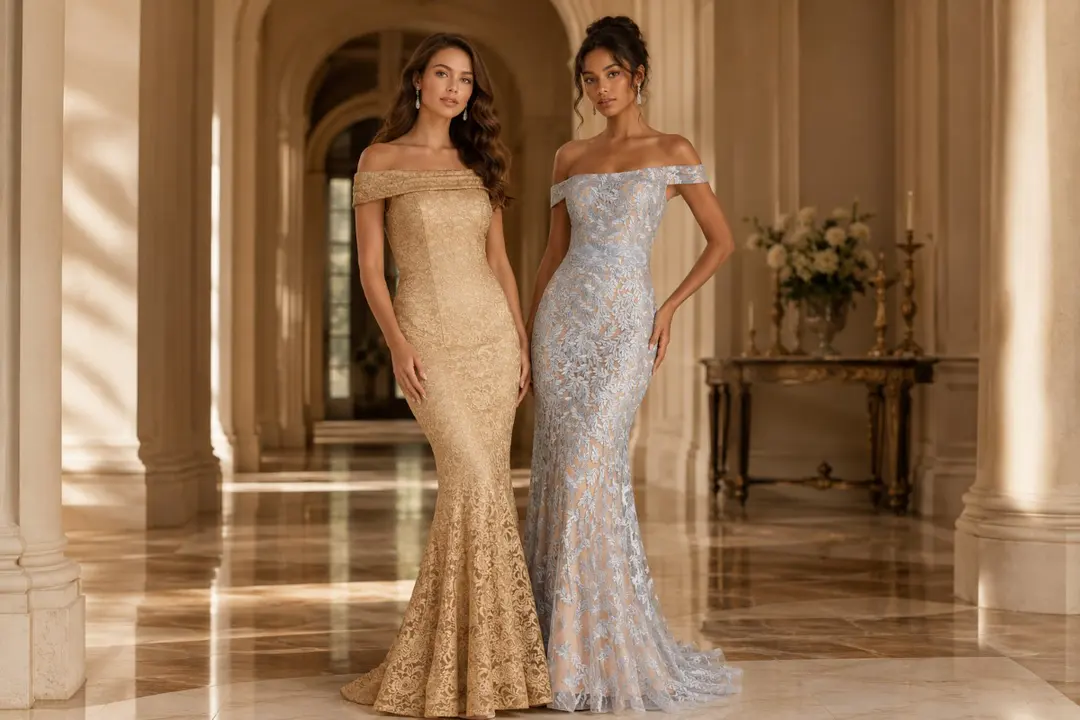
The mother of the bride should begin her search roughly six to eight months before the wedding. Formal gowns often need to be ordered in a specific size or color, and almost every formal dress needs at least one round of alterations for a clean, comfortable fit. Starting early protects against rushed decisions and thin stock. Once she has chosen, she should share the details promptly so the mother of the groom has a comfortable window, ideally at least five months before the date, to find a complementary look without pressure. Both mothers should aim to have their dresses in hand about six to eight weeks before the wedding so alterations stay unhurried. For a closer look at how shipping, sizing, and fittings shape this schedule, the guide on When Should the Mother of the Bride Buy Her Dress breaks the full timeline down in detail. The single most useful habit is also the simplest one. Put the wedding date on a calendar, count backward, and treat those early months as the real shopping window rather than a loose suggestion.
FAQs About Mother of the Bride and Groom Dress Etiquette
1. Do the mother of the bride and mother of the groom have to match?
No, and they should not. The goal is coordination, not matching. The two dresses should share a formality level, a length range, and a general color temperature so they look balanced in photographs, but they should stay clearly distinct. Matching outfits can look like a uniform and can read as competition rather than harmony. Complementary colors a clear step apart are the better target for both women.
2. Who picks their dress first, the mother of the bride or the mother of the groom?
Traditionally the mother of the bride chooses first, then shares the color, length, and formality so the mother of the groom can select something that complements it. This is less a strict rule than a practical sequence, since someone has to go first. Modern families often handle it with a casual conversation rather than a formal announcement, but the order still helps both mothers avoid shopping blind.
3. Can the two mothers wear the same color?
They can wear colors from the same family, but they should not wear the exact same shade. If the bride's mother wears navy, the groom's mother is better in a different tone such as pewter, deep teal, or muted plum. Colors from the same family but a clear step apart look intentional and elegant together, while an identical shade can look like an accidental uniform in the photos.
4. Is it acceptable for either mother to wear black?
Black is generally acceptable, especially at a formal or evening wedding where it looks refined. It is still worth a quick check with the couple first, since some families continue to associate black with mourning. If the couple is comfortable with it, a well chosen black gown is a safe and flattering option for either mother.
5. What should the mother of the groom do if the mother of the bride never shares her dress details?
She should reach out directly with a friendly message, ideally around five months before the wedding. A simple question about color and length is polite and completely expected. If she still cannot get clear information, she should choose a versatile dress in a flexible mid range color and formality so it is likely to coordinate regardless. The bride or groom can also help by passing the details along.
6. How far in advance should each mother buy her dress?
The mother of the bride should start six to eight months before the wedding, and the mother of the groom should begin once the first dress is chosen, with at least five months of lead time. Both should have their dresses ready about six to eight weeks before the date to allow for unhurried alterations. Formal gowns often need ordering time and at least one fitting, so an early start prevents last minute compromises.