
Mother of the Bride & Groom Dress Cuts & Details: A Complete Guide
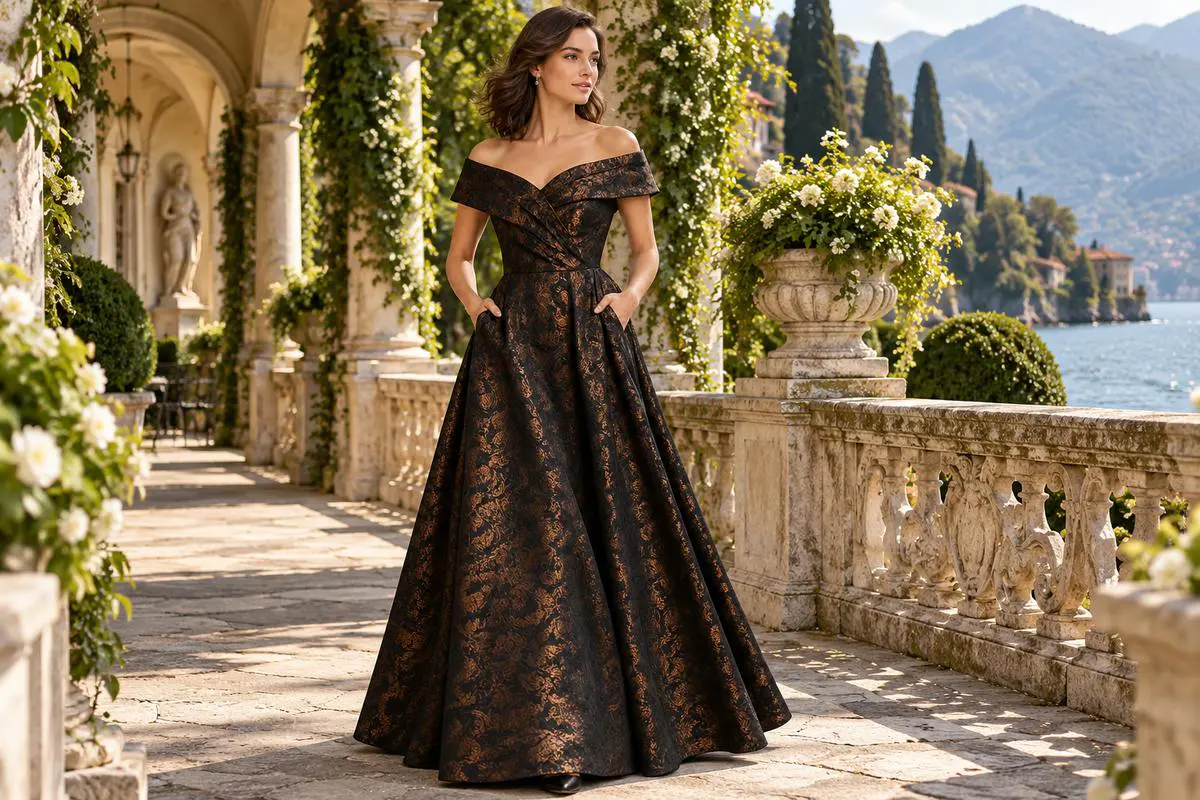
The best mother of the bride dress cuts balance the shape you like with the movement you need. A-line gowns offer room below the waist, sheaths follow a closer outline, and trumpet skirts add a controlled flare. The same choices work for the mother of the groom. Start with the overall cut, then compare the neckline, sleeves, and fabric. Jovani's Mother of the Bride Dresses illustrate these combinations.
What Are the Main Mother of the Bride Dress Cuts?
The main mother of the bride dress cuts include A-line, empire, sheath, and column styles. Fit-and-flare, trumpet, mermaid, and ball gown designs complete the range. Their biggest difference is where the dress follows the body and where the skirt releases. Use this comparison before trying on individual styles.
| Cut | Shape | Check at the fitting |
|---|---|---|
| A-line | Gradual flare from waist | Waist placement |
| Empire | Skirt falls below bust | Seam under bust |
| Sheath or column | Close or straight outline | Ease through hips |
| Fit-and-flare | Defined waist, fuller skirt | Where fullness begins |
| Trumpet or mermaid | Fitted upper skirt, lower flare | Room for steps |
| Ball gown | Full skirt from waist | Skirt weight and width |
Labels vary between designers. Judge the actual seam lines and skirt width rather than relying on the style name alone.
A-Line and Empire Cuts: Definition Without a Tight Skirt
An A-line dress fits through the bodice and widens gradually below the waist. An empire cut places its defining seam just beneath the bust, leaving more room through the midsection.
For a waist-level seam and a skirt that moves independently of the hips, consider A line Mother of the Bride Dresses. Choose the empire shape if you prefer the skirt to begin higher. At a fitting, look sideways in the mirror to see whether the seam sits where the designer intended.
Sheath, Column, and Fit-and-Flare: Different Degrees of Shape
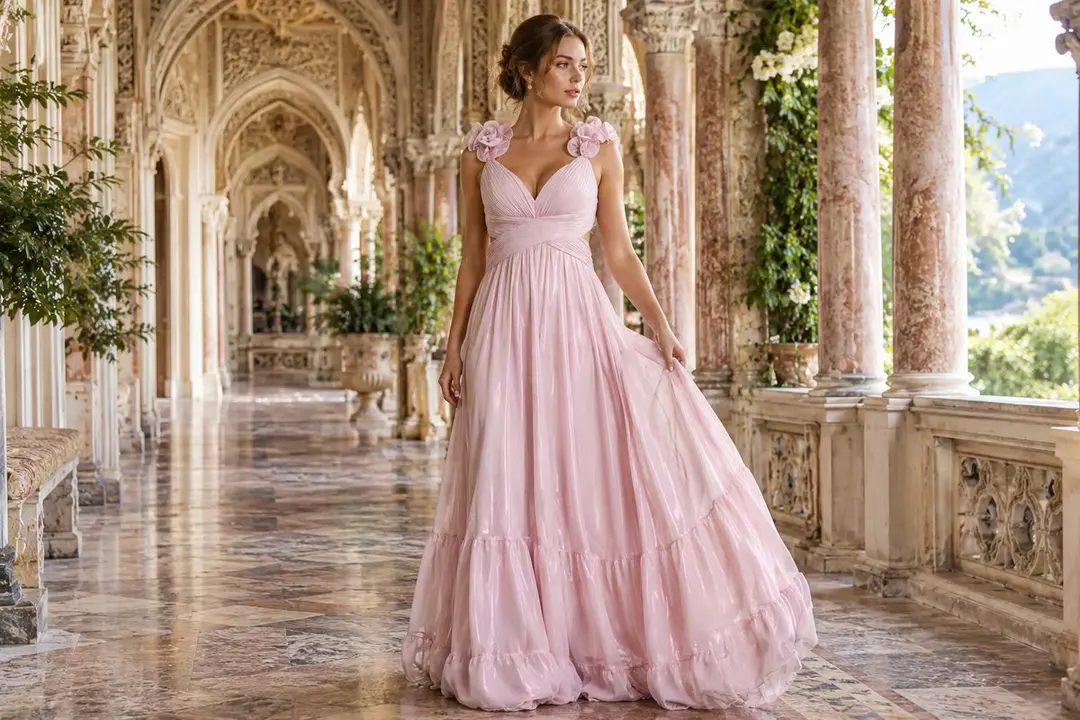
A sheath follows the body's contours, while a column falls in a straighter line from the upper body toward the hem. Fit-and-flare defines the waist before opening into a fuller skirt.
The practical difference appears when you move. A narrow sheath may need stretch or a back vent; a column needs enough hip ease to sit comfortably. A fit-and-flare skirt offers more room below its fitted section. Check the side seams for pulling instead of choosing by a size label alone.
Mermaid, Trumpet, and Ball Gown: Where the Volume Begins
Mermaid gowns stay fitted toward the knee before widening. Trumpet cuts usually start their flare higher, often around mid-thigh. Ball gowns create volume from the waist, so the skirt feels dramatic without following the legs closely.
In Mermaid Mother of the Bride Dresses, inspect the flare point and the stretch of the inner lining, not just the photographs. A very narrow knee area can shorten your stride.
If you like a fitted silhouette, Jovani's guide to mermaid dress fit covers that specific choice in more detail.
How Do Necklines and Sleeves Change the Overall Cut?
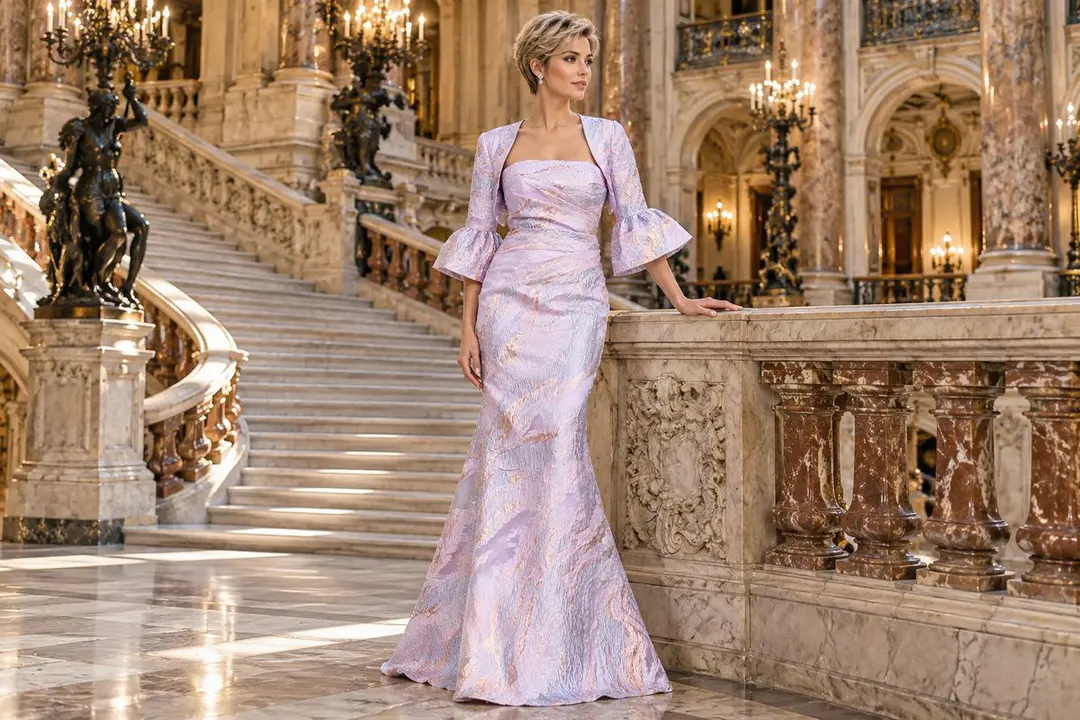
Necklines and sleeves change how a gown frames the shoulders and balances its skirt. A V-neck draws the eye toward the center, a bateau creates a broad horizontal line, and a one-shoulder design introduces asymmetry. The best option is the one that stays secure as you move.
Start with the silhouette, then compare the best necklines for mother of the bride dresses without repeating a full neckline lesson here. Test each style while reaching forward and turning your head.
Sleeves affect both coverage and mobility. Long Sleeves Mother of the Bride Dresses can suit a formal ceremony, while flutter or sheer sleeves offer a lighter appearance. Raise both arms to make sure the bodice does not shift.
Waist Seams, Ruching, and Embellishment
Waist seams determine where the eye sees definition. Diagonal draping can soften a firm bodice, while ruching gathers extra fabric into a controlled shape. Check that gathers lie flat rather than bunching when seated. Beading adds weight, so inspect the lining and how the embellished area hangs.
Choose a Hemline That Fits the Wedding Setting
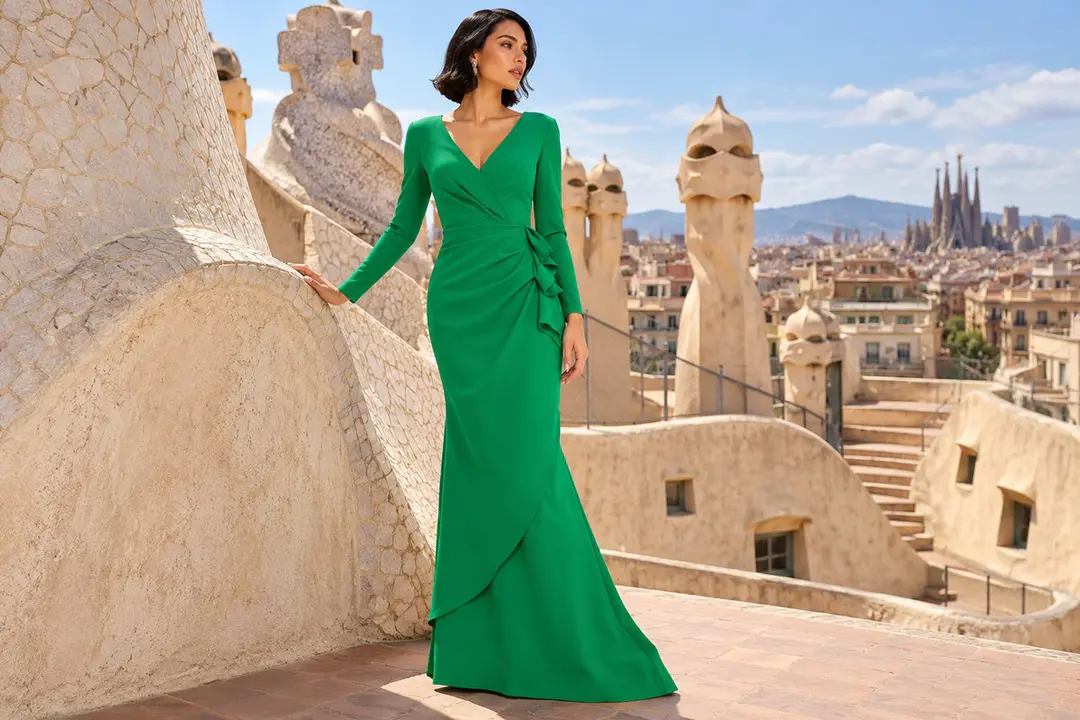
Floor-length gowns commonly suit black-tie and formal evening weddings. Tea-length dresses, which generally fall around mid-calf, can work for daytime and less formal celebrations. The invitation, venue, and any wishes expressed by the couple should guide the choice.
The two mothers do not need identical hems, but similar formality helps their outfits look considered together. Jovani's mother of the bride and groom dress etiquette guide explains the coordination question in greater depth.
Let the Fabric Support the Silhouette
Fabric determines whether a cut keeps its shape or moves softly. Chiffon falls in light layers, satin shows folds and seam placement clearly, and crepe can give a smooth line with less shine. Lining matters just as much: it should not twist, pull, or catch against the skirt.
For tailored column and sheath shapes, Crepe Mother of the Bride Dresses offer useful examples of fabric and cut working together.
Make the Final Choice by Testing the Fit
Try the gown with shoes close to your planned heel height and perform three simple checks:
- Sit fully and check for pulling at the waist, hips, and knees.
- Walk, turn, and climb a step without lifting the skirt excessively.
- Reach forward as if hugging someone and confirm the neckline stays in place.
When comparing mother of the bride dress cuts, prioritize secure fit, easy movement, and the wedding's formality over a silhouette that looks appealing only while standing still. The right details should support your comfort, not demand constant adjustment.
Once you have a shortlist, visit an authorized Jovani retailer to compare the cuts in person and discuss any alterations before choosing your gown.
Can both mothers wear the same silhouette?
Yes, both mothers can wear A-line, sheath, or another shared silhouette. Choose different colors or details if you want the outfits to feel distinct while remaining equally formal.
Is a train practical for a mother of the bride dress?
A short sweep train can work at an indoor formal wedding, but a floor-skimming hem is usually more practical for outdoor paths and a busy reception. Check that the fabric does not catch underfoot.
Does a structured gown need boning?
No, a gown can gain shape from darts, lining, interfacing, or firm fabric without boning. Try sitting and bending to confirm that the structure supports you without digging into the body.
Should you size down before alterations?
No, choose the size that accommodates your measurements according to the designer's chart. A tailor can take in many seams, but adding room may be limited by the fabric allowance inside the dress.