
The wedding day of a son or daughter is a milestone that brings profound joy and a flurry of preparation. Amidst the excitement of venue selection, guest lists, and floral arrangements, finding an outfit that feels both elegant and comfortable becomes a top priority. When mothers begin their search, they often focus primarily on color and silhouette. However, the true secret to looking and feeling extraordinary lies in the material itself. Understanding mother of the bride dress fabrics is the most crucial step in finding a gown that honors your personal style while celebrating your figure in the most flattering way possible.
Understanding How Fabric Affects Body Shape
Before delving into specific materials, it helps to understand the fundamental mechanics of how fabric affects body shape. Every textile behaves differently when it interacts with the human form. Some materials possess inherent stiffness, creating architectural lines that define and support. Others are completely fluid, designed to cascade gently over curves without clinging. The art of dressing for your body type requires balancing these two crucial elements: structure and drape in formal wear.
For mothers looking for smoothing properties, structured fabrics offer a firm, supportive foundation. Conversely, lightweight, draped fabrics provide movement and ethereal softness, which can be highly effective when seeking slimming MOB fabrics. If you are currently navigating the process of choosing the perfect mother of the bride dress, turning your attention to the weave, weight, and stretch of the material will completely transform your shopping experience. By understanding the science of textiles, you ensure a flawless fit when exploring flattering mum of the groom gowns that align seamlessly with the formality of the event.
Top Mother of the Bride Dress Fabrics Explored
To make an informed decision, it is essential to explore the characteristics of the most popular formal textiles. Each fabric offers a distinct visual aesthetic and a unique method of interacting with your silhouette.
Crepe: The Master of Smooth Contours
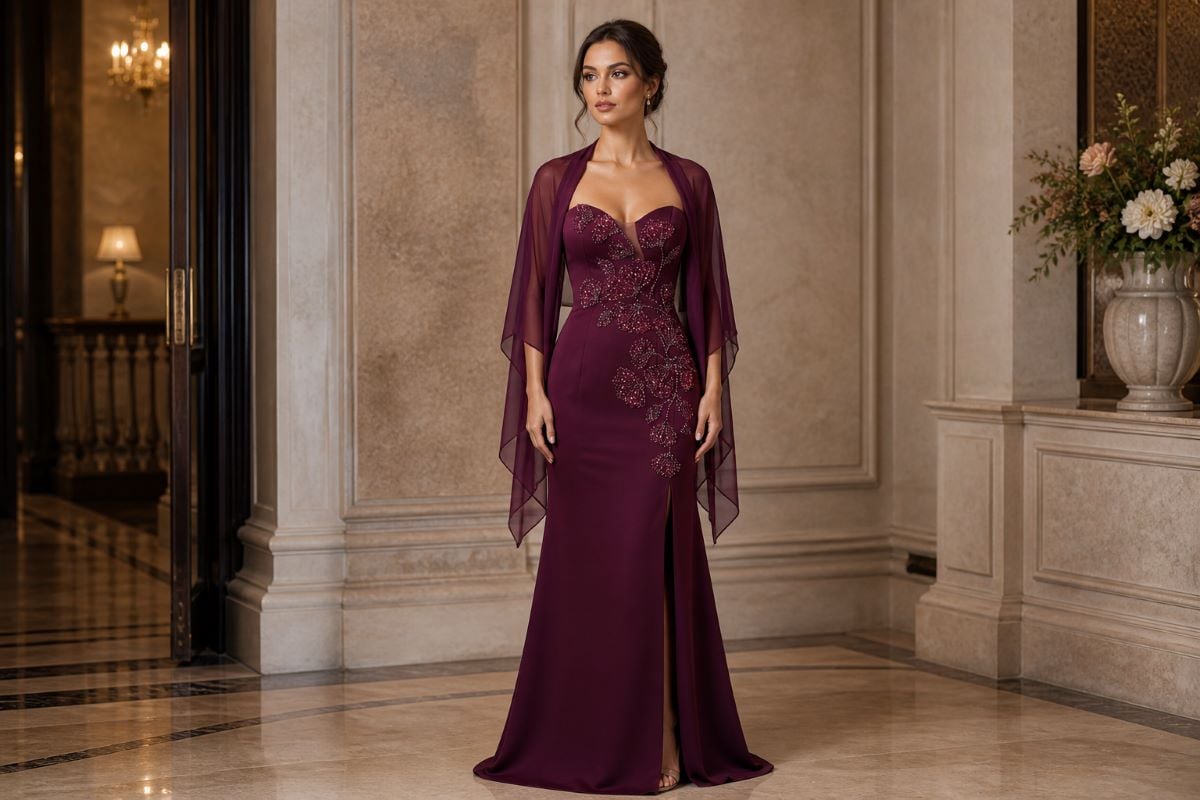
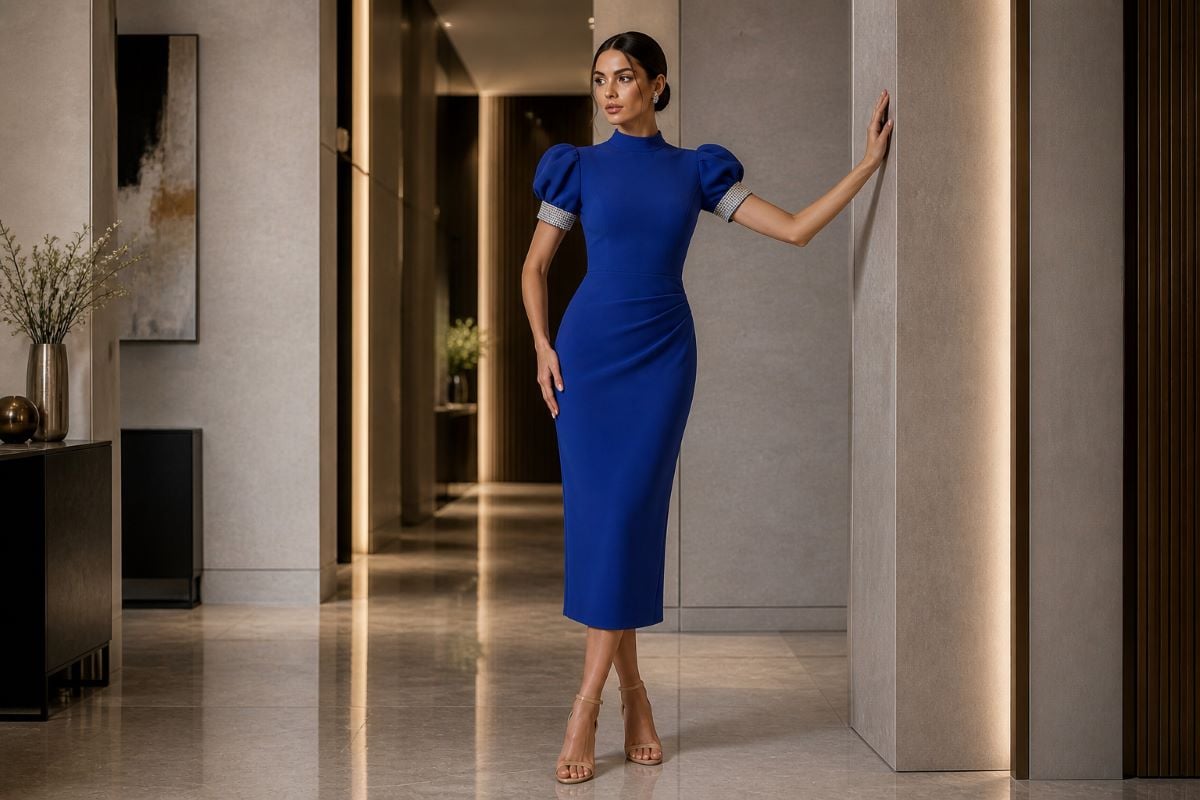
Crepe is a remarkable material that strikes a beautiful balance between structure and fluidity. Known for its subtle, textured surface and sophisticated matte finish, crepe provides excellent coverage without the heavy bulk of traditional winter textiles. Because modern formal crepe possesses a slight natural stretch combined with a heavier drape, it glides seamlessly over the body. It works to smooth out contours rather than clinging to them.
This unique property makes crepe mum of the bride gowns incredibly popular for women who desire a tailored, polished look. The material holds its shape impeccably throughout a long event, ensuring you look just as refined during the final dance as you did walking down the aisle. Designers frequently utilize crepe gowns for mothers because the fabric acts almost like a subtle foundation garment. It offers a sleek, continuous vertical line that visually elongates the figure, making it an exceptional choice for almost any body type, especially those seeking a minimalist, modern aesthetic.
Chiffon: The Illusion of Weightlessness
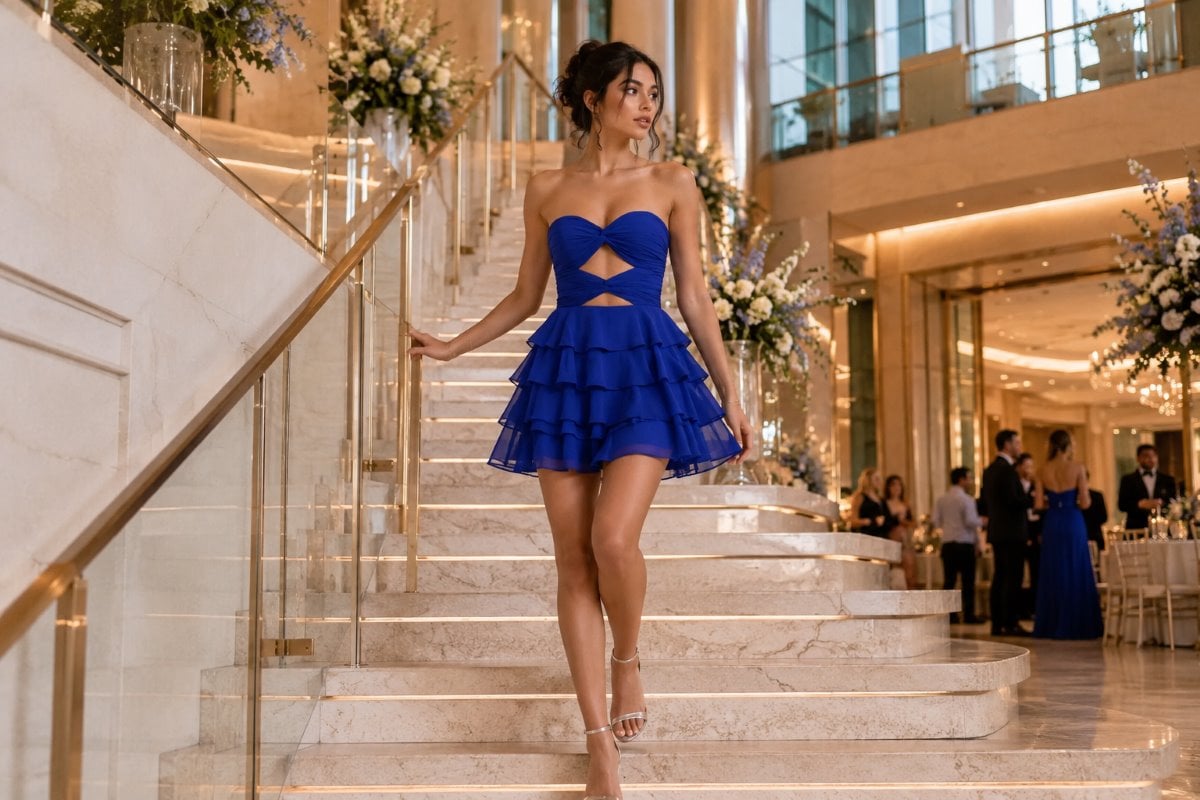
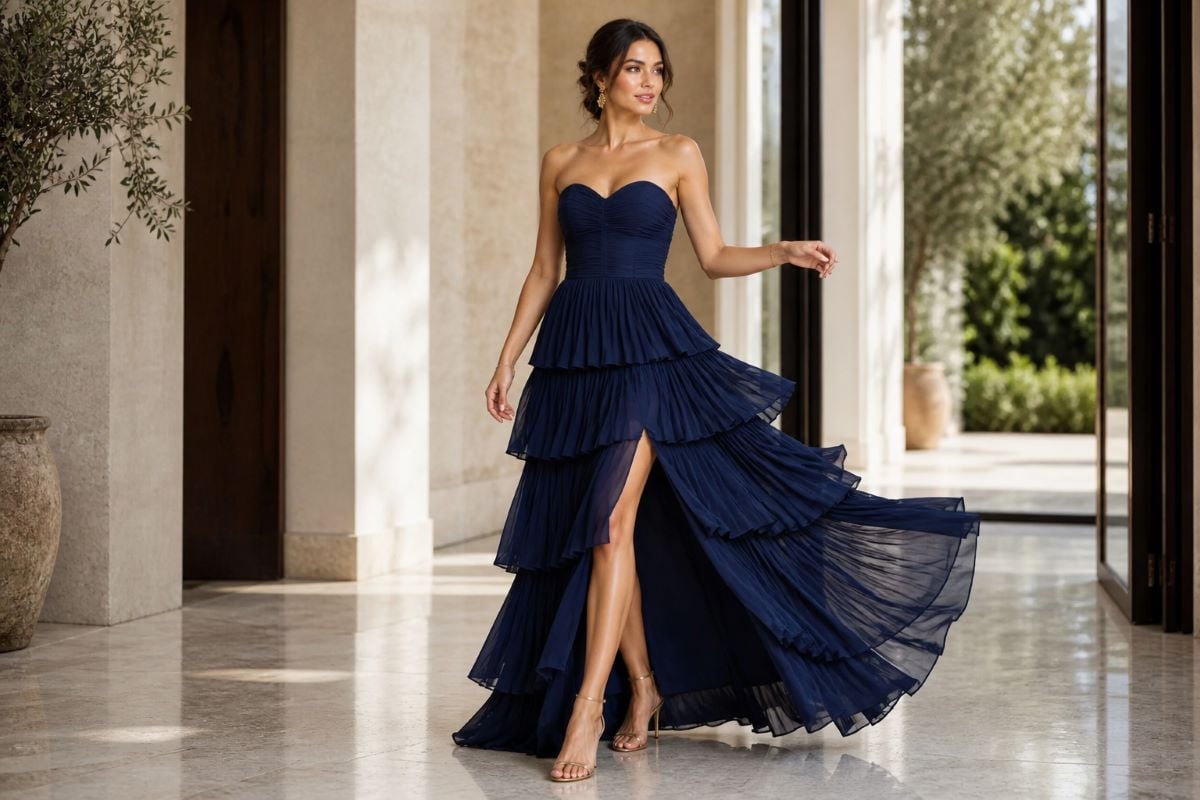
When the goal is an ethereal, romantic aesthetic, chiffon is unparalleled among mother of the bride dress fabrics. This sheer, lightweight woven material is famous for its delicate appearance and graceful movement. Because chiffon is naturally translucent, it is almost always meticulously layered over a solid, smooth lining. This layering technique is incredibly forgiving on the body. Instead of wrapping tightly around curves, flowing chiffon mob gowns float away from the figure, offering a soft-focus effect that blurs lines and creates a beautiful sense of proportion.
Chiffon is particularly magnificent when utilized in A-line silhouettes. The natural, sweeping volume of an A-line skirt combined with the weightlessness of chiffon creates a silhouette that highlights the natural waist and gently cascades over the hips. This combination offers supreme comfort and effortless elegance, particularly for warm-weather weddings, beach settings, or outdoor garden ceremonies where heavy fabrics would feel restrictive and out of place.
Satin: Luminous Structure and Grandeur
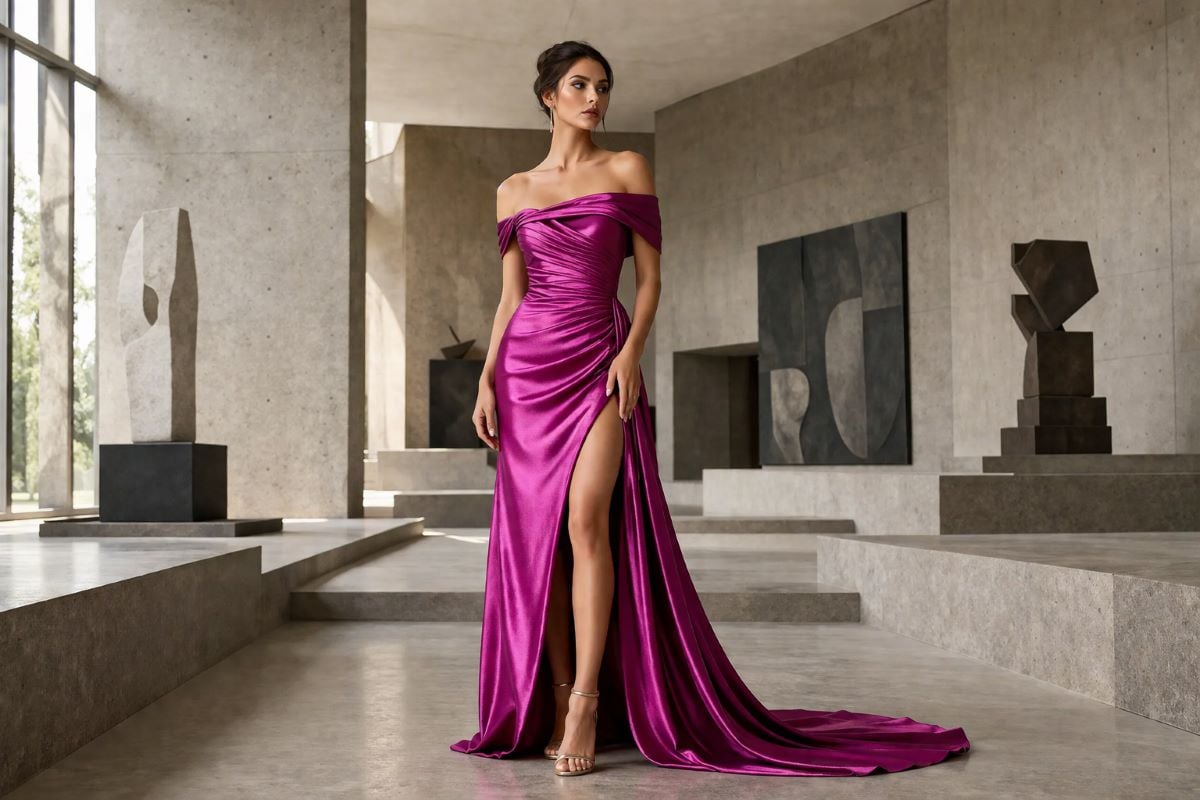
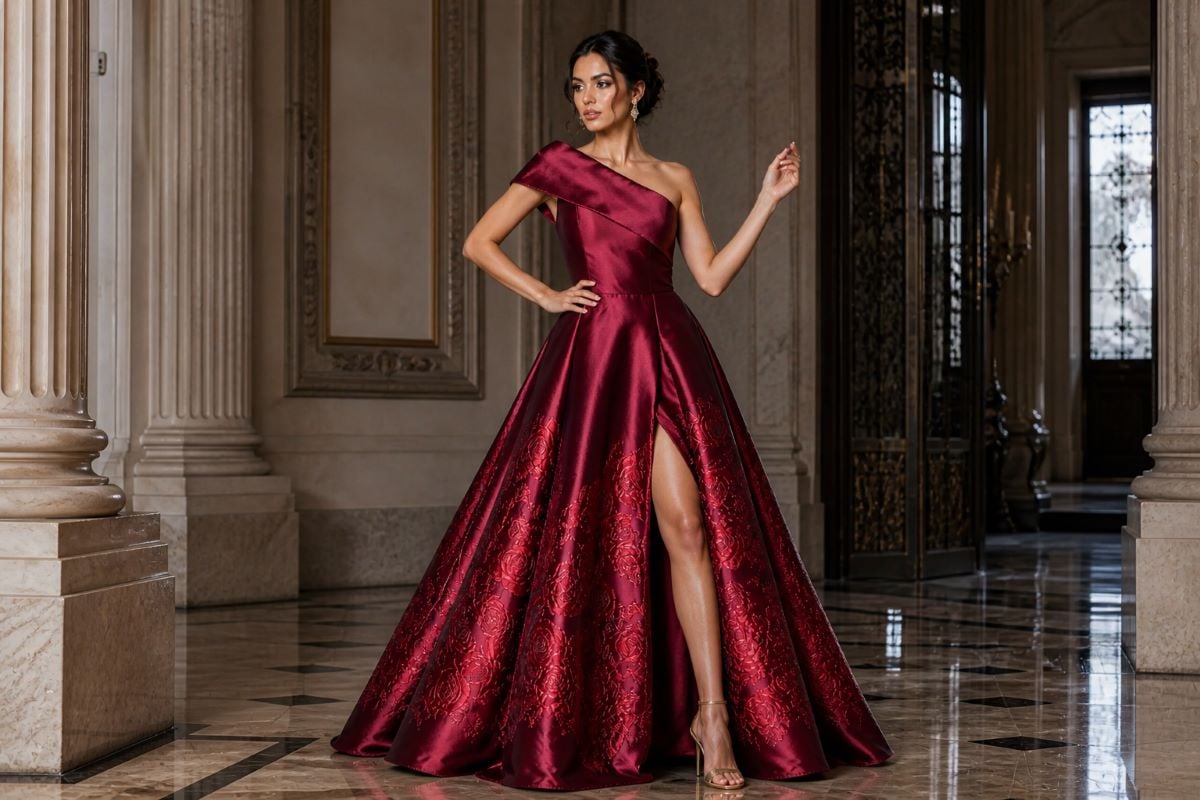
Satin brings an undeniable sense of royalty and traditional glamour to any formal event. However, when evaluating chiffon vs satin dresses, it is important to note that satin behaves very differently against the body. Satin is characterized by its smooth, lustrous surface and varied weights. A heavy duchess or mikado satin provides brilliant architectural support. It can be sculpted into dramatic folds and holds a precise shape, making it ideal for creating curves where there are none or supporting a fuller bust.
Because of its luminous sheen, satin mum of the bride dresses require masterful tailoring. The glossy finish catches the light, which naturally draws the eye and highlights the construction of the garment. When fitted perfectly, a structured satin gown acts as a mold, defining the waist and offering a majestic, regal presence. It is a fabric that demands attention and provides a highly formal, structured aesthetic that is absolutely perfect for black-tie affairs and grand ballroom receptions.
Strategic Fabric Choices for Different Figures
Understanding how these textiles perform allows you to make strategic choices that highlight your best features. Every woman’s body is different, and knowing exactly how fabric affects body shape is the key to unlocking true confidence on such a momentous day.
Enhancing the Midsection and Waistline
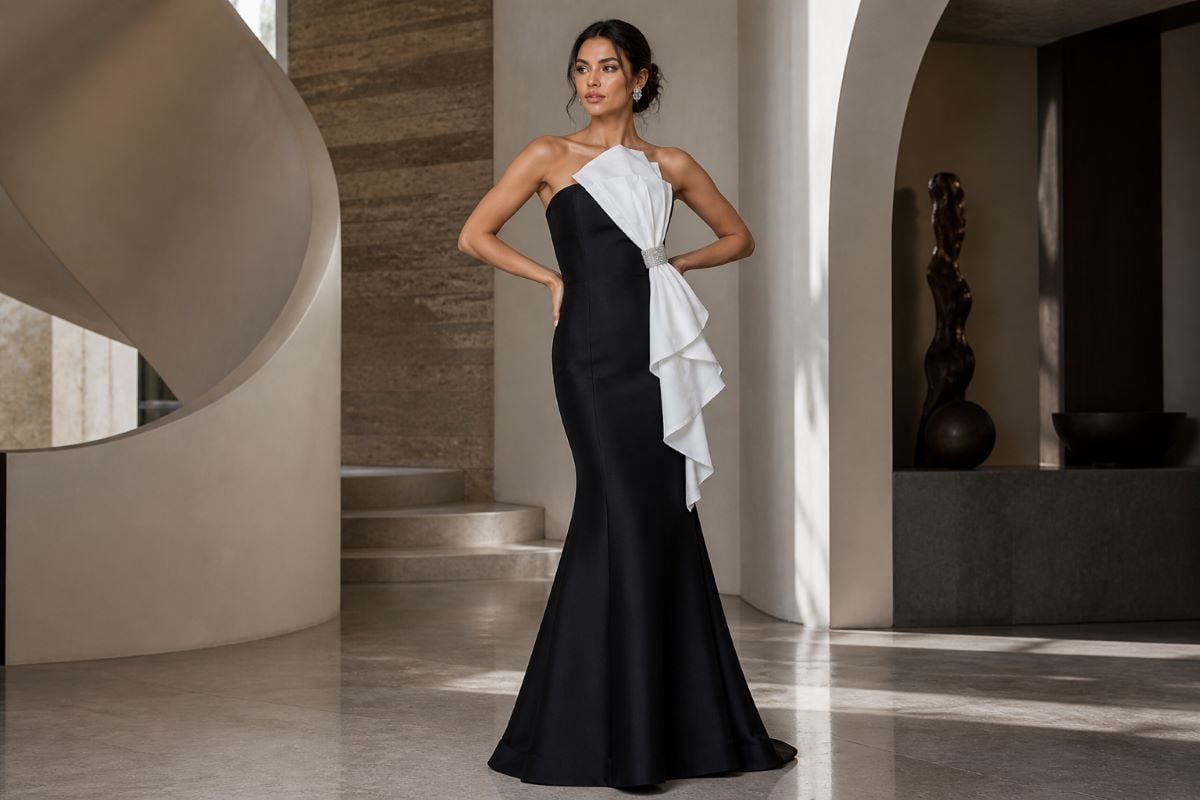
For women who carry weight in their midsection, the contrast between a structured bodice and a fluid skirt is highly effective. A gown with a firm, supportive upper construction paired with a draped, lightweight skirt draws attention upward to the face and neckline while allowing room to breathe comfortably. Conversely, those with an hourglass figure often find that substantial fabrics with a touch of elastane beautifully highlight their proportions. In these cases, fitted mermaid silhouettes crafted from stretch mikado or heavy crepe celebrate the natural waist and hips while providing the necessary support to move with complete confidence.
Support for Extended Sizing and Curves
For women seeking extended sizing, the internal construction of the garment is just as important as the external textile. The most flattering pieces in this category utilize supportive stretch linings paired with premium outer layers that resist wrinkling and pulling across the torso. Many plus size mother of the groom dresses are designed with strategic ruching in soft jersey or fine mesh. This is an advanced technique that uses the fabric’s natural drape to create visual interest, mask undergarment lines, and smooth the midriff entirely, giving the wearer unparalleled security.
Arm Coverage and Elegant Sleeves
Your choice of fabric also dictates the comfort and appearance of your arms and shoulders. If you prefer arm coverage, the material of the sleeve drastically alters the overall look of the gown. Solid crepe sleeves offer a highly formal, tailored appearance that feels very structured. Alternatively, exploring styles with long sleeves made from sheer illusion fabrics, georgette, or fine lace provides elegant coverage without adding visual weight to the upper body. This allows you to feel completely covered and at ease while maintaining a delicate, breathable feel throughout the evening.
The Jovani Difference: Engineering the Perfect Fit
At Jovani, we understand that a dress is only as spectacular as the material from which it is cut. We dedicate ourselves to sourcing the best fabrics for mother of the bride attire, ensuring that every yard of silk, chiffon, satin, and crepe meets our rigorous standards for drape, color depth, and structural integrity.
Our design team engineers each gown with the wearer’s body in mind. We utilize advanced pattern-making techniques so that the fabric works in absolute harmony with your figure, proving that understanding how fabric affects body shape is an art form. A Jovani gown is not just sewn; it is architecturally planned so that the material supports, flatters, and moves with you effortlessly from the ceremony to the final farewell. We pride ourselves on creating elegant, authoritative styles that allow every woman to feel secure, radiant, and deeply comfortable.
FAQs About Mother of the Bride Dress Fabrics
1. Which fabrics are considered the best slimming MOB fabrics for the midsection?
Materials that offer a matte finish and a substantial, smoothing drape are generally the most effective for creating a streamlined look. Crepe is highly recommended because its weight allows it to glide evenly over the midsection without clinging to undergarments. Additionally, softer fabrics like chiffon or fine stretch-mesh that feature strategic, asymmetrical ruching can visually blur the torso and create a highly flattering, cinched waistline.
2. When looking at chiffon vs satin dresses, which is better for a summer wedding?
For warmer months, chiffon is undoubtedly the superior choice. It is highly breathable, feather-light, and allows for excellent airflow, which is critical for preventing overheating during outdoor ceremonies or crowded receptions. Satin, particularly heavier weaves like duchess or mikado, retains body heat and is much better suited for indoor, heavily air-conditioned venues or elegant fall and winter celebrations.
3. What is the best fabric for a mother of the bride who wants to look taller?
To create the illusion of height, opt for fabrics that offer a continuous, unbroken vertical drape. Crepe or georgette in a single, solid color works beautifully because these materials fall straight to the floor without adding unnecessary horizontal volume or stiffness. Avoid overly stiff fabrics with heavy, horizontal tiered skirts, as these can interrupt the visual line and make the wearer appear shorter.
4. Are structured fabrics uncomfortable to wear for a long event?
They absolutely do not have to be. The best fabrics for mother of the bride gowns effortlessly blend structure with comfort. High-quality structured textiles, such as stretch crepe or stretch mikado, incorporate a small percentage of elastane or spandex into their weave. This hidden flexibility allows the dress to maintain its crisp, tailored architectural shape while still expanding slightly to accommodate sitting, dining, and dancing comfortably for hours on end.
5. How does lace affect the shape and silhouette of a formal dress?
Lace is incredibly versatile, but its effect depends entirely on its backing. When appliquéd over a structured satin corset, lace adds visual texture while maintaining a rigid, supportive shape. When layered over fluid jersey or mesh, it becomes a soft, romantic overlay that moves naturally with the body. Large, bold lace patterns can add visual volume, while delicate, fine Chantilly lace tends to lay flat and blend smoothly into the silhouette.