
Satin vs Mikado Wedding Dresses: Sheen, Shape, and Photos
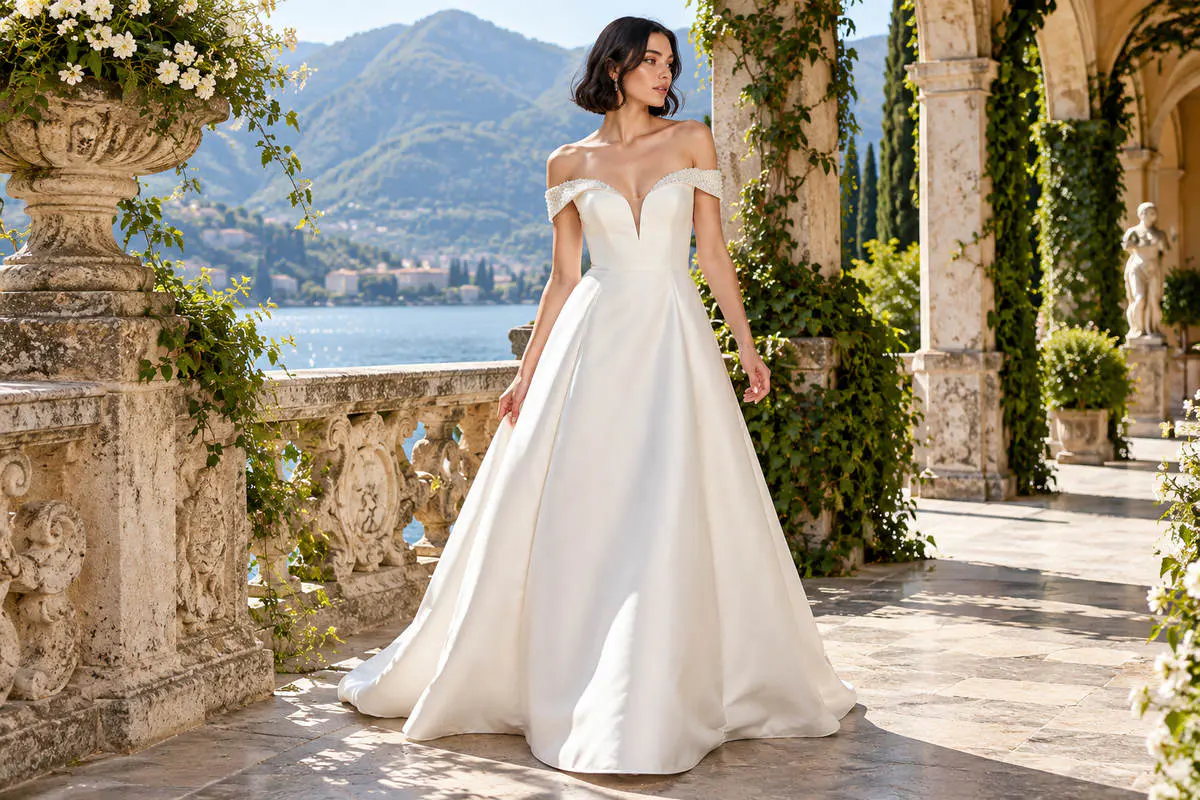
Satin vs Mikado wedding dresses differ most in how their fabric reflects light and holds shape. Softer satin often drapes closer to the body, while Mikado usually creates firmer pleats and volume. Neither label guarantees a specific weight or level of shine. Compare the finished gowns in motion and in photographs before choosing.
Start with Jovani’s Wedding Dresses to see how a smooth fabric can produce several silhouettes. You will notice more useful differences in the finished garment than in an isolated fabric swatch.
Satin vs Mikado Wedding Dress: What Is the Difference?
Satin describes a weave known for its smooth, light-reflecting surface. Mikado usually refers to a denser bridal fabric with greater body and a more controlled sheen. Either can contain silk, synthetic fibers, or blends. A label alone cannot confirm the exact composition.
Jovani’s Wedding Dresses 101 introduces bridal fabrics alongside silhouettes and necklines. For this comparison, judge the surface, skirt movement, and construction together. Those details reveal what the dress will feel like beyond the fitting-room mirror.
How Do Satin and Mikado Reflect Light?
Satin can produce broad highlights that travel across a skirt as the wearer turns. Mikado often reflects light more softly across crisp folds. The result still depends on the fabric finish, lighting, and garment shape.
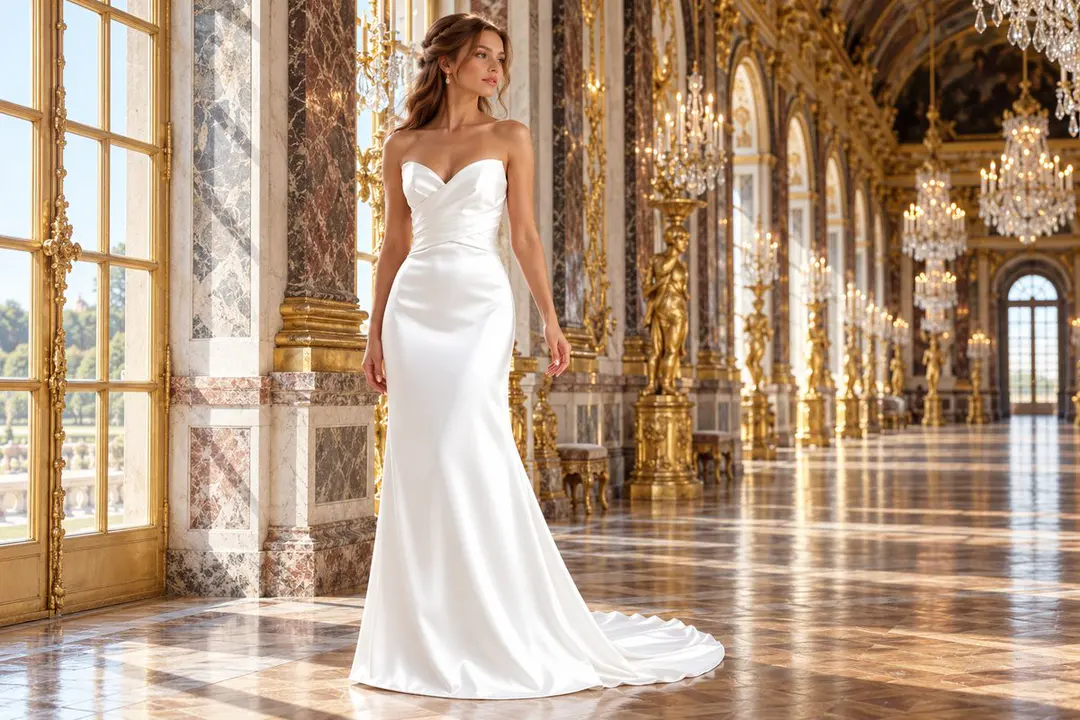
Satin Highlights and Surface Detail
A fluid satin gown can show diagonal light bands across draping and seams. Jovani style JB45837 lists satin, a draped bodice, and a smooth sheath skirt. Those confirmed details make it a useful reference for examining how light reveals the cut.
Mikado Luster and Defined Edges
Mikado often makes pleat edges and the outline of a fuller skirt more distinct. Jovani style JB07134 identifies both Mikado and satin in its listed fabrics. Ask the retailer which panels use each material before treating the entire gown as one fabric.
Which Fabric Holds a Bridal Silhouette Better?
Mikado generally provides more body for a sculpted skirt or defined waist. However, heavyweight satin can also hold considerable structure. Internal layers, cut, and seam placement determine the final result, not just the outer material.
Compare A-line Wedding Dresses when you want a skirt that opens gradually from the waist. A sharper outline often comes from a substantial textile and appropriate internal shaping. A lighter cloth tends to fall into softer folds.
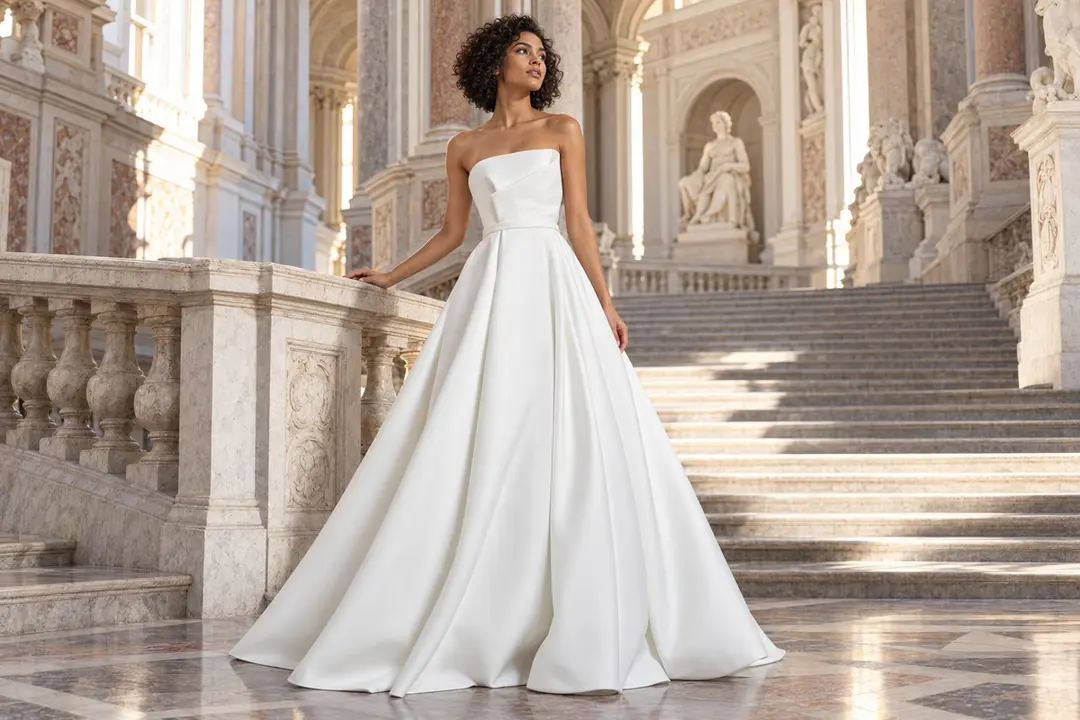
Fitted Lines Need Different Support
A close-fitting skirt needs careful shaping through the hips, regardless of fabric. Fitted Wedding Dresses provide examples of fitted seams and different fabric choices. Check whether the cloth follows your movement without twisting at the side seam.
Full Skirts Depend on More Than Fabric
Jovani style JB45169 lists satin, a structured waist, a full skirt, and a pleated bodice. This demonstrates why a satin label does not automatically mean fluid draping. Support layers can give satin a strong, formal outline.
How Do Weight and Movement Compare?
Mikado often feels more substantial than softer satin, but garment weight varies widely. Lining, train length, embellishment, and underskirts can outweigh differences between the outer fabrics. Judge the complete gown after it is fastened properly.
Walk at your normal pace, turn, and sit before deciding. Try a few steps with the train arranged as it would be during the ceremony. A fabric that looks perfect while standing still may feel restrictive when you move.
The Wedding Dress Construction 101 guide explains how seams and supportive layers affect the finished gown. Use those checks when a fabric feels unexpectedly heavy or a skirt pulls against the bodice.
What Do Real Jovani Fabric Labels Tell You?
Product specifications show why comparing construction matters more than ranking fabric names. Jovani style JB40599 lists Mikado and satin together, plus a pleated design and closed back. That makes it a practical example of combined fabric terminology.
For contrast, JB45837 uses satin in a sheath silhouette, while JB45169 uses satin for a fuller ball gown. Both specifications are published by Jovani. The different results arise from the overall design rather than a single fabric label.
Brides considering Mermaid Wedding Dresses should check the lower skirt release and stride length carefully. A structured fabric changes how the flare stands away from the legs. The actual fit remains the deciding factor.
A Simple Photography Test Before Buying
Photograph the actual gown from the front, side, and back in consistent lighting. Take one image near a window and another under the boutique’s indoor lights. Ask permission before using flash, and keep the camera exposure similar.
Zoom in on the bodice and waist, where bright highlights can emphasize wrinkles or seam tension. Then look at the whole silhouette from several steps away. A brighter satin is not automatically worse for photography. Good exposure and fabric construction matter more.
If you are considering Strapless Wedding Dresses, photograph the neckline after moving your arms. A smooth surface can make small shifts more noticeable. Ask the fitter to adjust the gown before judging its fabric from the images.
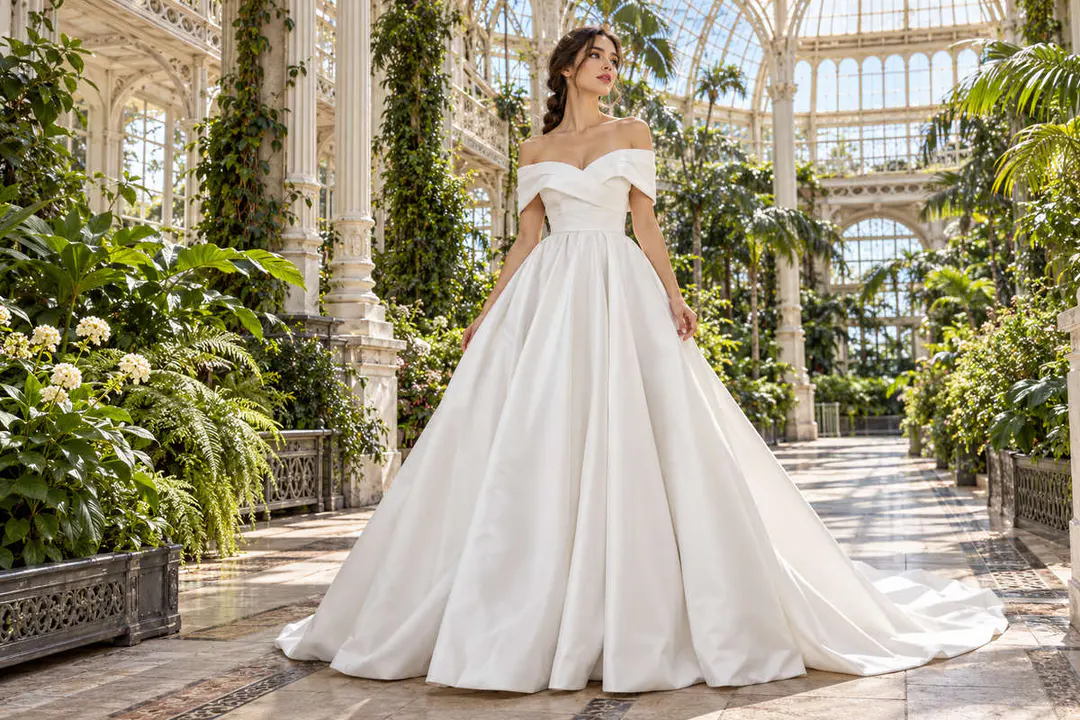
Questions to Ask About Fabric and Alterations
Ask for the actual fiber composition, lining details, and care instructions. Check whether the sample matches the material available for your order. Confirm whether any planned hem or bodice alteration would affect the pleats or sheen.
Jovani’s Wedding Dress Shopping Tips guide covers broader appointment planning. For this fabric decision, compare two gowns under similar conditions and record which one moves comfortably. A thoughtful fitting is more reliable than guessing from online photographs.
For satin vs Mikado wedding dresses, bring those notes to an authorized Jovani retailer and compare available bridal styles in person. The retailer can help verify fabric details and discuss fit options.
Frequently Asked Questions
Is Mikado Always Made From Silk?
No. Mikado can use silk, synthetic fibers, or blends. Check the composition for the specific wedding gown rather than assuming the material from its name.
Can Satin Be as Structured as Mikado?
Yes. Heavy satin, including some duchess satins, can support strong pleats and fuller silhouettes. Compare the actual gown and its inner construction before deciding.
Which Fabric Photographs Better in Bright Sunlight?
Neither fabric wins in every lighting condition. Satin may create stronger highlights, while Mikado can show firmer folds. Test both gowns with similar camera exposure.
Will a Mikado Dress Always Feel Heavier?
No. A lighter Mikado gown may weigh less than a layered satin ball gown. Consider lining, train, embellishments, and the finished garment as a whole.