
How Wedding Dress Fabrics Look in Daylight, Flash and Warm Light
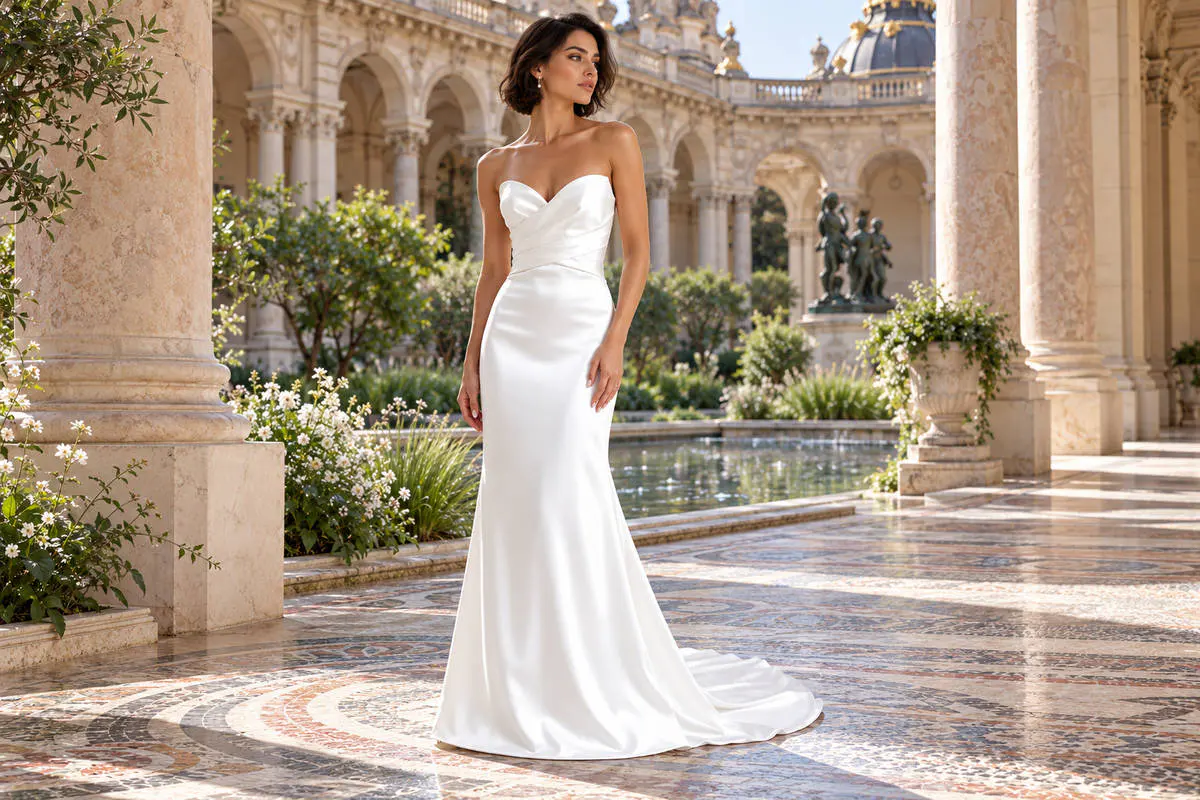
Wedding dress fabric in photos can look markedly different in daylight, direct flash, and warm indoor lighting. Satin may show bright highlights, while lace reveals patterned texture and tulle softens the outline. Test the actual gown in each type of light before choosing a fabric based on online product images alone.
Why Does Wedding Dress Fabric Look Different in Photos?
Cameras record reflected light, not the fabric exactly as your eyes perceive it. Glossy surfaces can appear brighter than their surroundings, while matte finishes spread light more evenly. When comparing designer bridal gowns, focus on the same fabric at different angles and under consistent exposure.
Cut, lining, and embellishment change the result as much as a fabric name. Jovani’s Wedding Dresses 101 provides the broader introduction to bridal materials and silhouettes. This guide concentrates on the lighting conditions a wedding photographer is likely to encounter.
How Satin, Crepe, Lace and Tulle Look in Daylight
Open shade and soft window light often reveal more fabric detail than hard midday sunshine. Strong sunlight can create intense highlights on smooth cloth and deep shadows inside folds. Compare fabric finishes in the light planned for your ceremony rather than assuming daylight always looks the same.
Satin and Crepe: Shine Versus Quiet Texture
Satin reflects light across broad areas, making folds and tension lines more visible. Jovani style JB45837 lists satin, a draped bodice, and a smooth sheath skirt. Its finished construction provides a concrete example of how fabric sheen and garment shape interact in photographs.
Crepe generally shows less surface shine, although its weight and weave vary. Photograph a smooth crepe gown from the front and side to see whether its seams remain visible. For a related comparison of reflective finishes, read Jovani’s satin and Mikado wedding dress guide.
Lace and Tulle: Pattern, Transparency and Layers
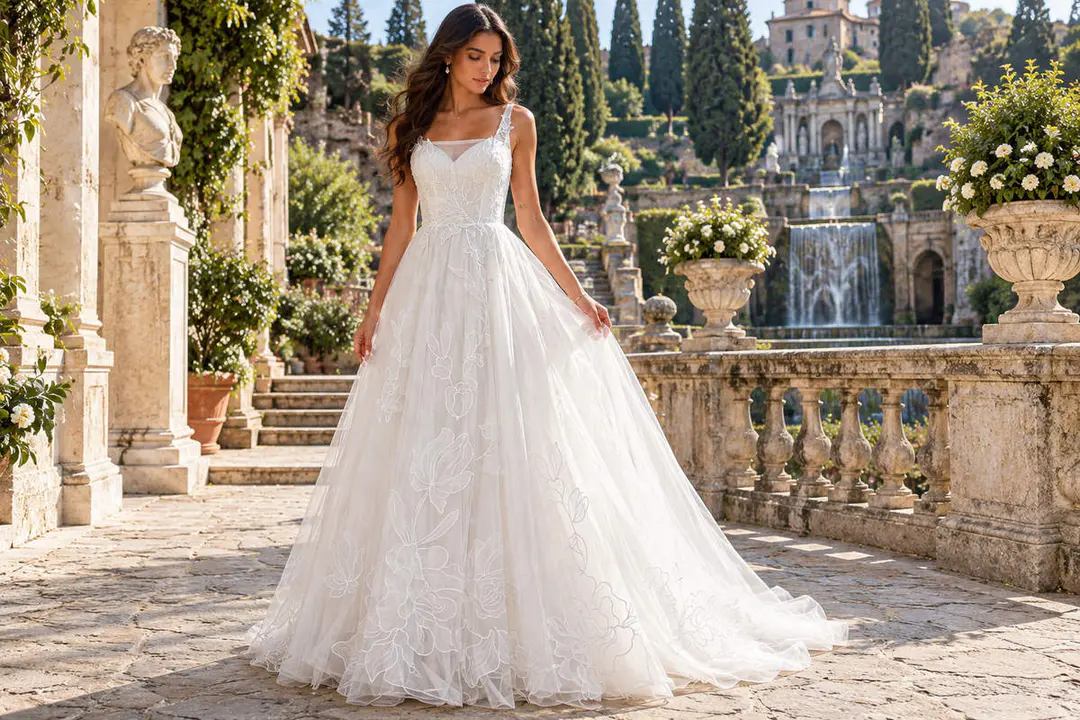
Lace needs contrast for its motifs to appear clearly in wide shots. In floral lace bridal designs, a contrasting lining may separate the pattern from the base color more clearly than matching ivory layers. Jovani style JB49761 confirms lace appliqué on tulle, a sheer bodice, and a layered A-line skirt.
Tulle can look airy when daylight passes through its layers, especially near a window or in open shade. Front lighting may make multiple pale layers blend together. Check both a full-length image and a close-up before deciding how much of the texture you want visible.
What Does Camera Flash Do to Wedding Dress Fabrics?
Direct flash may create bright spots on satin and sharp reflections from crystals or sequins. Those effects vary with the angle, distance, camera exposure, and finish. A flash photograph should test the real garment, not serve as a prediction that every glossy wedding dress will photograph badly.
Bright Satin Highlights and Visible Folds
Under a direct phone flash, inspect the bodice for areas that appear pure white without visible texture. A slight turn can move a satin highlight away from the center of the frame. Ask your photographer about softer or bounced lighting for formal portraits rather than rejecting a fabric you like.
Beading, Crystals and the Camera Angle
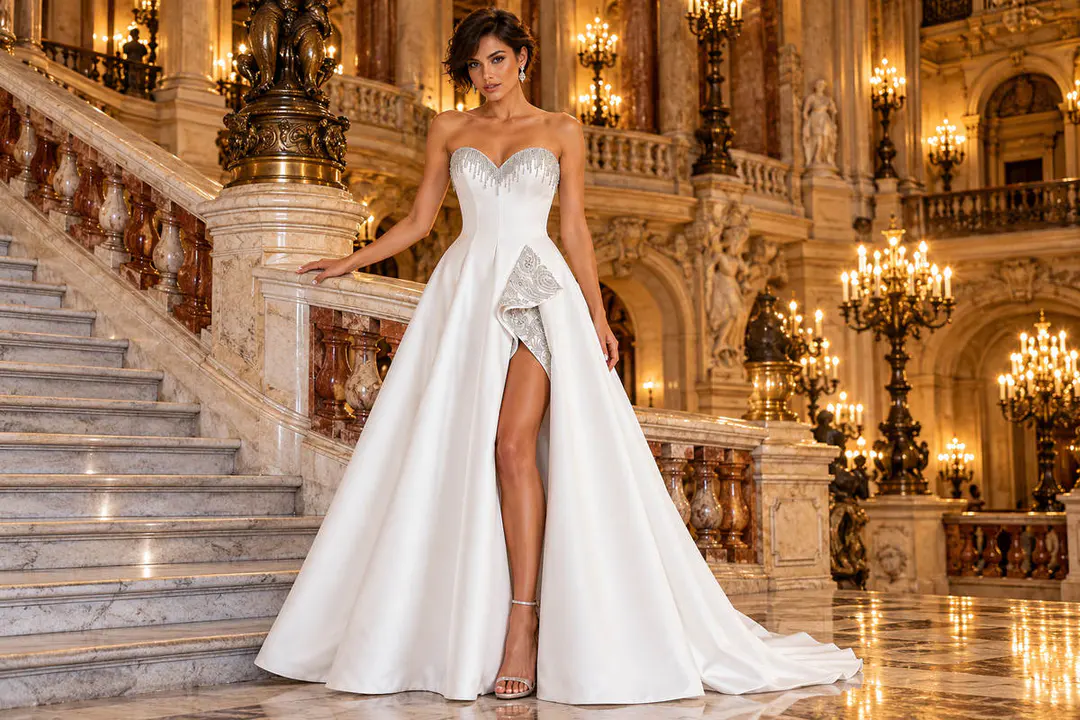
Small reflective details can sparkle strongly at one angle and disappear at another. Jovani style JB45132 specifies satin, a beaded bodice, and a structured skirt. Compare its concentrated surface detail with other embellished bridal gowns, then photograph both the bodice and the complete silhouette.
For lace or illusion panels, flash can also reveal differences between the outer layer and its lining. Test the same pose with flash on and off. Review the resulting images for opacity, seam lines, and reflections rather than judging sparkle alone.
What Changes Under Warm Indoor Wedding Lighting?
Warm venue lights can make ivory, white, and champagne fabrics appear more yellow or peach than they do outdoors. The effect also depends on camera white balance and surrounding walls. Photograph a fabric sample near the actual venue lighting if possible, especially when color consistency matters.
Ivory Undertones, Shadows and Lace Contrast
Matching lace and lining may look different under amber chandeliers than under a neutral window. Fine patterns sometimes lose contrast in dim rooms, while raised appliqué can retain visible shadows. Ask for a close-up when embroidery or lace placement is central to your gown.
Satin Folds and Sparkle After Sunset
Side lighting can reveal depth in satin pleats, while overhead lighting may brighten the shoulders more than the skirt. With strapless bridal gowns, check how light traces the upper bodice after you raise your arms. A secure fit prevents shifting that can look more obvious on a smooth surface.
The Three-Light Fitting Room Photo Test
Take consistent photographs of the actual dress before deciding which wedding dress fabric photographs best for you. This simple comparison works even without professional camera equipment. Ask the retailer for permission and use a similar distance, pose, and framing in every set.
- Daylight: stand by a window or in open shade, then photograph the full length and fabric detail.
- Flash: repeat the front and side views, watching for bright patches, sparkle, and visible lining.
- Warm light: use indoor lighting similar to your reception and check white or ivory undertones.
- Movement: take a short video while walking and turning so the skirt and train can be judged in motion.
Compare the photos at similar brightness and examine them on more than one screen. In A-line bridal gowns, layered skirts and shaped waistlines provide useful reference points for watching how silhouettes change between shots. Do not interpret one phone image as an exact preview of professional wedding photography.
How Lining, Fit and Movement Affect the Final Image
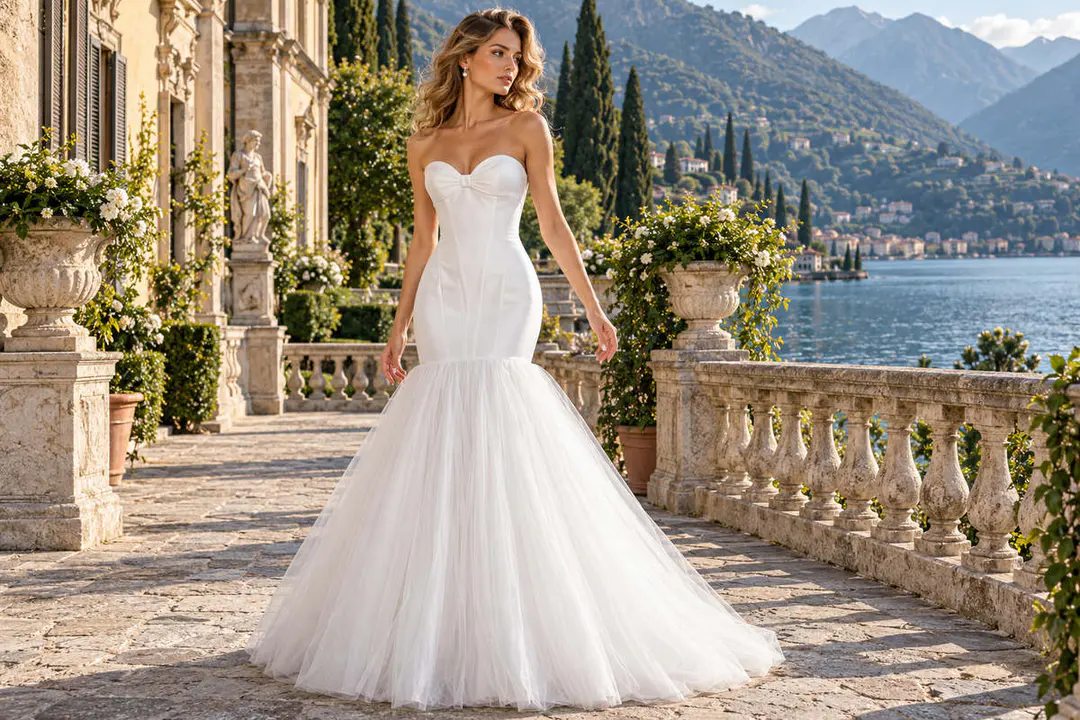
An outer fabric alone cannot explain how a wedding dress will photograph. Lining color influences lace contrast, while a fitted seam may create shadows under side lighting. Jovani style JB45361 pairs a structured satin bodice with a layered tulle skirt, showing why different parts of one dress can respond differently.
Your photographer can help manage exposure, white balance, and lighting direction. For a separate session focused on posed images, Jovani’s bridal portrait dress guide explains how camera needs influence the outfit choice. When evaluating wedding dress fabric in photos, also choose a gown that feels comfortable while walking, sitting, and celebrating.
Bring your fitting-room photos to an authorized Jovani retailer and ask to compare fabric finishes, linings, and fit in person before making a final decision.
Frequently Asked Questions
Does satin photograph badly with flash?
No. Satin can produce strong highlights under direct flash, but the result depends on the finish, lighting direction, and exposure. Try a front and side photograph before deciding.
Can a white wedding dress look yellow in indoor photos?
Yes. Warm bulbs and automatic white balance can make white or ivory appear warmer than in daylight. Test the fabric under similar lighting and discuss color correction with your photographer.
Will lace patterns show clearly in wedding photographs?
Larger or higher-contrast motifs often read more clearly in wide shots. Fine lace may need a closer photograph and directional light to reveal the pattern. Lining color also affects visibility.
Should I use my phone to test wedding dress fabrics?
Yes. A phone is useful for comparing the same gown under several lights, even though it cannot predict every professional photograph. Keep the angle and framing consistent and review detail at normal screen brightness.