
Chantilly vs Guipure Lace: Pattern, Weight, and Bridal Use
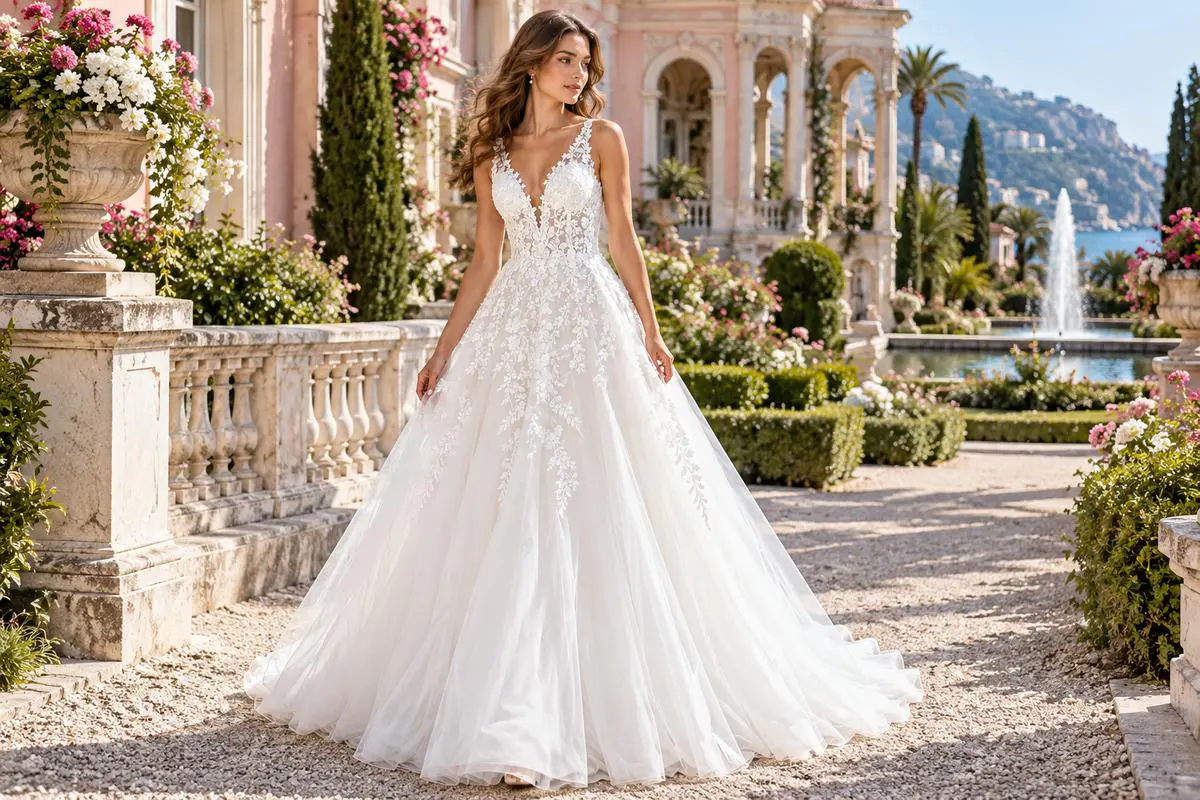
Chantilly vs guipure lace comes down to construction: Chantilly places delicate motifs on fine net, while guipure connects bolder motifs without that continuous mesh. Chantilly generally drapes softly. Guipure often holds a more defined pattern. For brides, the best choice depends on placement, lining, movement, and the look you want in photographs.
What Is the Difference Between Chantilly and Guipure Lace?
The quickest check is to look between the motifs. Fine net suggests Chantilly or a similar net-based lace; open spaces linked by stitched bars suggest guipure. Browse lace wedding dresses to see how different textured surfaces work across bridal silhouettes. Fabric labels still need confirmation from the retailer.
Chantilly Has a Fine Net Foundation
Chantilly lace commonly features small floral or scrolling patterns on a soft, transparent ground. The fine threads allow the pattern to follow curves without a pronounced raised edge. A lining or layered fabric underneath determines coverage and the final shade. The broader Wedding Dresses 101 guide introduces fabrics within the overall bridal selection process.
Guipure and Venise Connect Their Motifs Directly
Guipure, often called Venise lace in bridal retail, uses connecting bars or threads instead of a continuous net ground. Larger motifs may feel more substantial and keep their outlines visible from a distance. Not every heavy floral lace is guipure. Ask the boutique to identify the textile instead of judging solely from a product photograph.
How Pattern Size and Open Space Change the Look
A lace pattern changes the mood of a dress before you notice its exact fiber content. Fine repeats create a quieter surface, while larger motifs can dominate the bodice or skirt. The floral wedding dresses collection demonstrates how floral embroidery, dimensional appliqué, and layered fabrics can create different effects without identifying every style as Chantilly or guipure.
Small Motifs Create a Softer Outline
Fine Chantilly patterns often appear almost drawn onto the foundation. On sleeves, they can reveal the arm softly through a transparent ground. Against ivory lining, the same lace looks more continuous. Check both close-up detail and a full-length photograph so the pattern does not disappear visually.
Larger Motifs Make Negative Space Part of the Design
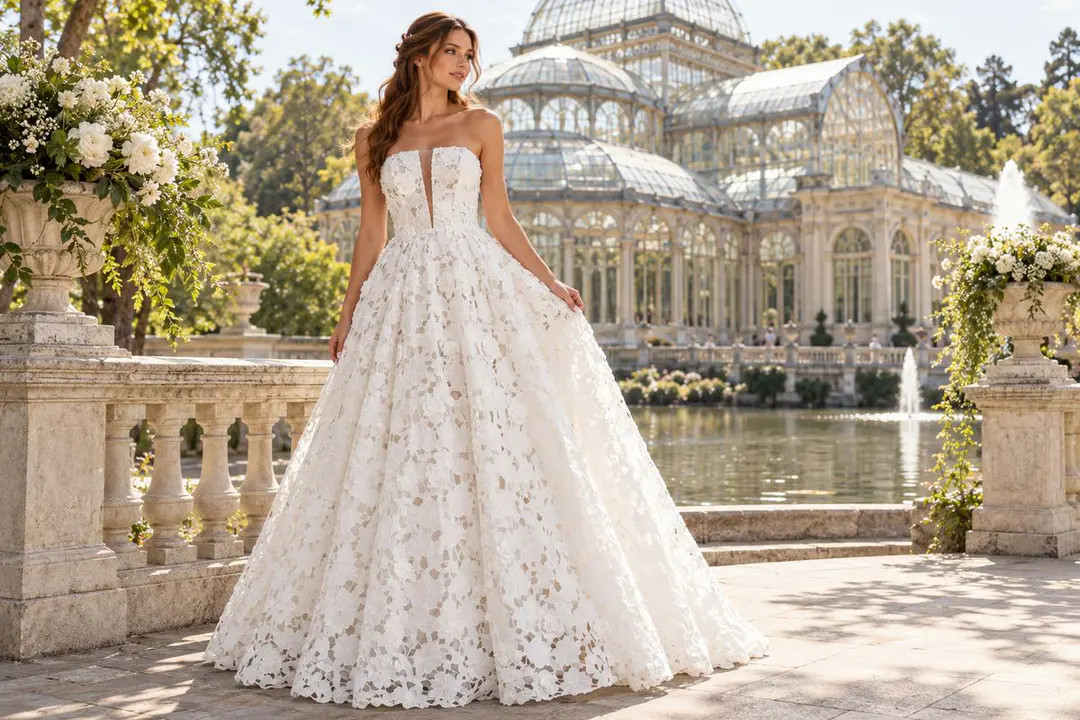
Guipure leaves open areas between connected shapes, making the pattern easier to recognize from across a room. A contrasting lining can emphasize those openings. The motif may also interrupt seam lines when a bodice needs adjustment. Inspect the side seams and zipper area before deciding how much tailoring might be possible.
Which Lace Feels Lighter and Moves More Freely?
Chantilly is usually lighter and more fluid than a substantial guipure, but density and lining can reverse that impression. A light overlay over stiff layers may move less freely than expected. Look at skirt construction as a whole. Flowing A-line wedding dresses show why the foundation matters as much as the decorative surface.
Test the Fabric in Motion
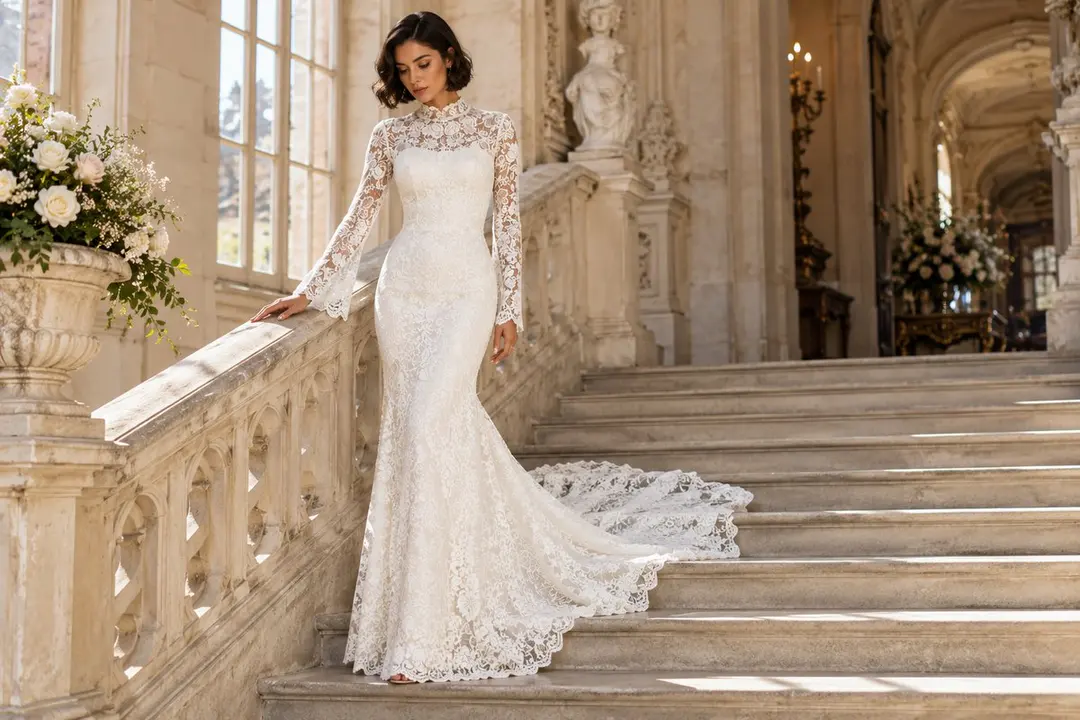
Lift a small outer layer with the stylist’s permission and watch how it settles. Chantilly commonly falls in softer folds; dense guipure can retain a firmer outline. Walk, sit, and turn without tugging the fabric. If the lace pulls across the thigh or catches at an opening, discuss the fit before ordering.
Check Lining, Seams, and Skin Contact
The backing often controls comfort more than the lace name. Guipure can feel textured against bare skin, especially near an armhole or waist seam. Fine lace can catch on jewelry or rough fasteners. Ask whether the decorative layer touches your skin or sits over a smooth lining.
Where Does Each Lace Work Best on a Bridal Gown?
Chantilly works naturally for light sleeves, overlays, and soft sections of a train. Guipure suits visible borders, shaped bodices, and graphic placements where motifs can stand apart. The fitted wedding dresses collection offers examples of close silhouettes where seam placement and surface detail require particular attention.
Sheer Sleeves and Flowing Overlays
Jovani style JB45767 has allover lace, a high illusion neckline, and long sheer lace sleeves. Its listed fabric is simply lace, not a confirmed Chantilly subtype. This distinction matters when comparing product descriptions. The lace wedding dress guide covers overall bridal lace styling, while this comparison focuses on the textile itself.
Corset Bodices, Scalloped Edges, and Full Skirts
Jovani JB45912 lists floral appliqué, scalloped edges, and a layered ball gown skirt. Those are verified design details, not proof of guipure construction. On a fitted bodice, examine where larger motifs meet the closure. On a full skirt, check whether the border follows the hem cleanly.
How to Compare Lace During a Bridal Appointment
Bring two or three reference photographs and ask the retailer for a close inspection of the fabric. Jovani JB42323, for example, lists lace appliqué on tulle with three-dimensional floral details and a flowing A-line skirt. It illustrates why appliqué on net should not automatically be called Chantilly. Compare wedding dresses by their stated construction as well as their appearance.
- Hold each sample against a light source and identify any continuous net ground.
- Touch the motif edge gently to assess thickness without stretching or pulling.
- Compare the fabric against the actual lining, not only bare skin.
- Take one close-up and one full-length photo under the same lighting.
- Ask how seam alterations, cleaning, and train bustling affect the pattern.
Have the stylist explain which layers are decorative and which support the gown. Photograph the dress from the back as well as the front. For fitting preparation beyond textiles, review bridal appointment planning before visiting an authorized retailer. A useful decision comes from movement and construction, not the fabric name alone.
Why Bridal Fabric Labels Need a Second Look
Product descriptions may use lace, embroidery, appliqué, or tulle for visibly similar surfaces. A floral appliqué stitched onto mesh is not necessarily woven as Chantilly lace. A thick outlined motif does not automatically qualify as Venise lace. Ask for the supplier description when the exact lace type matters to your purchase.
A bridal stylist may recommend a different lining for better coverage, but changing the backing can also alter the pattern contrast. Discuss alterations before committing to a heavily decorated seam. If a sample snags easily, ask about handling, storage, and professional cleaning recommendations for that specific garment.
When you are ready to inspect lace and fit in person, find an authorized Jovani retailer and request a bridal appointment with the styles you want to compare.
Frequently Asked Questions
Is Venise lace the same as guipure lace?
Usually, yes. Venise is commonly used as a retail name for guipure-style lace with joined motifs and no continuous net background. Naming varies between suppliers, so confirm the fabric specification before ordering a particular design.
Can Chantilly lace include raised or corded details?
Yes, some Chantilly-style laces include outlining or added embroidery. A raised motif alone does not identify the fabric. Look for the continuous fine net behind the decoration and ask the stylist about any additional appliqué.
Does heavier lace always feel warmer in a wedding dress?
No, lining and layering often matter more than lace weight alone. Dense guipure may feel substantial, but open sections still allow airflow. A lined Chantilly sleeve can feel warmer than an unlined, open-patterned lace panel.
Can guipure lace be altered without damaging its pattern?
Yes, but a bridal alterations specialist should assess the motif placement first. Large connected designs may need careful repositioning around a seam. Ask what will happen to the visible pattern before approving any change.