
Wedding Dress Fabric Weight: Drape, Support and Alterations
Wedding dress fabric weight changes how a gown falls, how substantial it feels, and how an alterations professional handles it. It can influence seasonal comfort, but outer fabric weight never tells the whole story. Lining, underskirts, trains, beading, and cut can add more total weight than the shell fabric.
Use fabric weight as a comparison tool, not a quality score. When browsing designer bridal gowns, compare complete dresses with similar silhouettes and note how each skirt moves once the gown is fully fastened.
What Does Wedding Dress Fabric Weight Change?
Wedding dress fabric weight changes drape, movement, perceived structure, warmth, and the work involved in some alterations. Weight describes how substantial a textile is, while drape describes how that textile hangs and folds. The two are related, but they are not interchangeable.
Fabric names also cover a range of weights. Satin can be fluid or firm, and tulle can be soft or comparatively crisp. Jovani's Wedding Dresses 101 provides the broader bridal framework, while fabric weight gives you a narrower way to compare how gowns may behave.
How Does Fabric Weight Change Drape?
Fabric weight influences drape, but stiffness, weave, layering, and cut decide how that weight behaves. A light textile can float away from the body, while a medium-weight fabric may fall into longer folds. A firmer fabric can keep pleats or skirt volume more clearly.
Silhouette changes the result again. A-line bridal gowns spread fabric across a widening skirt, so weight interacts with flare, train length, and any supporting layers. Two A-lines can therefore feel very different even when their outer fabrics share a name.
A fitted wedding dress keeps more fabric close to the body, which can make tension and seam behavior easier to notice. The same satin label can produce a smooth sheath or a full skirt depending on cut and construction.
Jovani's satin versus Mikado comparison makes that distinction clear: lining, train length, embellishment, and underskirts can outweigh the difference between two outer fabrics. Judge the finished gown rather than ranking fabric names by weight alone.
Does Heavier Fabric Give More Support?
No. A heavier outer fabric can hold shape, but support comes from fit and the complete construction. Seams, closures, lining, and internal structure can matter more than fabric density at the bodice.
This is especially important with strapless bridal styles. A firm satin may keep a sculpted surface, but the neckline still needs a secure fit that stays in place while you sit and move. Weight should never substitute for a proper fitting.
The wedding dress construction guide explains how lining, seams, boning, and skirt layers work with the outer fabric. Use those construction checks if a gown feels unexpectedly heavy or if the skirt seems to pull against the bodice.
Is Fabric Weight a Seasonal Rule?
No. Fabric weight can affect warmth, but total layers, airflow, venue temperature, and movement matter just as much. A light outer fabric can still feel warm when it sits over several layers. A firmer fabric may feel comfortable in a climate-controlled room when the gown has fewer underlayers.
For warm weather, test how the complete dress feels after standing and walking for several minutes. For cooler conditions, remember that a heavier shell does not replace practical outerwear. Season should guide the fitting test rather than create a fixed list of approved fabrics.
How Does Fabric Weight Affect Alterations?
Fabric weight can change how a hem, seam, train, or embellished area behaves during alterations. The alteration difficulty still depends on construction, layer count, surface detail, and where the change must be made.
A long hem with several layers may require more handling than a single smooth layer. Dense beading near a seam can also require careful removal and replacement before that seam moves. An alterations professional should assess the exact gown before promising a specific change.
Jovani does not provide tailoring or alteration services. Ask the authorized retailer how local alterations are handled, and bring the shoes and undergarments you plan to use for the fitting.
Why Layers, Trains and Beading Matter More Than the Label
The finished gown can weigh much more than its outer fabric suggests. Lining, tulle layers, petticoats, long trains, appliques, and beadwork all contribute to the load you carry.
This is why beaded bridal gowns should be tested for total comfort rather than judged by the base textile alone. Concentrated embellishment at the bodice or shoulders can feel different from the same amount spread across a skirt.
What Should You Check During a Bridal Appointment?
Check fabric weight by testing the complete dress in motion, not by lifting a swatch or reading a fabric name. The goal is to learn where the gown feels substantial and whether that weight changes your movement.
- Walk at your normal pace and notice whether the skirt swings freely or resists your stride.
- Sit for several minutes and check whether the skirt, waist, or train creates new pressure.
- Lift a small section of the skirt and see whether the layers fall back cleanly without tangling.
- Ask which parts are lining, outer fabric, underskirt, or embellishment before discussing alterations.
Repeat those checks in more than one gown. A useful comparison keeps the silhouette similar while changing fabric, layering, or surface detail so you can feel what actually changes.
Real Jovani Gowns Show Why Fabric Names Are Not Enough
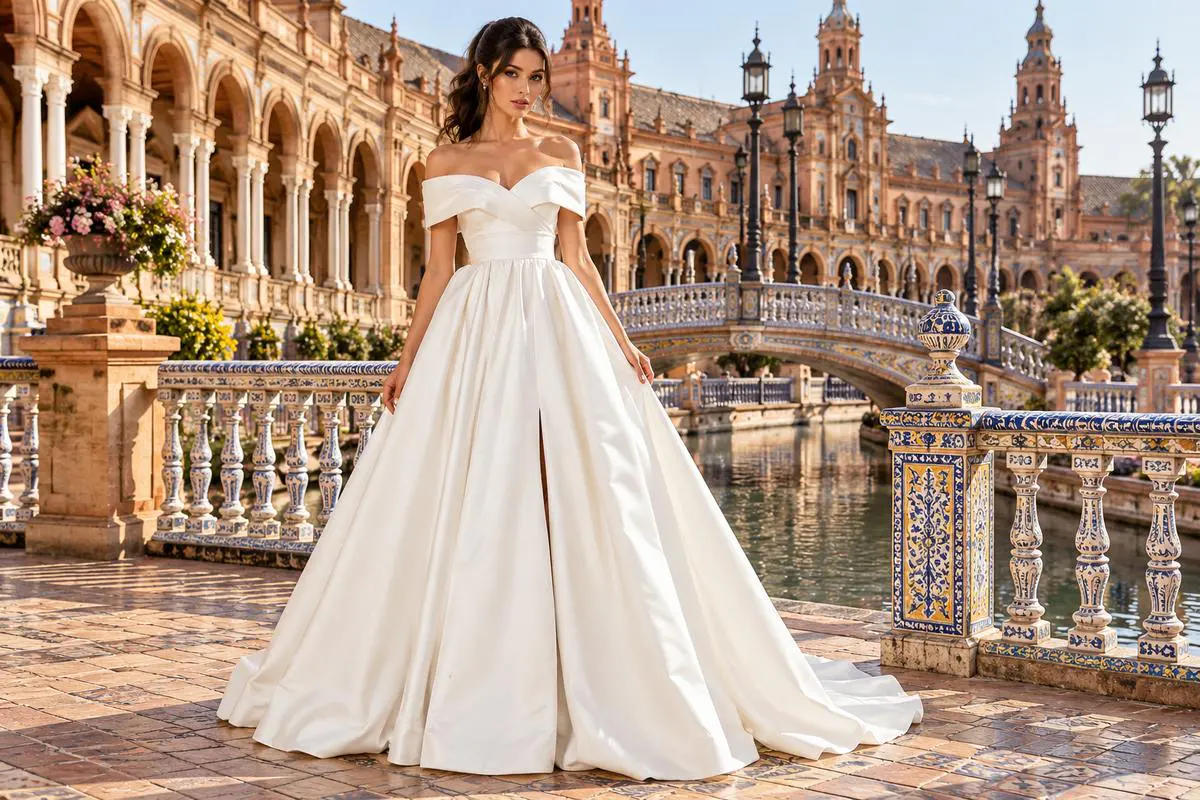
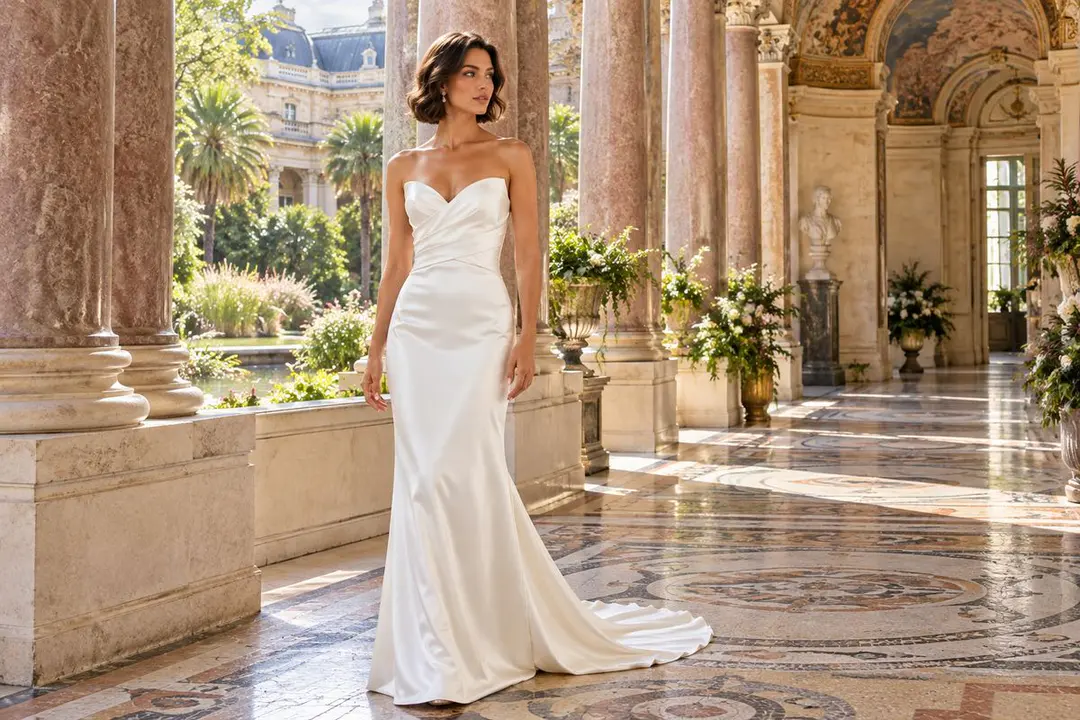
Jovani style JB45837 lists satin in a sheath silhouette with a draped bodice, smooth skirt, and soft sweep train. Style JB45169 also lists satin, yet it is a ball gown with a pleated bodice, structured waist, full skirt, and train. The shared satin label does not make the two gowns behave the same way.
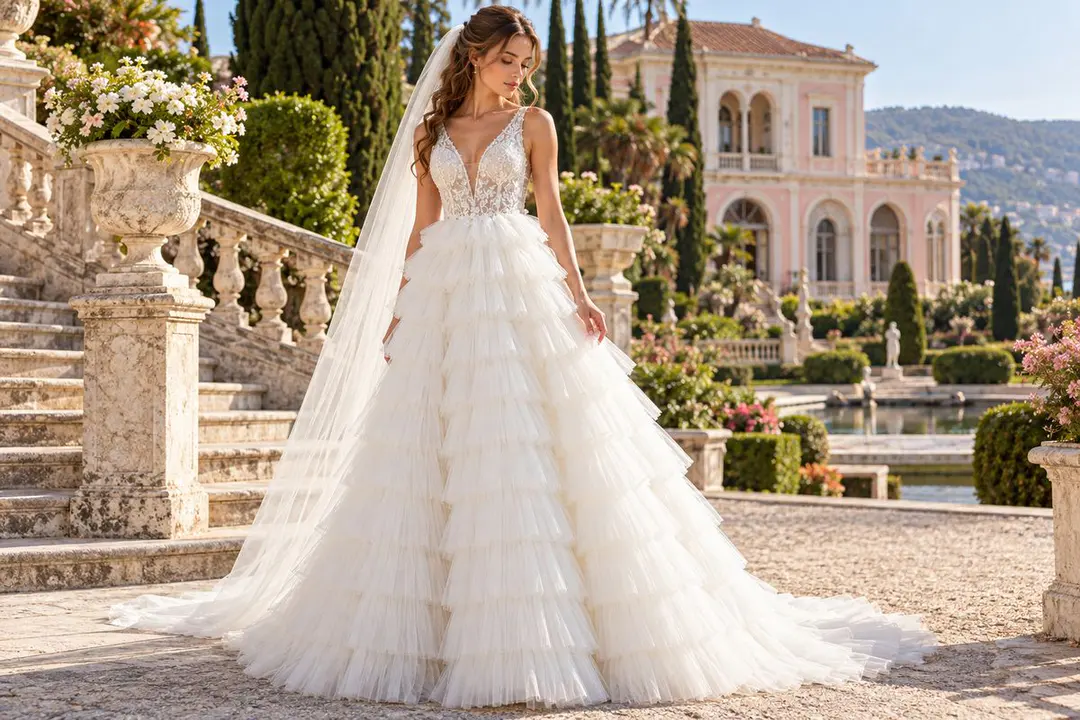
Style JB43318 provides a different example. Jovani lists tulle with beading, an A-line silhouette, a tiered ruffle skirt, and a beaded bodice. Those layers and surface details can change total garment weight even though tulle itself is usually considered a light bridal material.
Use product specifications as a starting point, then confirm the result on the actual dress. If fabric weight is a priority, compare several gowns in person and ask about lining, layers, train construction, and alteration options at an authorized Jovani retailer.
Frequently Asked Questions
Does a heavier wedding dress mean better quality?
No. A heavier wedding dress is not automatically better made. Fabric density, layers, train length, and embellishment add weight, while quality also depends on fit, construction, and finishing.
Which wedding dress fabrics are usually lighter?
Chiffon and tulle are usually lighter outer fabrics than dense Mikado or many satins. The finished gown can still become substantial when several layers, lining, or embellishment are added.
Can a lightweight fabric still create a full skirt?
Yes. Lightweight fabrics can create a full skirt through layering, gathers, ruffles, underskirts, or other supporting construction. Volume does not require one heavy outer textile.
Is Mikado always heavier than satin?
No. Mikado often feels firmer and more substantial, but neither Mikado nor satin has one universal weight. Compare the exact fabrics and the complete gown.