
What Is Mikado Fabric? Structure, Sheen and Bridal Uses
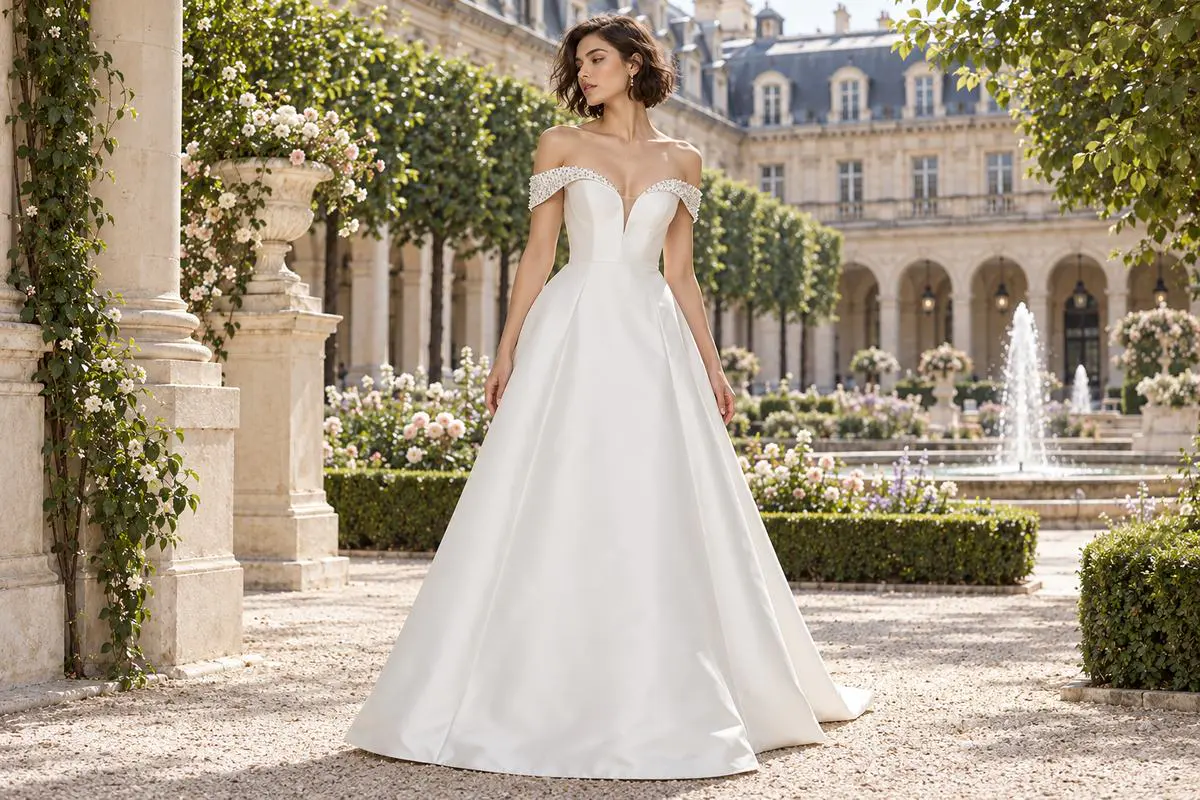
Mikado is a substantial, smooth bridal fabric known for holding sculpted shapes and clean folds. It often has a controlled sheen rather than a highly reflective finish. Wedding dress Mikado may contain silk, synthetic fibers, or blends, so the fabric name alone does not identify its exact composition.
If you are comparing designer wedding dresses, pay attention to the finished garment rather than the fabric label alone. Mikado changes how a skirt stands, how a seam reads, and how the dress behaves when you move.
What Is Mikado Fabric Made From?
Mikado describes a dense textile used in formalwear and bridal gowns, not a single guaranteed fiber content. Some versions use silk, while others combine silk with synthetics or use synthetic fibers. Read the individual garment label before assuming a particular composition or care method.
The surface generally feels smooth and firm, with enough body to retain a defined outline. Unlike a sheer overlay, Mikado often serves as the visible fabric of a bodice or skirt. Wedding Dresses 101 introduces the other terms you may hear during bridal appointments.
Why Does Mikado Hold a Bridal Shape So Well?
Mikado tends to resist collapsing into soft folds because the material has more body than many lightweight bridal textiles. Cut and construction still matter. A stiff fabric cannot correct an incorrectly fitted waist, and lining can change the finished silhouette.
Pleats and Full Skirts
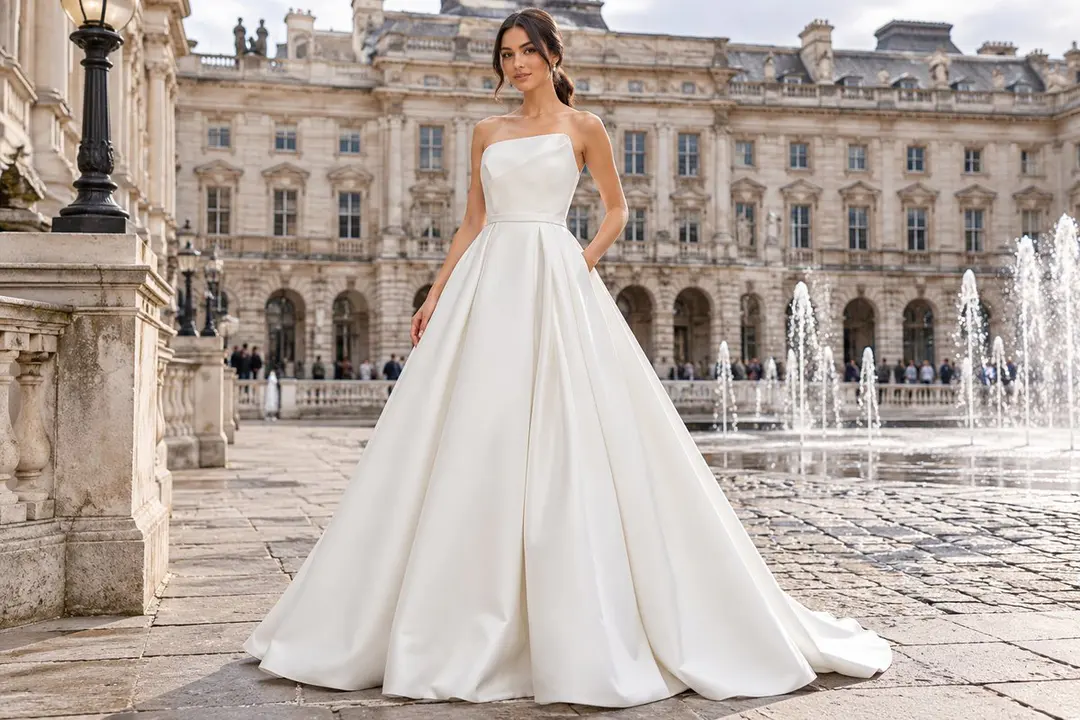
Wide pleats and clean skirt panels show Mikado at its most distinctive. Fabric can project outward from the waist rather than falling straight against the legs. Compare A-line bridal styles to see how skirt volume changes with waist placement and internal shaping.
Jovani bridal style JB40599 is listed in off-white, with a strapless neckline and pleated bodice. Its product specifications name both Mikado and satin, alongside an A-line or ball-gown shape. The combined fabric listing does not establish which panel uses each material.
Bodices and Defined Edges
A firm outer fabric can make a straight neckline, curved waist seam, or sculpted fold appear more precise. However, neckline stability comes from appropriate construction and fit, not Mikado alone. In strapless bridal gowns, compare the bodice while standing, reaching, and sitting.
What Does Mikado Sheen Look Like in Photographs?
Mikado usually has a smooth luster that highlights broad surfaces and crisp edges. Reflectivity varies with the weave, finish, color, and camera lighting. Take a photograph under window light and another under the lighting most like your venue.
Jovani style JB07134 lists ivory, an off-the-shoulder neckline, a floor-length A-line skirt, and Mikado and satin in its fabric details. Use this information to ask which section contributes the visible sheen. For a direct two-fabric comparison, see satin versus Mikado wedding dresses.
How Heavy Is Mikado and How Does It Move?
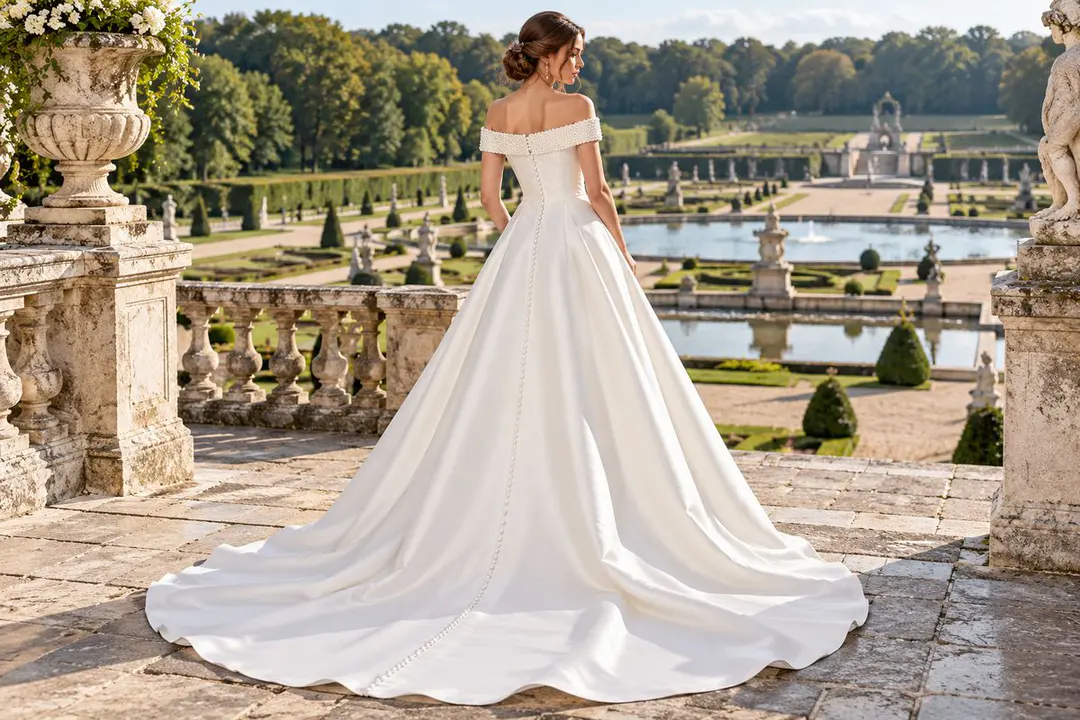
Mikado often feels firmer than chiffon or other airy bridal fabrics, but it has no universal weight. A long train, beading, lining, and underskirts can affect the total weight more than the outer fabric alone. Judge the complete gown once it is fastened.
When you walk, watch whether the skirt swings as one broad shape or folds against the legs. Sit down, take a normal stride, and turn without holding the skirt up. If the gown pulls around your hips, also compare closely fitted bridal silhouettes to understand the impact of cut.
Which Bridal Looks Make the Most of Mikado?
Mikado is particularly useful when the dress relies on a defined outline instead of elaborate surface decoration. The right choice depends on how you want the skirt and bodice to behave, not on which fabric sounds more formal.
Clean A-lines and Architectural Ball Gowns
A smooth, expansive skirt can give the waist clear definition and preserve deliberate pleats. Keep the design balanced by checking how the bodice supports the skirt. Structured cloth alone may not create the necessary volume without a suitable cut.
More Fitted Designs With Sculpted Details
Mikado can also appear in fitted gowns or as a sculptural bow, panel, or overskirt. Check seams and hip movement carefully because a firm material can resist a long stride. Avoid assuming a silhouette is comfortable merely because its outer surface looks smooth.
How to Examine Mikado at a Bridal Appointment
Ask the stylist to identify the outer fabric, the lining, and any supporting layers. You can make a useful assessment without knowing the textile weight in advance. Focus on three practical checks:
- Pinch and release a small, safe section of the skirt. Notice whether the crease relaxes or remains visible.
- Walk, sit, and turn with the full gown properly fastened. Notice resistance, noise, and where fabric pulls.
- Check the same panels in daylight and indoor light. Compare their sheen and any visible seam tension.
The wedding dress construction guide explains how underlining, interfacing, and seams affect a garment. Ask an alterations professional before changing a sculpted fold or heavily supported waist.
Is Mikado Practical for Your Wedding Day?
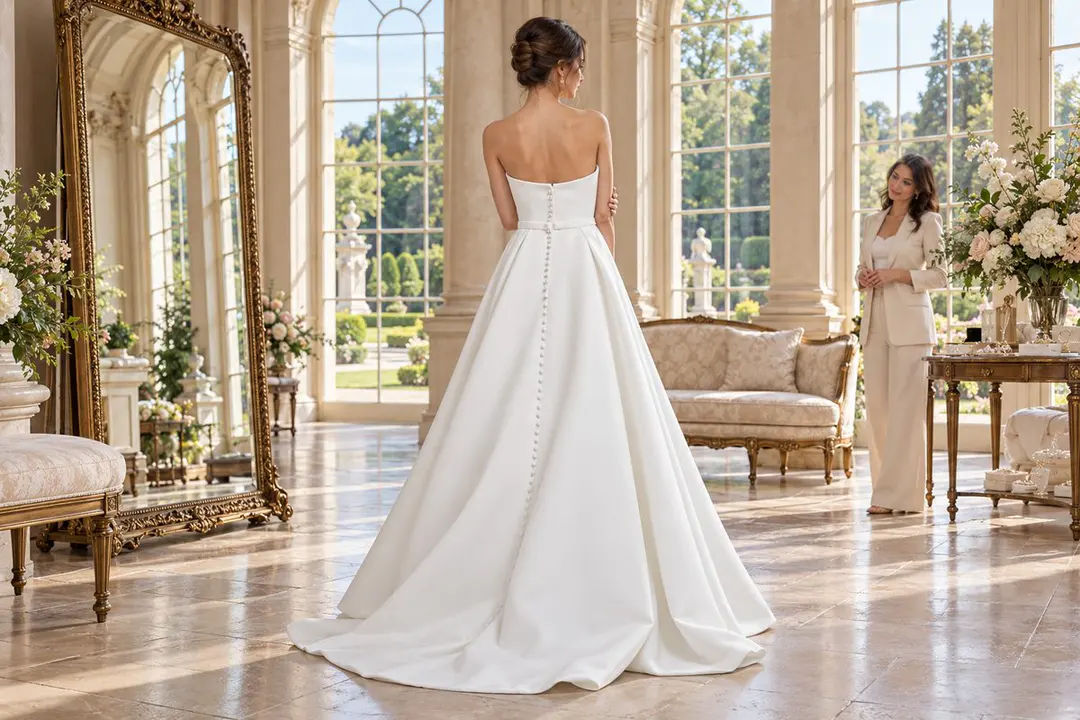
Mikado may feel warmer or less flexible than lighter options, especially in a layered gown. For an outdoor summer ceremony, test comfort in a warm fitting room if possible. For an indoor venue, check how easily the skirt passes through aisles and around chairs.
If a substantial ceremony gown becomes difficult to manage during dancing, consider lighter wedding reception looks as a separate option. A second dress is a personal preference, not a requirement. Ask about transport, pressing, and bustle arrangements before placing an order.
Mikado works best when the fabric, fit, and setting support the same design goal. Try the full gown through the movements that matter to you, then find an authorized Jovani retailer to compare styles and confirm product details.
Frequently Asked Questions
Is Mikado always made from silk?
No. Mikado may contain silk, synthetic fibers, or a blend. Ask the retailer for the exact composition listed for the specific gown.
Will a Mikado gown wrinkle during travel?
Some creasing is possible, especially where firm fabric stays folded. Arrange suitable hanging space and ask the retailer for product-specific pressing and transport advice.
Can a Mikado wedding dress have pockets?
Yes, when the design includes them. A structured skirt can accommodate pockets, but pocket placement and fabric bulk should be checked on the actual gown.
Can alterations change the shape of a Mikado skirt?
Some changes are possible, but reshaping pleats, hips, or structured seams can affect the silhouette. Ask a qualified alterations professional to examine the actual construction first.