
Wedding Dress Embellishments: 5 Types and How to Choose
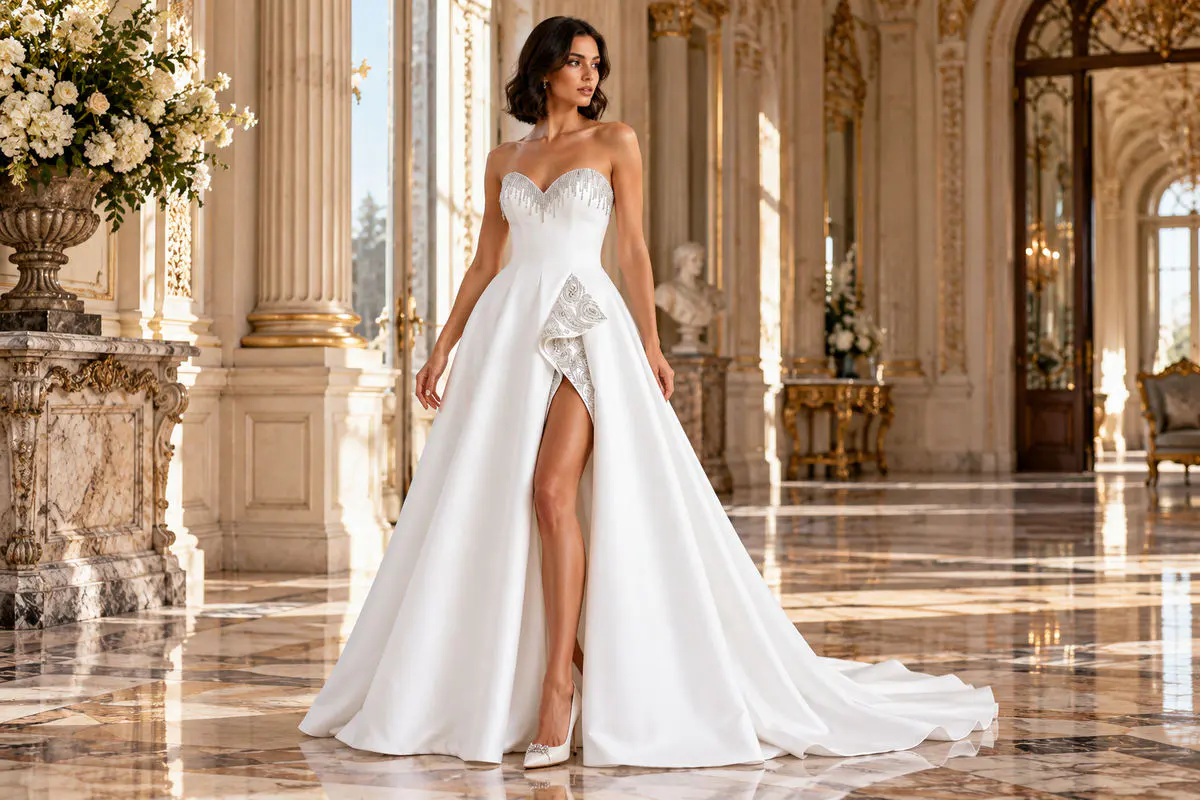
Wedding dress embellishments are decorative details added to a bridal gown, including pearls, crystals, raised florals, bows, and lace appliqué. The best choice depends on the effect you want, where the detail sits, and how the finished dress feels. Compare texture and placement before judging sparkle alone.
Start with bridal dress styles that suit your preferred silhouette. Then decide whether the decoration should frame the bodice, shape the waist, or add interest to the skirt.
What Counts as a Wedding Dress Embellishment?
Wedding dress embellishments sit on or extend from the main fabric to create texture, reflection, or shape. Beading and embroidery add small-scale detail, while fabric flowers and bows create stronger contours. Appliqué uses a separate decorative motif attached to the gown.
An embellished gown can still look restrained. A few pearls at the neckline produce a different result from crystals covering the bodice. Jovani’s wedding dress fundamentals explain the wider choices of fabric and silhouette; this guide focuses on surface details.
Pearls and Crystals: Soft Luster or Defined Sparkle
Pearls give bridal decoration a rounded, softly reflective finish. Faceted crystals produce brighter points of light. Neither material alone determines formality; size, color, spacing, and placement make the difference.
Pearl Details for Texture and Contrast
Small pearl accents can outline a neckline or sit between embroidered motifs. Larger pearl-style beads are more visible from a distance and may make delicate fabric feel heavier. Confirm whether a product uses genuine pearls or imitation beads before assuming its composition.
On beaded bridal gowns, compare a concentrated bodice pattern with scattered accents across tulle. Try the dress in daylight to judge contrast against the underlying ivory or white fabric.
Crystals, Sequins, and Light Reflection
Crystals can emphasize a waist seam or neckline with distinct flashes of light. Flat sequins often create broader shimmer, while tiny beads add texture without obvious sparkle. The guide to bridal beadwork examines these finishes in more detail.
Jovani style JB45132 lists a beaded bodice, embellished slit underlay, and satin A-line skirt. Its different surface treatments show why placement matters as much as the amount of decoration.
3D Florals, Lace Appliqué, and Embroidery
Three-dimensional flowers project from a gown, while many lace appliqués lie closer to the surface. Embroidery forms a design with stitches. These details can be combined, but their visual depth and care needs differ.
Raised Floral Details and Petal Volume
Fabric petals add visible depth to shoulders, hips, skirts, or trains. Large flowers become focal points, while smaller motifs can soften a transition between fabrics. Compare floral bridal gowns from the front and side, where raised details are easier to judge.
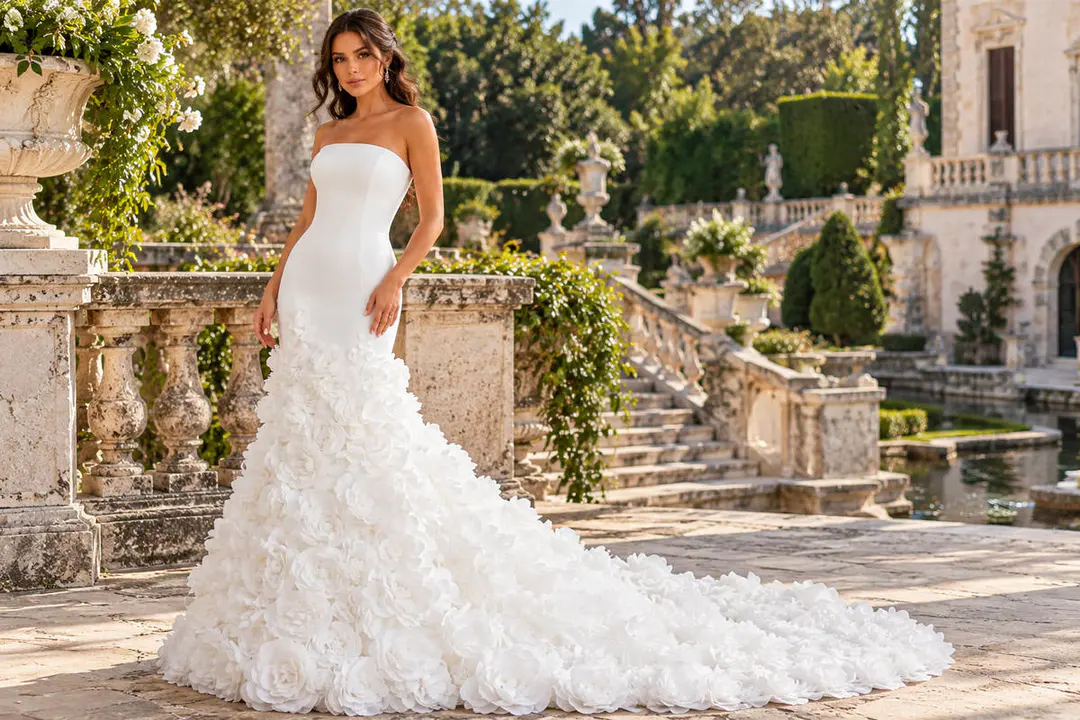
Jovani style JB45120 lists crepe and organza, a fitted mermaid bodice, and 3D floral appliqués around a layered petal skirt and train. Its construction offers a specific example of sculptural decoration.
How Lace Appliqué Differs From Embroidery
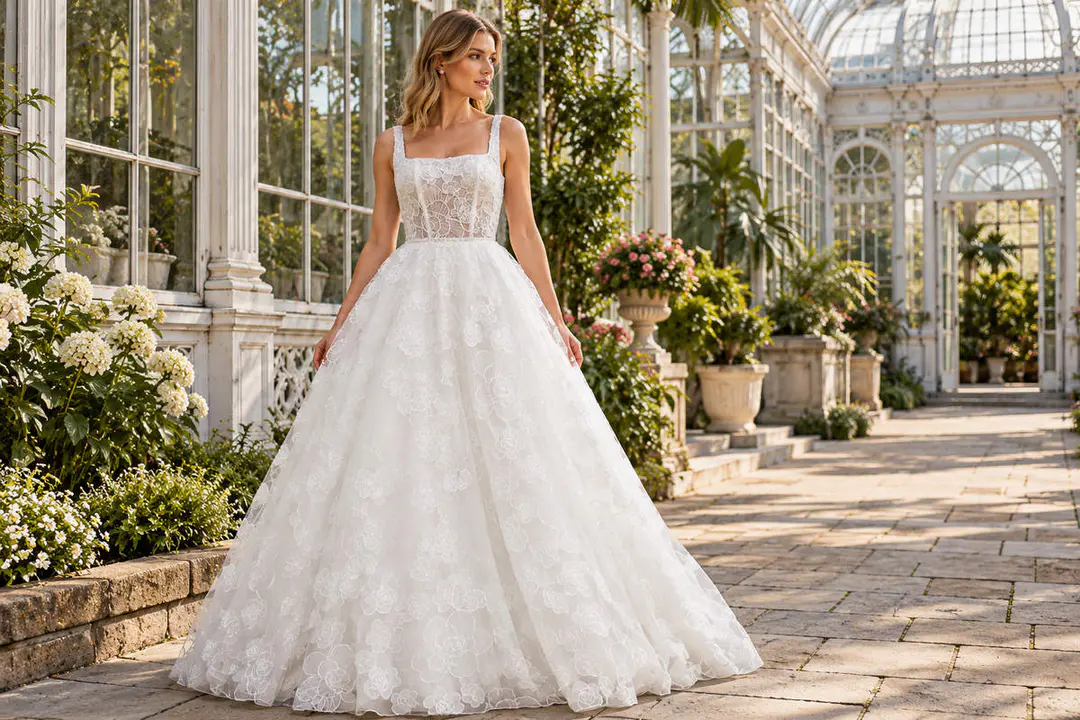
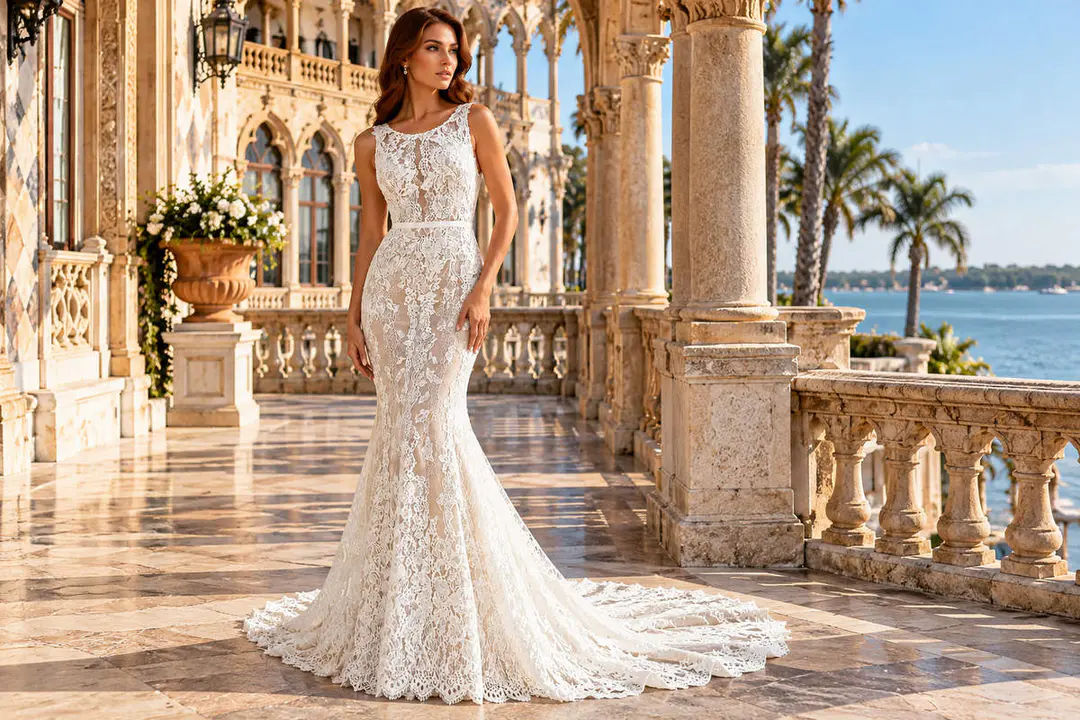
A lace appliqué is an attached motif, often placed over tulle or another base. Embroidery creates a pattern through stitching on the fabric itself. Some appliqués also contain embroidery, so the techniques are not mutually exclusive.
Jovani style JB45834 combines embroidered tulle with raised floral appliqués and a full skirt. Compare lace bridal designs to see how motif scale and placement change a gown without changing the overall silhouette.
What Do Bows Add to a Bridal Gown?
Bows create a deliberate shape rather than sparkle. A small waist bow can define a transition, while a sculpted bodice bow may become the dress’s main decorative feature. Large bows can also change the side profile, so assess their placement while turning.
Jovani style JB45671 lists a structured bodice with a center-front bow, button back, and soft train. The off-white gown illustrates how a single sculptural detail can carry the design without dense beading.
How to Choose Wedding Dress Embellishments for Your Shape and Setting
Choose the silhouette first, then decide where you want visual emphasis. Details at the neckline draw attention upward, while repeated motifs along a skirt create a more continuous surface. With fitted bridal gowns, check whether appliqués distort the clean line when you walk or sit.
Compare Placement Before Quantity
Look at the gown from the front, side, and back. A richly decorated bodice above a plain skirt gives a different balance from evenly scattered detail. Check whether motifs continue across side seams or stop abruptly.
Check the Effect Under Your Venue Lighting
Pearls, crystals, and raised petals respond differently to light. Photograph the gown in natural light and in a warm indoor setting when the boutique permits it. Look for reflective hot spots, unexpected shadows, and details that disappear at a distance.
Fit, Comfort, and Alterations With Decorative Details
Embellishments can affect weight, friction, and what an alterations professional can change. Feel the inside of the neckline and armholes for uncomfortable edges. Walk and sit to check whether raised pieces catch against your arms or snag nearby fabric.
Moving a seam through crystals or lace may require removing and repositioning decoration. Never assume a bow or appliqué can be detached without leaving marks. Jovani’s bridal alterations guide explains why the actual construction determines what is possible.
A Practical Final Check Before Choosing
Compare the complete dresses rather than just close-up product images. The right level of decoration should make sense at normal viewing distance and feel comfortable throughout the ceremony and reception.
- Check whether pearls or crystals feel secure and whether threads or edges catch on fabric.
- Examine petal volume, bow placement, and appliqué alignment from several angles.
- Ask the boutique about fabric composition, cleaning guidance, and alteration limitations.
Wedding dress embellishments should support the silhouette you love, not distract from fit or comfort. Visit an authorized Jovani retailer to compare actual gowns and discuss available styles.
Frequently Asked Questions
Are pearls on wedding dresses always real?
No. Bridal gowns may use imitation pearl beads as well as genuine pearls. Ask for the listed material or product specifications instead of judging the composition by appearance.
Can a wedding dress combine pearls and crystals?
Yes. Mixing pearlescent and faceted details can create different levels of reflection within one design. Compare the overall pattern and color balance rather than treating mixed materials as a rule to follow.
Can a bridal bow be removed during alterations?
Sometimes. A specialist must inspect how the bow attaches and whether removing it affects seams, support, or the surrounding fabric. Do not cut or unpick the detail yourself.
How should a dress with 3D flowers be stored before the wedding?
Keep the gown in the protective packaging recommended by the retailer and avoid crushing raised petals. Ask for fabric-specific storage and pressing instructions because heat and pressure can alter delicate details.