
Lace has been part of bridal tradition for centuries, and it still does something no other fabric quite manages. It softens a silhouette, adds texture that catches light without shouting, and carries a sense of heritage that feels right for a wedding. But lace is not one thing. A delicate Chantilly reads as airy and romantic, while a bold guipure reads as architectural and modern, and the difference between them changes the whole character of a gown. This guide walks through how to choose a lace wedding dress, from the type of lace to where it sits on the gown, which silhouettes it suits, and how to care for it, so you can find the version of lace that feels like you.
Choosing lace is partly about the look you want and partly about understanding the fabric itself, because the type and placement of lace shape how a gown reads far more than the color or the silhouette alone. A bride who wants something soft and traditional needs a different lace than one who wants something striking and contemporary, and knowing the distinctions makes the search far easier. The considerations below cover what actually matters when you are standing in front of a rack of lace gowns trying to tell them apart.
Why lace endures for brides
Lace carries a weight of meaning that plain fabrics do not. It has dressed brides across generations, which gives it a sense of continuity and tradition that feels fitting for the occasion. Beyond the sentiment, lace adds genuine visual interest through texture, creating depth and detail that a smooth fabric cannot, while still reading as refined rather than busy. It catches light softly, photographs with dimension, and brings a romantic quality that suits the emotional register of a wedding day. Lace also has a quiet versatility that smooth fabrics lack, since the same fabric can read as heirloom-traditional or sharply modern depending on how it is used, which means it suits a far wider range of brides than its reputation suggests.
Lace is also remarkably versatile, which is part of why it has lasted. The same fabric can read as vintage and soft or modern and bold depending on the lace pattern, its scale, and where it sits on the gown. This range means a lace wedding dress can suit almost any bride and almost any wedding, from an intimate garden ceremony to a formal cathedral. The full collection of lace wedding dresses shows how widely the fabric ranges, from barely-there delicacy to dramatic statement.
The main types of bridal lace
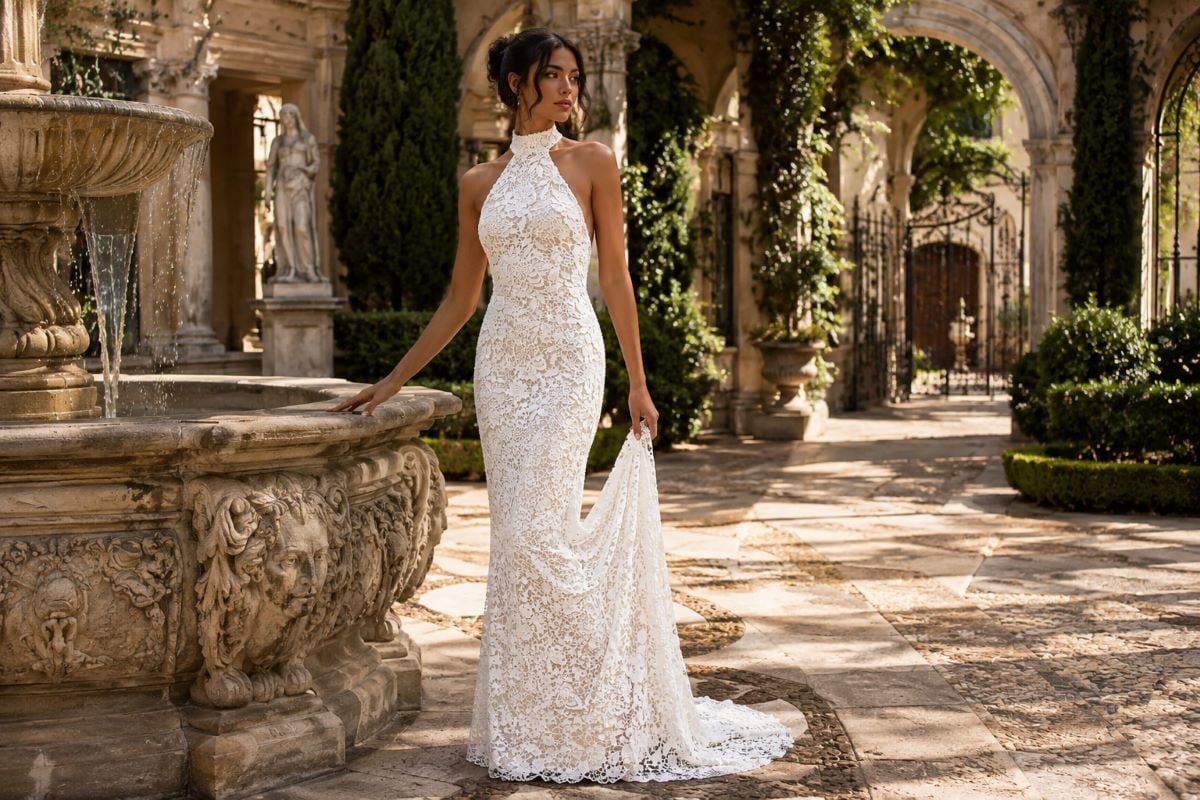
Knowing the types of lace helps you describe what you want and recognize quality when you see it. Chantilly lace is fine, delicate, and lightweight, with intricate floral patterns and a soft, almost sheer quality. It reads as romantic and airy, and it suits a bride who wants a gentle, traditional look. Because it is so fine, Chantilly often appears layered over a lining or used for sleeves and overlays where its delicacy can be appreciated.
Alençon lace is heavier and more defined, with patterns outlined by a fine cord that gives the design a raised, dimensional quality. It reads as more structured and substantial than Chantilly while still feeling classic. Guipure lace, sometimes called Venise lace, is bold and heavy, with motifs connected directly to each other rather than sitting on a sheer net, which gives it an architectural, modern look. Embroidered and appliquéd laces, where individual lace motifs are applied onto a base fabric or tulle, allow designers to place pattern exactly where they want it, creating effects from scattered delicacy to dense coverage.
Where the lace sits changes everything
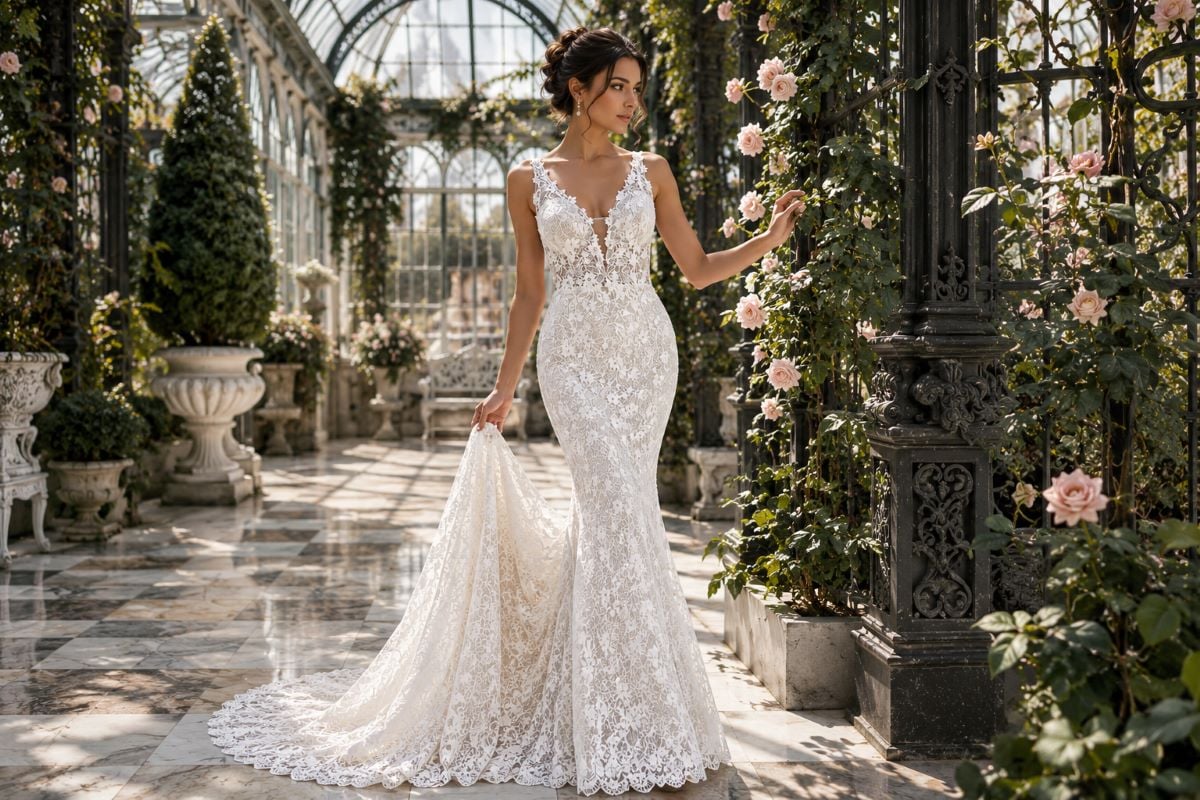
The placement of lace on a gown matters as much as the type, because the same lace reads completely differently depending on where it appears. An all-over lace gown, where lace covers the entire dress, reads as the most traditional and romantic, enveloping the bride in texture from neckline to hem. This is the classic lace look, and it suits a formal or traditional wedding beautifully.
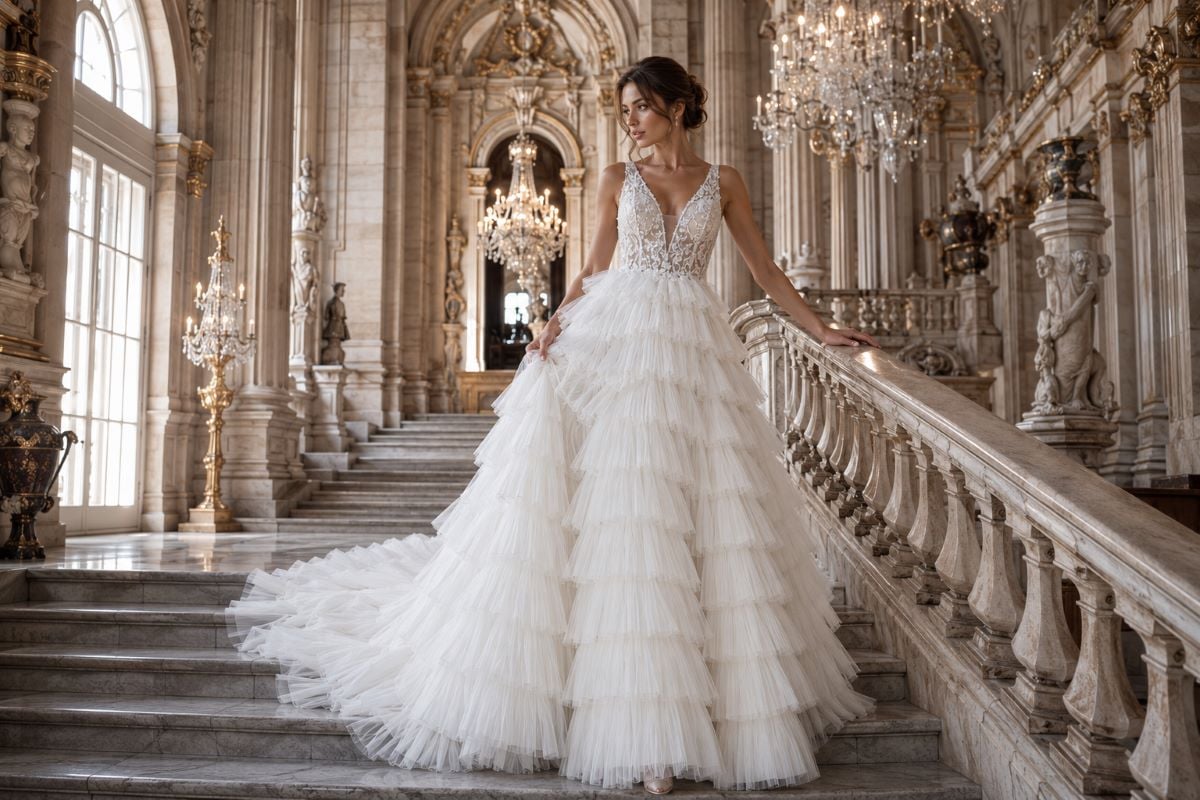
Lace concentrated at the bodice, with a smoother skirt below, draws the eye upward and creates a focal point at the upper body while keeping the silhouette clean. Lace appliqués scattered across a tulle or smooth skirt create a softer, more modern effect, with the pattern drifting across the gown rather than covering it. Lace sleeves, whether on an otherwise smooth gown or as part of an all-over lace design, add a romantic, often modest touch that frames the arms. Understanding where you want the lace to live helps you choose a gown whose effect matches the look you are after.
Lace and silhouette
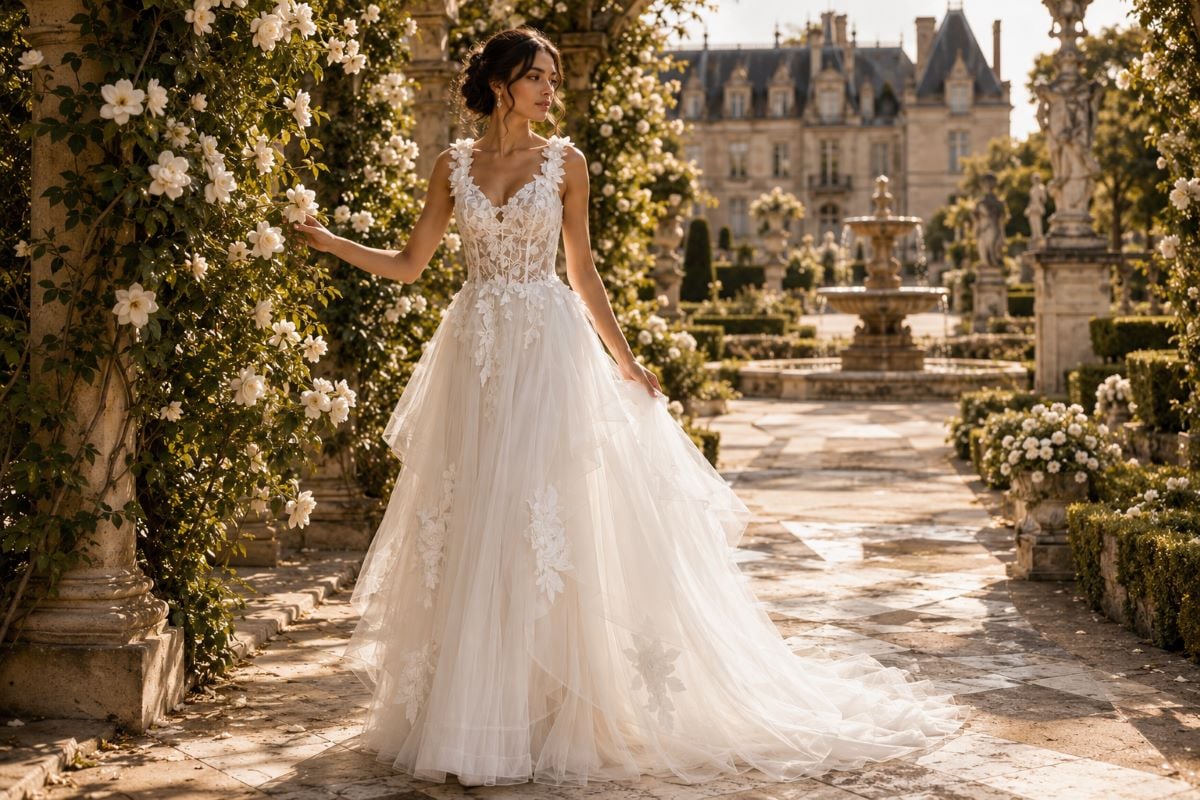
Lace works across nearly every bridal silhouette, and the pairing shapes the overall feel of the gown. On an A-line, lace reads as soft and romantic, with the gentle flare of the skirt giving an all-over pattern room to breathe and a defined waist keeping the shape flattering. The styles among A-line wedding dresses show how lace suits the universally flattering shape, which makes it a reliable choice for many brides.
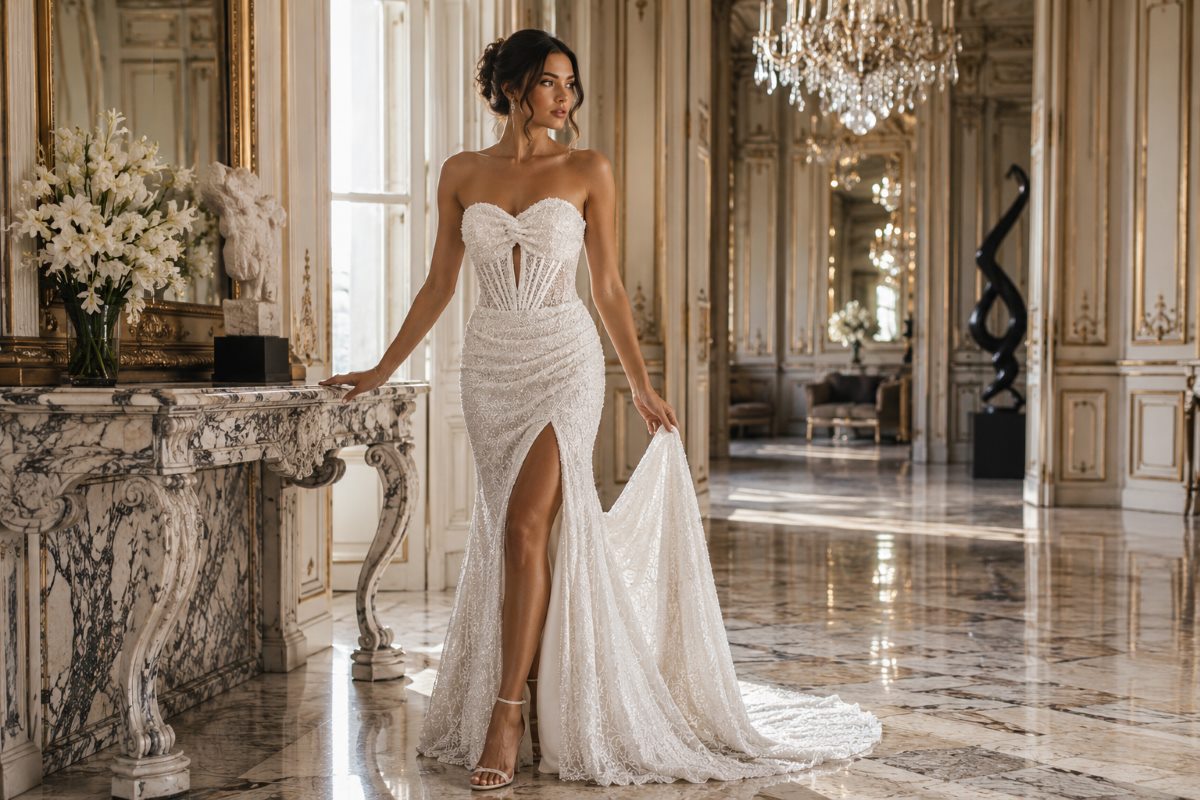
On a fitted or mermaid silhouette, lace takes on a more dramatic, body-conscious quality, following the lines of the figure and emphasizing the sculpted shape. A lace mermaid is one of the most striking bridal looks, combining the romance of lace with the drama of a fitted silhouette, and the range of mermaid wedding dresses shows how the fabric reads across a fitted line.
The right silhouette comes down to the shape you feel most confident in, with lace adding its texture and romance on top. A lace gown reads as romantic on a soft A-line and as dramatic on a fitted shape, so the same fabric adapts to the mood you want. To see how the foundational shapes compare before you narrow down the lace, our guide to popular wedding dress silhouettes lays them out side by side, which makes it easier to picture which shape suits your figure and your vision.
Lining, illusion, and coverage
Because lace is often partly sheer, what sits beneath it matters a great deal. Most lace gowns are lined with a smooth fabric that provides coverage and lets the lace pattern read clearly against a solid backing. The color of that lining affects how the lace looks, since a lace over a contrasting lining shows the pattern more sharply, while lace over a matching lining reads as softer and more tonal.
Lace also makes elegant illusion details possible, where lace is applied to sheer mesh to create the look of lace resting directly on the skin. This is how designers achieve illusion necklines, sheer lace sleeves, and open-back effects that appear daring but provide actual coverage and support underneath. For a bride who wants a romantic look with more coverage, lace is one of the most graceful ways to achieve it, since lace sleeves and a higher lace neckline read as modest and beautiful at once. A lace gown with sleeves is a particularly elegant option, and you can see how sleeves change the look across the range of long-sleeve wedding dresses.
Color and how it reads in lace
Lace interacts with color in a way smooth fabrics do not, because the texture and the lining both affect the final shade. Pure white lace reads as crisp and modern, while ivory lace reads as softer and warmer, which many brides find more flattering against the skin. Champagne or blush linings under white or ivory lace create a subtle, romantic depth, giving the gown a gentle warmth without reading as a colored dress.
The lace itself can also be a slightly different tone from the lining, which adds dimension. When choosing, it helps to see the lace in natural light and against your skin, since the way a particular ivory or champagne reads varies from person to person. The goal is a shade that flatters your complexion and suits the formality and setting of your wedding, and lace gives you a range of subtle options between stark white and warm ivory.
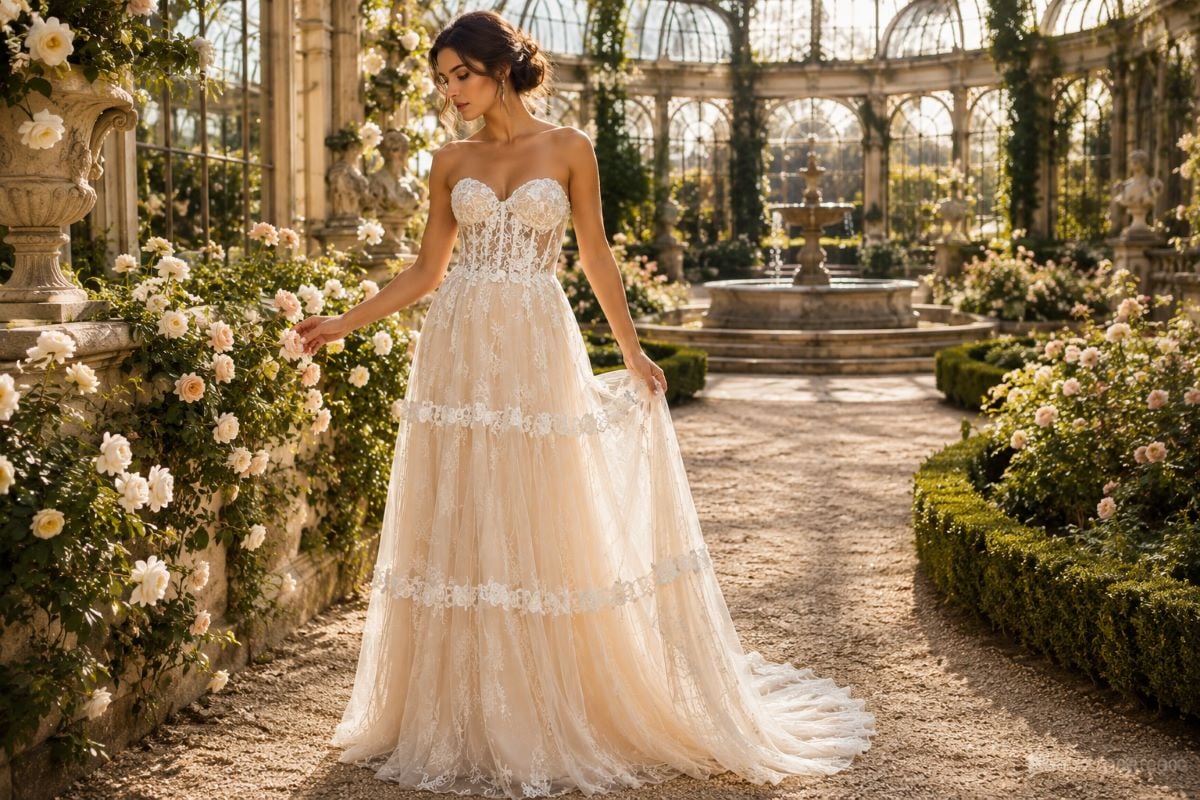
One more practical note on lace is that no two lace gowns photograph quite the same, because the texture interacts with light and camera in ways a smooth fabric does not. Fine lace can read as soft and almost luminous in photos, while a bold guipure reads as crisp and graphic. If your photography matters to you, it is worth seeing how a particular lace looks both in person and in a quick photo, since the pattern that charms you in the fitting room is the one that will appear in every image from the day. A lace you love on both counts is the one to choose.
Caring for a lace gown
Lace is delicate, which is part of its beauty and also a practical consideration worth understanding before and after the wedding. A fine lace can snag, so handling the gown with care and being mindful of jewelry and rough surfaces protects the fabric. Storing a lace gown properly, ideally hanging or boxed with acid-free materials, preserves it for the future.
Alterations on lace also require a skilled hand, because a tailor cannot simply sew through a lace pattern without disrupting the design. Adjusting a lace gown often means carefully working around or re-applying the lace motifs by hand to keep the pattern flowing naturally over the new seams, which is delicate, time-consuming work. This is why lace gowns benefit from an experienced bridal seamstress, and why it helps to budget time and care for the process. Our guide on wedding dress alterations covers what altering delicate fabrics like lace actually involves.
Styling a lace gown
Lace is already richly detailed, so the styling around it should support rather than compete with the texture. A heavily detailed lace bodice or an intricate lace neckline often looks best without a necklace, which would tangle with the pattern and clutter the look. In these cases, statement earrings and a classic bracelet complete the look while letting the lace lead. Our guide on how to accessorize your wedding dress covers how to build the finishing touches around a detailed gown.
The veil and hair accessories should also harmonize with the lace rather than overwhelm it. A lace-edged veil paired with a lace gown reads as cohesive and traditional, while a simple veil lets an ornate lace gown stand on its own. The principle throughout is balance, letting the lace be the focal point and choosing every other element to frame it. A lace gown rarely needs much else, since the fabric carries the romance on its own.
A note on quality
The quality of the lace and the construction beneath it separate a beautiful lace gown from a disappointing one. Fine lace, carefully applied and properly lined, reads as luxurious, while cheap lace applied carelessly can look flat or scratchy. Jovani has designed formalwear since 1983, working from a studio in the New York garment district under design director Julie DuRocher, and the brand builds its gowns with quality fabrics, hand-applied lace detail, steel boning, and smooth linings that let the lace sit beautifully against the body. For a bride choosing lace, that attention to how the fabric is sourced and applied is what keeps the gown looking refined from the ceremony through the last dance.
Frequently asked questions
What type of lace is best for a wedding dress?
It depends on the look you want. Chantilly lace is fine, delicate, and romantic, suiting a soft, traditional look. Alençon lace is heavier and more defined, reading as structured and classic. Guipure or Venise lace is bold and architectural, suiting a modern bride. Appliquéd lace lets designers place pattern exactly where they want it. There is no single best lace, only the one whose character matches your vision, so consider whether you want soft and airy or bold and defined. It also helps to see the lace in person, since the scale of the pattern and the way it catches light read differently up close than in a photograph.
Is a lace wedding dress good for a modest look?
Yes, lace is one of the most graceful ways to achieve a modest bridal look. Lace sleeves, a higher lace neckline, and lace applied to illusion mesh all provide coverage while reading as romantic and beautiful rather than heavy. A lace gown with long sleeves and a covered neckline suits a religious ceremony or a bride who simply prefers more coverage, and the lace keeps the look soft and elegant rather than severe. Because the texture itself carries the interest, a covered lace gown never reads as plain, which is part of why lace is the fabric so many modest brides return to.
What is the difference between white and ivory lace?
Pure white lace reads as crisp and modern, while ivory lace reads as softer and warmer, which many brides find more flattering against the skin. The lining beneath the lace also affects the shade, since a champagne or blush lining adds subtle warmth and depth. It helps to see the lace in natural light against your complexion, since the way a particular white or ivory reads varies from person to person. Choose the shade that flatters you and suits the formality of your wedding.
Does lace work on a fitted silhouette?
Yes, and a lace fitted or mermaid gown is one of the most striking bridal looks. On a fitted silhouette, lace follows the lines of the figure and emphasizes the sculpted shape, combining the romance of lace with the drama of a body-conscious cut. The result reads as both traditional and bold. Lace also works beautifully on an A-line, where the gentle flare gives an all-over pattern room to breathe, so the fabric suits nearly every silhouette.
How do I care for a lace wedding dress?
Handle a lace gown with care, since fine lace can snag on jewelry or rough surfaces. Store it properly, ideally hanging or boxed with acid-free materials, to preserve it. Alterations require a skilled bridal seamstress, because a tailor must work carefully around or re-apply lace motifs by hand rather than sewing straight through the pattern. Budgeting time and choosing an experienced seamstress protects the design and ensures the lace flows naturally over any adjusted seams.
How should I accessorize a lace wedding dress?
Keep the styling simple and let the lace lead, since the fabric is already richly detailed. A heavily detailed lace bodice or neckline often looks best without a necklace, which would tangle with the pattern, so statement earrings and a classic bracelet are the more elegant choice. Harmonize the veil and hair accessories with the lace rather than competing with it. The principle is balance, letting the lace be the focal point and framing it with restraint.
Finding your dress
A lace wedding dress carries romance, texture, and a sense of tradition that no other fabric quite matches, and the range from delicate Chantilly to bold guipure means there is a version of lace for every bride. With the right lace type, a placement that suits your vision, a silhouette you feel confident in, and a shade that flatters you, a lace gown becomes a look that feels both timeless and entirely your own. When you are ready to find the right one, explore the collection of wedding gowns and visit an authorized Jovani retailer to try lace styles in person.