
Is Satin a Good Fabric for a Cocktail Dress? Fit, Finish and Care Guide

Satin can be an excellent fabric for a cocktail dress, but the word satin does not tell you how the finished garment will fit, drape, stretch, wrinkle, breathe, photograph, or survive a night of sitting and dancing. Satin describes a weave and surface effect, not one fiber or one weight. Judge the actual dress by its fiber content, fabric weight, lining, cut, internal construction, seam quality, finish, embellishment, and care label.
Use this guide before choosing a satin cocktail dress. It explains why two satin cocktail dresses can behave very differently, how to compare fluid and structured versions, what to test in the fitting room, how dress codes affect the choice, and why care advice must come from the specific garment rather than the fabric name alone.
What Is Satin?
Satin is commonly described as a fabric, but its defining feature is the weave. A satin weave carries long floating yarns across the surface, and those floats reflect light, which produces the characteristic luster. The relatively low number of interlacings can also create flexibility and drape, while the same floats may snag more easily.
Satin can be made from different fibers. Silk, polyester, nylon, acetate, rayon, and blends may all appear in satin fabrics. Fiber content influences the result, but it still does not act alone. Yarn, weave density, finishing, weight, lining, stretch content, pattern cutting, and garment construction all affect performance, which is one reason satin compared with chiffon and velvet behaves differently in the same silhouette.
Do not use satin as a synonym for silk. Do not assume polyester satin is automatically poor quality, silk satin is automatically comfortable, or every satin has the same shine. Inspect the complete dress.
Common Satin Constructions in Cocktail Dresses
Retail terminology is not perfectly standardized, and brands may use overlapping names. The table below describes common categories you may encounter and the questions they raise.
| Construction or retail label | Typical tendency | What to check in the finished dress |
|---|---|---|
| Lightweight satin or charmeuse | Fluid, smooth, and lustrous; often used for draped or slip-style dresses | Opacity, lining, cling, static, seam puckering, bias distortion, undergarment edges, and movement at the hips |
| Structured or heavy satin, sometimes called duchesse | More body and shape; may support pleats, bows, corseted bodices, bubble hems, or fuller skirts | Finished weight, pressure while sitting, crease behavior, bodice comfort, hem volume, and transport |
| Stretch satin | Contains stretch fiber or is engineered for give; often used in fitted designs | Fiber content, stretch direction, recovery, seam strain, lining compatibility, zipper behavior, and whether the dress returns to shape |
| Satin combined with mesh, lace, tulle, sequins, beads, or appliques | Uses satin for part of the surface while other materials change support, transparency, weight, and care | Transitions between fabrics, abrasion, snagging, backing, lining, embellishment security, and whether all components share the same care method |
Charmeuse is a lightweight satin-weave fabric often used in eveningwear and bias-cut designs. Its fluidity can be attractive, but a specific charmeuse dress may still cling, pull, twist, or show underlayers if the cut, fit, or lining is wrong. At the other end of the range, heavy satin is usually called duchesse, and a heavier label suggests more body rather than a guarantee of comfort or quality. Mixed-surface designs raise a separate question, so compare a satin dress against sequin cocktail dresses when part of the shortlist uses applied embellishment instead of woven sheen.
Satin Is Not a Quality Grade
Quality cannot be determined from shine, fiber, price, or weight alone. A well-made polyester satin dress may have clean seams, balanced lining, stable stretch, and excellent construction. A silk satin dress may still have puckered seams, poor pattern matching, weak closures, or an unsuitable lining. Compare workmanship directly.
Inspect:
- whether seams lie flat in normal light and under flash;
- whether stitching creates ripples or pulls;
- whether the lining moves with the outer fabric rather than twisting separately;
- whether the zipper lies flat and closes without strain;
- whether darts, cups, boning, or princess seams align with the body;
- whether the fabric recovers after sitting, bending, and walking;
- whether the surface already shows snags, abrasion, pressure marks, or uneven sheen;
- whether embellishments are secure and comfortable against the skin.
Which Silhouettes Work in Satin?
There is no universally best satin silhouette. The correct choice depends on the particular satin and the construction of the dress. Rather than assigning one shape to every body type, compare how the actual garment behaves during movement, and look across the full range of short and cocktail dresses before narrowing to one shape.
Fluid Slip and Draped Dresses
Lightweight satin and charmeuse can create a soft, fluid line. Some slip dresses are cut on the bias, allowing diagonal give and a different drape from a straight-grain cut. Neither method guarantees a good fit. Check whether the dress hangs evenly, whether side seams rotate, whether the neckline gaps, and whether the fabric catches at the bust, waist, hips, or thighs.
Stand still, walk, sit, and turn. A dress that looks smooth in a posed photograph may pull during normal movement. If the fabric repeatedly catches or forms horizontal strain lines, compare another size, cut, or construction rather than assuming shapewear will solve the pattern issue.

Fitted Column, Sheath, and Bodycon Dresses
A fitted satin dress places more visual attention on seam alignment, stretch, lining, and fit. Look for enough room to sit and take a full stride without the zipper, slit, or seams carrying excessive tension. Check the dress after several minutes of wear; some fabrics grow, crease, ride, or fail to recover.
A full lining is not automatically better, and an unlined dress is not automatically poor. The lining must suit the outer fabric and the intended fit. It should not create bulk, restrict stretch, become visible at the slit, or pull the satin off grain.

Fit-and-Flare, A-Line, Bubble, and Structured Minis
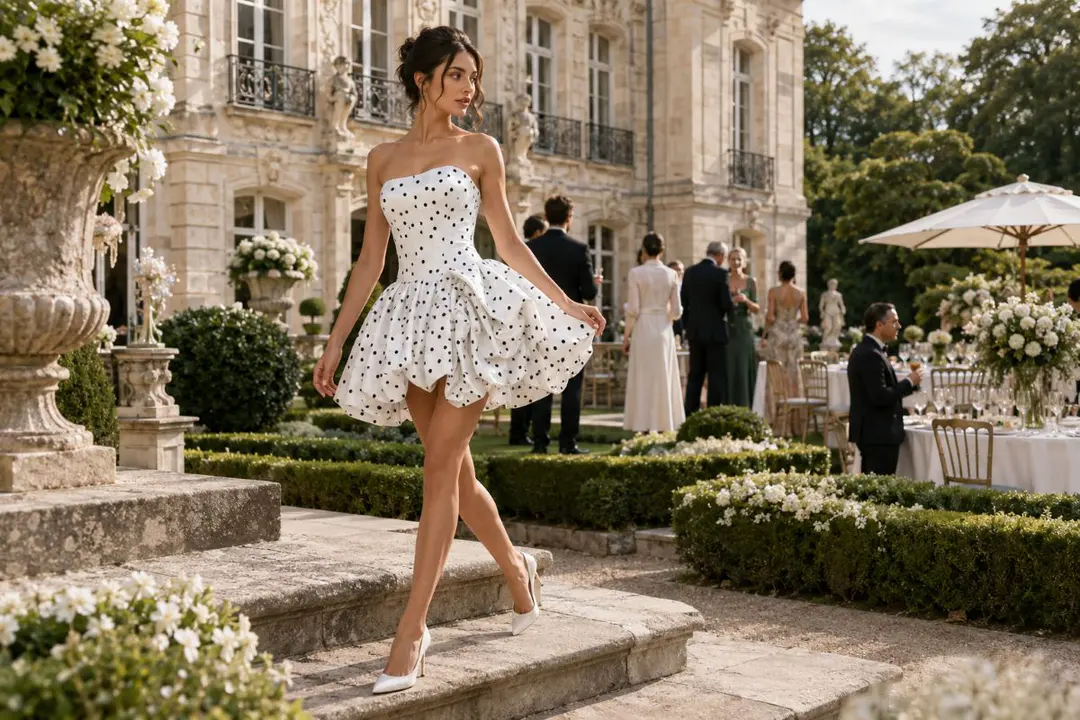
Heavier satin can hold pleats, volume, sculptural bows, bubble hems, or a defined skirt, which is why so many fit and flare cocktail dresses use a firmer weight. The appearance may be crisp, but the dress can also be heavier or occupy more space than expected. Sit in a chair, move through a narrow doorway, walk on stairs, and test whether the skirt springs back after pressure.
For a short full skirt, check coverage while sitting, bending, turning, and dancing. A structured hem can lift differently from a soft hem. Judge the moving dress, not only the front product image.

Wrap, Ruched, and Asymmetric Dresses
Draping, ruching, and folds change how light moves across satin. They may add dimension, but they can also hide or create fit problems. Confirm that folds are intentionally placed, that the wrap remains secure, and that asymmetric hems and necklines stay balanced during movement.

Use a Full Fit and Movement Test
A cocktail dress should work through arrival, standing conversations, dinner, photographs, and dancing. Wear the intended undergarments and shoes, then complete this test:
- Walk: Take long and short steps. Check whether the skirt restricts stride or climbs upward.
- Sit: Remain seated for several minutes. Notice pressure at the waist, hips, thighs, zipper, boning, and underarms.
- Stand again: Check whether the skirt, lining, ruching, and seams return to place or remain twisted and creased.
- Raise your arms: Make sure straps, cups, neckline, sleeves, and hem do not shift beyond your preferred coverage.
- Lean and turn: Check the neckline, back, slit, and undergarment visibility from several angles.
- Dance: Test faster movement, not only a slow turn in front of the mirror.
- Use a handbag or wrap: Confirm that hardware, prongs, or textured surfaces do not catch the satin.
Use current measurements and the size guide published for that exact style rather than a general brand size. Do not size down to make satin look smoother or a strapless bodice feel tighter, and treat security in strapless cocktail dresses as a construction question instead of a sizing shortcut. A smaller size can increase strain lines, seam stress, restricted movement, and closure problems.
Test the Sheen in Real Lighting
Satin's reflected light is part of its appeal, but there is no universally best color, finish, or silhouette for photographs. Daylight, warm bulbs, spotlights, colored event lighting, flash, camera exposure, background, and editing all change the result.
- Take front, side, and back photographs in daylight and indoor light.
- Repeat with and without flash.
- Record a short video while walking and turning.
- Check whether highlights emphasize seams, pulling, wrinkles, or undergarment edges.
- Check whether dark satin retains visible shape and whether pale satin becomes transparent.
- Look at the dress seated as well as standing.
- Photograph the complete outfit with jewelry, bag, outerwear, and shoes.
Jewel tones are not automatically superior at night, pastels are not limited to daytime, and pale satin is not universally more difficult to wear. Test the exact color and finish rather than relying on a ranking.
Is Satin Comfortable in Warm Weather?
The word satin cannot answer that question. Comfort depends on fiber, yarn, weave density, fabric mass and thickness, lining, layers, stretch, bodice structure, fit, coverage, air movement, humidity, direct sun, and the wearer's preferences.
A lightweight-looking dress can feel warm if it is densely woven, tightly fitted, heavily lined, or built over a structured bodice. A heavier satin dress may be comfortable in an air-conditioned venue if the fit allows movement and the lining feels good against the skin. Wear the complete dress for several minutes during the fitting and compare it with another construction under similar conditions.

Does Satin Make a Cocktail Dress More Formal?
Satin can contribute luster and visual polish, but fabric alone does not determine a dress code. Length, silhouette, construction, embellishment, coverage, styling, and host expectations matter.
Standard etiquette guidance places cocktail dresses inside semi-formal, festive, black-tie, and black-tie-optional contexts, with the expected level of formality changing by code. For black tie, a floor-length evening gown remains the most traditional option, though a dressy cocktail dress or a dressy little black dress is often accepted. When the invitation is strict, compare your satin shortlist against dresses made for black tie events. A satin mini is not automatically black tie, and a matte dress is not automatically less formal.
For weddings, rehearsal dinners, engagement parties, holiday events, and charity functions, read the invitation first. Then decide whether the complete dress fits the venue, ceremony, time, and host's requested level of formality.
How to Style a Satin Cocktail Dress
There is no rule that satin must be the only source of shine. Patent shoes, metallic bags, crystals, pearls, sequins, and polished jewelry can work with satin when the combination looks intentional to you. A matte accessory can reduce contrast; a reflective accessory can increase it. Neither approach is automatically more refined, and a broader guide to styling a cocktail dress covers the same decisions for other fabrics.
Use practical checks:
- Make sure jewelry prongs, watch edges, bag hardware, and shoe decorations do not snag the floats.
- Check whether a necklace competes with or catches on the neckline.
- Try outerwear over sleeves, bows, straps, and structured bodices.
- Confirm that the bag does not rub repeatedly against the hip.
- Wear the exact shoes before approving the hem or balance of a short skirt.
- Review the full outfit under the lighting expected at the event.
Undergarments and Support
No single bra, shapewear garment, or slip works under every satin dress. The neckline, back height, straps, cups, boning, lining, slit, stretch direction, and fabric weight determine what can be worn underneath.
Bring likely undergarments to the fitting. Check edges and closures while standing and sitting. If the dress requires adhesive products, test them in advance according to their instructions and your skin needs. Fashion tape can help control an edge, but it cannot correct a bodice that is the wrong size, cup shape, or pattern.
Alterations for Satin
Satin dresses can often be altered, but smooth, reflective surfaces may make puckering, old stitch marks, pressing impressions, and uneven seams more visible. Before buying a dress that needs changes, ask an alterations professional about:
- fiber content and whether the fabric tolerates the required pressing method;
- seam allowance and whether old needle marks may remain;
- lining, stretch compatibility, boning, cups, waist stays, and closures;
- bias-cut sections that may hang or shift after alteration;
- beads, lace, appliques, bows, ruching, or draping crossing the alteration area;
- slits, bubble hems, high-low hems, trains, and border details;
- final shoe height and hem clearance;
- whether the work requires additional fittings after the fabric settles.
Do not assume a tailor can simply "take in the sides" without changing the hang, grain, drape, or neckline. Obtain a garment-specific plan and quote.

Care, Wrinkles, Stains, and Travel
There is no universal satin-care method. Do not automatically steam, iron, wash, dry-clean, roll, hang, or store a dress flat based only on the word satin. Care instructions and warnings on a label have to hold true for the entire garment, including non-detachable lining, trim, and other components, so a single hidden layer can change the correct method.
- Read and preserve the sewn-in care label before wearing the dress.
- Follow any warnings about steam, ironing, washing, dry-cleaning, bleach, or drying.
- When the label or retailer approves steaming, use the approved method and test an inconspicuous area first.
- Do not use bathroom steam as a universal substitute; moisture may affect some fibers, finishes, dyes, glues, or decorations.
- Do not rub or experiment with water, solvent, stain remover, or heat on an unknown spot. Follow the label or consult a qualified cleaner.
- Protect the surface from jewelry, rough luggage, shoe hardware, and sharp closures.
- Use interior hanger loops only when the garment is designed to hang that way; heavy or structured dresses may need different support.
- Pack in a clean garment bag, avoid crushing pressure, unpack promptly, and inspect before the event.
Satin Cocktail Dress Shopping Checklist
- Confirm the fiber content, stretch content, lining, and care instructions.
- Identify whether the satin is lightweight and fluid or heavier and structured.
- Inspect seams, zipper, darts, cups, boning, hem, slit, and embellishment.
- Use current measurements and the exact product size guide.
- Walk, sit, stand, reach, lean, turn, and dance in the dress.
- Check whether the lining and outer fabric move together.
- Take daylight, indoor, flash, and video tests from several angles.
- Try the intended undergarments, shoes, jewelry, bag, and outerwear.
- Test for snags where accessories and arms contact the fabric.
- Get an alteration assessment before relying on major changes.
- Plan care, transportation, and storage according to the complete garment.
- Compare at least one different satin weight, or a different fabric entirely, before deciding.
Satin Cocktail Dress FAQ
Is satin a good fabric for a cocktail dress?
Yes, when the specific weight, fiber, lining, cut, fit, construction, and care requirements suit the event and wearer. Satin is a weave category, not one fixed fabric behavior.
Does satin wrinkle easily?
It varies. Fiber, weight, weave density, finish, cut, lining, pressure, packing, and humidity all affect creasing. Test the actual dress after sitting and follow its care label.
How do I remove wrinkles from a satin dress?
Start with the care label. Use steam or ironing only when the garment instructions permit it, and follow the approved temperature and method. Ask the retailer or a qualified cleaner when the fiber or embellishment is uncertain.
Is satin too hot for a summer event?
Not necessarily, but the fabric name is not enough to predict comfort. Evaluate the finished garment's weight, density, lining, layers, fit, coverage, and the venue's temperature, humidity, sun exposure, and air conditioning.
Does polyester satin look cheaper than silk satin?
Not automatically. Fiber is one input. Seam quality, lining, weight, finish, pattern cutting, fit, closure, and construction influence the final appearance. Compare the garments directly rather than judging from fiber alone.
Is a satin cocktail dress appropriate for black tie?
It can be when the complete dress is sufficiently formal and the host accepts a dressy cocktail length. A floor-length evening gown remains the most traditional and least ambiguous black-tie choice. Follow the invitation and local custom.
What undergarments work under satin?
It depends on the neckline, back, straps, cups, boning, lining, stretch, slit, and fit. Test options with the actual dress. Smooth edges may reduce visible lines, but no single bra or shapewear style is required for every satin garment.
Can a satin cocktail dress be altered?
Often, but difficulty varies. Smooth surfaces may reveal old stitch marks and puckering, while bias cuts, embellishment, boning, stretch, complex hems, and draping can limit the work. Get a garment-specific assessment before purchase.
A satin cocktail dress works best when you select it by construction rather than by shine alone. Compare weights and silhouettes, complete the movement and lighting tests, and follow the exact care label. Once you have a shortlist, evaluate those styles through an authorized Jovani retailer before committing to alterations.