
Selecting the perfect attire for a formal event involves much more than just picking a flattering color or silhouette. The true character of any gown is fundamentally defined by its material. The fabric dictates how a garment moves, how it catches the light, and how it drapes across the body. For decades, master designers have relied on a select few textiles to bring their high-fashion visions to life, making the choice between chiffon vs satin vs velvet evening dresses one of the most important decisions a woman will make when preparing for a special occasion.
At Jovani, the design process always begins with the textile. A profound understanding of how different materials interact with the human form is what transforms a simple two-dimensional sketch into a masterpiece of luxury evening wear. The tactile experience of a fabric—the crisp hold of a structured hem, the feather-light touch of a draped bodice, or the comforting embrace of a warm weave creates an immediate emotional connection. Whether you are stepping onto a red carpet, attending an exclusive black-tie gala, or preparing for a prestigious winter wedding, understanding the unique properties of these materials is essential. This comprehensive guide explores the deep nuances of these three iconic fabrics, helping you determine the best fabric for evening gowns based on your personal style, the season, and the specific demands of your upcoming event.
The Foundation of Formal Wear: Understanding Fabric Choice
Before diving into the specifics of individual materials and comparing chiffon vs satin vs velvet evening dresses, it is important to recognize why the textile matters just as much as the cut. A dress is essentially a piece of soft architecture, and its structural integrity relies entirely on the weave and weight of its fabric.
How Weave and Weight Impact Design
Some materials are engineered to create crisp lines that hold their own shape, while others are meant to surrender to gravity, floating like liquid over the wearer’s curves. When you begin browsing formal gowns, you will quickly notice that a gown designed in velvet will look, feel, and behave entirely differently from the exact same silhouette constructed in chiffon. The right fabric choice enhances natural curves, provides necessary comfort throughout hours of wear, and aligns perfectly with the venue’s climate.
The Role of Lighting and Environment
Different fabrics react differently to event lighting. The dim, romantic glow of a candlelit ballroom will highlight the rich depth of one fabric, while the bright sun of a daytime garden party might expose the flaws of another. By understanding the distinct characteristics of different evening dress fabrics, you can make an informed decision that ensures you look sophisticated, photograph beautifully, and feel completely confident from your arrival to the final dance.
Chiffon: The Essence of Ethereal Elegance
When the occasion calls for sweeping movement, delicate grace, and an almost weightless appearance, chiffon is unparalleled.
What is Chiffon?
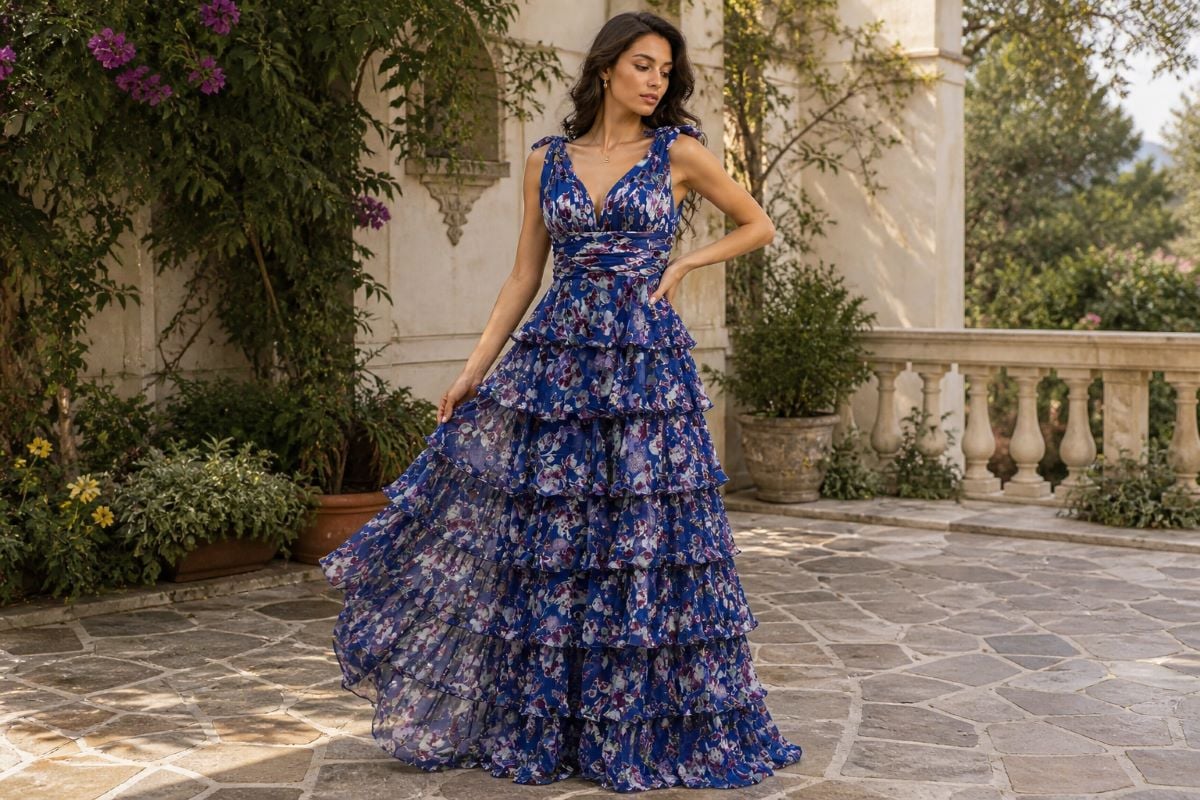
Chiffon is a sheer, softly draping fabric characterized by a slightly textured feel and a matte finish. Its magic lies in the weaving process; the yarns are twisted tightly, giving the fabric its signature slight pucker and incredible sheer drape. Originally made exclusively from the finest silk, modern chiffon is also masterfully crafted from high-quality synthetic fibers that offer exceptional durability without sacrificing its floating effect. Because the fabric is so sheer, chiffon gowns are almost always designed with multiple layers, creating a beautiful multidimensional effect as the wearer moves.
Best Occasions for Chiffon Gowns
As one of the most beloved lightweight formal fabrics, chiffon is the undisputed choice for spring and summer events, destination beach weddings, and outdoor galas. Its high breathability ensures comfort even in warm, humid, or tropical climates where heavier fabrics would feel stifling.
Chiffon is highly versatile when it comes to design, naturally lending itself to flowing styles. It is a perfect match for classic A-line evening silhouettes that sweep gracefully across the floor without adding unnecessary bulk to the hips. Furthermore, its soft drape is exceptionally forgiving, making it a perennial favorite for women seeking refined elegance and ease of movement during long, celebratory days.
Satin: The Timeless Mark of Luxury
If chiffon is about ethereal lightness, satin is about unapologetic glamour, striking structure, and Hollywood drama.
The Characteristics of Satin
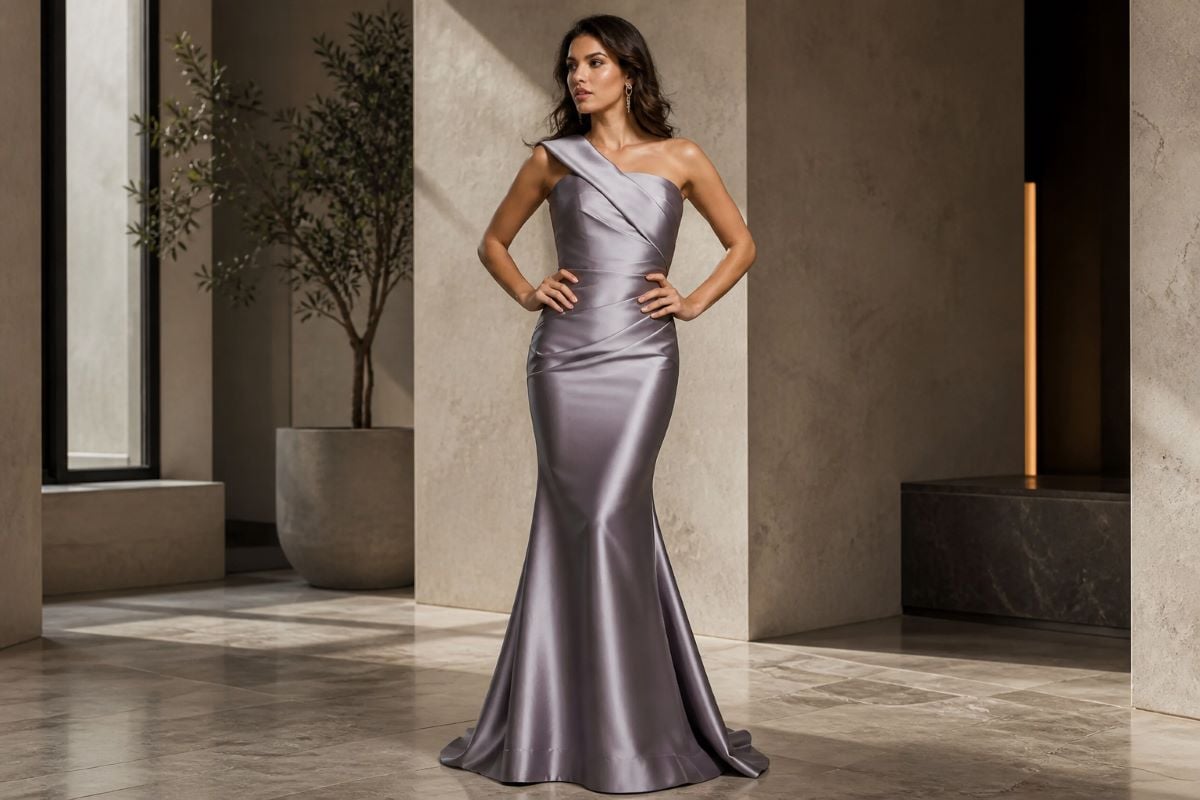
Interestingly, satin is not actually a raw fiber, but rather a highly specific type of weave. In a satin weave, warp threads float over a single weft thread, producing a brilliantly smooth, lustrous surface on the front side and a duller, matte finish on the reverse. The result is a high-impact fabric that reflects light beautifully, creating a brilliant sheen that commands attention.
The primary difference between chiffon and satin lies in their internal structure and finish. While chiffon floats, satin sculpts and defines. Satin has a substantially heavier weight and a stiffer, more decisive drape. This allows master tailors to create dramatic, architectural shapes, support intricate ruched detailing, and provide a remarkably smooth canvas that emphasizes precision tailoring.
When to Wear Satin
Because of its radiant finish, satin is universally recognized as the fabric of choice for high-glamour events. It has long been a staple in teenage formalwear, with satin prom dresses remaining a highly coveted choice for those wanting a classic, vintage-inspired look. In adult luxury evening wear, satin is incredibly popular for constructing dramatic, form-fitting mermaid gowns. Its inherent ability to smoothly contour the bodice before flaring out makes it incredibly flattering for hourglass figures. Due to its propensity to retain heat, satin is most ideal for climate-controlled indoor events or moderate climates.
Velvet: Opulence and Warmth for Cooler Seasons
Moving from the smooth, reflective sheen of satin, we arrive at the profound, tactile richness of velvet, the definitive symbol of cold-weather luxury.
The Texture and Depth of Velvet
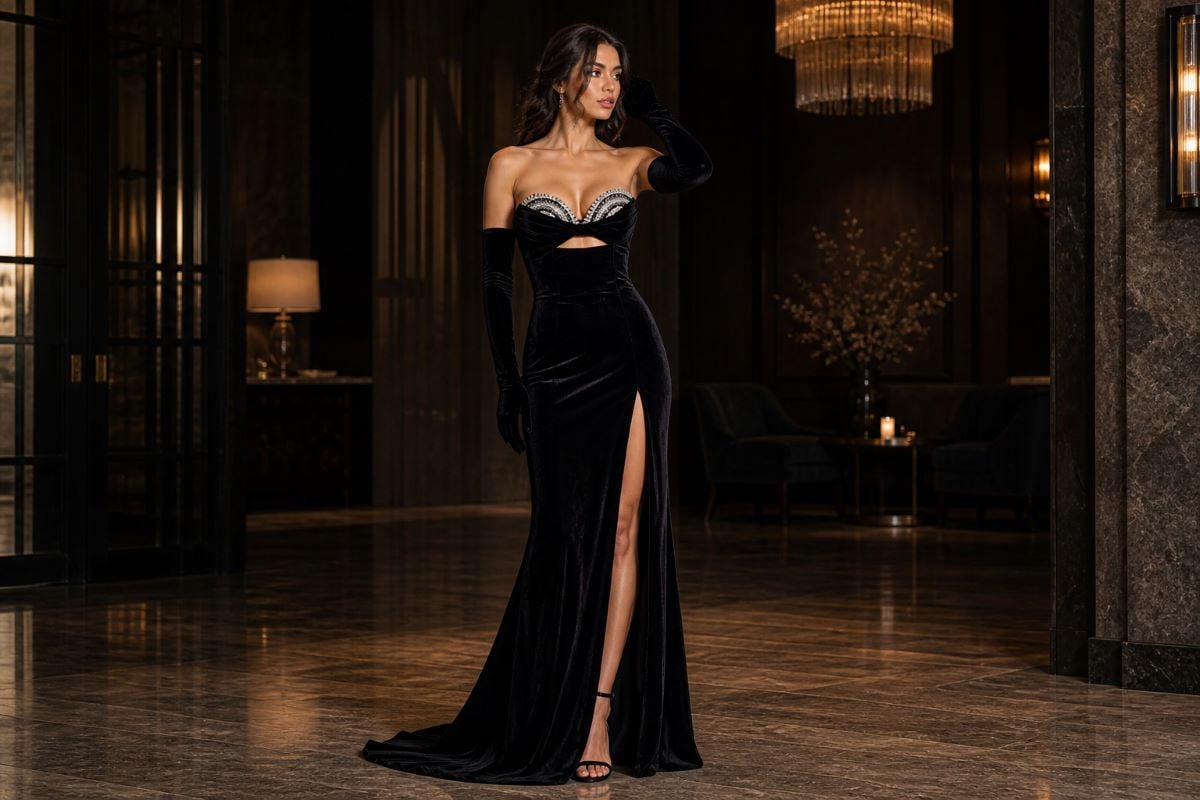
Woven on a highly specialized double-cloth loom that creates a dense, plush pile of cut threads, velvet possesses an unmatched depth of color. Because the cut pile absorbs and reflects light differently depending on the viewing angle, velvet takes on rich, saturated jewel tones like emerald green, midnight sapphire, and deep burgundy—better than almost any other material in the fashion world.
When evaluating satin vs velvet dresses, the distinction is fundamentally textural. Satin shines and reflects light outward, while velvet glows and absorbs light inward, creating alluring shadows. Velvet formal gowns bring an immediate sense of regal sophistication, warmth, and vintage charm to modern silhouettes.
Styling Velvet for Winter Events
Because the fabric is inherently warm and substantial, it is the elite choice for winter evening dresses, late-autumn weddings, and holiday galas. Its heavier weight naturally provides excellent, opaque coverage and incredible smoothing properties. Recently, the incorporation of modern stretch elements into the weave has allowed for the creation of luxurious velvet prom dresses and gowns that contour flawlessly to the body while remaining incredibly comfortable. Velvet is the perfect medium for striking long sleeve evening dresses that masterfully balance conservative modesty with high-end allure.
Comparing the Trio: Scenario and Lifestyle Considerations
Ultimately, when deciding between chiffon vs satin vs velvet evening dresses, the best fabric choice comes down to a blend of practical factors and aesthetic desires: the specific season, the venue, the desired silhouette, your personal comfort, and even your travel plans.
The Tropical Destination or Summer Soirée
If your event is taking place in July on a breezy coastal terrace, lightweight formal fabrics like chiffon are the undeniable winner. They pack easily, release wrinkles quickly with a simple steam, and offer ethereal beauty that moves beautifully in an ocean breeze.
The City Ballroom or Black-Tie Gala
If you are attending an upscale indoor charity ball in October and want a gown that acts as a structured, shining second skin, satin is unmatched. Satin requires careful pressing and travels less easily than chiffon, but its visual impact under ballroom chandeliers makes the extra care entirely worthwhile.
The Winter Estate or Holiday Celebration
If you are dressing for a black-tie New Year’s Eve celebration or a snowy winter wedding and want to project rich opulence while staying genuinely warm, winter evening dresses crafted from velvet are the definitive choice. Velvet resists wrinkling quite well when packed properly, making it surprisingly travel-friendly for winter destinations.
Chiffon vs satin vs velvet evening dresses FAQ’s
1. What is the main difference between chiffon and satin?
The primary difference between chiffon and satin is found in their weight, surface texture, and how they interact with light. Chiffon is a sheer, highly breathable, lightweight, matte fabric that floats delicately away from the body. Satin is a much heavier, entirely opaque fabric with a smooth, highly reflective surface used to create structured, tailored silhouettes.
2. Can I wear velvet formal gowns to a summer event?
Generally speaking, velvet is strictly reserved for the cooler months of late autumn and winter. Because of its dense pile and natural insulating properties, wearing velvet during a warm summer evening can lead to uncomfortable overheating. For warmer seasons, explore lightweight formal fabrics like chiffon, georgette, or silk organza.
3. When looking at satin vs velvet dresses, which is more forgiving on the figure?
Both fabrics have distinct advantages. Velvet, especially modern stretch velvet, is excellent at smoothing the silhouette; because it absorbs light, it has a flattering, visually slimming effect. Satin, due to its high-shine surface, tends to highlight the exact contours of the body. If you choose a satin gown and want a forgiving fit, look for styles with strategic ruching, draping, or structured inner corset linings.
4. How do these different fabrics photograph?
Satin is highly photogenic, catching flash brilliantly to create dramatic highlights that emphasize tailoring. Chiffon photographs beautifully in natural daylight, capturing a romantic, airy aesthetic. Velvet looks incredibly rich on camera, creating deep, luxurious shadows that look stunning in moodier or professional studio photography.
5. How should I care for and store these different fabrics?
Chiffon should be hung on padded hangers and gently steamed. Satin is highly prone to water spots and requires professional pressing or very careful steaming from the inside out. Velvet should never be ironed, as this will crush the pile permanently; it must be steamed from a distance and hung with plenty of space in your closet to avoid flattening the fabric.
Discover a world of unparalleled craftsmanship, explore the deep richness of these fabrics in person, and find the silhouette that speaks to your personal style by exploring the complete Jovani collection at an authorized retailer near you.