
Holiday Party Dress Guide: From the Office Party to Christmas Cocktails
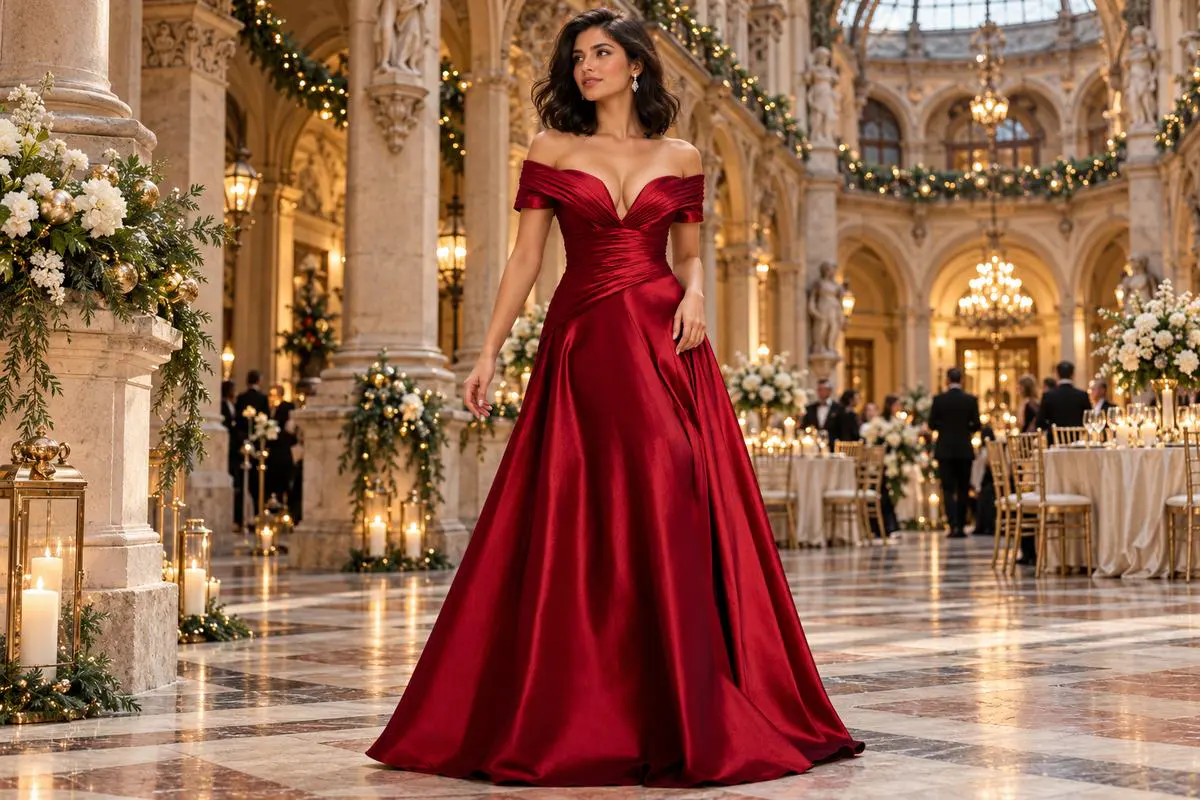
Holiday party dresses cover a much wider range than one festive formula. An office reception, family dinner, Christmas cocktail party, hotel event, and formal corporate celebration may all happen within the same few weeks, but they do not call for the same dress.
The easiest way to choose is to start with the event, then add the seasonal details. Dress code and venue should decide the level of formality. Color, texture, shine, sleeves, and accessories can make the outfit feel right for the holidays.
What should you wear to a holiday party?
Choose a holiday party dress by matching the event's dress code and venue first, then add one or two seasonal elements through color, texture, reflection, or accessories.
That might mean a black cocktail dress with metallic shoes, a velvet midi for a dinner, a sequined mini for a party with friends, or a longer formal dress for a corporate gala.
Holiday does not automatically mean sequins, red, green, or velvet. Those are options rather than requirements.
If the invitation says cocktail attire, start with Jovani's cocktail attire guide before adding seasonal styling.
Start by identifying the type of holiday party
The phrase holiday party describes the season, not the dress code.
A useful first step is to ask who is hosting, where the event takes place, and whether you will be sitting, standing, dancing, or moving between indoor and outdoor spaces.
Office holiday party
A workplace celebration requires an extra context check because the event is social while the audience is still professional.
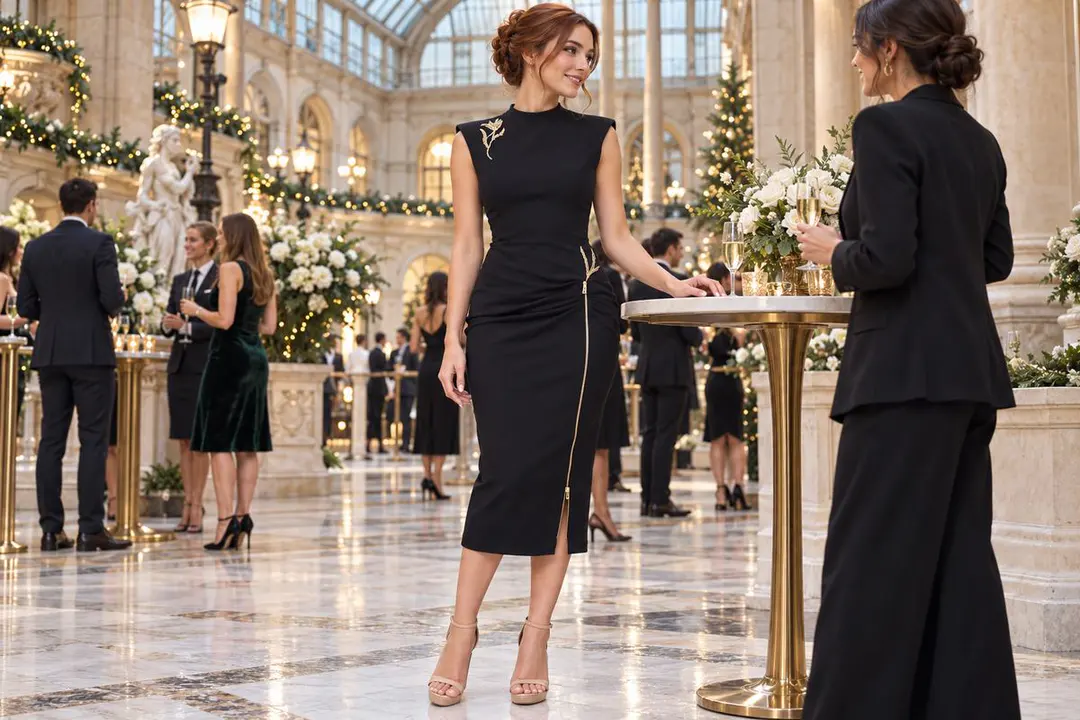
You can make the outfit more festive than regular office clothing without treating the event like a nightclub. Consider the company culture, venue, invitation, neckline, hem, and how comfortable you feel wearing the outfit around colleagues.
Jovani's dedicated office holiday party dress guide covers that situation in greater depth.

Christmas cocktail party
A cocktail-level Christmas party gives you more room for shorter lengths, reflective finishes, stronger colors, and party-focused details.
A midi or shorter cocktail dress can work well depending on the venue. Sequins, satin, metallic details, velvet, or crystal accents can add seasonal emphasis without requiring the entire outfit to follow a holiday theme.
Holiday dinner
A restaurant or private dinner often puts more emphasis on seated comfort than dancing.
Check how the waist, skirt, sleeves, and neckline feel when you sit. A fitted dress may still work perfectly, but the fitting should include the same positions you will actually use during the evening.
Formal corporate or hotel event
Some holiday celebrations move beyond cocktail attire into formal eveningwear.
If the invitation says formal or black tie, follow that instruction rather than assuming a cocktail dress is appropriate simply because it is a holiday party.
A longer dress may be the better choice for these events, with seasonal styling added through fabric, color, jewelry, or outerwear.
Party with friends
A private celebration usually gives you the most freedom, but the host and venue still set the practical context.
A sequined mini may work for a lively evening party, while a dinner at someone's home may call for something easier to sit and move in.
Use the actual event rather than a general Christmas-party stereotype.
How festive should a holiday party dress be?
There is no required level of sparkle.
A holiday dress can feel seasonal through one strong element rather than several competing ones. The dress itself may provide that element, or accessories may do the work.
If you choose a sequined dress, you may not need reflective shoes, oversized jewelry, and a metallic bag as well. If the dress is simple, those accessories have more room to create the seasonal effect.
The goal is not restraint for its own sake. It is deciding what you want people to notice first.
Black holiday dresses give you the most styling flexibility
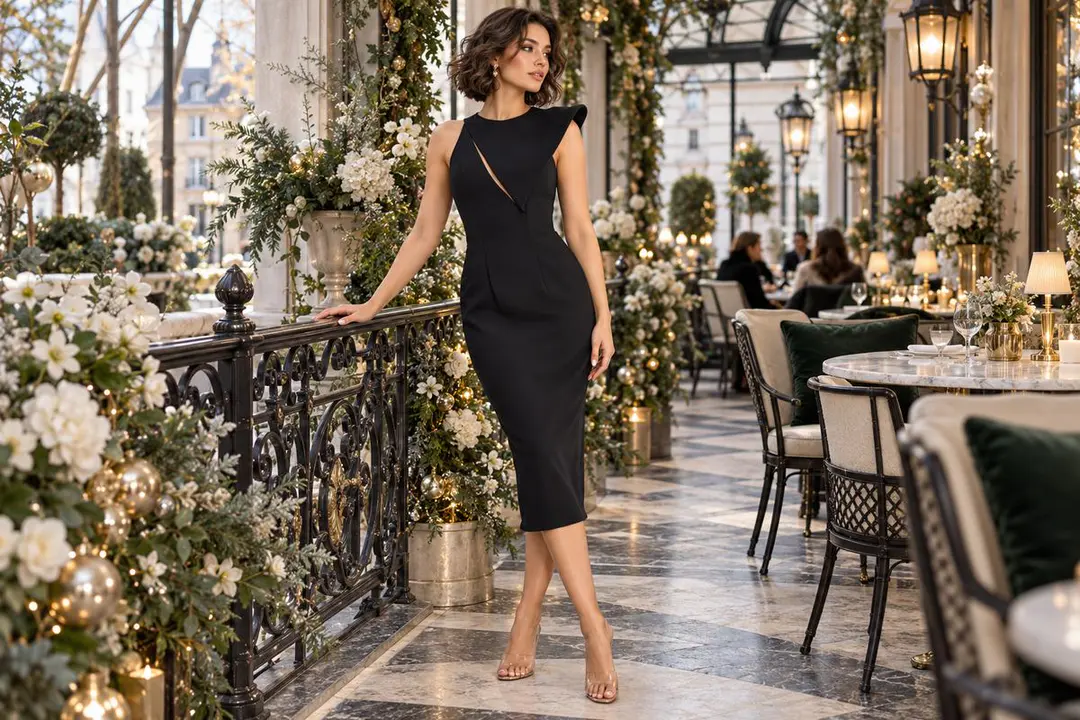
Black works well across almost every holiday-party category because it can move from professional to cocktail to formal depending on the dress.
A matte black midi can work for an office reception. A black velvet cocktail dress adds texture. A black sequin mini shifts toward an evening party.
The color itself does not determine formality. Length, neckline, fabric finish, construction, and styling all contribute.
Black is also useful if you want a dress that remains easy to wear after the holiday season ends.
Red and green can feel seasonal without looking themed
Red and green are strongly associated with Christmas, but they do not need to be treated as costume colors.
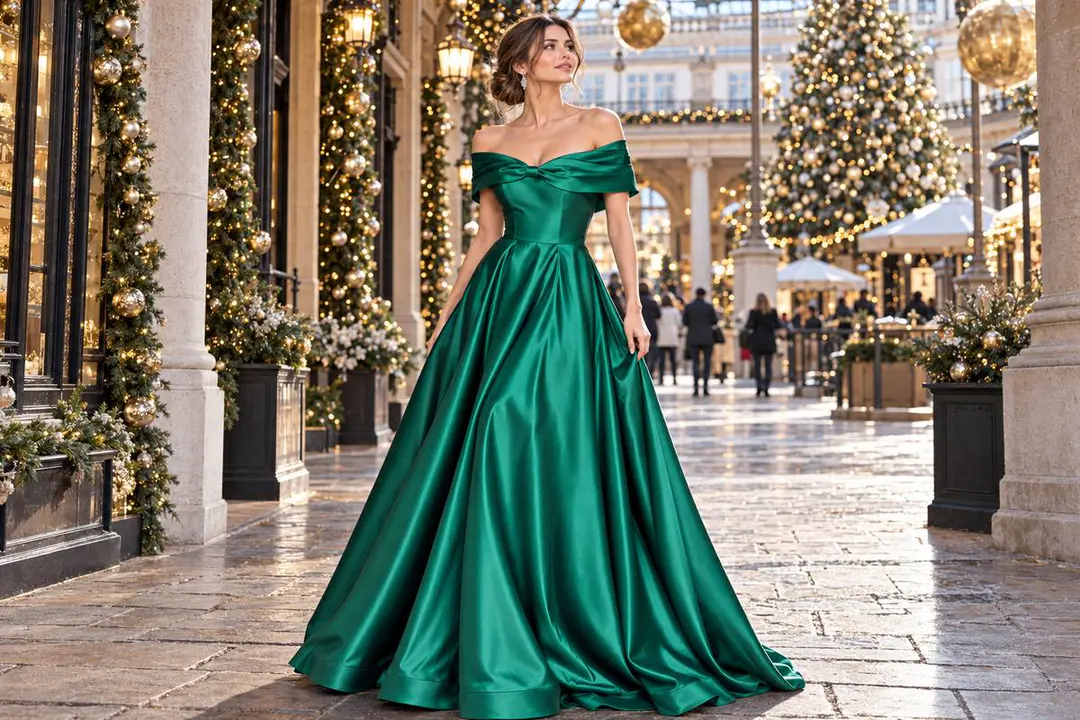
Burgundy, deep red, emerald, forest green, and brighter versions of either color can all work depending on the event and fabric.
The easiest way to keep the outfit event-focused is to let the color carry the seasonal reference without repeating the same theme through every accessory.
A green satin dress does not need red shoes and Christmas-themed jewelry to communicate the season.
Metallic dresses create holiday impact through light
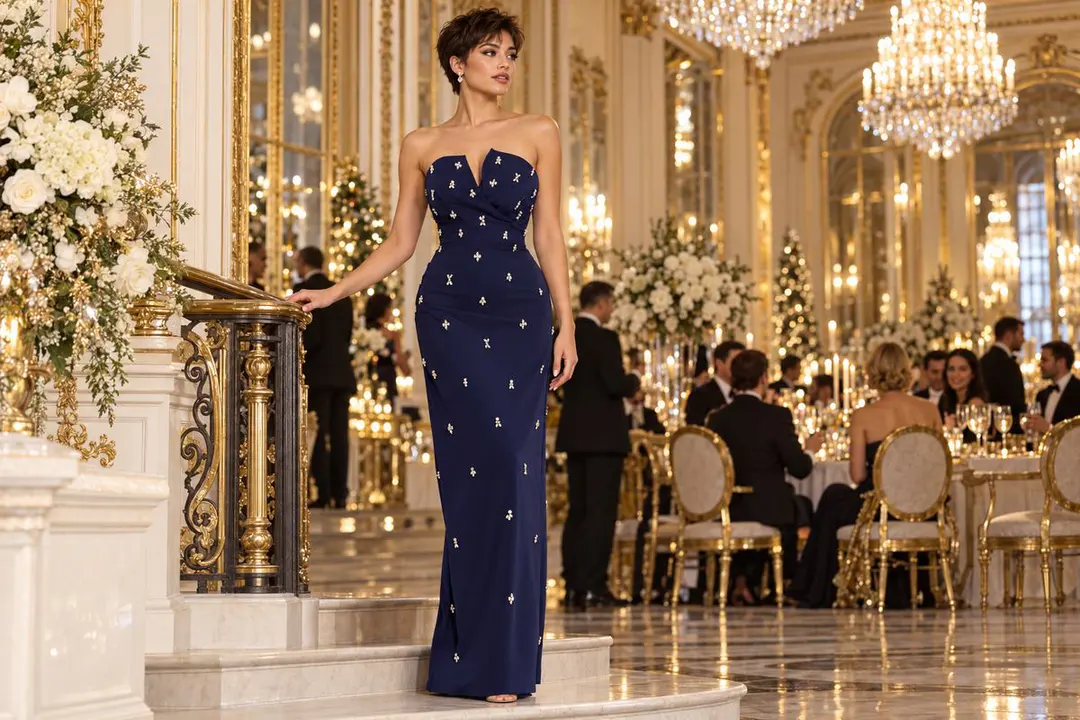
Gold, silver, and other metallic finishes naturally respond to evening lighting.
That can make a relatively simple cocktail silhouette feel more party-focused without additional decoration.
Metallic fabric and metallic embellishment do not behave exactly the same way. One may reflect across a broad surface while the other produces smaller points of light.
Look at the actual dress under more than one lighting condition when possible.
Sequins work best when you decide how much reflection you want
A fully sequined cocktail dress makes the surface of the dress the main event.
Partial sequins, crystal trim, embellished sleeves, or a decorated bodice create a more controlled effect.
Neither approach is better. The decision should match the venue and the level of visual impact you want.
For an office party, you may prefer a smaller reflective detail. For a Christmas cocktail event with friends, a fully sequined dress may fit the setting easily.
Velvet gives holiday dresses texture instead of sparkle
Velvet can create seasonal depth without metallic shine.
Its raised surface changes with the direction of light, which makes even a simple silhouette visually distinct.
Do not assume velvet automatically means a heavy or warm dress. The lining, sleeves, layers, and construction of the specific garment affect how it feels.
This matters particularly for parties held in warm restaurants, crowded venues, or heated ballrooms.
Satin gives you a quieter type of shine
Satin reflects light across a smoother surface than sequins.
That makes it useful when you want the dress to feel celebratory without heavy embellishment.
A satin midi can work for an office cocktail event, while a shorter or more dramatic satin design may fit a party with friends.
Accessories can then determine how festive the final outfit becomes.
Short dresses work well for cocktail-level holiday parties
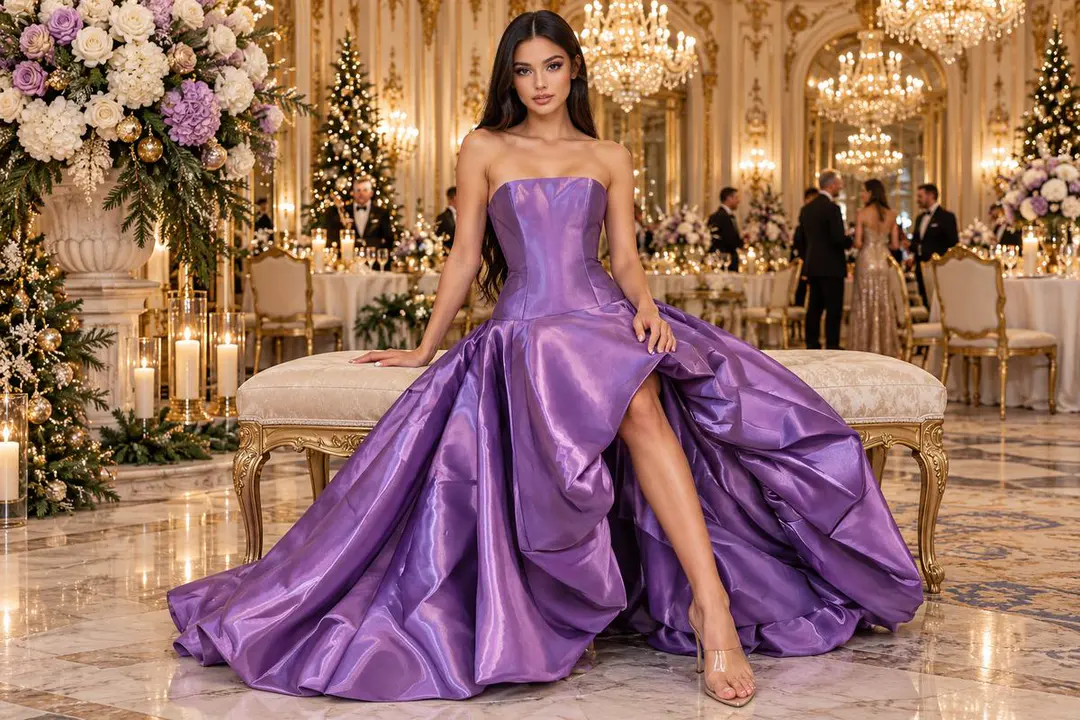
Mini and above-the-knee dresses can work particularly well when the evening involves standing, dancing, and moving through a crowded venue.
Short length does not automatically mean casual.
A structured silhouette, asymmetric neckline, satin finish, embellishment, or strong color can make a shorter dress clearly occasion-ready.
Check the dress while sitting and moving rather than judging the hem only while standing still.
Midi dresses cover a wide range of holiday events
Midi length is useful because it can move between professional, cocktail, dinner, and dressier social settings.
A simple midi can stay relatively quiet, while sequins, velvet, an asymmetric neckline, or a stronger finish can push the same general length toward evening party dressing.
It is also practical when you expect to wear outerwear or move through winter weather before reaching the venue.
Long dresses belong at the more formal end of holiday dressing
A longer dress becomes relevant when the invitation or venue moves beyond standard cocktail attire.
Formal corporate events, hotel galas, and black-tie holiday celebrations may call for floor-length eveningwear.
Do not choose a long gown merely because the event takes place in December. Let the invitation set the formality first.
The season should refine the gown through color, sleeves, fabric finish, or layers.
Cold weather should change your plan, not necessarily your dress
Winter dressing often becomes inaccurate when the entire indoor outfit is chosen for the outdoor temperature.
A heated restaurant or ballroom may feel completely different from the walk between the car and the entrance.
Plan both environments.
A sleeveless cocktail dress can still work in December when it has a suitable outer layer. A long-sleeve dress may reduce the need for extra coverage indoors, but it does not automatically solve cold-weather arrival conditions.
Plan the outer layer before buying the dress
A coat, wrap, cape, or jacket should be considered part of the outfit planning process.
Test the layer over the actual dress when possible.
Sequins, beads, bows, fringe, and dimensional details can catch under tight outerwear. A wide or sculptural sleeve may also require more room inside a coat.
Planning this early avoids having a good dress paired with an outer layer that changes how it sits.
Jovani's broader evening dress layering guide provides more detail on wraps, capes, jackets, and climate-based layering.
Long sleeves are one option for winter parties
A long-sleeve cocktail dress can work well when you prefer more arm coverage or want the sleeve itself to become part of the design.
Sheer, fitted, embellished, and statement sleeves all create different effects.
Sleeves should not be treated as a substitute for winter outerwear. A long sleeve may help indoors, but cold arrival conditions can still require a coat or another layer.
The exact fabric and construction matter more than sleeve length alone.
Shoes should match the full holiday itinerary
A holiday party may involve wet sidewalks, stairs, standing receptions, crowded rooms, dancing, or walking between venues.
Choose shoes for that complete route.
A metallic heel can add seasonal contrast to a simple black dress, but stability may matter more if you expect snow, rain, or long periods on your feet.
If you plan to change shoes after arriving, check that the dress hem works at both heights.
Accessories can create the holiday effect for you
A dress does not need to be holiday-specific if the accessories can shift its mood.
Crystal earrings, metallic shoes, a reflective clutch, or a textured wrap can take a simple cocktail dress into a holiday setting.
This is particularly useful if you want the dress to remain wearable for birthdays, weddings, dinners, or other cocktail events later.
Choose one or two accessory directions instead of making every piece seasonal.
Avoid turning seasonal dressing into a costume
Holiday styling can become too literal when every element repeats the same theme.
Red and green together, holiday motifs, heavy sparkle, metallic shoes, and themed accessories can all compete when used at once.
There is nothing wrong with a highly festive outfit if that is intentional. The useful question is whether the complete look still matches the actual party.
A corporate reception and a themed Christmas party may call for very different answers.
Let the venue refine the final choice
Venue information can settle decisions that the phrase holiday party cannot.
A hotel ballroom can support more dress volume and stronger evening detail. A restaurant rewards seated comfort. An office venue may call for clearer professional context. A private home may make an elaborate train or highly structured dress impractical.
The outfit should work in the actual space, not just in a product photograph.
Build a holiday wardrobe that can handle more than one event
If you attend several events in December, you do not necessarily need a separate dress for each one.
A versatile black, velvet, satin, or jewel-tone cocktail dress can change through outerwear, shoes, jewelry, and styling.
The key is choosing a base dress whose formality works for the events you attend most often.
A dress that sits in the middle of your holiday calendar can often cover several occasions with small changes.
What shoppers ask about holiday party dresses
The questions below cover the most common decisions when choosing a dress for holiday events.
What should I wear to a holiday party?
Start with the invitation and venue, then choose a dress at the right level of formality. Add seasonal color, texture, shine, or accessories only after the basic dress code is clear.
What should I wear to an office holiday party?
Choose a dress that feels more celebratory than regular office clothing while still fitting your company's professional context. Cocktail-length dresses, polished midis, and controlled festive details are practical starting points.
Do holiday party dresses have to be red or green?
No. Black, metallics, blue, burgundy, purple, winter white, and other colors can all work. The dress needs to suit the party rather than follow one holiday palette.
Can I wear sequins to a work holiday party?
Yes, when the amount of reflection and the overall dress suit the workplace and venue. A smaller embellished area can be easier to integrate into a professional event than dense head-to-toe sequins.
What should I wear over a cocktail dress in winter?
Choose a coat, wrap, cape, or jacket that fits over the neckline, sleeves, and surface details without catching or compressing them. Test the layer with the actual dress before the event.
Can one cocktail dress work for several holiday parties?
Yes. A versatile black, satin, velvet, or jewel-tone dress can move between different holiday events through changes in shoes, jewelry, outerwear, and styling.
Start with the dress code and venue, then test the dress with your shoes and winter layer before choosing the final look through an authorized Jovani retailer.