
Wedding Dress Comfort Test Before You Buy: Compare Gowns in the Salon
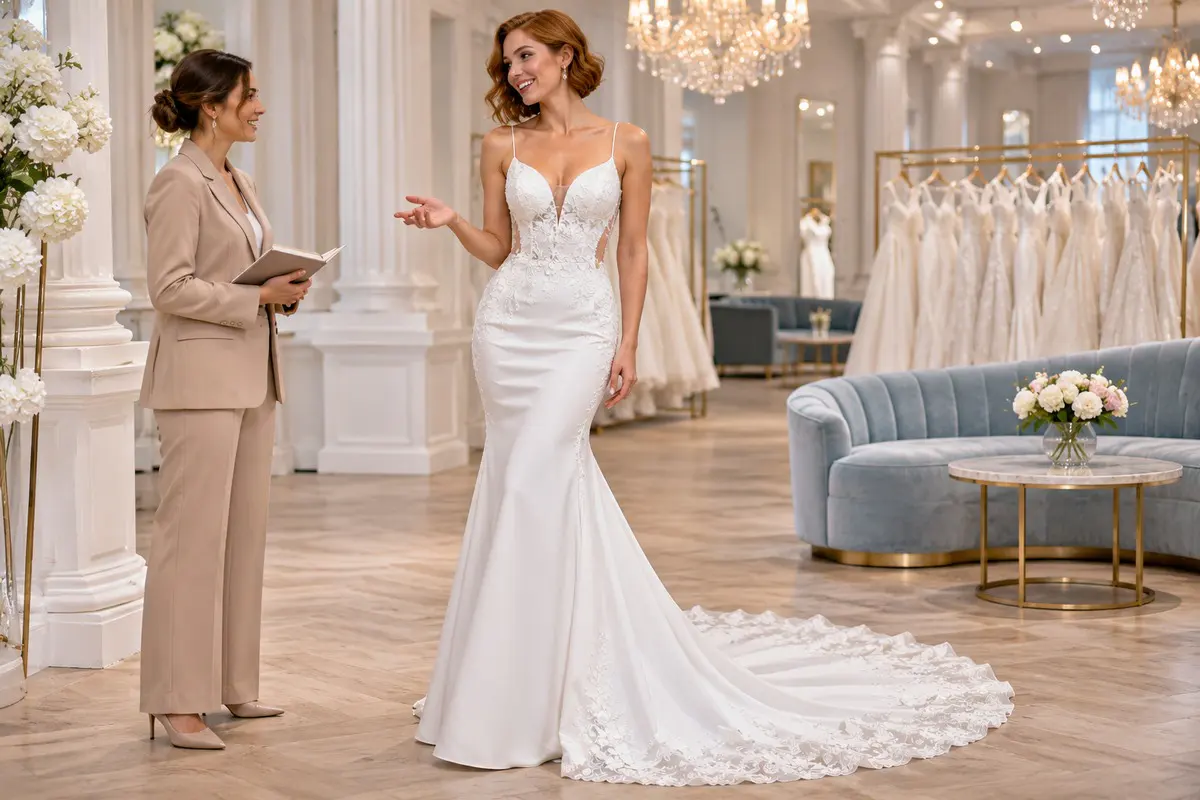
Before you order a bridal gown, use a wedding dress comfort test to compare how each sample behaves during ordinary movements. Two dresses may look equally appealing in a mirror but feel different after sitting, walking, or reaching. The goal is to choose a wearable design, not to demand a finished fit from a showroom sample.
Start with a short list of bridal dresses (opens in new tab) that suit your ceremony and reception. Then repeat the same small movements in each option so you can compare the differences fairly.
How Do You Run a Wedding Dress Comfort Test Before Buying?
Test each gown while walking, sitting, standing, turning, and lifting your arms. Ask the stylist to secure the sample safely, then repeat the movements in the same order. Record what changes, where you feel pressure, and which design needs constant adjustment.
The Wedding Dresses 101 guide (opens in new tab) explains the main bridal silhouettes. This test has a narrower purpose: helping you choose between samples before an order is placed.
Choose movements that match your venue
A garden ceremony may involve uneven paths, while a ballroom wedding may include several flights of stairs. Tell the stylist which activities matter most to your plans. Ask before using any steps or moving beyond the fitting area.
Use the same conditions for each sample
Wear similar undergarments and shoes of approximately the same heel height for both looks. A loosely clipped sample will not behave like a fitted gown, so ask the stylist to explain what the clips change.
Check Breathing and Sitting Before Judging the Bodice
Sit fully in a stable chair, breathe normally, and stand without pulling at the neckline. A sample should not force you to hold your breath or twist into an awkward position. A slight fit issue may be alterable, but substantial pressure needs a specific explanation.
Try A-line bridal styles (opens in new tab) when you want to compare a defined bodice with more room below the waist. Notice whether layered skirts bunch underneath you or spread comfortably when seated.
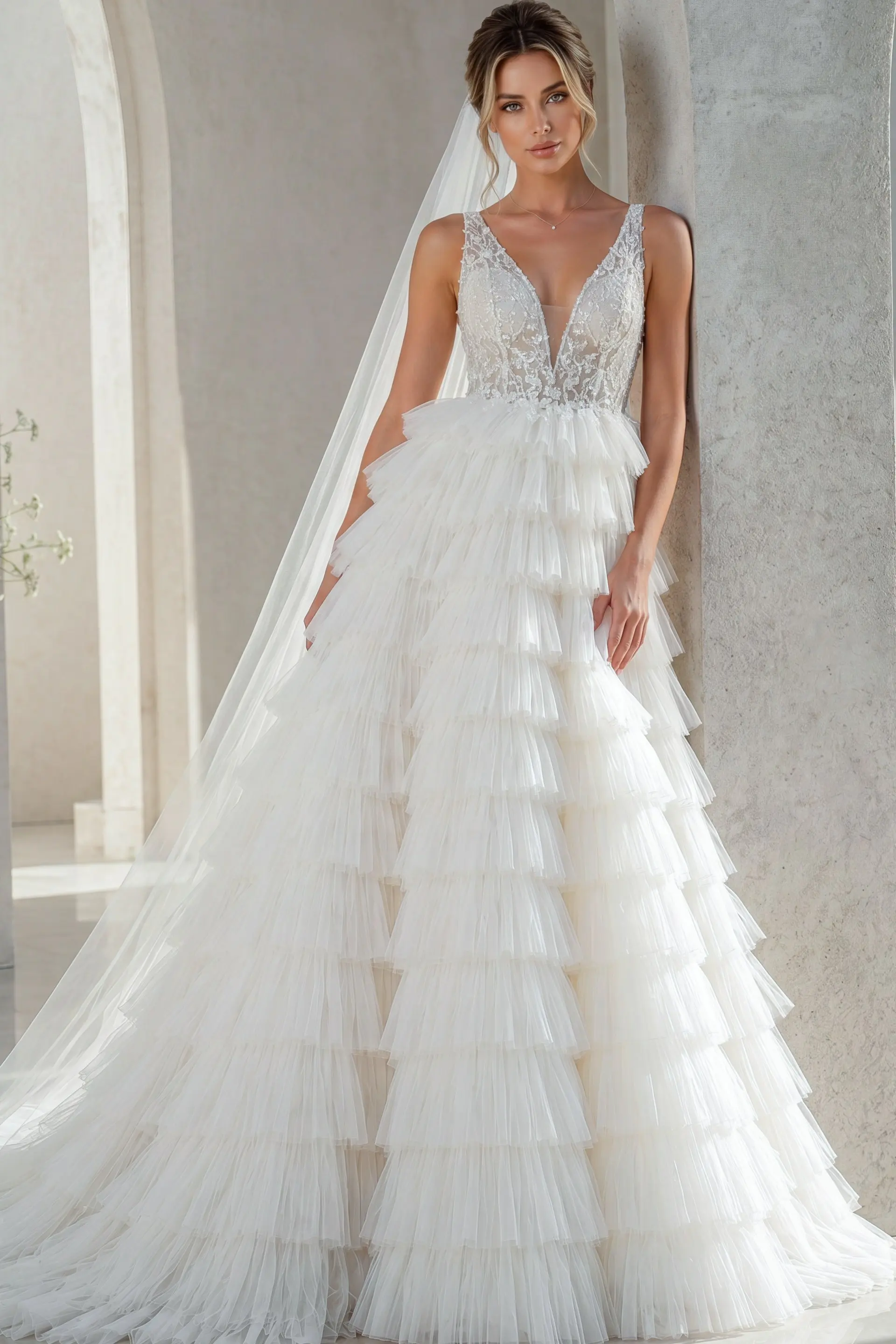
Jovani's Lace Bodice Ball Gown with Layered Tulle Skirt has a deep V neckline, a beaded bodice, and an A-line tulle skirt with tiered ruffles. During your appointment, compare the support around the upper body with the space available at the knees and hips.
Compare Walking and Turning in Two Different Silhouettes
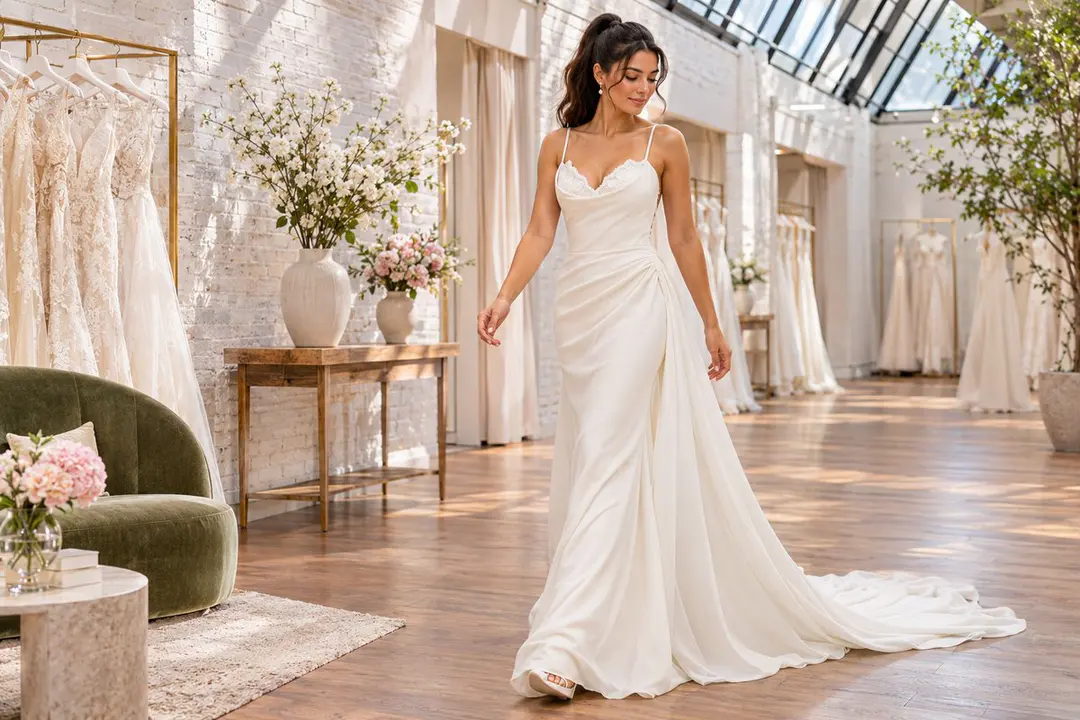
Walk several ordinary steps in each sample, turn slowly, then walk back. Notice whether the skirt allows a natural stride and how the train follows your movement. A dramatic silhouette may feel manageable in one fabric but restrictive in another.
Compare roomier skirts against fitted bridal silhouettes (opens in new tab) while keeping the movements identical. Focus on where the fabric starts resisting your stride rather than judging the shape only from a photograph.
Watch what happens at the knees and hem
A close skirt may limit the distance between your knees. A longer front hem can catch your shoes even when the bodice feels comfortable. Ask which concerns would change with the correct size or a later hem adjustment.
Notice how the train changes direction
Turn once without holding the train, provided the salon permits it. Watch for fabric winding around your ankles or pulling across the hip. The final bustle is a later alteration decision, not something to assume the sample already has.
Try a Reach and Dance Test Without Forcing the Dress
Raise your arms gently to shoulder height, offer a small hug, and make a short dance step. Stop if seams pull sharply or a closure strains. The purpose is to learn whether the design supports your planned activities, not to stress an ill-fitting sample.
Compare the neckline security of strapless bridal designs (opens in new tab) with styles that have straps. A gown may need adjustment at the bust, but the stylist should explain what is realistically possible.
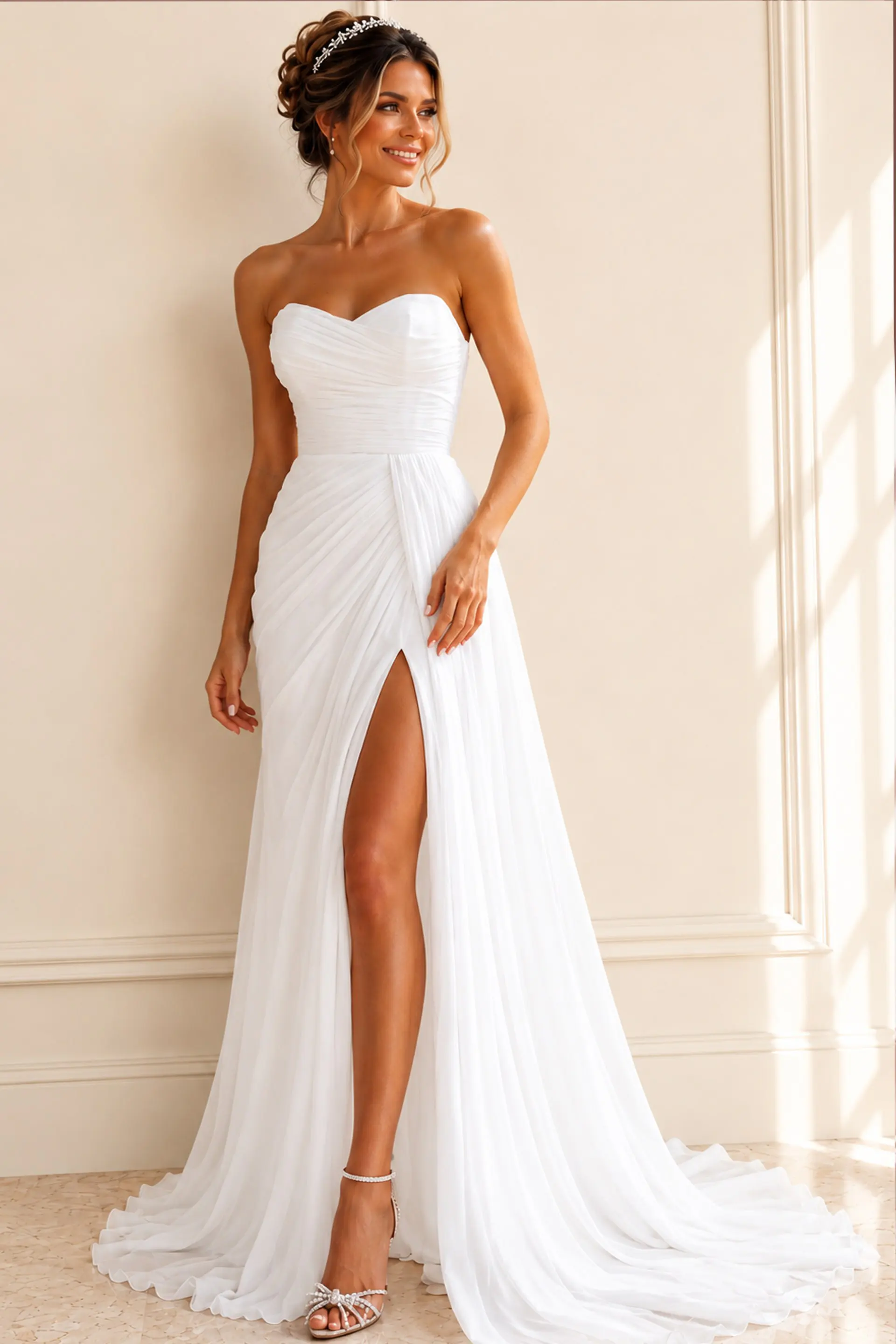
Jovani's Draped Bridal Gown with High Slit and Flowing Train combines ivory chiffon, a strapless sweetheart neckline, and a high slit. Check how the ruched bodice behaves during a gentle arm lift and how the slit opens during a small turn.
Which Comfort Problems Should Change Your Buying Decision?
Take repeated slipping, painful pressure, and restricted breathing seriously before purchasing. If the same problem appears after the stylist has secured the sample correctly, ask for an alternative silhouette. Cosmetic fit changes are different from redesigning a gown that limits basic movement.
Use questions to ask a bridal stylist (opens in new tab) to identify what the retailer can evaluate before ordering. Ask which alterations are feasible, which need a specialist, and which cannot be promised from the showroom sample.
- A neckline that falls repeatedly during a gentle reach deserves a clear fit plan.
- A skirt that blocks normal walking may call for a different cut, not only a shorter hem.
- A lining that scratches or grips during sitting should be assessed alongside the outer fabric.
What Can a Clipped Bridal Sample Really Tell You?
A clipped sample can show the outline and fabric behavior, but it cannot guarantee the fit of your ordered size. Ask the stylist to distinguish sample-size tens ion from the gown’s underlying construction. A loose waist, for example, may exaggerate how much the bodice shifts.
For detachable overskirts and trains, ask to see both configurations before deciding. An extra layer may create a different movement pattern even if the base dress feels secure. Only test removable pieces with the retailer’s help.

Keep a Simple Comparison Note for Your Finalists
Write down three observations for each gown: movement that felt easy, movement that felt restricted, and changes the stylist says are possible. Give the dresses a fair second try if a clip or shoe height distorted the first result.
If dancing comfort remains a major concern, compare bridal reception dresses (opens in new tab) as a separate option. A second outfit can solve a different need, but it should not excuse pain or instability in the ceremony gown.
Save Final Fit Checks for the Alterations Appointment
The wedding dress comfort test helps you choose a design before ordering. After the gown is altered, use a final wedding dress fitting checklist (opens in new tab) to check the actual hem, support, bustle, and movement in your finished dress.
When you have narrowed your choices, visit an authorized Jovani retailer (opens in new tab) to compare the designs in person and discuss realistic adjustments before ordering.
Frequently Asked Questions
Can you test a wedding dress if the sample is too large?
Yes. Ask the stylist to secure it with clips and explain which results are approximate. You can compare general skirt volume and fabric behavior, but not a precise finished bodice fit.
Should you be able to sit comfortably in a wedding dress?
Yes. You should be able to sit, breathe, and stand without significant pain. A structured gown may feel firmer than everyday clothing, but it should not prevent ordinary movement.
Can alterations make a tight wedding dress easier to walk in?
Sometimes. Hem changes may improve clearance, while skirt width and seam construction can limit other adjustments. Ask an alterations specialist to assess the exact design before you rely on a change.
When should you repeat the movement test?
Repeat it when comparing your final two samples and again at the last alteration fitting. The first test helps with selection; the second confirms the finished dress is wearable.