
Most advice about choosing between a wide-leg and a fitted jumpsuit is written for a weekend brunch, and it stops at a short list of body shapes: pear goes wide, hourglass goes belted, and so on. That advice is not wrong, but it leaves out the two things that actually decide the question at a formal event. The first is that the two cuts do not carry the same amount of formality, so one of them is simply better suited to a black tie invitation than the other. The second is that a jumpsuit interacts with your height in a way a dress does not, because a trouser hem is fixed to a shoe in a way a skirt hem is not. This guide covers both, along with the fabric and fit considerations that separate a formal jumpsuit from an ordinary one.
The two cuts, and what actually separates them
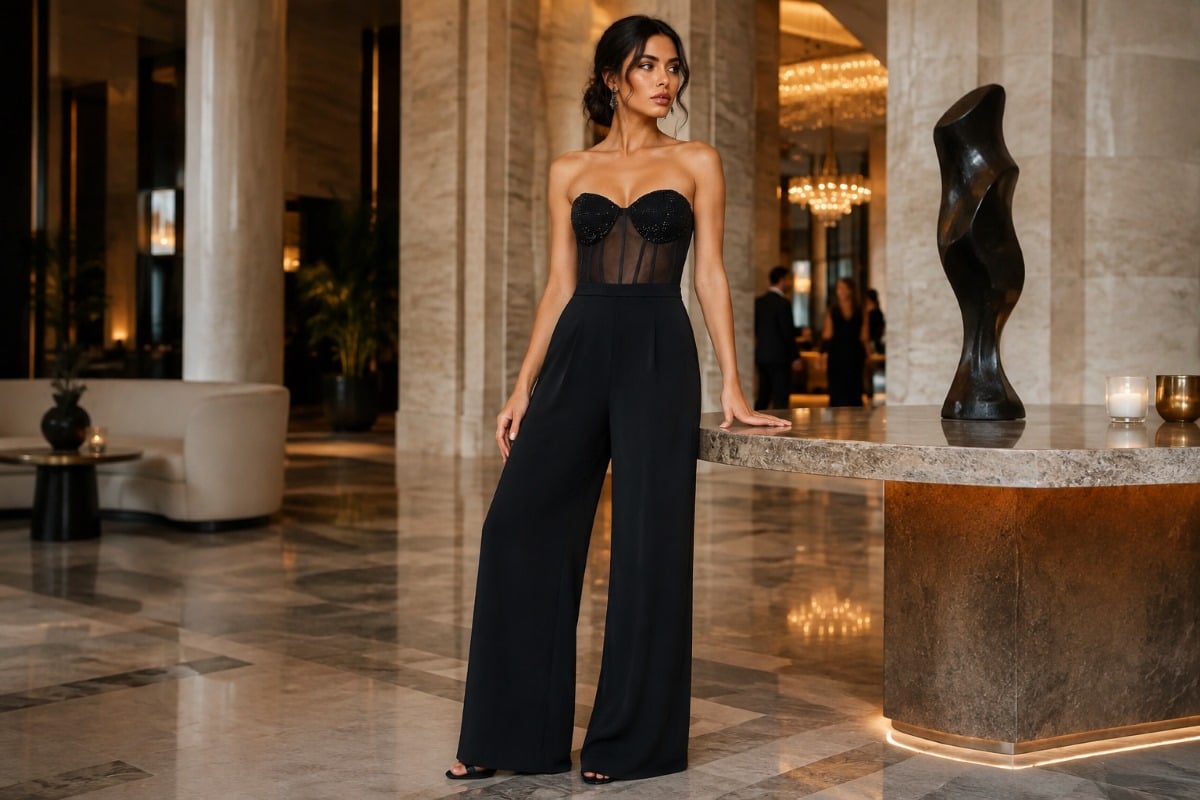
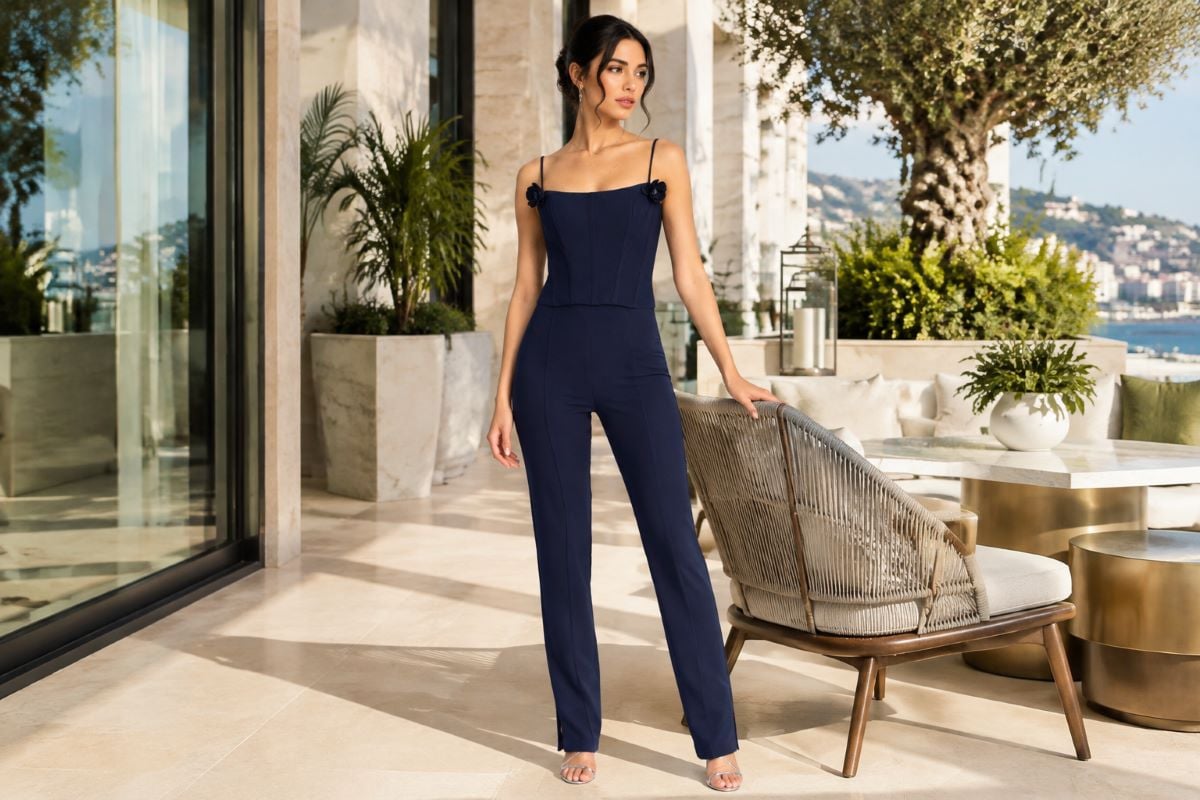
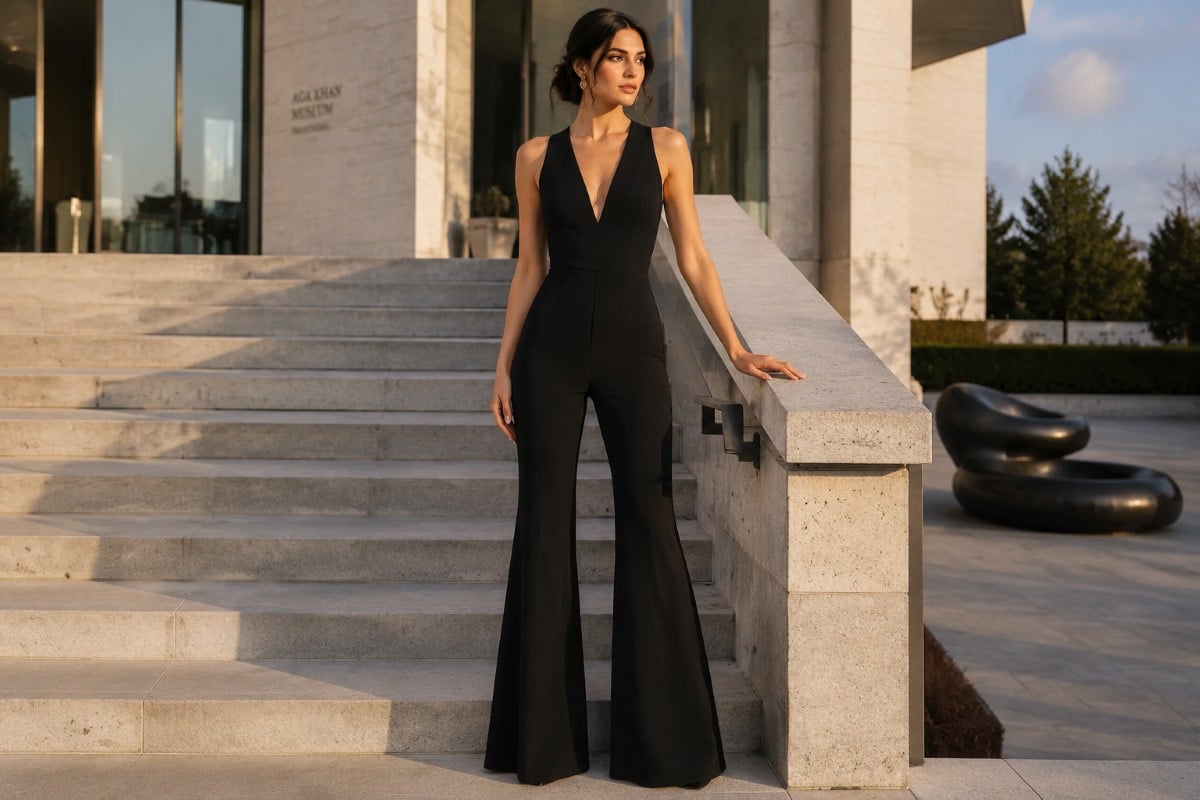
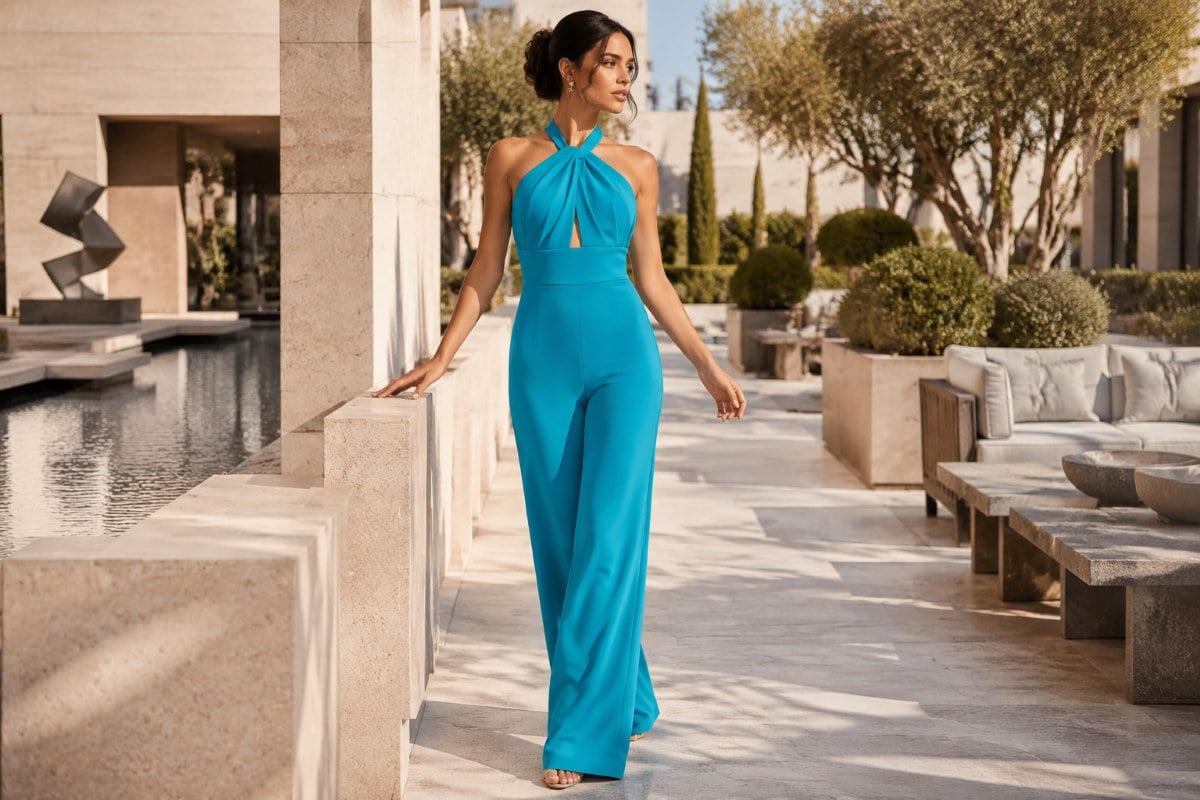
A wide-leg jumpsuit has trousers that fall straight and full from the hip or the knee, creating a column of fabric that reads almost like a long skirt when you are standing still. A fitted jumpsuit follows the leg more closely, through a straight, tapered, or slim cut, so the shape of the leg is visible.
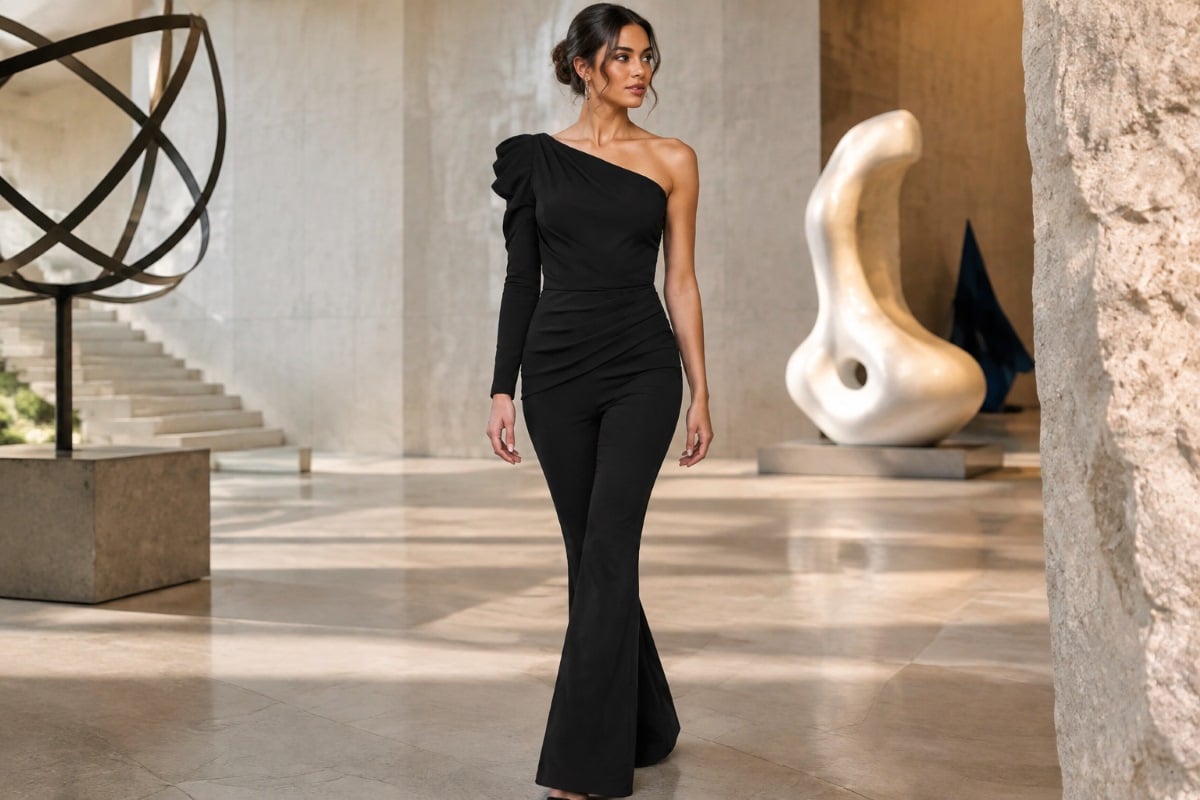
The difference people notice is volume, but the difference that matters is what each one does to the eye. A wide leg creates a single unbroken vertical line from waist to floor and hides where the legs are, which is why it reads as closest to a gown. A fitted leg divides that line and shows the shape of the body underneath, which is why it reads as more modern and more obviously trousers. The range of formal jumpsuits shows both cuts at an occasion level.
Which cut is more formal
This is the part the general guides skip entirely, and at a formal event it is the first question to answer.
A wide-leg jumpsuit is meaningfully more formal than a fitted one, for a reason that is structural rather than a matter of taste. Because the wide leg falls as a continuous column, it produces the same silhouette a floor-length gown produces, and from across a room a well-cut wide-leg jumpsuit in a heavy fabric can read almost as a dress. That resemblance is exactly what makes it the safer choice for black tie, formal weddings, and galas.
A fitted jumpsuit reads as sharper, more contemporary, and more clearly a separate garment category. That works entirely in its favor at a cocktail party, an awards dinner, a gallery event, or any occasion where looking current matters more than looking traditional. It works against it at a very formal or conservative event, where the visible trouser line reads as less dressed than a gown would.
The practical rule: if the invitation says black tie or the event is traditional, choose wide-leg. If the event is contemporary or the dress code is cocktail, either works and the fitted cut may look more considered. The breakdown of dress codes explained covers what each level expects.
How your height changes the answer
Here is the factor that matters more than body shape and gets almost no attention: a jumpsuit hem is tied to a specific shoe in a way a dress hem is not.
The petite problem with wide legs
A wide-leg jumpsuit on a shorter frame carries a real risk of overwhelming it, because the volume of fabric competes with the amount of person. The fix is not to avoid the cut but to raise the waist. A high-waisted wide-leg jumpsuit gives more leg above the trouser line and less fabric below it, which is what keeps the proportion working. Cropped wide legs are the other solution, provided the hem lands intentionally above the ankle rather than at an awkward mid-calf point, which shortens the leg visually. Hemming is not optional here, since a wide leg that pools on the floor removes the height the cut was supposed to create.
Why the shoe decision comes first
With a dress you can change your mind about heel height fairly late. With a jumpsuit you cannot, because the trouser hem has to be set for one specific shoe, and a difference of two centimeters shows immediately as either a drag on the floor or a gap at the ankle. This is more forgiving on a fitted leg, where a slightly short hem reads as a deliberate crop, and less forgiving on a wide leg, where the same error looks like a mistake. Choose the shoes, then hem the jumpsuit, in that order, and take the shoes to the fitting.
Which cut suits your shape
Body shape does matter, though less than formality and height. The useful version is shorter than the usual list.
If your hips or thighs are the fullest part of you, a wide leg skims past them and creates a straight line, which is more comfortable and generally more flattering than a fitted leg that follows the widest point. If your waist is your favorite part, either cut works provided the waist is genuinely defined by a seam, a belt, or a tie rather than left to a straight tube of fabric.
If you are tall, a wide leg is close to ideal, since you have the length to carry the volume and the cut adds drama that shorter frames have to manage. If you are slim through the hip and want the shape of your legs visible, the fitted cut is the one that shows it.
The thing that undermines both cuts equally is a torso that does not fit. A jumpsuit has a fixed distance from shoulder to crotch, and if that measurement is wrong for your body it pulls when you sit or sags when you stand, and no styling fixes it. The guidance on dress waistlines covers how waist placement changes proportion, which applies directly here.
Fabric behaves differently in each cut
The same fabric produces different results depending on the leg, which is why fabric advice written for one cut misleads for the other.
A wide leg needs a fabric with enough weight to hang and swing rather than balloon. Crepe is the most reliable, since it falls in a clean column and resists creasing through a seated dinner. Satin and heavy silk create real movement. Chiffon and georgette work for a lighter, softer version but need lining. What fails is a stiff fabric, which turns a wide leg into a rigid tube, and a very light one, which lets the leg billow rather than fall.
A fitted leg needs the opposite: enough structure to hold a clean line without clinging, which usually means a crepe with body, a ponte, or a fabric with a small percentage of stretch. Thin, slippery fabrics show every line on a fitted leg in a way they would not on a wide one, so a fitted jumpsuit in lightweight satin is the version that most often disappoints.
Across both, the fabrics that read as formal are the same: crepe, satin, silk, velvet, and beaded finishes. Jersey, cotton, and linen read as daywear regardless of cut. Fabric behavior differs enough between the two cuts that it is worth reading up separately; the popular evening dress fabrics overview covers the properties involved.
Where each cut works best
The formality argument above translates into specific events, and the two cuts divide fairly cleanly between them.
Occasions that suit a wide leg
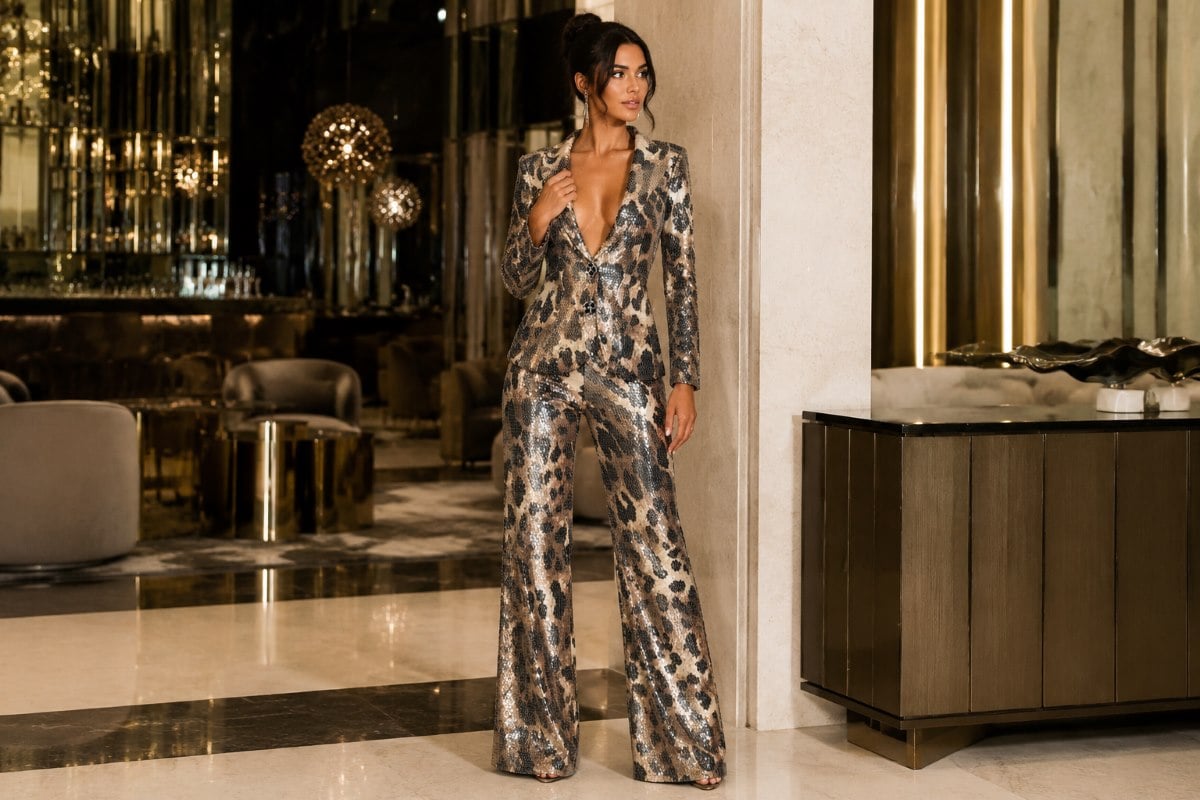
A wide-leg jumpsuit is at its best where a gown would otherwise be expected: a black tie wedding, a formal gala, an evening awards dinner, or a milestone celebration. It also handles a long evening well, since the loose leg is cooler than a fitted one in a warm room and easier to sit in through a seated dinner. For a mother of the bride or groom looking for an alternative to a dress, the wide leg is usually the version that reads as appropriately formal for the role. The range of mother of the groom gowns shows the formality it needs to match.
Occasions that suit a fitted cut
A fitted jumpsuit suits a cocktail party, a gallery opening, a work function, a smart dinner, or any event where looking current matters more than looking traditional. It is also the more practical choice for a standing event, since there is no fabric to manage in a crowded room, and it travels considerably better than a wide leg, which creases across the thigh in a suitcase. The styles among cocktail dresses show the register a fitted jumpsuit competes with at that level.
Styling each cut
The two cuts need different treatment above the waist, because they create different amounts of visual weight below it.
A wide-leg jumpsuit already has volume, so the top half works best kept clean: a fitted bodice, a simple neckline, and a defined waist. A belt is often the single most useful addition, since it stops the fabric reading as one continuous mass. Heels matter here more than anywhere, because a wide leg without height can drag the whole silhouette down.
A fitted jumpsuit has less volume to balance, which gives more room above the waist. A statement sleeve, a dramatic neckline, or a detailed shoulder all work well and add the interest the leg is not providing. This is also the cut where a jacket or cape reads best, since there is no competing fabric below.
For both, the accessories carry more formality than they would with a gown, because there is simply less garment doing the work. A pair of strong earrings and a small structured bag do most of the work, and a belt at the waist does the rest. The piece on evening party jumpsuits goes further into how accessories carry a one-piece silhouette.
Making the choice
Start with the event rather than your body. Black tie, a formal wedding, or a traditional venue points to wide-leg, because it reads closest to a gown. A cocktail event, an awards dinner, or a contemporary venue takes either, and the fitted cut often looks sharper.
Then apply your height. Shorter frames need a high waist or a deliberate crop with a wide leg, or can go fitted without adjustment. Taller frames carry a wide leg easily. Then check the fabric matches the cut: weight and drape for a wide leg, structure without cling for a fitted one.
And test it seated rather than standing, since a jumpsuit reveals its fit problems in a chair and not in a mirror. If you find yourself between the two and the event allows it, the wide leg is the more forgiving choice and the one that photographs closer to a dress. The range of contemporary gowns is worth looking at alongside both, since seeing them at the same formality tells you quickly which silhouette you actually want. To see how wide-leg and fitted jumpsuits compare in occasion fabrics, explore the current styles through an authorized Jovani retailer.
Choosing Between the Two Cuts
Is a wide-leg or fitted jumpsuit more formal?
Wide-leg, and the reason is structural rather than a matter of opinion. The wide leg falls as a continuous column from waist to floor, producing the same silhouette a floor-length gown produces, so from across a room it can read almost as a dress. A fitted leg divides that line and shows the trousers clearly, which reads as sharper and more contemporary but less traditionally dressed. For black tie or a formal wedding, choose wide-leg.
Can a petite frame wear a wide-leg jumpsuit?
Yes, with two adjustments. A high waist is the main one, since it gives more leg above the trouser line and less fabric below it, which keeps the proportion working. A deliberate crop is the other, provided the hem lands intentionally above the ankle rather than at an awkward mid-calf point that shortens the leg. Hemming is essential either way, because a wide leg that pools on the floor removes exactly the height the cut was meant to create.
Which jumpsuit cut suits fuller hips?
A wide leg. It skims past the hips and thighs and creates a straight line from the waist down, which is both more comfortable and generally more flattering than a fitted leg that follows the widest point of the body. The waist still needs to be defined by a seam, belt, or tie rather than left as a straight tube of fabric, since that definition is what stops the volume reading as shapeless.
Why does the shoe matter so much with a jumpsuit?
Because the trouser hem has to be set for one specific heel height, and a difference of two centimeters shows immediately as either fabric dragging on the floor or a gap at the ankle. A dress lets you change your mind about shoes fairly late; a jumpsuit does not. This is more forgiving on a fitted leg, where a slightly short hem reads as a deliberate crop, and least forgiving on a wide leg. Choose shoes first, then hem.
What fabric works best for each cut?
A wide leg needs weight and drape so it hangs and swings rather than balloons, which makes crepe the most reliable and satin or heavy silk good for movement. Stiff fabrics turn a wide leg into a rigid tube. A fitted leg needs structure without cling, so a crepe with body or a fabric with slight stretch works best, while thin slippery fabrics show every line. Both cuts read as formal only in crepe, satin, silk, velvet, or beaded finishes.