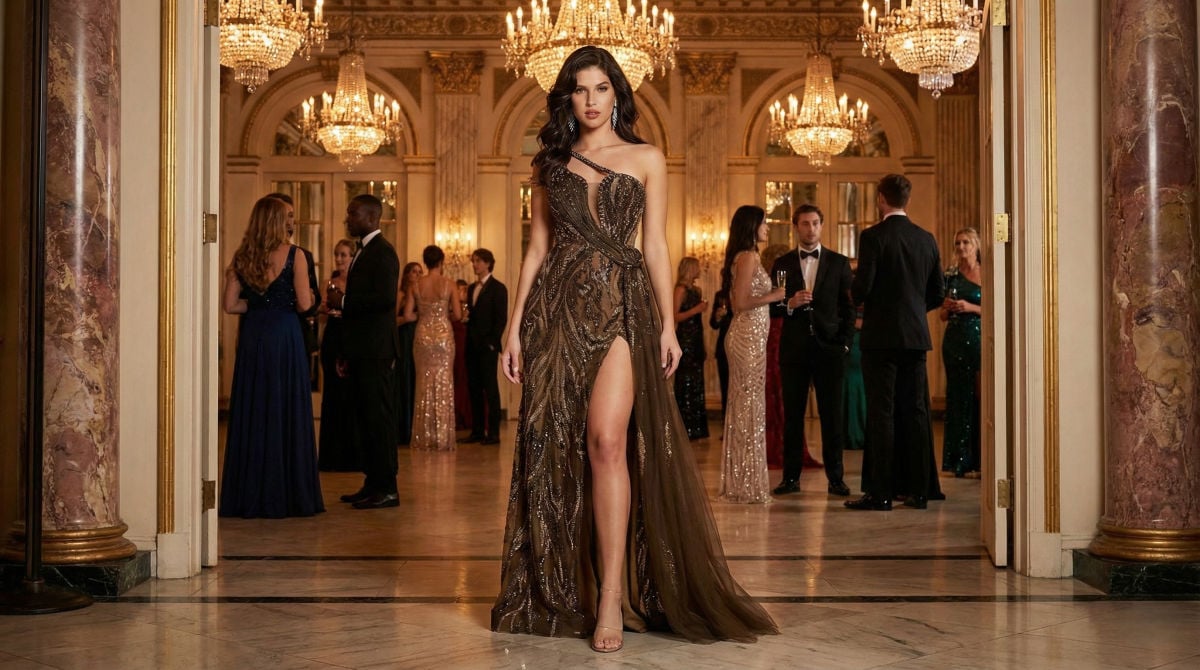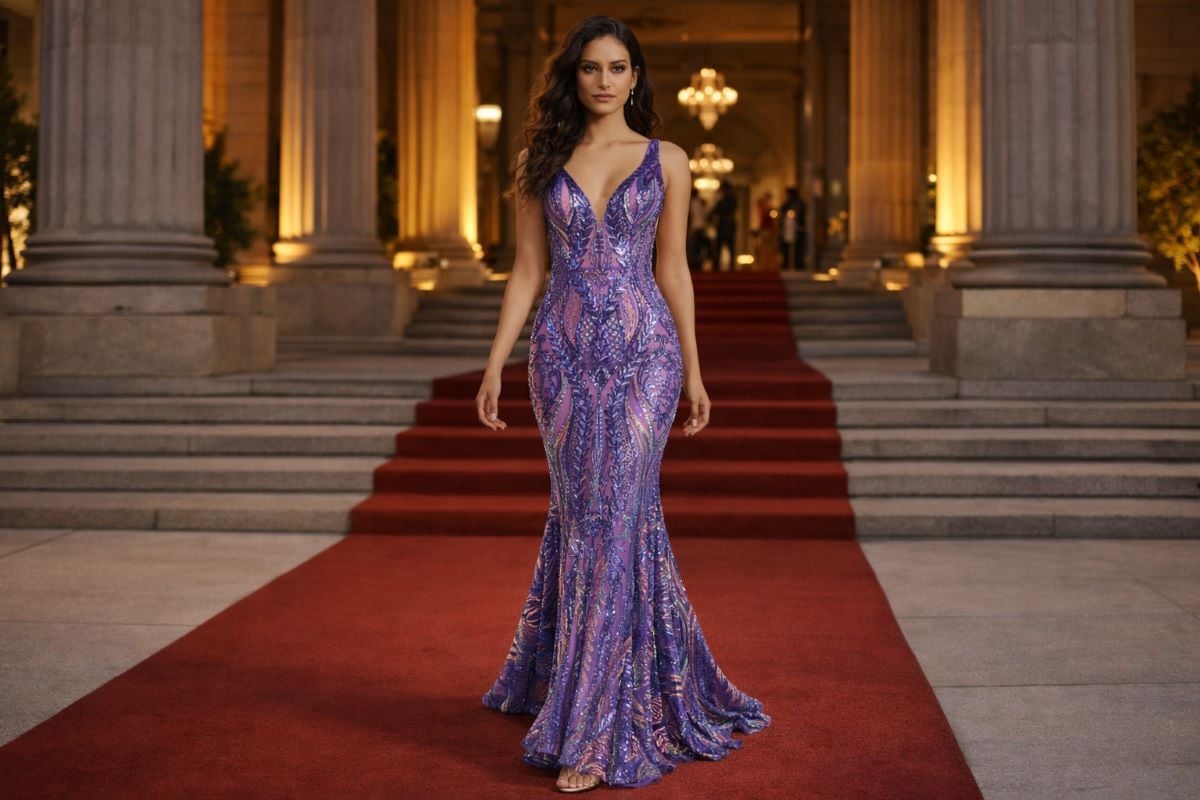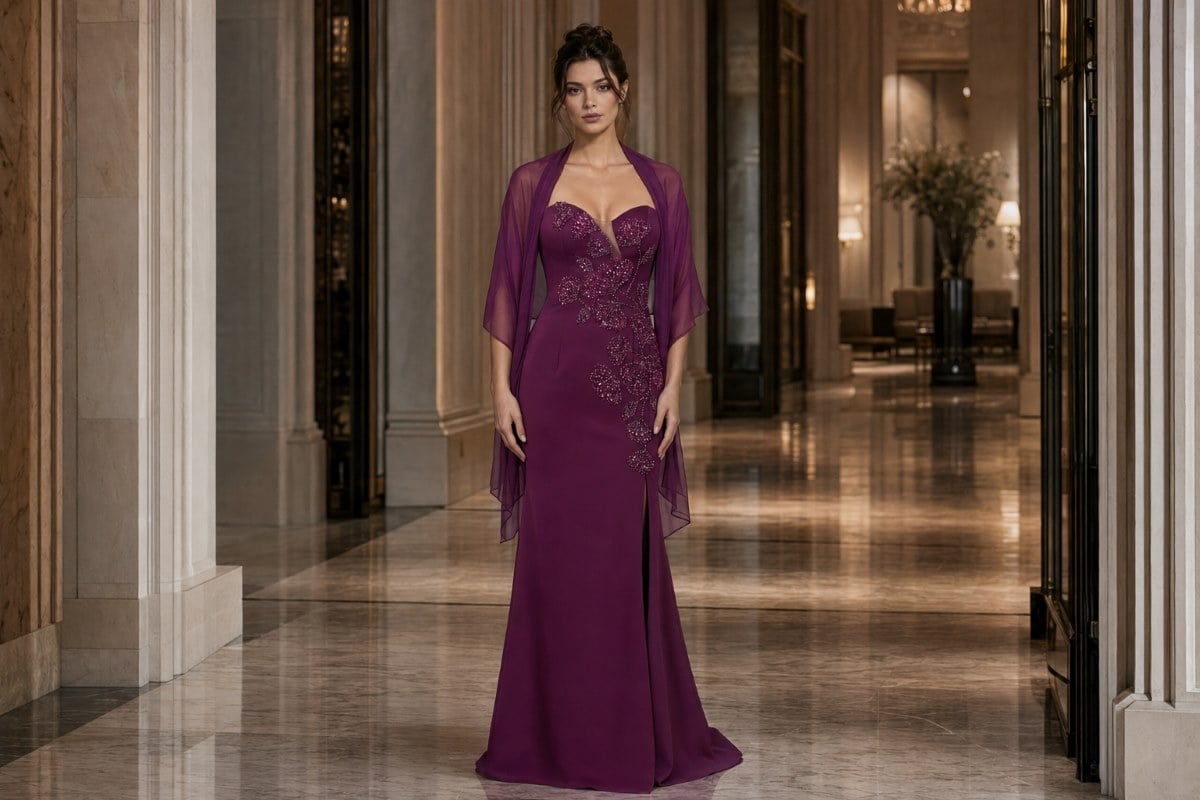

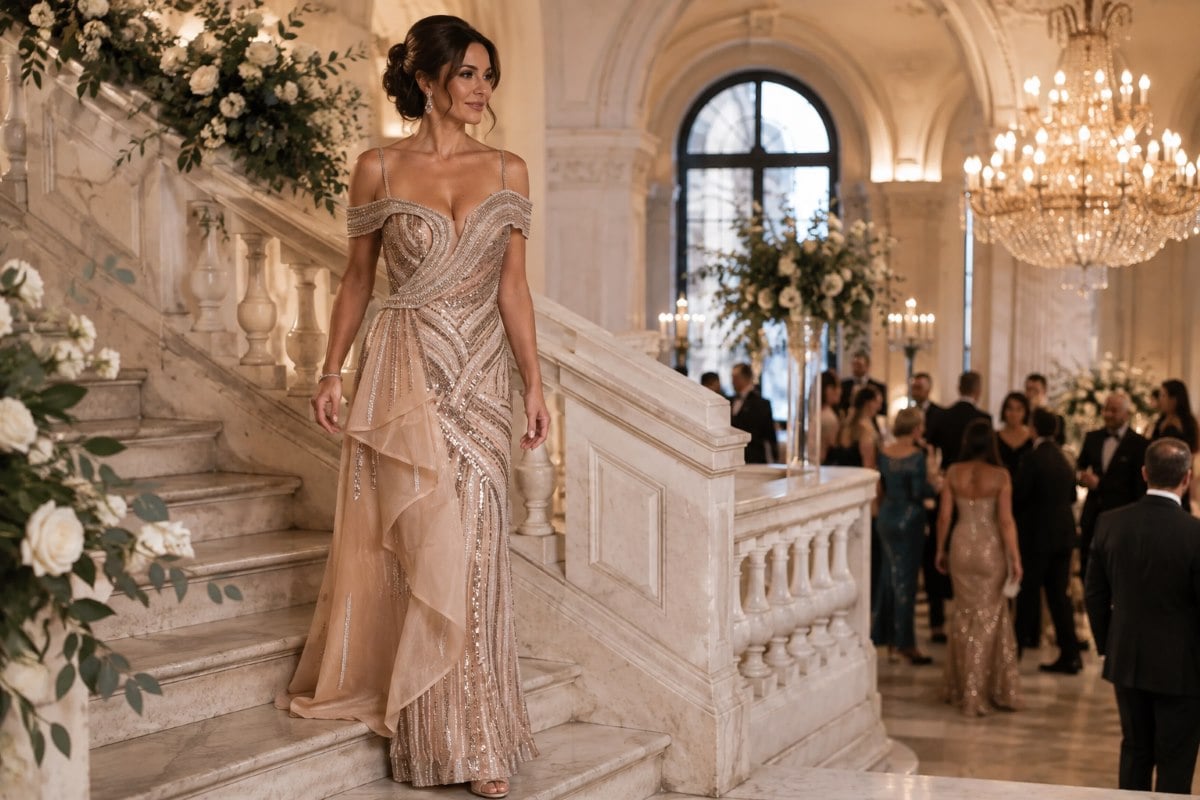
The mother of the groom stands in nearly every important photograph of the day. She is in the processional, at the head table or the family table, in the parent dances, and beside her son in the portraits that will hang on walls for decades. Her dress deserves the same care the rest of the wedding receives, and choosing it involves a few questions the mother of the bride never has to ask, starting with who picks first and how closely the two mothers should coordinate.
This guide walks through the traditional order of choosing, the colors that complement rather than compete, the silhouettes that hold up through a long celebration, and the timeline that keeps fittings calm instead of frantic.
How Formal Should a Mother of the Groom Dress Be?
A mother of the groom dress should match the formality of the wedding itself. A black tie evening calls for a floor length gown, a formal daytime ceremony suits a tea length or midi dress, and the color should complement the wedding palette and the mother of the bride without copying either one.
Follow the Traditional Order, Then Make It Your Own
Tradition gives the mother of the bride first choice. She selects her dress, shares its color and level of formality, and the mother of the groom then chooses something that harmonizes with it. The custom exists to keep the two mothers from clashing or twinning in photographs, and the full picture of mother of the bride and groom dress etiquette explains how the same logic extends to the bridal party and the couple’s wishes.
Many modern families treat the order loosely, and some mothers now shop together, which removes the guesswork entirely. Either way, a short conversation early in the planning about color, length, and formality saves a return shipment later, since her choices shape yours more than any other single factor.
Colors That Complement the Wedding Palette
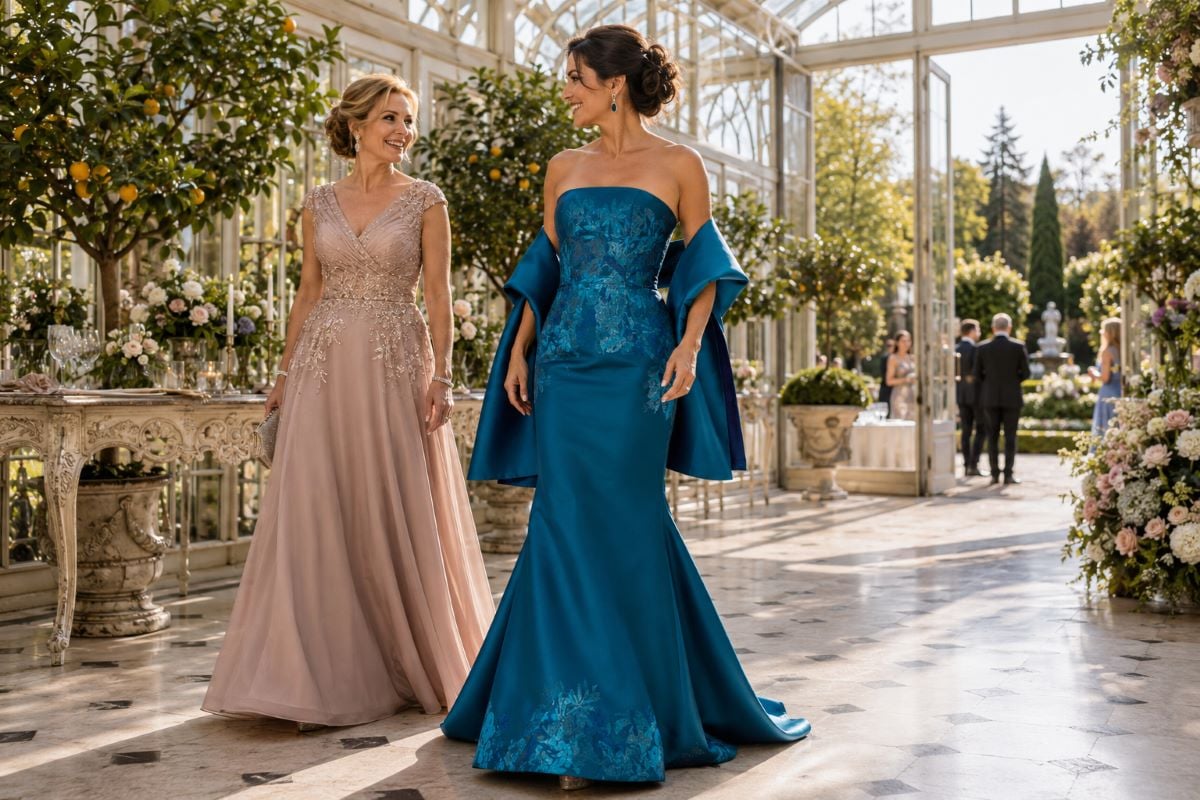
The strongest mother of the groom colors sit beside the wedding palette rather than inside it. Navy, champagne, taupe, silver grey, sage, dusty blue, plum, and burgundy all photograph beautifully and rarely collide with bridesmaid colors. Jewel tones suit formal evening receptions, while softer shades like sage and dusty blue feel right at garden and daytime celebrations.
Blue in particular comes up constantly, because it flatters most complexions and works across seasons. If it is on your shortlist, our answer to whether the mother of the groom can wear blue covers the shades that work and the one situation where you should check first.
Two exclusions hold at almost every wedding. White, ivory, and cream belong to the bride, and the exact shade the bridesmaids are wearing belongs to them, since matching it makes you read as part of the bridal party in photos. Black has shed its old taboo and is now welcome at most modern weddings, especially formal evening ones, though it is still worth confirming the couple has no objection.
Silhouettes and Lengths That Work
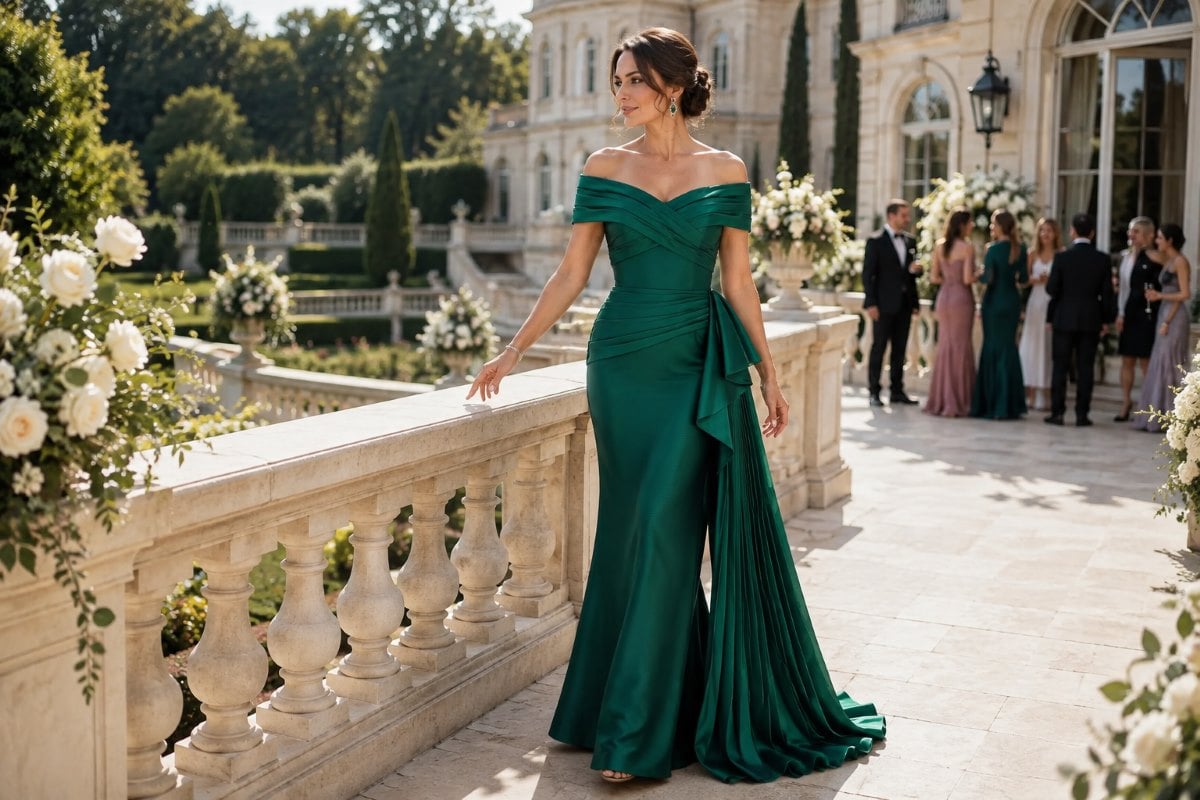
An A-line dress is the most requested mother of the groom silhouette for good reason, since it defines the waist, skims everything below it, and moves easily through a ceremony, a receiving line, and a dance floor. Sheath and column dresses give a more tailored line for structured venues, while a gown with a fuller skirt suits grand ballroom evenings. The guide to flattering styles for every body type applies to both mothers equally.
Sleeves are a matter of preference rather than rule. Long, three quarter, cap, and illusion sleeves each offer a different level of coverage, and the sleeve shape and fabric change the way a dress feels in person as much as the silhouette does.
Length follows the dress code. Floor length is the standard for black tie, and the specifics in our guide to black tie wedding etiquette for moms apply to the groom’s mother exactly as they do to the bride’s. Tea length and midi dresses suit daytime, garden, and semi formal celebrations, where a full gown can feel heavier than the occasion.
Match the Venue and the Season
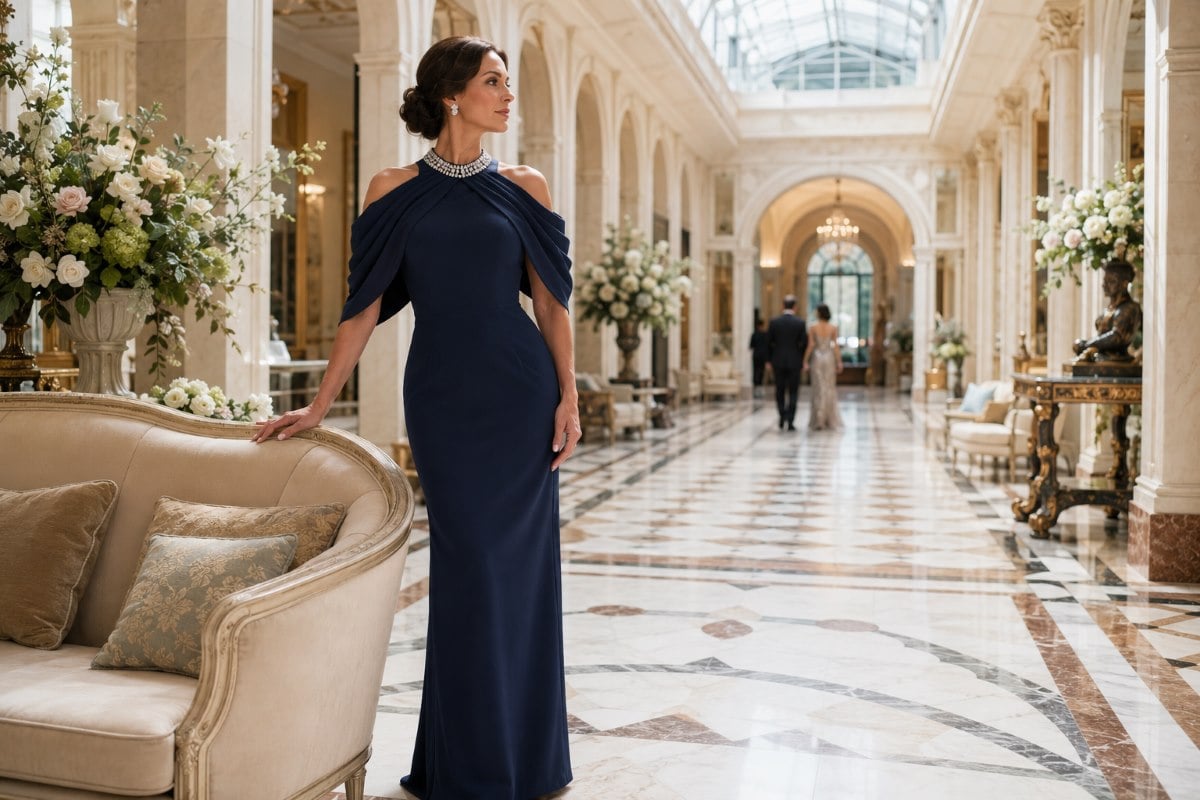
The setting should steer the fabric as much as the formality does. A garden or vineyard wedding in warm months favors chiffon, crepe, and lighter satins in soft colors, while an evening ballroom reception rewards richer fabrics like beaded lace, structured satin, and velvet in deeper shades. For a beach ceremony, breathable fabric and a length you can manage on sand matter more than anything else, and a cold weather wedding is the natural home of long sleeves and heavier weaves.
Timing the Purchase and the Fittings
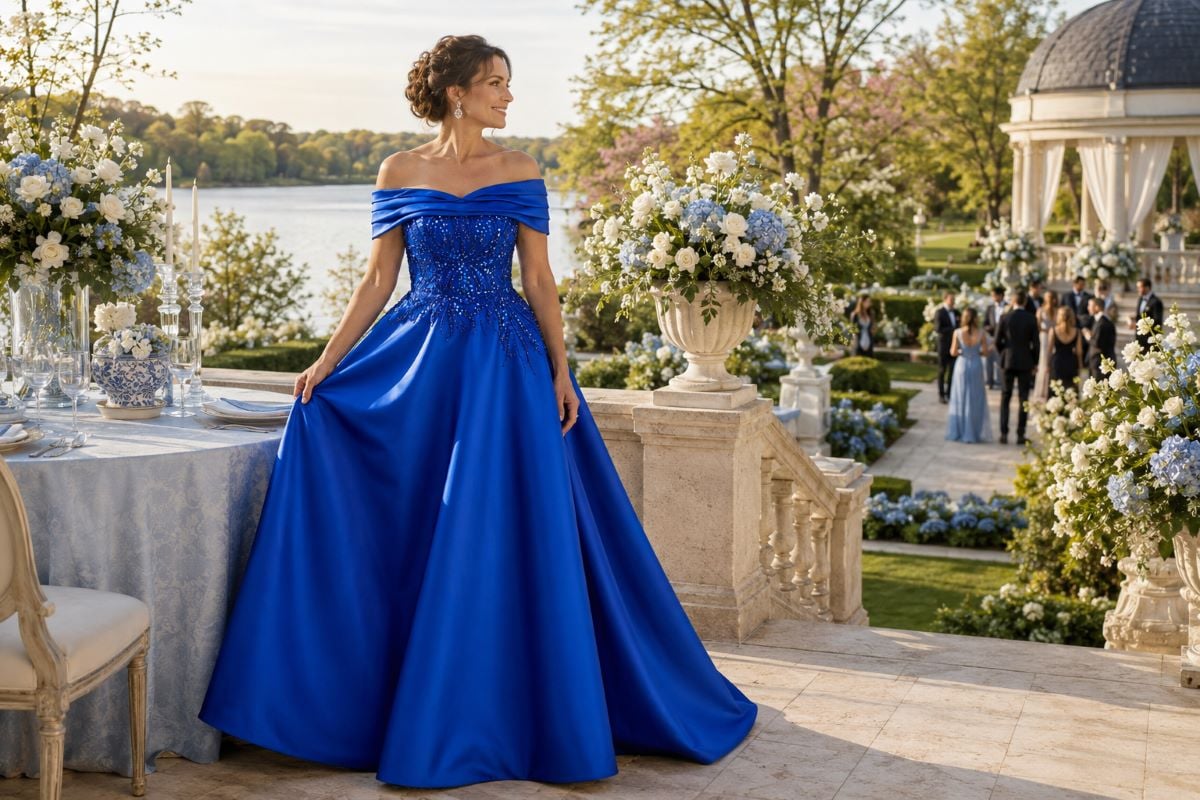
Start looking earlier than feels necessary. Formal dresses at this level are often made to order, which means production time before alterations can even begin, and the traditional sequence adds a waiting period while the mother of the bride decides. The timeline in when the mother of the bride should buy her dress works for the mother of the groom as well, shifted slightly later to respect the traditional order.
Leave a comfortable window for fittings once the dress arrives. A proper hem, a bodice adjustment, and a final press take time, and our dress alterations guide explains what each round of tailoring involves and how far ahead to book it.
When you begin browsing, know that one collection serves both mothers here. The mother of the groom gowns are designed with the groom’s mother equally in mind, so filter by the colors and sleeves that suit your side of the aisle.
Mother of the Groom Etiquette Questions
Grooms’ mothers tend to circle the same few questions during planning, and each has a straightforward answer.
What color should the mother of the groom wear?
The mother of the groom should wear a color that complements the wedding palette and the mother of the bride’s dress without matching either. Navy, champagne, sage, plum, silver grey, and burgundy are reliable choices, while white, ivory, and the bridesmaids’ exact shade are the only firm exclusions.
Can the mother of the groom wear black?
Yes, black is acceptable at most modern weddings and is especially fitting for formal evening receptions. Choose black with texture, beading, or lace so it reads celebratory rather than somber, and confirm the couple has no preference against it before ordering.
Should the mother of the groom match the mother of the bride?
The two mothers should coordinate rather than match. Aim for the same level of formality and a similar length so the family photographs feel balanced, but choose clearly different colors so neither mother appears to be copying the other.
When should the mother of the groom buy her dress?
The mother of the groom traditionally buys after the mother of the bride has chosen, which usually means ordering four to six months before the wedding. That window leaves room for made to order production, shipping, and at least two rounds of alterations without rushing any of them.
Who walks the mother of the groom down the aisle?
In many ceremonies the groom himself escorts his mother to her seat just before the processional begins, which has become a beloved moment in its own right. In others she is escorted by her husband, another son, or an usher, and religious and cultural traditions each have their own customs worth honoring.
What should the mother of the groom avoid wearing?
Avoid white, ivory, cream, and the bridal party’s exact color, along with anything dramatically more or less formal than the dress code on the invitation. Beyond those rules, the only real mistake is a dress you cannot sit, dance, and embrace people in comfortably for an entire day.
Choosing this dress is one of the sweetest errands of the whole wedding, so bring the palette, bring your questions, and try the shortlist on in person at an authorized Jovani retailer near you.