
If you have ever been to a quinceañera, you may have noticed that the birthday girl does not look exactly the same all evening. She arrives for the church ceremony in one gown, and by the time the dance floor fills up, she is often in something different. This is not a wardrobe accident or a simple costume change. It is a meaningful part of the celebration with real cultural roots, and it deserves to be understood properly. The quinceañera dress change tradition weaves together symbolism, faith, and pure practicality, and this guide explains exactly what it means, where it comes from, and how families handle it today.
What the Quinceañera Dress Change Tradition Actually Is
A quinceañera marks a girl’s fifteenth birthday and her passage from childhood into young womanhood. It is a major life event, often compared in scale and significance to a wedding, and it is usually built in two distinct parts: a religious ceremony, typically a Catholic mass or blessing, followed by a reception with dinner, toasts, and hours of dancing.
Because the celebration has these two very different halves, the way the celebrant presents herself shifts along with it. In its fullest form, the quinceañera dress change tradition can involve more than one outfit, and it can also involve smaller symbolic changes, such as a change of shoes, that carry their own meaning. Some changes are deeply ceremonial. Others are simply practical. Understanding which is which is the key to understanding the whole custom, because families today mix and match these elements freely depending on their budget, their faith, and the celebrant’s personal style.
It is worth saying clearly that none of this is a rigid rulebook. Some girls wear a single gown all day. Others have two or even three looks. The tradition is a living one, and there is no single correct way to honor it. What follows is an explanation of the elements, so a family can choose what feels right for them.
The Symbolic Changes: Shoes, Dolls, and Coming of Age
Before discussing the dress itself, it helps to understand the smaller symbolic changes that happen during the formal ceremony, because they are the heart of the ritual and they are often confused with the dress change.
The Changing of the Shoes
The most famous symbolic moment in a quinceañera is the changing of the shoes. During the ceremony, a parent, traditionally the father, kneels before the celebrant and replaces her flat shoes with a pair of high heels. This single gesture is rich with meaning. The flats represent the girl she has been, and the heels represent the young woman she is becoming. It is a visible, public statement that she is stepping, quite literally, into a new stage of life.
This is a change of footwear, not a change of gown, but it is so central to the celebration that many people think of it first when they hear about a quinceañera changing anything. It usually happens while she is still in her main ceremony gown, and it is one of the most photographed moments of the entire day.
The Last Doll
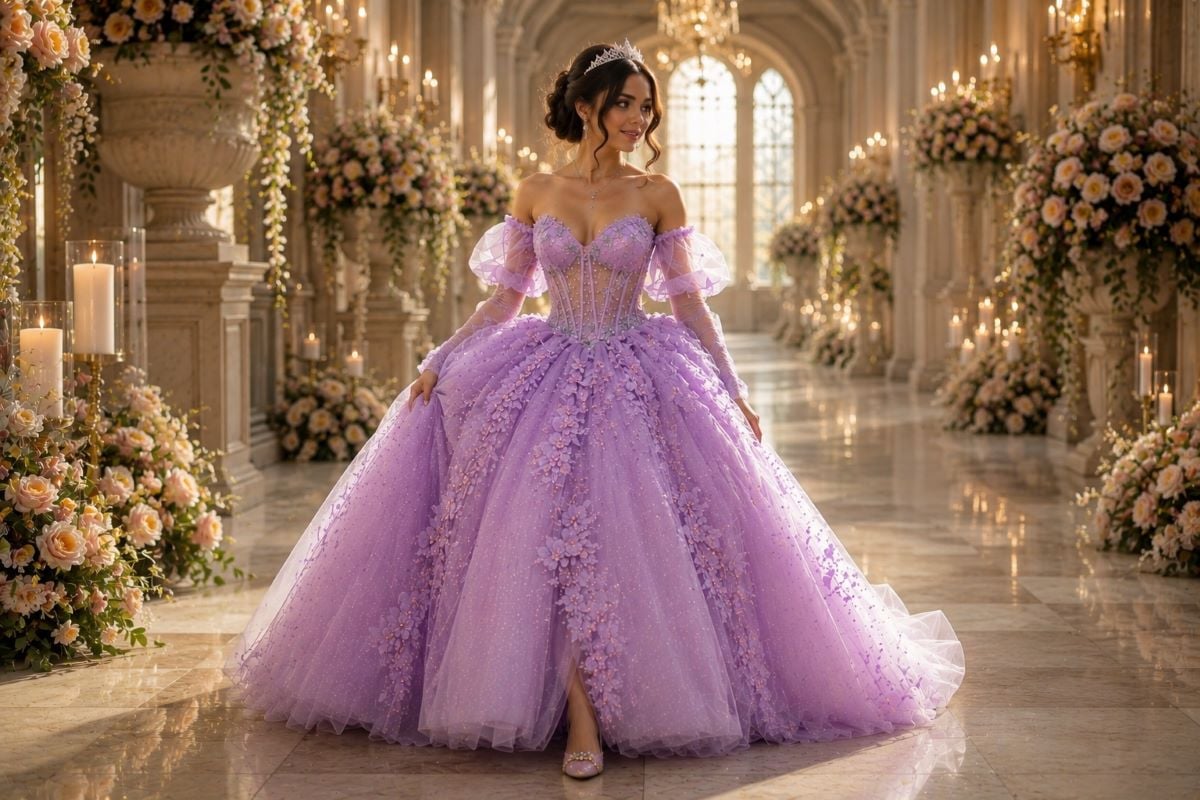
Another symbolic exchange is the presentation of the Última Muñeca, or last doll. The celebrant is given a doll, often dressed to match her own gown, which represents the final toy of her childhood. In many celebrations she then passes this doll to a younger girl in the family, symbolically handing down her childhood as she moves forward. Like the shoe change, this is a ceremonial gesture rather than a wardrobe change, but it belongs to the same family of traditions: small, meaningful acts that mark growing up.
These rituals matter here because they explain the spirit behind the dress change. A quinceañera is built around the idea of transition, and changing what the celebrant wears, whether shoes or a full gown, is simply another expression of that same idea.
How the Tradition Varies Between Families
It is also worth knowing that the dress change is not practiced identically everywhere. The quinceañera is celebrated across many countries and communities, and each has its own customs. Some families treat a single, formal ball gown as the only correct choice and do not change outfits at all. Others consider a second reception look essential. In some communities the emphasis falls heavily on the religious ceremony, so the modest gown is the centerpiece, while in others the reception is the larger event and the dance outfit becomes the look people remember. Budget plays an honest role too, since not every family can or wants to invest in more than one gown. None of these approaches is more authentic than another. The tradition belongs to the family celebrating it, and the right version is the one that reflects their values and the celebrant’s own wishes.
Why the Ceremony Gown and the Reception Look Are Different
The practical heart of the dress change is the move from the church to the reception, and it exists because those two settings genuinely ask for different things from a gown.
The Ceremony Calls for Modesty and Tradition
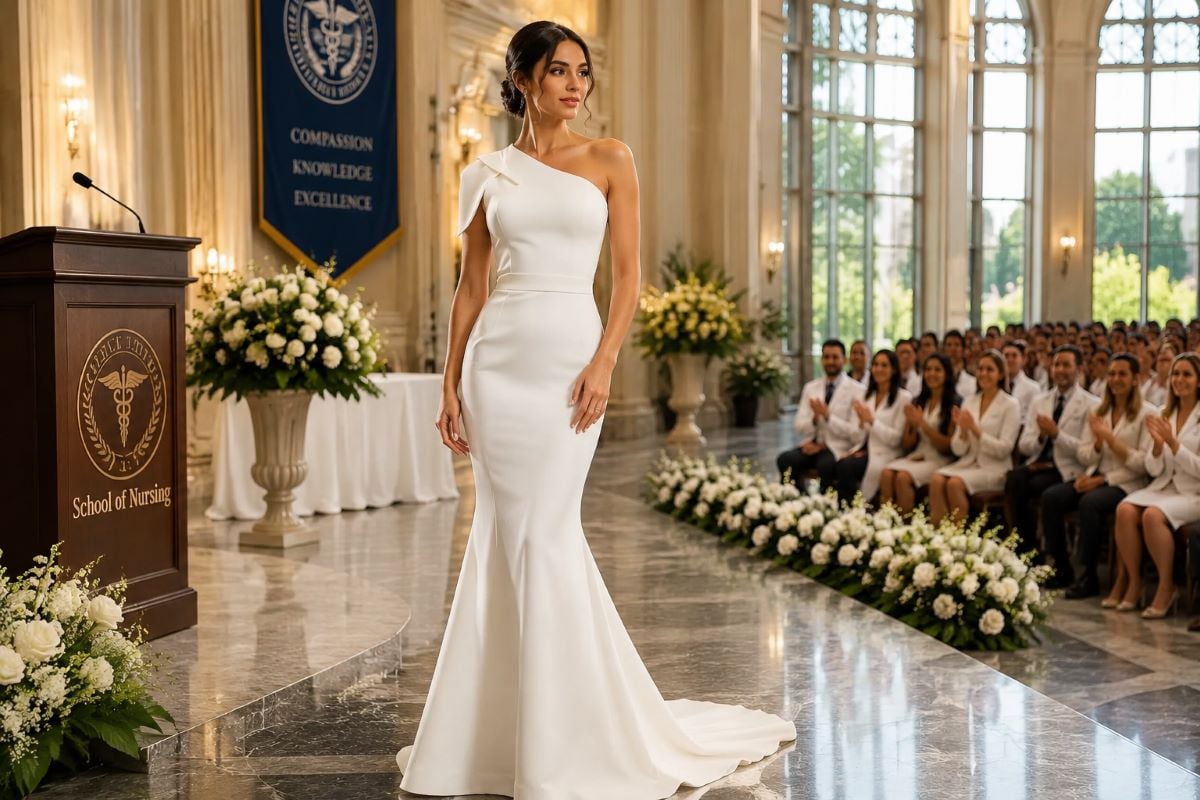
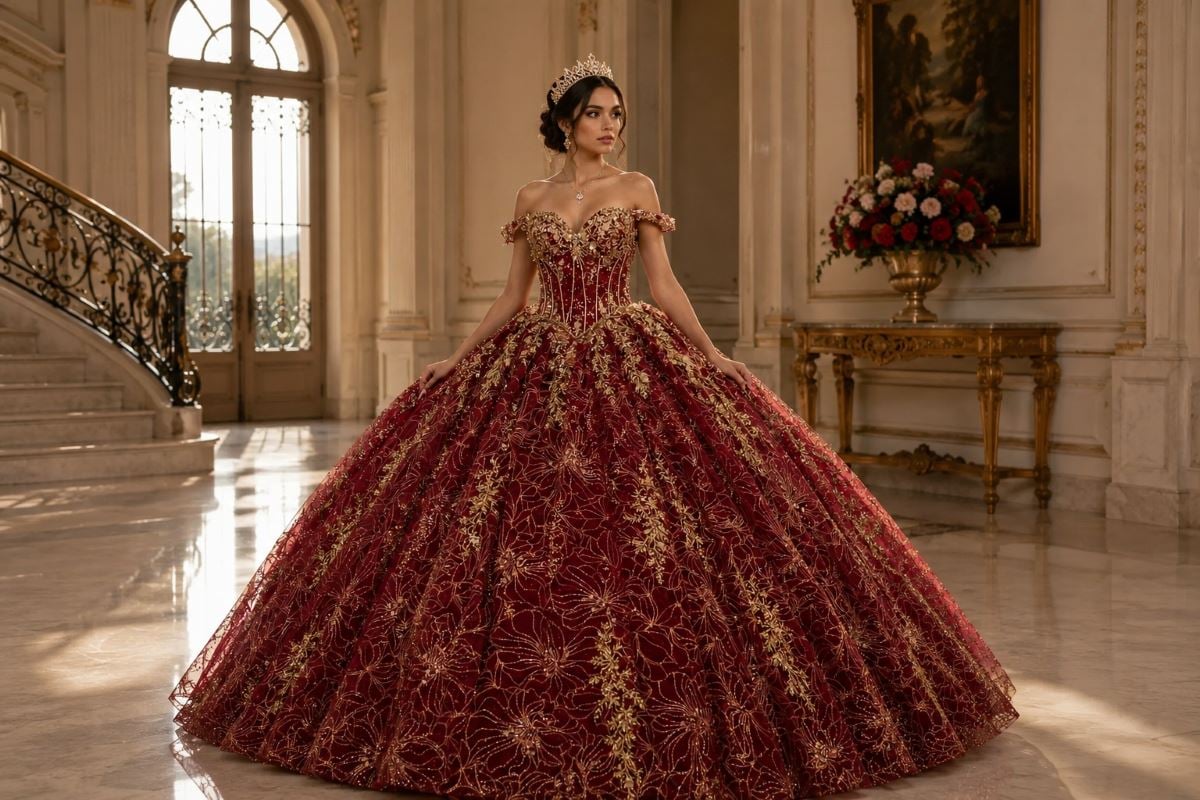
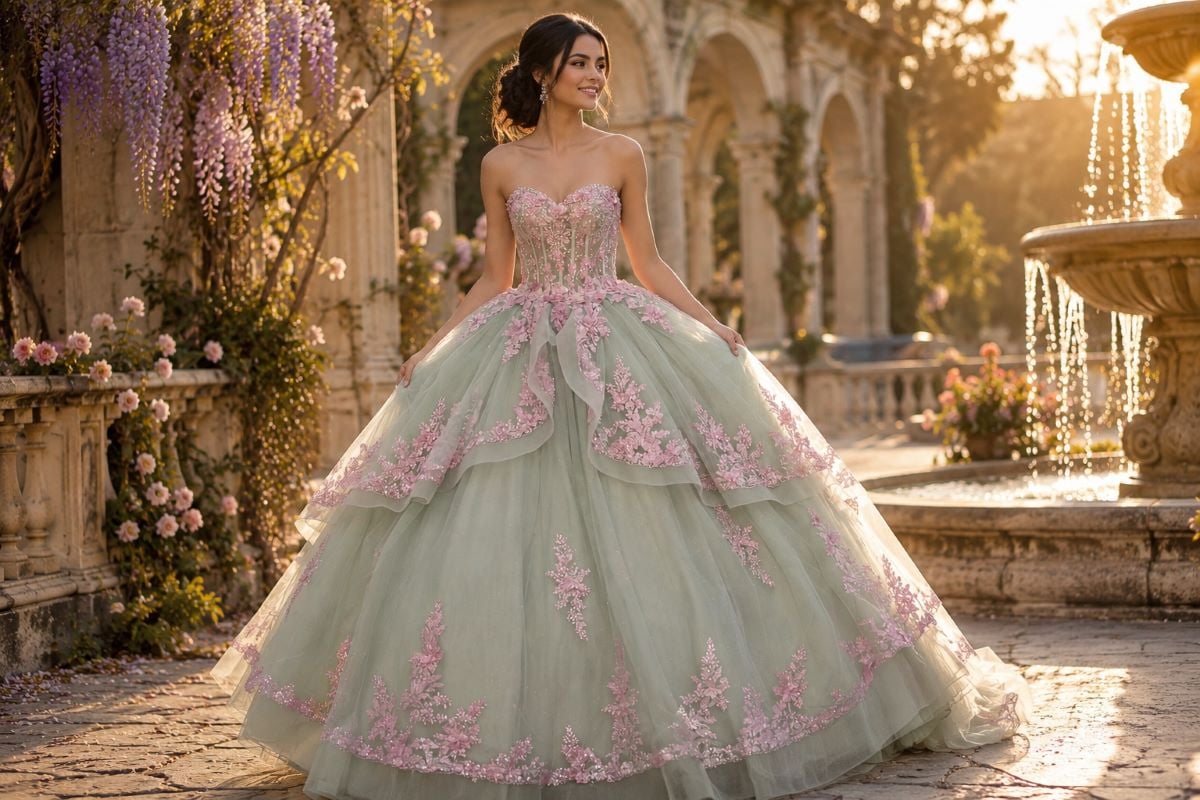
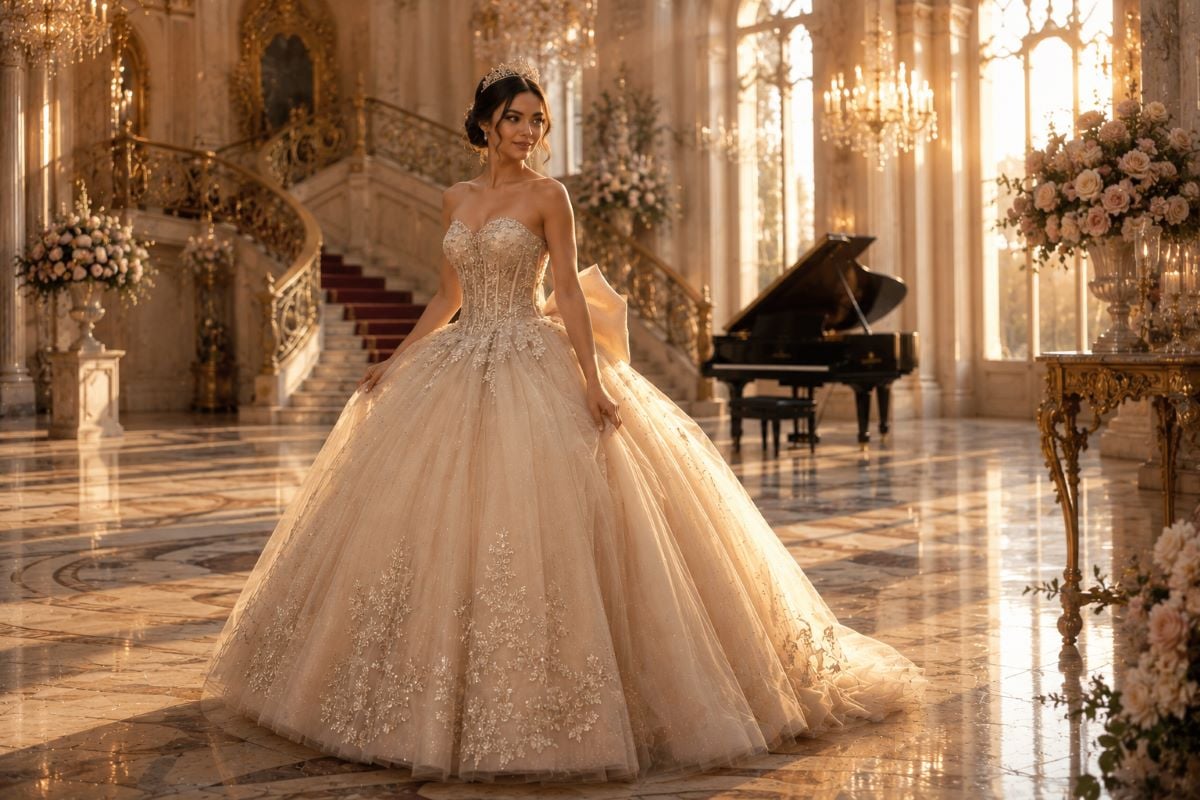
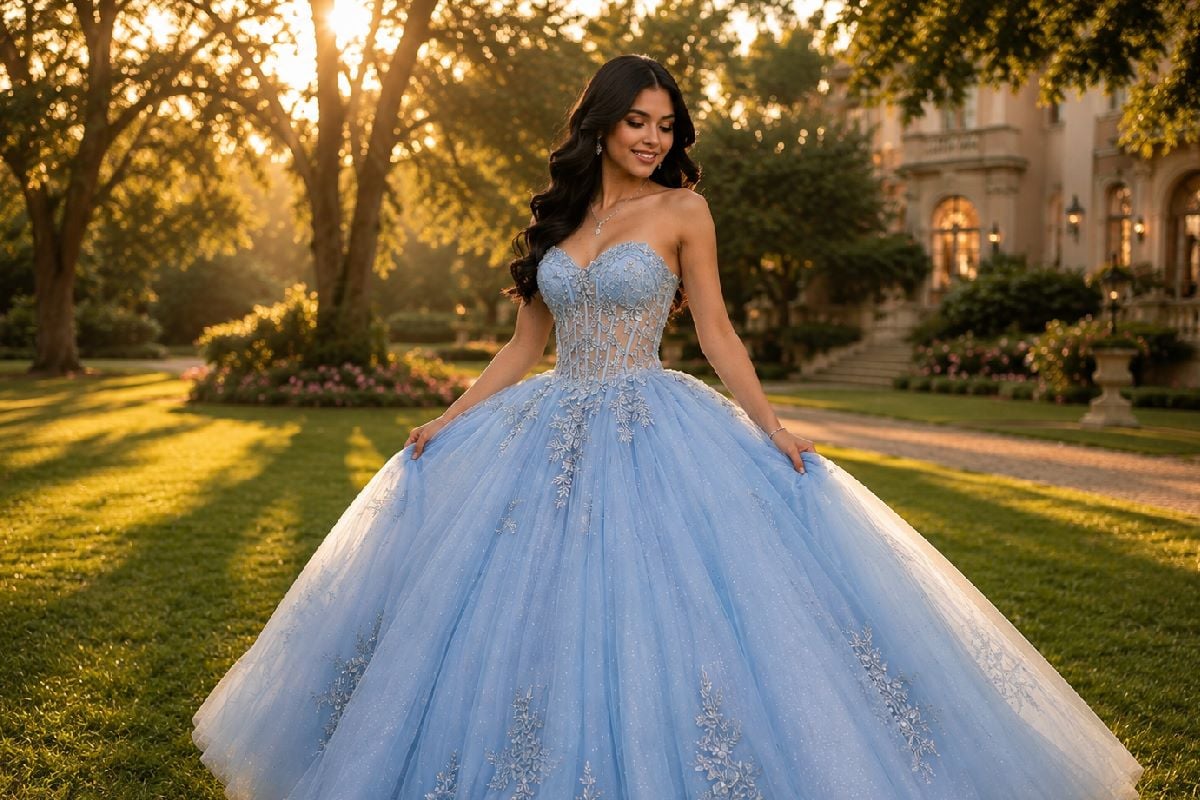
The religious portion of a quinceañera takes place in a church or before a member of the clergy, and that setting carries expectations. The ceremony gown is traditionally modest, often with sleeves or a covered neckline, and it leans into the classic, formal silhouette: a full ball gown in white or a soft pastel, structured and reverent. It is meant to honor the faith and the family, and it photographs as timeless and elegant. Many families choose styles in the spirit of modest prom gowns for this part of the day, valuing coverage and a respectful line for the sanctuary.
The Reception Calls for Movement and Personality
The reception is a completely different environment. There is dinner, there are toasts, and above all there is dancing, often for many hours. A heavy, voluminous ceremony ball gown is glorious for a grand entrance and a formal waltz, but it can be genuinely difficult to dance freely in for an entire night. The reception look is where the celebrant’s own personality comes through. It is often lighter, sometimes shorter, frequently more colorful, and built for movement. This is the outfit she will actually celebrate in, so comfort and freedom become just as important as beauty.
This contrast is the real reason the quinceañera dress change tradition endures. It is not about showing off multiple dresses for their own sake. It is about wearing the right gown for the right moment, a reverent one for the ceremony and a joyful, danceable one for the party.
The Surprise Dance and Its Special Outfit
One specific moment drives the reception wardrobe change more than any other: the baile sorpresa, or surprise dance. This is a choreographed routine, rehearsed for weeks or months, that the celebrant performs with her court of damas and chambelanes. It is one of the most anticipated highlights of the whole night.
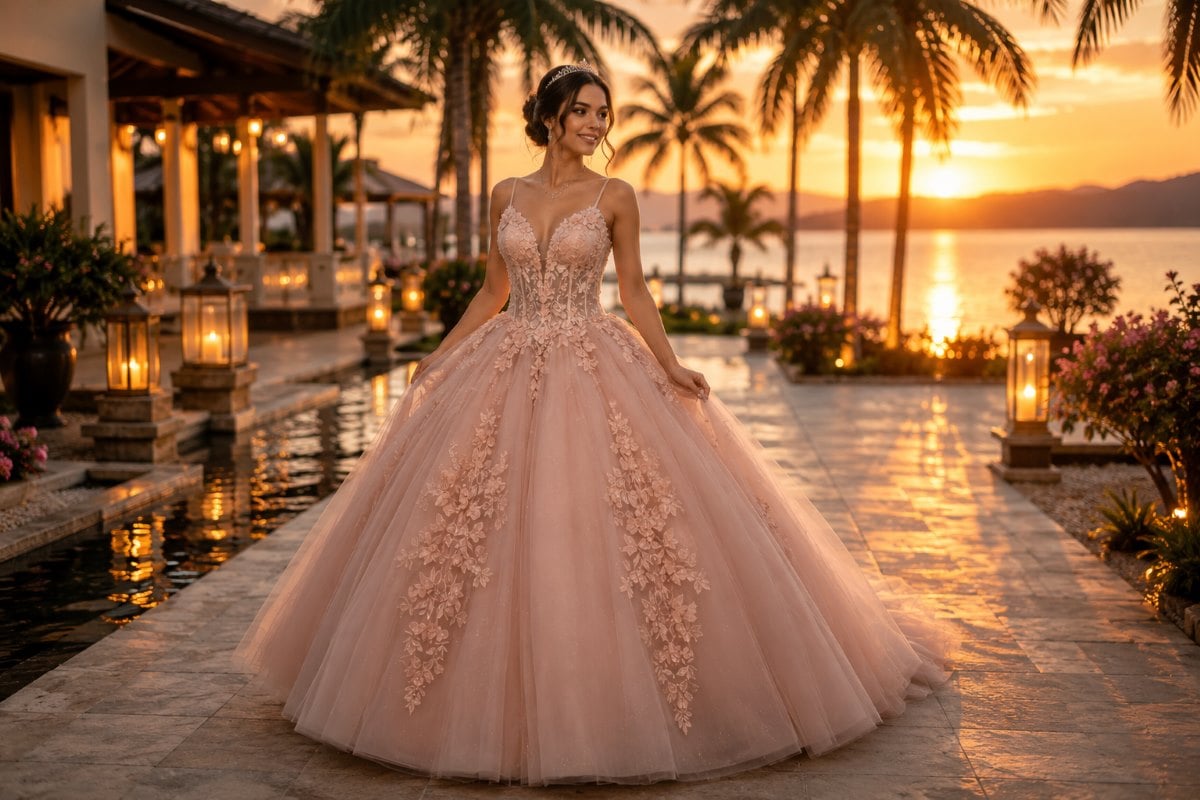
A surprise dance is energetic, modern, and often set to upbeat or pop music, a world away from the formal opening waltz. Dancing this kind of choreography in a full, structured ball gown is extremely hard. The skirt is heavy, the volume gets in the way, and the celebrant cannot move the way the routine demands. This is why so many girls change specifically for the surprise dance, slipping into a lighter, shorter, or more flexible outfit that lets them actually perform.
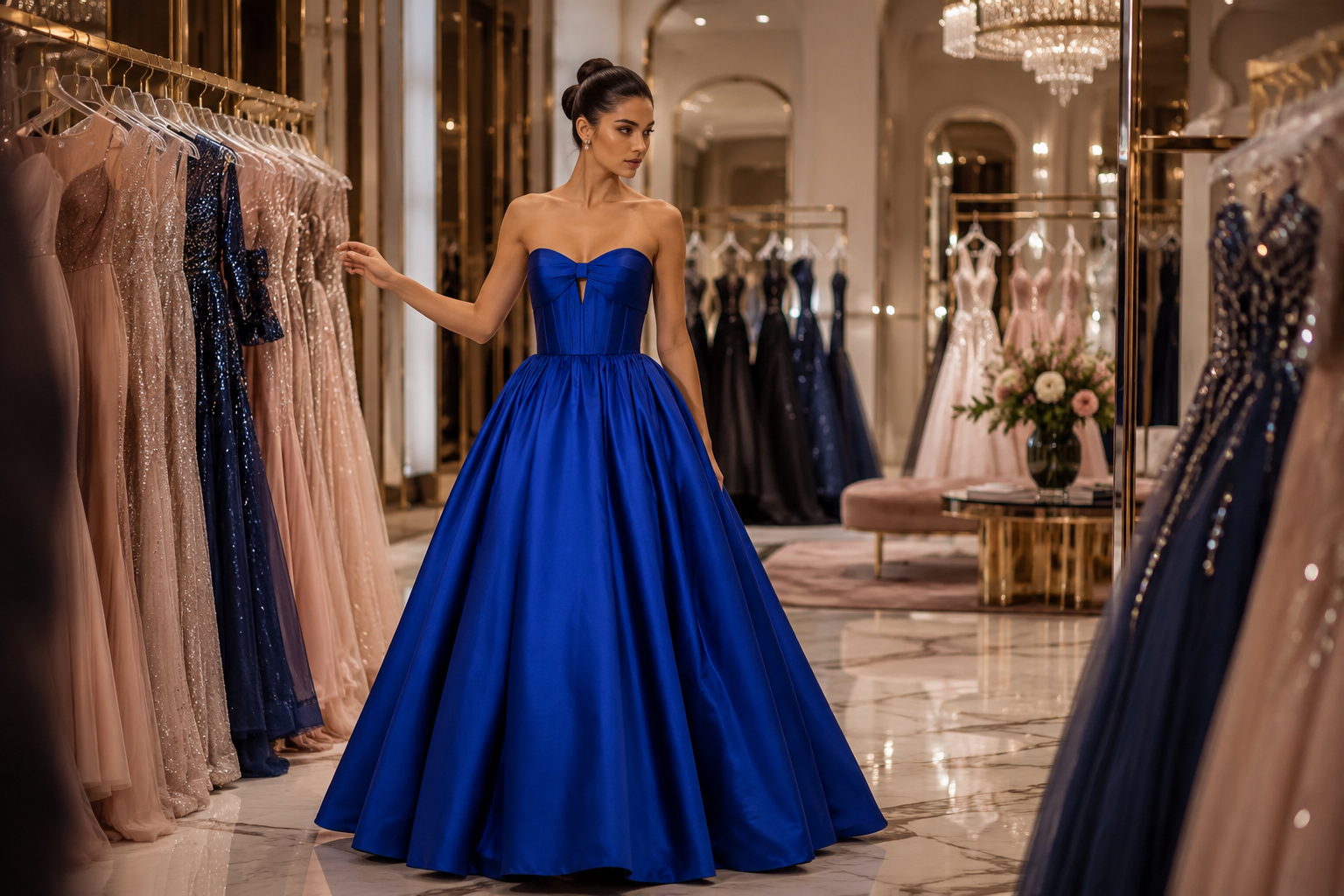
The surprise dance dress does not need to follow any of the ceremony’s rules. It can be bold, sparkly, and fun, and it is often the look the celebrant is most excited about. Short and flirty styles in the spirit of cocktail gowns are popular choices, because a shorter hem keeps the legs free for fast footwork and lifts.
Some celebrants go even further from tradition with a tailored jumpsuit. The range of jumpsuits available today makes a fashion-forward, fully danceable second look easier than it has ever been. A jumpsuit reads as modern and confident, gives complete freedom of movement, and removes any worry about a skirt during energetic choreography, which is why it has become a genuine favorite for the surprise dance segment.
Whatever the celebrant chooses, the surprise dance outfit has one job: to let her perform the routine she has worked so hard on without the dress getting in the way. Comfort and freedom of movement should guide the decision just as much as how the outfit looks.
One Convertible Gown or Two Separate Dresses
Once a family decides they want a ceremony look and a reception look, there is a real decision to make about how to achieve it. There are two main paths, and each has honest tradeoffs.
The Convertible Gown
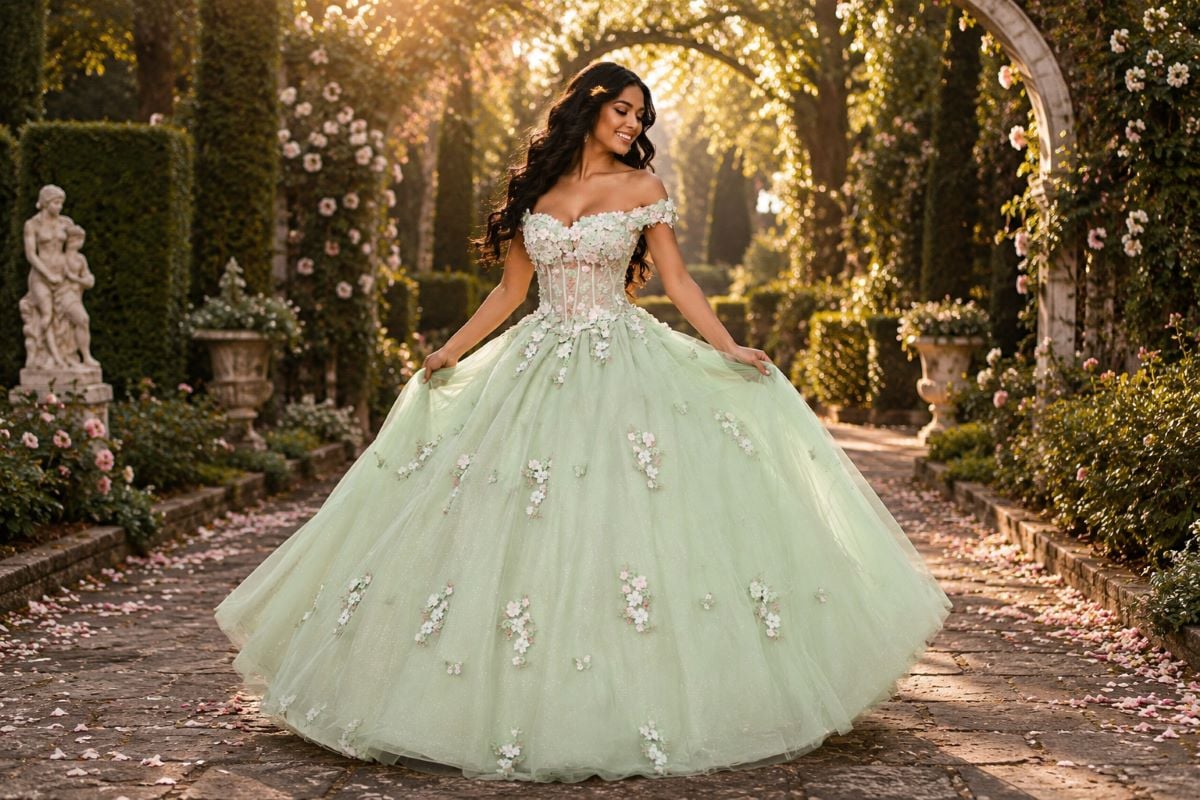
A convertible gown is a single dress engineered to transform. It often features a detachable overskirt, removable sleeves, or a removable train, so the celebrant can wear it fully covered and dramatic for the ceremony, then remove a piece or two to reveal a lighter, sleeker version for the reception. Convertible and two-piece designs have moved firmly into the mainstream of quinceañera fashion, and you can read more about that shift in the history of the quinceañera dress.
The advantages are real. One convertible gown is usually less expensive than two full dresses, it means only one round of alterations and fittings, and the transformation can happen quickly without leaving the celebration for long. The honest limitation is that both of the celebrant’s looks come from the same base dress, so they share a color and a core silhouette. If she dreams of a white ceremony gown and a bright red dance dress, a single convertible gown cannot deliver that.
Two Separate Dresses
The other path is simply two distinct outfits: a full traditional ball gown for the ceremony and grand entrance, and a completely separate reception or surprise dance look. The advantage here is total freedom. The two looks can be different colors, different lengths, and different silhouettes, with nothing tying them together except the celebrant’s taste.
The tradeoffs are cost and logistics. Two dresses means a larger budget, two sets of fittings and alterations, and a planned moment during the reception for the celebrant to slip away and change. Many families happily accept this because the second dress is a chance to express a side of the celebrant that the formal ceremony gown does not show. A two-piece prom dresses style can also serve as a clever middle ground, offering a layered, adaptable look without the full commitment of two separate gowns.
How to Plan for a Dress Change Without Stress
If your family decides to include a wardrobe change, a little planning keeps the day smooth. The change should feel like a joyful reveal, not a frantic scramble.
- Decide early how many looks you want. One gown, one convertible gown, or two dresses each take a different budget and timeline, so settle this before you start shopping. Begin the search several months ahead to allow for ordering and alterations.
- Plan the timing of the change. The most natural moment is between the formal portion of the reception and the surprise dance, or right before the open dancing begins. Build it into the event schedule so the photographer and the DJ are ready.
- Choose a practical changing space. The celebrant needs a private, comfortable room near the reception with help on hand, since formal gowns are not quick to get in and out of.
- Think about the foundations. The right undergarments make changing faster and keep both looks sitting correctly. A clear sense of what goes under a quinceañera gown is especially useful when two dresses are involved.
- Keep a small kit ready. Safety pins, a hairbrush, touch-up makeup, and an extra pair of hands turn a potentially stressful moment into an easy one.
Done well, the change becomes one of the most fun parts of the night. The celebrant disappears for a few minutes in her formal gown and returns transformed, ready to dance, and the room responds with genuine excitement.
Honoring Tradition While Making It Your Own
The most important thing to understand about the quinceañera dress change tradition is that it is flexible by nature. A girl who wants a single, classic ball gown for the entire celebration is honoring the tradition completely. So is a girl who wears a modest gown for mass and a bold jumpsuit for her surprise dance. The custom has always evolved, and today it accommodates every budget and every personality. For families who want to ground their choices in the classic foundations of quince fashion, the traditional quinceañera dress guide is a helpful companion to this one. The guiding principle is simple: the ceremony look should feel reverent and timeless, and the reception look should feel like joy in motion.
About the Quinceañera Dress Change FAQ’s
Does a quinceañera have to change her dress during the celebration?
No. Changing dresses is a common and meaningful custom, but it is entirely optional. Many celebrants wear a single gown for the whole day. The tradition is flexible, and a girl who keeps one dress is honoring it just as fully as one who changes.
What is the difference between the changing of the shoes and the dress change?
They are two separate things. The changing of the shoes is a symbolic ceremony moment where a parent replaces the celebrant’s flats with high heels to represent her step into womanhood, usually while she is still in her ceremony gown. The dress change is the practical move into a lighter outfit, typically for the reception or surprise dance.
Why do quinceañeras change into a second dress for the dance?
The traditional ceremony ball gown is heavy and voluminous, which makes the energetic, choreographed surprise dance very difficult to perform. Changing into a lighter, shorter, or more flexible outfit lets the celebrant move freely and actually enjoy the routine she has rehearsed.
Is a convertible gown better than buying two dresses?
It depends on your priorities. A convertible gown is usually more affordable and means only one set of fittings, but both looks share a color and base silhouette. Two separate dresses cost more and require more planning, but they give complete freedom to have different colors, lengths, and styles.
When during the celebration should the dress change happen?
The most natural moment is during the reception, either right before the surprise dance or as the open dancing begins. It should be built into the event timeline so the photographer and DJ are prepared and the change feels like a planned reveal.
Can the reception dress be a different color from the ceremony gown?
Yes. If the celebrant wears two separate dresses, the reception look can be any color she wants, and many girls choose a bolder shade for the party. If she uses a single convertible gown, both looks will share the same color, since they come from one base dress.
A Tradition Worth Celebrating
The quinceañera dress change tradition is a beautiful example of how a custom can be both deeply symbolic and genuinely practical at the same time. It honors the two halves of the day, the reverent ceremony and the joyful reception, and it gives the celebrant a way to show more than one side of herself on a milestone occasion. Whether a family chooses one gown, a clever convertible design, or two distinct looks, the meaning stays the same: a fifteen-year-old stepping confidently into a new chapter of her life. Jovani has spent more than forty years designing gowns for exactly these milestone moments, with the construction and craftsmanship that a once-in-a-lifetime celebration deserves.
When you are ready to find the gown, or gowns, for your own celebration, explore the full range of quinceanera gowns through an authorized Jovani retailer.