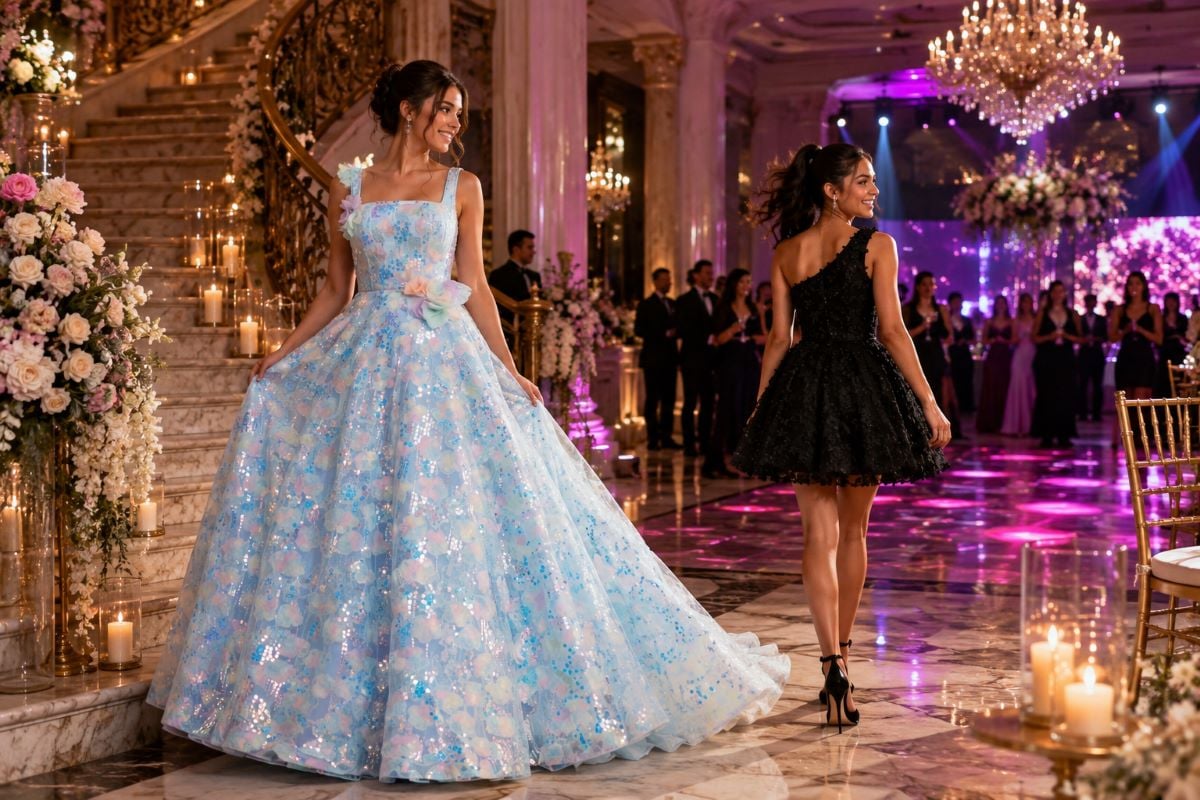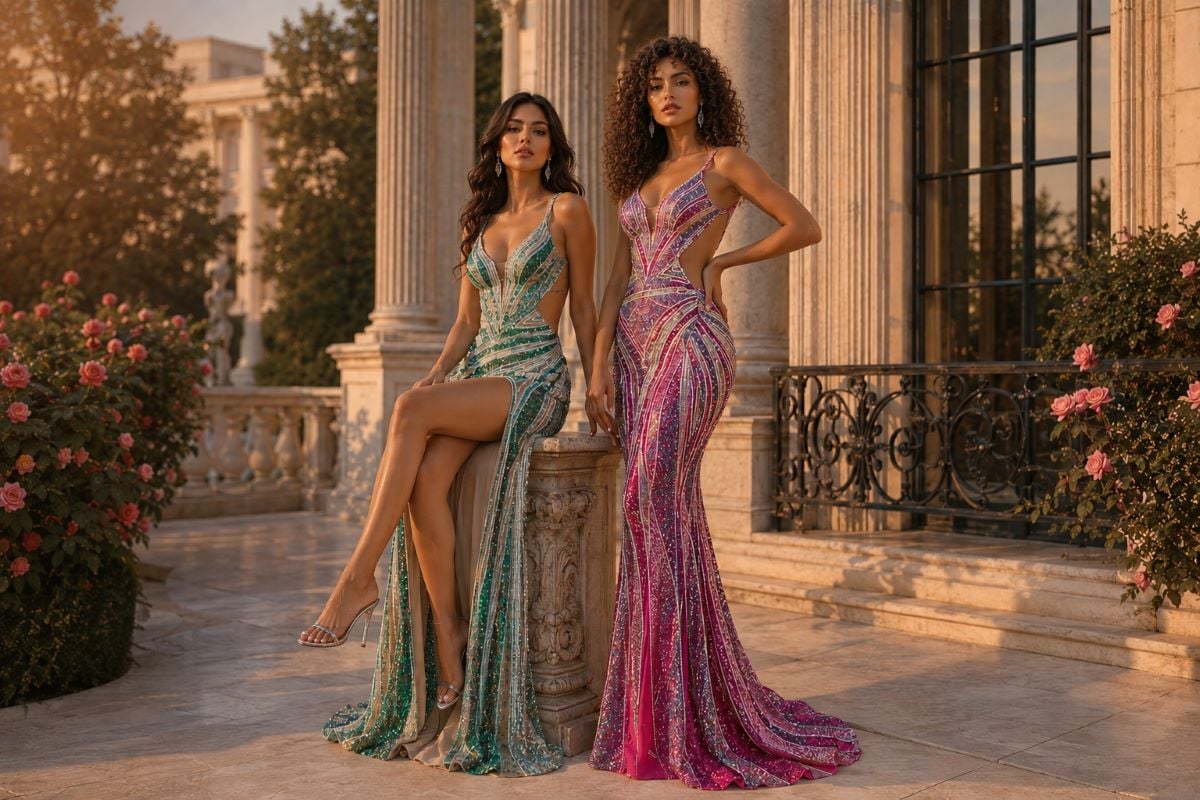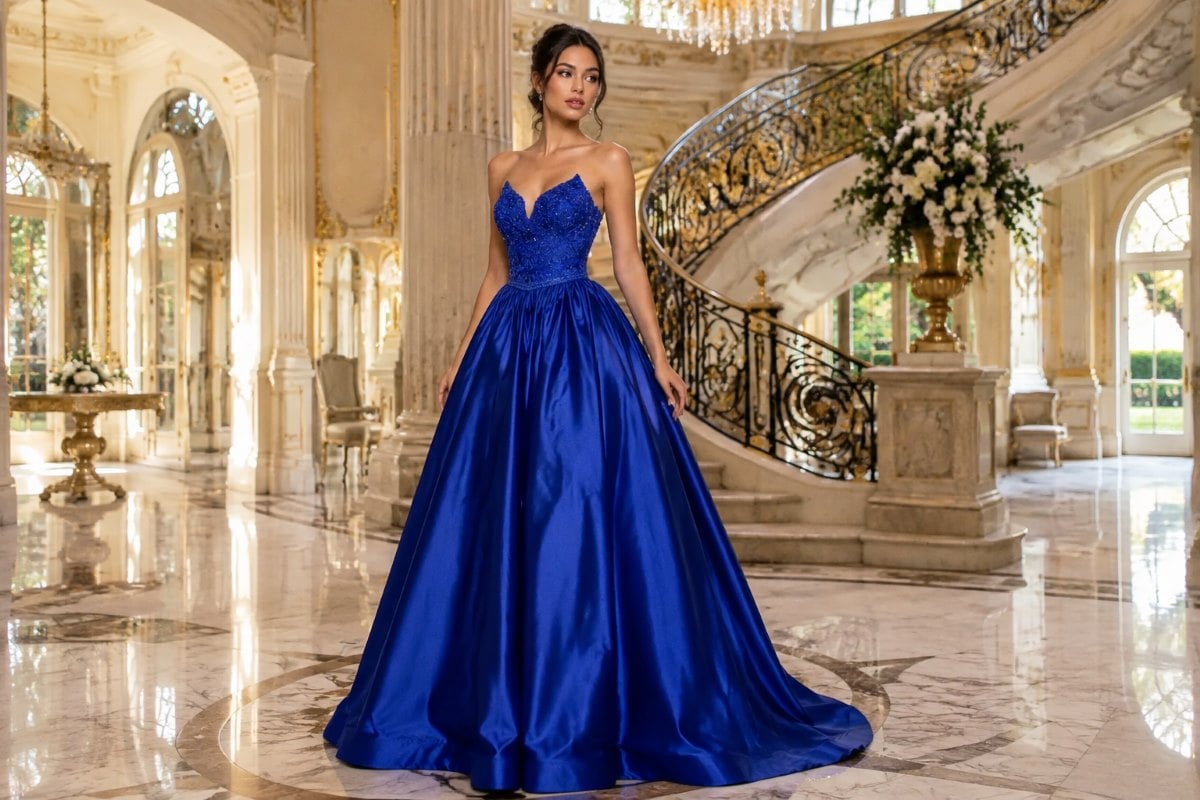

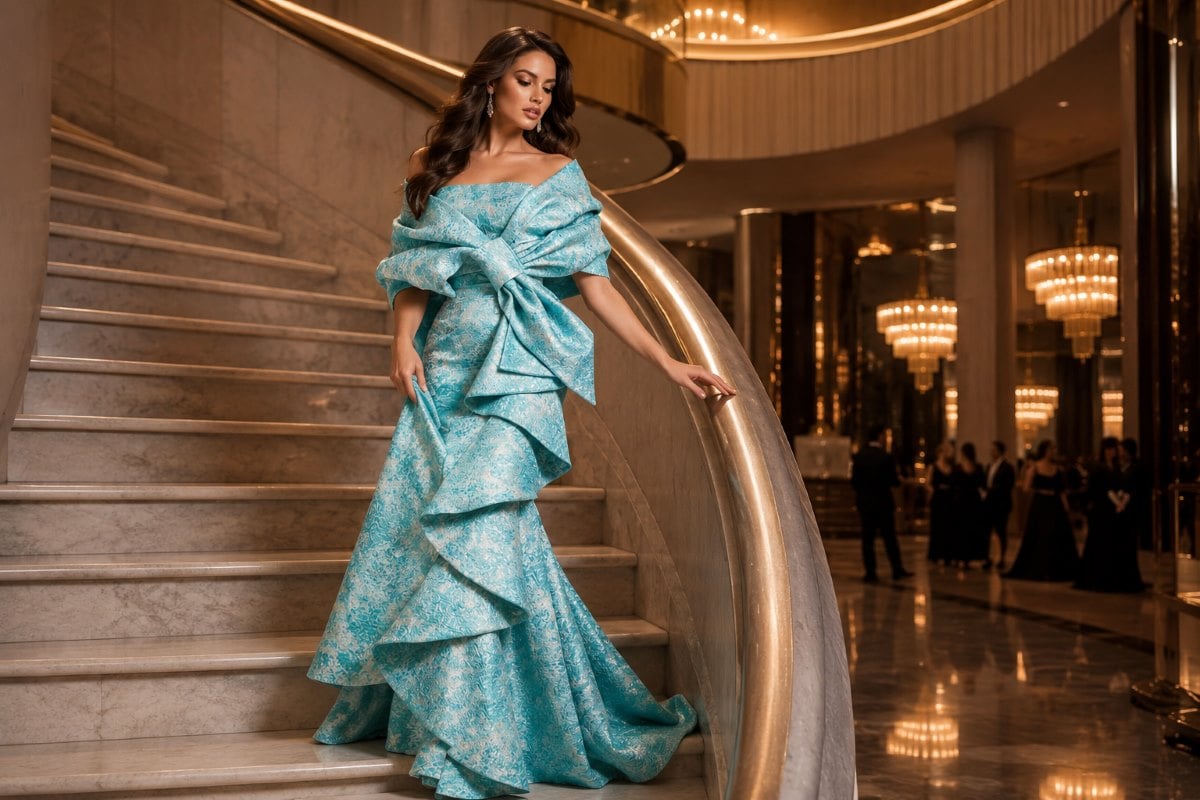
Some dresses make a quiet entrance. A high-low gown is not one of them. The cut is short at the front and long at the back, so it shows the legs and a striking pair of shoes while still sweeping the floor behind you. It moves when you move. It photographs with energy. And it sits in an interesting place in formalwear, more modern than a traditional floor-length gown and far more dramatic than a simple short dress. High-low hemline evening gowns reward the woman who wants to stand out, but the style is not right for every event, and wearing it well takes a little understanding. This guide covers all of it: what the cut actually is and where it came from, which occasions suit it and which genuinely do not, how to choose the right version for your figure, and how to style the look so it reads as polished rather than costume-like.
What a high-low hemline actually is
The term gets used loosely, so it helps to be precise. A high-low hemline is an asymmetrical cut where the front of the skirt is noticeably shorter than the back. The front might hit anywhere from the knee to mid-calf, while the back extends to the floor or into a short train. The result is a single dress that delivers two effects at once, the ease and leg-showing energy of a short dress and the formal sweep of a long one.
You will see a few related names, and they are not all the same thing. A waterfall hem describes a soft, gradual cascade from short to long. A fishtail hem usually refers to a fitted skirt that flares low at the back, closer to a mermaid shape. The word mullet hem is sometimes used, often unkindly, for a sharply uneven version. For clarity, this guide uses high-low to mean the deliberate, graceful front-short, back-long evening cut. It is one of several hemline choices a formal wardrobe can include, and our broader guide to picking the right dress length places it alongside the others.
The style also has real history, which is part of why it does not read as a passing gimmick. Uneven hemlines appeared in Victorian-era formal gowns, returned through the 1920s and 1930s, and came back strongly in the early 2010s. A cut with that much staying power has earned its place in eveningwear.
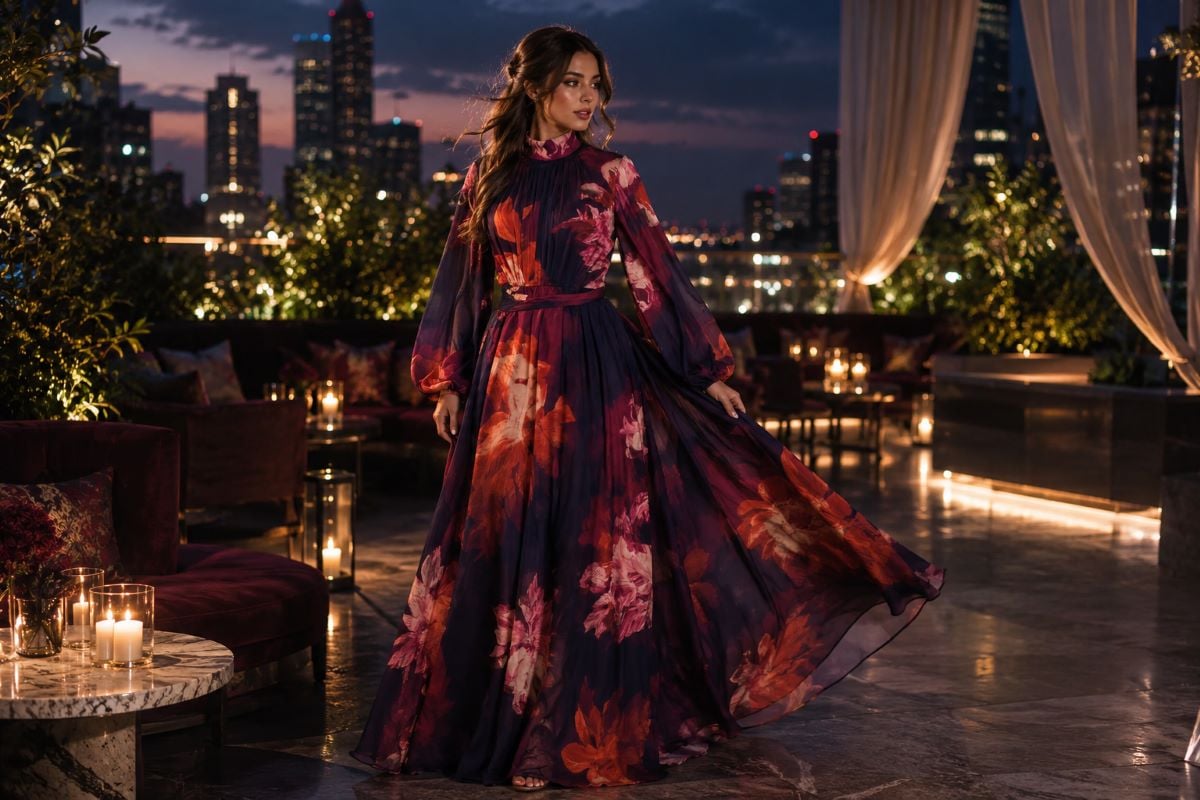
Where to wear a high-low evening gown, and where to skip it
This is the most important section, and honesty matters here. A high-low gown is wonderful for the right event and genuinely wrong for others. Knowing the difference is what separates a confident choice from a misjudged one.
Events where a high-low gown shines
- Cocktail and semi-formal evening events. This is the natural home of the style. The cut is exactly as dressed-up as these events ask for, and the shorter front keeps the look lively.
- Evening weddings as a guest. A high-low gown is a strong choice for a guest, since it is formal enough to respect the occasion while staying clearly distinct from anything bridal.
- Galas, benefits, and parties with a modern tone. At an event that welcomes a fashion-forward look, the asymmetrical cut stands out in the best way.
- Proms and milestone celebrations. Younger wearers love the style for its movement and its leg-lengthening effect, which is why the cut appears across the range of asymmetric prom gowns as well as in eveningwear.
- Engagement parties, rehearsal dinners, and showers. Festive evening events where you want presence without full black-tie formality.
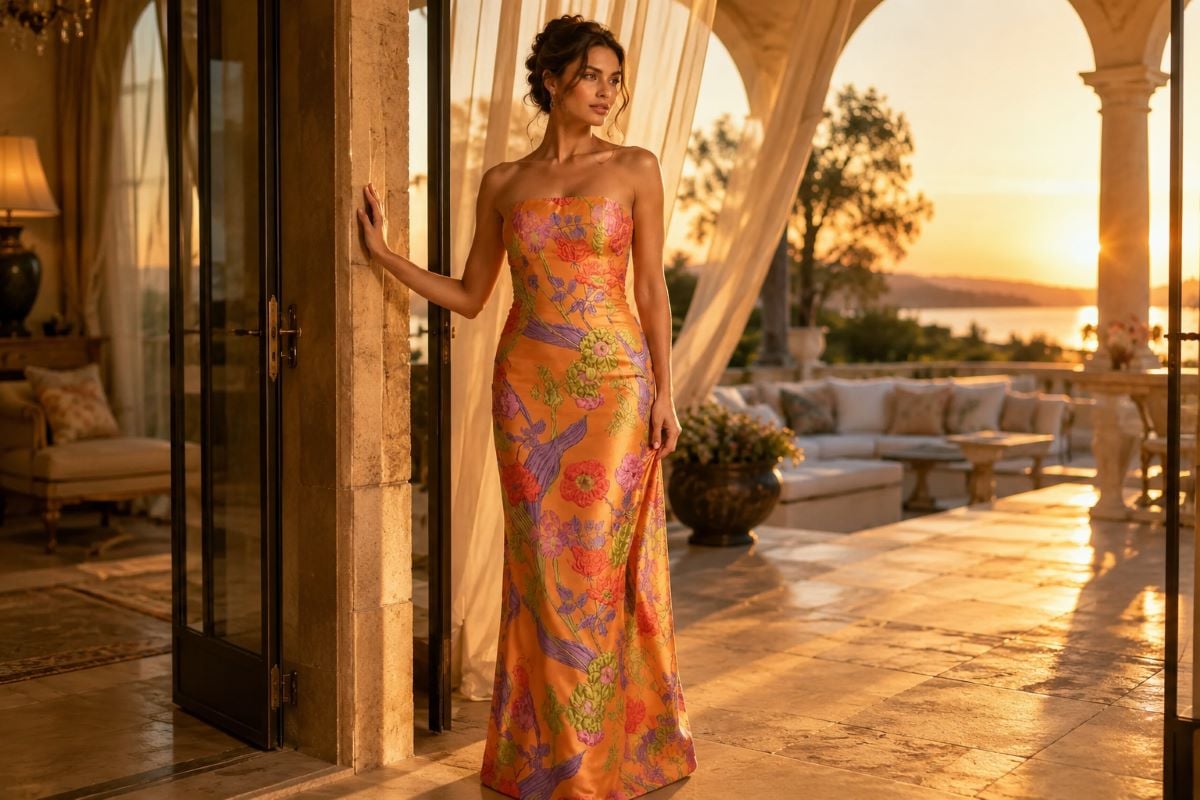
Events where a high-low gown is the wrong choice
Here is the part most style guides leave out. A high-low hemline is not a universal formal option. At the highest levels of formality, specifically white-tie events and the most traditional black-tie occasions, an uneven hemline is generally considered inappropriate. These events expect a full floor-length gown with a continuous hem, and a cut that shows the front of the leg reads as too casual for the setting, however beautiful the dress is. If your invitation specifies white tie, or black tie at a very traditional venue, choose a true floor-length gown instead. Our guide on dressing for a formal evening event explains where those lines fall. A high-low gown is also a poor fit for very conservative or religious ceremonies that call for more coverage. Choosing the right dress for the right event is not a limitation, it is what makes the dress look intentional.
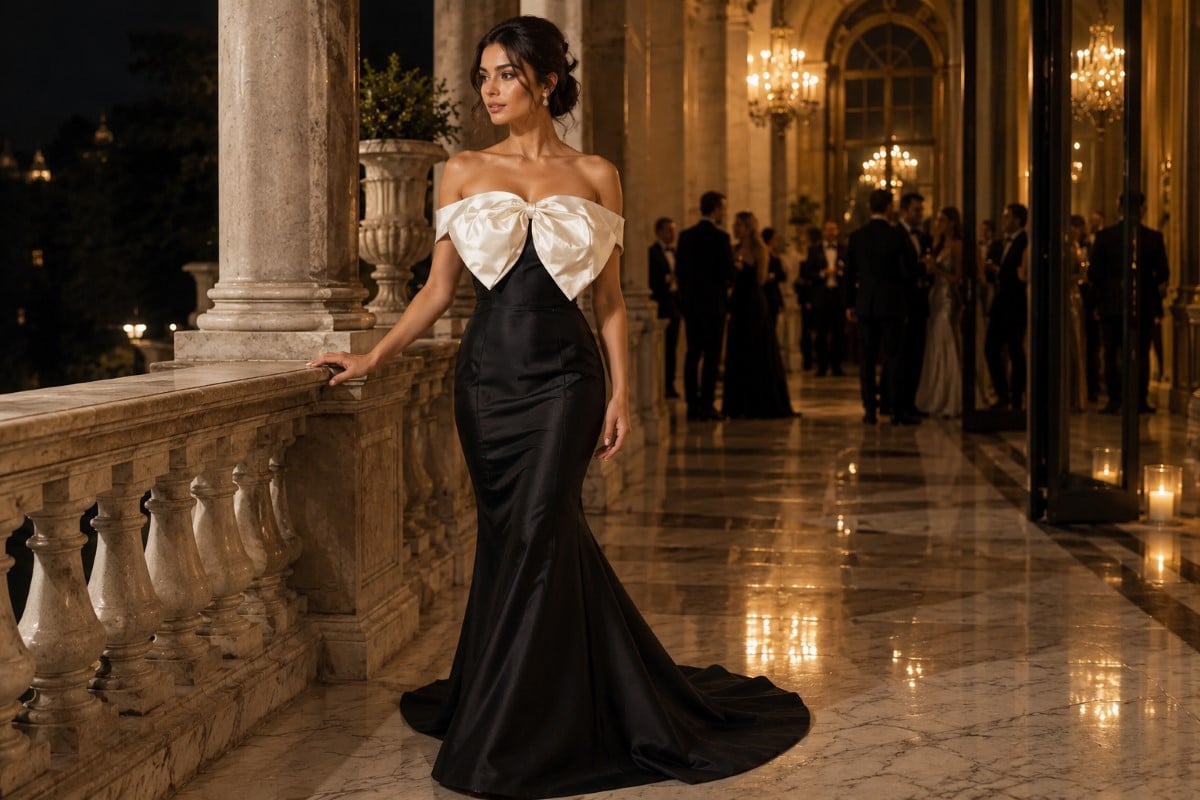
Choosing the right high-low gown for your figure
The high-low cut is more flattering than it first appears, and it works across a wide range of body types when you choose the proportions thoughtfully.
- Petite figures. This is one of the most flattering cuts for a shorter frame. The exposed front of the leg adds visual length, and the shorter hem prevents a heavy skirt from overwhelming a smaller body. Keep the back length moderate rather than a long train, so the proportion stays balanced.
- Tall figures. Height carries this style beautifully, and a tall frame can handle a more dramatic difference between the front and back lengths, including a longer train.
- Pear and triangle shapes. A high-low gown with a fitted bodice and a skirt that releases gently from the waist defines the upper body while the asymmetrical hem draws the eye downward in a flattering way.
- Hourglass figures. A fitted high-low style traces the waist and works with your natural curve. For a closely fitted version, the cut sits close to a mermaid formal dresses shape with the added leg-revealing front.
- Apple and fuller-midsection figures. Choose a high-low gown with structure in the bodice and a skirt that flows rather than clings, so the dress defines the torso and the hem adds movement below.
Two practical points apply to everyone. First, the front hem length sets the formality, so a knee-length front reads livelier while a mid-calf front reads more refined. Second, judge the cut in your real heels, since shoe height changes how the front hem sits. If you are unsure whether a high-low suits you, trying it alongside a traditional long evening dresses option and a midi formal gowns option gives you a clear comparison of how much drama you actually want.

Styling a high-low gown so it looks polished
The high-low cut is already a statement, so the styling around it should support the dress rather than compete with it. A few deliberate choices keep the look refined.
Shoes are not optional here
This is the single most important styling rule. A high-low hemline puts your feet and ankles on full display at the front, so the shoes are part of the outfit in a way they are not with a floor-length gown. They should be considered, not an afterthought. A strappy heel, an elegant ankle-strap sandal, or a refined pointed pump all work well. A bold color or a metallic finish can become a deliberate feature. Whatever you choose, the shoes should look finished, since every eye drawn to the hem lands on them. Make sure the heel height is one you can wear comfortably all evening, because this is a dress that invites movement.
Balance the rest of the look
With an asymmetrical hemline doing the visual work, keep the other elements balanced. If the gown has a one-shoulder or asymmetrical neckline, which pairs naturally with this cut, follow the rule of balance and let one area lead. Many one-shoulder formal dresses use a high-low hem for exactly this reason, and the styling answer is simple: skip the necklace and wear a striking earring on the exposed side. For jewelry overall, choose a few refined pieces rather than a heavy mix. For a bag, a clean clutch keeps the focus on the dress. For outerwear, a tailored jacket or a sleek wrap works for cooler venues, ideally one that does not hide the asymmetrical hem entirely.
Mind the practical details
A high-low gown moves, so wear it with confidence in that movement. Choose smooth, well-fitting undergarments that suit the neckline. Check that the shorter front allows a comfortable, natural stride. And consider the venue, since the longer back can trail on rough ground, so an indoor or smooth-floored setting suits the style best.
Why construction matters in a high-low gown
An asymmetrical hem is harder to cut well than a straight one. The transition from short to long has to flow smoothly, the hem has to be even and clean on both sides of the curve, and the skirt has to hang correctly so the dress does not look lopsided rather than deliberately asymmetrical. This is where construction quality shows.
A well-made high-low gown has a hemline that curves gracefully rather than jumping abruptly, a finished edge that lies flat all the way around, and a skirt cut so the back falls cleanly without twisting. The bodice usually carries internal structure so the fitted top stays smooth while the skirt moves freely below. Jovani has built structured eveningwear from its New York design studio for more than forty years, and that experience matters most in exactly this kind of dress, where a precise, intentional cut is the entire point. A high-low gown done poorly looks like a mistake. Done well, it looks like a design choice, which is what it should be.
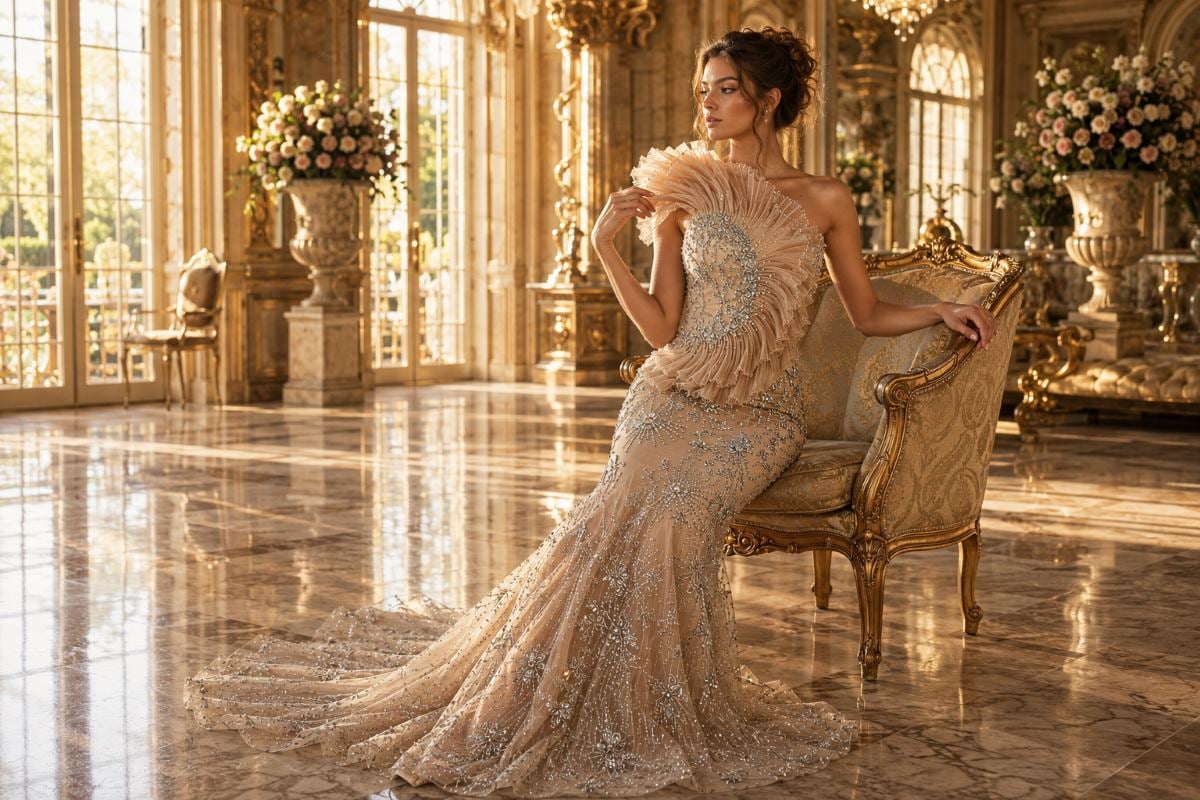
Frequently asked questions about high-low evening gowns
What is a high-low hemline?
A high-low hemline is an asymmetrical cut where the front of the skirt is shorter than the back. The front typically falls between the knee and mid-calf while the back reaches the floor or a short train. It combines the leg-showing ease of a short dress with the formal sweep of a long gown.
Is a high-low gown appropriate for a formal event?
It depends on the level of formality. A high-low gown suits cocktail, semi-formal, and many evening events very well. However, it is generally not appropriate for white-tie events or the most traditional black-tie occasions, which expect a full floor-length hem. Read the dress code and choose accordingly.
Can I wear a high-low dress to a wedding as a guest?
Yes, a high-low gown is a strong choice for an evening or semi-formal wedding as a guest, since it is formal enough to respect the occasion while being clearly distinct from bridal styles. Avoid it for a very formal black-tie wedding, and always avoid white, ivory, and cream.
What body type does a high-low hemline suit?
The cut flatters a wide range of figures. It is especially good for petite women, since the exposed front of the leg adds length, and for tall women, who can carry a more dramatic version. Choosing the right proportion of front length and back length is what makes it work for your shape.
What shoes should I wear with a high-low gown?
Shoes are essential with this style because the shorter front puts your feet on display. Choose a polished, considered pair such as a strappy heel, an ankle-strap sandal, or a refined pump. A bold color or metallic finish can become a deliberate feature of the outfit.
What is the difference between a high-low and a mermaid dress?
A mermaid dress is fitted through the body and flares near the knee, with a hem that is usually even all the way around. A high-low dress has a deliberately uneven hem, short at the front and long at the back. Some fitted high-low styles blend the two effects.
When you are ready to see how an asymmetrical cut translates across fabrics and colors, explore the formal gowns collection through an authorized Jovani retailer.