
The quinceañera dress carries more weight than most fashion historians give it credit for. A single gown worn for a single afternoon and evening, yet stitched into it are five centuries of cultural collision, religious symbolism, immigration history, and shifting ideas about womanhood. To understand the dress is to understand how Indigenous Mesoamerican coming-of-age rituals merged with Spanish colonial Catholicism, how royal European silhouettes traveled across an ocean and were rebuilt by Latin American hands, and how mid-century immigration to the United States turned an elite tradition into a community celebration that millions of families now share.
This is the real quinceañera dress history, not the surface version. Every ruffle, every layer of tulle, every embroidered motif, and every choice between traditional white and modern royal blue carries a story that began long before the modern silhouette we recognize today was ever sketched on paper.
Pre-Columbian Origins of the Quinceañera Dress
The earliest roots of the quinceañera predate Spanish contact by centuries, and any honest account of quinceañera dress history has to start there.
Aztec and Maya Coming-of-Age Garments
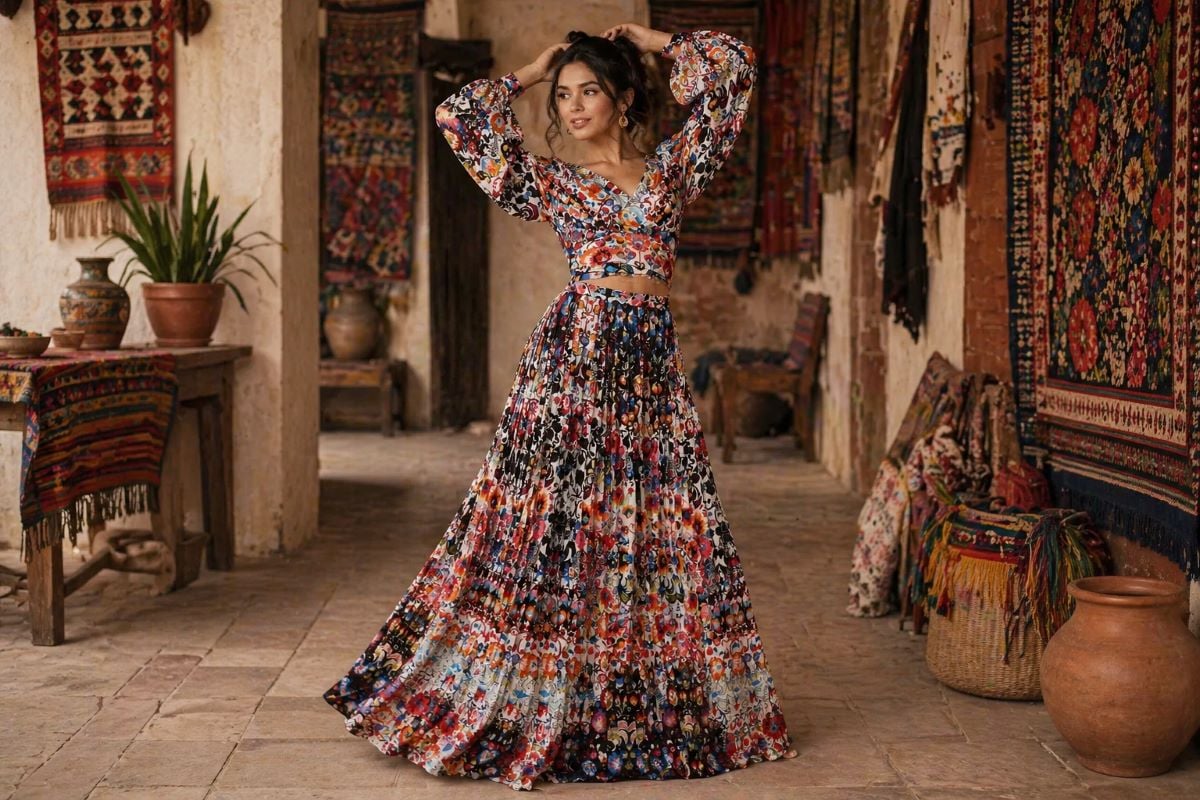
Aztec and Maya communities recognized the transition from girlhood to adult community membership through ceremonies that involved teaching, blessing, and public acknowledgment. Young women preparing for these rites typically wore a huipil, a rectangular woven garment, often dyed with cochineal red, indigo blue, or the deep yellow of marigold petals. Patterns and motifs woven into the cloth communicated lineage, region, and family identity in a way modern embroidery still echoes on certain quinceañera gowns today.
How Indigenous Symbolism Shaped the Modern Tradition
There was no ball gown, no corset, no tulle. The first quinceañera dress, in any meaningful sense, was a community garment that signaled belonging rather than ornament. The idea that what a girl wore at this moment carried symbolic meaning, however, traces directly to these traditions. That principle of dress as identity is the bone structure beneath everything that came later in the quinceañera dress evolution.
The Spanish Colonial Era and the Catholic Influence
When Spanish colonizers brought Catholicism to Mesoamerica in the sixteenth century, they did not erase the existing rites of passage. They layered new meaning on top. The traditional quinceañera dress began to take its modern shape during this period, blending Indigenous symbolism with European Catholic dress codes that emphasized purity, modesty, and reverence.
The Mantilla, Lace, and the New Religious Dress Code
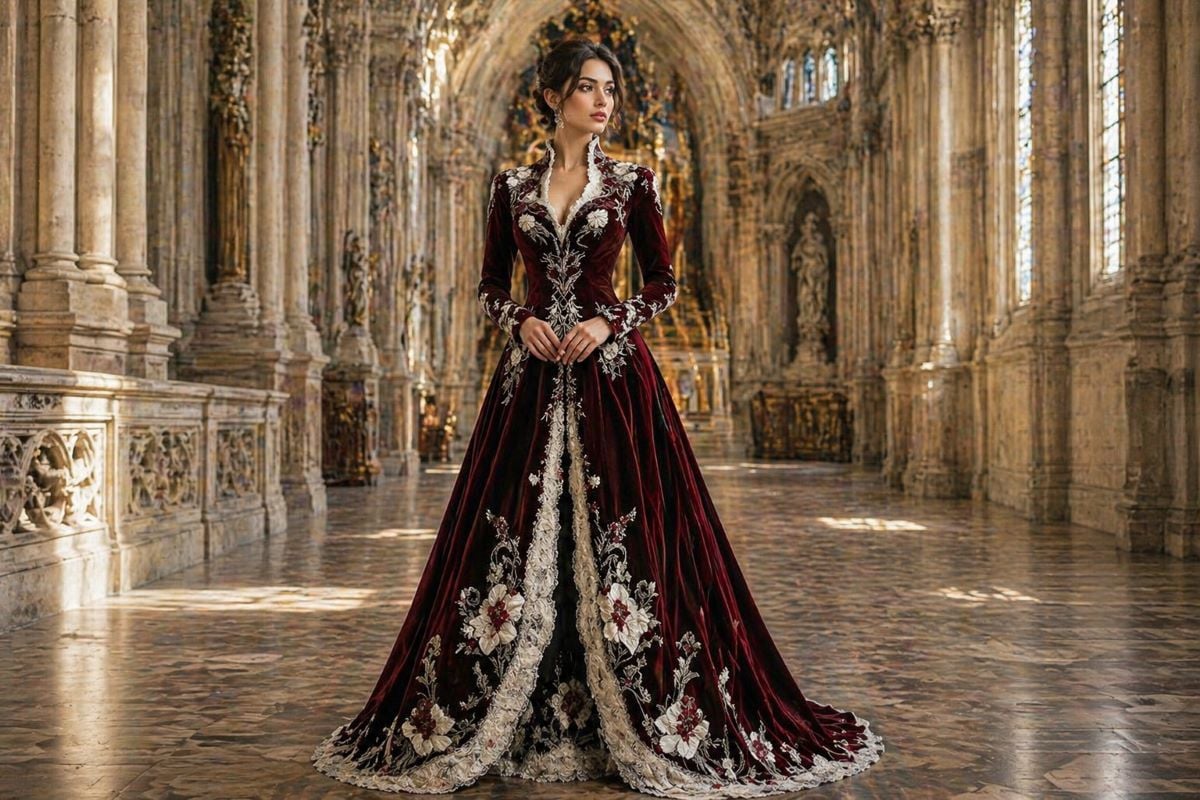
The mantilla, a lace veil traditionally worn during Mass, became a fixture of early quinceañera attire. Lace from Spanish workshops, particularly Andalusian and Catalan lacemaking centers, was prized for the gown and the veil. The dress became less about community identity and more about the religious threshold the celebration was now centered around, beginning with the Misa de Acción de Gracias and ending with the family reception. In this sense, the quinceañera dress origin sits at the intersection of two civilizations, neither of which wins outright.
Why White, Ivory, and Pink Became the Standard
Fabric choices shifted toward white, ivory, and pale pink, colors the Catholic Church associated with spiritual purity and grace. Many of the conventions families still observe, from the white veil to the floor-length hem, were locked in during these two and a half centuries of colonial layering. For a closer look at how those classical elements survive in modern designs, our traditional quinceañera dress guide walks through the silhouette, fabric, and structural choices that define the classic look today.
European Royal Courts and the Rise of the Quinceañera Ball Gown
Every honest conversation about quinceañera dress history eventually arrives at the same question. Why is the gown so voluminous? The answer comes from the European royal courts of the seventeenth, eighteenth, and nineteenth centuries.
From Farthingale to Crinoline: The Fashion Imports
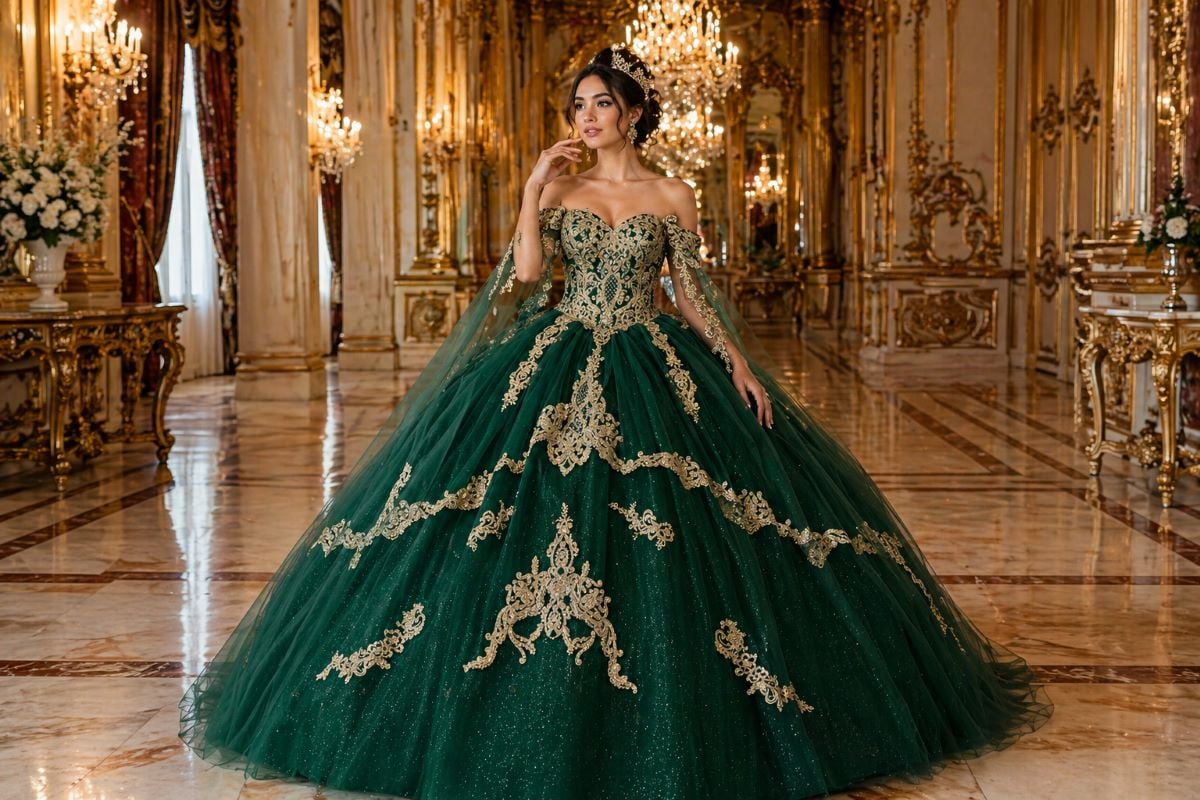
Wealthy Latin American families in the colonial and post-colonial periods imported their fashion sensibilities directly from Madrid, Versailles, and London. The farthingale of the late Renaissance, the pannier hoops of the eighteenth-century French court, and the crinoline cages of the Victorian era all arrived in Latin America as markers of status and elegance. By the time Spain’s colonial influence on fashion peaked in the late eighteenth century, the daughters of wealthy families wore versions of these voluminous silhouettes for any major social presentation, including the quinceañera.
Why Are Quinceañera Dresses So Big? The Reason the Silhouette Stuck
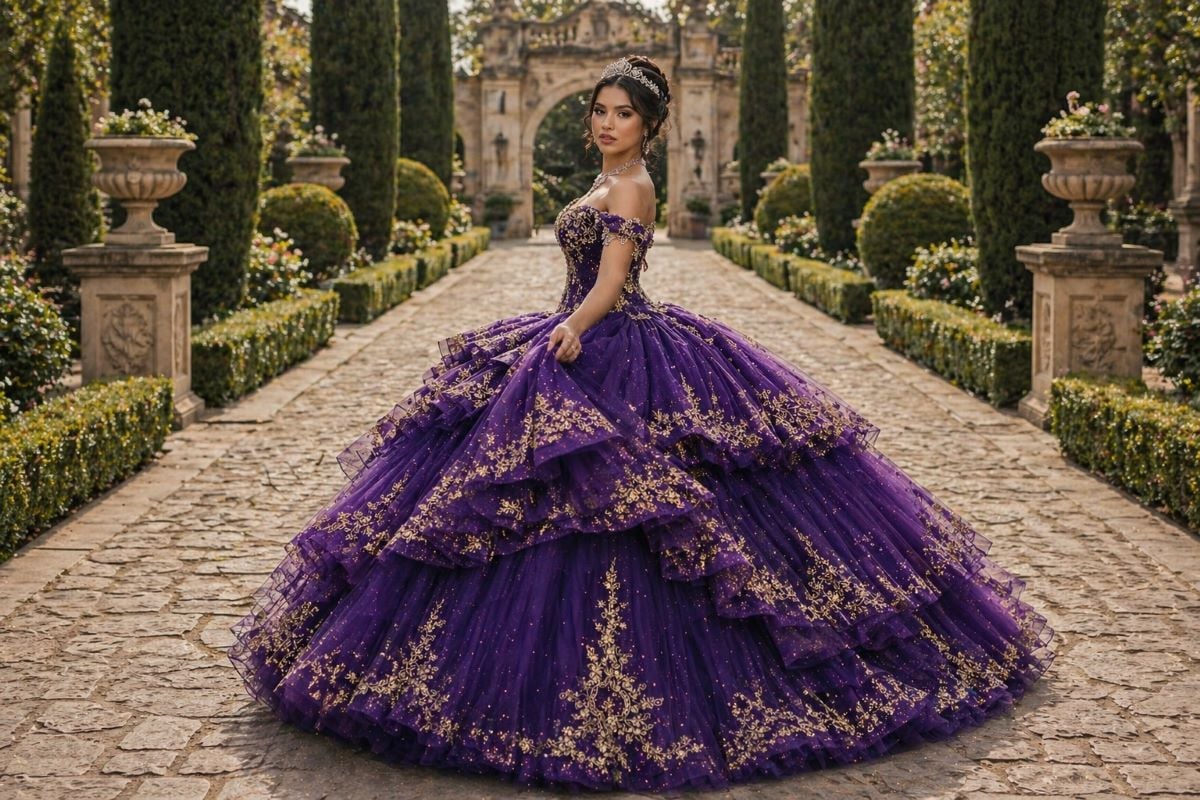
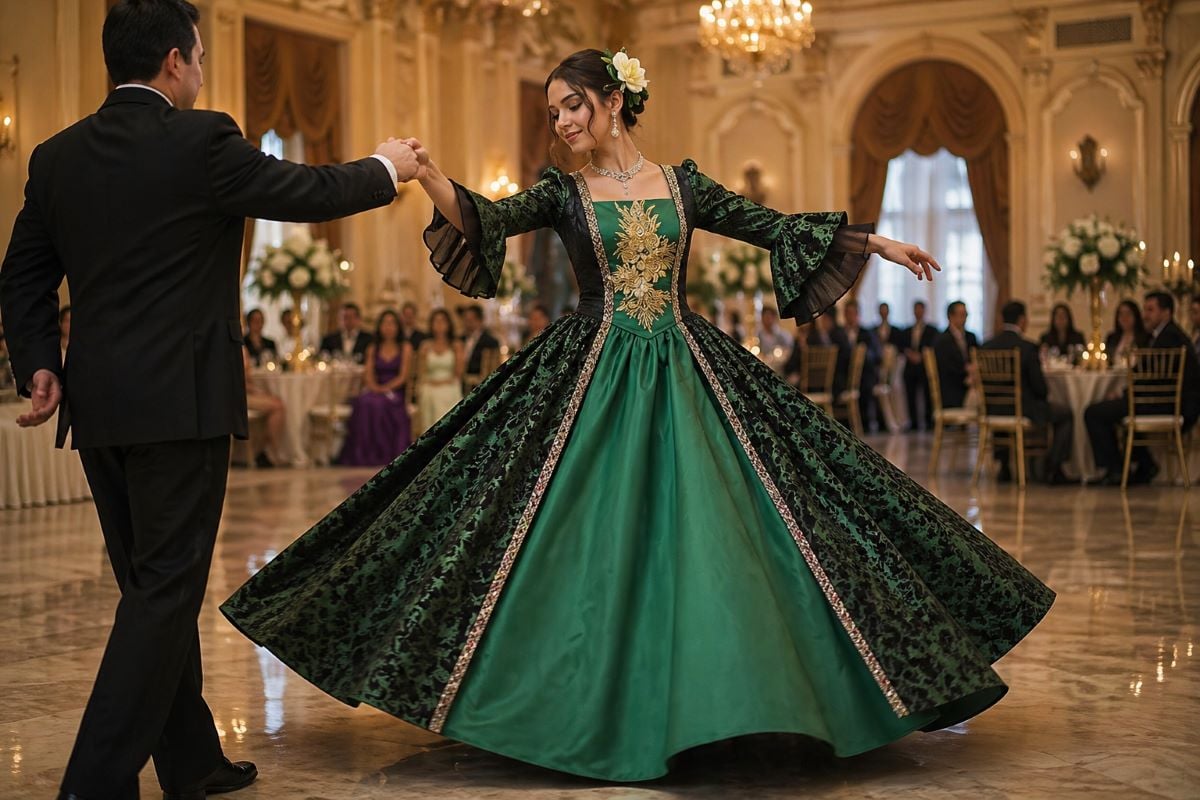
The full skirt did practical work as well. It signaled wealth because volume required fabric, and fabric required money. It read across long ballrooms. It moved beautifully during the waltz, the dance most associated with the formal entrance. Once the ball gown became the standard, the form stuck. It worked architecturally for grand venues, it carried a regal symbolism that no other silhouette matched, and later, when photography arrived, it photographed beautifully from every angle. The quinceañera ball gown is, in a real sense, a piece of European court fashion that found a permanent home in Latin American celebration culture and never left.
The American Quinceañera: Immigration and the 1960s Shift
For most of its history, the elaborate quinceañera was a celebration only the wealthiest families could afford. That changed in the United States during the second half of the twentieth century, and the change is the most important moment in the modern history of quinceañera dress culture.
How Migration Made the Quinceañera a Community Celebration
As Mexican, Cuban, Puerto Rican, Dominican, and Central American families migrated to American cities in larger numbers between the 1940s and 1970s, families who had never been able to throw a full quinceañera in their home countries found themselves in a position to celebrate. The community dimension of the event expanded. Padrinos and madrinas, godparents and sponsors, began collectively funding the gown, the venue, the cake, and the music. The dress, once a marker of class, became a marker of community.
The Rise of Quinceañera Boutiques in the United States
By the 1960s, the ball gown silhouette had cemented itself as the standard across the diaspora. Boutiques in cities with large Latino populations began stocking quinceañera-specific collections. Dressmakers in Los Angeles, Miami, Chicago, and the Texas border cities adapted American formalwear traditions and Mexican regional embroidery into a recognizable hybrid style. What had been a garment of quiet religious meaning was now also a public, photographic, deeply American ceremony of arrival.
The Telenovela Decades: 1980s and 1990s Maximalism
If the 1960s gave the quinceañera dress mass accessibility, the 1980s and 1990s gave it scale. The era of Mexican and Venezuelan telenovelas brought aspirational fashion into millions of households, and the gown responded directly.
Bigger Sleeves, Fuller Skirts, Heavier Embellishment
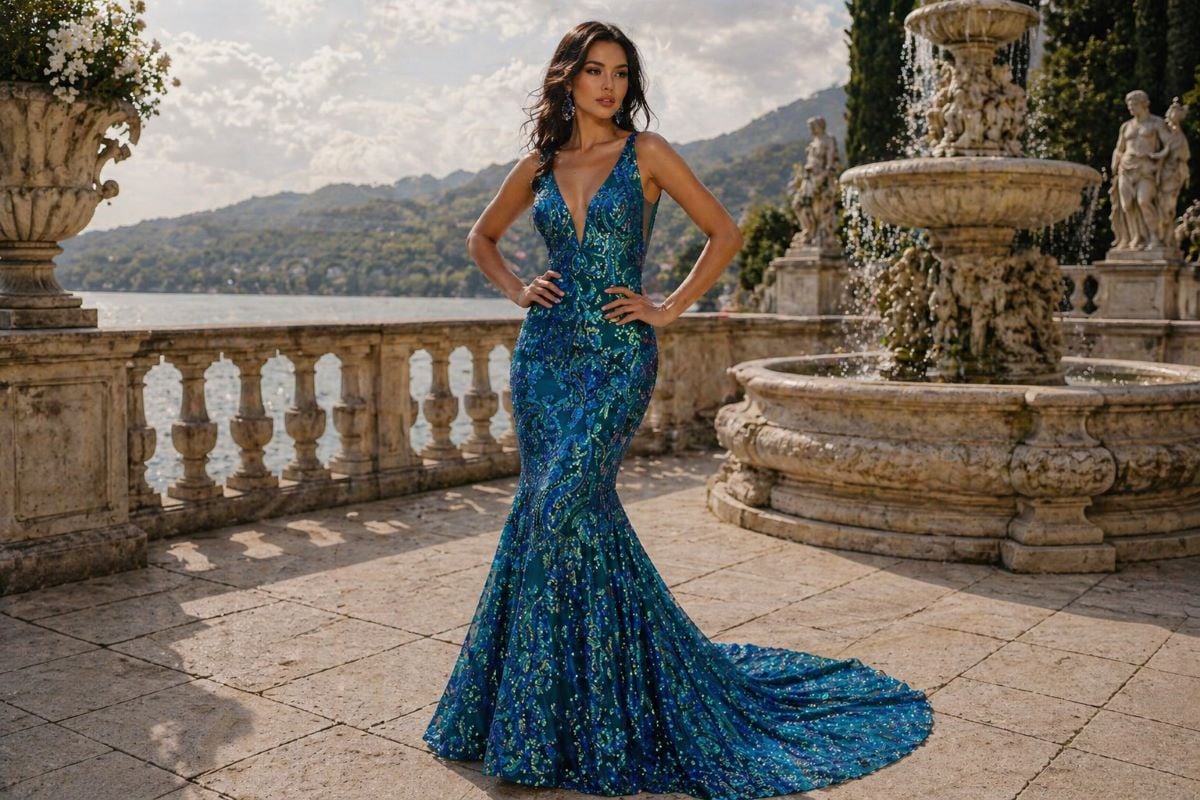
Sleeves grew larger. Skirts grew fuller. Embellishment moved from minimal lace to heavily beaded bodices, sequined trim, and rhinestone constellations across the entire dress. The maximalist culture of the era gave families permission to make a louder statement than the modest religious gowns of earlier generations had ever allowed.
The Expanding Color Palette
Pastel pinks and traditional whites stayed dominant, but new colors began to appear in serious numbers. Mint green, peach, lavender, and powder blue entered the vocabulary as families looked for ways to make each celebration distinct. The gown was no longer just a religious garment, it was a personal statement.
The Disney Princess Wave and the 2010s Color Revolution
The 2000s and 2010s reshaped the silhouette and the color palette of the modern quinceañera dress at the same time, driven by two different cultural waves.
A Fairy Tale Silhouette Takes Hold
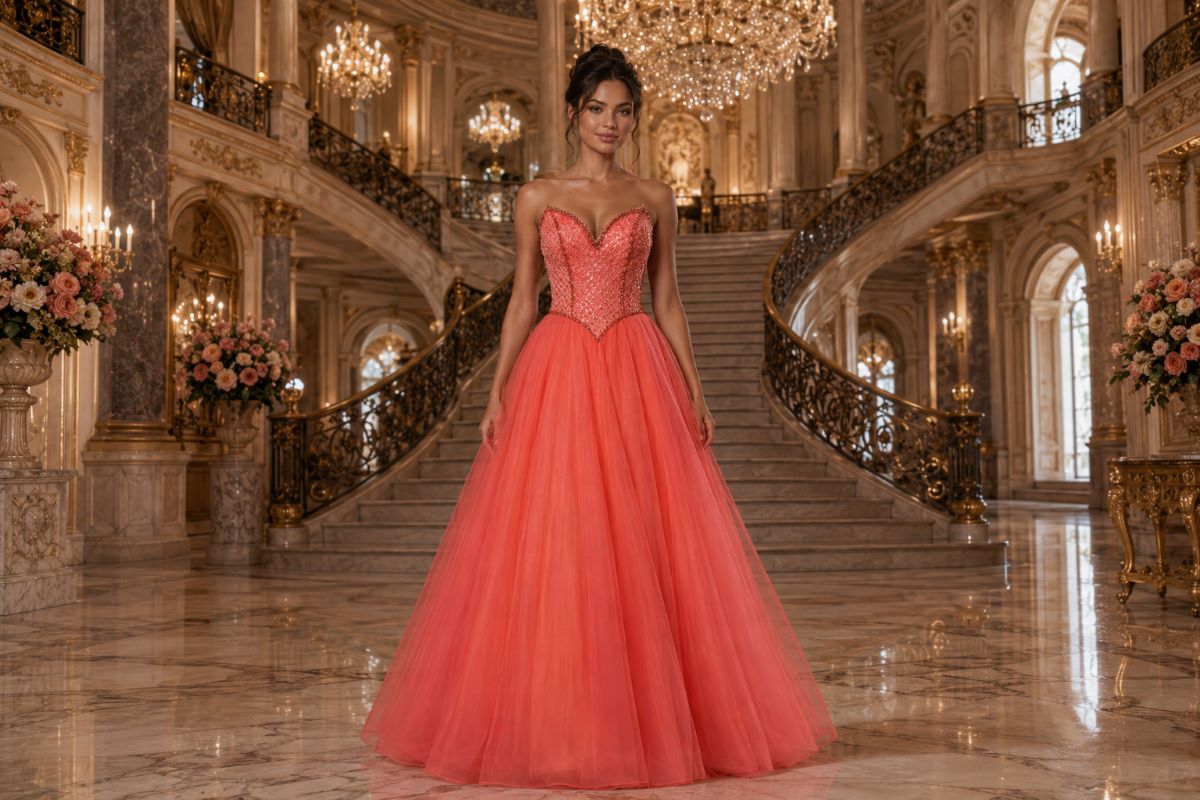
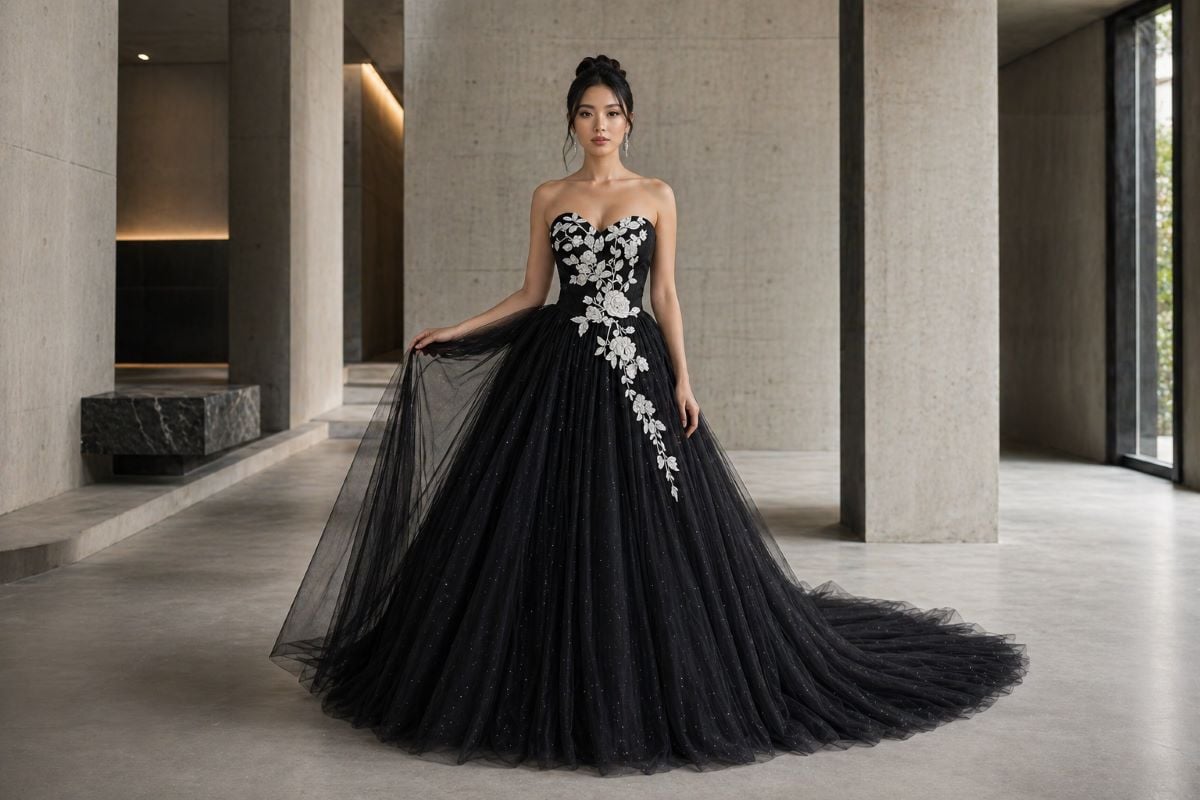
The early 2000s drew from Disney’s princess imagery, celebrity wedding coverage in tabloids, and reality television aesthetics, particularly MTV’s coverage of teen birthday celebrations. The combined influence pushed the gown toward something that read like a fairy tale on camera. Sweetheart necklines became standard. Strapless bodices replaced the higher Catholic-influenced cuts of earlier decades. The skirt got more dramatic, with multiple layers of tulle, organza, and horsehair hem trim creating shapes that looked engineered rather than sewn.
When Color Replaced White and Pink
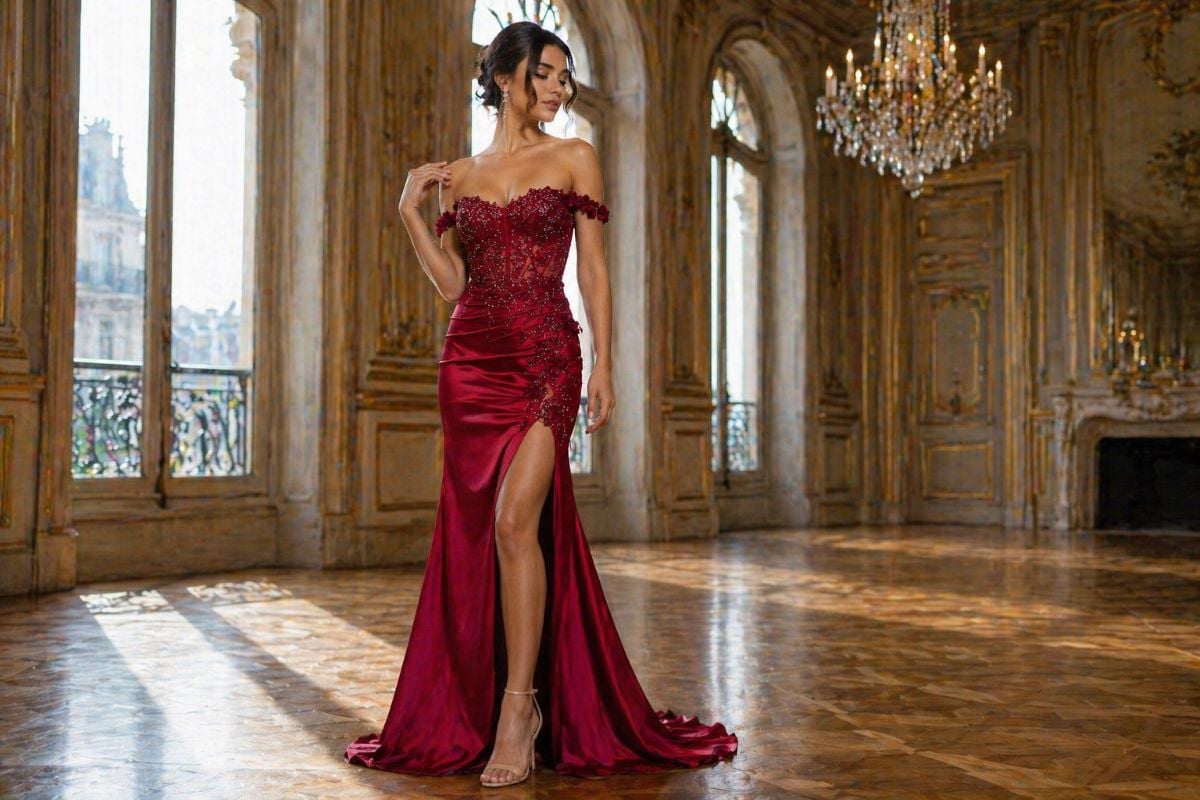
Color exploded during the 2010s. Social media photography rewarded distinct, scroll-stopping imagery, and families responded. Royal blue, deep red, emerald, plum, fuchsia, and metallic rose gold moved from rare to common. Many families now choose color first and silhouette second, reversing the order of the traditional quinceañera dress decision-making process. The shift reflects something real about how the celebration is framed in the United States today, less a debutante presentation and more a personal arrival.
The Charro Quinceañera and Mexican Regional Identity
Running parallel to the mainstream ball gown evolution is a distinctly Mexican tradition that has gained national visibility over the past decade.
Where the Charro Tradition Comes From
The charro quinceañera honors the equestrian and ranching heritage of Mexico, particularly the states of Jalisco, Guanajuato, and Zacatecas. The dress associated with this celebration draws on charro culture, mariachi tradition, and regional embroidery practices. The charro quince is a deliberate cultural statement, a reclaiming of Mexican identity within a tradition that, in its wider American form, had become more universal.
What Makes a Charro Quinceañera Dress Different
A charro quinceañera dress typically features hand-worked embroidery on the bodice and sometimes the skirt, often in colors drawn from the Mexican flag or from regional textile traditions. The silhouette stays close to the ball gown standard but with additional structural elements, sometimes including a sombrero, a rebozo, or boots in place of formal heels for portions of the celebration. This branch of the tradition matters in any honest history of quinceañera dress culture because it shows the form is not static. Families continue to reshape it.
The 2020s: Convertible, Modest, and Sustainable Quinceañera Dresses
The most recent chapter of the quinceañera dress evolution reflects the priorities of the current generation.
Two-Piece, Detachable, and Modest Designs
Two-piece dresses, convertible gowns with detachable overskirts and detachable sleeves, and modest designs that work for both the church ceremony and the reception have all moved from rare to mainstream. The single most consequential shift is the rise of the convertible gown, which gives the wearer two distinct looks from one dress, modest and covered for the religious portion, fully open for the dance floor.
Sustainability and the Multi-Use Gown
Sustainability has entered the conversation as well, with families choosing gowns built from higher-quality fabrics intended to be passed down or resold rather than worn once and stored. Designers building modern quinceañera ball gowns for the diaspora market are responding with collections that prioritize versatility. For a closer look at where this is heading, the quinceañera dress trends for 2026 highlight how today’s designers are translating these priorities into new collections. This is the latest evolution but it will not be the last. The traditional quinceañera dress has been changing for five hundred years. There is no reason to expect that to stop.
How the Quinceañera Dress Supports the Traditional Rituals
The history of quinceañera dress design cannot be separated from the rituals it is built to support.
The Last Doll, the Change of Shoes, and the Tiara
The Last Doll ceremony, in which the celebrant receives a doll dressed identically to herself before symbolically passing it to a younger sibling or cousin, only works because the gown is recognizable enough to be miniaturized. The change of shoes, where flat shoes are replaced with the celebrant’s first heels, only matters because the gown reaches the floor and reveals the moment cleanly. The crowning of the tiara, the placement of the medal or scapular, the removal of long gloves before the toast, all of it depends on the architecture of the dress.
The Entrance, the Waltz, and the Photographs
The choreography of the entrance, the waltz with the father, and the formal photographs all assume a particular silhouette. The gown is not just decorative. It is functional within a series of moments the family has invested in.
What the Quinceañera Dress Means Today
The contemporary quinceañera dress is the visible point where five hundred years of layered meaning converge. Aztec and Maya rites of community recognition, Spanish Catholic ceremonies of purity, European court silhouettes, twentieth-century immigration, telenovela aesthetics, Disney princess imagery, charro regional identity, and the practical demands of a modern bicultural celebration are all present in the gown a girl chooses for her fifteenth birthday. Most families do not consciously think about all of this. They do not have to. The history is sewn into the form.
What matters is that the dress still does the work it was designed to do. It marks a threshold. It honors a community. It creates a photograph that family members will look at fifty years from now and recognize as the moment a young woman stepped forward.
Explore the full collection of designer quinceañera ball gowns from Jovani at authorized retailers across the United States to find the gown that carries this history into your own celebration.
About the Quinceañera Dress and Its History FAQs
1. Where did the quinceañera dress originate?
The gown traces back to two converging traditions. Indigenous Mesoamerican coming-of-age garments worn by Aztec and Maya communities established the idea that ceremonial clothing carries symbolic meaning, and Spanish Catholic ceremonial dress introduced during the sixteenth-century colonial period brought the formal silhouette, the lace, and the white and pastel color palette. The modern ball gown shape emerged later, in the eighteenth and nineteenth centuries, as European court fashion was adopted by wealthy Latin American families.
2. Why are quinceañera dresses so big?
The voluminous silhouette comes from European royal court fashion, specifically the farthingale, panniers, and crinoline cages popular between the seventeenth and nineteenth centuries. Volume signaled wealth because it required expensive fabric, and the silhouette also performed well during the waltz, the formal entrance, and church photography. The form became permanent because it suited every architectural moment the celebration is built around.
3. Was the first quinceañera dress always white?
No. The earliest gowns in the Indigenous era were woven huipils in cochineal reds, indigos, and yellows. White and pale pink only became standard during the Spanish colonial period, when Catholic symbolism associated those colors with purity and reverence. Color variety returned in the twentieth century and expanded dramatically in the 2010s.
4. What is the difference between a charro quinceañera dress and a traditional quinceañera dress?
A charro gown draws on Mexican equestrian and ranching heritage, particularly from states like Jalisco and Zacatecas. It features hand-worked embroidery in regional colors and motifs and is often paired with elements like a sombrero or rebozo. A traditional quinceañera dress, by contrast, follows the European-influenced ball gown silhouette with less regional ornamentation. Both are valid traditions and many families now choose between them based on cultural identity rather than geography.
5. When did colors other than white and pink become acceptable for quinceañera dresses?
Pastel variations like mint green, peach, and lavender entered the mainstream during the 1980s telenovela era. Bold colors such as royal blue, red, emerald, and rose gold became broadly accepted during the 2000s and grew dramatically in popularity during the 2010s, driven by Disney princess imagery and social media. Today, color is often the first decision a family makes about the dress.