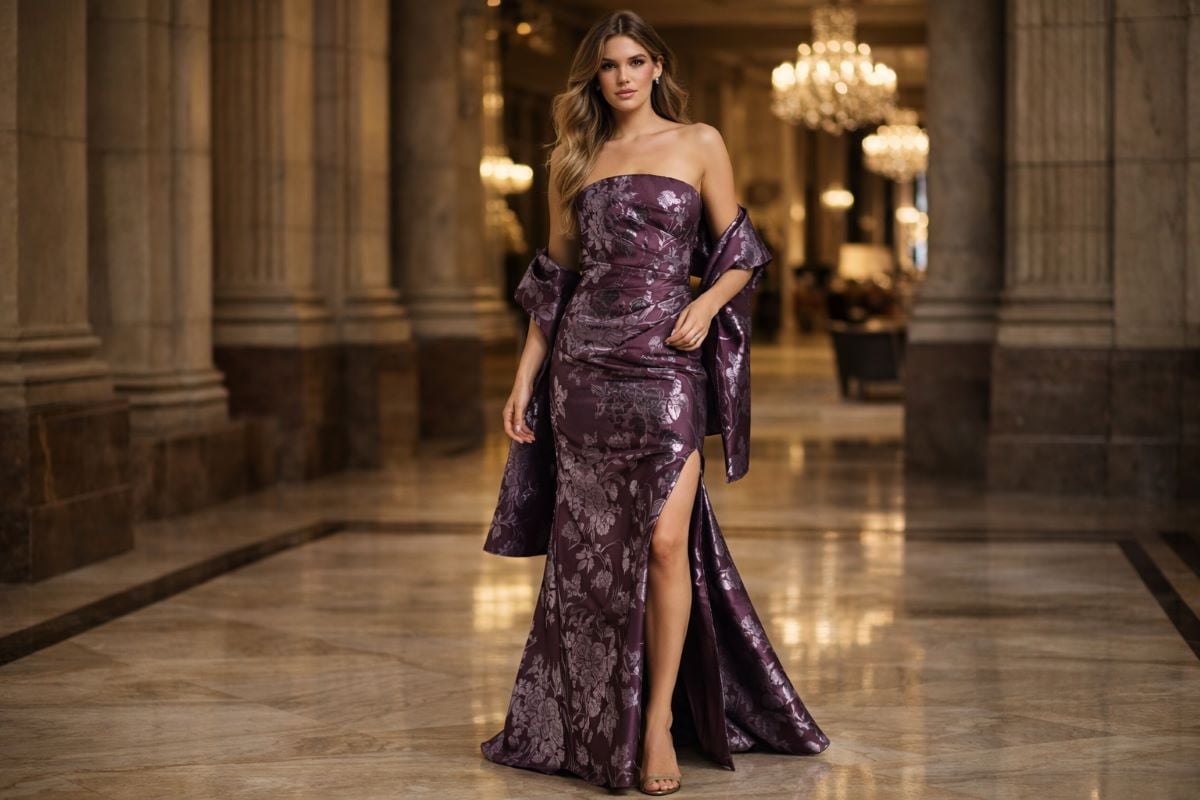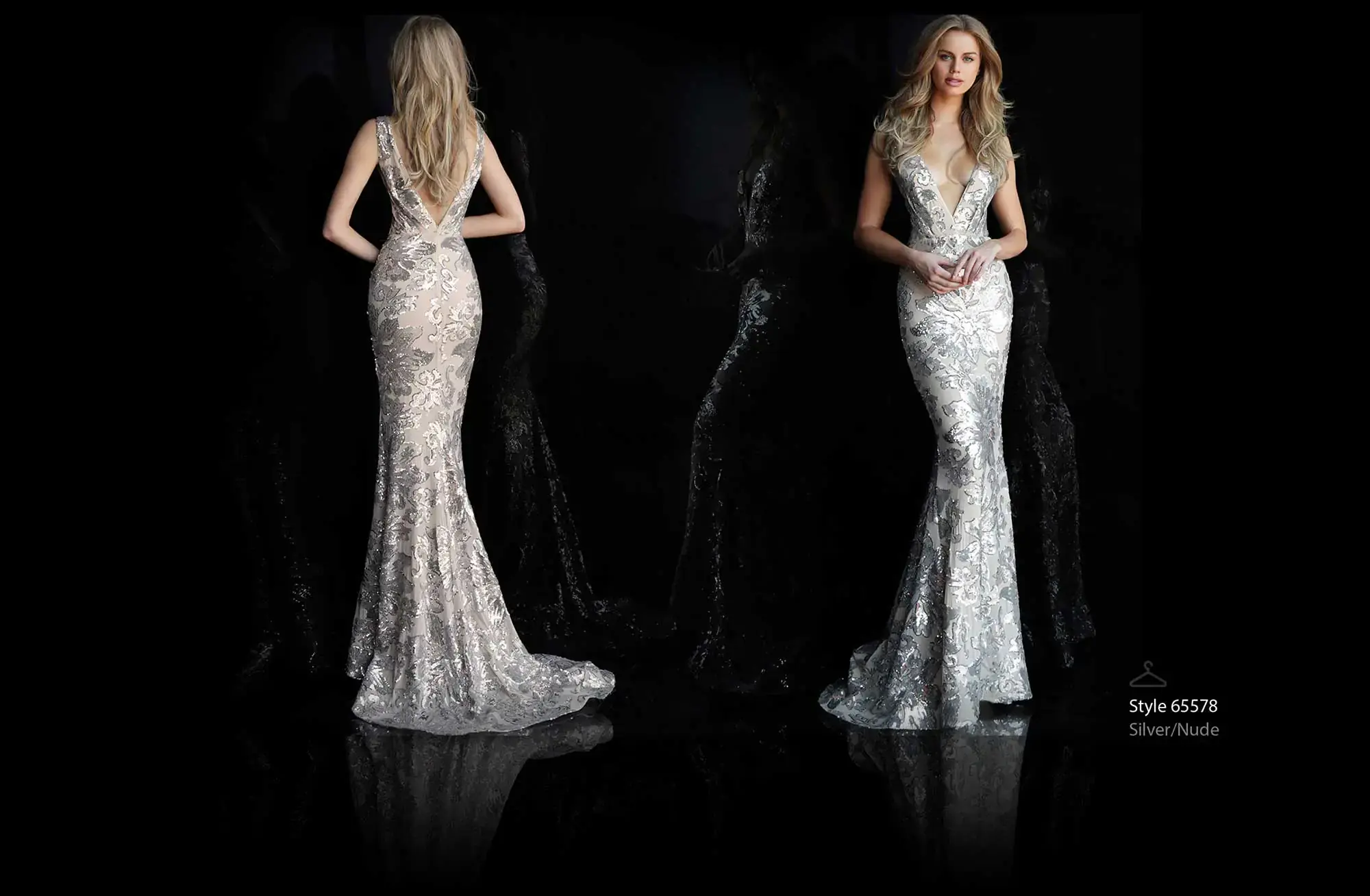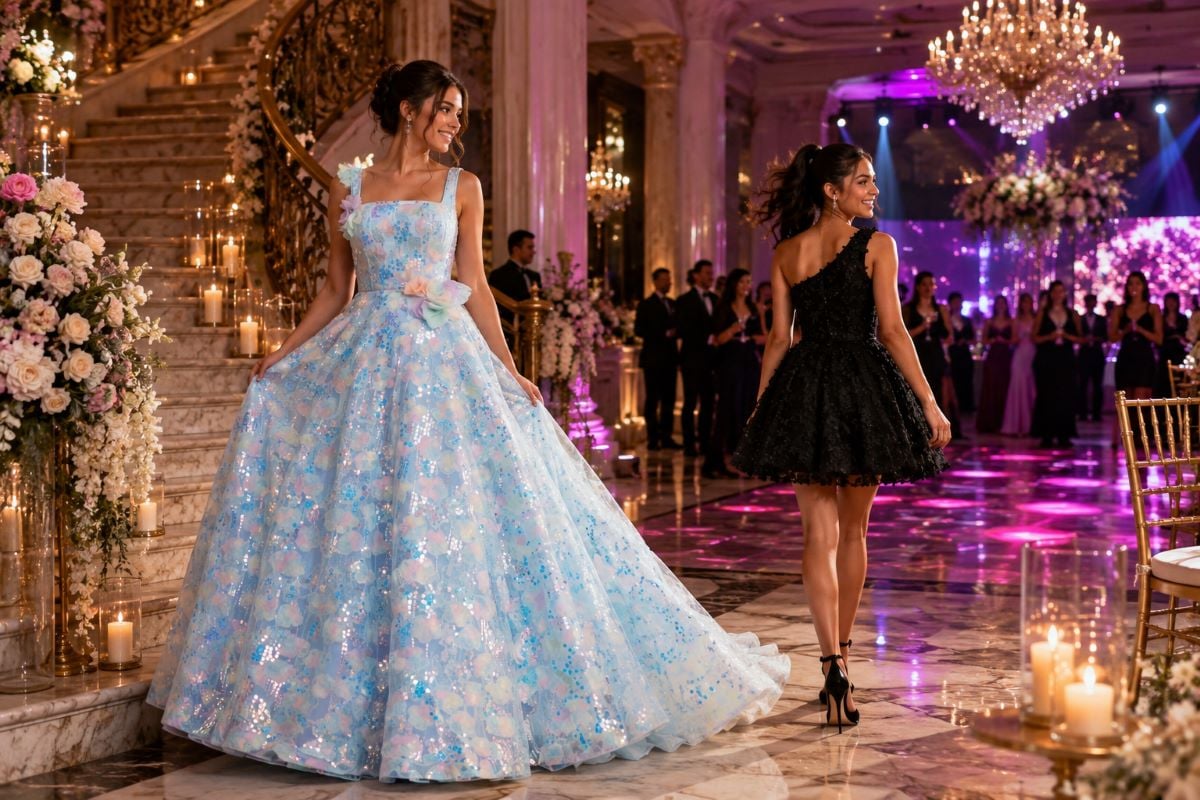

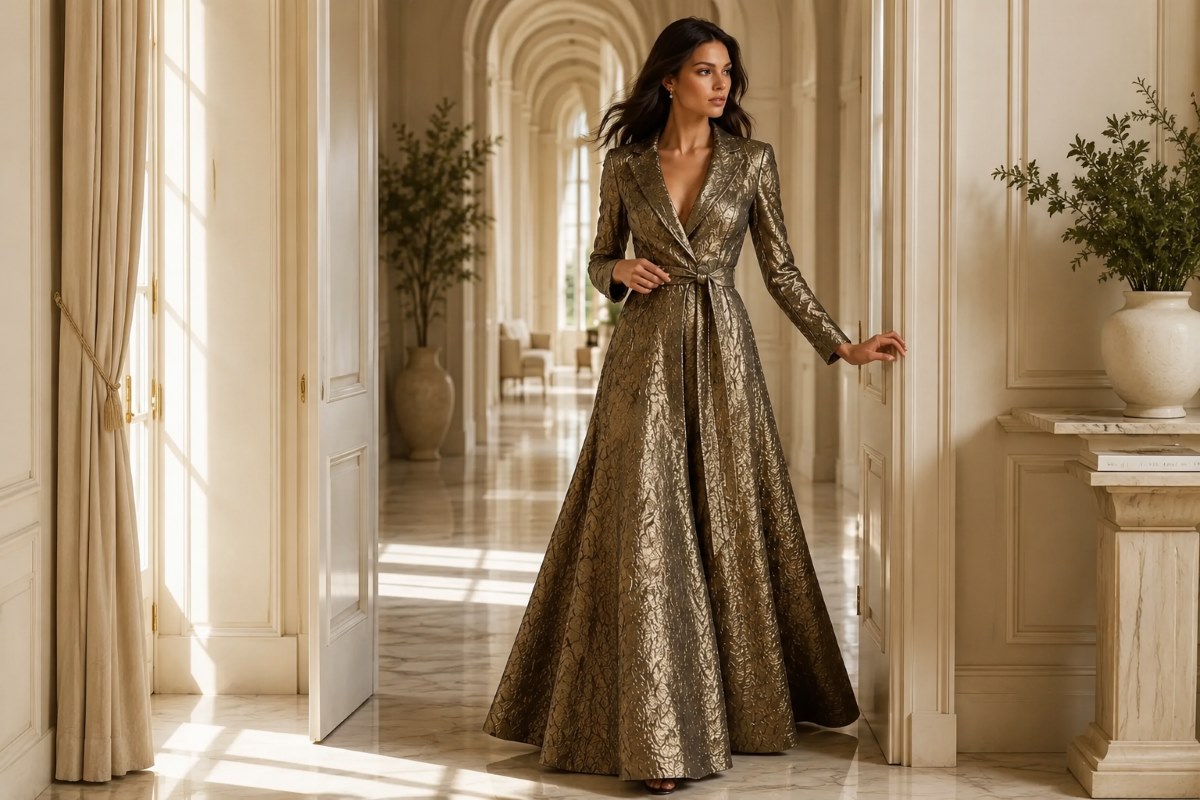
Two women can wear the same fabric, the same color, and the same length of gown, and one will look longer and more balanced than the other. Often the reason is not the dress at all, it is a single horizontal seam, and where on the body that seam happens to land. The waistline is the quietest design decision in any gown and one of the most powerful, because it tells the eye where your body divides. Once you understand the three main types of dress waistlines, drop, empire, and natural, you stop guessing in the fitting room and start choosing on purpose. This guide explains exactly what each one does, who it flatters, and how to spot it before you ever try a dress on.
Why the Waistline Quietly Controls the Whole Silhouette
The waist seam on a dress is a horizontal line, and the human eye reads horizontal lines as dividers. Wherever that seam sits, the body appears to split into an upper section and a lower section at that exact point. This is the entire principle behind why waistline placement matters, and it is why two identical skirts can look completely different depending on the seam above them.
Move the line up, and the legs read longer because more of the body falls below the divide. Move it down, and the torso reads longer instead. Place it at the body’s true midpoint, and you get an honest, balanced hourglass division. None of these is better than the others in the abstract. Each one solves a different proportional problem, and the right choice depends entirely on the body wearing it and the effect she wants. Understanding the different types of dress waistlines is really about learning to control where the eye lands.
On a formal gown this matters even more than on everyday clothing, because evening dresses are structured. The waist seam is built into the boning and interlining, it anchors the skirt, and it is sewn to hold its position through a long night. You cannot casually shift it later, so the placement you choose at purchase is the placement you keep. That is why it is worth slowing down and understanding the options before you fall for a dress.
The Natural Waistline: The Honest Hourglass
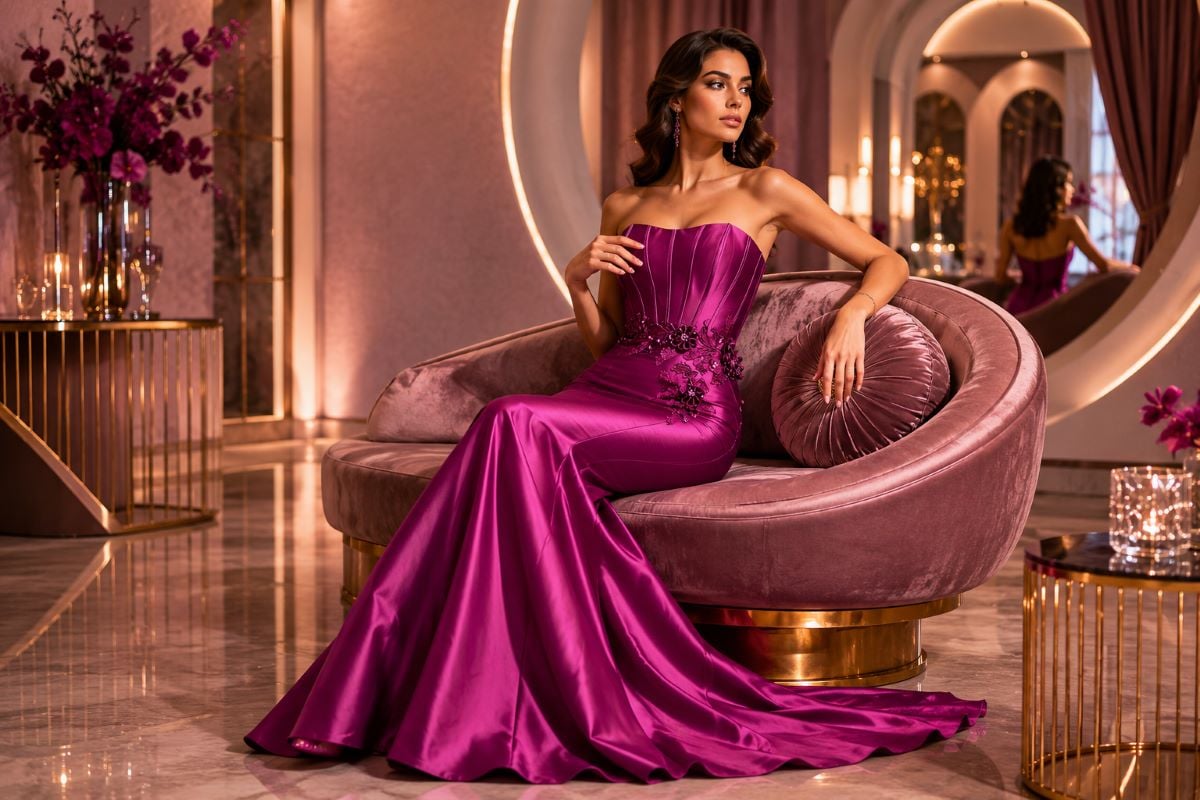
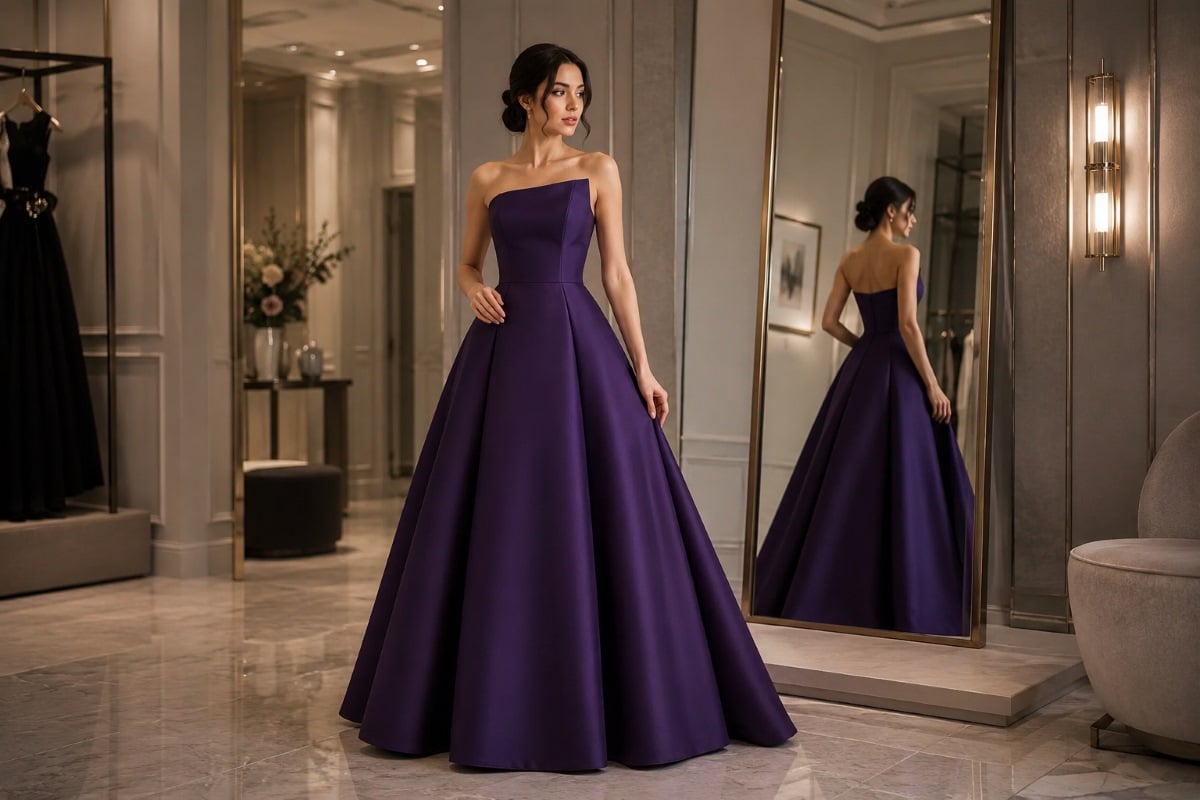
The natural waistline sits where your body is genuinely narrowest, usually about an inch above the belly button, at the slimmest part of your torso. It is the most traditional and the most familiar of all waistline placements, the one most people picture when they imagine a fitted dress.
What a Natural Waist Does to the Body
Because the seam lands at your true narrowest point, a natural waist follows your real shape rather than reinventing it. It cinches where you actually curve in, which creates a clear, defined hourglass and emphasizes the contrast between the bust, the waist, and the hips. There is an honesty to it. The dress is working with your proportions, not disguising them.
This placement is the foundation of many classic silhouettes. Most ball gown prom dresses use a natural waist, with a fitted bodice that nips in at the waist before the skirt explodes outward. Many fitted styles cinch there too before flaring. The natural waist is the seam that makes a dramatic skirt look dramatic, because the tighter the waist, the fuller the skirt appears by contrast.
Who the Natural Waistline Flatters Most
A natural waist is most rewarding for women who already have a defined waist and want to show it, and for anyone whose torso and legs are already fairly balanced in length. It is the obvious friend of the hourglass figure and works beautifully on many average and longer-torso proportions.
Be more thoughtful with a natural waist if you have a short torso, since a seam at your midpoint can shorten the upper body further and emphasize a divide you may prefer to soften. It is also less forgiving through the midsection than the other two placements, because it draws the eye straight to the waist rather than skimming past it. That is a strength if you want emphasis there and something to weigh if you do not.
The Empire Waistline: The Long, Lifted Line
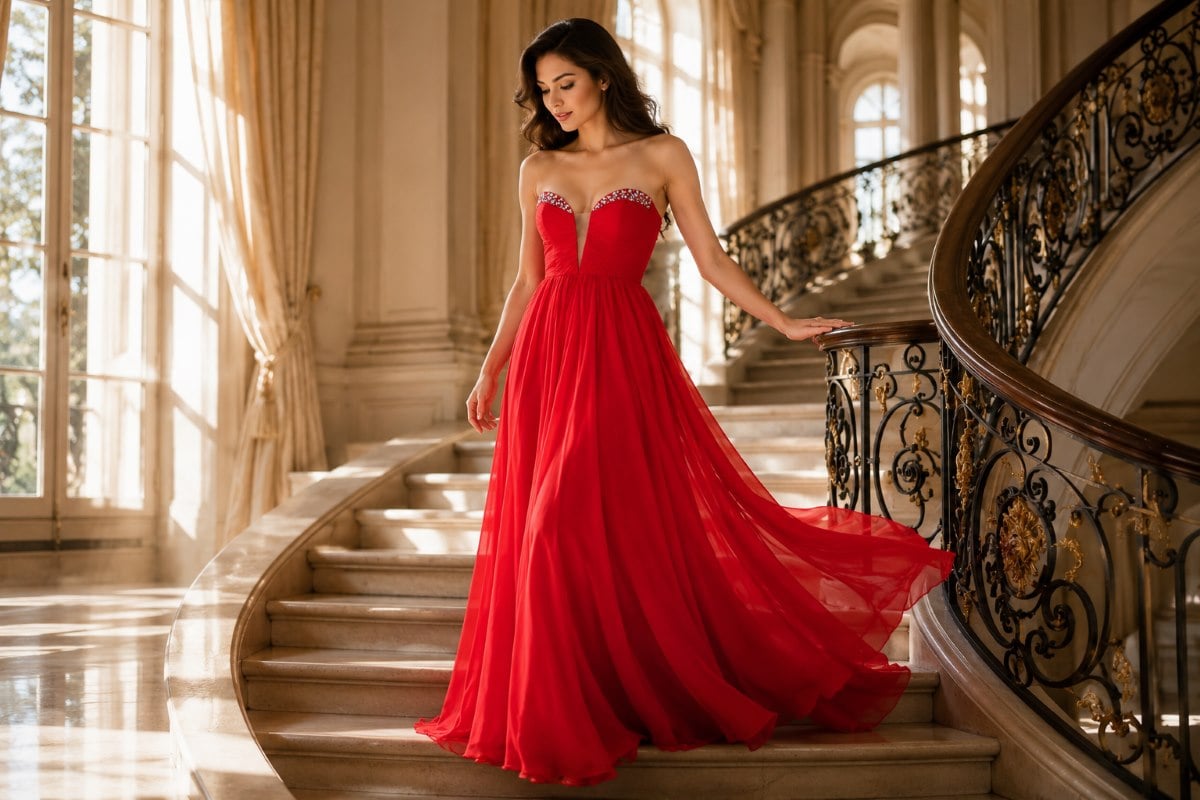
The empire waistline raises the seam dramatically, placing it just below the bust rather than at the natural waist. The bodice is fitted only through the chest, and from that high seam the skirt falls straight and free all the way to the floor. It is one of the oldest silhouettes in fashion, named for the early nineteenth-century styles of the First French Empire, and it has stayed in rotation ever since.
What an Empire Waist Does to the Body
By lifting the divide to just under the bust, an empire waist makes almost the entire body read as the lower section. The visual result is length. The legs appear to start higher, the body looks taller and more elongated, and the eye is pulled into one long vertical line from the chest to the hem.
The other key effect is what happens to the midsection. Because the skirt releases from under the bust and falls without ever touching the waist or stomach, an empire dress skims straight over the midsection instead of clinging to it. Nothing pulls tight across the middle of the body. You can see this clearly across the range of empire prom gowns, where the high seam releases the skirt into one long, uninterrupted fall.
Who the Empire Waistline Flatters Most
The empire waist is genuinely excellent for several body types. Petite women love it because the raised seam manufactures the illusion of longer legs and added height. Anyone who wants to skim over the midsection rather than define it finds the empire flattering and comfortable, since the skirt never cinches the stomach. It is also a frequent favorite for expectant mothers and a reliably comfortable choice for dancing, because the skirt moves freely. The same high-seam logic carries into many a-line formal dresses, where the soft flare can begin high on the body for a similar elongating effect.
Here is the honest caveat, because the empire waist is too often sold as universally flattering and it is not. If you have a short torso, an empire seam sits very high and can shrink the upper body so much that proportions look unbalanced, with a tiny top half and an overwhelming skirt. If you have a fuller bust, the seam directly beneath it can sometimes add visual volume right there. And because the skirt falls loose from the bust down, the empire waist hides the natural waist entirely, so if your goal is to show off a defined waist, this is the wrong placement. A truthful guide on the types of dress waistlines has to say that plainly.
The Drop Waistline: The Lengthened Torso
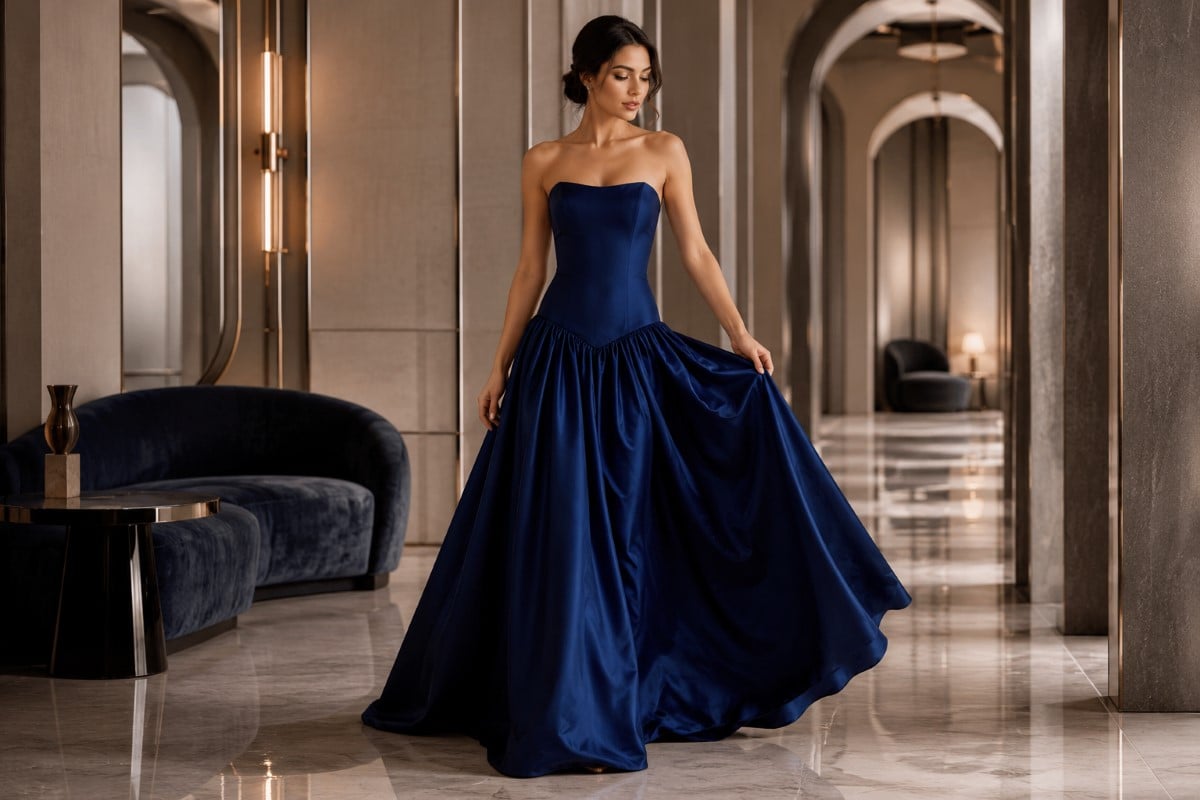
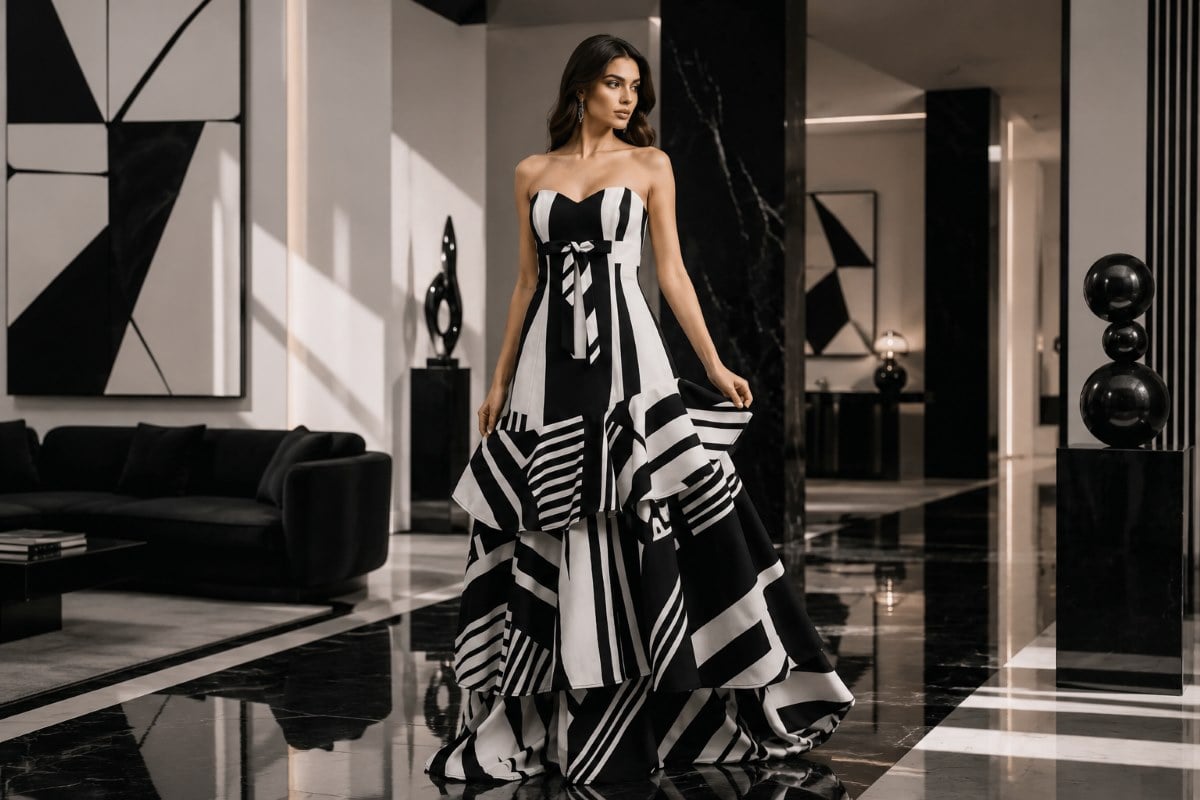
The drop waistline does the opposite of the empire. Instead of lifting the seam, it lowers it, placing the waist seam below the natural waist, usually around the upper hip or hip bone. The bodice is therefore long and fitted, and the skirt does not begin to flare until lower down the body.
What a Drop Waist Does to the Body
Lowering the divide makes the torso read as the long section of the body. The fitted bodice extends past the natural waist and over the upper hip, which lengthens and slims the entire upper body in one clean line. The skirt then takes over lower down, so the leg-revealing or skirt-flaring portion is compressed into the lower part of the figure.
The drop waist carries real fashion history, it defined the straight, elongated dresses of the 1920s, but it is not a costume piece. In modern formalwear it is a sophisticated, slightly unexpected choice that flatters in ways the other placements cannot. Because the seam sits low and the bodice is long, a drop waist creates a smooth, uninterrupted vertical run from the shoulders down past the hip.
Who the Drop Waistline Flatters Most
The drop waist is the quiet hero for short torsos. Where an empire seam would crowd a short upper body, a drop waist gives that torso room to breathe and visually lengthens it, restoring balance. It is also a smart choice for anyone who wants to elongate and slim the upper body, and it skims the natural waist and stomach much like the empire does, offering coverage without cling.
The tradeoff is the reverse of the empire. If you have a long torso already, a drop waist can lengthen it too far and leave the legs looking short, so a long-torso figure is usually happier with a natural or even raised waist. The drop waist also de-emphasizes the natural waist, so it is not the placement for showing off an hourglass. As with every option here, it solves one proportional problem and creates another, which is exactly why no single waistline is right for everyone.
How the Three Waistlines Compare at a Glance
It helps to see the three placements side by side. The pattern is consistent: the higher the seam, the longer the legs appear, and the lower the seam, the longer the torso appears.
- Empire waist: seam just below the bust. Lengthens the legs, adds height, skims the midsection. Best for petite frames and long torsos. Hides the natural waist.
- Natural waist: seam at the body’s narrowest point. Creates a defined hourglass and emphasizes real curves. Best for balanced proportions and anyone who wants to show the waist.
- Drop waist: seam at the upper hip. Lengthens and slims the torso, compresses the lower body. Best for short torsos. Hides the natural waist.
Read that list as a set of tools rather than a ranking. A petite woman with a long torso and a tall woman with a short torso have opposite needs, and the same gown would not serve them equally. The skill is matching the seam to the body.
How to Identify a Dress’s Waistline Before You Try It On
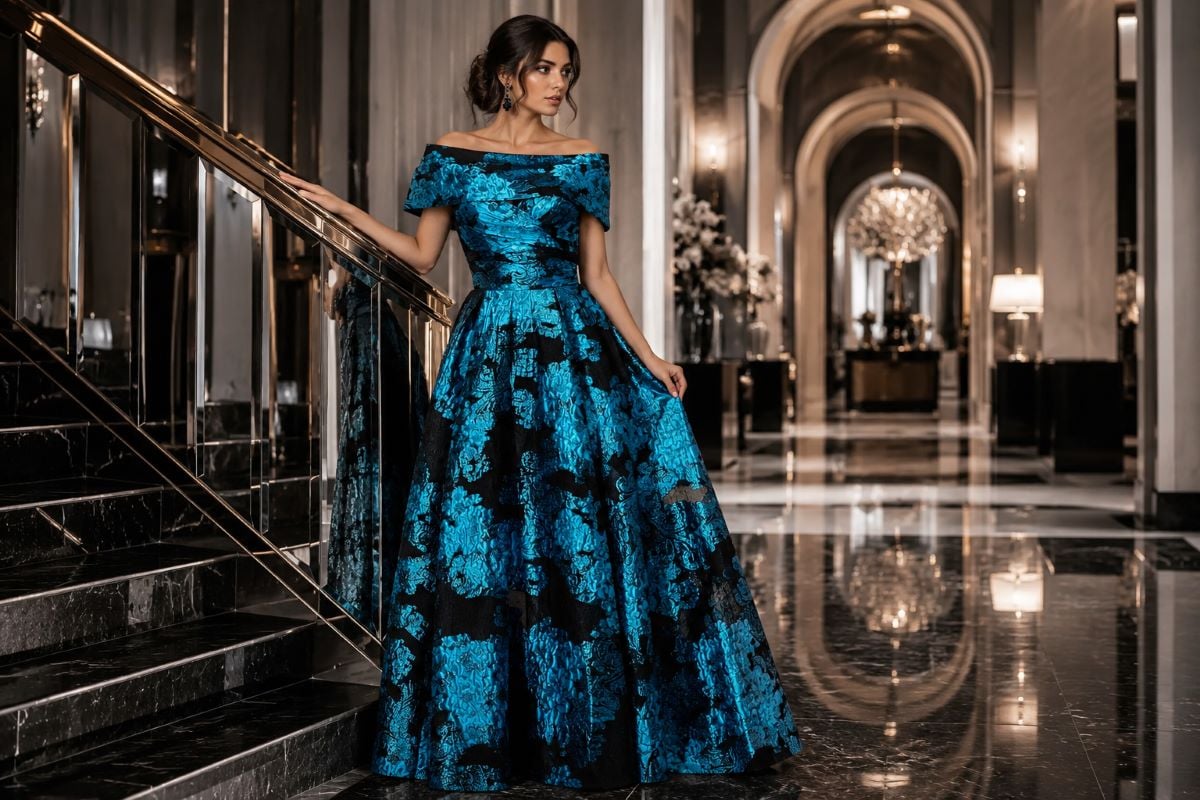
Most women shop online first, which means you need to read a waistline from a photograph. It is easier than it sounds once you know to look for the horizontal seam where the fitted bodice meets the skirt.
- If that seam sits high, right under the bustline, and the skirt falls loose from there, it is an empire waist.
- If the seam sits at the slimmest visible part of the torso and the dress is clearly nipped in there, it is a natural waist.
- If the bodice looks long and fitted and the seam sits low near the hip before the skirt begins, it is a drop waist.
Two cautions when reading photos. First, a model is usually tall with balanced proportions, so a waistline that looks ideal on her may land differently on you, this is the heart of so many how to solve common evening dress fit problems situations. Second, a structured gown is engineered around its waist seam, and that seam is meant to sit at a specific point on the body. If a natural-waist gown lands two inches low on you, the whole silhouette shifts. Knowing your own torso length before you shop tells you which placement to look for in the first place.
Matching the Waistline to Your Body and Your Occasion
Choosing among the types of dress waistlines comes down to two honest questions: what are my proportions, and what do I want the dress to do.
Start With Your Torso Length
The single most useful measurement here is whether your torso is short, average, or long relative to your legs. A short torso is generally happiest with a drop waist and is usually best avoiding a high empire seam. A long torso is the reverse, it suits an empire or natural waist and can look out of balance in a drop waist. An average, balanced torso has the most freedom and can carry a natural waist beautifully, which is part of why guidance on dressing a best prom dresses for a short torso leans so heavily on seam placement.
Then Decide What You Want to Emphasize
If you want to celebrate a defined waist, choose a natural waist, since the other two placements deliberately skim past it. If your priority is comfort, coverage through the midsection, and freedom to move and dance, an empire or drop waist will serve you better. If you want to look taller, lift the seam. If you want to lengthen and slim the upper body, lower it. The fabric and skirt shape then build on that decision, which is why fluid, body-skimming styles such as mermaid formal gowns read so differently from a full ball gown even when the waist placement is the same.
Construction plays its part too. A sleek column or sheath with a defined seam behaves nothing like a layered tulle skirt, even when both use a natural waist, which is clear when you compare the clean lines of fitted straight evening dresses against a voluminous gown.
One last point worth keeping in mind. The waistline sets the structure, but it works alongside neckline, fabric weight, and skirt volume to create the final effect. A defined waist is only one way to look balanced, and styling that draws on a strong waist seam, explored further in this look at evening dresses that highlight the waistline, is a choice rather than a rule. The goal is never to follow a formula. It is to understand what the seam is doing so the decision is yours.
FAQs About Dress Waistlines
What is the difference between an empire waist and a natural waist?
An empire waist places the seam just below the bust, so the skirt falls loose from high on the body and the legs look longer. A natural waist places the seam at the narrowest part of the torso, so the dress cinches at your true waist and creates a defined hourglass. Empire skims the midsection, natural emphasizes it.
Which waistline is most flattering for a short torso?
A drop waist is usually the best choice for a short torso. By lowering the seam to the upper hip, it gives the upper body room and visually lengthens it. A high empire seam tends to do the opposite, crowding a short torso and making proportions look unbalanced.
Is an empire waist flattering on everyone?
No. The empire waist is excellent for petite women, long torsos, and anyone who wants to skim the midsection, but it is not universal. It can shorten a short torso further and can add visual volume directly under a fuller bust. It also hides the natural waist, so it is not ideal if you want to show a defined waist.
Does a drop waist only work for vintage-style dresses?
Not at all. The drop waist defined 1920s fashion, but in modern formalwear it is a sophisticated, contemporary choice. It lengthens and slims the torso and reads as elegant rather than costume-like, especially on figures with a shorter torso.
How do I find my natural waistline?
Your natural waist is the narrowest part of your torso, generally about an inch above the belly button. An easy way to locate it is to bend gently to one side, the point where your body creases is your natural waist. Knowing where it sits helps you judge whether a dress’s seam will land where the designer intended.
Can the waistline of a formal gown be altered?
Moving a waist seam is one of the most difficult and expensive alterations because the seam is built into the gown’s boning, lining, and skirt structure. Minor adjustments are sometimes possible, but it is far better to choose the right waistline placement at purchase. A skilled tailor can tell you what your specific gown can handle.
Choosing the Waistline That Works for You
A waistline is a small detail with an outsized effect. Once you understand the three main types of dress waistlines, you can look at any gown and know immediately what it will do for your figure, whether it will lengthen your legs, lengthen your torso, or honor your natural curves. The empire lifts and elongates, the natural defines and balances, and the drop lengthens and slims the upper body. None is universally best, and the right one is simply the one that matches your proportions and your intention. Jovani has spent more than forty years engineering gowns where every seam is placed with purpose, and the waistline is one of the clearest examples of that thinking at work.
When you are ready to see how each waistline feels on you, explore the full range of silhouettes available through an authorized Jovani retailer.